
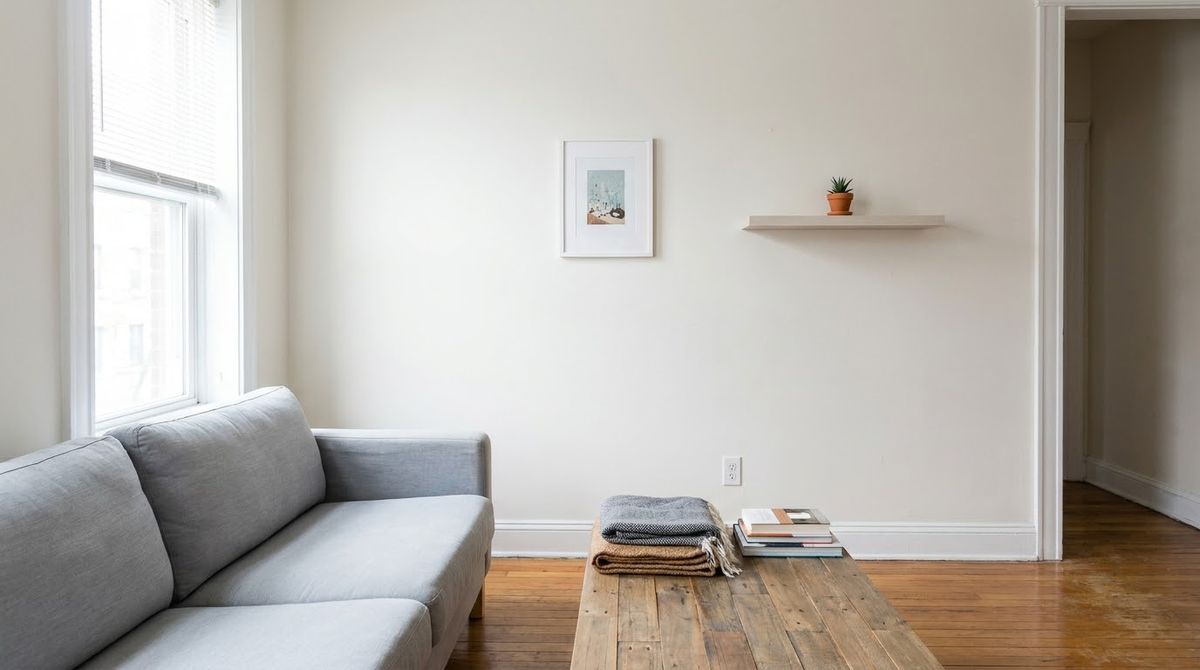
A minimalist room usually looks empty for one reason: it has fewer than 4 textures, one overhead light and no object taller than about 14 inches to anchor the eye. The fixes cost $5 to about $180. Each mistake below comes from stripping a room without replacing it with texture, contrast or intent.
Key Takeaways
- Texture is non-negotiable: aim for at least four (smooth, rough, soft and one natural).
- One large object beats five small ones; scale reads as intent, accumulation reads as clutter.
- Use three to five tones in one color family, not a single flat white.
- Light at three heights with 2700K bulbs; overhead-only lighting flattens the room.
- Every main wall and floor needs an anchor: a large artwork, a properly sized rug or a plant.
Mistakes That Make a Room Look Abandoned
The first three come from treating minimalism as subtraction only.
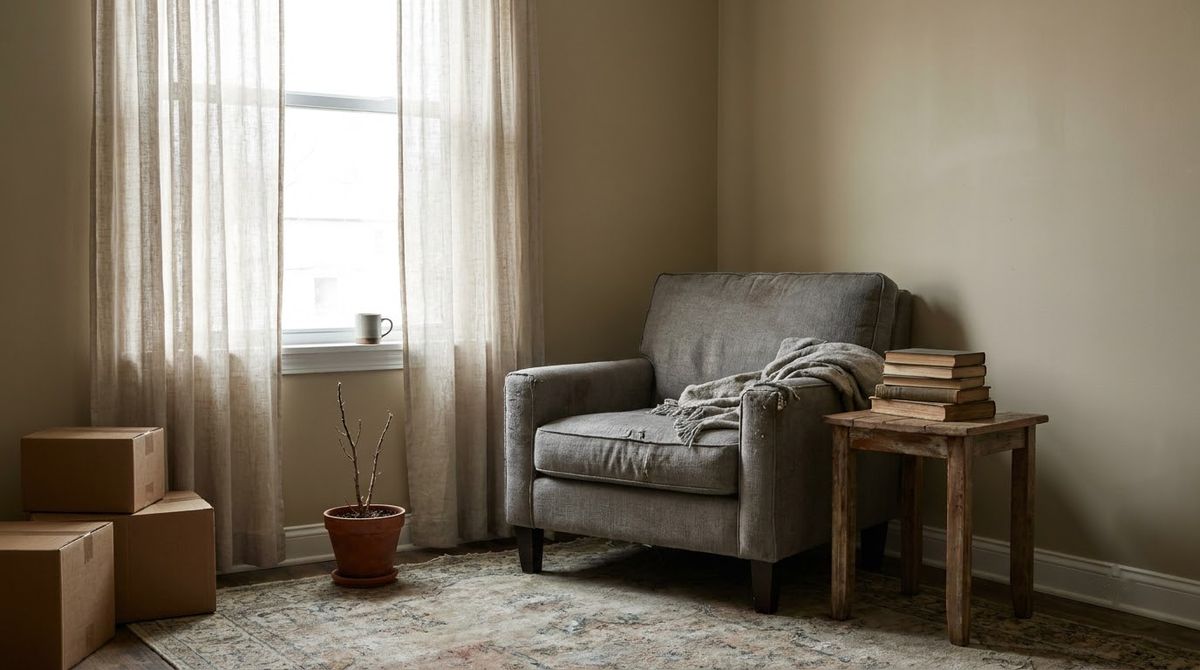
1. Treating “Minimalist” as “Empty”
Designed minimalism is editing, not erasing. Three chosen objects feel intentional, while three random ones feel abandoned. Use a 60-30-10 split for objects: 60% foundation furniture, 30% supporting pieces (side tables, rugs, lamps) and 10% personality (art, books, ceramics). If you count fewer than three personality items in a room, that is the gap. A Threshold ceramic bud vase at Target ran $15, a cheap way to add one.
2. Skipping Texture
A white sofa on a smooth floor under a flat ceiling gives the eye nothing to grip. The room photographs fine but feels cold in person. Aim for four textures: smooth (glass, lacquer), rough (linen, jute, raw wood), soft (bouclé, wool) and one natural. Photograph the room in grayscale; if everything is one tone, texture is the problem. At Walmart, chunky knit throws ran about $7 to $17 for budget sizes and $60 to $65 for hand-knit ones.
3. Many Small Pieces
A bowl, a candle, three books, two figurines and a small vase are each “minimalist,” but together they make visual noise. Replace clusters with one sculptural piece and a functional tray. Clear the coffee table, put back only what you use plus one object, and wait a week before adding more. Walmart listed acacia trays from $11.89 (10-inch) to $19.99 (15 x 10 inch). See minimalist statement pieces.
Mistakes With Color and the Floor
Flat color and an undersized rug are the two biggest reasons a room echoes.
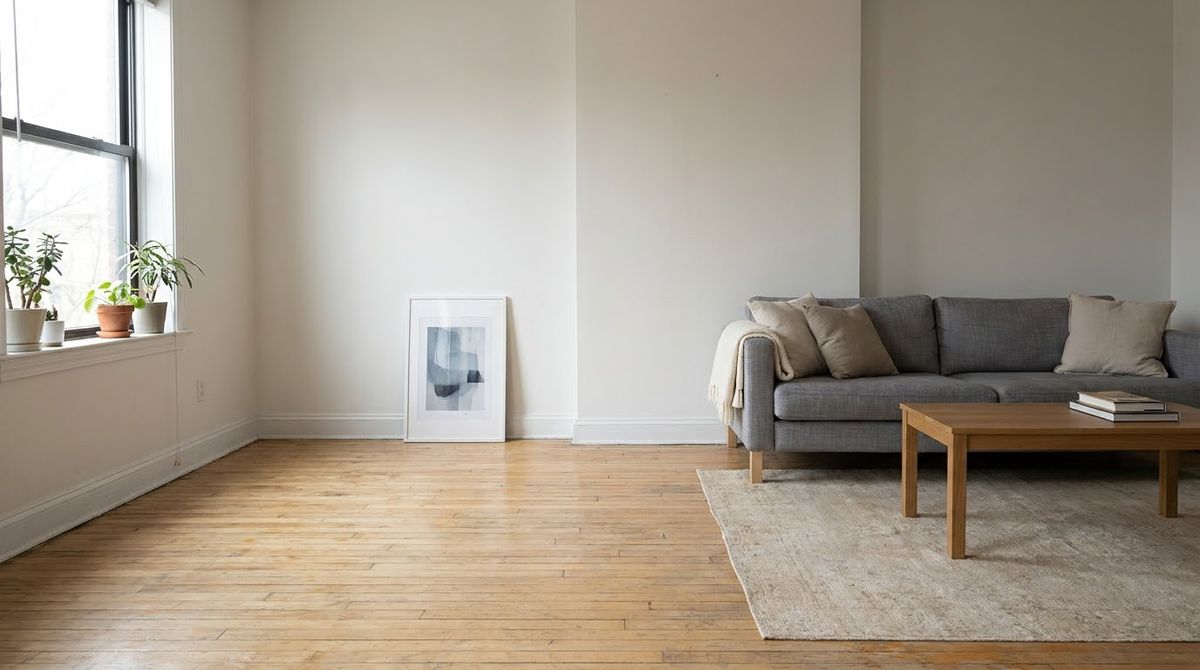
4. Going All-White or All-Beige
A single flat color reads like unfinished drywall, and the eye has nowhere to land. Build a palette of three to five tones in the same family: warm off-white walls, oat upholstery, tan or camel leather, walnut or oak, and black or bronze hardware as punctuation. Layer them through textiles. IKEA’s RITVA curtains are a cotton linen-look pair at $39.99 and add one tone cheaply. See the minimalist color palette.
5. A Rug That Is Too Small
A 5 x 7 rug floating in a large living room makes everything look smaller. In a living room the front legs of all seating should sit on the rug (usually 8 x 10 or 9 x 12). In a bedroom, extend it 24 to 30 inches past the bed on three sides. IKEA’s 100% jute LOHALS is $179.99 at 6’7″ x 9’10”, and Home Depot listed a Nourison washable jute-look 8 x 10 at $107. Add a felt-and-rubber pad; the RUGPADUSA 8 x 10 was listed from $37.95 at Walmart. See what size rug for a living room.
Mistakes With Light and Walls
Minimalist rooms have fewer surfaces to break up light, so they show lighting and wall errors faster.
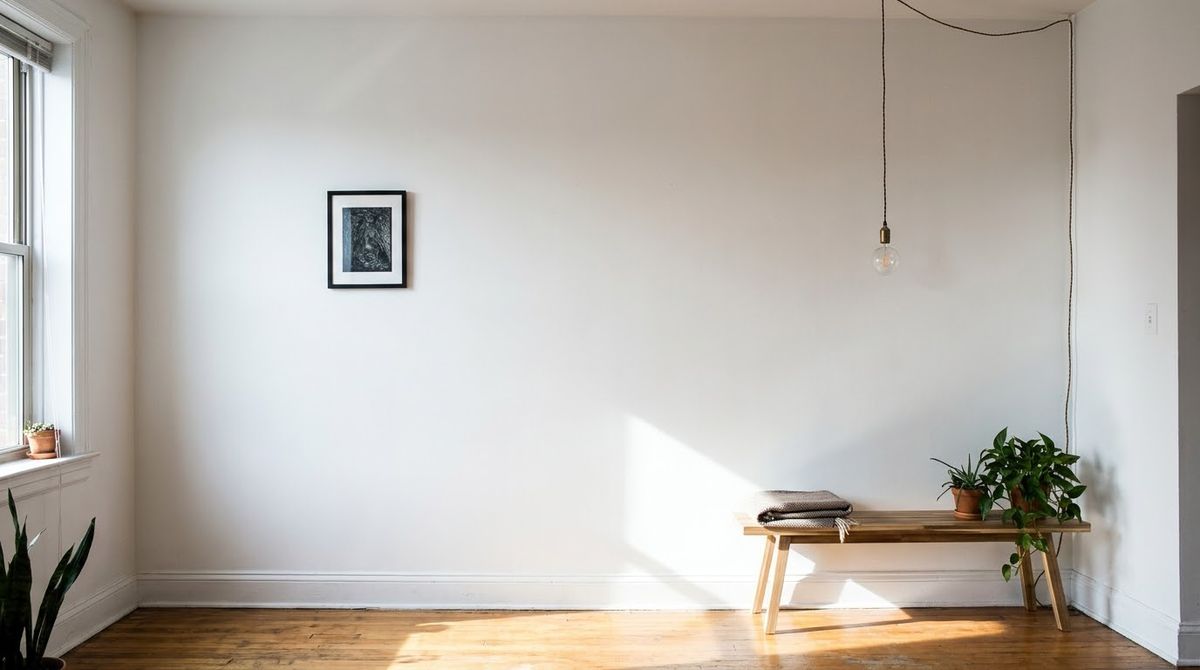
6. Lighting Only From the Ceiling
One overhead fixture flattens a room the way office light flattens a face. Layer three heights: ceiling (ambient), eye level (sconces, picture lights) and floor or table (lamp per seating area). Use 2700K bulbs; IKEA’s SOLHETTA warm-white bulbs are $4.99 per 2-pack. Choose CRI 90 or higher so wood and linen do not look muddy. A linen-shade floor lamp was listed at Walmart for $39.99.
7. Matching Everything
A full matching set of sofa, loveseat, coffee table and lamps makes a room look like a showroom, and in minimalism nothing distracts from the sameness. Mix two wood tones, two metal finishes and two upholstery materials. A walnut table beside an oak side table reads as collected. IKEA’s solid pine IVAR cabinet is $110 (31 x 12 x 33 inches) and gives a different wood next to darker furniture. Swap one piece, not the whole set.
8. A Blank Wall With No Anchor
A blank wall in a maximalist room is a pause. In a minimalist room it reads as a mistake. Give each main wall one large artwork (at least 36 inches wide above a sofa), an architectural feature or one sculptural object. Skip the small-frame gallery wall, which repeats mistake 3. Home Depot listed a 48 x 36 framed canvas at $111.07 to $125.54, and AllPosters listed a 48 x 36 inch print at $38 unframed. See minimalist decor cost.
Mistakes With Living Things and Screens
The last two mistakes soften the room’s hardest elements: no organic life and a TV that rules the layout.
9. No Plants or Organic Material
Hard surfaces and geometric furniture need a counterweight. Add one large plant per room (about 4 feet to register at scale) plus smaller organic touches like branches, stones or driftwood. Home Depot listed a Costa Farms snake plant at $67.99 (3 to 4 feet shipped) and 5-foot faux olive trees from about $56.61. The ASPCA lists snake plant as toxic to dogs and cats, so choose a faux plant in a pet home.
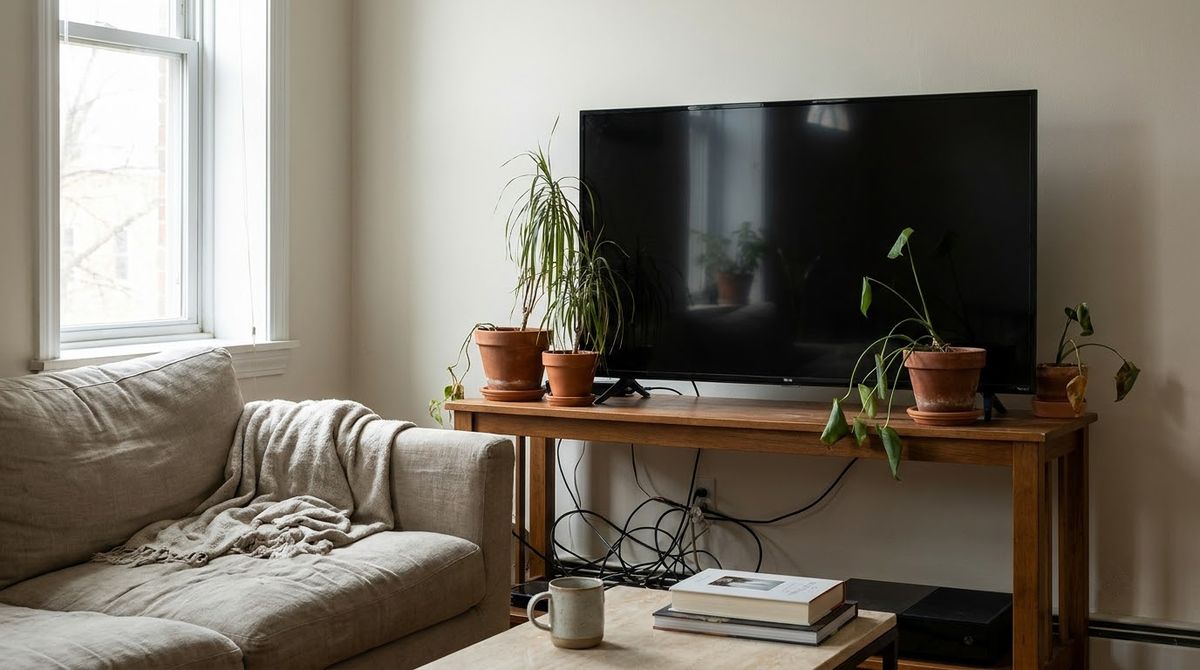
10. Decorating Around the TV
A 65-inch black rectangle becomes the room’s focus, and every other choice becomes a reaction to it. De-emphasize it three ways: frame it, hide it or decentralize it. A frame-style TV such as Samsung’s 65-inch Frame has been listed from about $1,400 to $2,100 depending on the sale. A media cabinet with doors costs far less, or turn the seating inward so the conversation area, not the screen, organizes the room.
Add Depth Without Losing the Look
If you take one idea from this list, take depth, not density. A minimalist room should pass five checks:
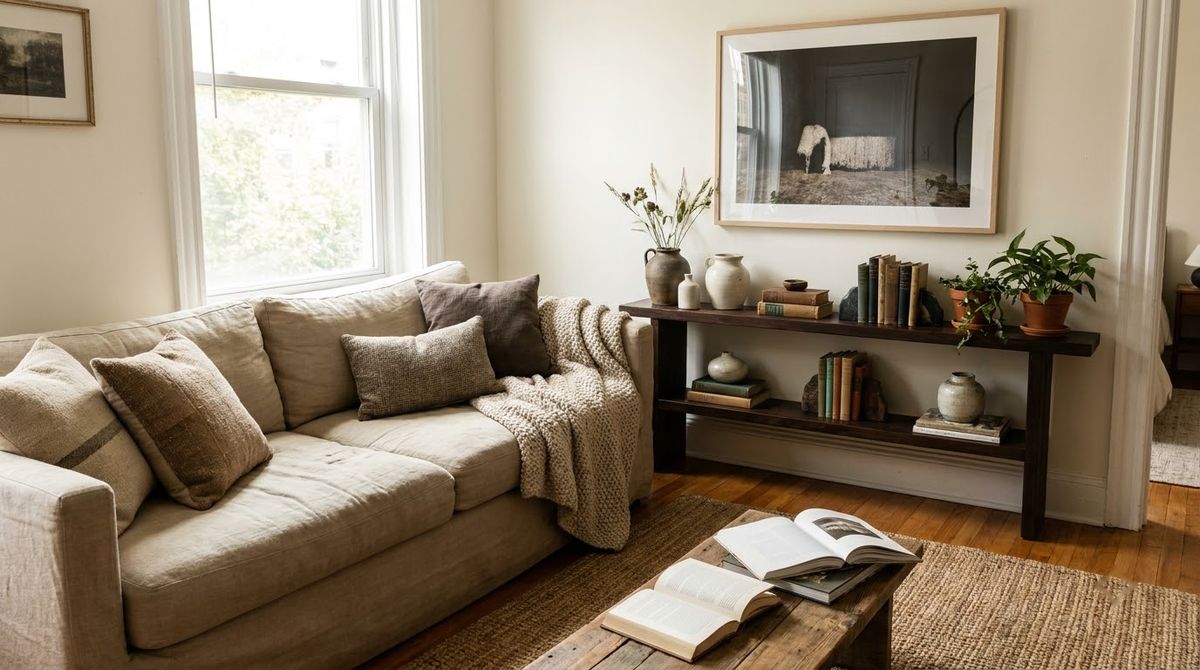
- At least four textures.
- Three to five tones in one color family.
- One sculptural anchor per main wall or surface.
- Three light sources at different heights.
- At least one organic or living element.
Cost Snapshot
| Mistake | Fix | Approx. cost |
|---|---|---|
| 1 Empty look | Add one ceramic | $15 (Target) |
| 2 No texture | Chunky throw | $7-$17 (Walmart) |
| 5 Small rug | 6’7″ x 9’10” jute rug | $179.99 (IKEA) |
| 6 Overhead only | Warm bulbs, floor lamp | $4.99 + $39.99 |
| 8 Blank wall | Large framed canvas | $111-$126 (Home Depot) |
| 9 No plants | Snake plant | $67.99 (Home Depot) |
For a full system, read the modern minimalist decor guide and the 6-step declutter guide.
Frequently Asked Questions
How many decor items should a minimalist room have?
There is no fixed number. Aim for about 60% foundation furniture, 30% supporting pieces and 10% personality objects. Most rooms need at least three personality items (art, ceramics, a stack of books) to read as intentional rather than abandoned.
Why does my minimalist room feel cold and empty?
Cold rooms almost always lack layered light and organic material. Add three light sources at different heights with 2700K bulbs and one plant about 4 feet tall. Then check that the room has four or more distinct textures.
What size rug works best in a minimalist living room?
Large enough that the front legs of all seating sit on it, usually 8 x 10 or 9 x 12. A 5 x 7 rug floating in the center makes the whole room look smaller, which is the most common rug mistake.
What colors are best for a minimalist room?
Warm off-white walls layered with three to five tones in the same family. Avoid pure white on every surface. Build depth with oat upholstery, camel or tan leather, walnut wood and one matte black or aged brass accent.
How many textures does a minimalist room need?
At least four. Mix smooth (glass, lacquer), rough (linen, jute, raw wood) and soft (bouclé, wool). Photograph the room in grayscale: if it reads as one flat tone, you have a texture problem rather than a color problem.
Empty by Accident, Calm by Design
Empty rooms happen by accident; intentional ones come from the layers you keep. Pick the two mistakes that match your room, fix those this week and leave the rest. The minimalist decor hub has more picks.
Prices checked October 2026.