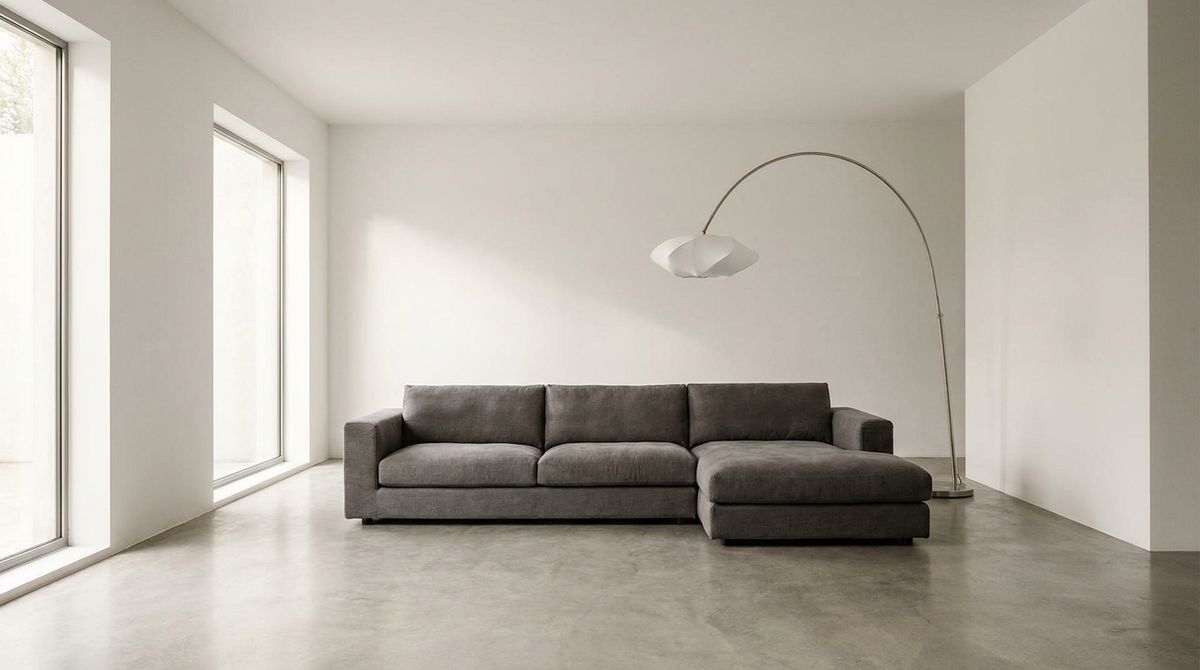
Modern minimalist decor is the design philosophy of using fewer, better objects to create rooms that feel calm, intentional, and visually quiet. Instead of filling a home with accessories, it strips a space down to the essentials, then elevates each remaining piece through quality materials, considered placement, and breathing room. The result is not cold or empty. It is focused.
In 2026, minimalism has moved past the all-white box and the bare concrete floor. The new minimalist home is warm, textured, and lived-in. Linen replaces leather. Oak replaces lacquer. Wabi-sabi imperfection sits comfortably next to clean Scandinavian lines. This guide is the foundation document for everything we cover on DecorQuarter about modern minimalist decor. By the end, you will know which minimalist variant fits your taste, the six elements every minimalist room shares, how to apply the style room by room, and exactly what to buy at $100, $250, and $500.
What Modern Minimalist Decor Actually Means in 2026
Minimalism is often misunderstood as a look. It is closer to a filter. Every object in the room earns its place by passing two tests: is it useful, and does it bring joy or visual calm? Anything that fails both gets removed, donated, or stored out of sight.
The 2026 version of this philosophy has softened. Where 2010s minimalism worshipped pure white walls and empty surfaces, today’s interpretation embraces what designers call “warm minimalism” or “soft minimalism.” Think bouclé instead of leather, putty instead of stark white, rounded edges instead of sharp corners. The principles are identical to the original movement, but the execution feels more human.
A modern minimalist room is identifiable by what it lacks more than what it contains. There are no gallery walls of twelve frames. No decorative bowls filled with decorative balls. No throw pillows competing in five different patterns. Instead, you see negative space, repeated material palettes, and one or two carefully chosen focal points per room.
Key Takeaway: Modern minimalist decor is not about owning less for its own sake. It is about owning the right things, displaying them well, and letting empty space do the visual work that clutter cannot.
The 3 Main Variants of Modern Minimalist Decor
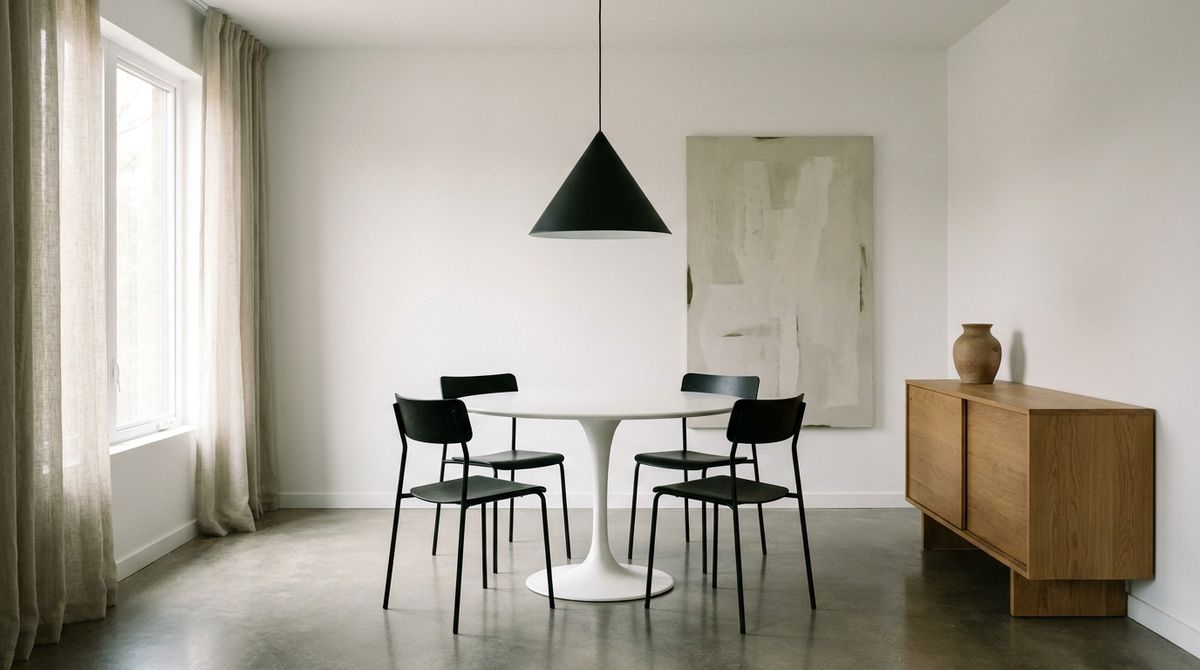
Not all minimalist homes look the same. The style splits into three dominant variants in 2026, each with a different mood, material palette, and target audience. Understanding which one suits you prevents costly furniture mistakes.
1. Scandinavian Minimalism
This is the most accessible entry point and the version most people picture when they hear “minimalist.” Scandinavian minimalism prioritizes light, function, and a tight palette of white, light oak, soft grey, and black. Furniture lines are clean but rarely harsh. A Scandinavian minimalist living room might contain a pale linen sofa, a white oak coffee table, a single woven pendant light, and a large floor plant. That is essentially the whole room.
The mood is bright, airy, and gently optimistic. It works well in homes with limited natural light because the pale palette amplifies whatever sunshine reaches the room. It is forgiving for beginners because the materials are widely available and the look is hard to get wrong.
2. Japandi (Japanese + Scandinavian)
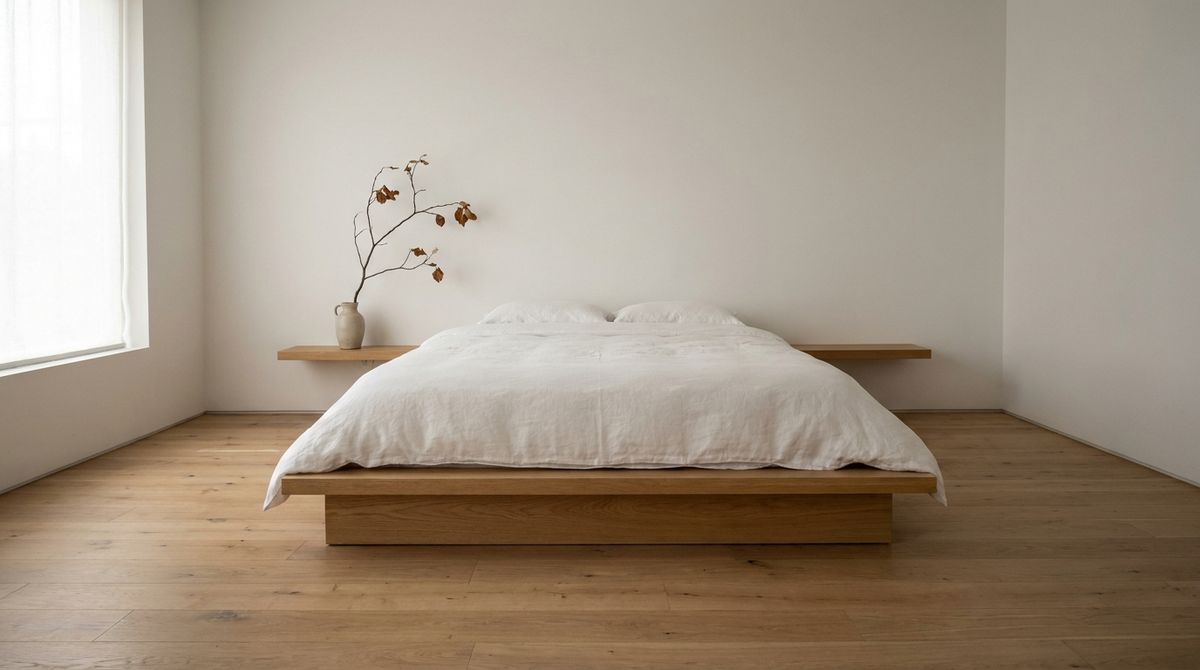
Japandi merges Japanese craftsmanship and wabi-sabi imperfection with Scandinavian comfort. The palette darkens slightly. Expect black ash, walnut, charcoal linen, terracotta, and natural rattan. Furniture sits lower to the ground. Forms reference traditional Japanese pieces such as the low platform bed, the engawa-inspired bench, and the shoji-screen room divider.
Japandi is for people who find pure Scandinavian minimalism a touch too cool. The deeper tones and more textured materials add warmth and visual weight. It also handles natural imperfections beautifully, so handmade ceramics, raw linen with visible slubs, and hand-thrown pottery all belong here.
3. Warm Modern Minimalism
The newest and fastest-growing variant. Warm modern minimalism keeps the restrained object count of classic minimalism but swaps cool tones for earth-driven ones: cream, oat, clay, taupe, espresso, and burnt umber. Curved furniture dominates. Bouclé, sherpa, sheepskin, and brushed wool replace flat upholstery. Plaster walls and limewash finishes show up frequently.
This variant suits homeowners who want minimalism without austerity. It photographs beautifully under warm artificial light, which is why it dominates 2026 interior design social feeds. Pair it with travertine, unlacquered brass, and oak floors for the signature warm-minimalist look.
Free · 60 seconds
Not sure which style is actually yours?
Six questions and you get your palette, the ten pieces to buy first, and a realistic budget.
The 6 Core Elements of Modern Minimalist Decor
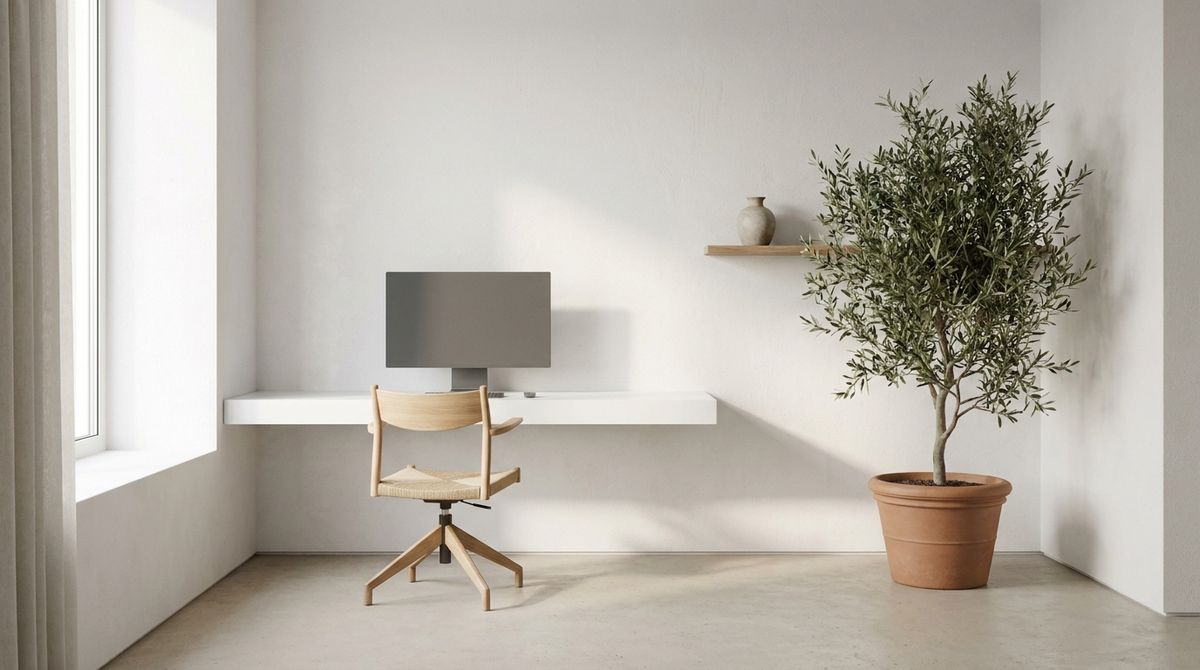
Regardless of which variant you choose, every successful modern minimalist room contains the same six structural elements. Skip any one of them and the room either reads as sparse-but-cold or as half-finished.
1. A Restrained Color Palette of 3 to 4 Tones
Minimalist rooms work because the eye is never asked to process too many colors at once. Choose one dominant neutral for walls and large upholstery, one secondary neutral for textiles and rugs, one accent wood tone, and at most one true accent color. Four tones, total. Repeat them throughout the space until the room feels unified.
What most guides miss: the classic 60-30-10 rule is what keeps a restrained palette from reading flat. Give your dominant neutral roughly 60 percent of the room (walls and large upholstery), your secondary tone about 30 percent (rugs, curtains, bedding), and your accent wood or color only 10 percent. That final 10 percent is small on purpose. It is the ratio that separates a calm minimalist room from a beige showroom.
2. Negative Space as a Design Element
Empty surface area is not failure. It is the feature. A coffee table with one book and one ceramic bowl reads as intentional. The same table with seven objects reads as cluttered, even if every object is beautiful. As a rule of thumb, leave at least 50 percent of any horizontal surface empty. Walls follow the same logic. One large piece of art on a long wall beats five small pieces in a grid.
What most guides miss: negative space runs on measurable ratios, not a vibe. Aim to keep 40 to 50 percent of your floor visibly uncovered by furniture or rugs, which is what makes a room read as open rather than crowded. On walls, leave a clear margin of at least 12 inches (30cm) around a single artwork instead of pushing it to the frame edges. The breathing room is the design.
3. Quality Over Quantity in Furniture
Minimalism cannot hide a cheap sofa. When the object count drops, every remaining object carries more visual weight, so it must hold up to scrutiny. Invest in the two or three pieces that define each room (the sofa, the bed, the dining table) and let everything else be supporting cast. Solid wood beats veneer. Natural fibers beat synthetics. Pieces with simple, timeless silhouettes outlast trend-driven shapes.
What most guides miss: quality over quantity is usually cheaper across a decade, not more expensive. A $150 particleboard sofa replaced roughly every three years costs about $500 over ten years, and it never photographs well in a sparse room. One $700 solid-frame sofa that lasts the full ten years costs about $70 a year and anchors every restyle around it. In minimalism you are buying the cost-per-year, not the sticker price.
4. Layered Natural Textures
Without color or pattern doing the heavy lifting, texture becomes the room’s visual interest. Combine smooth and rough, hard and soft, matte and lightly polished. A linen sofa next to a jute rug next to a travertine side table next to a wool throw delivers exactly the right amount of sensory variety. If you photographed the room in black and white, you should still see contrast.
5. Considered Lighting in Three Layers
Minimalist rooms need ambient, task, and accent lighting just like any other room. The difference is that minimalist fixtures themselves are sculptural and few. One statement pendant, one floor lamp, one table lamp per zone is usually enough. Avoid recessed-only lighting plans, which flatten texture and make rooms feel commercial. Warm color temperatures between 2700K and 3000K flatter natural materials.
6. Hidden Storage Everywhere
The minimalist aesthetic depends on surfaces staying clear, which depends on having somewhere to put the daily mess. Built-in cabinetry, closed-front media consoles, lift-top ottomans, under-bed drawers, and full-height wardrobes are not optional. Open shelving works only when you commit to curating it, which most homeowners do not. When in doubt, close the door on it.
Modern Minimalist Decor Room by Room
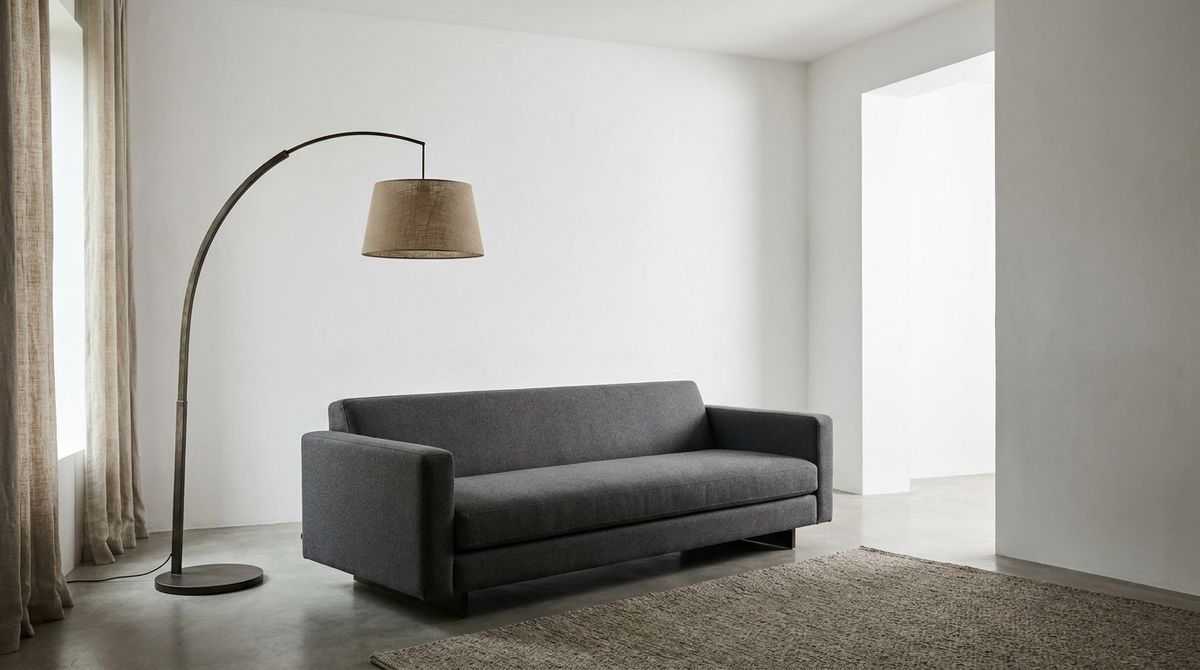
The principles above apply universally, but each room has its own pitfalls and priorities. Here is how to translate the style into the five rooms that matter most.
Living Room
The living room is where minimalism is tested most aggressively because it absorbs daily life: remotes, books, devices, throws, snacks. Start with a single statement sofa in a neutral linen, bouclé, or performance fabric. Add one coffee table, one accent chair, one rug, and one floor lamp. That is the entire furniture budget. For visual interest, place one oversized piece of art on the main wall and one large floor plant in a corner. Resist the urge to fill the bookshelves. Need more inspiration for this room specifically? Our deep dive on 25 modern minimalist living room ideas that prove bare isn’t boring walks through real layouts you can copy.
Bedroom
Bedrooms are the easiest room to minimalize because the function is narrow: sleep. Keep the bed, two matching nightstands, one dresser, and one chair if the room is large enough. Use bedding in two tones maximum (typically a white duvet with a single contrasting throw or pillow). Skip the headboard if your bed has a strong frame, or choose an upholstered headboard in a single solid color. Wall art stays modest, often a single large piece above the bed. Reading lamps should match each other and clip directly to the wall to keep nightstands clear.
Kitchen
Modern minimalist kitchens rely on uninterrupted cabinetry, handle-less or slim-pull drawers, and stone or quartz counters in a single tone. Hide the small appliances behind appliance garages or in deep pantries. Limit countertop objects to three: a wooden cutting board, a ceramic crock for utensils, and one piece of fruit-bowl-style decor. Open shelving works in a minimalist kitchen only if everything stored on it matches (white plates, clear glasses, no logos, no clutter). For most homeowners, closed cabinets are more forgiving.
Bathroom
Bathrooms benefit enormously from the minimalist approach because clutter accumulates so quickly here. Wall-mounted vanities visually float and make small rooms feel larger. Stone or large-format porcelain tile in a single tone keeps grout lines minimal. Replace plastic toiletry bottles with refillable ceramic or glass dispensers. Hang only one piece of art, choose matte black or unlacquered brass hardware, and keep towels in two colors maximum.
Home Office
Remote work has made the home office a primary room rather than a closet afterthought. A minimalist home office centers on a clean desk, one ergonomic chair, one task lamp, and concealed cable management. Cables are the enemy of minimalism, so route everything through a tray under the desk or through grommets in the desktop itself. Storage lives in a single credenza or built-in unit, never in an exposed pile of file boxes. One large plant or one piece of art finishes the room.
Budget Tiers: Modern Minimalist Decor at $100, $250, and $500
You do not need a designer budget to execute this style. In fact, minimalism rewards restraint, which means a smart $100 transforms a room more than a thoughtless $1,000. Here is exactly what to buy at each tier.
The $100 Refresh
At one hundred dollars, you cannot replace furniture, but you can decisively shift a room’s character. Allocate roughly $40 to a single large piece of unframed canvas or paper wall art (oversized prints are widely available in this range). Spend $25 on two solid-color linen-blend throw pillow covers to layer onto an existing sofa. Use $20 on a single ceramic or stoneware vase in matte clay, oat, or charcoal, and add one stem of dried pampas or eucalyptus. The final $15 goes to two unscented pillar candles in matching neutrals. This bundle alone elevates almost any room from generic to intentionally minimalist.
The $250 Foundation Upgrade
At this tier, you can address one of the room’s structural problems. Options include: a new washable cotton or jute rug in a 5×7 size, which immediately grounds a living room or bedroom. A pair of matching matte black or warm brass floor lamps with linen drum shades, which corrects the dim, single-overhead-bulb problem most rooms suffer. A small solid-wood side table or stool that doubles as a plant stand and replaces a cheap particle board piece. Choose whichever item is currently the weakest link in your space.
The $500 Statement Investment
Five hundred dollars buys one true anchor piece, and in minimalism, one anchor piece is sometimes all a room needs. The best uses are a quality solid-wood coffee table in oak, walnut, or ash; a large area rug (8×10) in wool, jute, or a washable performance blend; or a single occasional chair in bouclé or natural linen. Avoid the temptation to buy three $150 things instead. A single $500 piece in a minimalist room makes the rest of the budget furniture look better by association. Three $150 pieces tend to compete with each other and add visual noise.
Common Modern Minimalist Decor Mistakes (and How to Fix Them)
Most minimalist rooms fail in predictable ways. Recognizing these traps before you decorate saves money and frustration.
Mistake 1: Confusing Empty With Minimalist
A room with only a sofa and a TV is not minimalist. It is unfinished. True minimalism still requires layered textures, considered lighting, art, and a rug. The goal is fewer objects, not zero objects. Fix: Use the rule of three per zone. Each functional area of a room (seating area, reading nook, dining area) should have at least three considered elements working together.
Mistake 2: All-White Everything
Pure white walls with white furniture on a white rug photograph well but feel sterile in person. The eye needs at least one anchor of contrast and several layers of texture. Fix: Introduce a single deeper tone (charcoal, espresso, terracotta, forest) in one large element such as the rug, the art, or a single accent chair.
Mistake 3: Skipping Texture Variety
Two flat surfaces next to each other (smooth sofa, smooth coffee table, smooth wall) read as flat and lifeless. Fix: Pair every smooth surface with a textured one. Bouclé next to oak. Linen next to ceramic. Wool next to stone.
Mistake 4: Buying Cheap to Save Money
Particle board furniture, thin curtains, and synthetic rugs cannot disappear into the background the way quality pieces can. Minimalism amplifies whatever you bring into it. Fix: Buy fewer pieces at higher quality. One $500 oak table beats three $150 veneer tables in any minimalist room.
Mistake 5: Forgetting Lighting
Many minimalist rooms rely on a single ceiling fixture, which flattens texture and creates harsh shadows. Fix: Layer three sources of light per room: ambient (overhead), task (floor or table lamp), and accent (wall sconce, small lamp, or candle).
Mistake 6: Ignoring Storage Before Decorating
Decorating a room that has no storage solution is decorating around a problem you will recreate within a month. Fix: Solve storage first. Add closed cabinetry, a media console with doors, an ottoman with hidden storage, or under-bed drawers. Then decorate the now-clear surfaces.
Mistake 7: Treating Minimalism as a Single Project
Minimalism is not something you finish on a Saturday. It is a continuous editing process. Rooms collect objects faster than people expect. Fix: Build a quarterly “edit” into your calendar. Walk each room with a donation box and a single question: does this object still earn its place? If not, it leaves.
Frequently Asked Questions
Is modern minimalist decor still trending in 2026?
Yes, but the definition has evolved. Cold, all-white minimalism peaked around 2018. The 2026 version is warm, textured, and material-forward, often described as warm minimalism, soft minimalism, or organic minimalism. The core principles (fewer objects, intentional placement, negative space) are unchanged.
How is modern minimalism different from Scandinavian or Japandi style?
Scandinavian and Japandi are both variants of minimalism with distinct material palettes and cultural references. Scandinavian leans light and bright. Japandi leans dark, low-profile, and craft-forward. “Modern minimalist” is the umbrella term that contains both, plus the newer warm-minimalist movement.
Can families with kids realistically do minimalist decor?
Absolutely, and arguably they benefit most. Families generate the most clutter, so the discipline of minimalism is more valuable, not less. The keys are aggressive closed storage, washable performance fabrics on upholstery, and dedicated toy zones that contain mess rather than fighting it everywhere.
What is the cheapest way to start a modern minimalist look?
Declutter first. It costs nothing and delivers the biggest visual impact. Box up half of what currently sits on shelves and counters. Live with the change for two weeks. Most of what you boxed will not be missed and can be donated. Only then start shopping for new pieces.
Does minimalist mean I can only use white and beige?
No. Minimalism refers to object count and intentionality, not color palette. A room with deep navy walls, a single black sofa, and one piece of brass-accented art is still minimalist if it follows the principles of negative space, restrained palette, and quality over quantity.
How do you make minimalism feel warm instead of cold?
Swap cool greys for earth tones, layer at least three natural textures, and light the room at 2700K. In practice, one bouclé or sheepskin piece, a visible oak or walnut wood tone, and a single clay or terracotta accent turn a gallery-cold space into warm minimalism without adding to the object count.
Conclusion: Less Stuff, More Impact
Modern minimalist decor in 2026 is not the cold, perfectionist style it was a decade ago. It is warmer, more textured, more forgiving, and more personal. The throughline has not changed: choose fewer objects, choose better ones, and give them room to breathe.
Start small. Pick one room. Box up half its contents. Replace the weakest anchor piece with one quality investment. Add three layers of lighting. Audit your texture mix. That single room becomes a working template for the rest of your home.
The reward is not just a better-looking space. It is the daily experience of walking into a room that feels calm rather than chaotic, intentional rather than accidental. That feeling is the entire point of the style, and it is available at every budget if you respect the principles. For deeper dives into specific rooms, variants, and product categories, explore the full modern minimalist decor guide hub, where every supporting article in this collection lives.