
The best low-maintenance indoor plants are 18 forgiving picks, from a haworthia at about $9 to a lady palm at $79, and they all share one trait: they survive a skipped watering. Most of the plants here want a bright window, so this list pairs well with our low-light plant guide for dimmer rooms.
Key Takeaways
- Match the plant to your window first. Most easy plants in this list want bright light, and the dim-room plants are in our low-light guide.
- Succulents, ponytail palm and kalanchoe want soil to dry out between waterings and less water in winter.
- Overwatering and soggy pots cause more failures than neglect, so every pot needs a drainage hole.
- Pet-safe picks here: haworthia, echeveria, burro’s tail, ponytail palm, Christmas cactus, bromeliad, hoya, Swedish ivy, money tree and lady palm.
- Starter sizes run about $9 to $79; large floor plants cost $79 to $149.
Succulents That Forgive Missed Waterings
Succulents store water in their leaves, so a week away barely matters. Give them a sunny window and a pot with a drainage hole.
1. Jade Plant (Crassula ovata)
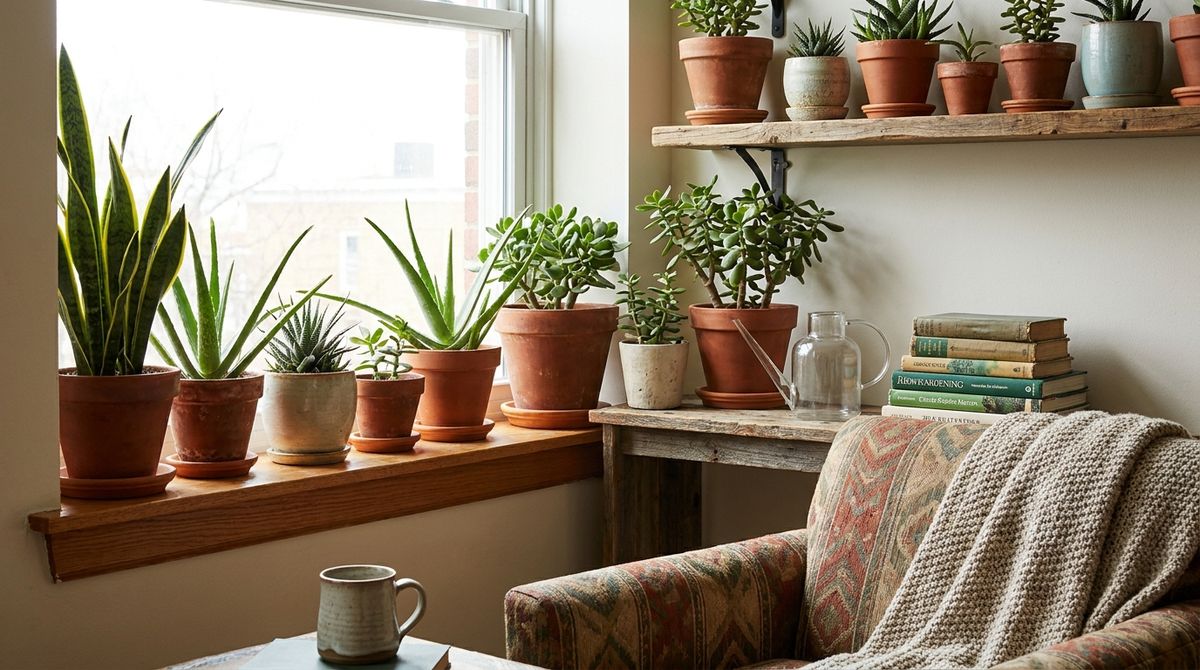
Jade plant has thick, coin-like leaves and a woody trunk that gets more sculptural with age. NC State lists bright light with some afternoon shade, water only when the soil is dry, and less from fall to late winter. Its listed size is 3 to 6 ft tall and 2 to 3 ft wide, which indoors takes years. The ASPCA lists it as toxic to dogs and cats. A Costa Farms 4-inch jade in a decor pot was $19.99 at Walmart (snippet); The Sill’s small ‘Sunset’ jade is $39.
2. Aloe Vera
Aloe is a sculptural rosette that doubles as a small first-aid plant for kitchen burns. NC State says to let the soil dry completely between waterings, use very well-drained succulent soil, and water less in winter. It grows about 1 to 2 ft tall and 1 to 2.5 ft wide. The ASPCA lists it as toxic to dogs and cats. A price guide listed a Costa Farms 4-inch aloe at $13.97 at Home Depot (snippet); The Sill’s medium aloe is $49.
3. Zebra Haworthia (Haworthia fasciata)
Haworthia is a palm-sized rosette with white stripes, which makes it the easiest succulent for a desk or bathroom shelf. NC State lists bright indirect light with tolerance of low light, and says to let the soil dry out completely. It stays 4 to 6 inches tall and about as wide. The ASPCA lists it as non-toxic. A 2.5-inch plant was $8.99 at Walmart from a third-party seller (snippet).
4. Echeveria
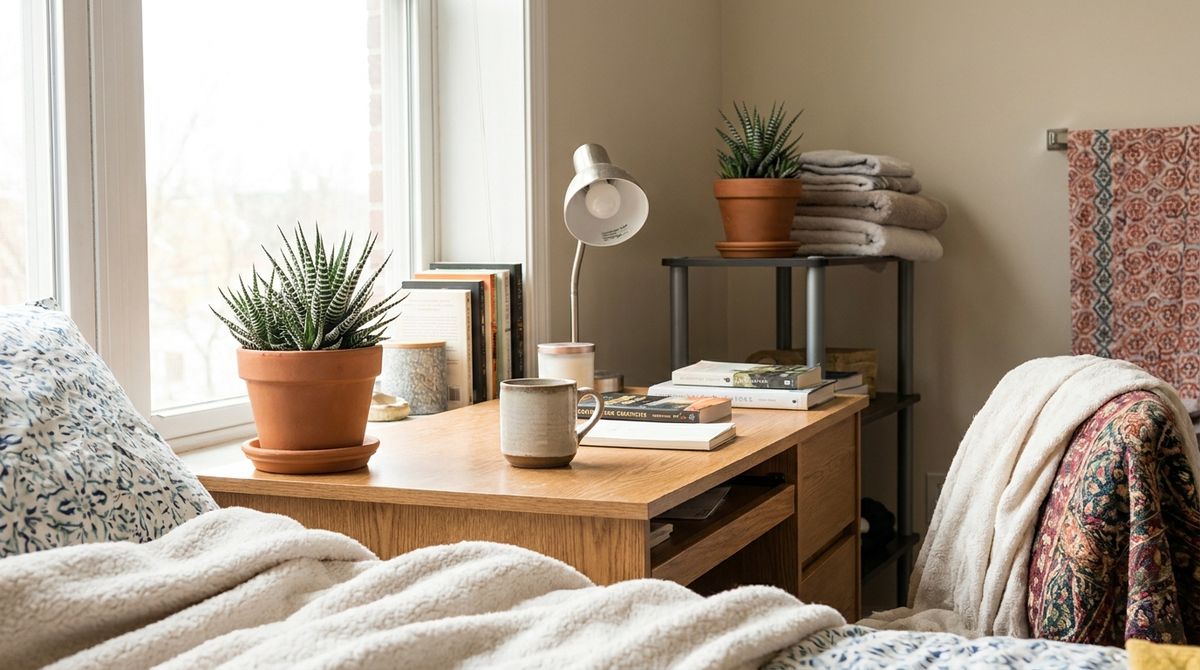
Echeveria forms a tight, rose-shaped rosette in gray, blue or pink, so a few of them fill a windowsill tray. NC State lists full sun to partial shade, drought tolerance, soil that stays dry and well drained, and a footprint under 12 inches. Low light makes it stretch, so give it your sunniest sill. The ASPCA lists hens and chickens (Echeveria elegans) as non-toxic. The Sill lists ‘Garotto’ echeveria at $59.
5. Burro’s Tail (Sedum morganianum)
Burro’s tail trails with plump, braided stems, which makes it a hanging-basket succulent for a bright window. NC State lists full sun to partial shade, dry-down watering, and stems that reach about 2 ft. The leaves drop easily, so hang it where no one brushes it. The ASPCA lists it as non-toxic to dogs and cats. Home Depot listed a 6-inch hanging plant at $27.18 and Walmart a single plant at $7.99 (snippets).
Easy Plants for Bright Windows
These four like a bright spot but are fine with a measured watering routine. Two of them bloom.
6. Ponytail Palm (Beaucarnea recurvata)
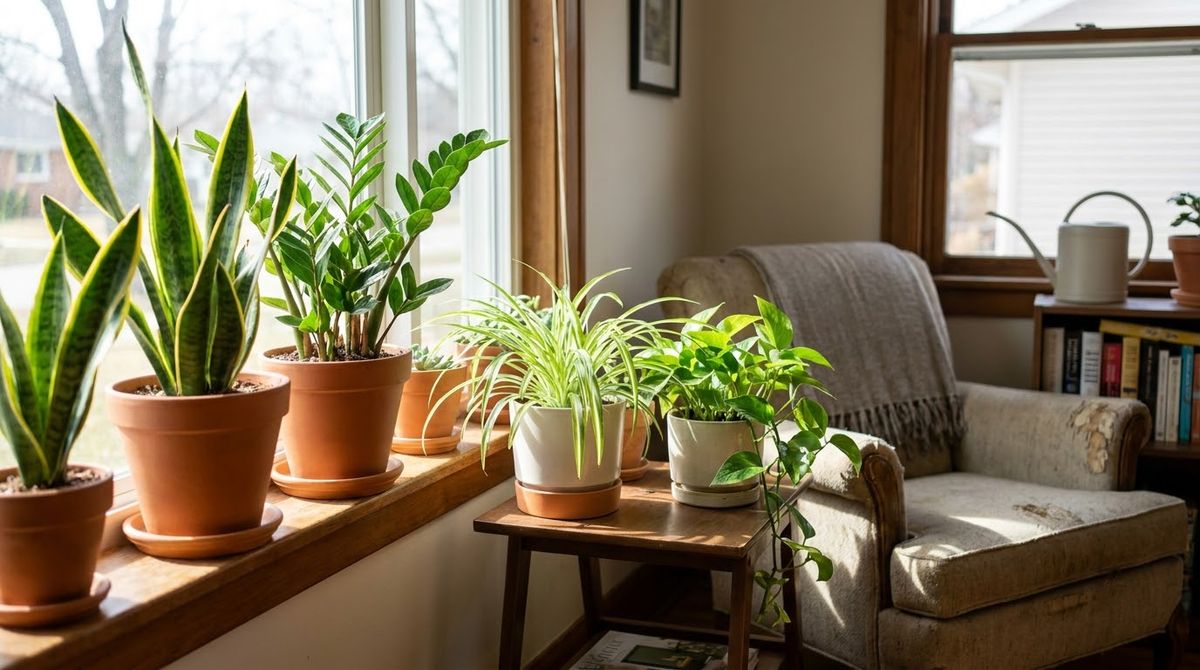
Ponytail palm has a swollen trunk that stores water and a fountain of narrow leaves, so it tolerates being forgotten for weeks. NC State lists full sun, deep summer watering with dry-down in between, and greatly reduced water in winter. It is slow-growing and listed at 6 to 8 ft in the landscape. The ASPCA lists it as non-toxic. Walmart listed a 15-inch Costa Farms plant at $21.23 (snippet); The Sill’s small plant is $59.
7. Kalanchoe
Kalanchoe has thick, scalloped leaves and long-lasting clusters of small flowers, which gives a windowsill color for weeks. NC State lists bright indirect sun, drought tolerance, a cactus-type mix and 6 to 18 inches tall; it needs 6 to 8 hours of bright light to bloom. The listing calls all parts toxic to pets, and the ASPCA agrees. The Sill lists ‘Flapjack’ kalanchoe at $38.
8. Christmas Cactus (Schlumbergera)
Christmas cactus drapes jointed, leafy stems and blooms in winter, so it is the one succulent-style plant that likes some moisture. NC State lists partial shade, soil kept moist but well drained, and 9 to 12 inches tall and 1 to 2 ft wide. Summer shade keeps stems from yellowing. The ASPCA lists it as safe for dogs and cats. The Sill sells a hanging basket at $54.
9. Guzmania Bromeliad
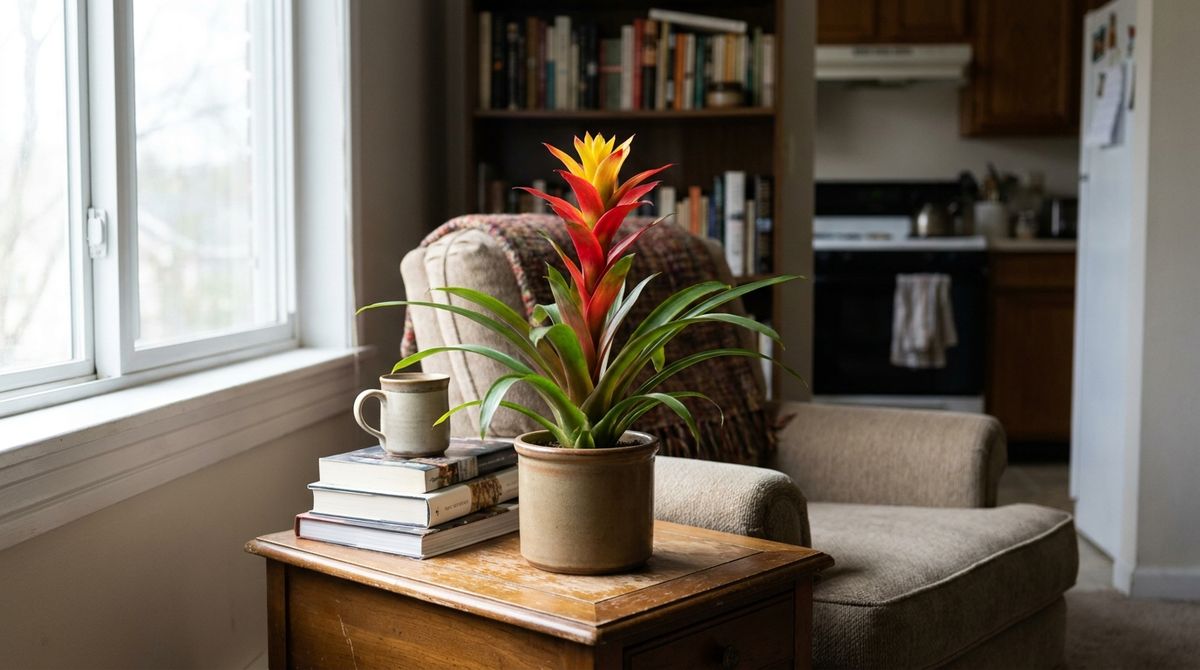
Guzmania forms a rosette of strappy leaves with a long-lasting red, orange or yellow bloom spike, so it reads as a flower arrangement. NC State lists part to full shade, water kept in the center cup of the rosette, orchid-style mix, and 1 to 2 ft tall. The ASPCA lists the orange star guzmania as non-toxic. The Sill lists ‘Marsha’ at $49.
Trailing and Climbing Plants
Trailing plants work off the floor, so they suit small apartments and shelves. Both of these tolerate a missed watering.
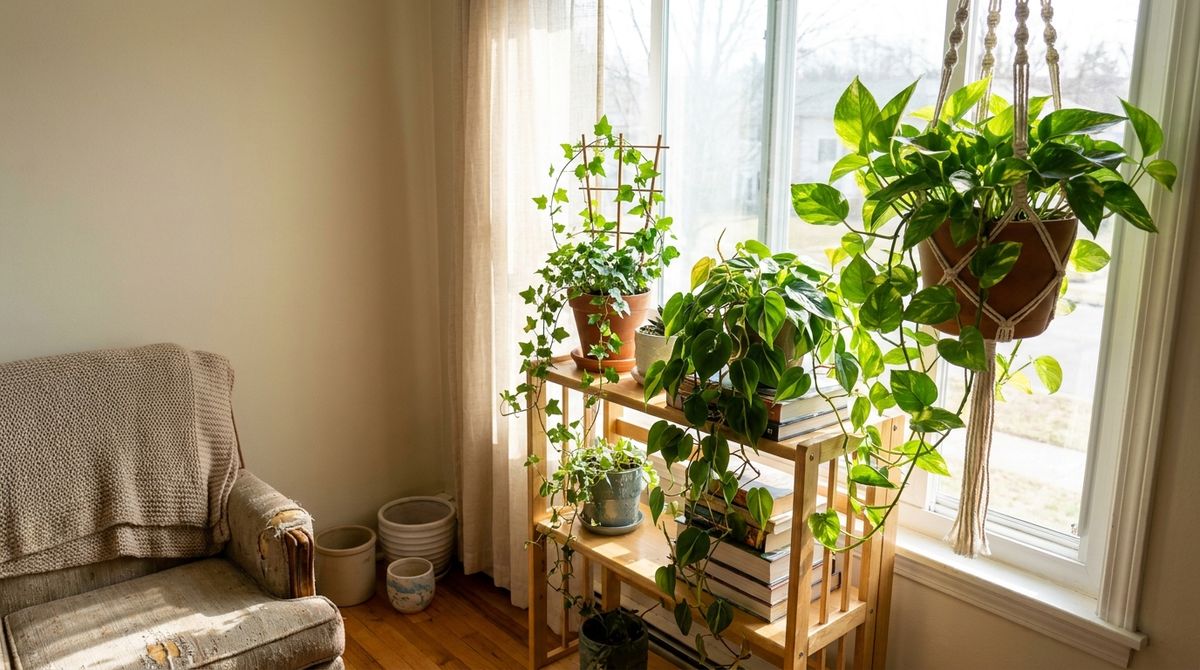
10. Hoya Carnosa (Wax Plant)
Hoya has waxy, thick leaves and a slow, climbing habit, so it fills a trellis or a hanging basket without much fuss. NC State says bright indirect light year-round is ideal and to allow the soil to dry between waterings; leaf drop comes from soil that is too wet or too dry. The ASPCA lists wax plant as non-toxic. The Sill lists a small ‘Tricolor’ hoya at $59.
11. Swedish Ivy (Plectranthus australis)
Swedish ivy has scalloped, glossy leaves and trails fast, so it is a cheap way to fill a high shelf. NC State lists dappled sun or partial shade, moist well-drained soil, less water in winter, tolerance of occasional dryness, and 2 to 3 ft tall by 2 to 4 ft wide. The ASPCA lists it as safe for dogs and cats. Walmart listed 2.5-inch plants at about $8.99 (snippet).
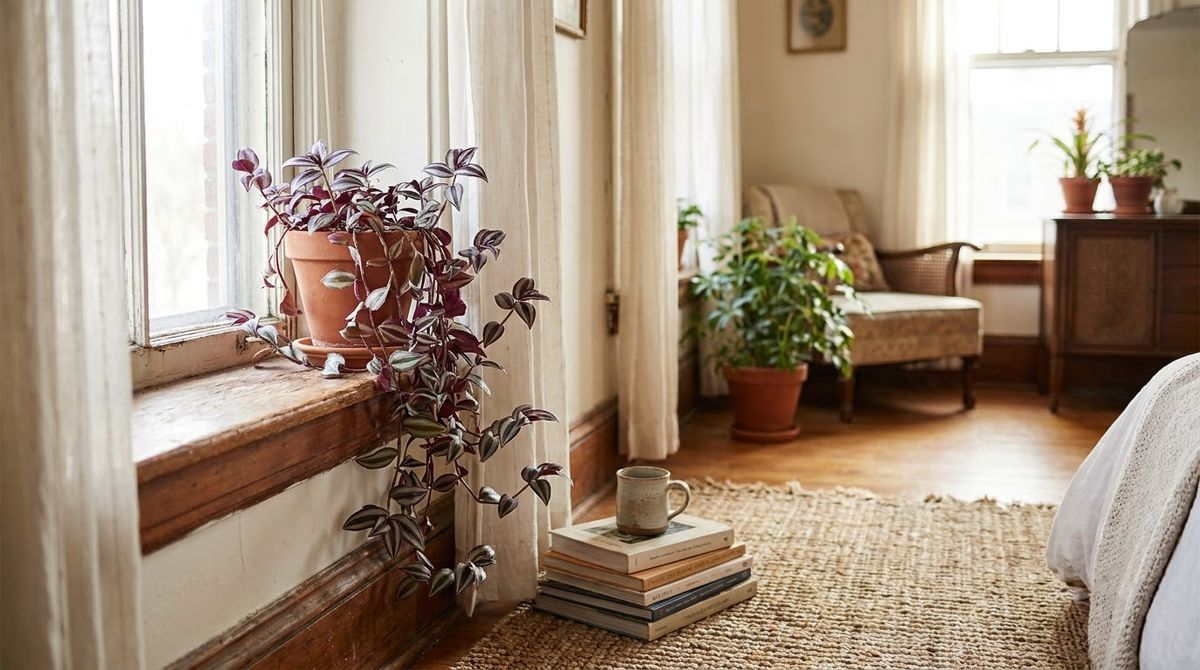
12. Zebra Tradescantia (Tradescantia zebrina)
Zebra tradescantia has purple and silver striped leaves, which gives a trailing plant real color in a bright window. NC State lists filtered sun, regular watering with the top of the soil drying between, and 6 to 9 inches tall by 1 to 2 ft wide. The ASPCA lists the related inch plant as toxic with skin irritation. The Sill sells a small plant at $48.
Statement Plants for the Floor
A tall plant does the work of a piece of furniture. These six cost more up front but need little once placed.
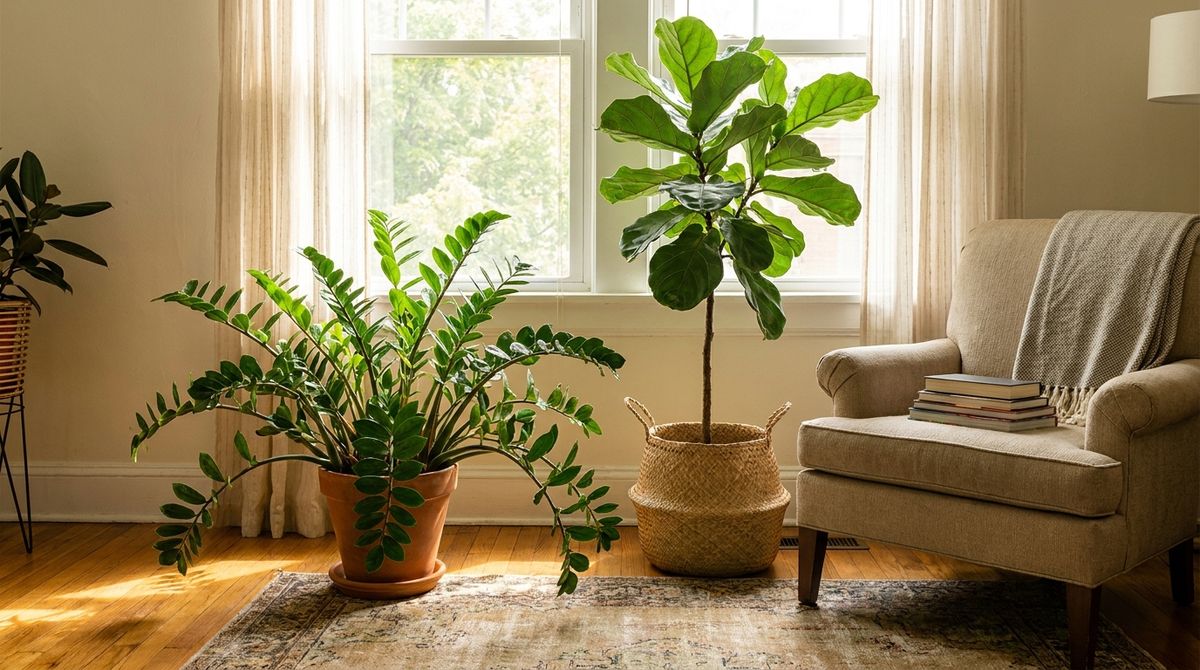
13. Monstera Deliciosa
Monstera has big split leaves that make one plant a room’s focal point. NC State lists moderate brightness without direct sun, thorough watering then letting the top quarter to third of the soil dry, and usually 6 to 8 ft indoors. A moss pole keeps it upright. The ASPCA lists it as toxic to dogs and cats. Costa Farms’ 24 to 38 inch plant was listed between $36.99 and $59.97 at Walmart (snippet); The Sill’s medium plant is $69.
14. Money Tree (Pachira aquatica)
Money tree has a braided trunk and glossy leaves, so it looks tidy in a corner. NC State lists partial shade with indirect light, soil kept moist but well drained, and 6 to 8 ft as a houseplant. Standing water causes root rot. The ASPCA lists it as non-toxic to dogs and cats. The Sill sells a small 12 to 16 inch plant at $39; another brand’s 14-inch plant was $14.97 at Walmart (snippet).
15. Corn Plant (Dracaena fragrans)
Corn plant has a woody cane and a head of arching leaves, so it works like a small indoor tree. NC State lists bright to moderate filtered light, moist but well-drained soil, less water in winter, and use of non-fluoridated water because leaf tips burn. It is toxic to cats and dogs per the ASPCA. The Sill sells a small 8 to 12 inch ‘Sol’ at $39.
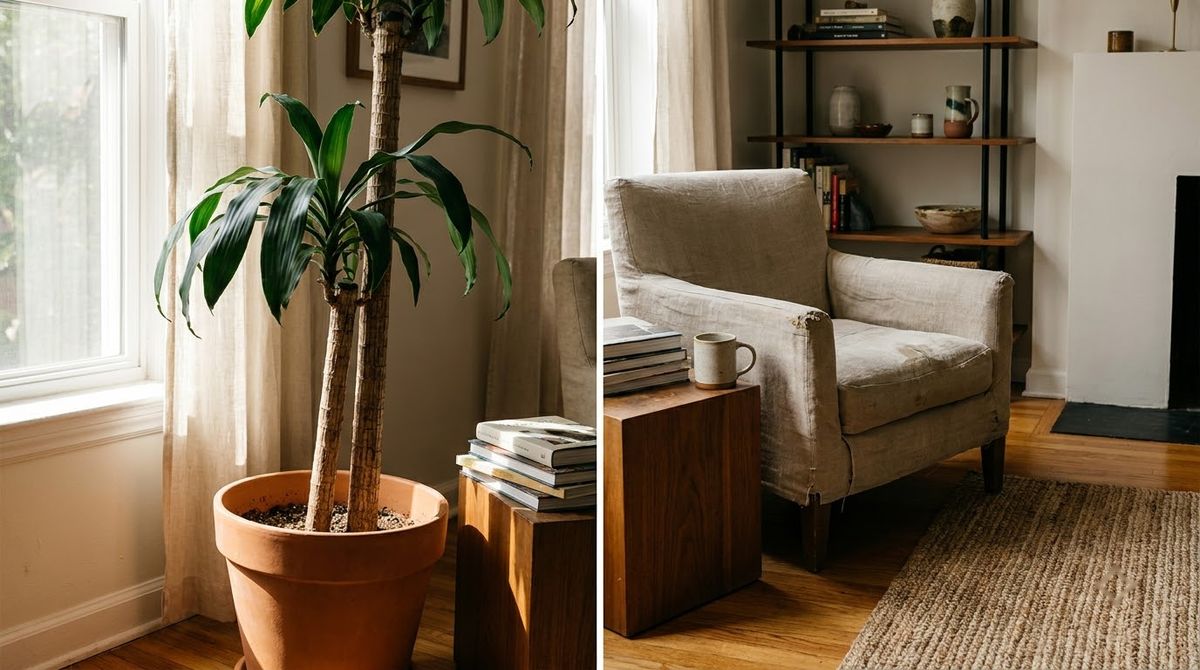
16. Dragon Tree (Dracaena marginata)
Dragon tree has thin red-edged leaves on slim, curving stems, so it adds height without bulk. NC State lists bright indirect light, soil that dries between waterings but not severely, non-fluoridated water, and about 6 ft as a houseplant. The ASPCA’s Dracaena listing marks the genus toxic to dogs and cats. The Sill lists a 2 to 3 ft dragon tree at $149.
17. Lady Palm (Rhapis excelsa)
Lady palm grows as a clump of fan-shaped leaves on thin stems, so it fills a corner with a dense, bamboo-like screen. NC State lists tolerance of deep shade, indirect light indoors, regular watering except in winter, and a slow 4 to 12 ft by 6 to 15 ft in the ground. The ASPCA lists it as non-toxic. The Sill sells a 3 to 4 ft plant at $79.
18. Dieffenbachia (Dumb Cane)
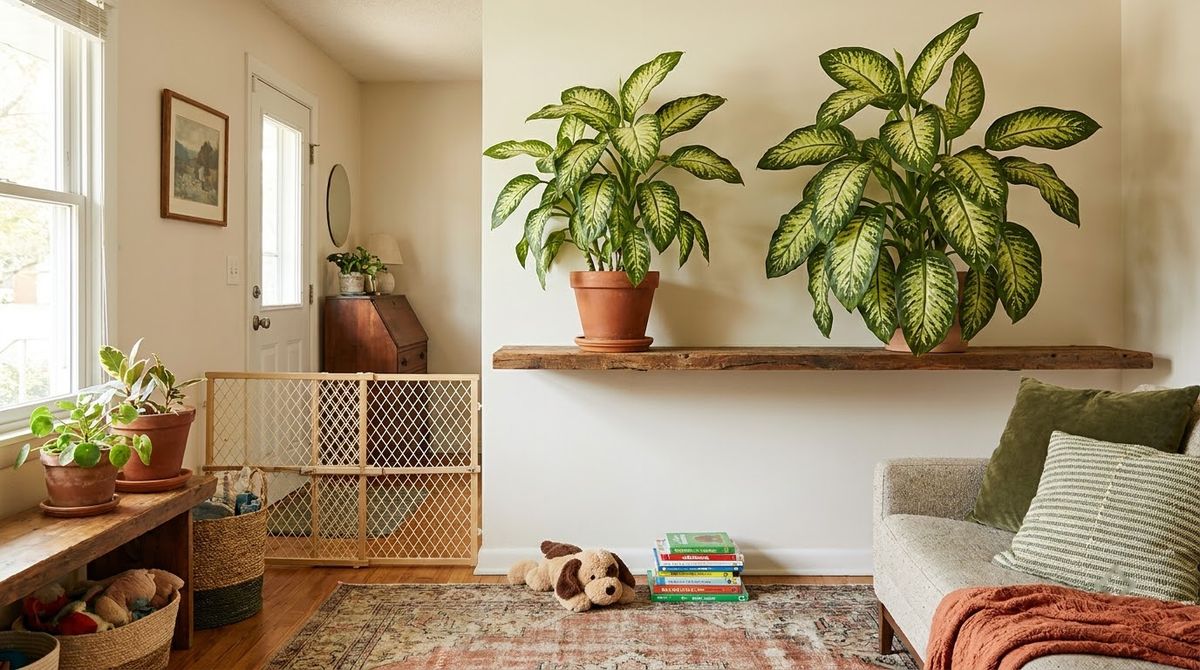
Dieffenbachia has broad cream-and-green leaves that brighten a corner, but it is the one plant on this list to keep away from pets and children. NC State lists partial shade, thorough watering with the top 1 inch drying between, and 3 to 8 ft tall; all parts contain calcium oxalate. The ASPCA lists it as toxic to dogs and cats. The Sill lists ‘Star Bright’ at $44.
Quick Care Reference
| Plant | Light | Water rule | Pet-safe (ASPCA) | Starter price |
|---|---|---|---|---|
| Jade plant | Bright | Dry fully | No | $19.99-$39 |
| Aloe vera | Full sun to part shade | Dry fully | No | $13.97-$49 |
| Haworthia | Bright, low tolerated | Dry fully | Yes | $8.99 |
| Ponytail palm | Full sun | Deep, then dry | Yes | $21.23-$59 |
| Hoya | Bright indirect | Dry between | Yes | $59 |
| Monstera | Moderate, no direct sun | Top third dry | No | $36.99-$69 |
| Money tree | Partial shade | Keep moist, drained | Yes | $14.97-$39 |
| Lady palm | Shade tolerant | Regular, less in winter | Yes | $79 |
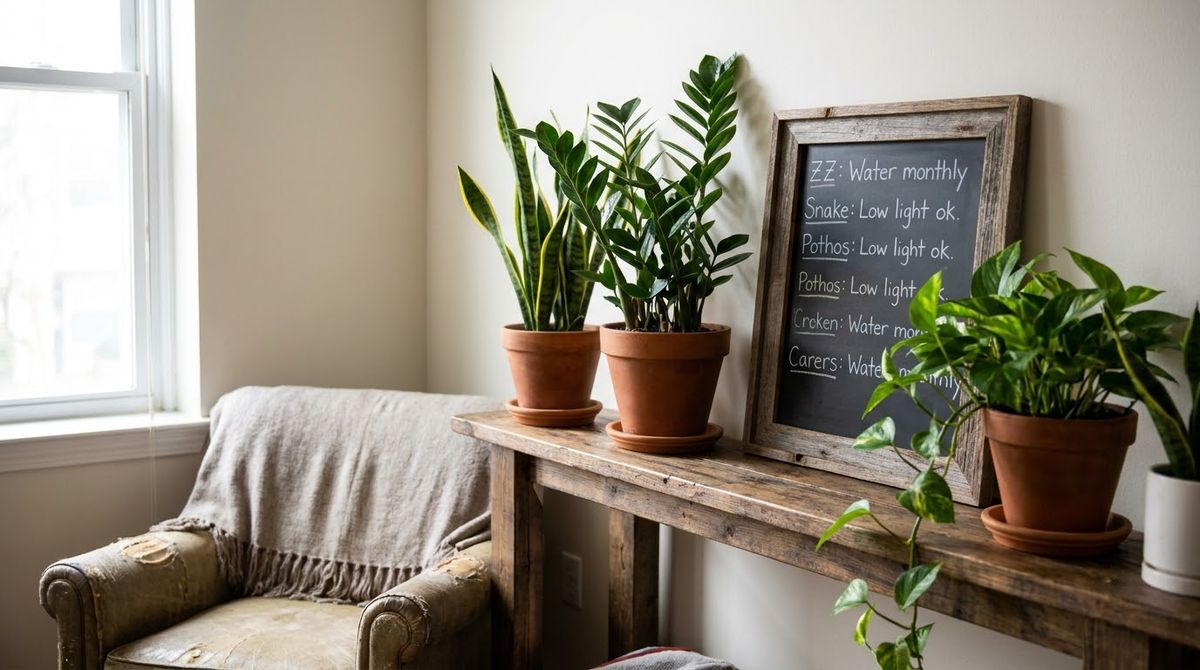
Two rules cover most of the list. Water by the soil, not the calendar, and use a pot with a drainage hole. Terracotta dries faster than glazed ceramic, which helps the succulents.
For ideas on arranging plants once you have them, see plant shelf and corner ideas, indoor plant styling and hanging plant ideas. Small homes are covered in small apartment plants, and plants by room are in bedroom plants and bathroom plants.
Frequently Asked Questions
What is the easiest indoor plant to keep alive?
Among the plants here, haworthia, jade and ponytail palm are the most forgiving because they store water. All three want soil to dry out between waterings. For dim rooms, the ZZ plant and snake plant are easier, and they are in our low-light guide.
What indoor plant needs the least light?
None of the 18 plants here is a true low-light plant. Haworthia and the Christmas cactus tolerate partial shade, and the lady palm tolerates deep shade. For north windows and dark corners, use the plants in our low-light guide.
How often should I water low-maintenance plants?
Water by the soil, not a calendar. Succulents, jade, aloe and ponytail palm want the soil dry before the next drink and much less water in winter. Hoya and monstera want the top layer dry. Swedish ivy, money tree and Christmas cactus prefer soil that stays slightly moist.
Which low-maintenance plants are safe for cats and dogs?
Per the ASPCA, haworthia, echeveria, burro’s tail, ponytail palm, Christmas cactus, guzmania, hoya, Swedish ivy, money tree and lady palm are non-toxic. Jade, aloe, kalanchoe, monstera, corn plant, dragon tree, tradescantia and dieffenbachia are toxic.
Do indoor plants really clean the air?
Claims that houseplants purify a home are overstated, and we do not cite a figure for them here. Buy plants for how they look and feel in a room. We cover what research supports in indoor plants that clean air.
How do I know if a window has enough light for a plant?
Check the window direction and look at the sun on the sill. Succulents, jade, aloe and ponytail palm need a bright or sunny sill. Monstera and dracaena do better in bright light with no direct sun on the leaves. If new growth is pale or stretched, move the plant closer to the glass.
Start With Three
You do not need all 18. Pick one succulent for the sunniest sill, one trailing plant for a shelf and one floor plant for a corner. Check pet safety first, then size, then price.
Prices checked October 2026.