
The best low-light indoor plant is the ZZ plant, which sells from about $20 to $39 and survives a north window with a drink roughly once or twice a month. Below are 20 plants for dim rooms, each with a light rule, a watering rule, pet safety checked against the ASPCA list, a mature size and a real price.
Key Takeaways
- “Low light” means a bright room with no direct sun on the leaves, such as a north window or a spot several feet back from an east or west window. It does not mean a windowless closet.
- ZZ plant, snake plant and cast iron plant are the toughest picks; all three want soil to dry out between waterings.
- Overwatering is the main risk in dim rooms, because slow-growing plants use water slowly.
- Pet owners: cast iron plant, parlor palm, calathea, prayer plant, nerve plant, peperomia, Boston fern and spider plant are non-toxic on the ASPCA list. ZZ, snake plant, pothos and peace lily are not.
- Most starter sizes run about $13 to $59, though a few large plants cost more.
Near-Unkillable Picks for the Darkest Corners
These six handle the least light and the most neglect. Start here if the room has one small north window or sits far from the glass.
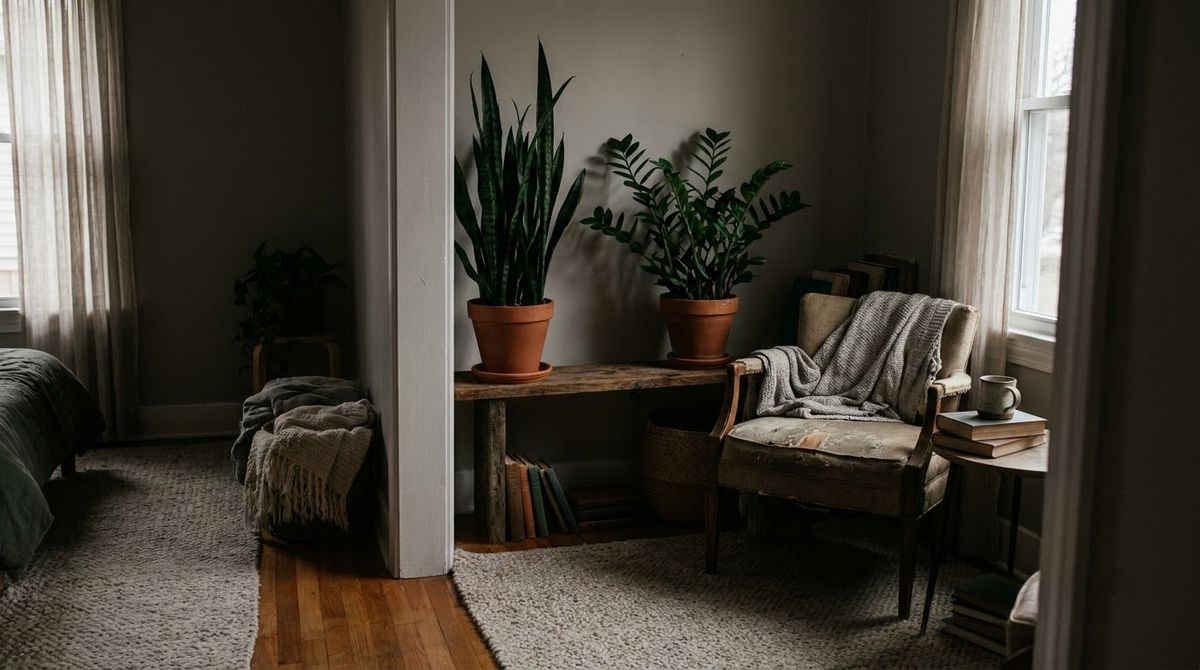
1. ZZ Plant (Zamioculcas zamiifolia)
The ZZ plant stores water in thick rhizomes, so missed waterings do little harm. NC State Extension says it prefers bright indirect light but tolerates low light, and it suggests watering about monthly in winter and up to twice monthly in summer, only once soil is fully dry. It reaches 2 to 4 ft tall and wide. A university extension answer calls it toxic to cats and dogs. The Sill sells a small 9 to 12 inch plant from $39; Walmart listed a Costa Farms 12-inch ZZ near $20 (snippet).
2. Snake Plant (Dracaena trifasciata)
Snake plant leaves are upright and narrow, so one plant fits a 6-inch footprint beside a door or dresser. NC State lists it as tolerating very low light, with water only between full dry-downs and every 1 to 2 months in winter. The ASPCA lists it as toxic to dogs and cats. Costa Farms’ 12-inch laurentii was about $21 at Walmart (snippet); The Sill’s small laurentii is $59.
3. Cast Iron Plant (Aspidistra elatior)
Cast iron plant is one of the few true shade plants, and it is pet-safe. NC State lists partial to full shade, drought tolerance, and no tolerance for direct sun. It grows 1 to 3 ft tall and wide, slowly, so it suits a floor corner you will not rearrange. The ASPCA lists it as non-toxic to dogs and cats. The Sill lists a variegated one-gallon plant at $59 and a large 2 to 3 ft plant at $129.
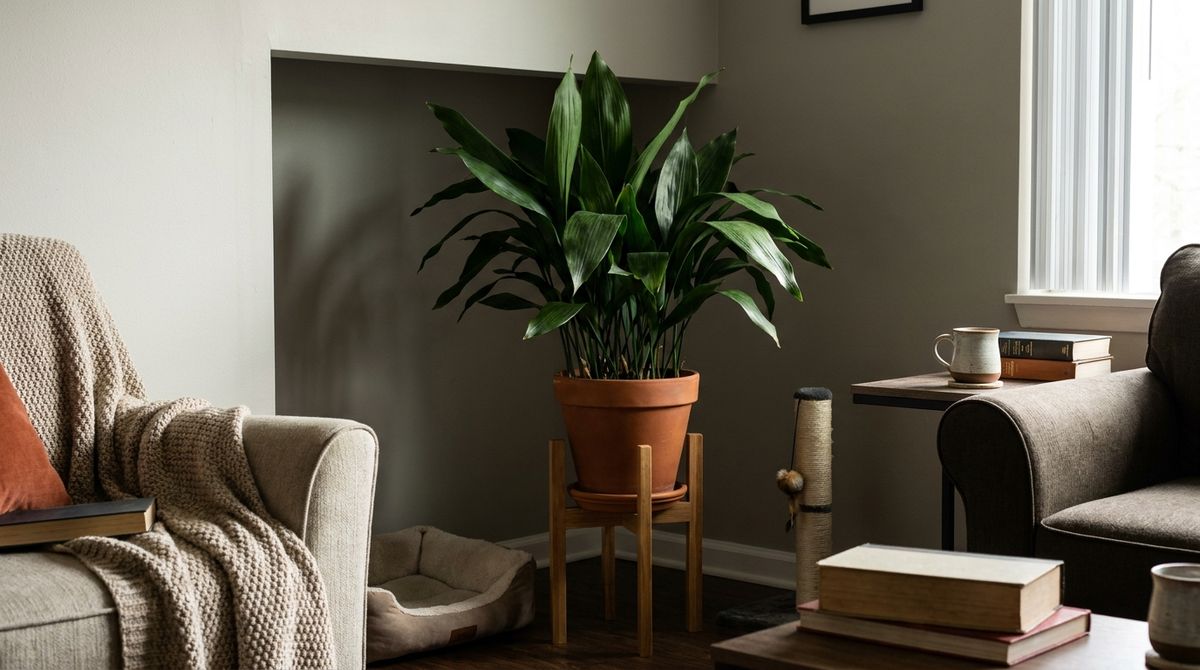
4. Golden Pothos (Epipremnum aureum)
Pothos vines can run to roughly 40 ft in the ground, but indoors a single pot is easy to trim and to hang from a high shelf. NC State says it prefers bright indirect light and tolerates low light for long periods, though variegation fades in dim spots. Let the mix dry between waterings. The ASPCA lists it as toxic to dogs and cats. Home Depot listed a Costa Farms 6-inch pot at $20.99 (snippet).
5. Heartleaf Philodendron (Philodendron hederaceum)
Heartleaf philodendron has heart-shaped leaves and climbs a small moss pole or trails from a shelf edge. NC State lists medium light as best, low light as tolerated, and slightly moist soil with water cut back in winter. The ASPCA lists it as toxic to dogs and cats. The Sill sells a small 3 to 6 inch plant at $49, and a hanging basket at $59.
6. Chinese Evergreen (Aglaonema)
Chinese evergreen comes in silver, pink and deep green leaves, which is why it is the pattern plant of dim rooms. Clemson Extension says solid green types tolerate low light while variegated types need low to moderate light, and to water when the top 1 to 2 inches are dry. It grows 1 to 3 ft tall and wide. It is toxic to pets per the ASPCA. The Sill lists medium ‘Silver Bay’ at $49.
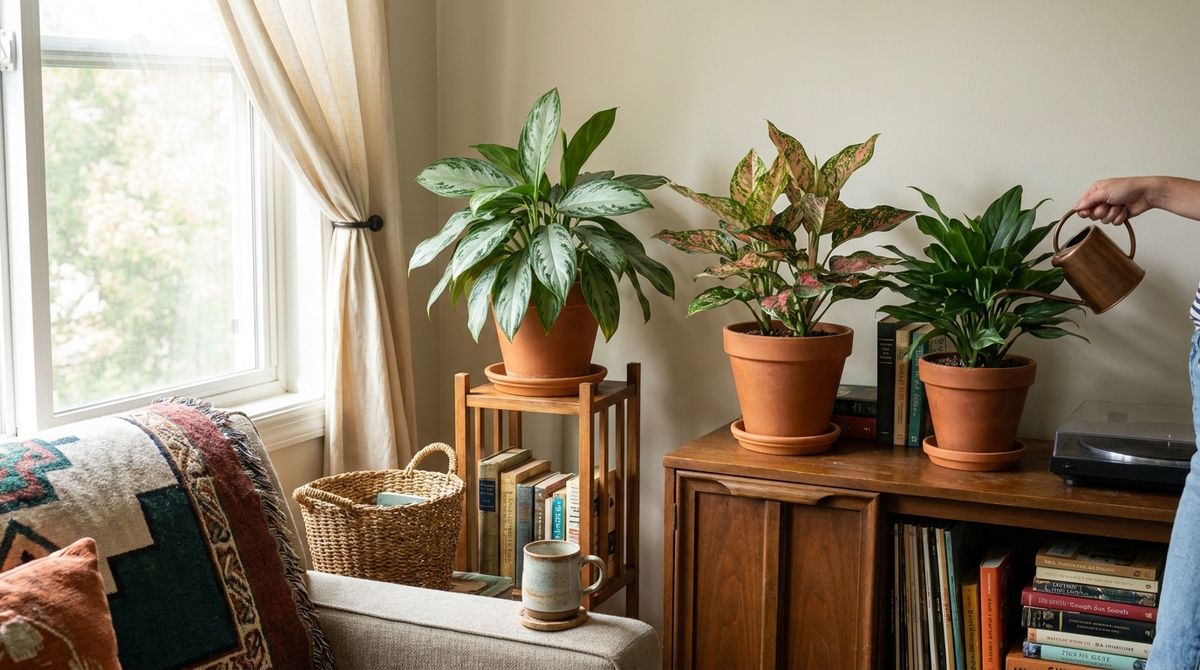
Floor Plants That Fill a Dim Corner
When the corner is bare floor, a tall plant does more than three small ones. These four reach knee to ceiling height.
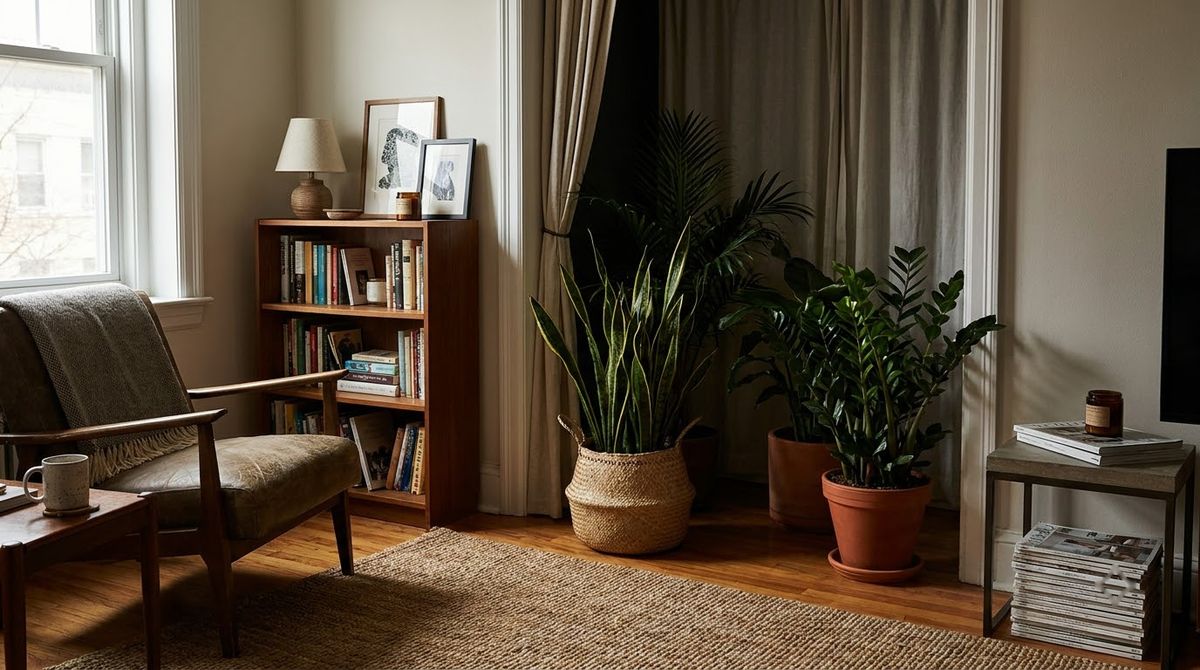
7. Janet Craig Dracaena (Dracaena deremensis)
Janet Craig has dark, strap-shaped leaves and a cane trunk, so it reads as a small tree in a corner. NC State lists bright to moderate filtered light, with narrower leaves in low light, and 3 to 14.5 ft tall. It is sensitive to fluoride and salts, so flush the pot monthly. The ASPCA’s Dracaena listing marks it toxic to dogs and cats. Home Depot listed a 4-inch pot at $19.99 and a 6-inch at $36.99 (snippet).
8. Peace Lily (Spathiphyllum)
Peace lily is one of the few dim-room plants that flowers, and it droops visibly when thirsty, which makes watering easy to time. NC State lists partial to deep shade, no direct sun, and about 3 ft tall and wide indoors. Keep soil moist but not soggy and let it dry slightly between waterings. NC State lists it as a problem for cats, dogs and children. The Sill lists a medium 15 to 19 inch plant at $59.
9. Parlor Palm (Chamaedorea elegans)
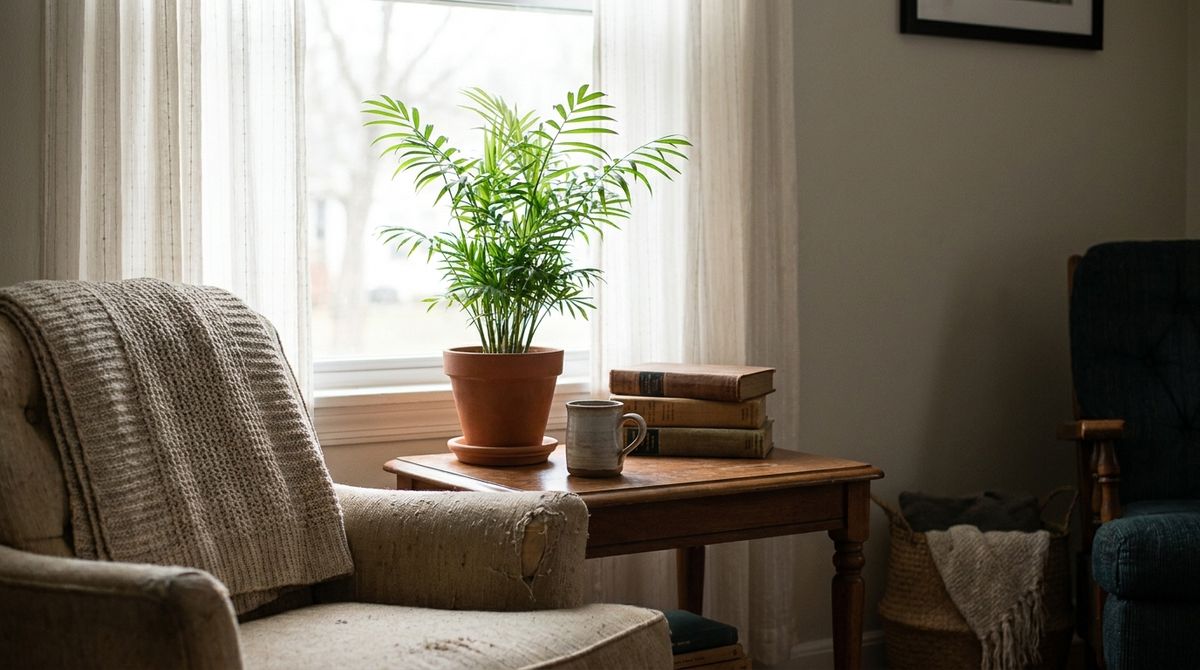
Parlor palm is a soft, feathery palm that stays small enough for a desk or side table. NC State lists bright indirect light but tolerance of low light, with a north or east window working well, and up to about 5 ft indoors. Let the top soil dry slightly between waterings. The ASPCA lists it as safe for dogs and cats. The Sill sells a small 6 to 11 inch plant at $59.
10. Kentia Palm (Howea forsteriana)
Kentia is the slow, graceful floor palm that costs more per inch but looks like a design-store plant. NC State lists moderate indoor light, soil that never fully dries, and fronds that reach 10 to 12 ft in the ground, so indoor plants stay far smaller but are still wide. The ASPCA lists it as non-toxic. Walmart listed a 4-inch grower pot at $28.78 (snippet).
Pattern and Color Without Much Light
Leaf pattern is how a dim room avoids looking flat. These six trade bulk for stripes, veins and flowers.
11. Calathea (Goeppertia)
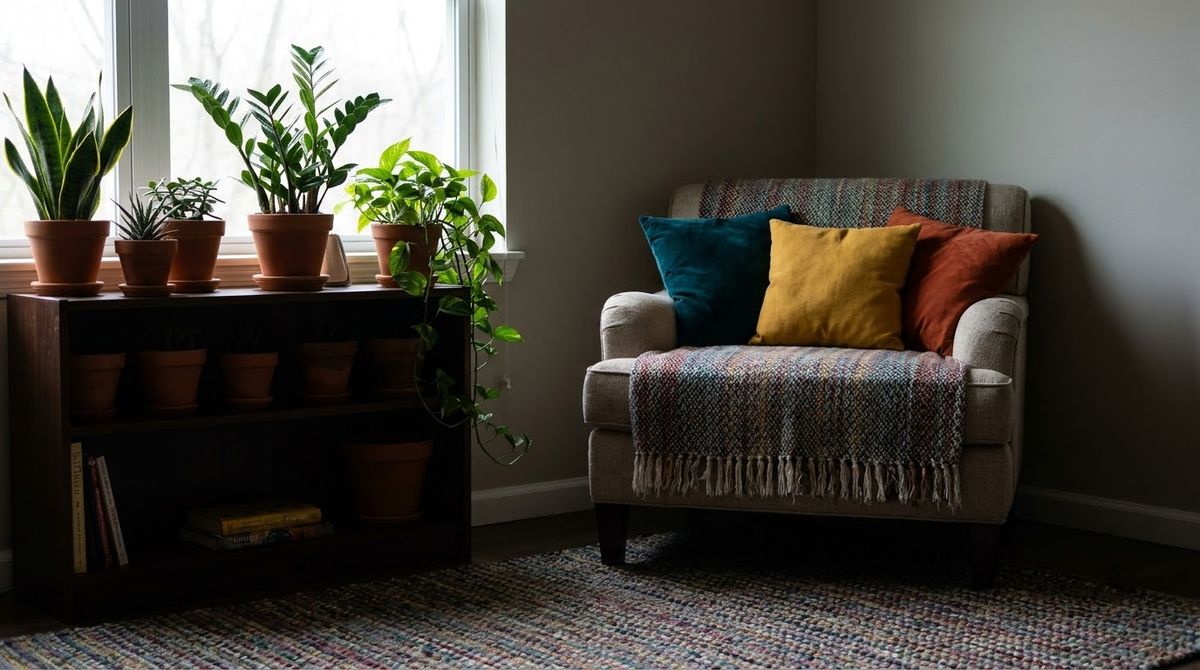
Calathea (peacock and rattlesnake types) has long, wavy leaves with bold stripes or spots. NC State lists partial shade, consistently moist but never soggy soil, and 1 to 2 ft tall and 8 to 12 inches wide for peacock calathea; it warns that direct sun scorches leaves. The ASPCA lists calathea as non-toxic to dogs and cats. The Sill lists a small rattlesnake calathea at $39.
12. Prayer Plant (Maranta leuconeura)
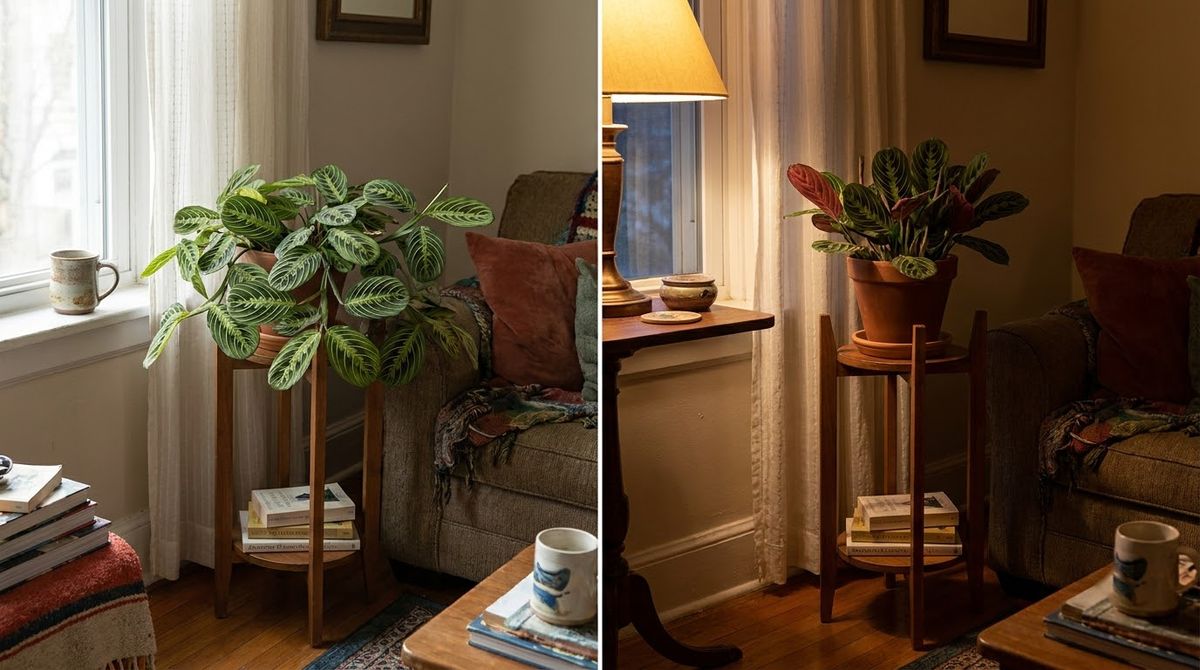
Prayer plant leaves fold upward at night, so the plant looks different morning and evening. NC State lists bright indirect light, tolerance of low to medium light, evenly moist soil and high humidity, and a 6 inch to 1 ft height. The ASPCA lists it as non-toxic. It is compact enough for a bookshelf. The Sill lists a small silver maranta at $39.
13. Nerve Plant (Fittonia)
Nerve plant is a 3 to 8 inch ground-hugging plant with white, pink or red veins, so it fits a terrarium or a bathroom shelf. NC State says it wants bright to medium indirect light and soil kept evenly moist, and it wilts sharply when dry. The ASPCA lists it as non-toxic. Home Depot listed a 4-inch plant at $40.74 (snippet), so check garden centers for lower prices.
14. Aluminum Plant (Pilea cadierei)
Aluminum plant has quilted green leaves with silver patches, which catch the little light a dim room has. NC State lists bright indirect light, moderate watering in the growing season and less from fall to late winter, and 6 to 12 inches tall and 6 to 9 inches wide. The ASPCA lists it as non-toxic. Spokane Plant Farm listed a 6-inch plant at $19.99 (snippet).
15. Peperomia (Peperomia obtusifolia)
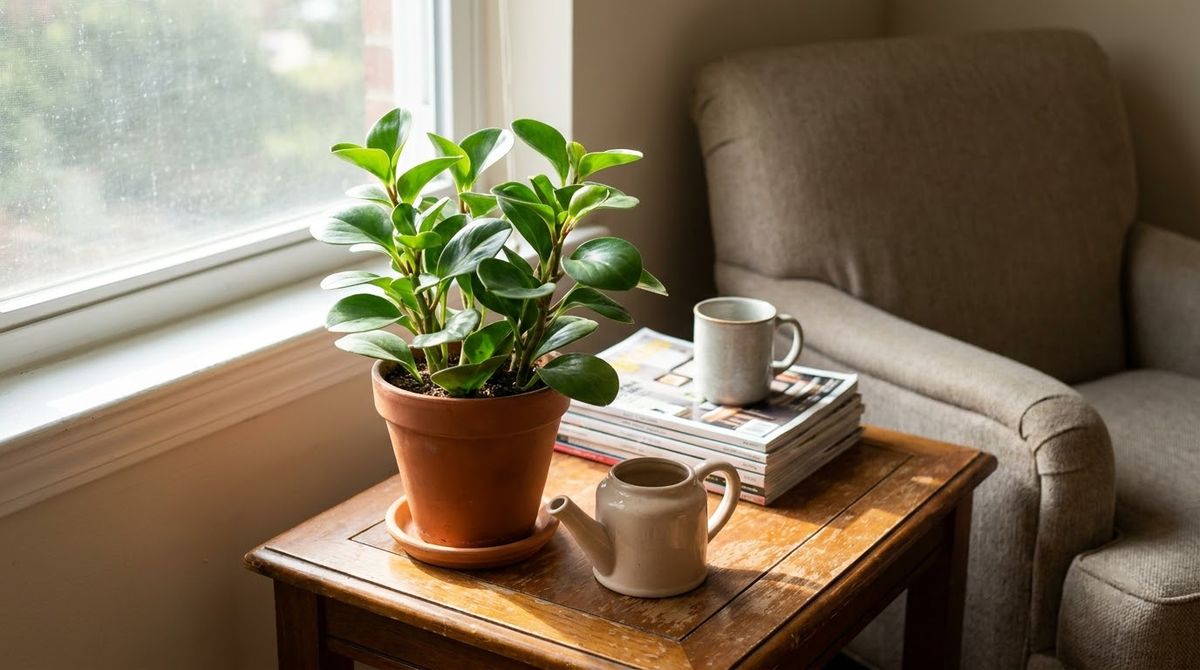
Peperomia has thick, glossy leaves that store water, so it forgives a late watering. NC State lists bright indirect light with tolerance of low light for months, dry soil preferred, and 6 inches to 2 ft tall and wide. Its main problem is overwatering. The ASPCA lists peperomia as non-toxic to dogs and cats. The Sill lists a small ‘Obtipan Green’ peperomia at $49.
16. Arrowhead Plant (Syngonium podophyllum)
Arrowhead plant starts as a compact bush and becomes a trailing or climbing vine, so you can train it or cut it back. NC State lists dappled light, moist soil, and 3 to 6 ft tall. Pink varieties keep their color better with more light. The ASPCA lists it as toxic to dogs and cats. The Sill sells a small pink arrowhead at $39.
Ferns and Trailers for Shelves and Hangers
Moisture-loving ferns and trailers work off the floor, where a bathroom or hanging basket can supply the humidity they want.
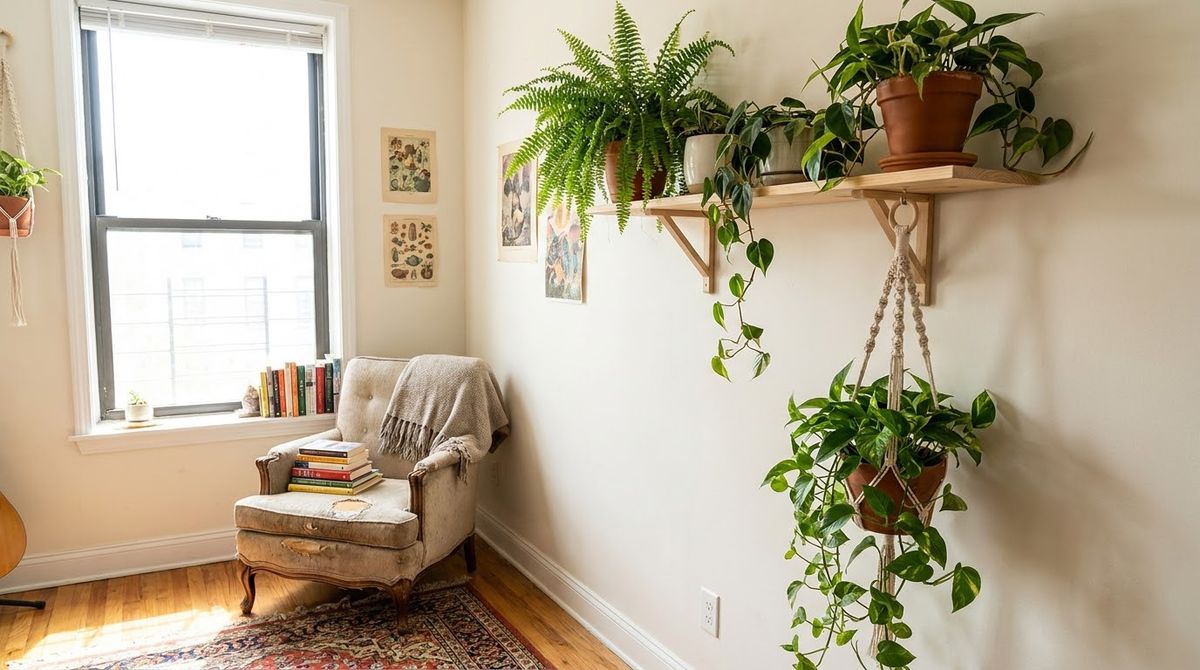
17. Boston Fern (Nephrolepis exaltata)
Boston fern makes a full arching shape in a hanging basket or on a pedestal. NC State lists bright indirect light, soil kept moist and never dry, and 2 to 3 ft tall and wide. Dry indoor air crisps the fronds, so a bathroom helps. The ASPCA lists it as non-toxic. The Sill lists a large Boston fern hanging basket at $79.
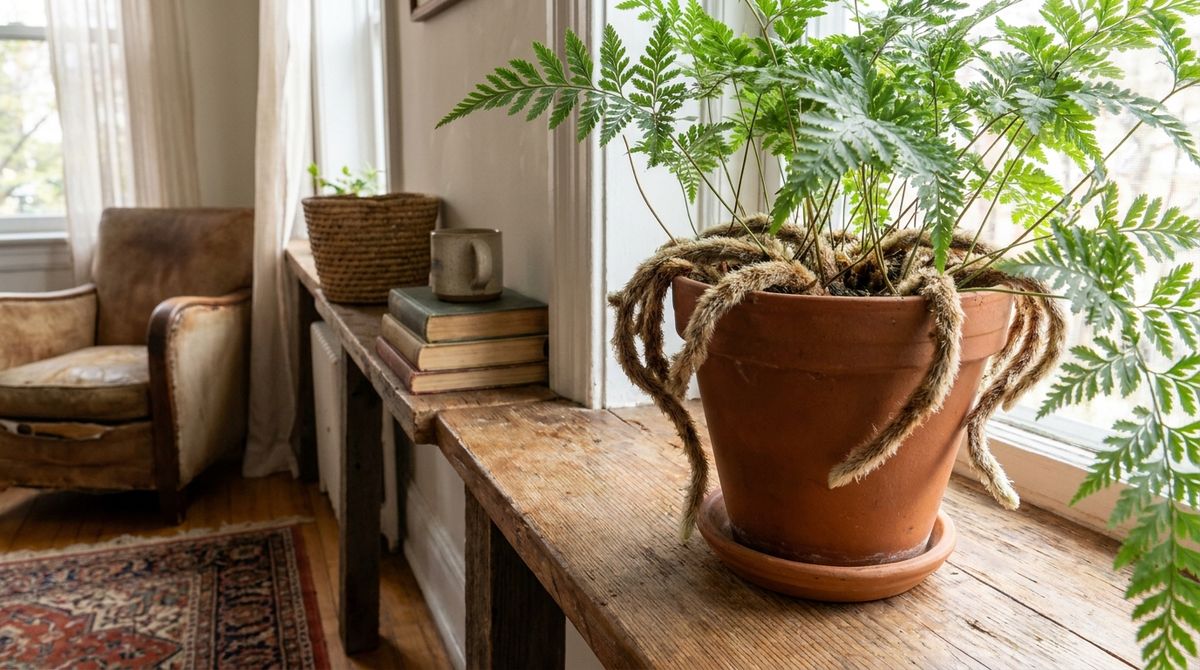
18. Rabbit’s Foot Fern (Davallia)
Rabbit’s foot fern has fuzzy rhizomes that creep over the pot edge, so it looks sculptural even before the fronds fill in. NC State lists dappled or partial shade, potting mix kept moist with the top half inch drying between waterings, and fronds 18 to 24 inches long. The ASPCA lists Davallia as non-toxic. Walmart listed a 4-inch white rabbit’s foot fern at $12.99 (snippet).
19. English Ivy (Hedera helix)
English ivy is a classic trailer for a shelf or a curtain rod, so hang it above pet reach. NC State lists a wide light range from full sun to deep shade and drought tolerance, which makes it forgiving of a dim spot. The ASPCA lists it as toxic to dogs and cats. The Sill sells an English ivy hanging basket at $59.
20. Spider Plant (Chlorophytum comosum)
Spider plant sends out arching stems with baby plants you can pot up for free. NC State lists medium light or dappled shade, moist soil, tolerance of drought, and 1 to 1.5 ft tall and 1 to 2 ft wide. Use non-tap water if the leaf tips brown. The ASPCA lists it as non-toxic. The Sill lists a small spider plant at $59.
Low-Light Plant Quick Reference
| Plant | Light | Water rule | Pet-safe (ASPCA) | Starter price |
|---|---|---|---|---|
| ZZ plant | Low tolerated | Let dry fully | No | $20-$39 |
| Snake plant | Very low tolerated | Let dry fully | No | $21-$59 |
| Cast iron plant | Shade | Sparingly in winter | Yes | $59-$129 |
| Golden pothos | Low tolerated | Let dry between | No | $21-$59 |
| Parlor palm | Low tolerated | Top soil slightly dry | Yes | $59 |
| Spider plant | Medium | Keep moist | Yes | $59 |
| Boston fern | Bright indirect | Keep moist | Yes | $79 |
| Peperomia | Low tolerated | Mostly dry | Yes | $49 |
Mass retailers such as Walmart, Home Depot and Lowe’s often charge less than The Sill for the same plant, so compare pot sizes before you buy.
For more options sorted by every light level, see our low-maintenance indoor plants guide. Styling ideas live in plant shelf and corner ideas and indoor plant styling. Small spaces are covered in small apartment plants, and humidity lovers are in bathroom plants and bedroom plants.
Frequently Asked Questions
What plants grow in low light?
ZZ plant, snake plant, cast iron plant, pothos, parlor palm, peperomia and Chinese evergreen all tolerate low light. They do best in a bright room with no direct sun, such as a north window. The toughest ones need water only after the soil dries out completely.
Can plants survive with no natural light?
Not for long. Every plant needs light to photosynthesize, so a windowless room with no lamp will slowly starve even a ZZ plant. A full-spectrum LED bulb on a timer, placed near the plant, turns a windowless room into a usable spot.
Which low-light plants are safe for cats and dogs?
Per the ASPCA, cast iron plant, parlor palm, kentia palm, calathea, prayer plant, nerve plant, aluminum plant, peperomia, Boston fern, rabbit’s foot fern and spider plant are non-toxic. ZZ, snake plant, pothos, philodendron, peace lily, arrowhead, dracaena and English ivy are toxic.
How often should I water low-light plants?
Less often than plants in bright rooms, because low light slows growth and water use. Check the soil with a finger and water only when the top inch or two is dry, then empty the saucer. Ferns, calathea and prayer plant are the exceptions and want evenly moist soil.
How can you tell a low-light plant needs more light?
Look for stretched stems leaning toward the window, small pale new leaves, wide gaps between leaves and stalled growth. Variegated plants such as pothos fade toward plain green. Moving the pot closer to the glass or adding a small LED lamp usually fixes it.
Pick Two, Not Twenty
A dim room needs one tall plant for the floor and one or two small ones for a shelf. Choose by pet safety first, then by how much humidity you can give. Match the pot to the plant and use a drainage hole.
Prices checked October 2026.