
These 20 indoor hanging plant ideas pair 10 trailing plants with 10 hangers, from a $9.89 six-pack of Command hooks to joist-mounted swag hooks rated around 30 lb. Pick the hanger by the pot’s watered weight first, then pick the plant by the light your window gives.
Key Takeaways
- A watered 6-inch pot can weigh several pounds, and water alone is about 8.3 lb per gallon, so size every hook to the wet weight.
- Command’s ceiling hooks are rated for just 0.5 lb, so they suit paper decorations, not planters.
- Command Large Utility Hooks hold 5 lb each and cost $9.89 for six at Staples.
- Pothos, spider plant and Boston fern are the beginner trailers; spider plant and Boston fern are listed non-toxic by the ASPCA.
- For anything heavier than about 5 lb, screw a rated hook into a ceiling joist.
Easy Trailing Plants for Low and Medium Light
These four trailers forgive missed waterings and dim corners, which makes them the safest first hanging plants.
1. Pothos in a Basket
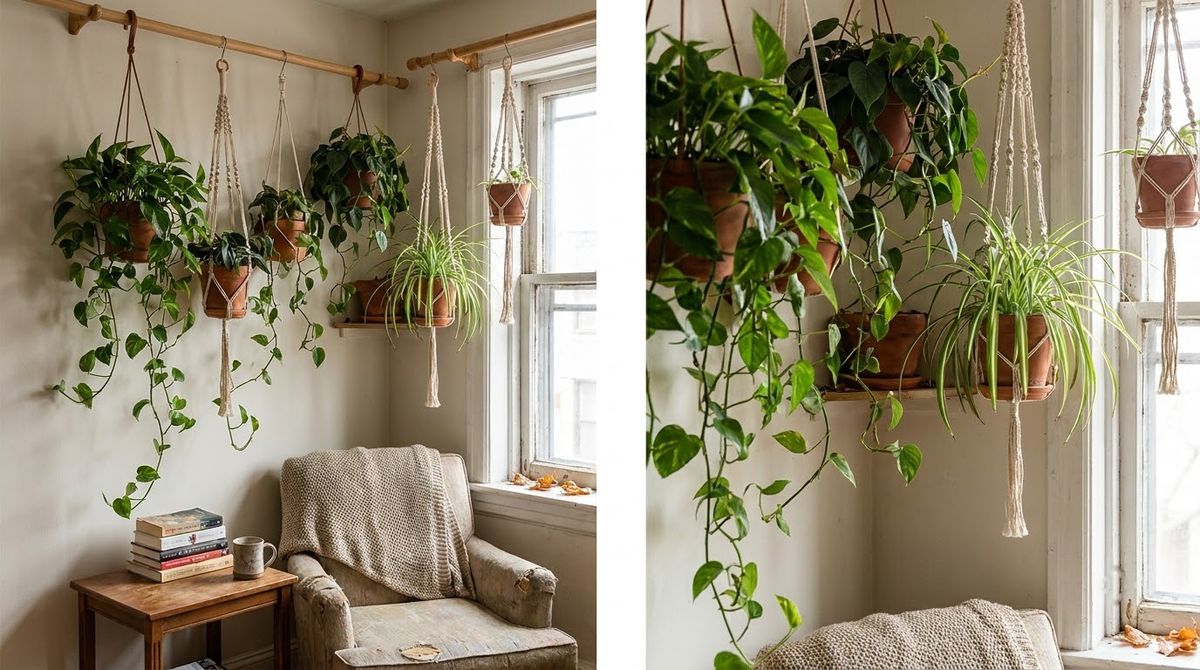
Pothos is the default hanging plant because it tolerates a lot of neglect. Penn State Extension says it prefers moderate to bright indirect light, can tolerate low light for a while (with fading), and its stems can reach 8 to 10 feet or longer. Water only when the soil is dry. A 12-inch pothos in a 6-inch hanging basket was listed at about $10.97 at Walmart (snippet). Keep it away from pets: the ASPCA lists pothos as toxic to dogs and cats.
2. Heartleaf Philodendron Over a Doorway
Heartleaf philodendron has smaller, softer leaves than pothos and a similar trailing habit, so it suits a narrow spot such as the top of a door frame or a bookcase corner. Give it bright indirect light and let the top inch of soil dry between waterings. Like pothos, it is generally treated as unsafe for chewing pets, so hang it high. Check your local garden center for pricing, as live-plant prices vary by store and size.
3. Spider Plant With Dangling Babies
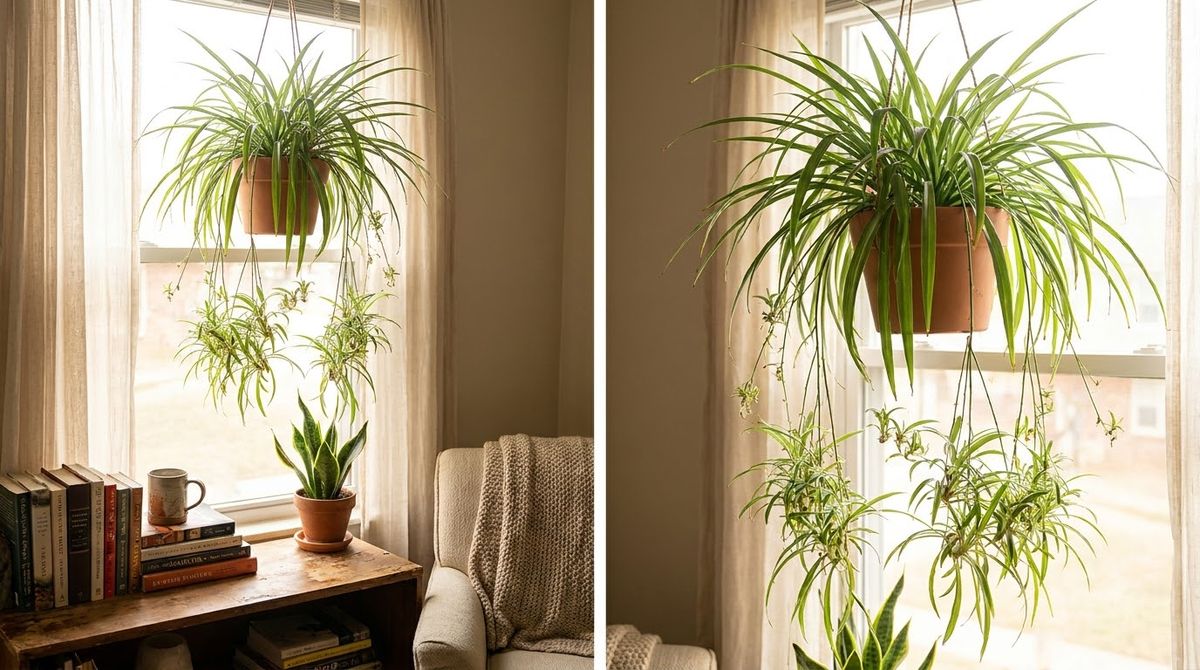
Spider plants send out long stems with small plantlets that hang below the pot, so the display fills out in a single season. The ASPCA lists spider plant as non-toxic to dogs and cats, which makes it a strong pick for a shelf above a pet’s reach or a kitchen window. Replant the plantlets in water or soil to make more. It does best in medium to bright indirect light.
4. Boston Fern in a Bathroom
Boston fern wants humidity, so a bathroom with a bright window or a kitchen over the sink suits it better than a dry living room. The ASPCA lists Boston fern as non-toxic to dogs and cats. Keep the soil evenly moist, never soggy. For humid-room picks, see bathroom plants for humidity. A faux version in a basket ran about $55 at Home Depot (snippet).
Trailing Plants for Bright Windows
These trailers store water in their leaves or grow fast with light, so they need a sunny window, not a dim shelf.
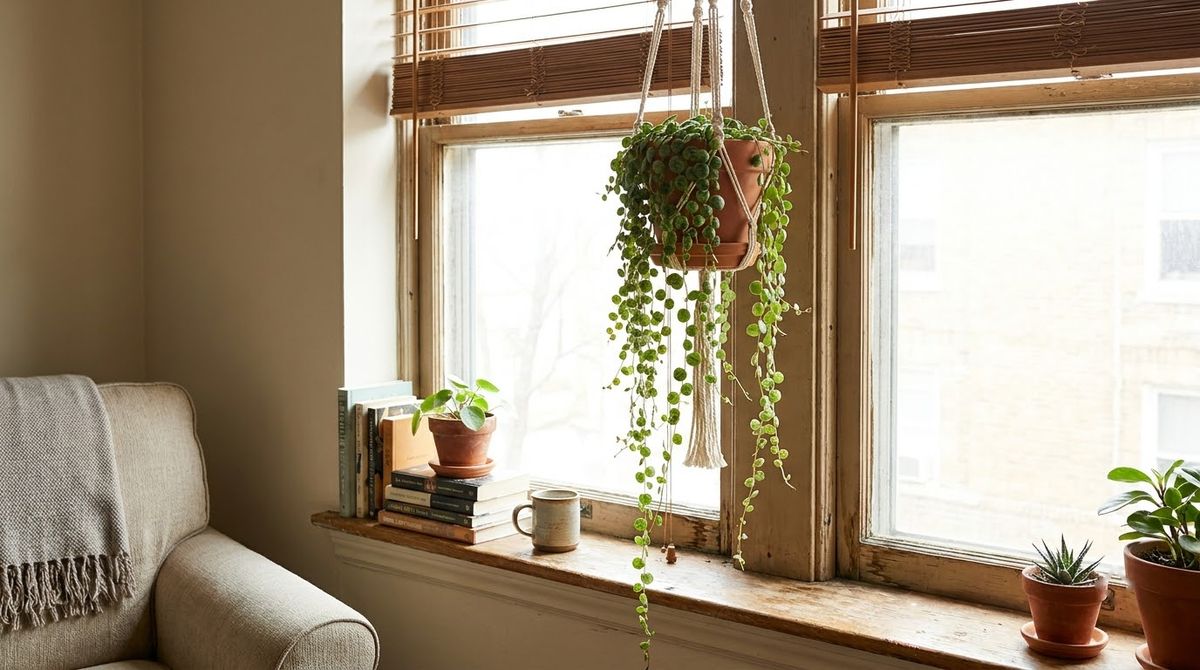
5. String of Pearls
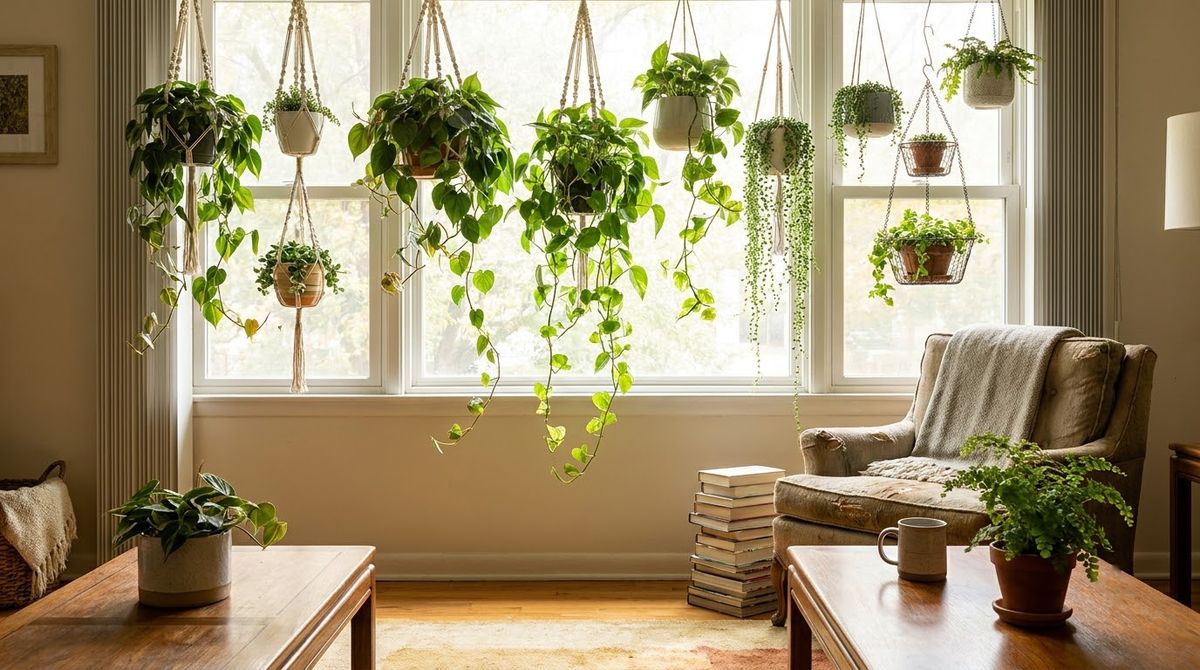
String of pearls has bead-shaped leaves on thin stems that drape 2 to 3 feet. It needs strong light and a pot that drains well, because soggy soil rots the stems. It is lightweight even when watered, which makes it easy on small hooks. A single 4-inch rooted plant was listed at $13.99 at Home Depot (snippet). Hang it at eye level in a bright window so the strands show.
6. String of Hearts
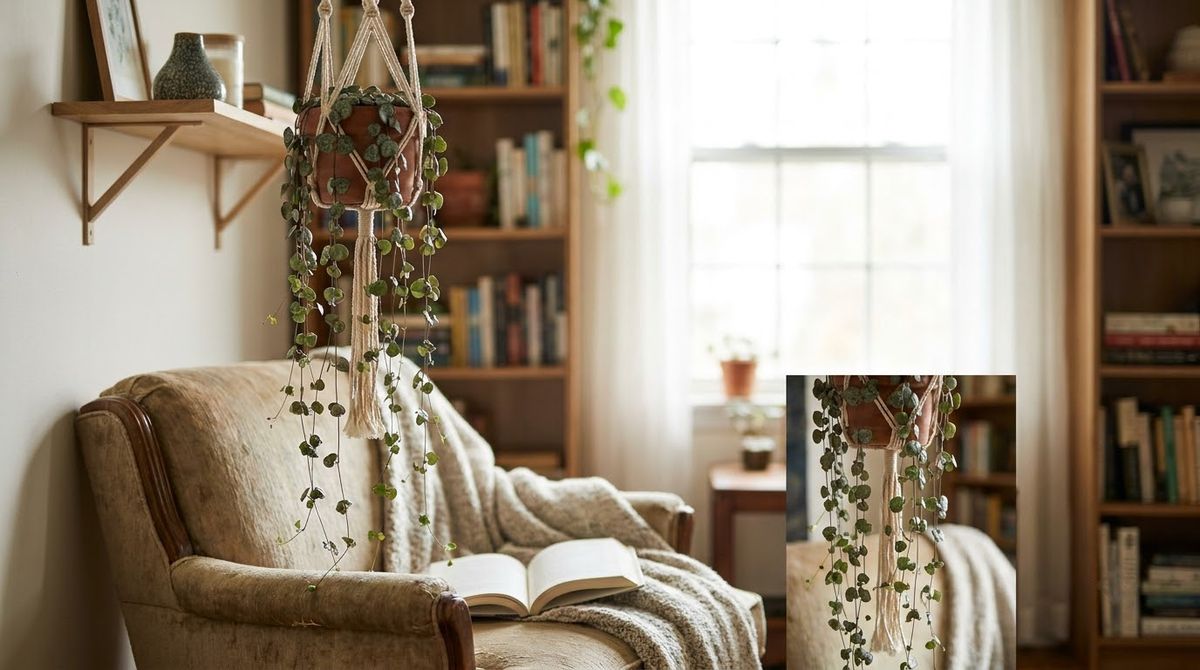
String of hearts has thin, wiry stems with small heart-shaped leaves, so it looks best above eye level where the stems can fall freely. It stores water in small tubers along the stem and dislikes constantly wet soil. Give it bright indirect light. It stays light enough for a single 5 lb adhesive hook when the pot is small. Look for a 4-inch pot at a local nursery, as pricing varies by store.
7. Burro’s Tail (Sedum Burrito)
Burro’s tail grows plump, braided stems that hang heavily, so use a pot with a wide base and a strong hook. A 6-inch burrito sedum hanging basket was listed at $14.89 at Home Depot (snippet). The stems break off easily when bumped, so hang it where nobody walks past, such as in a window corner. Water sparingly, since the leaves hold moisture. It needs the brightest spot you have.
8. English Ivy on a High Shelf
English ivy trails fast in bright, cool rooms and suits a high shelf or bookcase top. It is not a pet-friendly choice: the ASPCA lists English ivy as toxic to dogs and cats, with signs including vomiting and drooling, so place it well out of reach. Trim the tips regularly for a fuller look, and keep the soil lightly moist.
9. String of Turtles
String of turtles has small, patterned, round leaves that read as finer than pothos, which makes it a good pick for a small apartment window. It likes bright indirect light and prefers to dry between waterings. A 6-inch hanging basket collection listing at Lowe’s showed about $28.95 (snippet), so it costs more than a pothos. Hang one pot alone, so the pattern is the focal point.
10. Faux Trailing Pothos for the Hard Spot
Some corners are too dark, too high or too hard to reach for a live plant. A faux pothos hanging basket from Nearly Natural was listed at $56.63 at Home Depot (snippet) and is described as UV-resistant. Use it above a kitchen cabinet or in a stairwell, and keep live plants where you can reach them. See faux plants that actually look real for what to check before buying.
No-Drill Ways to Hang Plants
Renters can hang light and medium pots without a drill if the hanger’s rating is higher than the pot’s wet weight.
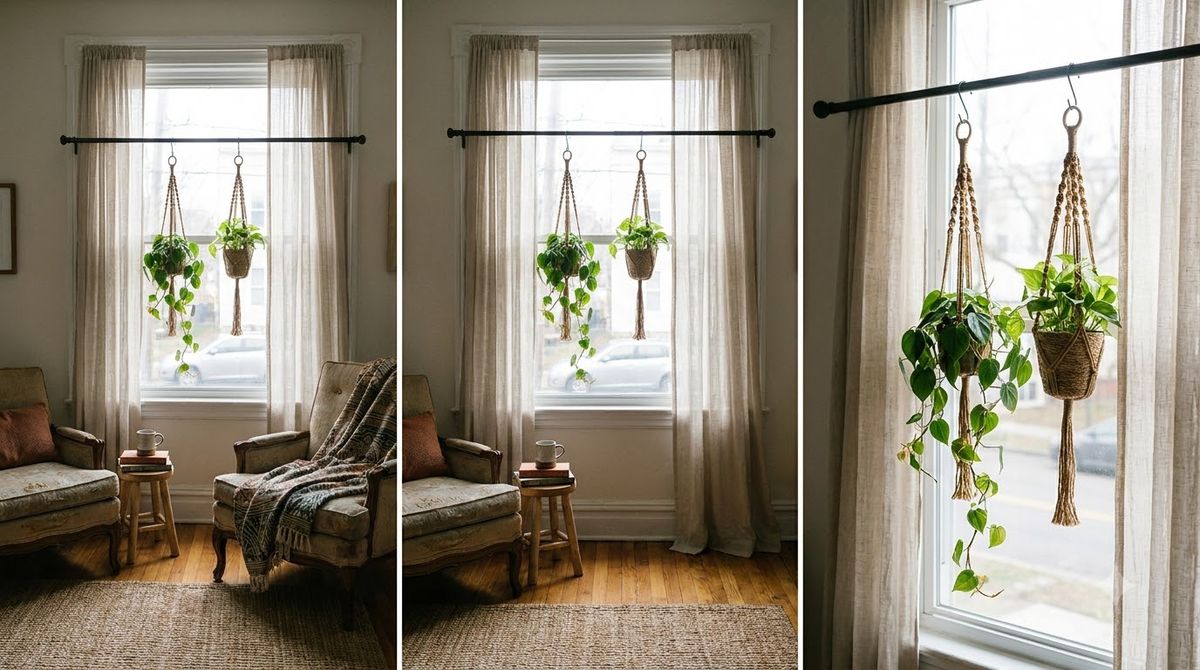
11. Command Large Utility Hook
A Command Large Utility Hook holds up to 5 lb per hook and works on painted walls, finished wood, glass, tile and metal, according to the Staples listing. A six-pack was $9.89, about $1.65 per hook. Use it for small pots such as string of pearls or a 4-inch pothos. Do not stretch it: a swinging pot can pull an adhesive strip loose well under its rating.
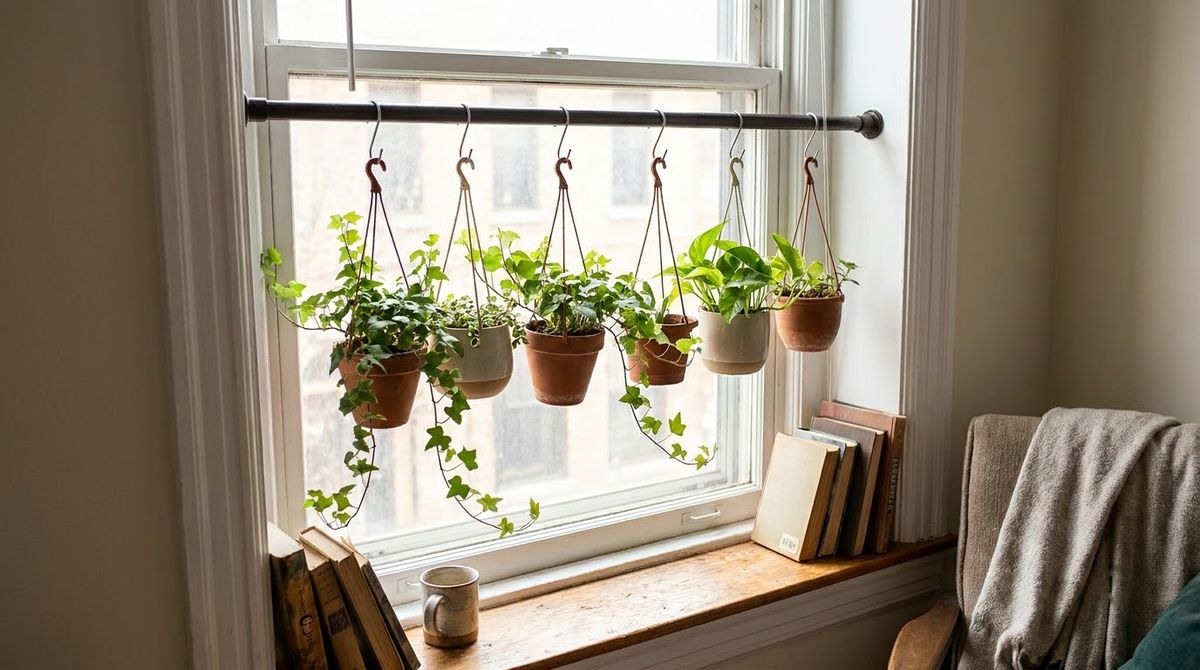
12. Tension Rod Across a Window Frame
A tension rod spans a window frame and holds several light pots on S-hooks. Mainstays 28 to 48 inch rods were listed at about $5.94 at Walmart (snippet), but one multi-pack listing rates its rods for only 2 to 4.5 lb in total. One Target rod listed 5 lb. Spread the load across the rod, use two or three small plants, and check that the spring holds before adding the pots.
13. Over-the-Door Hook
An over-the-door hook needs no wall contact at all, which suits dorms and bathrooms. Walmart listings showed metal door hooks rated from 10 to 22 lb for roughly $5 to $8 (snippet), but they are mostly sold for wreaths and stockings, so check the spec. Hang one pothos on the inside of a bedroom door, and take the plant down before closing the door hard.
14. Trailing Over a Shelf Edge
Set the pot on a shelf and let the vines fall over the front edge, with no hook at all. The IKEA LACK wall shelf (43 1/4 by 10 1/4 inches) holds a maximum of 22 lb and cost $29.99 on IKEA’s page, but it must be anchored with screws sold separately. Two or three small pots fit on one shelf. Trailers such as pothos or ivy look best at the end of the shelf.
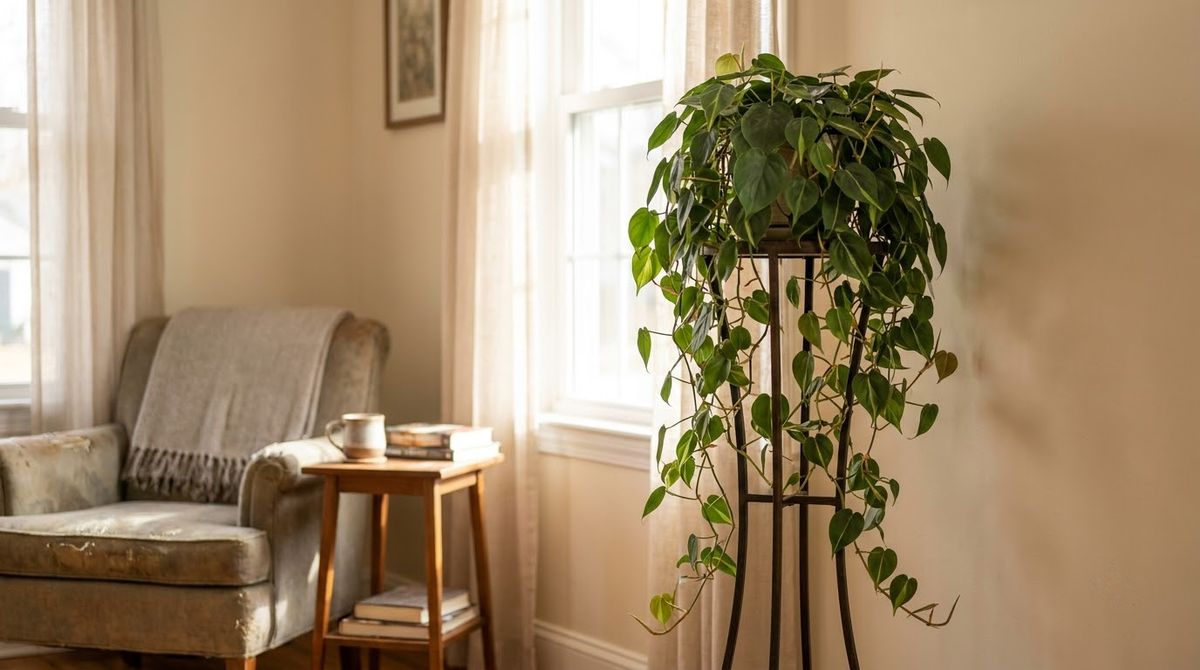
15. Freestanding Plant Stand With a Trailer
A freestanding stand puts a trailing plant at height without touching the wall. IKEA’s OLIVBLAD plant stand is 22 3/4 inches tall, 17 3/4 inches across and rated for 55 lb, at $29.99 on IKEA’s page. Put a heavy pot of ivy or string of hearts on top and let the vines trail down the legs. It is the best option for a rental with strict wall rules.
Drilled Ways to Hang Heavier Plants
Once a planter weighs more than a few pounds, move from adhesive to hardware, and put the hardware into the structure of the ceiling or wall.
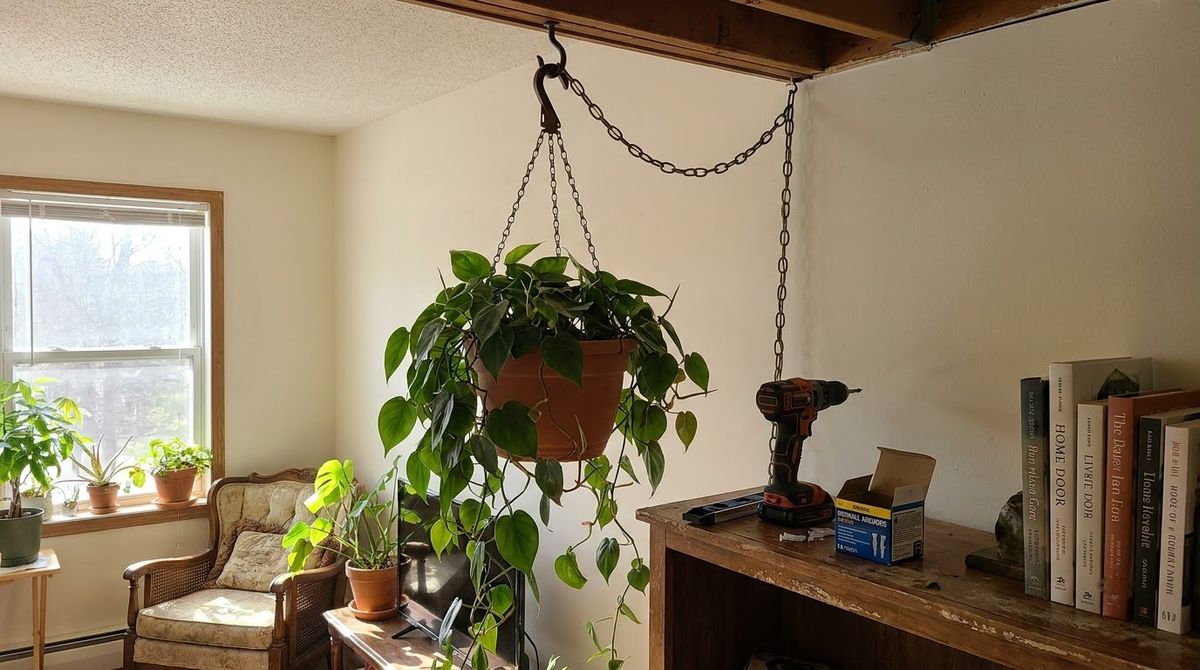
16. Swag Hook Into a Ceiling Joist
A swag hook screws into a joist with a drill, and the Hillman 0.5-inch swag hooks listed at Lowe’s show a 30 lb capacity (snippet). Find the joist with a stud finder, drill a pilot hole, and screw the hook in by hand. A 30 lb rating gives room for a 10 to 15 lb pot with a safety margin. Always follow the rating on your package.
17. Toggle Anchor Into Bare Drywall
Where there is no joist, a toggle bolt spreads the load across the back of the drywall. A retailer listing for Toggler SnapToggle anchors showed up to 265 lb in 1/2-inch drywall, but advised using only one-fourth of that figure (snippet), and a separate toggle listing rated its ceiling load at roughly half of its wall load (snippet). Treat these as rough guides and choose a hook rated far above the wet weight of the planter.
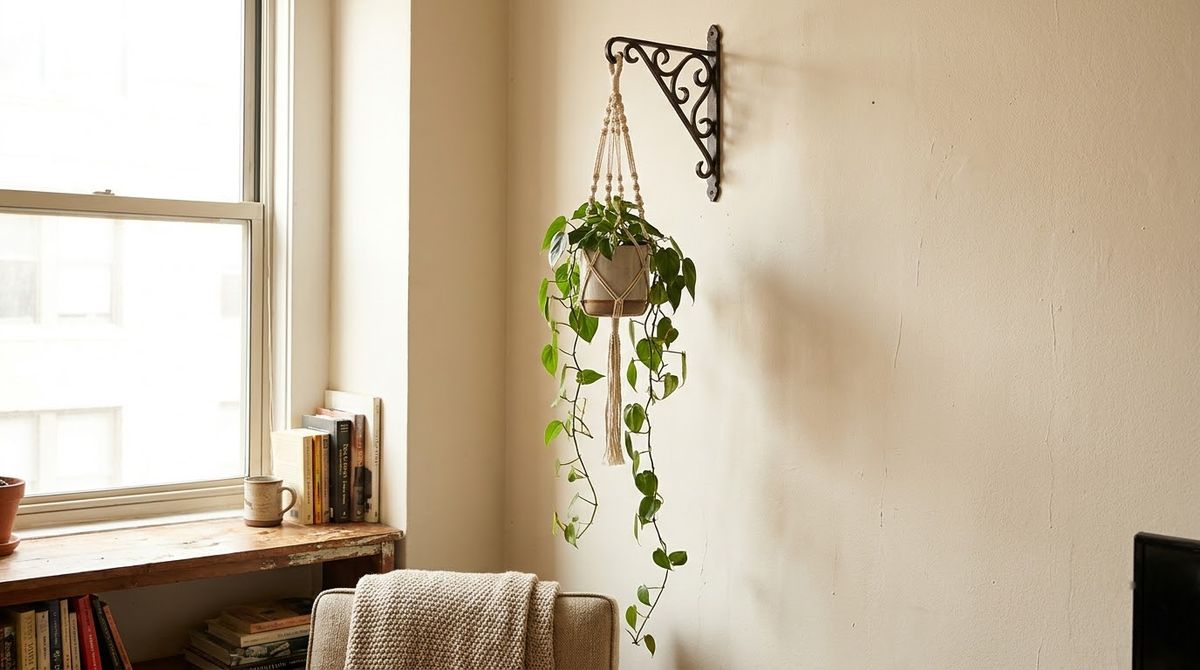
18. Wall Bracket With a Plant Hook
A wall-mounted iron bracket holds a trailing plant away from the wall, so the vines hang clear instead of pressing against the paint. Walmart listed iron brackets from about $5.99 to $15.99 (snippet). Screw it into a stud or a rated anchor, hang a 6-inch pot, and keep the pot light. Because the bracket pulls outward, the screws bear more load than they do for a hook straight down.
Hangers and Pots That Make Plants Look Finished
The hanger and the pot decide whether a hanging plant looks planned, so choose both before you buy the plant.
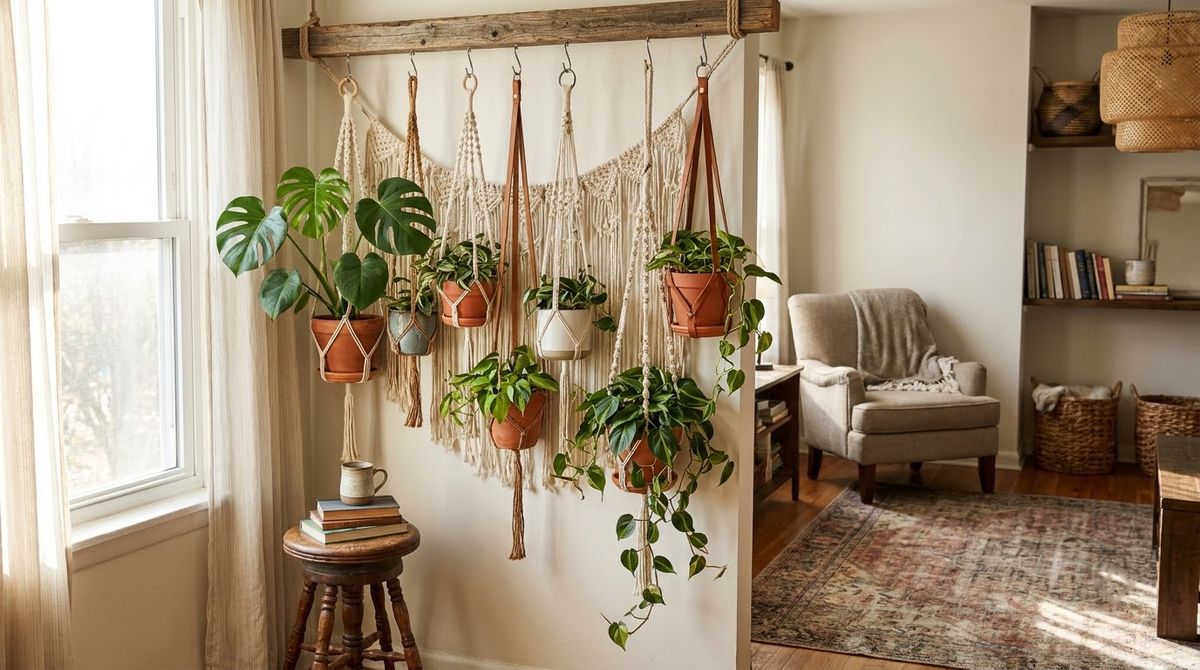
19. Macrame Plant Hangers
Macrame hangers cradle a pot in knotted cord, so they soften a bare ceiling or wall. Walmart showed six-packs from $7.99 to $16.99 (snippet), which works out to roughly $1.30 to $2.80 per hanger. Check that the cord is rated for your pot, and test with the pot full of water before you trust it over a sofa or bed. Pair the hanger with a pot that has a drainage saucer. For layouts, see macrame in boho decor.
20. Pots Made to Hang
A pot built for hanging has drainage and a hook point, which beats improvising with a basket. IKEA’s hanging planter page listed CHILISTRÅN (4 3/4 inches) at $12.99, KORKGRAN (10 3/4 inches, galvanized) at $14.99 and MÄVINN, a plant pot hanger, at $9.99. Add a saucer or liner to catch drips. More ways to arrange them are in indoor plant styling ideas.
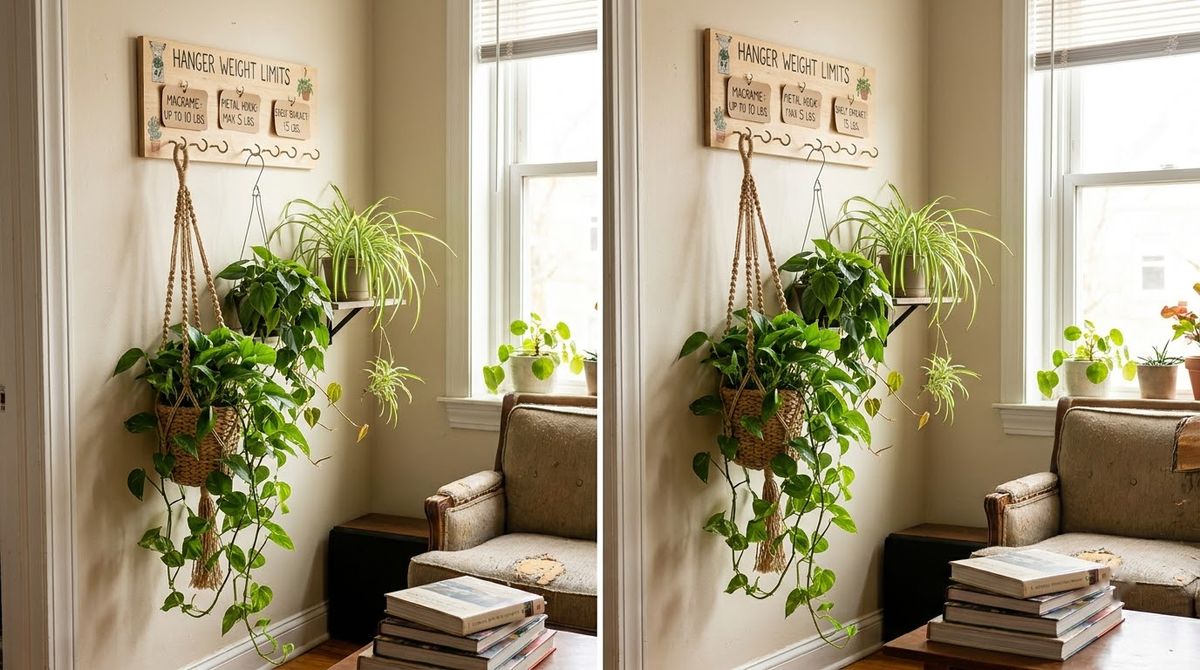
Hanger Weight Limits at a Glance
| Hanger | Rated load | Price | Source |
|---|---|---|---|
| Command Ceiling Hook | 0.5 lb | check store | 3M Canada listing (snippet) |
| Command Large Utility Hook | 5 lb each | $9.89 for 6 | Staples |
| Metal over-door hook | 10-22 lb | about $5-$8 | Walmart (snippet) |
| IKEA LACK shelf, 43 1/4″ | 22 lb | $29.99 | IKEA |
| IKEA OLIVBLAD stand, 22 3/4″ | 55 lb | $29.99 | IKEA |
| Hillman swag hook | 30 lb | check store | Lowe’s (snippet) |
Frequently Asked Questions
What are the best indoor hanging plants?
Pothos is the easiest overall, because Penn State Extension notes it tolerates low light and its stems can reach 8 to 10 feet or longer. Spider plant and Boston fern are the best pet-safe options, according to the ASPCA. String of pearls and string of hearts add fine texture, but they need a bright window.
How do you hang plants without drilling?
Use a Command Large Utility Hook (5 lb each), a tension rod across a window, an over-the-door hook, or a freestanding stand. Match the rating to the wet weight of the pot, press adhesive onto a clean smooth surface, and wait the time printed on the package before hanging anything.
How much weight can a ceiling hook hold?
It depends on the hook. Command’s ceiling hooks are rated at 0.5 lb, so they are not for pots. A screw hook into a joist can be rated around 30 lb or more, depending on the model. Hooks in bare drywall need toggle anchors, and ceiling ratings run lower than wall ratings. Follow the package rating.
Which hanging plants are safe for cats and dogs?
The ASPCA lists spider plant and Boston fern as non-toxic to dogs and cats. It lists pothos and English ivy as toxic, with signs such as drooling, vomiting and mouth irritation. If you keep a toxic plant, hang it high and out of reach, or choose a pet-safe plant or a faux one.
Do hanging plants need special pots?
A hanging pot should have drainage and a saucer, tray or liner to catch runoff. IKEA lists hanging planters from $9.99 to $19.99. If you cannot reach the plant easily, a pot with a built-in reservoir or a lightweight plastic nursery pot inside a decorative holder makes watering easier.
How do you water a hanging plant without making a mess?
Lift the pot down and water it over a sink, then let it drain before you rehang it. If the hook is out of reach, use a stool and a small watering can with a long spout, with a tray underneath to catch drips. Avoid watering in place over a wood floor.
Start With One Window
Choose one window, one trailing plant and one hanger rated well above the pot’s wet weight. Add a second and third plant at different heights once the first one is stable. If you need plants for a tight space, see small apartment plants and low-light indoor plants, or choose from the best low-maintenance indoor plants.
Prices checked October 2026.