
The best bathroom plants are ferns, calatheas and orchids, which want the steam a shower creates, and 16 are listed here for $8 to $30 each. Every pick has light and water needs, mature size, pet safety and a price, plus tougher choices for a bathroom with no window.
Key Takeaways
- Humidity helps, but light still decides success: match each plant to your window first.
- Ferns, calatheas, prayer plants and anthuriums ask for high humidity; NC State puts calathea near 60% and anthurium at 60 to 80%.
- No window? Use pothos, Chinese evergreen or lucky bamboo and add a clip-on grow light on a timer.
- Pet-safe per the ASPCA: Boston fern, rabbit’s foot fern, staghorn fern, orchid, calathea, prayer plant, nerve plant, polka dot plant and bromeliad.
- Most picks cost $10 to $30 in a 4- to 6-inch pot.
Ferns That Love Steam
Ferns come from damp forests and brown quickly in dry living-room air, so a steamy bathroom shelf is where they look best.
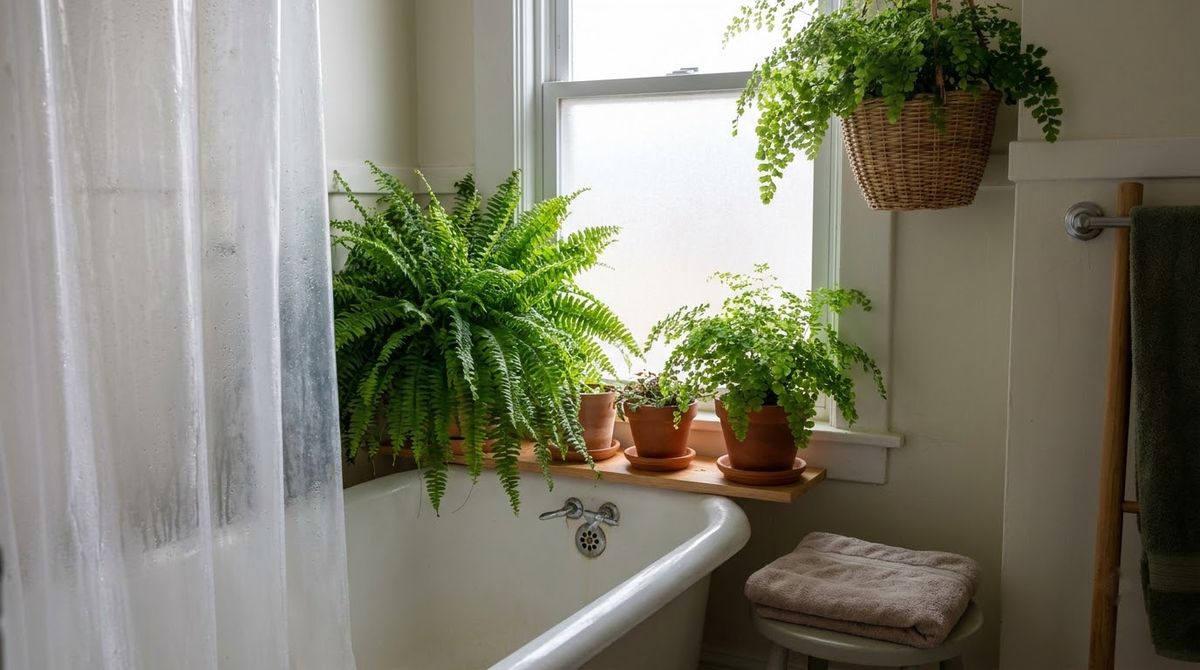
1. Boston Fern (Nephrolepis exaltata)
Boston fern grows 2 to 3 feet tall and wide, so give it a shelf or hook where fronds can arch. NC State says it needs bright indirect light, soil that never fully dries, and recommends bathrooms for the high humidity. The ASPCA lists it as non-toxic to dogs and cats. Home Depot listed a Costa Farms 10-inch hanging basket at $29.40.
2. Rabbit’s Foot Fern (Davallia)
Rabbit’s foot fern grows fuzzy rhizomes over the pot edge, with fronds 18 to 24 inches long. NC State says it needs good indirect light and moist mix with the top half inch allowed to dry, and that it looks better in high humidity. The ASPCA lists the ball fern (Davallia) as non-toxic to dogs and cats. Walmart listed a 4-inch plant at $12.99.
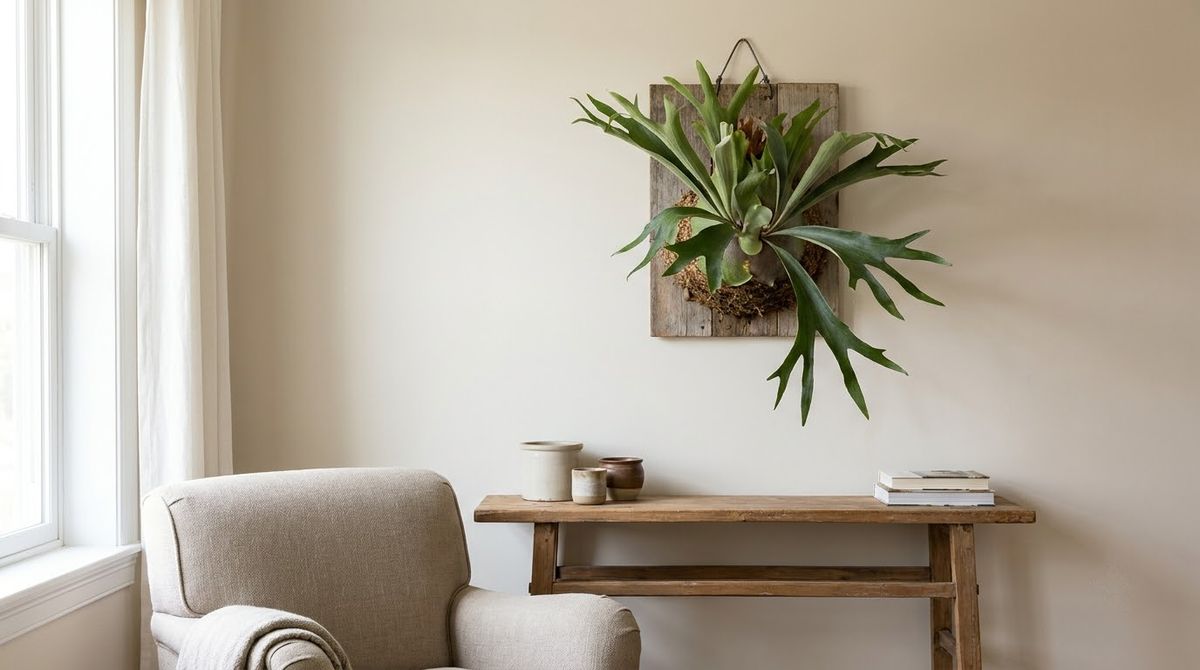
3. Staghorn Fern (Platycerium bifurcatum)
Staghorn fern is usually mounted on a board and hung on the wall, which saves counter space; it grows 2 to 3 feet across. NC State says dappled sun, water at the crown, and let roots dry slightly between waterings. Too much humidity can cause black spot, so give it airflow. The ASPCA lists it as non-toxic. Home Depot listed a 4-inch plant at $19.99.
Flowering and Bloom Plants
Plants that flower in a bathroom turn a utility room into a feature, and their blooms last weeks in steady humidity.
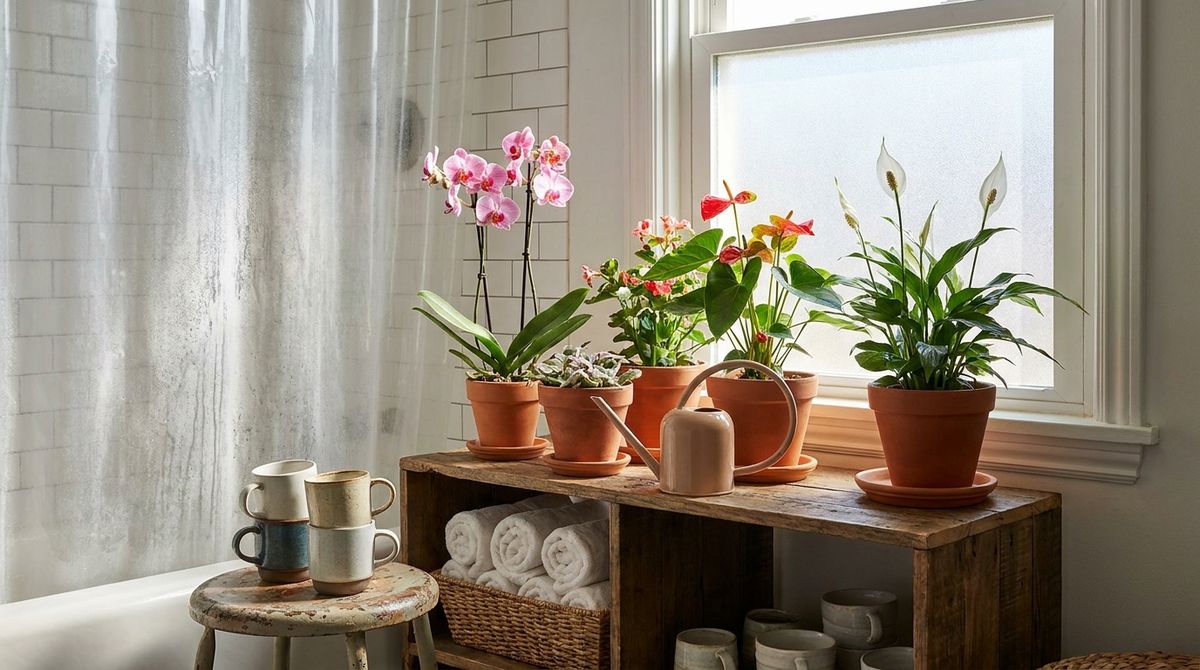
4. Moth Orchid (Phalaenopsis)
A moth orchid sits happily on a sill or vanity, with flower spikes that can last a month or more. University of Maryland Extension recommends indirect light from an east or west window and watering when the aerial roots turn pale green, once a week at most. The ASPCA lists it as non-toxic. Home Depot listed a 4-inch blooming plant at $15.98.
5. Flamingo Flower (Anthurium)
Anthurium grows 1 to 1.5 feet tall and wide and blooms in red, pink or white spathes. NC State says bright indirect light, water when the top inch dries, and 60 to 80% humidity, which a bathroom can provide. The ASPCA lists Anthurium as toxic to dogs and cats. Home Depot listed an Altman Plants 6-inch red Anthurium at $30.29, and keep it away from cold drafts.
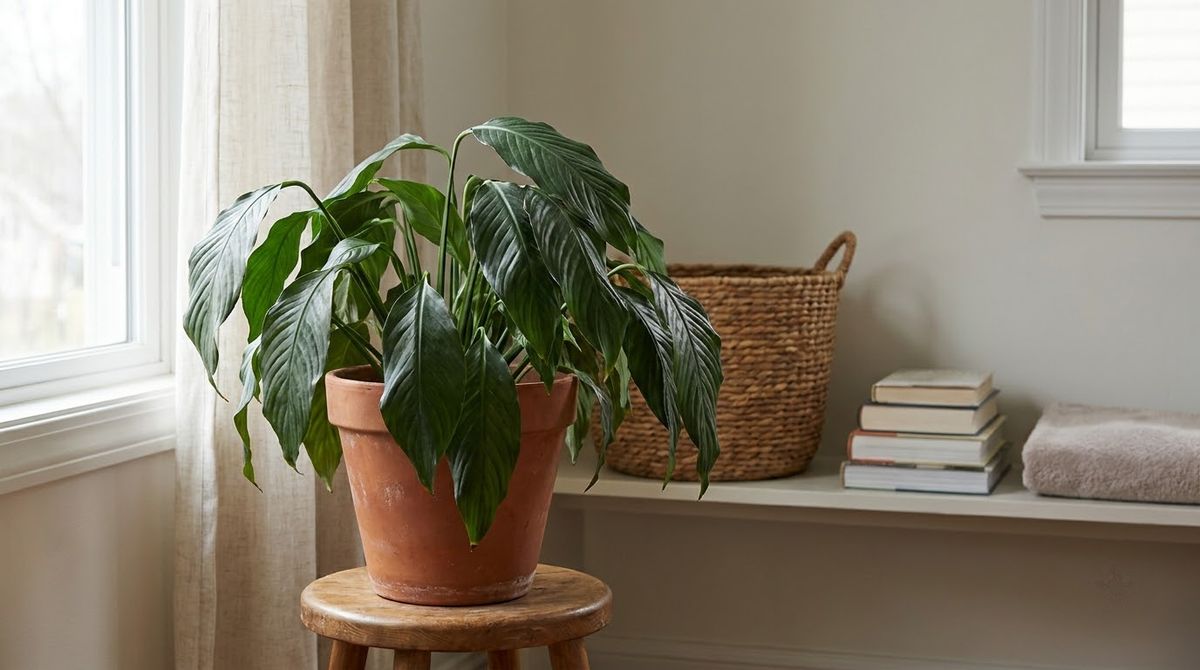
6. Peace Lily (Spathiphyllum)
Peace lily reaches about 3 feet indoors and signals thirst by drooping. NC State says partial to deep shade, no direct sun, soil kept moist but not soggy, and that brown leaf tips often come from low humidity. The ASPCA lists it as toxic to dogs and cats, with mouth irritation and drooling. Home Depot listed a Costa Farms 6-inch plant at $20.17.
7. Blushing Bromeliad (Neoregelia)
Bromeliads hold water in a central cup, and NC State says to keep the cup filled and let the potting mix dry between waterings. Size varies from a few inches to 3 feet, and it wants bright light indoors for color; in very humid air leaf spot can spread. The ASPCA lists it as non-toxic. Home Depot listed a 2-pack of Orange Crush in 6-inch pots at $50.85, about $25 each.
Patterned Foliage for Humid Corners
These plants have striped, veined or spotted leaves that crisp up in dry rooms, so they earn their space in a steamy bathroom.
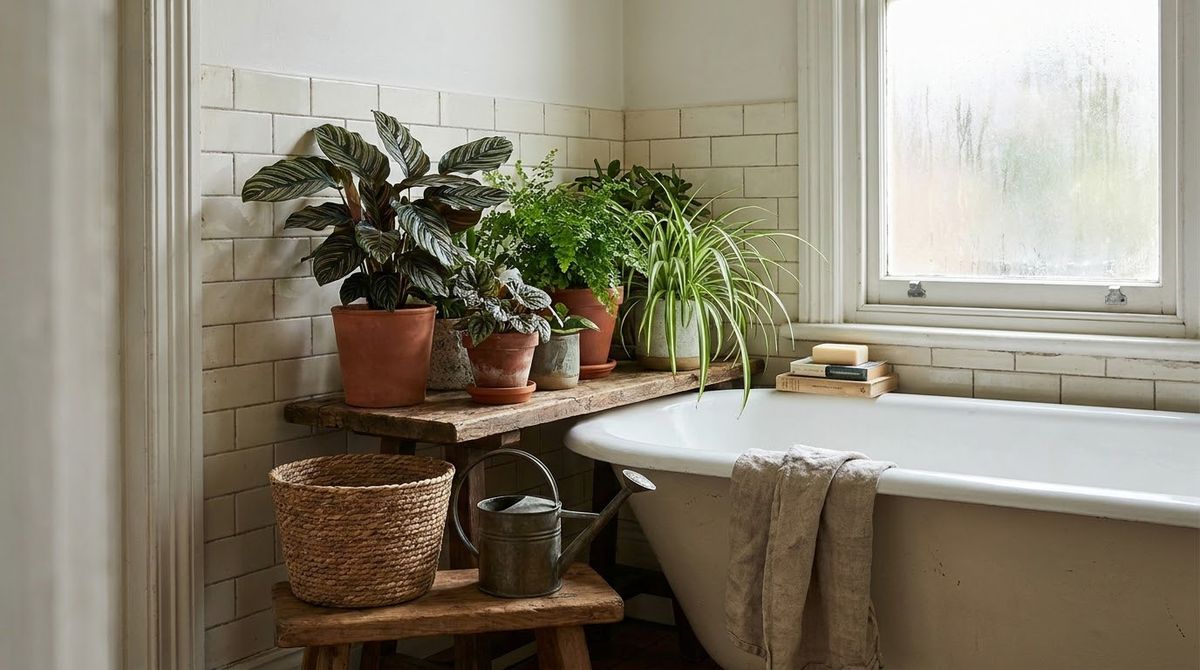
8. Peacock Calathea (Calathea makoyana)
Peacock calathea grows 1 to 2 feet tall and 8 to 12 inches wide, with feathered leaves. NC State says bright indirect light, evenly moist soil, humidity around 60%, and distilled or rain water because fluoride in tap water browns the leaves. The ASPCA lists Calathea as non-toxic. Walmart listed an Altman Plants 4.25-inch plant at $19.85, and Home Depot listed a 3-pack of 4-inch plants at $34.74, about $11.58 each.
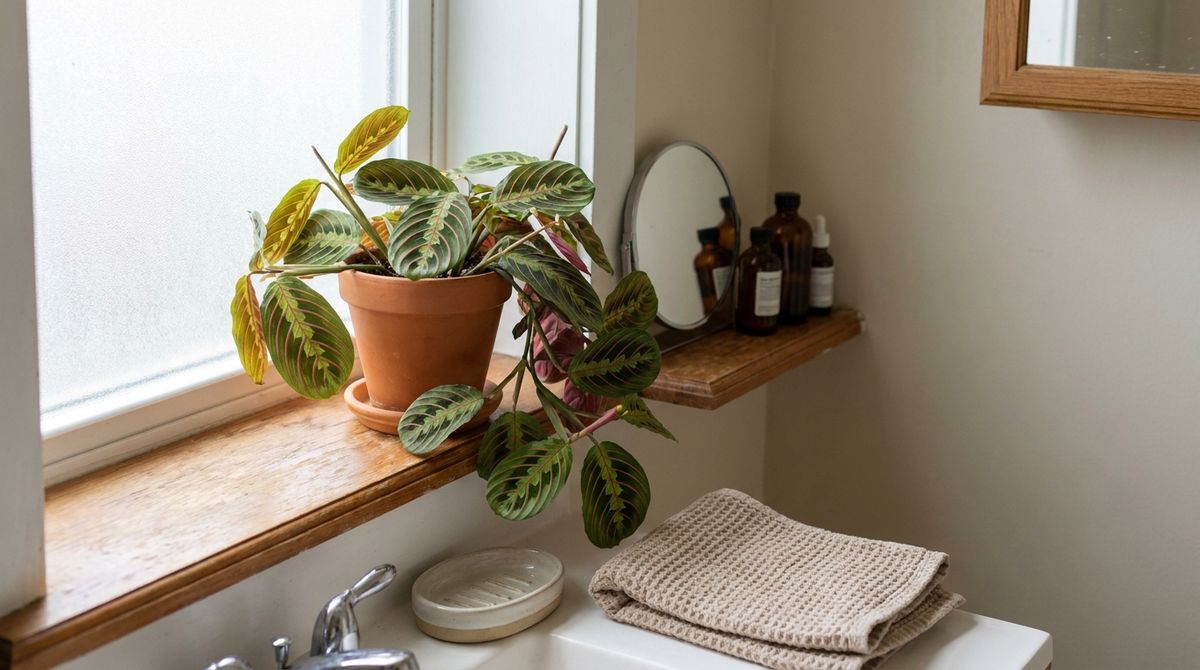
9. Prayer Plant (Maranta leuconeura)
Prayer plant stays 6 to 12 inches tall and spreads sideways, so it suits a vanity or shelf edge. NC State says bright indirect light, evenly moist soil in the growing season, and that it needs high humidity and does not tolerate dry air. The ASPCA lists the prayer plant as non-toxic. Walmart listed a Hirt’s red prayer plant in a 4-inch pot at $10.99.
10. Nerve Plant (Fittonia)
Nerve plant creeps 3 to 8 inches tall and 6 to 18 inches wide, which fits a small tray or terrarium. NC State lists bright to medium light, soil kept moist but drained, and notes that it wilts dramatically when dry and recovers after a drink. The ASPCA lists it as non-toxic. Walmart listed a set of three 4-inch plants (red, white, pink) at $44.99, about $15 each.
11. Polka Dot Plant (Hypoestes phyllostachya)
Polka dot plant grows 1 to 2 feet tall and 9 to 12 inches wide with pink, white or red freckled leaves. NC State says it prefers dappled light, fades and gets leggy in too little light, and is drought intolerant, so keep the soil consistently moist. The ASPCA lists it as non-toxic. Walmart listed a 2.5-inch Pink Splash plant at $8.99 plus shipping.
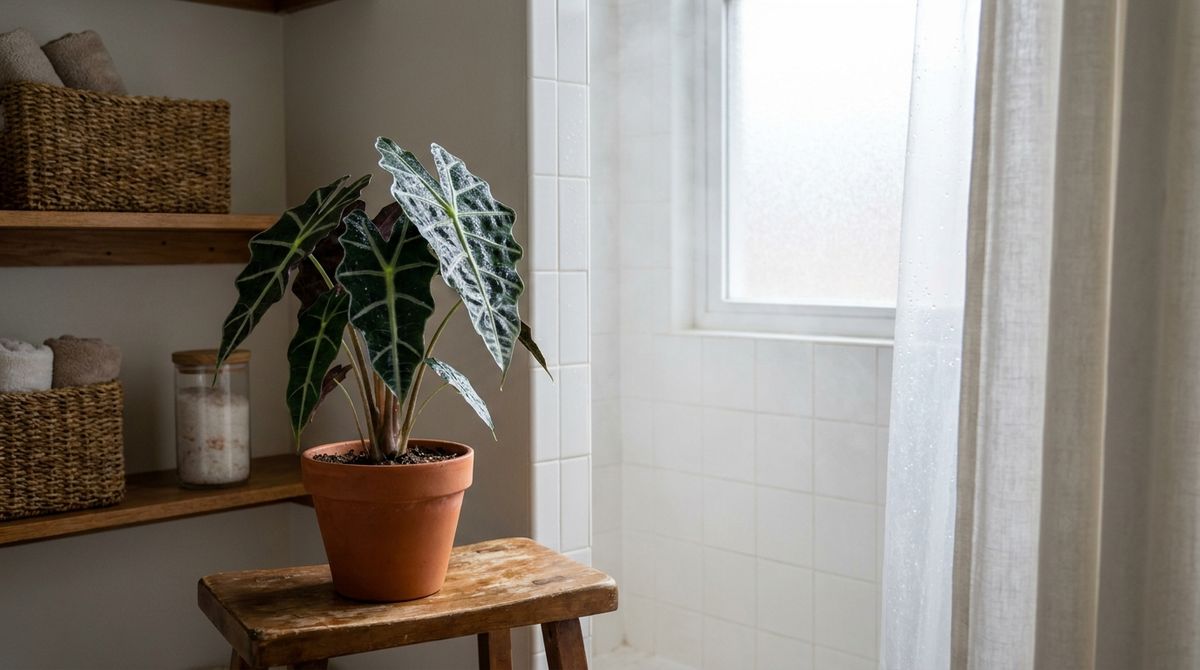
12. Alocasia Polly (Alocasia x amazonica)
Alocasia ‘Polly’ stays compact, about 2 feet tall, with dark arrow-shaped leaves and white veins. NC State says bright indirect light, moist well-drained soil, high humidity, and keep it above 60°F, which matters for a cold bathroom. The ASPCA lists Alocasia among toxic houseplants. Home Depot listed a 4-inch plant at $24.99; Walmart listed one at $12.99, down from $19.99. Wipe dust off the leaves so they keep absorbing light.
Tough Picks for Low Light and No Window
Humidity is only half the equation, so plants in this group are the ones that survive on a bright bulb or a clip-on grow light better than the rest.
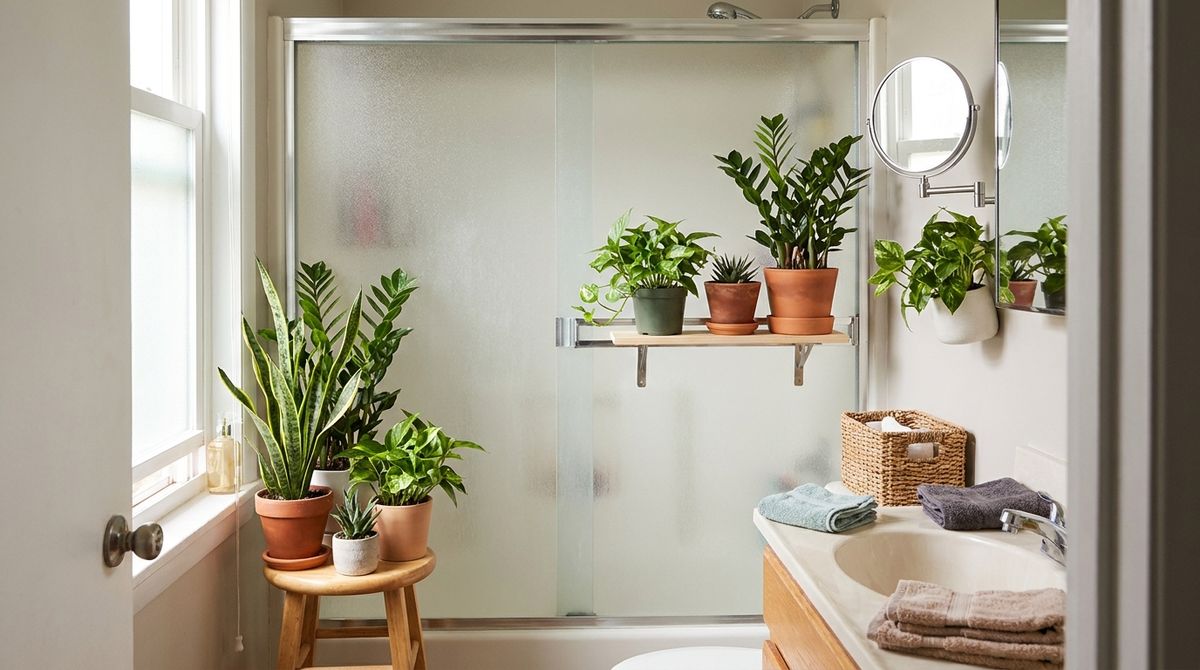
13. Golden Pothos (Epipremnum aureum)
Pothos trails over a shelf edge and, per NC State, prefers bright indirect light but tolerates low light for long periods, though low light fades its variegation. Let the mix dry between waterings, as shower humidity slows drying. The ASPCA lists it as toxic to dogs and cats, so place it high. Walmart listed an 8-inch Costa Farms 2-pack at $19.49.
14. Chinese Evergreen (Aglaonema)
Chinese evergreen grows 1 to 1.7 feet tall and 1 to 1.5 feet wide. NC State lists diffuse sun or good indirect light, deep shade tolerance, moist mix in spring to fall and less in winter, and says it prefers high humidity but tolerates drier air. The ASPCA lists it as toxic to dogs and cats. Walmart listed a Costa Farms 14-inch plant in a 5-inch pot at $24.99.
15. Lucky Bamboo (Dracaena sanderiana)
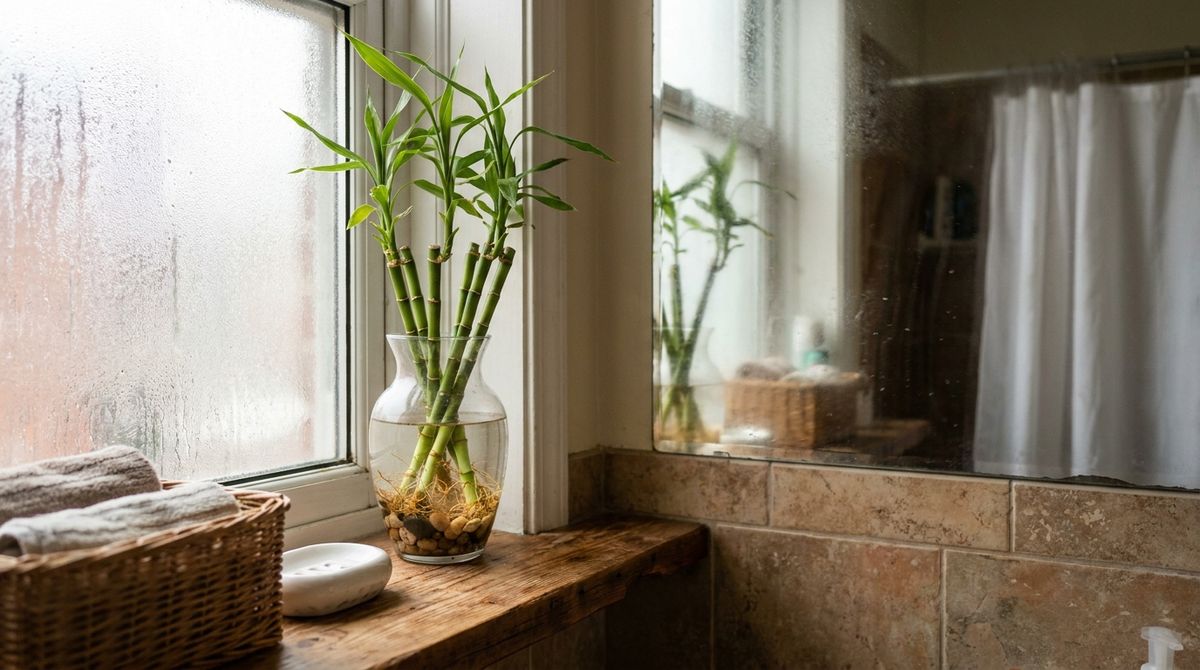
Lucky bamboo grows in water, so there is no soil to stay soggy in a humid room. NC State says bright but indirect light year-round, and to change the water weekly; low humidity browns the leaf tips. The ASPCA lists the Dracaena genus as toxic to dogs and cats. Walmart listed a Costa Farms pack of ten 15-inch stalks at $25.00, or $2.50 a stalk.
16. Swiss Cheese Plant (Monstera deliciosa)
Monstera is the big-leaf option, reaching 6 to 8 feet indoors per NC State, so reserve it for a roomy bathroom. It wants moderate indirect light, a thorough watering then a drying of the top quarter to third of the soil, and likes high humidity. The ASPCA lists it as toxic to dogs and cats. Walmart listed a Costa Farms 24-inch plant in a 10-inch pot at $24.97.
Quick Reference: Light, Humidity and Pets
| Plant | Light | Humidity | Pet-safe | Typical price |
|---|---|---|---|---|
| Boston fern | Bright indirect | High | Yes | $29 |
| Rabbit’s foot fern | Good indirect | Moderate to high | Yes | $13 |
| Staghorn fern | Dappled | Moderate | Yes | $20 |
| Moth orchid | Indirect, east or west | Moderate | Yes | $16 |
| Anthurium | Bright indirect | 60-80% | No | $30 |
| Peace lily | Partial to deep shade | High | No | $20 |
| Bromeliad | Bright | Tolerant | Yes | $25 |
| Peacock calathea | Bright indirect | About 60% | Yes | $20 |
| Prayer plant | Bright indirect | High | Yes | $11 |
| Nerve plant | Bright to medium | High | Yes | $15 |
| Polka dot plant | Dappled | Tolerant | Yes | $9 |
| Alocasia Polly | Bright indirect | High | No | $13-$25 |
| Pothos | Low to bright indirect | Tolerant | No | $10-$20 |
| Chinese evergreen | Indirect to shade | High preferred | No | $25 |
| Lucky bamboo | Bright indirect | Low browns tips | No | $3 a stalk |
| Monstera | Moderate indirect | High | No | $25 |
Frequently Asked Questions
What plants do well in a bathroom?
Plants from humid forests: Boston fern, rabbit’s foot fern, calathea, prayer plant, anthurium and orchids. Pothos and Chinese evergreen handle low bathroom light better. Match the plant to your window first, then to the spot on the shelf, over the toilet or on the vanity.
Can plants live in a windowless bathroom?
Yes, if you replace daylight. A clip-on LED grow light on a plug-in timer works, or rotate two plants between the bathroom and a bright room every couple of weeks. Pothos, Chinese evergreen and lucky bamboo cope best. For related dim-room picks, see low-light indoor plants.
Which bathroom plants are safe for cats and dogs?
Per the ASPCA, Boston fern, rabbit’s foot fern, staghorn fern, moth orchid, calathea, prayer plant, nerve plant, polka dot plant and bromeliad are non-toxic. Pothos, peace lily, anthurium, Chinese evergreen, monstera and Alocasia are toxic if chewed, so hang them out of reach.
Do bathroom plants need less water?
Often a little less, because humid air slows soil drying. Check the top inch of soil before watering instead of following a calendar. Peace lily and calathea like steady moisture, while pothos and Chinese evergreen should dry slightly between waterings.
Do bathroom plants add humidity?
Not much; they use the humidity already there. The benefit goes to the plant, which gets steam it would not find in a dry living room.
Start With Your Window
Choose from the first three groups if your bathroom has a window, and from the last group if it does not. A fern over the toilet, a trailing pothos by the mirror and a small orchid on the vanity use three different spots without crowding. For more ways to arrange them, see indoor plant styling ideas, plant shelf and corner ideas and the best low-maintenance indoor plants. Short on space? The small apartment plants list covers compact options.
Prices checked October 2026.