
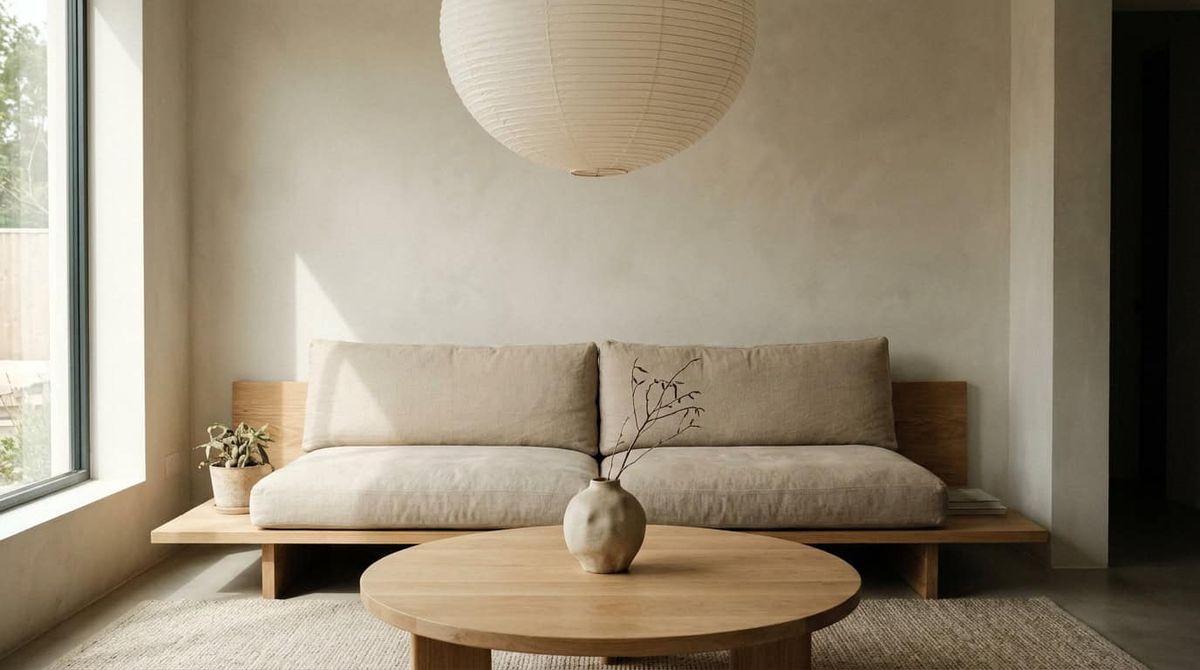
Japandi storage in a small space comes down to one ratio: hide roughly 90% of what you own and let only 10% sit on an open surface. Across 15 renter-safe solutions in 5 rooms, most land under $80 and none require a drill. The clutter is still there. The IKEA boxes of charging cables, the stack of extra bedding, the three types of coffee pods. Japandi doesn’t eliminate stuff; it hides it with intention.
We mapped 15 solutions across every room that hide your things while holding the calm. None require drilling into walls. Most land under $80. All of them work in rentals because freestanding, stackable, and removable are the operating modes of the style anyway — that Japanese restraint translates directly into renter-friendly territory. Here’s what actually works when square footage is tight and your security deposit is on the line.
Key Takeaways
- 15 solutions span 5 rooms: living, bedroom, kitchen, bathroom, entry/closet
- 5 fully no-drill options — adhesive hooks, freestanding units, tension rods
- Price range: $12 (adhesive hooks) to $180 (closed-front shoe cabinet) — average under $65
- 8 of 15 are completely freestanding — move out day requires zero repair
- Core principle: closed storage first, open display second (only for intentional single objects)
The 3 Japandi Storage Principles
Before the 15 solutions, the framework. Most “Japandi storage” boards on Pinterest fail because they apply Japandi aesthetics without Japandi logic.
What most guides miss: the calm look is a ratio, not a single product. Rooms read as Japandi when closed storage outnumbers open display by about 9 to 1. The “hidden storage” furniture that actually sells the look (lift-top tables, storage ottomans, closed-front shoe cabinets) runs $55 to $180 per piece, so a full small apartment usually needs $250 to $400 in dedicated pieces, not one $120 hero buy.
1. Hide First — Closed Beats Open
The Japanese concept of ma (negative space) only reads as calm when there’s genuinely nothing filling that space. Open shelving stacked with folded towels, labeled bins, and colorful product packaging is Scandinavian-practical, not Japandi-calm. Japandi storage hides the daily-use objects completely behind doors, lids, and closed fronts. Open display is reserved for one ceramic, one plant, one book — not a row.
2. Match the Wood Tone — Oak or Walnut, Not Orange Pine
Every piece of wood storage in a Japandi room should pull from the same tonal family: light oak (warm beige-blonde) or medium walnut (warm brown-grey). Orange pine — the default finish on most big-box storage units — breaks the palette immediately. IKEA’s HEMNES line in white or light brown, Target’s Threshold woven baskets in natural (not terracotta-adjacent rattan), and the Amazon Basics bamboo line all stay within range.
3. Keep Edges Low and Horizontal
Japandi spaces feel expansive because storage units stay below the 36-inch mark wherever possible. Tall bookcases and stacked storage crates push visual weight up and compress the ceiling. Low profile — coffee table height, nightstand height, bench height — keeps the room reading as airy even when the square footage says otherwise.
Free checklist
Spending $100 on a room? Spend it in this order.
The four phases we use, starting with the free one that changes more than any purchase.
15 Japandi Storage Solutions
Living Room
1. Lift-Top Oak Coffee Table With Hidden Storage
The lift-top coffee table is the single highest-ROI piece in a small-space Japandi living room. The VASAGLE LCT025A01 ($120, Amazon) has a light oak surface and a full interior compartment that fits throws, board games, or electronics. The top rises on a spring hinge — no bending, no awkward angles. Dimensions: 43.3″L × 23.6″W × 18.1″H. It replaces both the coffee table and a storage ottoman without reading as bulky. The flat, clean surface holds one tray, one ceramic, and nothing else.
2. Low Rattan Basket Pair Under Console
Two matching flat-weave rattan baskets slid under a console table do the work of a side cabinet at a fraction of the price. Look for natural (not bleached white, not orange-tinted) rectangular baskets in the 20″W × 14″D × 10″H range — the Seagrass Rectangular Storage Baskets from The Container Store ($28 each) fit without looking stuffed. Use one for remote controls and cords, one for extra throw blankets. The visual effect: two clean rectangles, low, horizontal, calm.
3. Linen Ottoman With Internal Tray
A storage ottoman in a Japandi space needs two things: a lid with a flat tray insert and a linen or boucle exterior in greige or oatmeal. The SONGMICS storage ottoman ($55–75 on Amazon, search ULSF045) ships with a removable tray so the top surface can hold drinks during use and the interior holds anything. The tray is the key — without it, opening the ottoman mid-gathering to retrieve something reads as chaotic. With the tray, the top stays styled; the storage stays hidden.
Bedroom
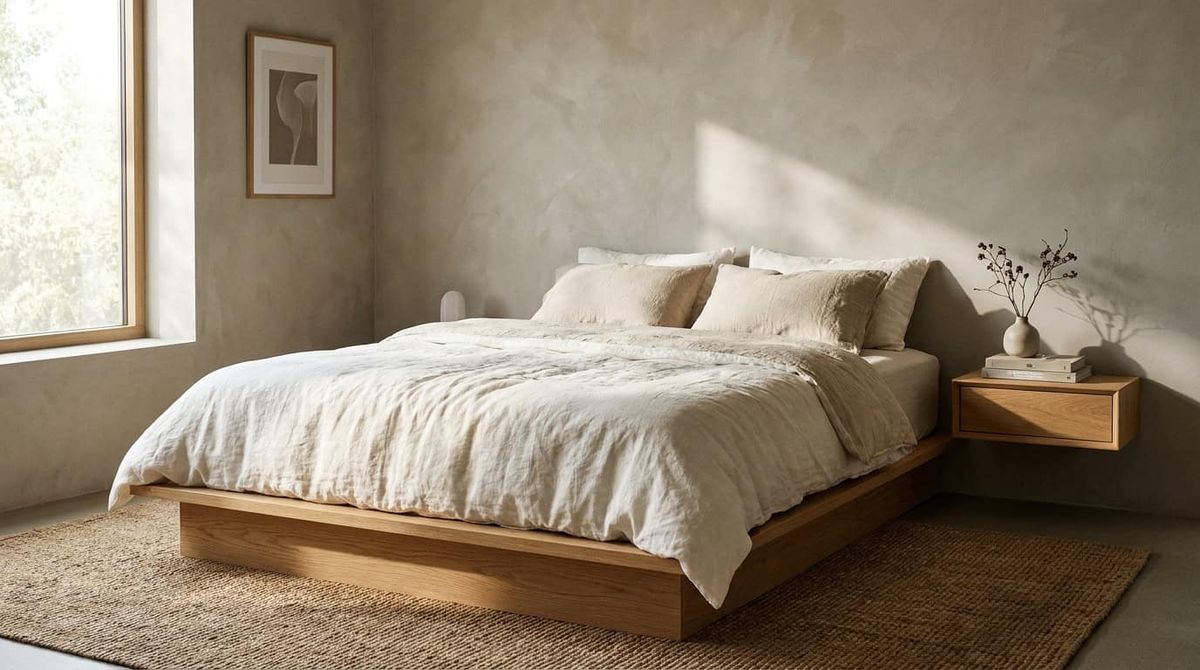
4. Under-Bed Flat Boxes, Linen-Covered
The gap under a low platform bed is prime Japandi storage real estate only when the containers are invisible from standing height. Flat under-bed storage boxes (IKEA SKUBB, $16/6-pack) covered with a linen bed skirt or a fitted sheet drape keep the floor line clean. For beds without a skirt option, use the IRIS USA flat bins ($24 for 4, Amazon) in stone grey — they sit low enough that a 2-inch clearance gap reads as shadow, not clutter.
What most guides miss: the exact clearances decide whether under-bed and vertical storage read as calm or cramped. Keep flat under-bed bins to 6 inches or less, with a 2-inch shadow gap at the floor line, and hold freestanding units below 36 inches so visual weight stays low. Vertical hooks on Command strips top out around 16 lbs per pair on clean painted drywall, which stays renter-safe when removed as directed.
5. Nightstand With Closed Drawer — No Open Shelf
The nightstand is where Japandi discipline breaks down fastest. Books, glasses, charging cables, chapstick, water bottle — all of it lands here. An open-shelf nightstand displays every bit of it. The IKEA HEMNES nightstand ($129) with two drawers solves this: full closed front, light brown stain within the oak range, simple tapered leg. Alternatively, the Amazon Ravenna Home ($89) in light walnut keeps the same closed-front logic. Nothing on top except one lamp and one small plant or object.
6. Wall Hooks Behind the Bedroom Door
The back of the bedroom door is dead space in most rentals and high-value real estate in a small-space Japandi setup. Command Large Picture Hanging Strips ($12, any hardware store) hold a single-bar hook rail without drilling. The MUJI wooden wall hook strip ($28, MUJI.us) in ash is the reference object — five pegs, horizontal bar, fits on command strips rated for 16 lbs total. Hang tomorrow’s outfit, a robe, a scarf. Everything that would otherwise land on the chair.
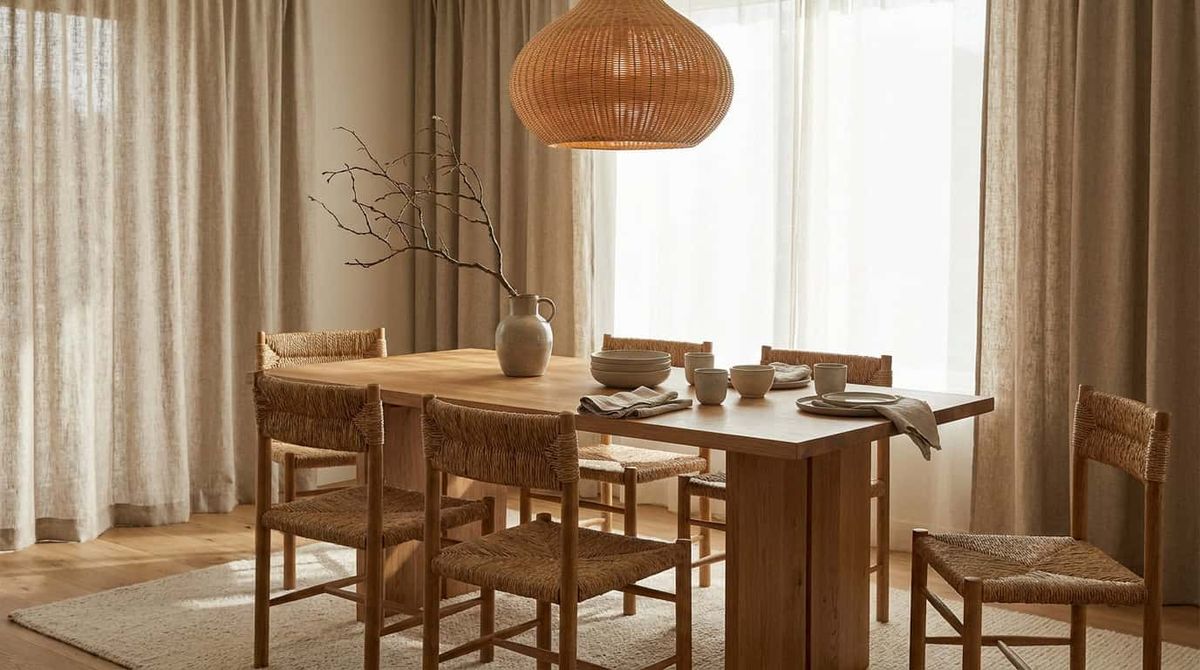
Kitchen
7. Wall-Mount Pegboard in Neutral Tone
A pegboard sounds maximalist, but in a Japandi kitchen it works when the board, pegs, and items all share a single material story. Use a natural birch or painted-white MDF pegboard (SKADIS from IKEA at $15–25 for the board) and limit what hangs to items that are visually light: a single pan, three lightweight utensils, a small potted herb in a plain white pot. No plastic, no color. The board itself becomes a low-visual-noise display — not a storage dump.
8. Under-Counter Sliding Bin for Recyclables
Open recyclable bags and freestanding trash cans are immediate Japandi violations. A pull-out cabinet organizer with a lid — or, for rentals, a slim freestanding pull-out bin on wheels that slides under the counter overhang — hides the function completely. The simplehuman 10L slim pull-out bin ($45) in brushed steel sits under most counters with 18+ inches of clearance. No separate trash area visible from the living space.
9. Glass Jars in a Single Line on the One Open Shelf You’re Forced to Use
Rentals often include one fixed open shelf in the kitchen that cannot be closed off. When you must display, the Japandi rule: one material, one line, one height. Transfer dry goods (rice, pasta, oats, lentils) into matching glass jars — OXO Pop Containers ($8–12 each) or IKEA KORKEN ($3 each) — and line them in a single row. No labels facing out. Consistent heights. The shelf reads as intentional rather than stocked.
Bathroom
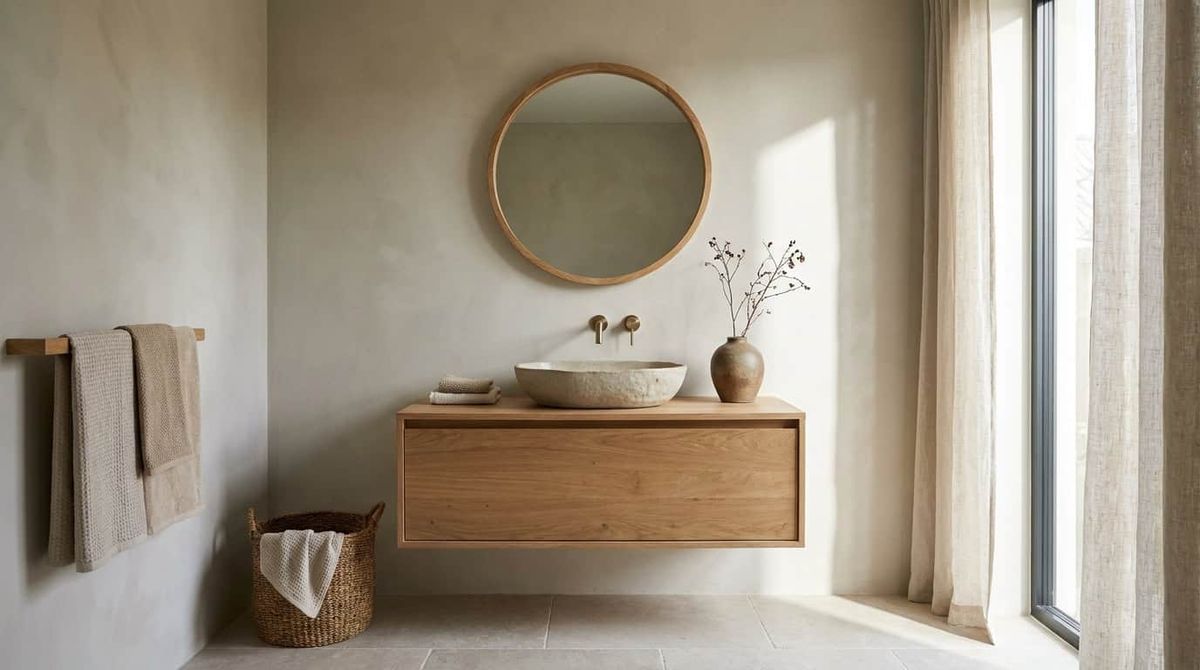
10. Lidded Ceramic Jars for Counter Items
Cotton balls, q-tips, and hair ties in open dishes or clear containers are Japandi failures. Transfer them to lidded ceramic jars in matte white or warm stone — the MUJI Ceramic Canister with lid ($18 each) or the Target Threshold Porcelain Canister ($14) both work. Two or three matching jars on the counter, lids on, nothing else. The counter reads as a spa surface.
11. Narrow Bamboo Cabinet for the Empty Wall
A narrow freestanding cabinet (12–14″ wide) next to or against the bathtub or behind the door uses wall space without touching it. The Zenna Home Over-Door/Freestanding Cabinet in espresso bamboo ($65, Amazon) pivots between over-door and freestanding mode — useful for rentals where over-door hooks may damage door frames. Store towels, cleaning supplies, and toiletries inside, closed front only.
12. Recessed Shelf vs. Over-Toilet Étagère
Over-toilet étagères are space-efficient but visually heavy — shelves at multiple heights, visible objects at every level, visual noise above the toilet line. If the rental allows one temporary modification (some do for adhesive-mount shelves), a single recessed floating shelf between studs at 60″ height holds one object: a plant, a soap bottle, a single candle. If no modification is permitted, skip the étagère entirely and use the narrow bamboo cabinet from solution 11 instead. Two competing storage moments in a small bathroom is one too many.
Entry / Closet
13. Genkan-Inspired Shoe Bench
The Japanese genkan — the dedicated transition zone at the entry — translates in a small apartment as a low bench with closed shoe storage beneath. The IKEA HEMNES shoe bench ($99) in light brown holds 4–6 pairs inside, offers a seat for putting on shoes, and keeps the entry floor completely clear. At 40″ wide and 19″ deep, it fits in a standard apartment entry without blocking the door swing. No shoes visible. No pile at the door.
14. Narrow Oak Coat Tree — Single Pole, Not Branching
A traditional branching coat rack holds too many things at too many levels. A single-pole coat tree with 3–5 pegs at one height reads as intentional rather than loaded. The VASAGLE coat stand in rustic brown ($35, Amazon, search URST62BX) hits the right wood tone and keeps the vertical silhouette slim — 10″ footprint. Limit what hangs: two jackets maximum, one bag. Everything else goes in the closed-front cabinet.
15. Closed-Front Shoe Storage Cabinet for Hallways
For apartments with more than four household shoe-wearers, the shoe bench fills in a week. A closed-front shoe storage cabinet — the SONGMICS shoe cabinet ($80–120) in white or the IKEA STÄLL ($89) in white — handles 12–16 pairs behind a fully closed flip-door front. The STÄLL is 13.75″ deep and 27.5″ wide: narrow enough for a hallway, tall enough to handle boots in the lower compartment. The closed front is non-negotiable. An open-cubby shoe rack is not a Japandi piece regardless of the finish color.
Renter-Friendly Priority List: The Top 5 No-Drill Options
If your lease is strict or you’re mid-tenancy and avoiding any patching, these five solutions from the list above require zero wall contact:
-
Lift-top oak coffee table (Solution 1) — fully freestanding, moves with you
-
Low rattan basket pair (Solution 2) — slides under existing furniture, no hardware
-
Linen storage ottoman (Solution 3) — freestanding, doubles as seating
-
Narrow bamboo bathroom cabinet (Solution 11) — freestanding, self-supporting
-
Wall hooks behind bedroom door (Solution 6) — Command strips rated to 16 lbs, fully removable without wall damage when used as directed on clean, painted drywall
For the kitchen pegboard (Solution 7), Command Large Strips hold up to 16 lbs per pair — sufficient for a birch pegboard with lightweight items. Test the wall surface first: textured or brick walls reduce adhesion.
The genkan shoe bench (Solution 13), closed-front shoe cabinet (Solution 15), and coat tree (Solution 14) are all freestanding — no drilling, no anchoring required.
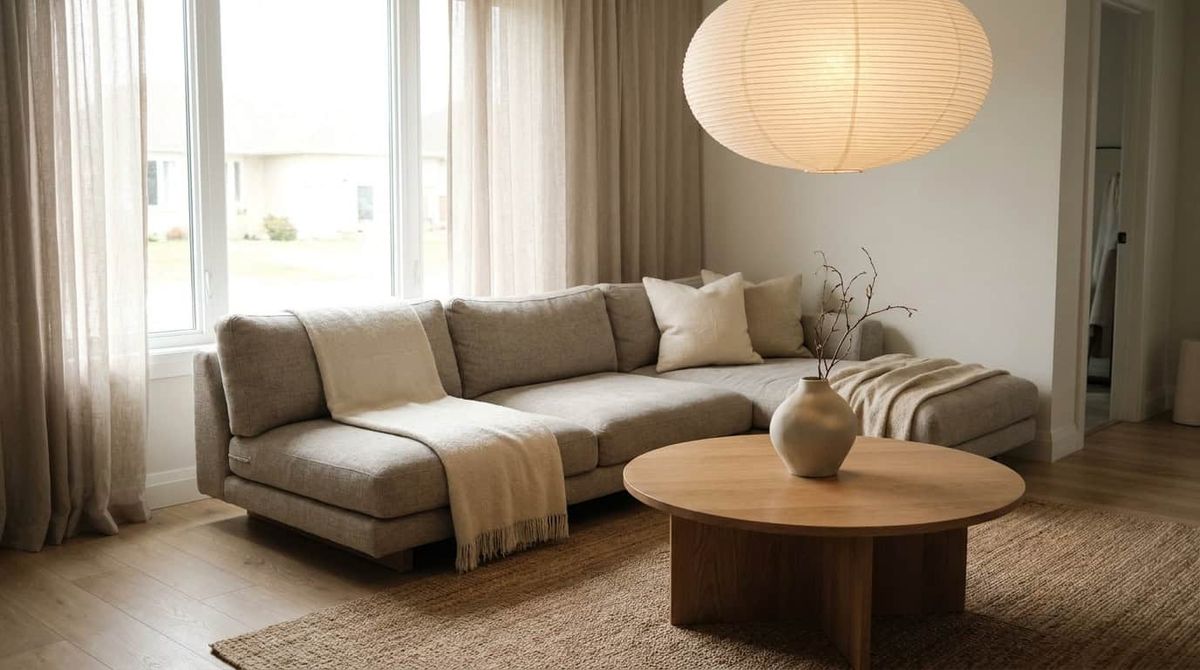
Hidden vs. Visible Storage: The Decision Matrix
Japandi storage isn’t about hiding everything — it’s about knowing which objects earn display rights.
Hide it when:
- It’s used daily (remotes, charging cables, scissors, cleaning supplies)
- It’s plastic (no exceptions — all plastic goes behind doors)
- There are more than two of the same object (three throw pillows in a stack = chaos signal)
- The color doesn’t match the palette (bright packaging, orange-toned wood, white appliances)
- It creates a visual line that interrupts the horizontal calm (vertical stacks of books, hanging bags)
Display it when:
- It’s a single ceramic object in matte white, warm stone, or terracotta
- It’s a live plant in a plain pot (one, not three)
- It’s one book, spine facing inward or cover facing out if the cover is neutral
- The object is the material story of the room — a handmade bowl, a piece of driftwood
The ratio is roughly 90/10: 90% of what you own gets hidden, 10% earns a surface. Most people apply it 50/50 and wonder why their Japandi room still reads as cluttered.
3 Storage Mistakes That Break the Calm
1. Open Shelves Overstuffed With Organized Clutter
A perfectly organized open shelf — labeled bins, folded towels, color-sorted books — is still a maximalist moment in a Japandi room. The bins are visible. The labels are visible. The quantity is visible. “Organized” and “invisible” are not the same thing. If a shelf is open, it holds one thing or nothing.
2. Wrong Wood Tone: Orange-Pine Baskets
The natural rattan basket from most big-box retailers has an orange-gold tone that clashes with light oak and reads warm in the wrong direction. Test next to your existing wood pieces before buying. The Container Store’s seagrass line and Target’s Threshold woven baskets (in the darker, more grey-natural tone) stay within range. Any basket described as “honey,” “golden,” or “warm natural” is likely too orange.
3. Labeled Bins on Display
White text on a woven basket surface — “BLANKETS,” “TOYS,” “MISC” — is a visual signal that says “storage area” rather than “calm space.” Japandi rooms have no storage areas; they have surfaces and objects. If a bin needs a label to identify its contents, it belongs behind a door.
FAQ
Q: What’s the smallest closet upgrade for a Japandi makeover?
Start with door organization. A slim over-door organizer on the inside of the closet door (not visible when the door is open from the room) paired with IKEA SKUBB hanging organizers ($12 for 6 compartments) creates a fully closed-front system within an existing closet footprint. The room-facing side of the closet door stays clean.
Q: What are the best Japandi storage pieces on Amazon?
Three consistently solid picks: VASAGLE lift-top coffee table ($120, LCT025A01), SONGMICS storage ottoman in linen grey ($55–75, ULSF045), and the simplehuman slim pull-out bin in brushed steel ($45). All stay within the wood-tone or neutral-metal palette. Pin this list for reference before your next purchase.
Q: Which IKEA pieces work best for Japandi storage?
HEMNES (nightstand, shoe bench, dresser) in light brown or white is the core Japandi-adjacent IKEA line. SKUBB flat storage boxes in grey or white are the best under-bed option. EKET wall cabinet in white (not the open cubby version — the closed-door version) works as a living room display unit when used with restraint. KORKEN glass jars for the kitchen. Avoid the KALLAX open shelving system entirely — it’s Scandi-functional, not Japandi-calm.
Q: Where do I find closed-front cabinets cheap for a Japandi entry?
Facebook Marketplace and OfferUp consistently list IKEA BESTA and EKET units secondhand for $30–60. These are the closed-cabinet systems IKEA uses for media walls and entryways — flat front, push-open doors, no hardware. In white or light grey, they land cleanly in a Japandi palette. For new, the SONGMICS shoe storage cabinet ($80–120 on Amazon) is the most consistent budget pick with a fully closed flip-door front. See our full budget breakdown for category spending guidance.
Q: How much does the “hidden storage” furniture actually cost for a full small apartment?
Budget $250 to $400 in dedicated pieces, not a single hero buy. A lift-top coffee table runs about $120, a linen storage ottoman $55 to $75, and a closed-front shoe cabinet $80 to $120. Layer in freestanding rattan baskets around $28 each and the average per-piece cost still lands under $65.
Q: How tall should under-bed storage be in a Japandi bedroom?
Keep flat bins to 6 inches or less under a low platform bed, and leave a 2-inch clearance gap at the floor so the shadow line reads as calm rather than crammed. IKEA SKUBB boxes ($16 for 6) and IRIS USA flat bins ($24 for 4) both sit low enough to disappear from standing height.
Conclusion
The 15 solutions here cover every room a small-space renter actually uses — and every one of them works without a drill or a landlord conversation. The goal isn’t a minimalist showroom; it’s a room where the storage does its job invisibly so the space can do what calm spaces do: feel bigger than they are.
If you’re starting from scratch, begin with the closed-front shoe cabinet at the entry and the lift-top coffee table in the living room — those two pieces eliminate the two most visible daily-use clutter zones and set the tone for the rest of the apartment. For the full style context, see our Japandi style decor guide. For building out the rest of the room, our Japandi furniture picks for 2026 and the under-$300 furniture roundup cover the key investment pieces. And for how the storage approach shifts between rooms, see Japandi living room ideas and our room variations breakdown. Pin this guide and come back when you’re tackling the next room — aesthetic corners and nooks is a useful next read once the storage layer is in place.
Related: Japandi Style Decor Guide · Budget Breakdown · Best Japandi Furniture 2026 · Furniture Under $300 · Living Room Ideas · Room Variations · Aesthetic Corners