
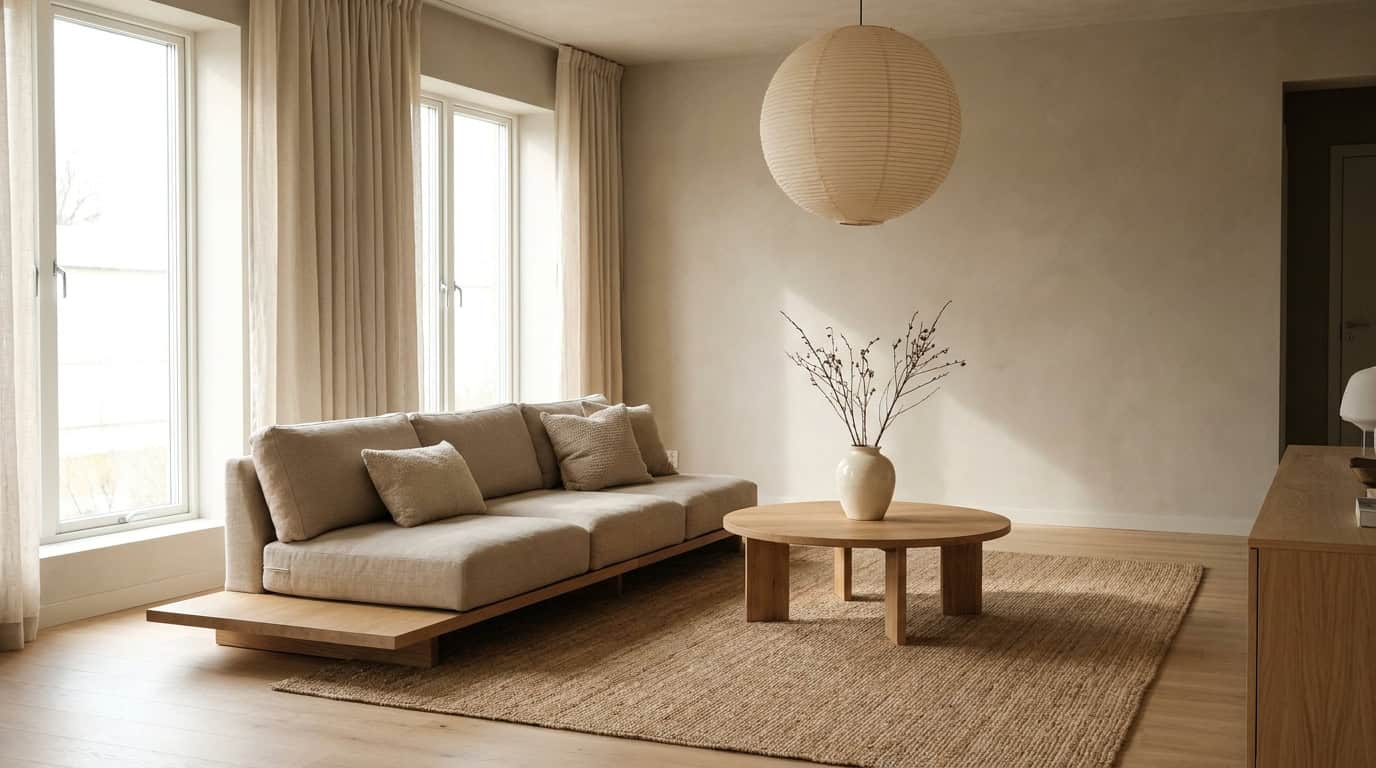
A functional Japandi tea corner comes down to six items in a footprint as small as 18″×12″, for a total of $122–$295. Most guides skip that and show 12 photos of perfectly staged shelves with zero guidance on how to actually make tea there. We’ve built four working tea stations — across a kitchen counter, bedroom nightstand, office desk, and living room console — and the one consistent finding is that function shapes the aesthetic better than any styling trick. When the kettle is in the right spot and the tray holds exactly what you need, the corner looks right without effort.
This guide covers the 6 items that make a japandi tea corner actually usable, a simple setup formula, four location-specific variations, and the daily ritual that justifies the whole thing. Total cost: $122–$295 depending on sourcing. Weekend-buildable, renter-friendly, and sized for corners as narrow as 18 inches.
Key Takeaways
- 6 core items cover kettle, cups, tray, storage, strainer, and one live element — nothing more
- Total cost range: $122–$295 (budget to mid); luxury versions top out around $400
- Ritual-first design means every item has a job; the aesthetic emerges from placement and restraint
- Weekend-buildable: sourcing + setup takes one Saturday afternoon, with Prime or local Japanese import store
- Renter-friendly: zero wall holes required for the nightstand and desk variations; floating shelf version uses two anchors
The 6 Essential Items for a Japandi Tea Station
A functional japandi tea corner needs exactly six categories of object. Fewer and you’re missing something mid-brew; more and the surface gets cluttered and stops reading as Japandi.
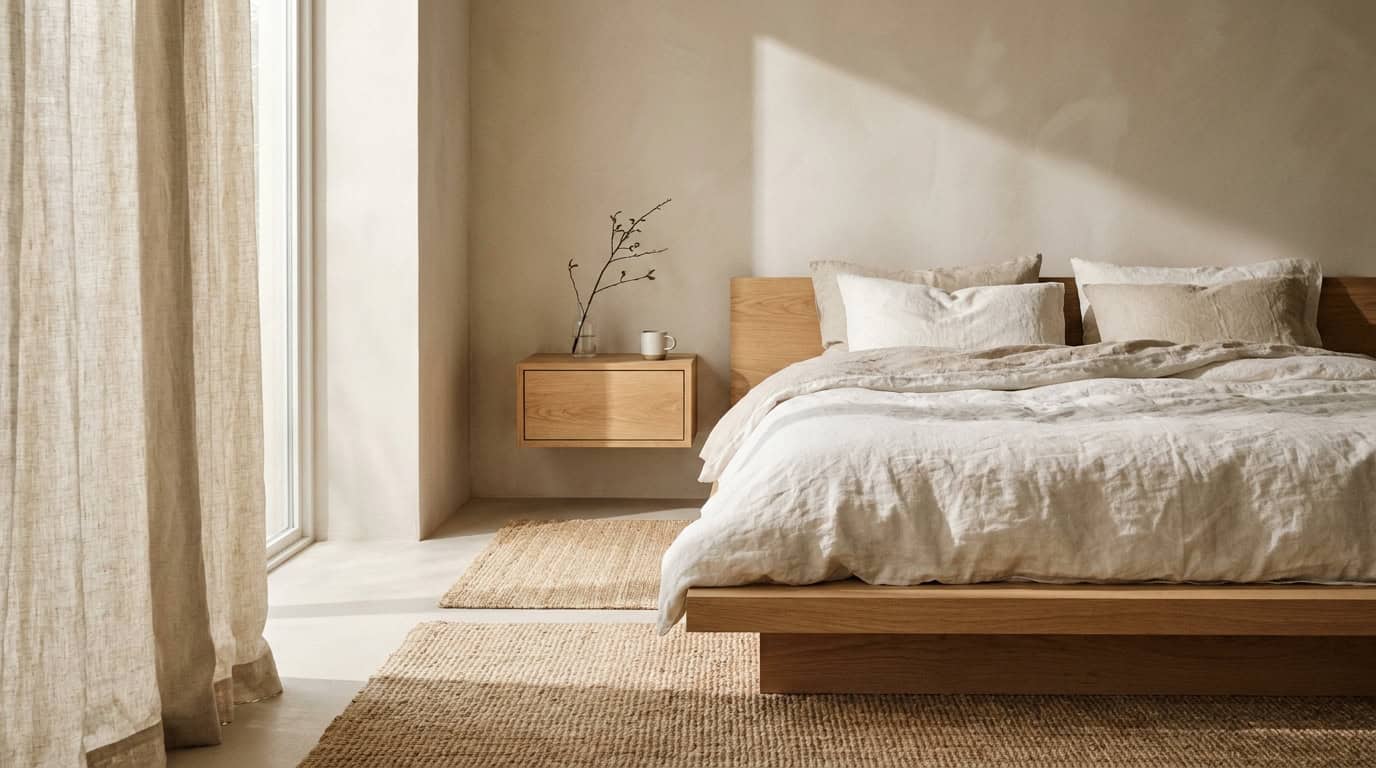
1. Cast Iron Tetsubin or Stoneware Kettle — $35–$90
The kettle is the visual anchor and the most-used object on the surface. A Iwachu cast iron tetsubin (around $75–$90 at Japanese kitchen importers or Amazon) retains heat for 20–30 minutes and oxidizes to a matte black that suits Japandi perfectly. If cast iron feels too heavy for a bedroom setup, a stoneware gooseneck kettle from brands like Fellow or Hario works equally well at $35–$55 — gooseneck control matters for green teas like gyokuro, which scorch above 175°F. Skip stainless; the reflective finish conflicts with the matte palette that defines the Japandi color palette of muted neutrals.
2. Yunomi Tea Cups — $20–$40 per set of 2
Yunomi are tall, handleless Japanese everyday tea cups — deliberately informal compared to a chawan ceremony bowl. Sets of two in rough-textured stoneware (Hasami Porcelain, Arita ware, or budget equivalents from Daiso or World Market at $8–$12/cup) fit the wabi-sabi imperfection principle central to Japandi’s wabi-sabi warmth. Keep two cups on the tray, store extras in a drawer. More than two cups on the surface breaks the “quiet” read of the corner.
3. Bamboo Tea Tray or Solid Wood Serving Board — $25–$60
The tray defines the footprint of the tea station and contains spills — both practically and visually. A bamboo gongfu tea tray with drain reservoir (widely available at $25–$40 on Amazon under brands like Teavana or generic Chinese imports) works perfectly for daily use. For a drier aesthetic without the tray’s built-in drainage, a solid walnut or acacia serving board (10″×16″ minimum) at $35–$60 from Home Goods or Ikea’s APTITLIG does the same job. The tray or board should be large enough to hold the kettle, two cups, and strainer simultaneously.
4. Loose-Leaf Tea Storage Canister — $15–$30
Loose-leaf tea is mandatory here — tea bags are too visually casual and don’t hold gyokuro or high-grade hojicha well anyway. A ceramic canister with an airtight wooden lid (15–30, widely found at Japanese homeware stores or Etsy ceramic sellers) keeps tea fresh and adds a vertical element to an otherwise low horizontal arrangement. Label the outside with a piece of washi tape if you rotate teas seasonally. Recommended starting teas: Ippodo’s Shogyokuro sencha ($18 for 100g, ships from Japan) or Kettl’s roasted hojicha ($16 for 50g, Brooklyn-based, excellent for evenings).
5. Tea Strainer or Kyusu Teapot — $12–$45
For single-cup brewing, a fine-mesh stainless strainer that rests on the cup lip works fine ($12–$18). For households brewing two cups at a time, a kyusu side-handle teapot (ceramic, 300–400ml capacity) is worth the upgrade at $25–$45. Brands like Tokoname ware or Hario’s ceramic kyusu are available through specialty tea retailers including Kettl and Bellocq. The kyusu sits on the tray between the canister and cups and adds visual weight to balance the kettle.
6. Single Small Ceramic Vase for One Branch — $15–$30
One branch, stem, or dried sprig in a bud vase or small ceramic vessel (3–5 inches tall) provides the seasonal element that makes the corner feel alive without cluttering it. A single eucalyptus stem, dried pampas grass sprig, or cut branch from a garden works. In winter, one bare twig with lichen. The vase should contrast with the tray — if you have a dark tray, use a cream or white vessel. Bud vases from CB2, IKEA’s ANLÖGGNING, or handmade ceramic sellers on Etsy keep the cost at $15–$28.
What most guides miss: the real starting cost of a usable tea set is lower than the styled photos suggest. A genuinely functional starter, one electric gooseneck kettle ($35), two stoneware yunomi ($20), a fine-mesh strainer ($12), a ceramic canister ($15), and 50g of hojicha ($16), comes to about $98 before the tray. The $200-plus figures come from the cast iron tetsubin and the kyusu teapot, both upgrades rather than requirements.
Free · 60 seconds
Not sure which style is actually yours?
Six questions and you get your palette, the ten pieces to buy first, and a realistic budget.
The Setup Formula
Every japandi tea corner follows the same spatial logic regardless of where it lives.
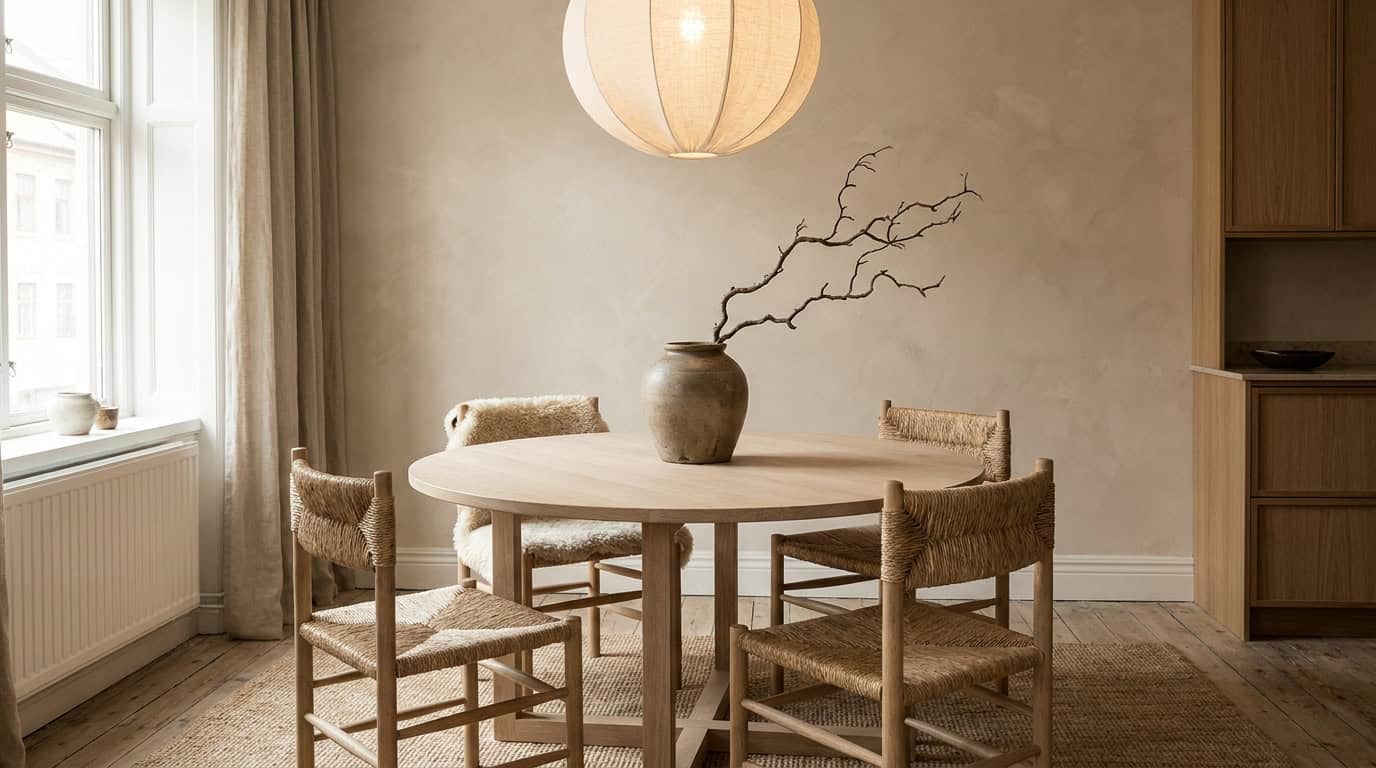
Surface → vertical anchor → focal item → seasonal touch
Start with the tray or board as the base surface. Place the kettle at the back-left or back-right (not centered — centered kettles look staged). Position the kyusu or strainer at the front opposite corner of the kettle to create diagonal tension. Cups go between them. The canister stands upright behind the cups. The bud vase with its single element goes at the near edge or beside the cups.
The “less than 60% filled” rule: measure the tray surface in your head, fill no more than 60% of it with objects. The remaining 40% of visible tray or board surface is part of the design — it signals restraint. Overfilling a tray is the most common reason a tea corner photographs as cluttered rather than composed.
Add a vertical anchor if the surface sits on a counter or console: a floating shelf 12–14 inches above holding the canister and backup cups, or a small three-tier shelf unit beside the tray. Vertical anchors let the tea corner hold more objects without cluttering the primary tray surface.
What most guides miss: if you want a floor-seated tea corner, the dimensions are specific. A floor cushion (zabuton) runs 22–26 inches square and 2–4 inches thick, and the low table in front should sit 12–16 inches high so the tray meets you at a comfortable pour height while kneeling or sitting cross-legged. Anything taller than 18 inches forces you to reach up and breaks the grounded, low-line posture that defines the Japanese side of Japandi. Plan for roughly a 3′×3′ patch of floor to fit the cushion, table, and knee room.
4 Location Variations
Kitchen Counter Corner
The kitchen japandi tea station is the most functional of the four setups and the easiest to commit to daily use. Use a three-tier bamboo shelf unit (14″×10″ footprint, $35–$55) in a corner beside the stove or near the sink. Place the kettle on the counter beside the shelf — not on the shelf, which is too high for a heavy cast iron tetsubin. Tier one: cups and strainer. Tier two: canister and a small matcha scoop if you drink matcha. Tier three: backup teabags, a backup yunomi. The bud vase sits on the counter at the corner of the shelf. This version works in a rental kitchen because the shelf requires no wall anchors.
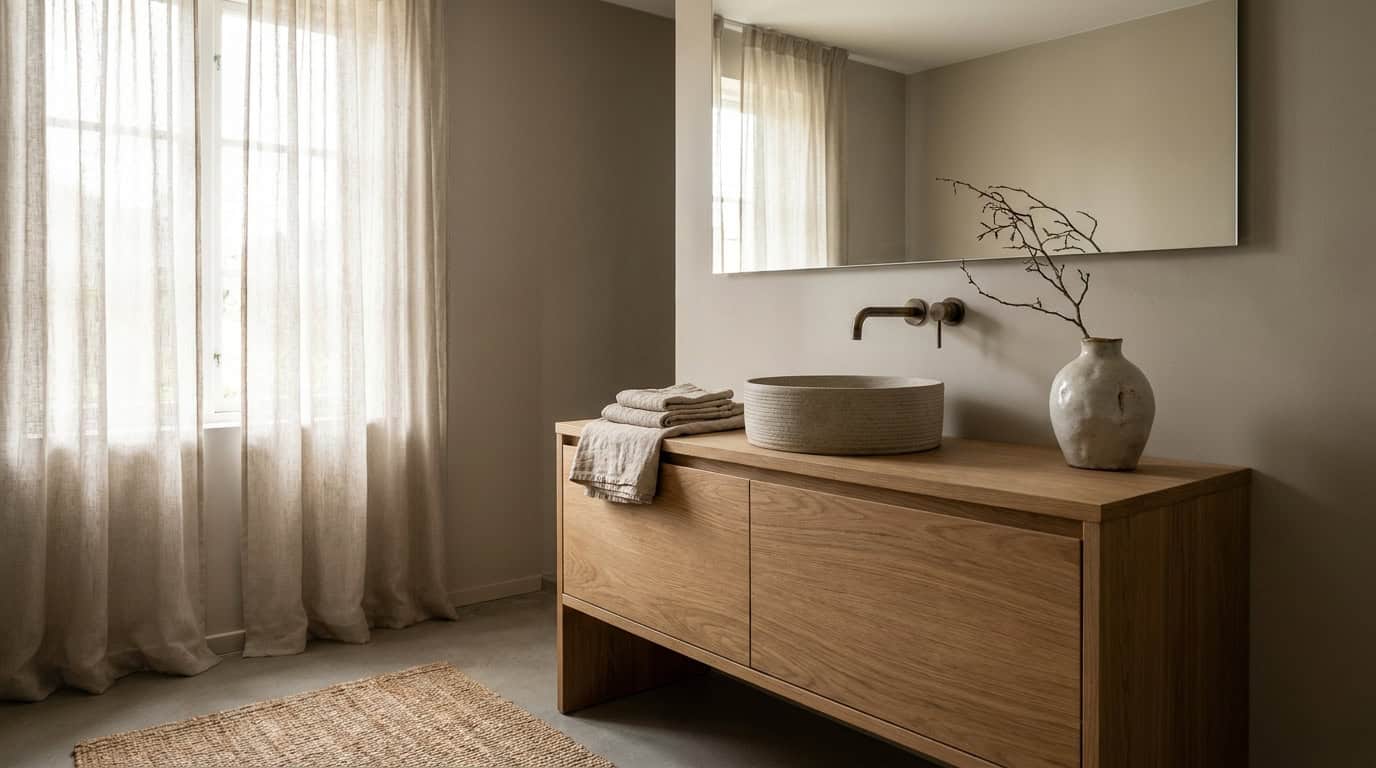
Bedroom Nightstand Tea Station
The compact version: one tray (10″×14″ minimum) on the nightstand or a dedicated small side table. Kettle gets plugged in via a bedside outlet — a Fellow Stagg EKG electric gooseneck ($165, overkill but quiet and temperature-precise) or a basic Cosori gooseneck ($35). The canister, one cup, and the bud vase complete the tray. This setup is for morning and evening teas only; hojicha or low-caffeine sencha recommended for the nightstand context. The ritual is simpler here: boil, steep, read, finish. See our Japandi reading nook guide for pairing this setup with a bedside reading corner.
Office Desk Side Tea Ledge
A floating wall shelf (24″×8″, $20–$35 from IKEA LACK or Amazon basics) mounted at desk height on the side wall creates a dedicated tea ledge without consuming desk surface. Place the electric kettle on the floor or on a small stool beneath the shelf and run the cord behind the desk. The shelf holds the tray with cups, canister, and strainer. Add a small paperback or one physical notebook beside the tray — the tea + book combination signals deliberate pause within a work context, which is the entire point of the office version. Keep one variety of tea only (we use Ippodo’s Hojicha Sannenbancha, $12/100g — low caffeine, good for afternoon).
Living Room Console Tea Moment
The entertaining version. A console table behind the sofa or against a living room wall supports a larger tray (14″×20″) with the full setup: kettle, kyusu, two to four cups, canister, and bud vase. This version allows two extra cups stored on a small tray beside the main tray — for guests. The living room setup benefits most from the vertical anchor: a wall-mounted shelf 18 inches above the console holding a small ceramic sake bottle (decorative), backup cups, and a candle. Coordinate with your broader Japandi living room decor — the tea corner should feel continuous with the room’s material palette, not like a separate vignette.
Daily Ritual Practice
A tea corner you only use on weekends is a styling exercise. The goal is a corner that earns its space through daily use.
The 5-minute morning ritual: Fill the kettle the night before. In the morning, turn it on before anything else — before checking the phone. While it heats, measure 3–4g of loose sencha or gyokuro into the strainer or kyusu. When the kettle reaches temperature (160–175°F for green teas, 190–200°F for hojicha), pour over the leaves, steep for 60–90 seconds, pour into the cup. Stand at the corner for the duration of the first cup. This is the entire practice.
Weekend slow tea: Brew three consecutive infusions from the same leaves (Japanese green teas handle 2–3 re-steeps well). Each infusion takes 4–6 minutes. Use this time to read, write, or simply look out the window. The corner’s minimalism makes the 20-minute practice feel distinct from the rest of the morning.
Look follows function: The corner looks the way it does because everything in it has a clear reason to be there. The kettle is front-accessible because it’s used first. The cups are near the kettle because they receive the pour. The canister is behind the cups because it’s opened before the kettle is on. The bud vase is at the edge because it’s the only non-functional element. When function drives placement, the resulting arrangement reads as composed — which is the same logic behind every Japandi furniture pick that works: purposefulness before aesthetics.
3 Mistakes That Flatten a Tea Corner
Too many cups on the surface. Four cups maximum visible at any time — two in use, two as backup on a secondary shelf. A row of six yunomi looks like a retail display, not a personal ritual corner. The intimacy of two cups signals that this corner serves one or two people, not a crowd.
Wrong-temperature aesthetic. Japandi runs warm-neutral: warm whites, natural wood tones, matte black, terracotta, stone gray. Introducing icy-white glossy ceramics or chrome-finish anything — a stainless steel kettle, a glossy white tray — shifts the register toward cold Scandinavian minimalism and away from the warmer Japanese sensibility that gives Japandi its lived-in quality. See the Japandi color palette guide for the specific warm neutral anchors to match.
No ritual element. A tea corner that holds decorative items but no actual tea supplies — the kettle is there for looks, the canister is empty, the cups are purely decorative — reads as a flat prop. The budget breakdown for Japandi decor shows that the functional items (kettle, tea, strainer) cost $47–$135 and are the items that make the corner worth building. The aesthetic elements amplify something that already works; they don’t substitute for it.
FAQ
What is the smallest viable japandi tea corner?
An 18″×12″ footprint works: a small board or tray (10″×14″), a compact electric kettle, one yunomi, and the strainer. This fits on a nightstand, a floating shelf, or a small corner of a kitchen counter. The bud vase can go on the wall via a small peg hook if the surface is genuinely that tight. The 18 Japandi corners and nooks guide has six examples of sub-18-inch setups.
Can a renter set up a japandi tea station without drilling?
Yes. The kitchen counter three-tier shelf and the bedroom nightstand versions require zero wall anchors. The office floating shelf version requires two small holes (patchable at move-out). The living room console version requires none. Command Strips rated for 5–7 lbs handle a lightweight floating ledge if the landlord prohibits any drilling.
What is the best beginner Japanese tea for a tea corner?
Hojicha (roasted green tea) is the most forgiving: brew temperature 190–200°F, steep 45 seconds, low bitterness even if you overshoot the time. It’s also the most affordable in good quality — Ippodo’s Hojicha ($12/100g) or Kettl’s Roasted Hojicha ($16/50g) are both excellent starting points. Gyokuro is the most rewarding but requires precision (160°F, 90-second steep) and a thermometer or temperature-controlled kettle.
Cast iron vs ceramic kettle: which suits Japandi better?
Both work aesthetically — cast iron runs matte black, ceramic runs earthy matte. The practical difference: cast iron retains heat longer and is heavier (the Iwachu 0.7L is 2.4 lbs); ceramic is lighter but more fragile. For a bedroom setup, ceramic or an electric stoneware kettle wins on weight and safety. For a kitchen or living room corner with a shelf that can handle weight, cast iron’s longevity and heat retention justify the price premium.
How much space does a japandi tea corner need?
A functional corner needs an 18″×12″ surface at minimum, enough for a 10″×14″ tray plus the kettle beside it. A floor-seated version needs roughly a 3′×3′ patch of floor to fit a 22–26″ zabuton cushion, a 12–16″ low table, and knee room. Go smaller and you end up brewing elsewhere and carrying the cup back, which defeats the ritual.
Does a cast iron tetsubin need special care?
Yes, but it’s minimal. Rinse with hot water only, never soap, and dry it fully over low heat or it will rust. Most tetsubin have an enamel interior that resists rust, while the raw cast iron exterior develops a matte patina over time. Boiling plain water and emptying the kettle fully after each use is the entire maintenance routine.
Conclusion
A japandi tea corner earns its counter space or shelf space by being used, not by being photographed. The six items above — kettle, cups, tray, canister, strainer, single branch — cover the entire ritual without excess. Pick the location variation that fits your floor plan, apply the 60% fill rule to the tray surface, and use it every morning for two weeks. The corner will feel essential before the end of the first week.
For the next natural pairing, the Japandi reading nook guide covers how to extend the same quiet aesthetic into a dedicated reading seat — a setup that combines well with any of the four tea corner variations above.
Related guides: Japandi Style Overview · 18 Japandi Corners · Wabi-Sabi in Japandi · Japandi Color Palette · Budget Breakdown