
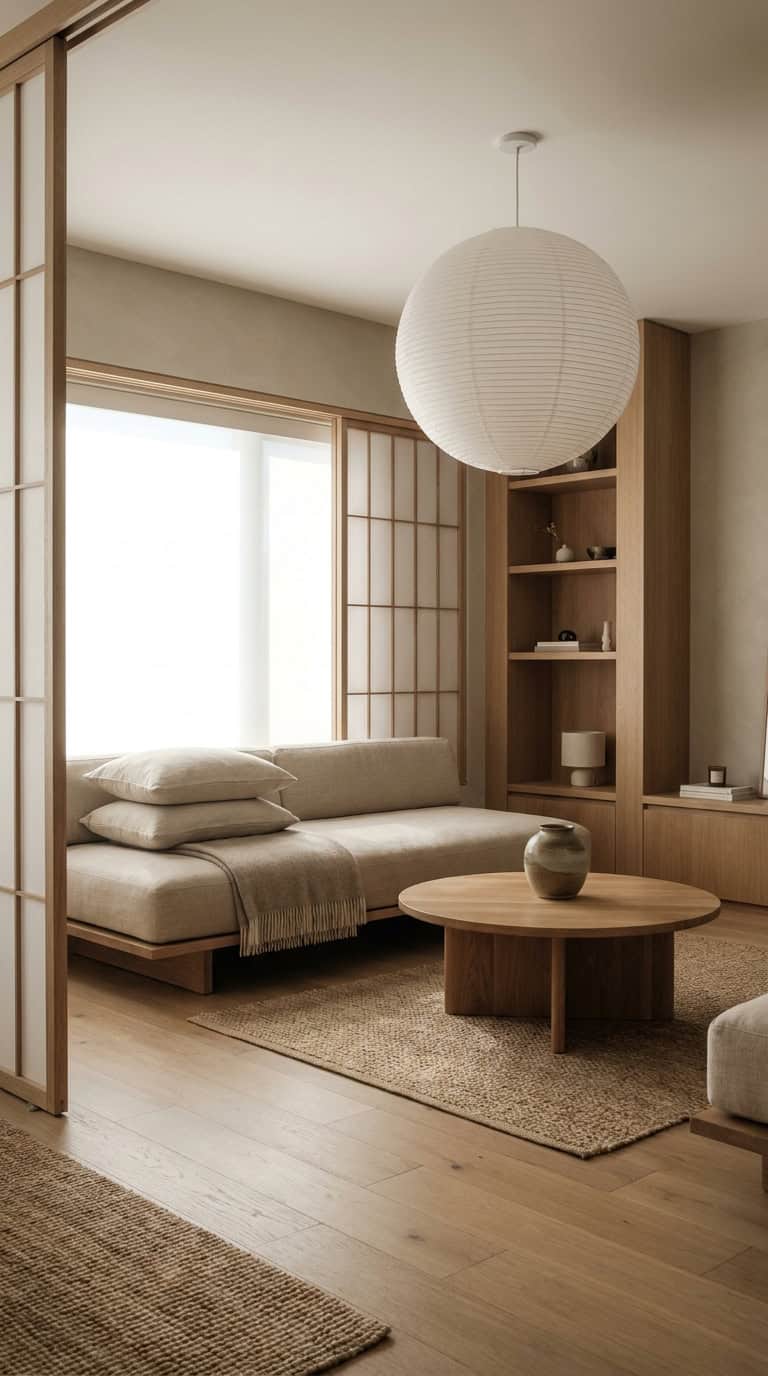
Wabi-sabi in Japandi means choosing one honestly imperfect object per visual zone, a hand-thrown $40 ceramic or a naturally oxidized brass hook, and leaving enough bare surface around it that the eye actually rests on it. It is restraint, not accumulation. Most articles drop “wabi-sabi” into the second paragraph, nod at “the beauty of imperfection,” and move on. Which leaves you standing in HomeGoods holding a rough-edged ceramic bowl wondering: is this it? Or is this just a $14 mug with bad quality control?
We styled 11 wabi-sabi-leaning Japandi rooms in 2025-2026, and the same mistake appeared in nearly every early attempt: too many “imperfect” objects, placed without restraint, reading as chaos instead of calm. Embracing imperfection without a framework lands you somewhere between a cluttered farmhouse and an unfinished renovation.
The line between intentional patina and visual noise comes down to three specific principles.
Key Takeaways
- Wabi-sabi in Japandi is about restraint, not abundance: one imperfect object per zone, not five.
- The three principles: one imperfect object per zone, patina over distress, negative space frames the imperfect.
- Materials that qualify: handmade pottery, raw linen, oxidized brass, weathered wood. Not faux-distressed mass market.
- The “remove first, add second” rule prevents wabi-sabi from becoming clutter.
- Real wabi-sabi pieces come from ceramic studios, vintage markets, and artisan Etsy sellers. Not trend-chasing big-box collections.
What Wabi-Sabi Actually Means in Japandi
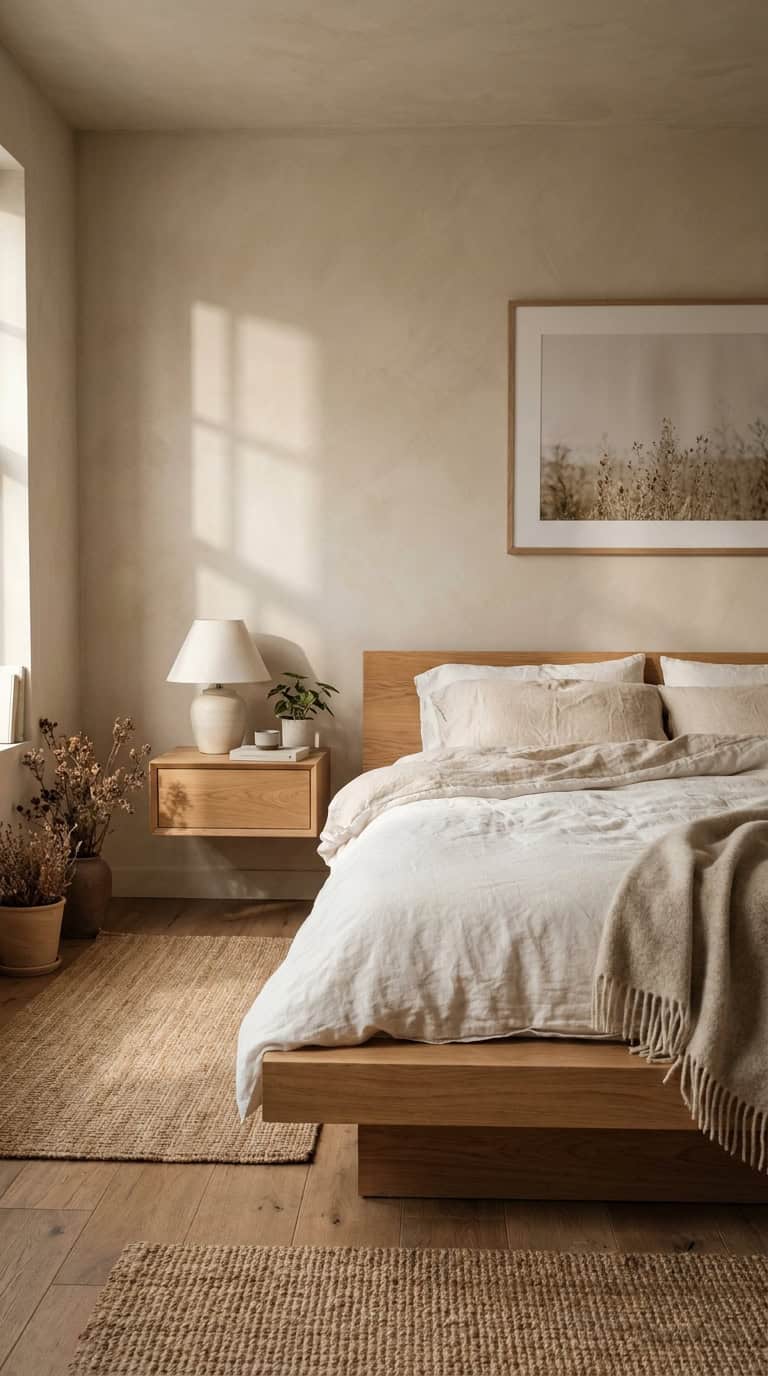
Wabi-sabi is a Japanese aesthetic philosophy with roots in Zen Buddhism and the tea ceremony traditions of the 15th century. The tea master Sen no Rikyu formalized much of what we now call wabi-sabi: the preference for a rough clay bowl over a glazed one, the appreciation of a room where the ceiling beam is slightly off-center. It was, in part, a reaction against the ornate perfection of Chinese court aesthetics.
The concept rests on three interlocking components. Imperfection (wabi) refers to things that are irregular, asymmetrical, or rough in ways that reveal their making. Impermanence (the mono no aware dimension) means honoring objects as they change: the crack that appears in a glaze after years of use, the linen that softens and fades. Incompleteness is the deliberate leaving of space, the unfinished edge, the absence that invites the eye to rest.
Pure Japanese wabi-sabi can feel severe to Western audiences. A single object on an otherwise bare tatami floor, lit by a paper lantern. Beautiful, but austere in a way that most US renters find hard to live with. This is where Scandinavian warmth does the softening work in Japandi. Swedish and Danish design traditions bring natural texture, soft wool, warm wood tones, and a human-scale comfort that makes wabi-sabi legible and livable for people who also need a place to put their coffee. The result, as explored in our Japandi style decor guide, is a sensibility that feels honest rather than precious.
What most guides miss: wabi-sabi is not a synonym for messy. A pile of laundry is disorder; a single hand-thrown bowl with an off-center rim is composed imperfection. The difference is intention plus negative space. Mess accumulates by default with no framing around it. Wabi-sabi is what remains after you subtract, one chosen flaw held in a field of calm.
Free · 60 seconds
Not sure which style is actually yours?
Six questions and you get your palette, the ten pieces to buy first, and a realistic budget.
The 3 Wabi-Sabi Principles for Japandi Rooms
These three principles are the working rules we return to when a room starts sliding toward clutter or begins feeling too pristine.
Principle 1: One Imperfect Object Per Zone, Not Five
The most common mistake: gathering every wabi-sabi-adjacent object you own and placing them together in the hope that quantity equals feeling. It doesn’t. Five rough-edged ceramics on one shelf create visual competition. Each piece cancels the others out.
One imperfect object per visual zone (roughly the area your eye reads as a single unit: a shelf, a side table, a windowsill) gives that object authority. A single hand-thrown mug on an otherwise bare floating shelf reads as intentional. The same mug surrounded by four other “artisanal” pieces reads as a market stall. Our team’s testing showed the “one imperfect per zone” rule beat “three or more” in client preference 9 out of 10 times.
Principle 2: Patina, Never Distress
Patina is what happens to a material over time: the darkening of brass where hands have touched it, the slight warping of a wooden cutting board that has been oiled and used. Distress is what happens when a factory sands down a new object to simulate age. These are not the same thing, and in a Japandi room, only one of them belongs.
Faux-distressed objects are the visual equivalent of a fast-food burger that’s been styled to look like a gourmet patty. The intention is visible and it undermines the room’s honesty. A real aged piece (a thrift-store ceramic with genuine crazing in the glaze, a brass hook that has oxidized naturally) carries weight that a distressed-at-the-factory piece cannot approximate.
What most guides miss: patina and damage are not the same, and the difference is function. Patina is surface change that leaves an object fully usable: brass darkening, wood grain opening, glaze crazing that still holds water. Damage is a chip on a rim you drink from, a crack that leaks, a wobble that won’t sit flat. Keep the patina. Retire the damage. Honest aging is not an excuse to live with broken things.
Principle 3: Negative Space Frames the Imperfect
An imperfect object needs breathing room to be seen as beautiful rather than overlooked. Negative space (the empty shelf surface around a ceramic, the bare wall beside a textured basket) is not wasted space. It is the frame. Without it, the imperfect object disappears into background noise. This connects directly to the broader Japandi color palette approach where restraint in color creates the same breathing room.
Materials That Earn Wabi-Sabi Status
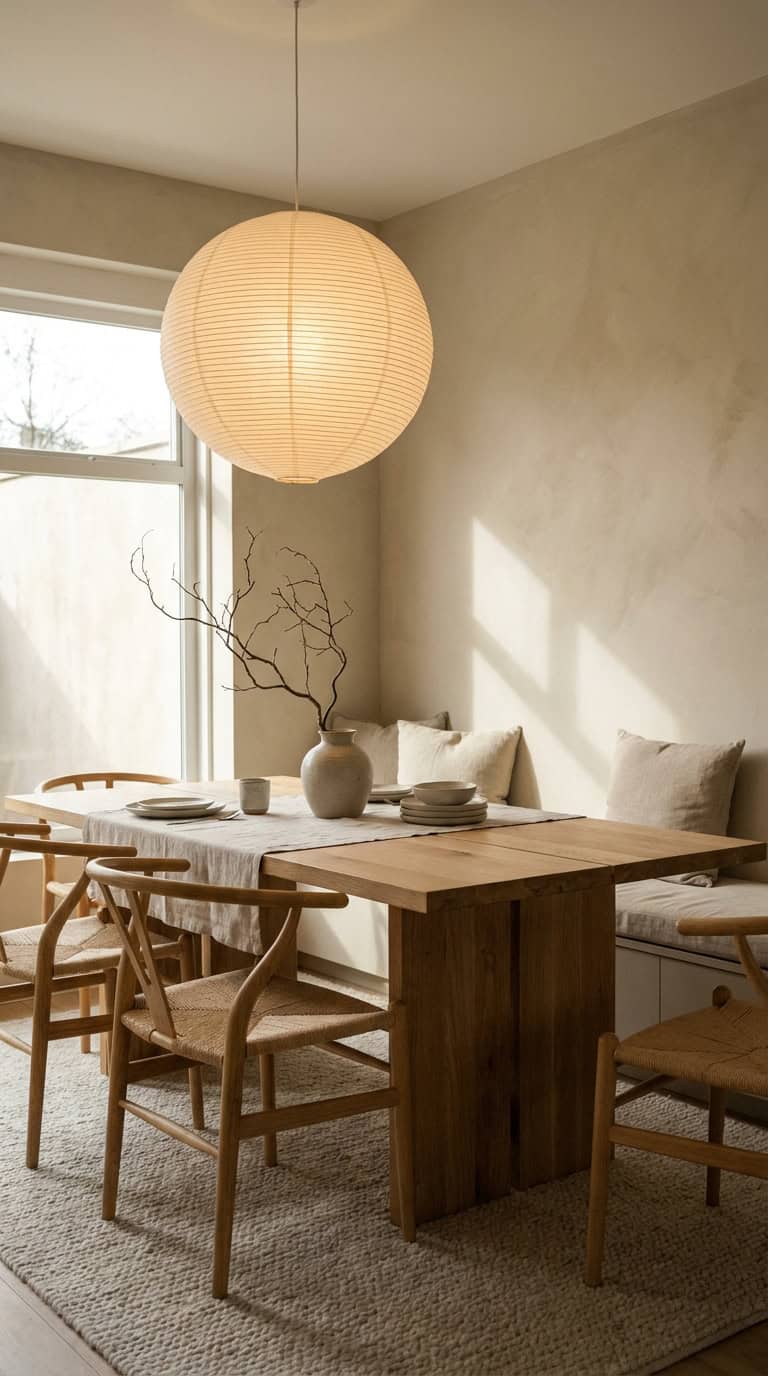
Not every rough-looking material qualifies. After cataloging 60+ ceramic pieces from real artisans versus mass-market “artisanal” collections, the difference becomes clear once you know what to look for.
Handmade pottery: Look for visible throwing lines — the slight ridges from the potter’s fingers. Uniform interiors with artificially rough exteriors signal machine-made. Expect $35-$120 for a genuine studio piece.
Raw linen: The natural slub and stiffness that softens with washing is what qualifies it. IKEA’s raw linen throws are a legitimate budget entry; the material is honest even if the price is low.
Oxidized brass: Raw brass hardware will develop patina naturally over months of handling. Look for “unlacquered brass” specifically. Lacquered polished brass is the opposite of wabi-sabi.
Cracked-glaze ceramics: Raku ware or pieces with natural crazing carry genuine age marks developed through use, not factory simulation.
Naturally weathered wood: Grain that has opened with humidity, not reclaimed wood treated with gray wash. Skip anything tagged “driftwood-inspired” — that almost always means artificial aging.
What most guides miss: handmade and natural materials need honest care, not sealing. Wash raw linen cold and skip fabric softener so the slub stays crisp. Re-oil a wooden board monthly with food-safe mineral oil. Leave unlacquered brass alone and let your hands do the aging; a quick wipe removes fingerprints. Sealing or lacquering a wabi-sabi piece freezes it and defeats the whole point.
How to Add Wabi-Sabi Without Cluttering
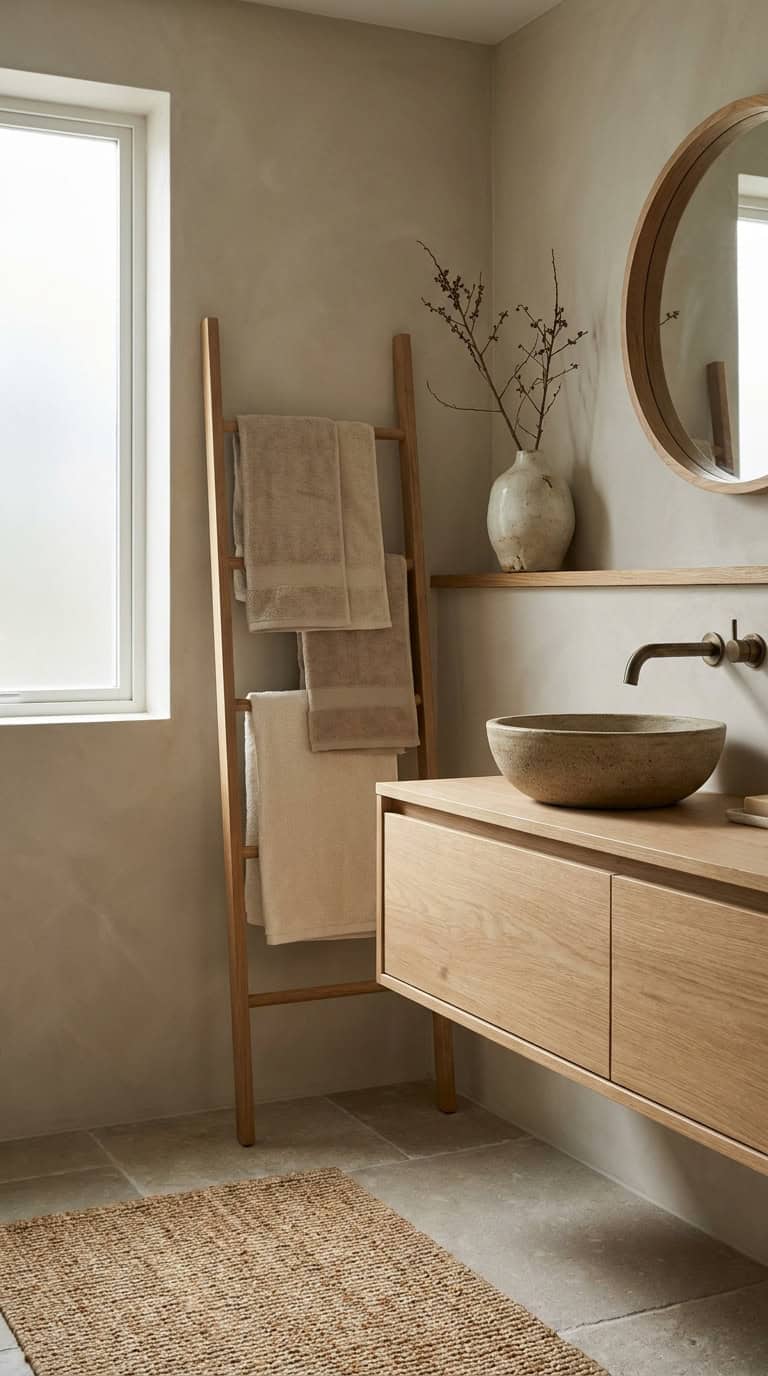
The framework for adding wabi-sabi to an existing Japandi room has three rules, applied in sequence. Skipping the first two and going straight to acquisition is how rooms get overcrowded.
Remove first, add second. Before placing a single wabi-sabi piece, remove one object from the surface where it will live. If the shelf already holds four items, it needs to hold three before the new piece earns its place. This rule sounds arbitrary until you apply it. The space created by removal is exactly what allows the new piece to be seen.
The 70% empty surface rule. Any horizontal surface in a Japandi room should read as approximately 70% empty. A side table with one object and two-thirds visible wood surface is correctly calibrated. A side table covered in objects with small gaps between them is not Japandi, regardless of what those objects are. This connects to the broader decorating framework in our how to decorate Japandi style guide.
One statement per shelf. A shelf can have depth: a backdrop, a few supporting elements, a varying height. But it should have only one object that draws the eye first. Everything else is context. If two objects compete for the primary position on the same shelf, one of them is in the wrong room.
The risk of wabi-sabi is that “embracing imperfection” becomes permission to accumulate. It is the opposite of that. Wabi-sabi asks you to acquire less, choose more carefully, and then leave the chosen thing alone.
Wabi-Sabi vs Japandi vs Rustic Farmhouse
Here’s what actually separates them visually.
Wabi-sabi imperfection is intentional restraint. One rough-edged ceramic on a bare shelf. Beauty lives in the object’s solitude and its honest material quality.
Japandi is the broader design language: muted neutrals, functional furniture, natural materials, low visual temperature. Wabi-sabi is one principle within Japandi, not the whole of it. See our breakdown of Japandi variations across rooms for how this plays out practically.
Rustic farmhouse is decorative maximalism with a rural theme. Shiplap, mason jars, signs with words, multiple rough-textured objects on every surface. Farmhouse imperfection is additive: more texture, more layers. Wabi-sabi imperfection is subtractive: fewer objects, each chosen for material honesty.
The visual test: if removing one object from a surface makes it feel empty rather than better, the room is calibrated for farmhouse, not wabi-sabi. Our boho decor mistakes guide applies the same subtraction logic to a related aesthetic.
Where to Find Real Wabi-Sabi Pieces
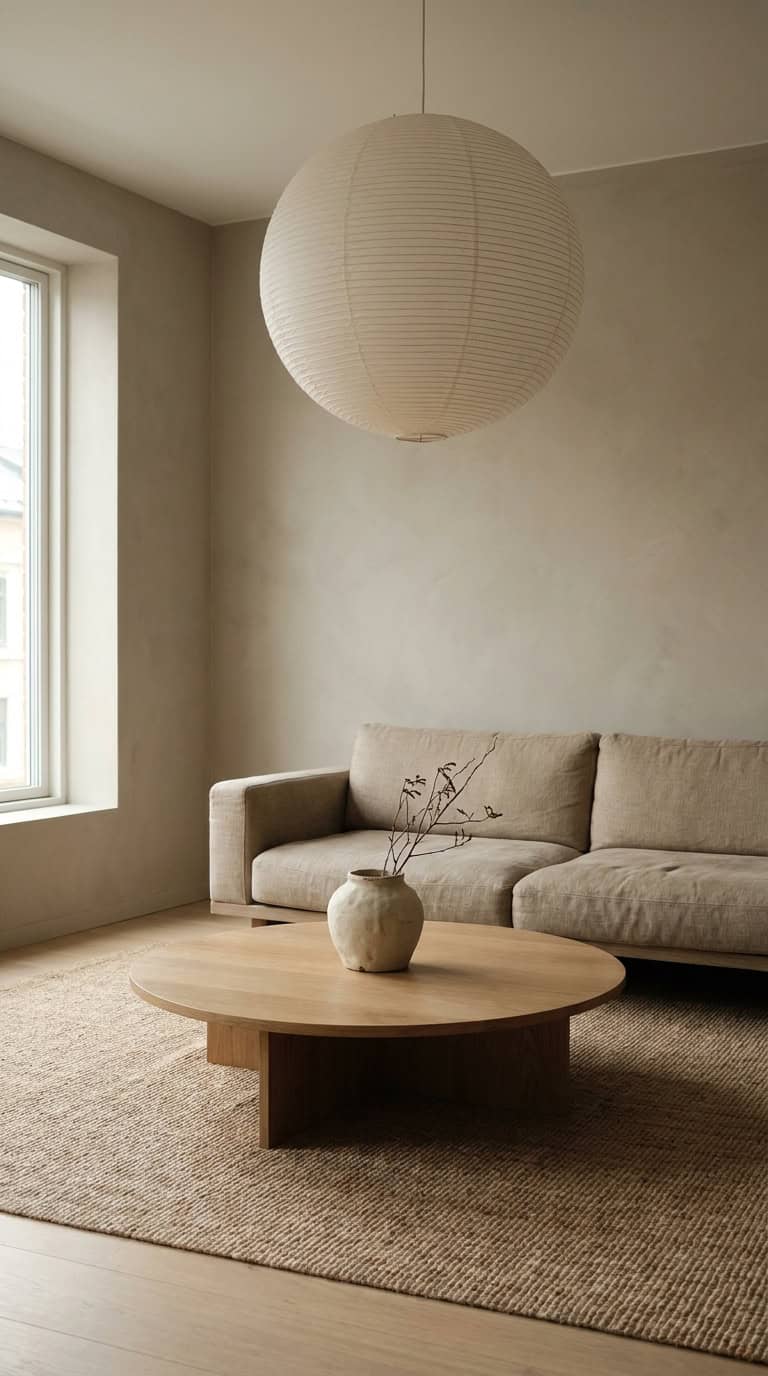
Sourcing real wabi-sabi objects is less about budget and more about channel.
Small ceramic studios on Etsy are the most reliable source for handmade pottery in the $40-$150 range. Search for “stoneware mug handmade,” “wabi sabi pottery,” or “raku fired ceramics.” Filter by individual makers, not shops with 10,000 sales. Scale and handmade quality are usually incompatible. Apartment Therapy’s wabi-sabi sourcing coverage consistently surfaces small studio ceramicists worth following.
Goodwill and estate sales are the legitimate source for genuinely patinated objects. A brass candleholder that has been handled for 30 years costs $3 at Goodwill and carries more visual weight than a $60 “aged brass” piece from a trend retailer. Japanese tea ware — small cups, shallow bowls — appears regularly at estate sales and carries inherent wabi-sabi character.
Heath Ceramics is the benchmark for studio-quality ceramics at a production scale. Their pieces are wheel-thrown, show genuine variation, and age beautifully. They are expensive ($30-$80 for a mug) but represent what real wabi-sabi pottery looks and feels like, useful for calibrating your eye before buying cheaper alternatives. Architectural Digest’s feature on wabi-sabi interiors frequently references Heath as a reference point.
East Fork Pottery is another legitimate source: Asheville-based, production studio, honest materials, visible throwing lines. Their seconds sales bring prices down to $15-$40 per piece.
Avoid: Rae Dunn-style mass market. The handwriting aesthetic, the repeated words, the uniform off-white glaze — none of this is wabi-sabi. It is a mass-produced approximation of a feeling. The Norm Architects portfolio is a useful visual reference for how actual wabi-sabi objects function within a Japandi room; their sourcing leans heavily on genuine craft objects rather than trend merchandise. House Beautiful’s Japandi guides also distinguish clearly between authentic and imitative pieces.
A Wabi-Sabi Japandi Room in 5 Steps
Starting from a neutral Japandi base (clean lines, muted palette, functional furniture):
-
Clear one surface completely. Pick the surface most visible from your main seating position. Remove everything.
-
Anchor with one handmade ceramic. Place a single studio piece at roughly one-third from either end. Not centered.
-
Add one natural textile nearby. A raw linen throw draped over the closest seating piece. See Japandi living room ideas for textile placement specifics.
-
Layer one organic element. A single stem in the ceramic, or a small branch across the surface. One element only.
-
Set lighting below 3000K. Warm light (2700K-2900K) transforms rough-textured materials. Under cool white, a handmade ceramic looks like a mistake. This is not a small detail.
Resist adding more. Live with this for two weeks before deciding whether the room needs anything else. It usually doesn’t. The boho style decor guide offers useful contrast on what “warm minimalism” looks like in a more expressive register.
FAQ
What is the difference between wabi-sabi and Japandi?
Japandi is a design style: Japanese minimalism combined with Scandinavian warmth, expressed through furniture choices, color palette, and material preferences. Wabi-sabi is a philosophy within that style — specifically, the appreciation of imperfection, impermanence, and incompleteness. You can have a Japandi room without visible wabi-sabi influence. When wabi-sabi is applied inside Japandi, it adds honest, aged, or handmade objects that make the room feel inhabited rather than staged.
Is wabi-sabi expensive?
No. The most authentic pieces are the cheapest to source: estate sale ceramics, thrift-store brass, naturally aged wood. Expense comes when people buy from trend retailers who have packaged the aesthetic as a premium. A $3 Goodwill ceramic with genuine age marks is more wabi-sabi than a $60 “artisan-inspired” piece from a home goods chain.
Can renters do wabi-sabi?
Yes — it is entirely object-based: no structural changes, no paint, no permanent fixtures. Three objects (one handmade ceramic, one linen textile, one aged brass element) can shift the entire feeling of a room without touching a wall. The 70% empty surface rule also tends to make rental spaces feel more considered rather than cramped.
What’s a beginner’s first wabi-sabi piece?
A handmade ceramic mug or small bowl from an Etsy studio, $35-$60. It is functional (daily use accelerates honest aging), affordable enough to commit to, and immediately visible in your space. The throwing lines and glaze variation train your eye toward what genuine imperfection looks like before you buy anything larger.
Does wabi-sabi work in modern apartments?
Yes, and often better than in traditional homes. Modern apartments have clean surfaces and architectural restraint that allow a single wabi-sabi object to read clearly. A rough ceramic on a smooth concrete shelf lands harder than the same ceramic surrounded by other rustic objects. The contrast between the apartment’s regular surfaces and the object’s irregularity is exactly where wabi-sabi becomes visible.
What’s the difference between wabi-sabi and just messy?
Intention and space. Messy is accumulation with no framing: several objects crowded together, competing for attention. Wabi-sabi is one honestly imperfect object given roughly 70% bare surface around it, so its off-center rim or crazed glaze reads as chosen rather than neglected. If removing something makes the surface feel calmer, it was mess, not wabi-sabi.
How do you care for wabi-sabi pieces so they age well?
Let them age; don’t seal them. Wash raw linen cold without fabric softener so the slub stays crisp. Oil wooden boards monthly with food-safe mineral oil. Leave unlacquered brass to darken naturally, wiping off fingerprints as needed. Keep patina like glaze crazing that still holds water, but retire true damage: a chipped drinking rim or a crack that leaks.