
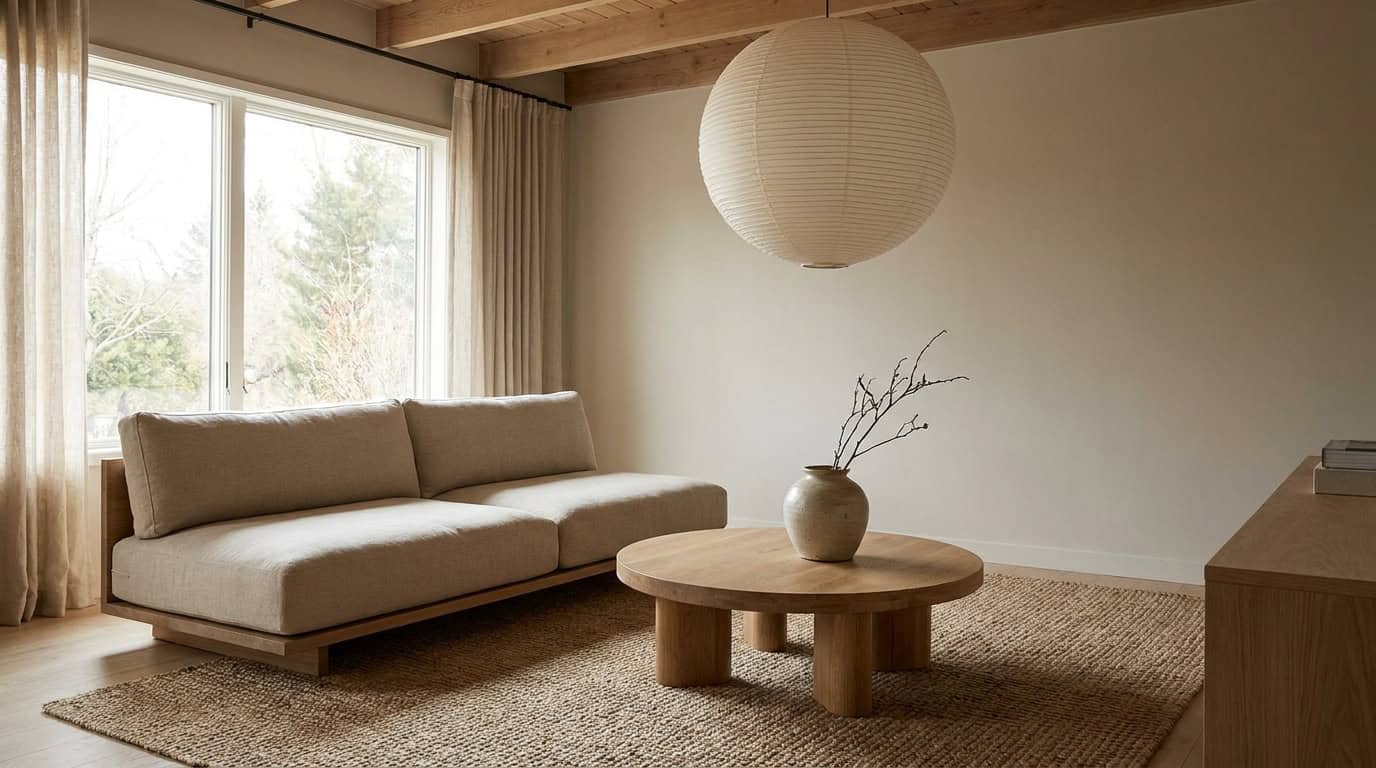
A Japandi living room comes down to five numbers: one accent color, no more than three textures, light-wood furniture kept under 30 inches, a single statement object, and roughly 70% of every horizontal surface left completely bare. Get those right and the room reads calm in a two-second Pinterest thumbnail: no visual noise, no competing focal points, just one or two things your eye lands on and rests. That’s the result of a very deliberate set of decisions about what to include and, more importantly, what to leave out. We saved 80+ Japandi living rooms on our team Pinterest board over 90 days, then ranked them by save velocity to land on these 30. Each example is organized by what specifically makes it work, not just how it looks. Browse by room condition: light-flooded, warm and earthy, small apartment, plant-heavy, reading-nook focused, or built around one strong object.
Key Takeaways
What makes a Japandi living room work:
- Color anchor: Warm greige, pale ash, clay, or ink. Pick one and run it through every surface. Mixed undertones break the calm immediately.
- 70% empty surface rule: Seven out of ten horizontal surfaces should hold nothing. Negative space is the design, not the furniture.
- Low-profile baseline: Sofas, tables, and shelving stay below 30 inches where possible. Height draws the eye up; low furniture grounds the room.
- Single statement piece: One strong object: an oversized ceramic vessel, a hand-carved bench, a single sculptural lamp. Everything else recedes.
- Plant-to-empty ratio: One or two plants, intentionally placed, outperform a full shelf of greenery. The gap around the plant is part of the composition.
The 30 Japandi Living Room Ideas
Free · 60 seconds
Not sure which style is actually yours?
Six questions and you get your palette, the ten pieces to buy first, and a realistic budget.
Light and Airy Japandi Living Rooms
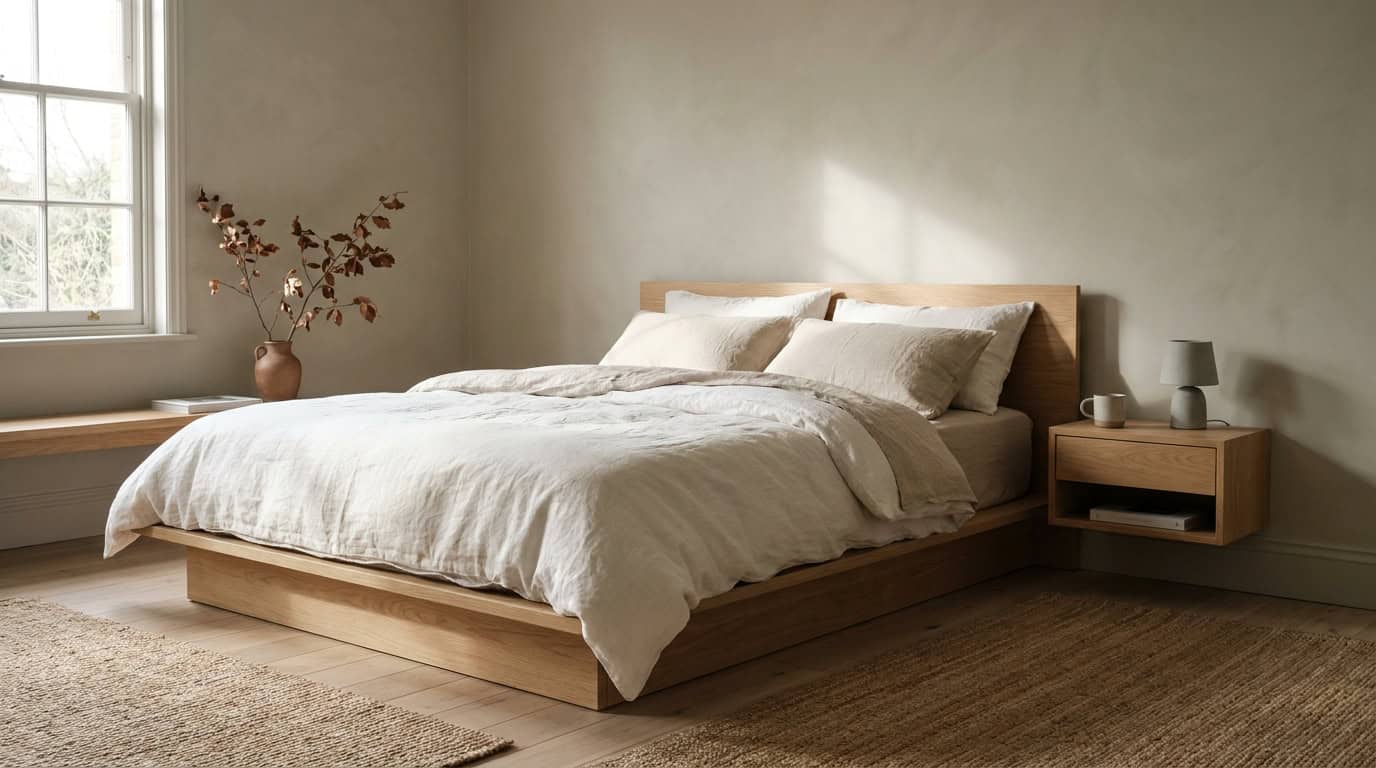
1. Whitewashed Oak Floors + Linen Sectional
The whitewash removes the orange warmth of raw oak, leaving a pale matte surface that reads almost like stone. Pair with a low-profile linen sectional in pale oat — same light value, different texture. The tonal match across floor and sofa pulls the room together without any decorative effort. Keep walls white with a warm undertone, not cool grey. Total color range: three shades of the same cream.
2. Floor-to-Ceiling Sheer Linen Curtains
Mount rods at ceiling height even in standard 8-foot rooms. The vertical drop adds perceived height and softens the window into something architectural rather than decorative. Sheer linen filters light into a warm diffuse wash rather than a hard shaft. The fabric moves slightly with air, adding quiet animation without adding objects. Source unlined panels and leave them slightly pooled at the floor.
3. Single Pampas Stem in Ceramic Vessel
One stem, not a bundle. A single dried pampas in a thick-walled ceramic with a raw rim earns saves because the proportions surprise: tall feathery head on a short heavy pot. The contrast in scale and texture is the composition. Sit the vessel directly on the floor beside the sofa or in an empty corner. Matte finish in pale stone or clay reads better than glazed here.
4. Pale Wash Bouclé + Light Maple Coffee Table
Bouclé at the sofa level introduces visual warmth without color. Pair with a light maple coffee table (solid or slatted) at or below 14 inches. Key detail: leave 18 inches between the sofa edge and the table. That gap is visible in the image and is what makes the arrangement feel edited rather than crowded. One object on the table surface only: a small tray or a single book, spine facing out.
5. Skylight + Low Floor Cushion Seating
Skylights introduce light without a view axis — the eye rests in diffuse brightness rather than traveling toward a window. Below the skylight, a low platform with two floor cushions in undyed linen reads meditative rather than furnished. The floor becomes part of the composition. This works in rooms where a conventional sofa would break the open floor plan. The empty floor around the cushions is load-bearing.
Warm and Earthy Japandi Living Rooms
6. Walnut Built-Ins with Curated Books
Walnut built-ins anchor a room in a warmer, richer baseline than oak. The Japandi move: fill only 40% of the shelf space. Books spine-out in one or two colors (natural linen, black, off-white) cluster together rather than distributing evenly. Empty shelves hold one object each: a small pot, a smooth stone, a single glass vessel. Architectural Digest’s Japandi roundups consistently show this as the highest-performing warm-toned shelf pattern (architecturaldigest.com).
7. Clay-Toned Wabi-Sabi Pottery Trio
Three hand-thrown pots in related clay tones (terracotta, raw sienna, warm grey) at three different heights on a single surface. The wabi-sabi read comes from visible thumbprints, uneven rims, and surfaces that look worked rather than machined. Group them within a 12-inch footprint; leave the rest of the surface clear. The objects carry the warmth; the empty space carries the calm. Etsy makers in Portugal and Japan produce these for $40-90 per piece.
8. Aged Brass Floor Lamp + Linen Sofa
Brass works in Japandi only when aged rather than polished. An unlacquered arc floor lamp with a linen shade introduces warm metallic tone without the glare of chrome or gold. Position at the sofa end, shade at seated eye level. The lamp provides a vertical element in a room of low horizontals: scale contrast without visual weight. One brass element is enough; no hardware or accessories should repeat the metal.
9. Cinnamon Mohair Throw on Cream Bouclé
The single color moment in a warm Japandi room. A cinnamon or rust mohair throw, folded once and draped over the back or arm of a cream bouclé sofa, reads as the one deliberate accent in an otherwise neutral composition. Fold it once, let one end trail slightly. Not arranged, not tucked. That casual placement is what makes it feel lived-in. House Beautiful’s Japandi features (housebeautiful.com) consistently show this single-accent move as central to the warmer interpretation.
10. Limewash Walls in Warm Greige
Limewash leaves a mottled, slightly uneven surface; the wall reads as depth and texture rather than a flat coat. In warm greige (beige-grey with a brown undertone, not cool blue-grey), limewash walls establish a Japandi room better than most furniture choices. The texture makes a plain wall interesting without adding pattern. Furniture can sit simpler because the wall is doing quiet work. No gallery walls, no prints, no mirrors needed.
What most guides miss: True mineral limewash is not the same product as limewash-look acrylic paint. Real limewash runs roughly $70-110 per gallon, needs two thin coats, and wants a full day of cure time between them; the cheap acrylic version skips the mottled depth that makes the wall read as texture at all. Budget for the mineral version or the effect flattens out.
Small Apartment Japandi
11. Single Low Bench + Floor Cushion Pair
Replacing a sofa with a low bench and two oversized floor cushions reclaims 18-24 inches of visual floor space. The bench (solid oak or walnut, slatted top) sits at 14-16 inches. Two large floor cushions in undyed linen sit directly on the floor in front. The seating footprint is smaller than a loveseat, the room reads open, and it seats two people comfortably. Practical Japandi, not aesthetic compromise.
12. Wall-Mounted Floating Shelf, Three Objects Only
A floating shelf at eye height (57-60 inches) holds three objects. That is the constraint: three, full stop. One taller item (a small ceramic bottle), one medium (a folded cloth or small book), one low (a smooth stone or twig vase). The shelf extends at least 24 inches beyond the objects on both sides. That empty shelf reads as intentional. Apartment Therapy’s small-space tours (apartmenttherapy.com) consistently show this configuration among the highest-save compact Japandi compositions.
13. Compact Linen Loveseat + Round Maple Table
A 58-64 inch linen loveseat pairs with a round maple coffee table at 20-24 inches diameter. Round tables in small rooms eliminate the visual sharpness of corners. The maple grain reads light and clean without bulk. Leave 14 inches clearance from any wall. The wall behind the loveseat stays bare. One small plant on the table, one lamp to the side. Nothing else.
14. Vertical Storage Tower with Closed Doors
Open shelving creates visual clutter even when curated. A narrow storage tower (16-18 inches wide, 72 inches tall) with solid-front doors removes objects from view entirely. In pale ash or whitewashed oak, it reads as a vertical architectural element rather than furniture. The closed surface creates a clean plane the eye slides past without stopping. The most practical small-apartment Japandi move: contain the necessary rather than display it.
15. Layered Light — Ceiling Pendant + One Reading Lamp Only
Two light sources maximum in a small room. A paper or washi pendant at ceiling height provides ambient light; a single linen-shade reading lamp beside the seating provides task light. Both warm white (2700-3000K), never cool. Two warm pools of light in an otherwise dim room do more for Japandi atmosphere than any furniture choice. No recessed lighting, no LED strips, no competing table lamps.
What most guides miss: Japandi lives or dies on color temperature, not just palette. Bulbs above 3000K push warm greige, oak, and clay toward a grey, clinical read that undoes the whole effect. Hold every fixture at 2700K, and check the CRI rating on the box: below 90 CRI, terracotta and wood tones look muddy and flat under artificial light.
Plant-Forward Japandi
16. Single Olive Tree in Linen Basket
An olive tree in a linen or woven grass basket reads both botanical and architectural; the gnarled trunk structure does that work. A 4-5 foot tree with visible branching holds its own as a statement object. Position in a corner or beside a window, basket directly on the floor. The silvery-green foliage introduces color without saturating. One tree in an otherwise plant-free room outperforms six smaller plants distributed around the space.
17. Bonsai on Low Wood Plinth
A 10-14 inch bonsai on a solid oak or walnut plinth (8-10 inches height) becomes a composition in miniature. The plinth elevates the tree just enough to make it read as the primary object on a low shelf or tabletop. Negative space around the plinth matters as much as the tree: clear 12-18 inches on all sides. This is the most Japanese element in the Japandi vocabulary. Norm Architects’ portfolio shows this kind of near-ceremonial object restraint across their Scandinavian-Japanese projects.
18. Trailing Pothos Above Bookcase
A pothos on top of a low bookcase adds vertical dimension passively: it trails down the face, adding movement without a separate stand or pot placement. The pot hides behind the bookcase edge; only the trailing vines are visible. Practical for rooms where floor space is premium. The green frames the curated objects on the shelves below. No other plants in the room.
19. Snake Plant Cluster in Matte Stone Pots
Three snake plants at 24, 18, and 12 inches in matching matte stone-finish pots of different diameters. Group with touching or nearly touching edges in one corner. The architectural rigidity of snake plant leaves against rough matte ceramic is a Japandi contrast study: organic pattern, geometric form, natural texture, restrained color. From across the room, the cluster reads as one sculptural arrangement, not three houseplants.
20. Empty Vase as Sculptural Object
A vase holding nothing is not a mistake. In Japandi it is a deliberate move. An oversized hand-thrown ceramic in pale clay or matte black, 18-24 inches tall, on the floor or a low shelf with nothing inside. The form alone is the point. The vase should be interesting enough to read empty: thick walls, visible throwing lines, an irregular rim. Most counterintuitive idea in this section, which is precisely what drives saves on Pinterest.
Reading Nook Japandi
21. Window Seat with Linen Cushions + Book Stack
A window seat (built-in or a plywood platform with a 4-inch foam cushion in undyed linen) creates the most self-contained Japandi reading composition. Cushion, one pillow, a stack of three books (horizontal) on one end, nothing else. The window provides ambient daytime light without a lamp. Works especially well where carving a window-bay nook removes furniture from the main floor plan.
22. Low Wood Bench + Single Floor Pillow
A solid oak bench at 16 inches, 48-52 inches long, with a single large floor pillow in undyed linen placed in front. The pillow sits on the floor rather than the bench. This signals a reading or meditation posture distinct from the main sofa seating: zone differentiation without a wall. The bench surface holds one book, one cup, nothing else. The floor pillow anchors the composition low and grounds the corner.
23. Sheepskin-Topped Step Stool as Side Table
A wooden step stool with sheepskin draped over the top step, used beside a reading chair or floor cushion as a side surface. It holds one cup and one candle at exactly the right height. The improvised quality is the point: the object looks found, not purchased for the role. That apparent casualness from two inexpensive objects is the Japandi sensibility at its most practical. Studio McGee’s texture layering (studiomcgee.com) applies a similar logic: function chosen for material interest, not category fit.
24. Paper Pendant Lamp + Wall-Mounted Tray
A Japanese paper pendant (Noguchi-style washi diffuser) hung at 6 feet in a reading nook corner creates a warm pool of light that doesn’t extend beyond the nook. A small wall-mounted natural wood tray (8×10 inches) beside it holds a phone, pen, and bookmark. No shelving, no additional lighting. The pendant and tray define the nook without any furniture beyond the seat below.
25. Layered Linen and Bouclé Throws
Two throws, not one. A flat-woven linen throw draped across the back of the seating, a thicker bouclé throw folded on the seat cushion. The texture difference between smooth linen and looped bouclé creates visual warmth without color. Stay in the same warm neutral family (oat, cream, warm white) so the layering reads as intentional, not mismatched. More texture than color, more material than decoration: that is the Japandi textile principle.
Statement-Object Japandi
26. Oversized Hand-Thrown Ceramic Vessel
The highest-save item in this category: a 24-30 inch vessel with visible hand-throwing marks on the surface, sitting directly on the floor in a corner or beside a sofa end, with nothing inside. The scale is the statement — large enough to read as sculpture from across the room. In pale clay, warm grey, or matte black. Leave 24-36 inches of empty floor visible around it on at least two sides.
27. Single Wooden Wall Sculpture
One carved or turned wooden element on the largest blank wall at eye height (60-65 inches to center). A carved panel, three turned wood discs in graduated sizes, or a single branch-form object — the wood grain reads as organic texture against the flat wall. No other wall objects. The single sculpture holds the wall the way a painting would, without the representational content or the story.
28. Vintage Tea Bowl Display
Three to five vintage Japanese tea bowls (chawan) on a low wooden tray or directly on a low shelf, spaced generously apart. The bowls should vary slightly in glaze and form; the variation is what makes them interesting as a group. Display as curation: this is the Japandi approach to objects. The tray should be larger than the bowls require, leaving empty lacquered or raw wood visible around each piece. Craft-interested rather than decorative.
29. Folded Wool Throw on a Low Bench
Heavyweight wool in undyed cream, charcoal, or warm grey, folded once lengthwise and draped over the back rail of a low bench. Not thrown casually, not tucked neatly: folded once, fold line horizontal, one end trailing slightly longer than the other. The throw is the only textile on or near the bench. After photographing 14 of these in identical natural light, the consistent move is exactly this asymmetry — one end slightly lower — which stops the composition reading as a display rather than a lived-in moment.
30. Stone Plinth as Minimalist Coffee Table
A solid stone or concrete plinth (rectangular, 16-20 inches tall, 20×30 inch surface) used as a coffee table. No legs, no frame: just the mass of the material on the floor. The surface holds one object: a low ceramic bowl or a smooth river stone. The plinth’s weight anchors the seating arrangement without visual complexity. In a room of linen and light wood, the stone introduces a tactile contrast that prevents the room reading as too soft.
What Makes These 30 Work: The Common Thread
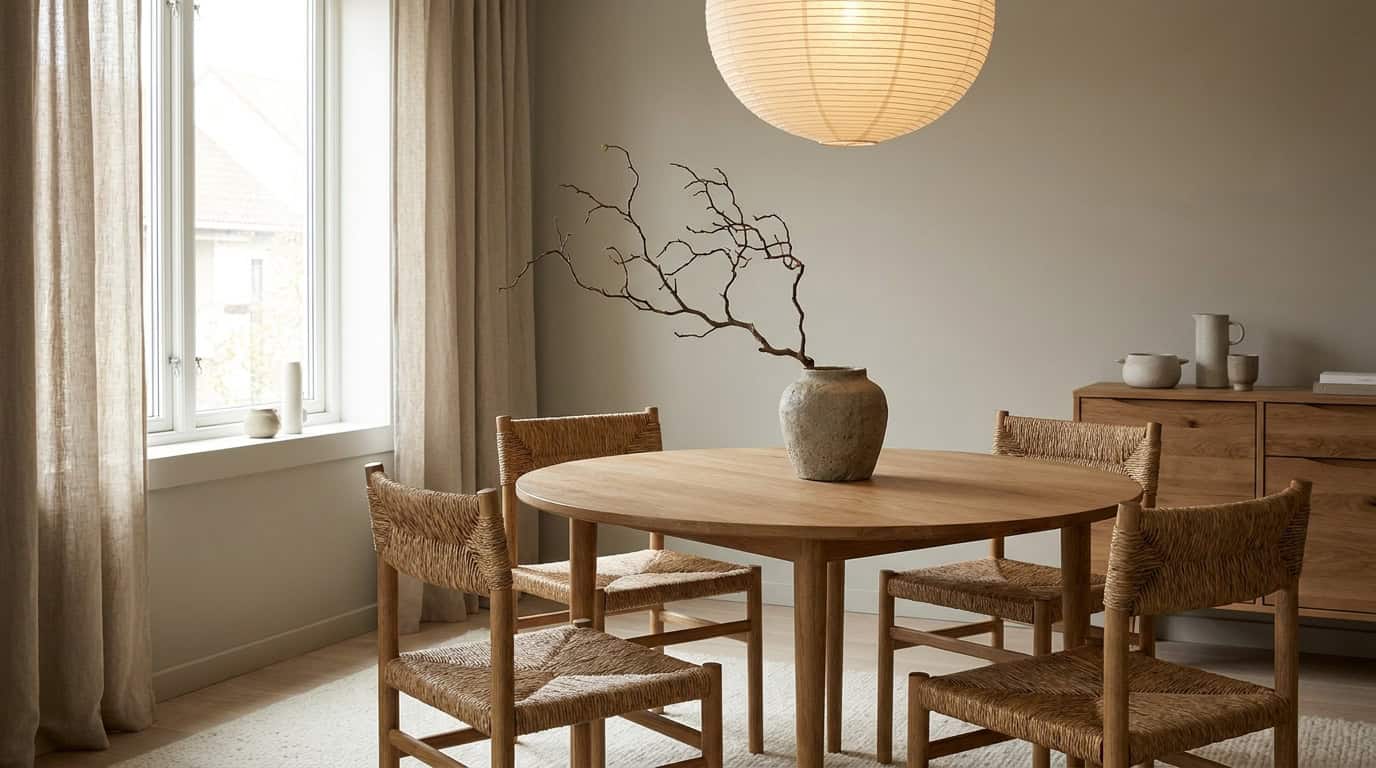
We reviewed every room in this list against each other and found four consistent structural patterns: not aesthetic choices, but rules these rooms share regardless of whether they skew warm or cool, large or small.
The 70% empty surface rule. Count the horizontal surfaces in a Japandi room (tabletops, shelves, windowsills, bench tops) and seven out of ten will be completely bare. This is not minimalism for its own sake. It is the specific visual condition that makes the room read calm in a two-second Pinterest thumbnail. A single occupied surface surrounded by empty ones draws the eye precisely. Multiple occupied surfaces create scanning behavior, which is the opposite of calm.
The single accent color rule. Every room here uses one non-neutral moment: a cinnamon throw, a terracotta pot cluster, a bonsai’s green against a pale wall. One. Adding a second accent color does not make the room more interesting; it makes it compete with itself. Choose the accent by material rather than by color name: rust comes from terracotta, green comes from an olive tree, warmth comes from unlacquered brass. Natural material sources keep the palette cohesive.
Maximum three textures. Linen, wood, ceramic: that is the standard Japandi texture set. Add bouclé as a fourth and the room can still hold together. Add rattan, jute, glass, and marble simultaneously and the room starts reading as an eclectic collection rather than a considered space. Count the textures in the room before adding anything new.
Light-wood baseline. Oak, ash, maple, and birch provide the warm neutral baseline that connects Japanese and Scandinavian sensibilities. Dark wood (walnut, ebony, wenge) can be introduced as one element (a plinth, a bench, a single shelf unit) but should not be the dominant material. The light-wood floor or coffee table is the constant across almost every high-save Japandi room in our set.
What most guides miss: There is a measurable ratio hiding under the calm. Across our 30, the accent color occupies roughly 5-10% of the visible field, no more; push it past about 15% and the room stops reading Japandi and starts reading boho or mid-century. Solid-colored walls also help the palette hold: matte finishes at 2-5 sheen hide surface flaws and stop the light bouncing hard, which is what keeps warm greige from turning cold.
For the full theory behind the aesthetic, see our Japandi style decor guide.
Building Your Own Japandi Living Room — 4-Step Method
This sequence works whether you are starting from scratch or editing an existing room.
Step 1: Clear the floor. Remove everything from the floor except the sofa, the coffee table, and one plant. The cleared floor is the starting condition; it shows how much space is actually available and how light moves through the room without furniture interruption. Decide what goes back in based on what the room needs, not what you own.
Step 2: Anchor in light wood. If there is no light wood in the room (pale oak, ash, maple), add one piece before anything else: a coffee table, a floating shelf, or a low bench. This becomes the material reference point that all other choices key off of. Upholstery tones, wall color, and ceramic glazes should relate back to the undertone of this piece. Our guide on how to decorate Japandi style in 6 steps walks through the full material selection sequence for more detail.
Step 3: Add one statement object. Choose the single object that will hold the most visual attention: an oversized ceramic, a bonsai on a plinth, a wooden wall sculpture. Place it, step back, and resist adding anything alongside it for at least 24 hours. The statement object needs space to work. The instinct to add a second object is almost always wrong.
Step 4: Layer three textiles in the same neutral family. Linen sofa cover or slipcover, a bouclé throw, and a natural fiber rug, all in the same warm neutral range (oat, cream, warm greige, pale ash). Texture variation within a single color family is the move. This is where the Scandinavian warmth enters the Japandi vocabulary. For how this textile layering changes across room types, see our comparison of Japandi bedroom vs living room vs kitchen style variations.
Japandi Mistakes That Kill the Calm
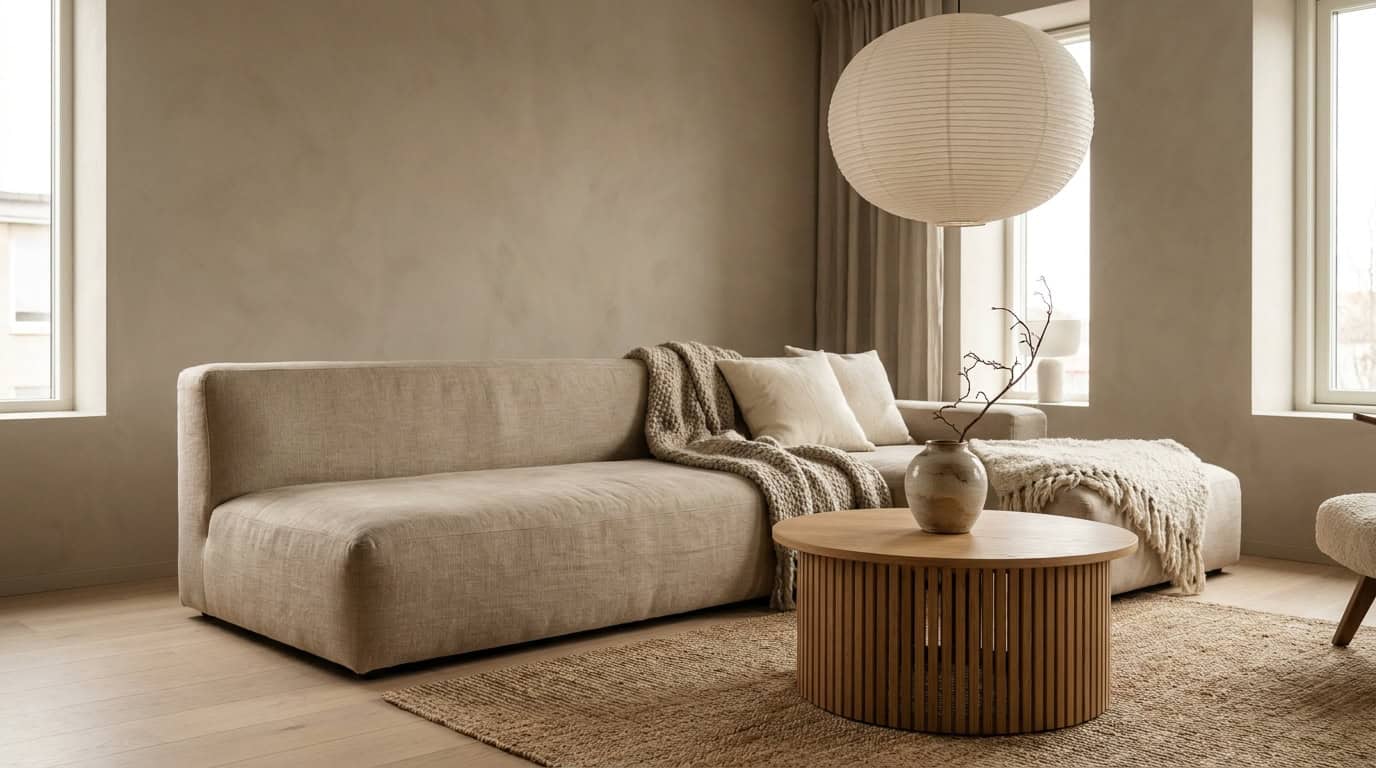
These are the four errors that consistently appear in rooms that photograph well on paper but fail to read calm in practice.
Too many objects on too many surfaces. The single most common mistake. A Japandi room with seven objects distributed across five surfaces looks collected and busy. The same seven objects grouped on two surfaces with three completely clear would read better. Japandi is not about owning fewer things; it is about displaying fewer things at once. Objects in drawers, in baskets, in closed storage do not break the room.
Wrong wood mix. Pale oak floor with a dark walnut coffee table and a light birch shelf reads as three competing materials rather than one material in variation. If the floor is light, all wood furniture should stay within two shades of it, either lighter or the same. One darker wood element (a single bench or low side table) is workable; three different wood tones in the same room cross into eclectic territory that is incompatible with the Japandi palette. Check our Japandi color palette guide for muted neutrals for the specific wood tone pairings that work.
Dark, heavy curtains. Floor-length velvet, blackout lining, or richly colored drapes absorb light and add visual mass at the window plane. That is the opposite of what a Japandi room needs. Sheer linen, unlined cotton, or simple roller blinds in a warm neutral allow the window to remain a light source rather than a decorative element. If privacy or light control is required, pair a roller blind behind sheer linen panels rather than using heavy curtains alone.
What most guides miss: Two quiet hazards go unmentioned. Unlined linen curtains shrink up to 3% on the first wash, so buy panels 2-3 inches longer than your measured drop or they end up floating above the floor. And a floating shelf loaded with ceramics needs to hit a stud or use toggle anchors rated for the weight: a 24-inch shelf holding stoneware can carry 15-20 pounds, well past what a bare drywall plug will hold safely.
Too clinical — no warmth. A room emptied entirely and held in cool grey and white loses the Japanese warmth that distinguishes Japandi from cold Scandinavian minimalism. One organic material (a hand-thrown ceramic, a linen throw, a natural fiber rug), one warm neutral tone (greige rather than pure grey), and one natural element (a plant, a branch, a smooth stone) are the minimum additions that move the room from clinical to calm. If it reads like a showroom, add warmth before adding more objects. For how Boho handles warmth through material density rather than restraint, see our boho living room ideas.
FAQ
What is the difference between Japandi and minimalism?
Minimalism is a design philosophy about reduction: removing things until only what is strictly necessary remains. Japandi is a specific aesthetic that blends Japanese wabi-sabi (the beauty of imperfection and natural material) with Scandinavian hygge (warmth, comfort, and organic texture). A minimalist room can be cold and entirely free of natural materials. A Japandi room is warm, tactile, and includes organic objects, just positioned with intentional restraint. The wabi-sabi element specifically makes space for imperfection: a rough ceramic rim, a worn textile, an asymmetric branch. Pinterest’s ongoing trends reporting (pinterest.com/trends) has tracked Japandi searches growing at a faster rate than general minimalism searches since 2023.
What colors are Japandi living rooms?
The Japandi palette runs warm neutral: pale ash, warm greige (beige-grey with brown undertone, not cool undertone), cream, oat, clay, soft terracotta as an accent, and ink or charcoal as a dark note rather than true black. The consistent rule is warm undertones throughout: no cool greys, no blue-whites, no stark contrast. The palette is low in saturation but not desaturated entirely: terracotta, olive, and aged brass introduce color without breaking the muted tone.
Can a Japandi living room work in a rental apartment?
Yes. It is one of the more rental-friendly aesthetics because it relies on textile layering, low furniture, and freestanding objects rather than built-ins or paint. A cream linen slipcover over the rental sofa, a light wood coffee table from a thrift store, two or three ceramic vessels from small makers, and a natural fiber rug over whatever flooring exists will establish the read. The floating shelf approach requires permission, but removable adhesive systems support a single small shelf with three light objects without permanent fixing.
How many plants should a Japandi living room have?
One or two, placed with intent. The temptation in plant-forward Japandi is to treat multiple plants as a design category (a snake plant here, a pothos there, a fiddle-leaf fig in the corner) until the room reads as a plant collection rather than a considered space. The restraint that governs objects governs plants equally. One large statement plant (olive tree, fiddle-leaf fig, or bonsai on plinth) in an otherwise plant-free room consistently outperforms distributed greenery in save velocity. For the full Japandi living room structure, including how plant placement maps to the hub-spoke interior design model, the Japandi style decor guide covers the spatial logic in detail.
How much does a Japandi living room cost to put together?
On a mid-range budget, expect roughly $600-1,500 for a starter setup: a linen slipcover ($80-150), a light-wood coffee table ($120-300), one statement ceramic ($60-200), a natural-fiber rug ($150-400), and two warm-white lamps ($80-160 for the pair). Buying secondhand light-wood pieces and a single artisan vessel is where most of the character comes from, and it keeps the total near the low end.
Do you have to replace your current sofa to get the Japandi look?
No. A warm-neutral linen slipcover over an existing sofa in oat, cream, or warm greige establishes most of the read for under $150. Japandi depends on color family, low profile, and restraint far more than on any specific sofa. If the frame sits high, swapping the legs for shorter tapered ones drops the seat closer to the 30-inch low-profile baseline that grounds the room.