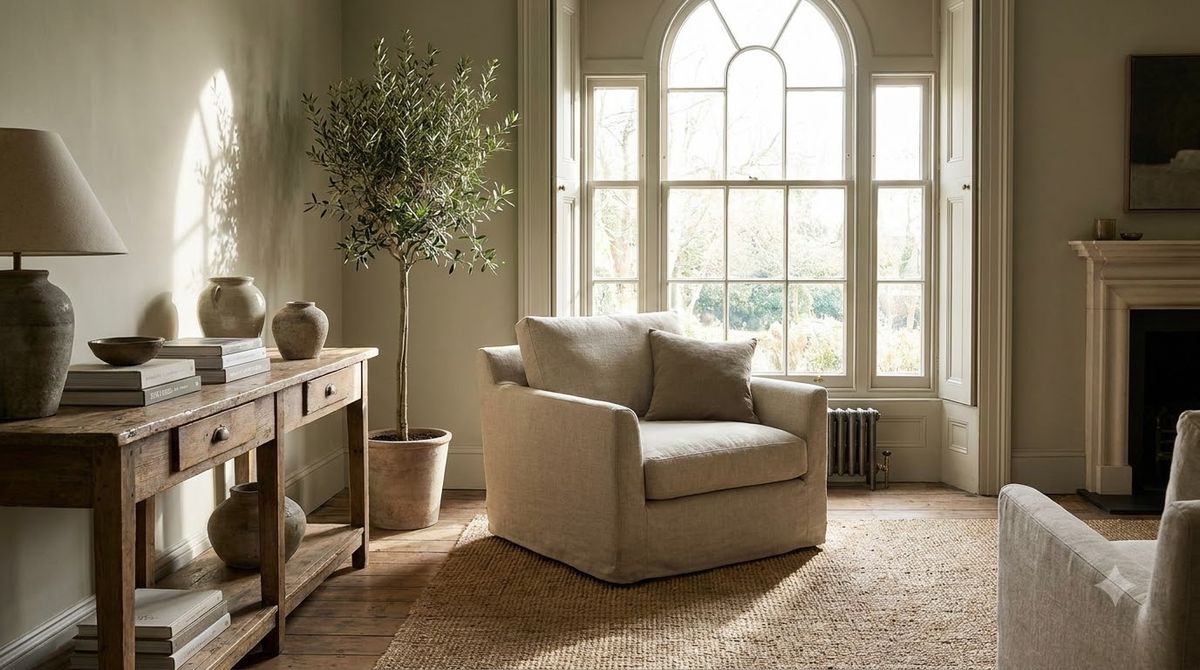
Elegant home decor isn’t about spending more. It’s about restraint, proportion, and a few well-chosen pieces doing quiet, confident work. A $200 refresh and a $2,000 overhaul can look equally expensive, and the cheap-looking room and the expensive-looking room often cost the same. The difference is editing. Elegance reads as calm: fewer objects, better spacing, materials that feel real. This guide walks through the principles, the color and texture rules, and a room-by-room plan, all with concrete prices from IKEA, Target, HomeGoods, and Wayfair. No renovation required.
Key Takeaways
- Elegance is subtraction, not addition: an over-decorated room reads cheaper than a nearly empty one, so edit before you buy
- Stick to three colors max: a tight palette of neutrals plus one accent is the fastest path to a high-end look
- Texture does the heavy lifting: linen, wood, ceramic, and matte metal add depth when your palette stays quiet
- Symmetry signals intention: matched lamps or paired art instantly make a room feel composed
- One real statement piece beats ten small “filler” objects for a fraction of the visual clutter
- Anyone can do this on a budget with named-brand basics and a lot of empty space
What Are the Principles of Elegant Decor?
Elegant decor rests on three ideas: restraint, proportion, and quality over quantity. Designers repeatedly point to editing and negative space as the backbone of a timeless room (Architectural Digest, 2025). Often the single biggest upgrade to a space is simply removing things, so start by taking out about a third of what’s already in it.
Start with the “one in, one out” mindset. A room feels elegant when every object earns its place. We tell friends to clear a surface completely, then add back only what they’d genuinely miss. Usually that’s a lamp, a stack of two books, and one sculptural object, not the twelve things that were there before.
Proportion matters just as much. A too-small rug or a lonely, undersized piece of art is the fastest way to make a room feel unfinished. Buy the rug one size up from what feels right, and hang art so its center sits at roughly eye level, about 57 inches from the floor.
What most guides miss: the single biggest tell of a “cheap” room is scale, not price. Undersized rugs, short curtains, and art that floats too high read as budget instantly, while a $79 rug in the right size reads as intentional. Get proportion right first and inexpensive pieces stop looking cheap.
Free · 60 seconds
Not sure which style is actually yours?
Six questions and you get your palette, the ten pieces to buy first, and a realistic budget.
How Do Color, Texture, and Symmetry Create Elegance?
Color, texture, and symmetry are the three levers that make a budget room read as refined. A restrained, neutral-led palette is one of the most consistent markers of timeless interiors (The Spruce, 2025). Get these three right and inexpensive pieces start looking deliberate instead of cheap.
Keep the palette tight. We stick to a rule of three: two neutrals plus one accent. Think warm white walls, greige upholstery, and a single deeper tone like olive, navy, or terracotta running through pillows and art. When everything relates, nothing looks accidental.
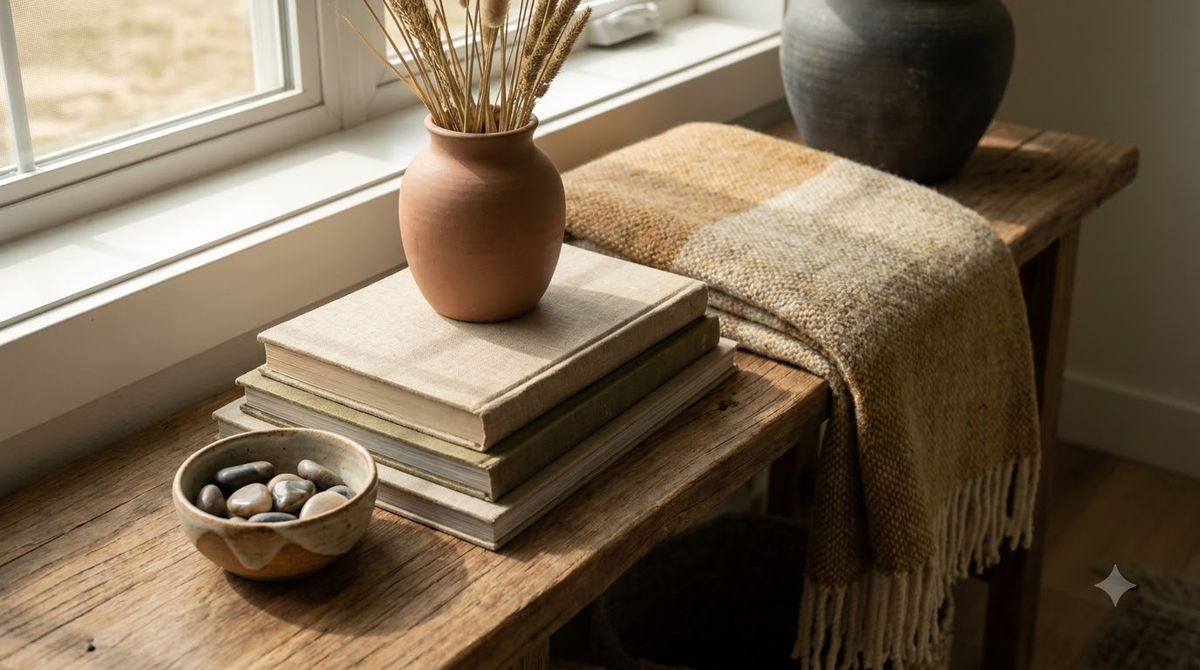
Layer texture, not color. Once the palette is quiet, texture becomes the depth. A linen curtain, a nubby wool throw, a ceramic lamp, and a wood tray give the eye somewhere to travel without a single loud color. We picked up chunky-knit throws at HomeGoods for around $20 that read far pricier than the tag.
Use symmetry as a shortcut. Matched table lamps flanking a sofa, or two identical frames above a bed, signal intention immediately. Symmetry is the easiest trick for anyone who doesn’t trust their eye yet, and it almost never looks wrong.
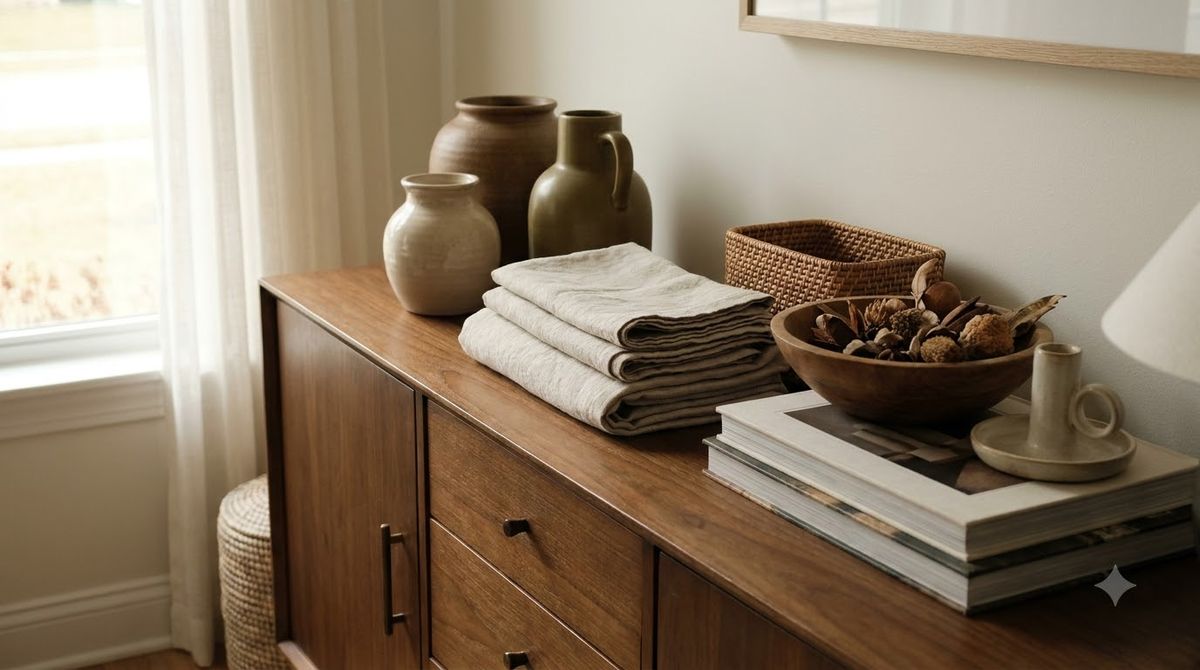
What most guides miss: you can mix metals, but keep it to two finishes per room, one dominant and one accent, at roughly an 80/20 split. Pair warm brass with matte black, or brushed nickel with a touch of aged brass. Three or more competing metals is what actually reads as unplanned, not the mix itself.
What Does Elegant Decor Look Like Room by Room?
Elegant decor follows the same principles in every room, but the anchor piece changes. Below is our room-by-room plan, each built around one hero and a lot of breathing space. For a deeper commercial walkthrough, our luxury living room ideas on a budget guide layers in more specific picks.
Living Room
Anchor the living room with the largest rug your space allows. A too-small rug is the number one thing that cheapens a living room, and sizing up instantly grounds the furniture. We like IKEA’s low-pile wool-blend rugs from about $79 to $199. Add a pair of ceramic table lamps, one oversized piece of art, and a linen or velvet sofa in a neutral. Keep the coffee table nearly bare: a tray, a candle, one book.
What most guides miss: curtain length quietly makes or breaks a living room. Hang the rod 4 to 6 inches above the window frame, or close to the ceiling, and let panels reach the floor. Aim for a slight break where the fabric just kisses the floor, or a 1 to 2 inch puddle for softer rooms. Curtains that stop at the sill or hover above the floor are the fastest way to look unfinished.
Bedroom
The bedroom hero is the bed itself, specifically the linens. Swap busy patterns for a matched set in one calm color and layer a textured throw at the foot. An upholstered or rattan headboard, around $120 to $250 at Target or Wayfair, does more for elegance than any amount of wall decor. Two matching nightstand lamps seal the composed, hotel-like feel.
Dining Room
Elegant dining is about the tablescape and the light above it. A single sculptural pendant or a linen-shade fixture reframes the whole room. Keep the table clear day to day, then style it simply for guests: a low runner, cloth napkins, and one low arrangement of greenery so people can actually see each other.
Entryway
The entry sets the tone before anyone sees the rest of the home. A narrow console, a round mirror, a lamp, and one plant is all it takes. Try a $99 Target console, a HomeGoods mirror, and a thrifted brass lamp: together they can look custom. This is where high-end dupes shine; see our high-end decor dupes roundup for near-identical looks at a fraction of the price.
What Common Mistakes Cheapen a Room?
The mistakes that cheapen a room are usually about excess and poor proportion, not budget. Interior stylists routinely cite over-cluttering and undersized rugs as the top offenders in otherwise nice spaces (House Beautiful, 2025). The good news: every mistake below is free to fix.
- Too many small objects. A shelf crammed with trinkets reads busy and cheap. Group in odd numbers, leave gaps, and let each piece breathe.
- The undersized rug. If furniture legs float off the rug, it looks like an afterthought. Size up so at least the front legs sit on it.
- Everything pushed against the walls. Floating furniture even a few inches inward makes a room feel intentional and larger.
- Harsh overhead-only lighting. One ceiling light flattens a room. Add two or three lamps for warm, layered light instead.
- Matchy furniture sets. A boxed set that all matches looks builder-grade. Mix one or two materials for a collected, high-end feel.
- Fake-looking greenery. Cheap plastic plants undercut everything. One good faux stem or a single real plant beats a jungle of obvious fakes.
If your budget only stretches to a few upgrades, spend it where the eye lands longest. We put our dollars into lighting and the largest textile first: a warm-toned lamp or pendant, then the biggest rug the room allows. Both touch the whole space, so they lift everything around them, while trend accessories can stay cheap without anyone noticing.
Get-the-Look: Elegant Budget Essentials
If you want a ready-to-buy shortlist, these are the pieces that deliver the most elegance per dollar. Each does quiet, load-bearing work in a room without the designer markup.
- Ceramic table lamp (pair): the fastest symmetry win
- Larger wool-blend area rug: grounds the whole room
- Chunky-knit or linen throw: instant texture
- Round wall mirror: opens up an entry or bath
- Upholstered or rattan headboard: anchors an elegant bedroom
Frequently Asked Questions
How do I make my home look elegant on a small budget?
Edit first, then buy strategically. Remove about a third of your clutter, tighten your palette to three colors, and invest in one larger rug and a pair of matching lamps. Empty, well-spaced surfaces read as elegant, and that part is completely free.
What colors look most elegant in a home?
Warm neutrals lead the most timeless rooms: soft white, greige, taupe, and warm gray, plus one deeper accent like navy, olive, or terracotta. Keeping to two neutrals and a single accent stops a space from ever looking busy or cheap.
What makes a room look expensive?
Restraint, proportion, and texture. A large rug, layered warm lighting, symmetry, and a handful of real materials, linen, wood, ceramic, make budget pieces look intentional. Clutter and undersized rugs are what actually make a room look cheap.
Is elegant decor the same as minimalist?
Not quite. Minimalism is about owning very little; elegance is about curating well. An elegant room can feel layered and warm, it just avoids clutter and keeps every object purposeful. You can be elegant without being stark.
How long should curtains be for an elegant look?
Floor length, every time. Mount the rod 4 to 6 inches above the window frame, or near the ceiling, and let panels just kiss the floor or puddle 1 to 2 inches. Sill-length or floating curtains are one of the quickest ways a room reads as unfinished.
Can you mix metals in one room?
Yes, and it looks intentional when you limit it. Stick to two finishes, one dominant and one accent, at about an 80/20 split, such as brass with matte black. Three or more competing metals is what starts to look unplanned, not the mix itself.