
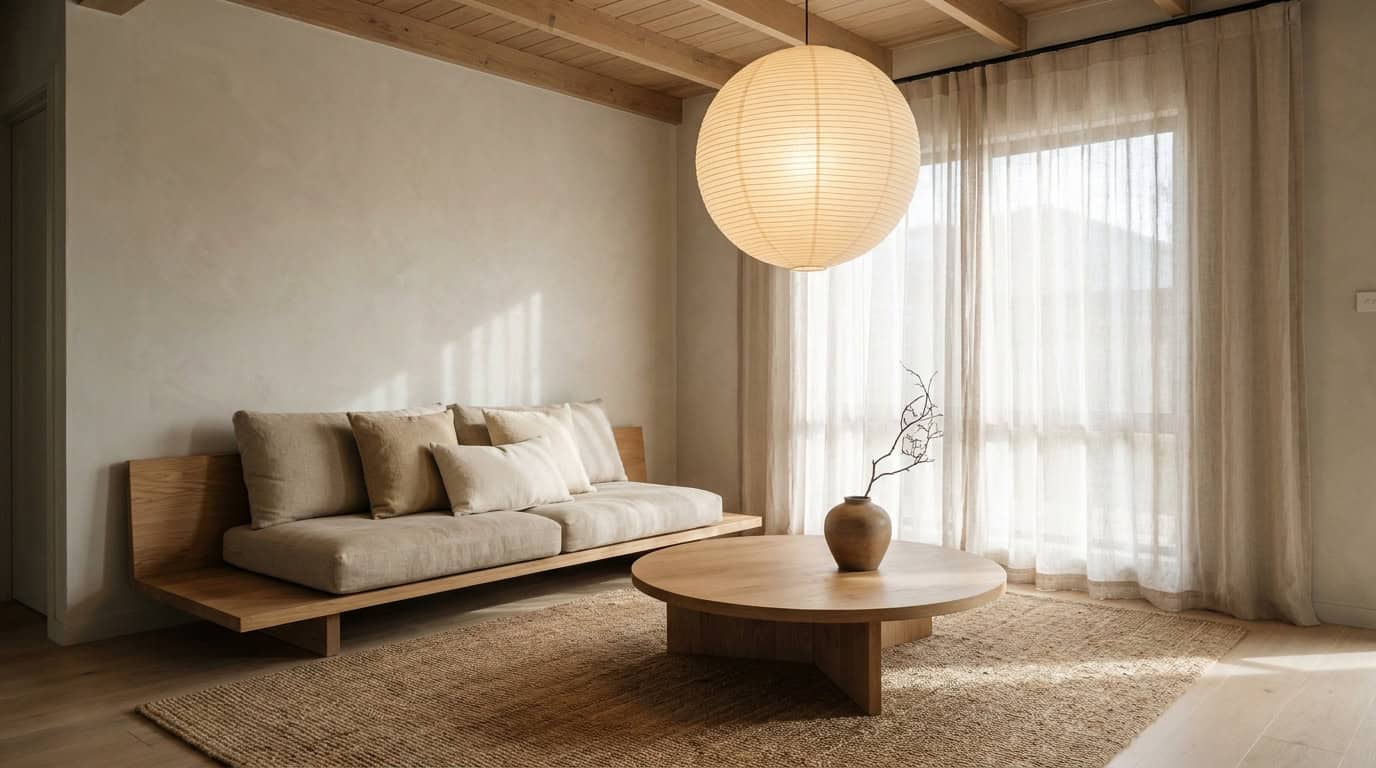
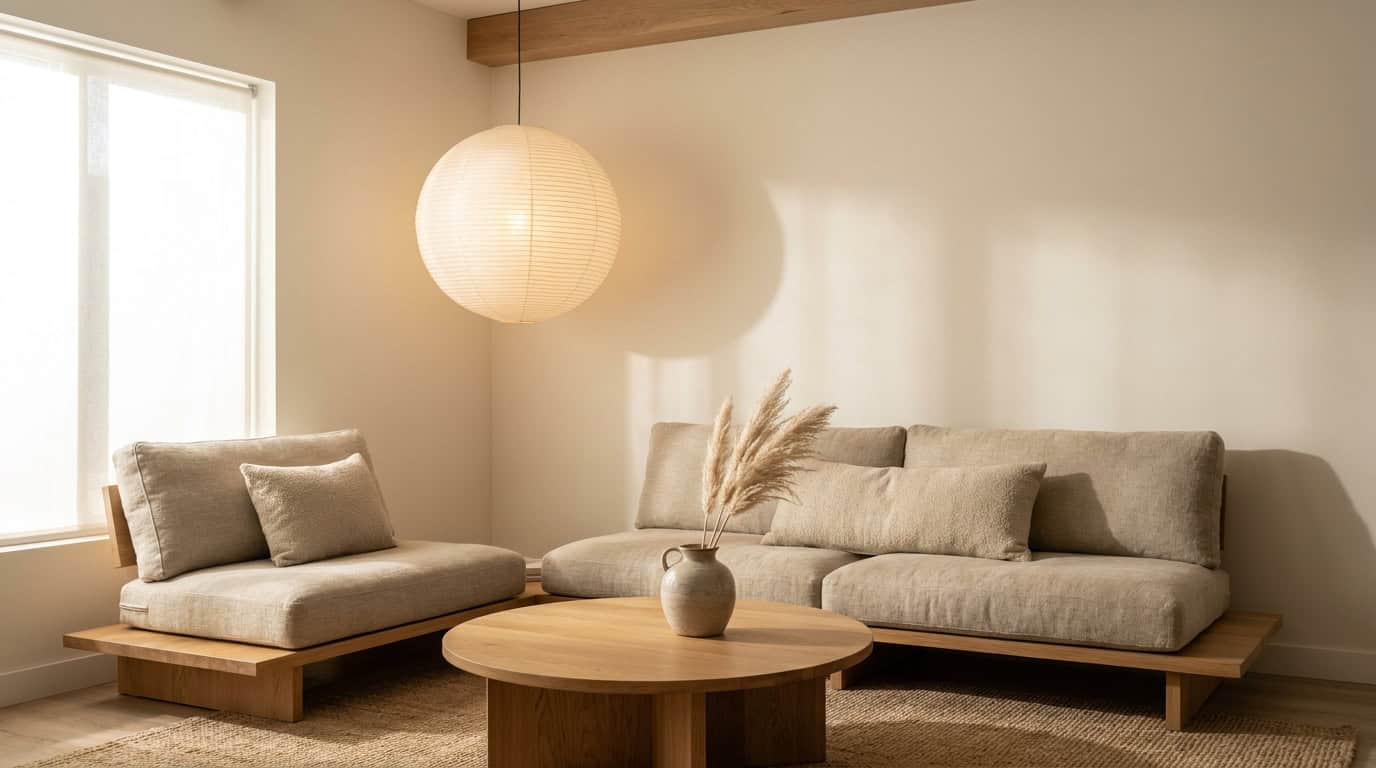
Japandi isn’t one rigid look. It’s a framework — and that distinction matters. Most guides treat it like a furniture catalog: buy this sofa, swap that rug, done. The reality is that Japandi is a set of principles (warm neutrals, honest materials, intentional negative space, layered calm lighting) that adapt to whatever home you’re already living in.
Modern minimalist apartment? You’re already 80% there. Vintage cottage with oak beams and mismatched ceramics? Tone down and warm up. Rental with carpet and landlord-beige walls? Layer instead of paint. We pulled 30 concrete ideas across 6 distinct home types — 5 ideas per category — so you can find the ones that actually match where you’re starting from. Every idea is weekend-doable and priced under $200.
Key Takeaways
- 6 sub-styles covered: Modern apartment, vintage cottage, renter-friendly, dorm, family home, studio apartment
- Average cost per idea: $25–$85 (most under $50)
- Weekend-doable count: 28 out of 30 ideas require no contractor or skilled labor
- No full furniture replacement needed: 90% of ideas work on top of existing pieces
- Renter-safe options included: 10 ideas use zero permanent modifications
The Japandi Adaptation Formula
Before diving into the 30 ideas, the 4-step process that works for any existing home:
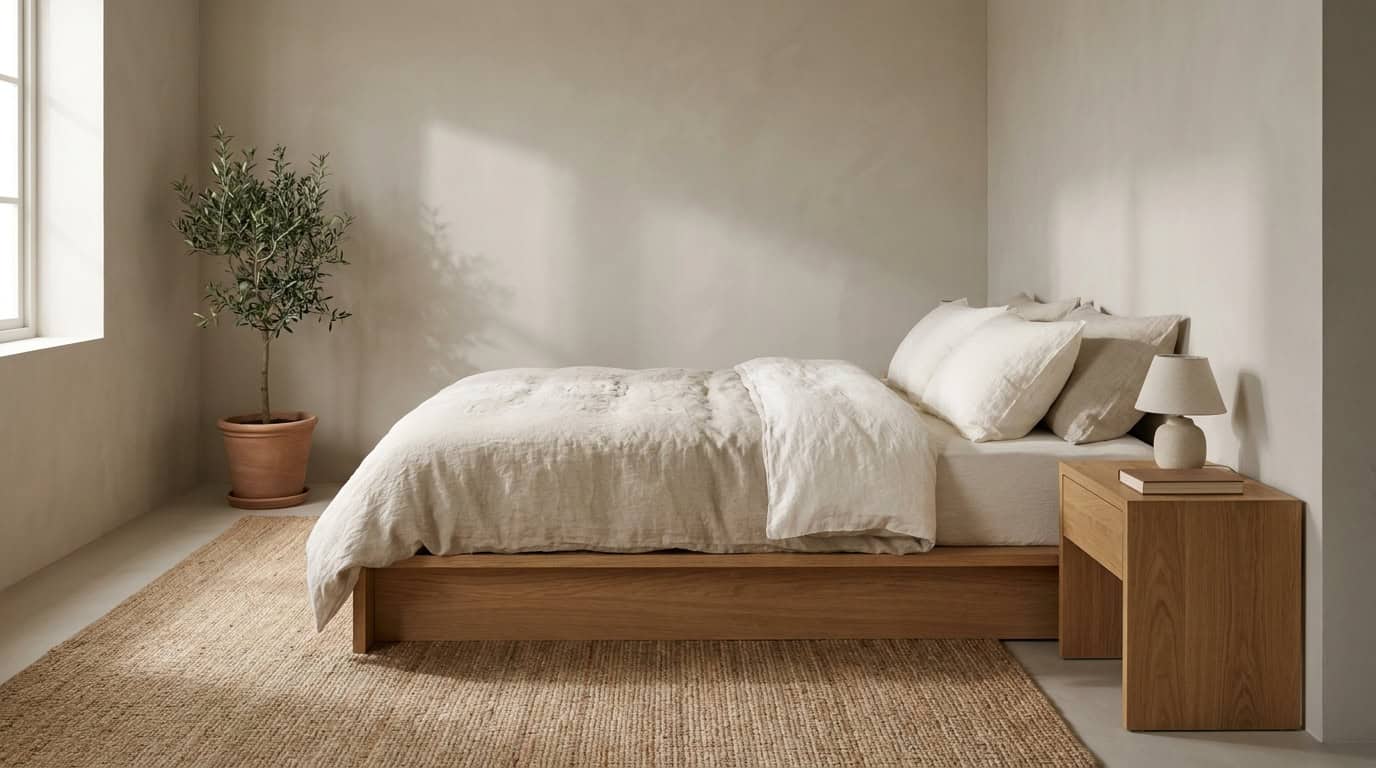
Step 1 — Match your wood tone. Japandi leans warm-medium: ash, oak, walnut, bamboo. If you have cool gray or painted white wood, add a warm wood accent piece (a tray, a shelf, a side table) before anything else. One warm wood anchor reads as intentional.
Step 2 — Unify your palette. Pick 3 colors max: one warm neutral (linen, oat, sand), one dark anchor (charcoal, black, deep forest green), one natural texture (rattan, jute, linen). Everything you add should fit one of those three slots.
Step 3 — Reduce ornaments by half. Take whatever is on your shelves and surfaces. Remove half. What stays should be singular and intentional — one wabi-sabi ceramic, one small plant, one book stack. Japandi reads as calm because there’s breathing room between objects.
Step 4 — Layer your lighting. Overhead lighting alone flattens a Japandi room. Add one floor lamp (warm bulb, 2700K) and one candle or table lamp. Three light sources at different heights create the soft, lived-in warmth that makes Japandi feel like a retreat rather than a showroom.
What most guides miss: The palette works on a rough 60-30-10 ratio, about 60% warm neutral, 30% mid natural texture, 10% dark anchor. And negative space is a measurable target, not a vibe. Aim to leave roughly 40% of every shelf and surface empty. That breathing room is what reads as calm, not the objects you add.
These four steps are the filter. Apply them first, then pick from the 30 ideas below based on your home type.
For a deeper look at the full style system, see our Japandi Style Decor Guide.
Free · 60 seconds
Not sure which style is actually yours?
Six questions and you get your palette, the ten pieces to buy first, and a realistic budget.
30 Japandi Aesthetic Ideas Across 6 Home Types
Modern Apartment Japandi (Ideas 1–5)
Modern apartments already have the clean lines and minimal clutter that Japandi requires. The gap is usually warmth — too much cool gray and matte black without the organic softness that makes Japandi feel human. These 5 fixes close that gap fast.
Idea 1 — Black metal accent + warm wood softening.
If you already have black metal shelving or a black-frame coffee table, add one warm wood element at the same height. An oak tray on the coffee table, a bamboo small stool next to the shelving unit. The contrast reads as deliberate and grounds the metal so it doesn’t feel industrial. Cost: $18–$35 for a tray or stool.
Idea 2 — Bouclé chair on a neutral rug.
A single bouclé accent chair in cream or oat, placed on a flatweave jute or wool rug, instantly adds the tactile warmth that modern apartments lack. No repainting, no new sofa. The chair does the heavy lifting. Budget option: IKEA LÅNGFJÄLL base + bouclé seat cover, around $95 total.
Idea 3 — Paper lantern over an IKEA bookshelf.
Swap the bare overhead bulb or the flat flush-mount light above your reading corner for a washi paper pendant lantern (Muji or Amazon, $20–$45). The diffused warm glow transforms the corner’s whole character. Takes 20 minutes to hang.
Idea 4 — Single oak floating shelf.
One 24-inch oak floating shelf, mounted at eye height, holding three objects maximum: a small ceramic, a plant cutting in a bud vase, a slim book. The negative space around those three objects is doing more work than the objects themselves. IKEA LACK oak-effect shelf: $12. Real oak from URBIO or similar: $40–$65.
Idea 5 — Linen curtain panel over existing blinds.
Roller blinds stay. Add one wide linen curtain panel on the same rod (or a simple curtain rod clipped over the blind bracket). The linen softens the window line and diffuses daylight into the warm haze that Japandi living rooms are known for. IKEA LISELOTT or similar, $25–$45 per panel.
Vintage Cottage Japandi (Ideas 6–10)
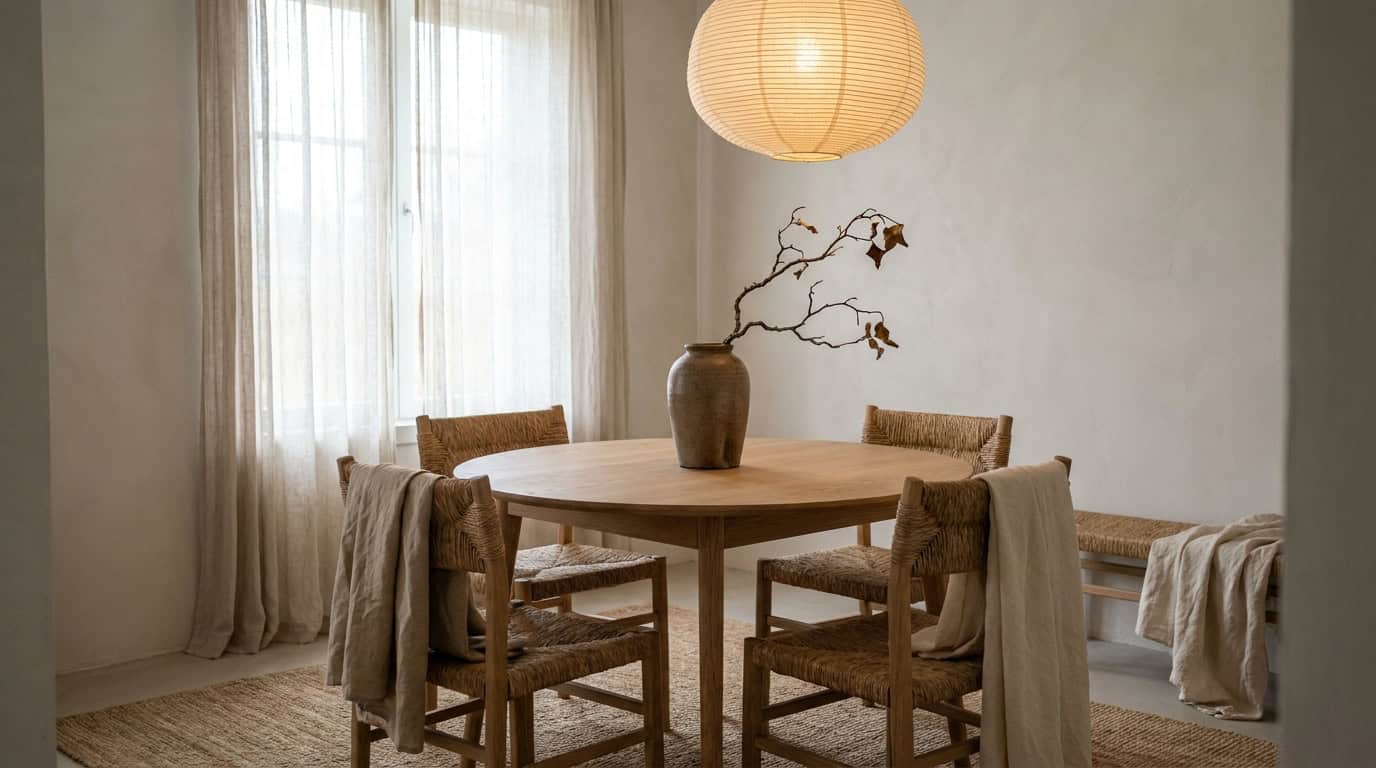
Vintage cottages come loaded with warm wood, collected ceramics, and natural textures — all things Japandi loves. The problem is usually visual busyness: too many patterns, too many colors, too many small objects competing. The adjustment is subtraction plus tone unification.
Idea 6 — Strip painted oak shelves back to natural.
If you have painted-over oak or pine shelving (common in older homes), sand back one shelf and treat with natural oil. Don’t strip everything — one natural wood surface among the rest reads as a deliberate Japandi accent. The contrast between painted and natural is part of the wabi-sabi approach.
Idea 7 — Swap floral textiles for solid linen.
Replace two or three floral throw pillows with solid linen covers in oat or natural. Keep one floral if it’s sentimental — Japandi allows one pattern per surface. The linen pillows cool down the visual noise without erasing the cottage warmth. Linen pillow covers: $12–$22 each on Etsy.
Idea 8 — One wabi-sabi ceramic per shelf.
In a cottage, shelves tend to collect everything. Apply the “one intentional object” rule: clear each shelf down to one ceramic piece with visible texture or asymmetry — a hand-thrown mug displayed on its side, a stoneware bud vase, a small raku bowl. The imperfection is the aesthetic, not a problem to solve.
Idea 9 — Soften brass fixtures with natural patina.
Vintage cottages often have polished brass hardware that reads as traditional. Don’t replace it — let it age, or apply a light patina finish. Aged brass sits in the same warm-metal register as Japandi’s typical bronze and iron accents. This costs nothing and takes the fixtures from “old” to “intentionally weathered.”
Idea 10 — Replace a gallery wall with a single botanical print.
A busy gallery wall is the fastest way to make a cottage feel cluttered. Take it down and replace with one large-format botanical illustration — a fig leaf, a monstera, a magnolia branch — in a simple oak or raw wood frame. Size up: 18×24 minimum. One strong image reads as confident. Small clusters of prints read as indecisive.
Renter-Friendly Japandi (Ideas 11–15)
No painting. No drilling beyond a single small hook. No changes that can’t be reversed before move-out. These five ideas work entirely within rental constraints.
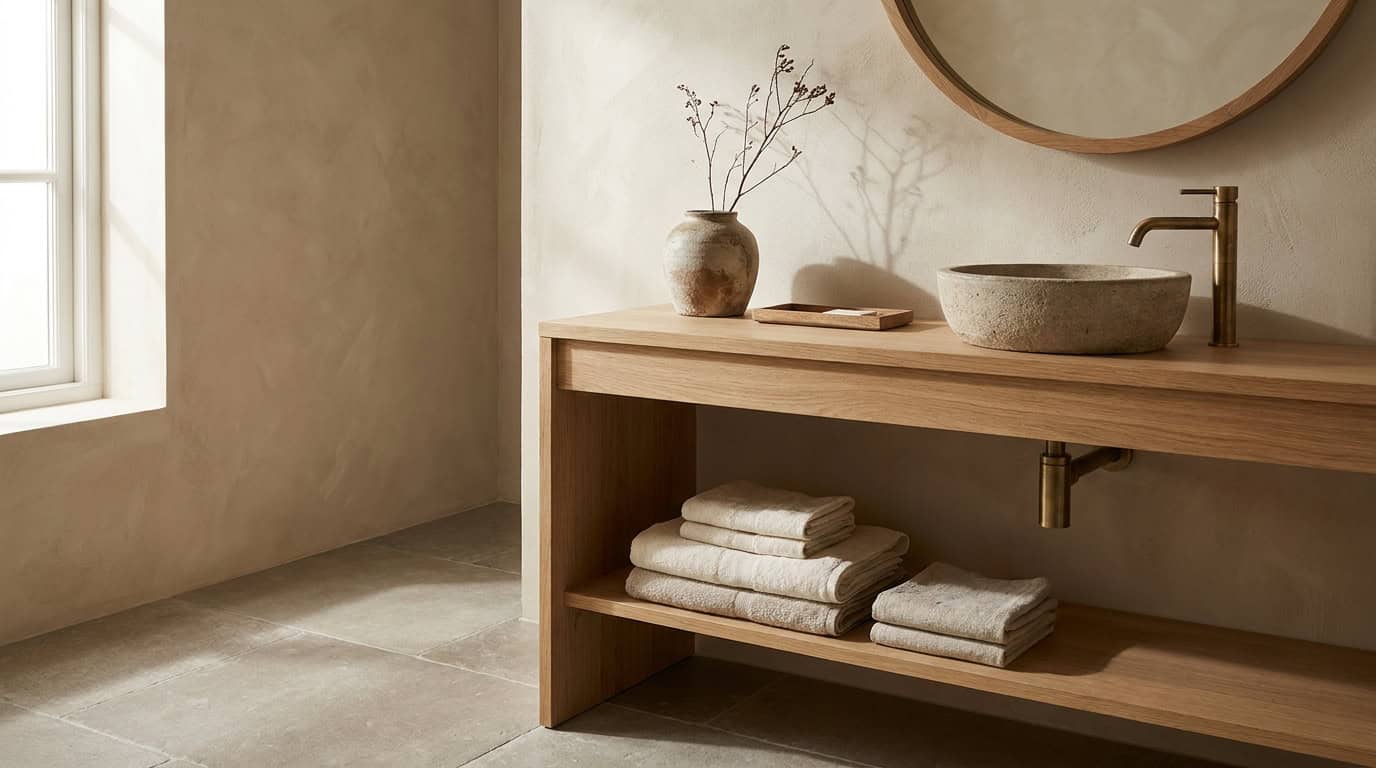
Idea 11 — Adhesive linen-texture wallpaper accent.
Peel-and-stick wallpaper in a linen or grasscloth texture, applied to a single wall behind a bed or sofa. Removes cleanly with a hairdryer and mild adhesive remover. Brands: RoomMates, NuWallpaper, or Chasing Paper. Panel sets run $40–$90. This is the closest a renter can get to a feature wall without a paintbrush.
Idea 12 — Jute area rug over rental carpet.
Lay a jute or flatweave wool rug directly over the apartment carpet. Use rug tape or a non-slip pad underneath to keep it from shifting. The natural texture covers the carpet entirely in high-traffic zones and immediately grounds the space in Japandi’s material palette. 5×8 jute rug: $65–$120 from Amazon or Ruggable.
Idea 13 — Removable picture ledges with single ceramics.
Command strip-compatible picture ledges (IKEA MOSSLANDA work, or use Umbra Trigg shelves with adhesive mounting) hold a single ceramic or plant per ledge. Stack two ledges at different heights on one wall. The arrangement creates a gallery feel without a single nail hole. Each ledge: $10–$15.
Idea 14 — Plug-in sconces instead of drilling.
Plug-in wall sconces with a fabric cord (cord covers available in linen or cotton braid) deliver the Japandi ambient lighting effect with zero hardwiring. Run the cord down behind a nightstand or credenza. CB2, West Elm, and Amazon all carry plug-in sconces in the $35–$75 range. Add a warm 2700K bulb.
Idea 15 — Neutral linen curtains over rental blinds.
Rental blinds stay. Clip-ring curtain rods (no drill required — tension mount or over-door bracket) hold wide linen panels that cover the blinds during the day. The linen reads as the window treatment; the blinds disappear behind it. Same effect as Idea 5, but specifically engineered for renters who cannot mount a standard curtain rod.
Dorm Room Japandi (Ideas 16–20)
Small square footage, institutional furniture, and shared walls. The Japandi approach here is about layering calm over chaos — not a full redesign, just strategic softening.
Idea 16 — Linen bedding swap.
Dorm-issued comforters in polyester are the single biggest obstacle to a Japandi dorm. Swap with a linen duvet cover or a stonewashed cotton duvet in oat, sand, or light sage. The fabric reads as softer and more intentional immediately. Brooklinen Linen Core sheet set: $109. Amazon linen duvet cover (solid): $38–$55.
Idea 17 — One paper lantern instead of overhead fluorescents.
Plug a floor-standing paper lantern or a paper lantern pendant (clipped to the overhead fixture) into a warm LED bulb and turn off the fluorescent overhead. The room temperature changes completely. IKEA REGOLIT pendant lantern: $9.99. Add a smart bulb (Govee or Kasa, $8–$12) to tune warmth.
Idea 18 — Oak desk organizer set.
Replace plastic desk organizers with a bamboo or oak-finish desk set: tray, pen cup, small shelf riser. MUJI bamboo desk set or Amazon alternatives run $20–$40 for a matching 3-piece. The warm wood on the desk surface signals intention and keeps the study area feeling calm rather than chaotic.
Idea 19 — Single floor cushion for seating.
A floor cushion in bouclé or woven cotton-linen blend (not a bean bag) adds flexible seating while keeping the floor clear when not in use. Brands: West Elm, IKEA, or handmade sellers on Etsy. Japandi scale: keep it thin and structured, not oversized and casual. $25–$55.
Idea 20 — Hanging plant trio.
Three small propagation stations — glass bud vases or small ceramic pots hung at three different heights using leather or jute cord — turn a blank wall into a living installation. Use trailing plants (pothos, string of pearls, tradescantia). Total cost including plants: $30–$50. This is consistently the most-pinned dorm Japandi element on Pinterest.
Family Home Japandi (Ideas 21–25)
Japandi and family life are not opposites. The style’s emphasis on storage, durable materials, and calm environments is exactly what family spaces need. The key is choosing the right materials (washable, rounded, closed-front storage) and not trying to make it look like a childless showroom.
Idea 21 — Closed-front toy storage.
Open shelving with visible toy bins reads as chaotic in a Japandi family room. Swap to closed-front storage: wicker baskets with lids, fabric drawer inserts, or a sideboard with solid doors. Everything disappears when the drawers close. The room resets to calm in 5 minutes of tidy. IKEA KALLAX with door inserts: $60–$120 depending on size.
Idea 22 — Washable linen-look slipcovers.
Linen is beautiful but not practical with children. Use Crate & Barrel’s performance linen covers, IKEA EKTORP slipcovers in natural, or Bemz custom covers in oat-wash cotton that mimics linen visually. The slipcover protects the sofa and machine washes without ironing. $60–$200 depending on sofa size.
Idea 23 — Low coffee table with rounded edges.
Replace a sharp-cornered coffee table with a low oval or rounded-corner version in oak or walnut-stain. The Japandi proportions are right (low to the ground, simple legs or no legs) and the rounded edge is child-safe. CB2 Decker table ($329), IKEA INGO modified with rounded corners, or budget option from Amazon ($75–$120).
Idea 24 — Durable jute rug in high-traffic zones.
Jute holds up better than wool blends under daily family traffic, spot-cleans reasonably well, and stays within Japandi’s natural material palette. Layer a smaller indoor rug over jute in the seating zone for softness. Base jute 8×10: $80–$140 on Ruggable or Amazon.
Idea 25 — Vertical shelving with one object per shelf.
Instead of horizontal clutter spread, go vertical. A tall 72-inch bookshelf styled with one object per shelf — a plant, a book stack, a single ceramic — keeps visual calm even in an active family room. The vertical movement draws the eye up and makes ceilings feel higher. IKEA BILLY with oak-effect finish: $59–$129.
Studio Apartment Japandi (Ideas 26–30)
Studios require every piece to work harder. Japandi’s natural restraint is actually an asset here — fewer pieces, better chosen, with more breathing room between them reads as intentional rather than sparse.
Idea 26 — Multi-function low platform bed.
A platform bed with built-in storage drawers eliminates the need for a separate dresser, freeing floor space. Japandi preference: solid oak or walnut veneer, low profile (under 18 inches from floor to mattress top), no headboard OR a simple slat headboard in natural wood. Amazon, Wayfair, and IKEA all carry platform storage beds from $180–$350.
Idea 27 — Room divider with paper screens.
A shoji-inspired room divider (bamboo frame, rice paper or linen panel) creates a visual boundary between the sleeping zone and living zone without a wall. Folds flat when not needed. Amazon or World Market, $60–$130 for a 3-panel screen.
Idea 28 — Vertical oak storage tower.
A tall, narrow storage tower in oak or bamboo (under 14 inches wide) uses vertical space without eating floor area. Use it for books, folded textiles, or kitchen overflow. IKEA IVAR column unit or Umbra Cubist tower. $35–$80.
Idea 29 — Single anchor color pop in deep forest green.
Studios go wrong when every surface is the same neutral. Add one deep forest green element — a throw blanket, a single large plant in a matte pot, or a small accent chair — to give the eye a rest point. Forest green reads as natural and grounded, not loud, in a Japandi palette. This single pop prevents the “beige box” effect.
Idea 30 — Foldaway desk station.
A wall-mounted fold-down desk (Prepac, IKEA NORBERG, or similar) keeps the work zone invisible when not in active use. In Japandi terms: every surface that can be cleared, should be. A fold-down desk that closes flush with the wall gives the studio 30–40 square feet of visual breathing room when the workday ends. Cost: $45–$120 depending on brand.
Style Adaptation Cheat Sheet
Not sure which section applies to your home? Use this quick decision matrix:
| Your current style | Primary Japandi adjustment | First swap to make |
|---|---|---|
| Modern minimalist | Add warmth (wood, linen texture) | Linen curtain or oak shelf |
| Scandinavian | Reduce brightness, add wabi-sabi | Replace one white ceramic with textured stoneware |
| Bohemian | Reduce pattern, keep natural texture | Swap patterned pillows for solid linen |
| Traditional/vintage | Reduce ornament, unify palette | Clear shelves to one object each |
| Industrial | Add organic softness | Bouclé or jute layer over metal and concrete |
| Contemporary glam | Reduce shine, add matte naturals | Replace metallic accents with brushed or aged equivalents |
For the full color decision framework, our Japandi Color Palette Guide covers the specific hex codes and paint brand matches for each adaptation path.
3 Mistakes People Make When Adapting to Japandi
These come up repeatedly when we look at “failed” Japandi attempts on Pinterest — rooms that followed the advice but didn’t land the feeling.
Mistake 1 — Forcing “all wood” creates orange overload.
Mixing too many different wood tones in the same room (pine shelving + mahogany table + bamboo blinds + teak accessories) reads as a lumberyard, not a calm retreat. Japandi uses one or two complementary wood tones. Pick one warm medium wood as your anchor and treat everything else as accent.
Mistake 2 — Removing ALL color creates sterile, not calm.
Pure white + beige + black with zero variation is not Japandi — it’s a mood board. Real Japandi rooms have tonal variation: the linen is slightly warm, the wall is slightly cooler, the rug has subtle texture variation, the plant brings a natural green. Aim for a palette of 5–7 shades within the same temperature range, not 3 flat solids.
Mistake 3 — Buying all new furniture when small swaps work.
We see this frequently: someone decides to “go Japandi” and replaces their entire living room. The result is a room that looks assembled, not lived in — and usually over budget. Japandi’s wabi-sabi principle values the patina of real use. Keep your existing pieces, add the wood tray, swap the cushion covers, change the curtains. The adaptation is in the layer, not the foundation.
What most guides miss: Bulb color temperature matters more than the fixture. Keep every bulb in the room at 2700K or warmer, and use the same rating throughout. A single 4000K “cool white” bulb mixed in turns the whole palette gray and flat, quietly undoing all the wood and linen warmth you just layered in.
See our Common Japandi Decor Mistakes guide for 7 more pitfalls with fixes.
Frequently Asked Questions
How long does Japandi adaptation actually take?
For a single room, one focused weekend is realistic if you’re working from existing furniture. The shopping portion takes longest — sourcing the right wood tone tray or the right linen pillow cover can take a few days if you’re particular. If you use in-store IKEA or Amazon Prime, you can complete most of the ideas above in 48 hours start to finish. Our How to Start Japandi in 6 Steps guide walks the full weekend process.
I’m a renter — how do I do Japandi without losing my deposit?
Ideas 11–15 above are all deposit-safe. The broader principle: anything that touches a wall permanently (paint, wallpaper, drilled hooks) stays off the table. Focus on textiles, rugs, lighting that plugs in, and freestanding furniture. The good news is that most of Japandi’s visual impact comes from those surface layers anyway — curtains, bedding, rugs, and ceramics do more visual work than the walls.
How much of my existing decor should I keep?
Keep anything that fits the palette (warm neutral, dark anchor, natural texture) and remove anything that doesn’t. A rough guide: if the piece is a natural material (wood, stone, ceramic, linen, rattan, jute), keep it. If it’s synthetic, patterned, or brightly colored, evaluate whether it can be styled around or should go. Most people find that 60–70% of what they already own is Japandi-compatible — it just needs to be edited and rearranged. For a detailed budget breakdown of what to keep vs. replace, see the Japandi Budget & Cost Breakdown guide.
Do you have to repaint the walls to get the Japandi look?
No. Wall color is the last lever, not the first. Landlord-beige, greige, and soft warm white already sit inside the Japandi range, so most rooms land the feeling before paint ever comes up. Adjust wood tone, textiles, and warm lighting first. If a wall still feels too flat, peel-and-stick grasscloth (Idea 11) adds texture without a single brushstroke, and it comes off cleanly at move-out.
What lighting color temperature works best for Japandi?
Warm, around 2700K, across every bulb in the room. That one number does more for the mood than any fixture you buy. Cooler 3500–4000K bulbs flatten the wood and linen into gray and kill the softness. Layer three warm sources at different heights — a floor lamp, a table lamp, and a candle or small lantern — so the light feels lived-in rather than switched-on.
The Short Version
Japandi works in any home because it’s a set of adjustments, not a fixed catalog. The 4-step formula — match wood tone, unify palette, reduce ornaments by half, layer lighting — applies whether you’re starting from a modern apartment or a vintage cottage. The 30 ideas above give you the specific moves for 6 different starting points.
Pick the category that matches your home, choose 2–3 ideas that fit your budget, and do those this weekend. Pin this post to your Japandi board so you can come back to the remaining ideas as your space evolves.
For the visual inspiration side, browse our 18 Japandi Corners and Nooks collection — those are the styled spaces where these ideas come together in practice.
Also in this series: Japandi Living Room Ideas · Japandi Storage Hacks for Small Spaces · Japandi Style Decor Guide