
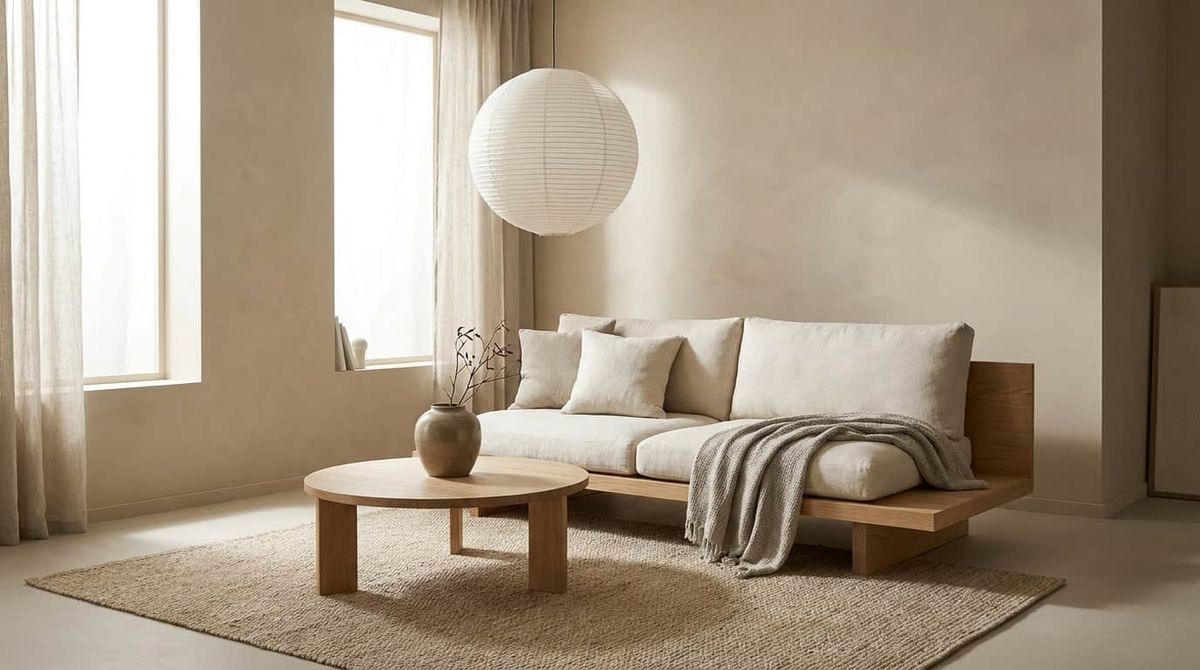
A Japandi outdoor space isn’t a styled patio with rattan and pampas grass. It’s a deliberate extension of indoor calm — the Japanese concept of engawa (a roofed, verandah-style transition between house and garden) fused with Nordic outdoor functionalism. Where most “Japandi-inspired” outdoor ideas stop at natural materials, the real discipline is in what you leave out: the color, the clutter, the competing focal points.
We pulled 12 specific setups — across patios, gardens, and balconies — along with the principles that actually make them read Japandi rather than generic minimalist. Each one works in real outdoor budgets, from compact city balconies (6 ft × 8 ft) to full backyard garden zones. If you’ve been adding pieces without a framework, this is where to start.
Key Takeaways
- Engawa principles — low platform, sheltered transition, intentional view to greenery — translate directly to modern patio and balcony design.
- Limit your plant palette to 3–4 varieties maximum; single statement plants per zone anchor the space without visual noise.
- Warm 2700K lighting (lanterns, low LED strips) is non-negotiable. Bright-white solar lights break the aesthetic entirely.
- Cedar, teak, and acacia are the reliable outdoor wood choices. Faux wicker reads cheap in this context.
- Monochrome stoneware planters, not terracotta or plastic, carry the Japandi tone outdoors.
What Is Engawa — and Why It Changes How You Design Outdoor Spaces
The engawa is the covered wooden platform that runs along the exterior of a traditional Japanese home, positioned between the interior rooms and the garden. It isn’t quite inside and isn’t quite outside — it’s a roofed, low-profile threshold that allows you to sit at the edge of the building while remaining sheltered, facing the garden deliberately.
Three things define it architecturally:
-
Low platform level — engawa sits close to grade, blurring the visual boundary between built structure and ground.
-
Overhead shelter — a roof overhang or pergola creates shade and rain protection without enclosing the space.
-
Framed view to greenery — the garden isn’t incidental. It’s the view the engawa is built to present.
In modern terms, this translates to a platform deck with a pergola or shade sail, a single seating zone oriented toward your garden or planting bed, and a clear visual connection to at least one living element. You don’t need a Japanese-style home to apply this. A low cedar platform, 8 ft × 10 ft, built against a fence with a pergola overhead and a single Japanese maple in sightline, is engawa logic in a suburban backyard.
For apartment balconies: the railing becomes your boundary, a linen privacy curtain replaces the roof overhang, and a single floor cushion facing a bamboo planter replaces the garden view. Same principle, compressed to 50 sq ft.
What most guides miss: a traditional engawa is only about 3 shaku deep, roughly 35 to 36 inches, and sits 12 to 16 inches above grade. That depth is deliberate. It’s enough to sit sideways with your legs over the edge, but not enough to become a separate room. When you rebuild it as a modern platform, hold the seating depth near 36 inches and keep the step down to the garden shallow. Go wider and it stops reading as a threshold and starts reading as a deck.
Free · 60 seconds
Not sure which style is actually yours?
Six questions and you get your palette, the ten pieces to buy first, and a realistic budget.
Japandi Outdoor Design Principles
Before the 12 ideas, here’s the short brief on what separates Japandi style outdoors from generic neutral-toned outdoor furniture:
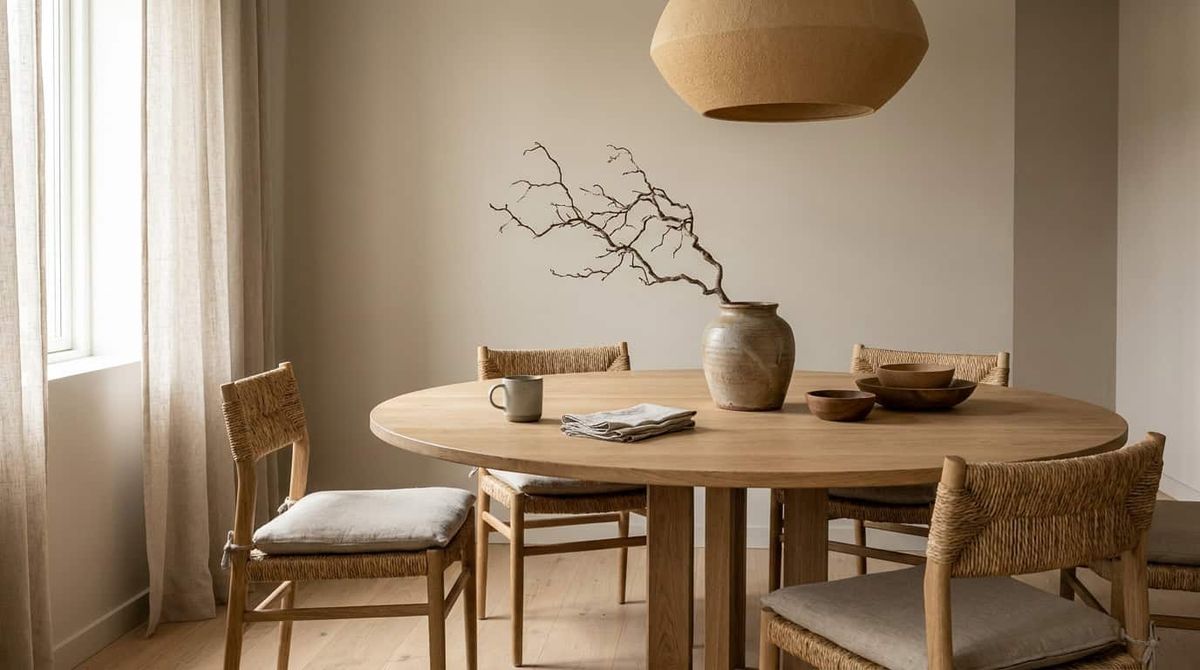
Wood finish: Unfinished or lightly oiled natural wood — cedar, teak, or acacia. No painted finishes, no heavily lacquered surfaces. The grain should show. The color should be warm grey-brown, not orange-toned.
Planters: Monochrome stoneware or concrete. Matte black, warm grey, or off-white. Terracotta can work if it’s aged and muted, not bright orange. Plastic planters in any finish break the look.
Plant count: Maximum 3–4 species across the entire space. One statement plant per zone. Repetition is intentional — three of the same ornamental grass reads as design. Three different flowering annuals reads as chaos.
Lighting: 2700K color temperature only. This is the warm amber range — the equivalent of an incandescent bulb. Paper lanterns, low-profile LED strip under a bench edge, or washi-style pendant for a covered patio. Solar string lights in bright white are a common mistake that immediately reads wrong.
Seating height: Low-profile. Floor cushions, platform benches 14–16 inches high, or low-slung Scandinavian outdoor chairs. High patio chairs and tall bar stools push against the grounded quality the style depends on.
12 Japandi Outdoor Setup Ideas
Patio Ideas
1. Engawa-Inspired Cedar Deck Nook
Build or source a low cedar platform (pre-built versions run $400–$900 on Wayfair and Home Depot) and position it against one wall or fence. Add a single low bench — 14 inches high — along the back edge, and face it toward your main planting zone. Keep the deck surface clear except for one stoneware planter in the corner. The key is restraint: no outdoor rug, no side table, no decorative objects. The cedar weathers to a silver-grey naturally over one season, which only improves the look.
2. Low Cedar Bench + Andon Lanterns
A cedar bench — 6 ft long, 14 inches high, no back — positioned against a fence or wall with two andon-style lanterns (floor-standing paper or linen shades, $30–$80 each at World Market or IKEA) placed at either end. This setup works on a 10 ft × 10 ft patio. No cushions needed in warm months; add a single linen bench cushion for shoulder-season use. The lanterns at 2700K warm LED create the evening atmosphere without overhead string lights.
3. Dining Corner with Linen Shade Umbrella
For a Japandi outdoor dining setup, the table should be low (28–30 inches, not the standard 36-inch patio table height), with simple bench seating rather than chairs. A natural linen or canvas umbrella in off-white or warm sand — not a bold color — provides the overhead shelter. The IKEA Äpplarö series gets this proportionally right, and the natural acacia stains down to a warmer tone with one coat of teak oil. Keep the table surface clear between meals — no centerpiece permanently placed.
4. Gravel-and-Stepping-Stone Patio
Skip the poured concrete or pavers. A gravel base (pea gravel or decomposed granite) with irregularly spaced stepping stones — flat bluestone, slate, or concrete pavers — creates the groundplane texture that reads Japandi immediately. Border it with a single row of low ornamental grasses or moss ground cover. This approach works on a budget ($3–$6 per sq ft for material and install) and requires minimal maintenance. Avoid colored gravel; stick to grey, tan, or near-black tones.
Garden Ideas
5. Minimalist Zen Rock Garden Corner
A dedicated rock garden corner doesn’t need to be large — 6 ft × 4 ft is enough to read as intentional. Use raked decomposed granite or fine gravel as the base, place 3 stones of varying sizes asymmetrically (odd numbers, Japanese design convention), and add one low specimen plant: dwarf mondo grass, a small bonsai in a training pot, or a single clump of black bamboo. Keep the raking pattern simple — parallel lines, not complex spirals.
6. Single Japanese Maple Anchor
One Japanese maple (Acer palmatum) as the garden’s focal point is among the most effective Japandi moves in a backyard. It provides color that shifts seasonally (spring green to deep red in fall), structure without bulk, and a human-scale presence. For zone 6–8 gardens, standard varieties are fully hardy. Clear the ground around it — bare mulch or moss groundcover only, no companion plantings competing for attention. Budget: $60–$200 for a 3–5 gallon nursery specimen.
7. Gravel + Moss + Stone Trio
This combination works as a ground treatment for areas that are difficult to plant (dry, shaded, or trafficked). Set large flat stones irregularly across the gravel, and encourage moss growth between and around them with a buttermilk-and-moss slurry painted onto bare stone. Moss establishes in 4–6 weeks in humid climates. This trio — gravel, moss, stone — is the closest you get to a maintenance-free Japandi garden zone.
8. Native Grass Border (Low-Water)
A border of native ornamental grasses — Muhlenbergia capillaris (pink muhly) in the South, Nassella tenuissima (Mexican feather grass) in zones 7–10, Panicum virgatum (switchgrass) in zones 5–9 — gives the garden a soft, naturalistic edge that fits Japandi’s wabi-sabi sensibility without requiring irrigation once established. Plant in a single-species mass — 7 to 12 plants of the same variety rather than a mixed grass border. The repetition is the design.
Balcony Ideas
9. Linen Privacy Curtain + Single Floor Cushion
A standard apartment balcony (6 ft × 8 ft) becomes a Japandi retreat with two changes: an outdoor linen curtain panel on a tension rod across one side (for privacy or wind shelter), and a single large floor cushion — 24 × 24 inches minimum, linen or cotton canvas cover in warm white or oatmeal. Add one stoneware planter with a single plant (a fern or a small Ficus pumila trailing over the edge). That’s the entire setup. The discipline is resisting the urge to add more.
10. Bamboo Trellis + Climbing Jasmine
For balconies with a railing or wall to work with, a bamboo trellis panel ($20–$50 at garden centers) provides both structure and privacy. Train Trachelospermum jasminoides (star jasmine) up it — the white flowers are small and understated, the fragrance is significant, and the plant handles containers well. One 6-inch pot of established jasmine will cover a 4 ft trellis panel within two growing seasons. This combination reads both Japanese (bamboo structure, climbing plant) and Nordic (functional, structural greenery).
11. Narrow Oak Bench + Paper Lantern
For balconies that can’t accommodate floor cushions (high-traffic, shared, or rental situations), a narrow oak or cedar bench — 10–12 inches deep, wall-mounted — serves as both seating and a shelf for a single paper lantern or shoji-style LED lamp. The bench takes zero floor space and the lantern provides the 2700K evening light the space needs. IKEA’s Äpplarö wall-mounted folding bar serves this function at $60 and stains well with teak oil.
12. Tea Station Ledge for Small Balconies
The smallest viable Japandi balcony setup: a wall-mounted ledge (16 inches deep, cedar or oak) at standing height, used as a tea station. Place a cast iron tetsubin kettle (or matte ceramic equivalent), one stoneware cup, and a single small plant — bonsai starter, air plant in a ceramic dish, or a succulent in a matte black pot. This isn’t seating; it’s a ritual station. The practice of standing at the edge of your balcony to make and drink tea is itself engawa logic — a deliberate pause at the threshold between inside and outside.
Japandi Plant Palette: What Works and What to Skip
The Japandi color palette extends outdoors through plant selection. These species carry the tone:
What works:
- Japanese maple (Acer palmatum) — seasonal color, fine texture, human scale
- Dwarf bonsai (juniper, azalea, or trident maple in training pots) — sculptural, contained
- Ferns (Dryopteris or Athyrium species) — low-light tolerance, soft texture
- Moss — ground cover for shaded or damp zones, zero maintenance once established
- Ornamental grasses (Hakonechloa macra, Carex, Nassella) — movement, naturalistic
- Star jasmine (Trachelospermum jasminoides) — climbing, fragrant, evergreen in zones 7+
- Black bamboo (Phyllostachys nigra) — striking in containers (note: plant in pots to control spread)
What to skip:
- Annual flowers in mass color (petunias, marigolds, impatiens) — color saturation breaks the palette
- Hanging basket overgrowth — cascading mixed plantings read fussy, not calm
- Succulents in terracotta — the pot color and plant combination reads more desert-modern than Japandi
- Ornamental cabbages or seasonal color swaps — the constant change disrupts the permanence the style depends on
Furniture Material Guide
For outdoor furniture that holds the Japandi look through real seasons, material selection matters more than brand. Here’s how the common options stack up:
Cedar is the best all-round choice for DIY and mid-budget builds. It’s naturally rot-resistant, weathers to a warm silver-grey without treatment, and takes teak oil well if you want to maintain a warmer tone. Available at every lumber yard.
Teak performs better long-term in wet climates and requires less maintenance than cedar. Budget for $200–$600 for a teak bench from brands like Teakwood Central or similar importers. Greyed teak actually looks better in a Japandi context than freshly oiled.
Acacia is the budget teak alternative — similar grain, less durable in sustained wet conditions. IKEA’s Äpplarö line uses acacia and performs reasonably for 3–5 seasons with annual oiling.
Pine (treated) is the lowest-cost option and works for 3–5 years before it starts to fail. Not ideal long-term but viable for rental situations where you’re not investing heavily.
What most guides miss: outdoor wood fails at the end grain first, not the face. The cut ends of cedar, teak, and acacia absorb water fastest, so seal those ends with an end-grain sealer or a second coat of teak oil before you finish anything else. Untreated cedar silvers evenly in 6 to 12 months of full exposure; if you want the warm tone to last, re-oil once a year. For cushions and curtains, solution-dyed acrylic (Sunbrella and equivalents) holds its color through years of UV, while cotton canvas and untreated linen fade and mildew within a season or two outdoors. Choose oatmeal or flax tones in acrylic to keep both the palette and the durability.
Why faux wicker fails: Synthetic resin wicker reads plasticky at close range and the weave pattern introduces a complexity that fights the clean line quality Japandi outdoor furniture requires. Even well-made pieces from brands like Sunbrella-upholstered Polywood look off against a gravel garden or cedar deck. For this aesthetic, stick to solid wood or metal.
Two budget brands worth knowing:
- IKEA Äpplarö — acacia outdoor collection, low-profile bench and table proportions, $60–$300, widely available, takes oil stain well
- Yardistry — cedar pergola kits and deck panels, $400–$2,000, the structural solution for building an engawa-style overhead shelter without custom carpentry
3 Mistakes That Ruin Japandi Outdoor
1. Bright color cushions. The most common failure. A single coral, navy, or green cushion pulls the eye immediately and breaks the monochrome groundplane the rest of the space is working to establish. Stick to warm white, oatmeal, flax, or charcoal grey for any textile. Removable covers make seasonal swaps easy without introducing color.
2. Plastic planters styled to look ceramic. The weight, the finish under direct sunlight, and the slight sheen all read wrong. Real stoneware or concrete planters are $20–$80 at Target, TJ Maxx, and HomeGoods — they’re not a budget stretch. Alternatively, matte-black metal planters hold the look better than any plastic imitation.
3. Bright-white solar string lights. Solar string lights default to 4000K–6500K color temperature — daylight to cool white. In a Japandi outdoor context, this reads like a suburban party setup. If you want solar, look specifically for warm-white solar lanterns (check the lumen output and color temp before buying — it’s usually listed). Otherwise, a plug-in 2700K LED on a timer is more reliable and better looking.
Frequently Asked Questions
What’s the smallest viable Japandi balcony setup?
A 5 ft × 6 ft balcony can work with the tea station ledge setup (idea 12) or a single floor cushion and one planter. The minimum viable version is: one flat surface to sit or stand at, one plant in a proper planter, one warm light source. You don’t need seating if the space is too small — a standing ritual station is entirely in keeping with engawa tradition.
Can renters do Japandi outdoor without permanent changes?
Yes. The entire balcony setup requires nothing permanent: tension rod curtains, freestanding bamboo trellises, portable floor cushions, and container plants all leave no trace. For patios, pre-built cedar platform sections (available as modular deck tiles at Home Depot for $2–$4/tile) lay directly on existing surfaces without fasteners and lift up when you move.
Does Japandi outdoor work in cold climates?
The structural elements — cedar, teak, stone — handle cold well. The adjustment is in plant selection: Japanese maples are hardy to zone 5, ornamental grasses to zone 4–5, and mosses are nearly universal. For zone 4–5 winters, store container plants (bonsai, jasmine) indoors during hard frost. The engawa concept originated in a climate with cold winters, so the covered overhead structure is already part of the design logic.
Best Japanese-leaning plants for US zone 6?
Zone 6 handles the full range well: Acer palmatum (Japanese maple) survives with root mulching, Hakonechloa macra (Japanese forest grass) is fully hardy, Cryptomeria japonica ‘Elegans Compacta’ works as a low evergreen specimen, and Nandina domestica (heavenly bamboo) provides winter red color. For moss, Thuidium delicatulum establishes reliably in zone 6 shade gardens.
What outdoor fabric holds the Japandi look without fading?
Solution-dyed acrylic (Sunbrella and equivalents) is the reliable pick, because the color runs through the fiber and resists UV fade for years. Choose oatmeal, flax, or charcoal to stay on palette. Untreated cotton and linen look right at first but fade and mildew within a season or two outdoors, so reserve them for covered patios or shoulder-season use only.
Wrapping Up
Japandi outdoor works because it applies the same logic indoors Japandi always has: intentional subtraction, natural materials, and a deliberate relationship between built space and living things. The engawa concept gives you the organizing framework — a sheltered threshold facing a composed green view — and the 12 setups above give you specific moves within that framework, from a full backyard cedar deck to a 50 sq ft balcony tea station.
Start with one zone, get the material choices right, limit your plants to 3 species, and get the lighting temperature correct. The rest follows. For the full indoor-outdoor material system, see our Japandi furniture and decor picks for 2026 and the step-by-step Japandi decorating guide.
Pin this for your next outdoor project — we update this guide seasonally.
Related: Japandi Style Guide | Japandi Color Palette | Aesthetic Corners & Nooks | Budget Breakdown