
The most common Japandi mistake is mixing three or more wood tones, and the cheapest fix is a $5 pack of warm bulbs. Japandi blends Japanese restraint with Scandinavian warmth, so rooms go wrong when they land on “cold Scandi office” or “wabi-sabi yard sale.” Each mistake below has a cause and a priced fix.
Key Takeaways
- Two wood tones at most: one dominant, one accent, with clear contrast between them.
- Cool-only palettes read clinical; one warm neutral or textured layer fixes most of it.
- Wabi-sabi means one imperfect object per zone, not a shelf of them.
- Bulbs at 2700K are the cheapest fix on this list: IKEA’s warm-white SOLHETTA bulbs are $4.99 for two.
- A bare floor reads unfinished; a rug is structure, not clutter.
Wood and Color Mistakes
These two decide how the whole room reads, so fix them before you buy anything else.
1. Mixing Three or More Wood Tones
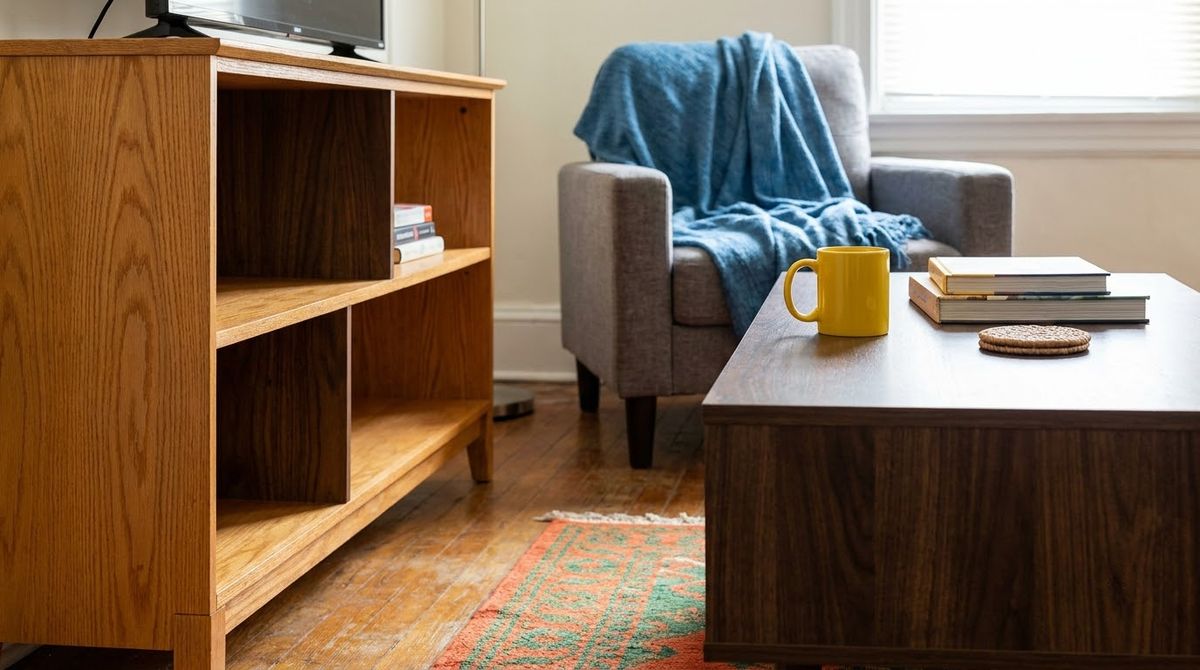
Light oak floor, medium walnut table and a dark wenge shelf are three wood “languages” competing. Each piece looks fine alone, but together they make visual noise that cancels the calm. The fix is one dominant wood across about 60% of surfaces and one accent for the rest. Two near-identical blondes also fail, so choose clear contrast, such as pale ash with mid-brown walnut. A 10-inch acacia tray is about $11.89 at Walmart if you only need one accent.
2. An All-Cool Color Palette
White walls, a cool gray sofa and black metal can be technically neutral but emotionally sterile; the room reads like a waiting area. Japandi is warm neutral with occasional cool contrast, not the reverse. Swap one or two cool pieces for warm greige, oat or clay. Sherwin-Williams lists Accessible Beige (SW 7036) as a color option; renters can add a chunky knit throw instead (about $17 for 50 x 60 inches at Walmart). See the Japandi color palette guide.
Object and Lighting Mistakes
Too many “interesting” things and the wrong bulbs both undo a good palette.
3. Over-Decorating With “Imperfect” Pieces
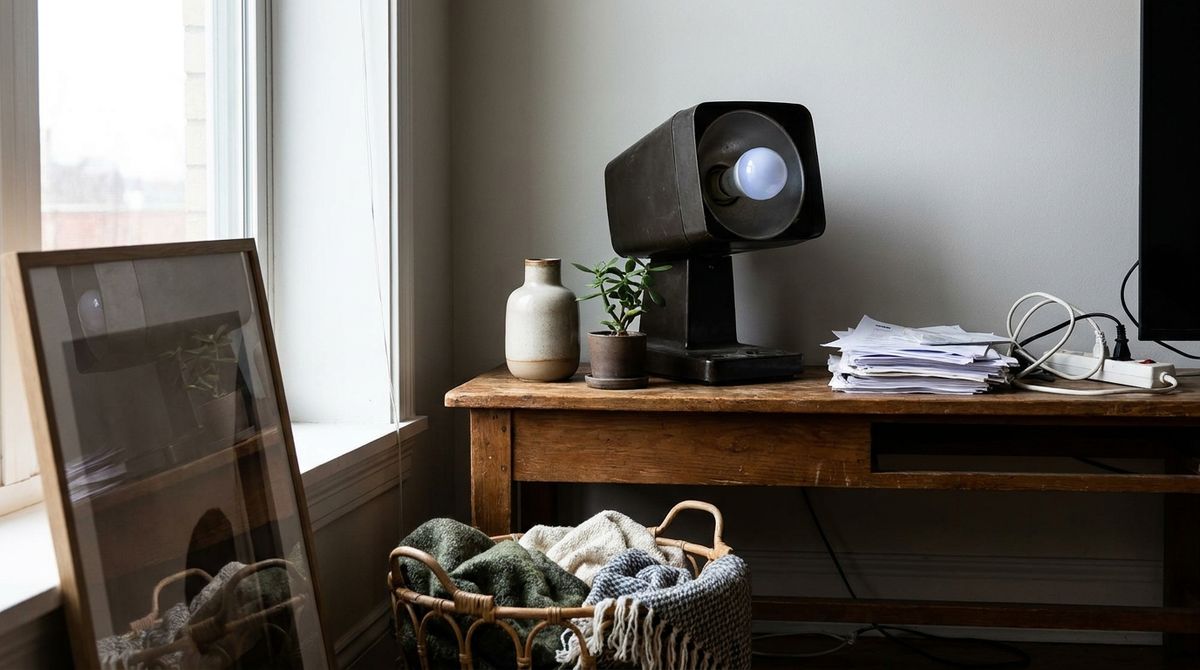
Wabi-sabi finds beauty in imperfection, but it gets misread as “collect interesting rough things.” Five irregular ceramics on one shelf cancel each other, and imperfection loses meaning when everything is imperfect. Give each surface one intentionally imperfect object (a hand-thrown mug, a rough vase, a piece of driftwood) and keep the rest quiet. Target listed Threshold ceramic bud vases at $15 (painted) and $34.99 (textured). More in wabi-sabi in Japandi.
4. Cool Bulbs That Turn Wood Gray
Standard LED bulbs sold as “daylight” sit at 4000K to 5000K, a range meant for tasks and retail. Under them oak looks gray and the warm palette disappears after dark. Replace every bulb with 2700K warm white. IKEA lists SOLHETTA warm-white E26 bulbs at $4.99 for a 2-pack (IKEA bulbs), so six bulbs cost about $15. Also check the CRI on the box: 90 or higher renders wood and linen richer.
Bedroom Mistakes
The bed is the largest object in the room, so its height, pillows and fabric set the tone.
5. A Tall Headboard in the Bedroom
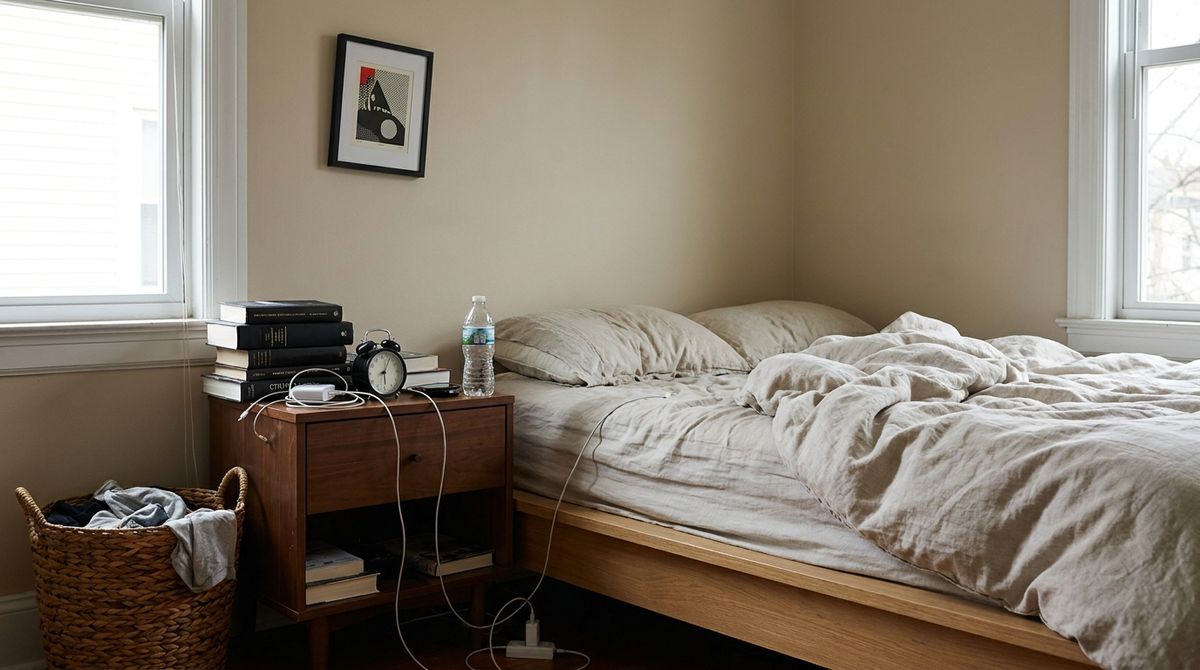
A tall upholstered headboard pulls the eye up and adds visual weight, which fights Japanese design’s closeness to the floor. Choose a low frame or a simple wall-mounted ledge instead. IKEA’s solid pine NEIDEN frame has an 11 3/4 inch footboard and a 25 5/8 inch headboard at $69 (Full), with slats sold separately. For a queen, Walmart listed the low-profile AFI Mission platform bed at $353.59.
6. Perfectly Symmetrical Pillows
A 2+2+2 matching set is safe and tidy, but it reads like a hotel brochure. Japandi aims for intentional, not formal. Try an asymmetric 3+2 arrangement: two 22-inch pillows on one side, one 18-inch on the other and a lumbar slightly off-center. Mix linen, bouclé and woven cotton in two neutrals. Walmart listed a set of four 18 x 18 linen-look covers at $17.43 on sale, enough to mix textures cheaply.
7. Polyester “Linen-Look” Bedding
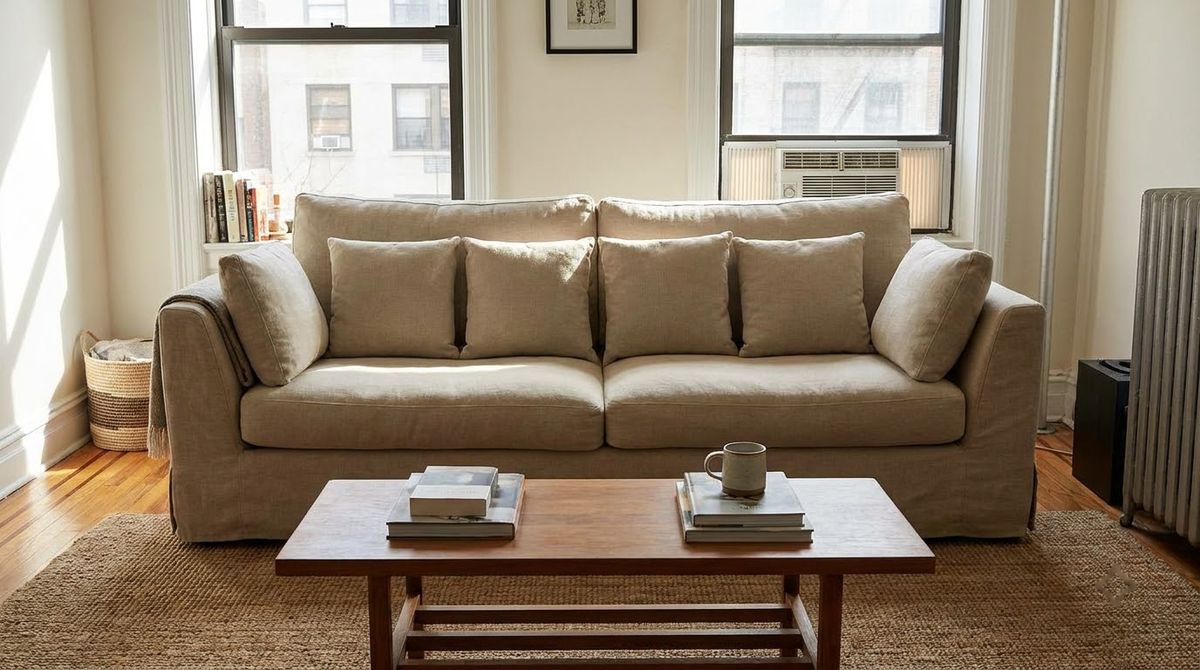
Polyester blends lie flat and shiny, while real linen has slub texture and a soft, rumpled drape that is part of the style. Choose undyed or lightly tinted tones, since pure white skews cool: oat, flax or dusty sage. Home Depot listed a Full/Queen washed-linen duvet cover in sandstone at $117, down from $156. Check the fiber content on the label before you buy.
Floor and Plant Mistakes
The last two mistakes come from misreading “minimal” as “empty.”
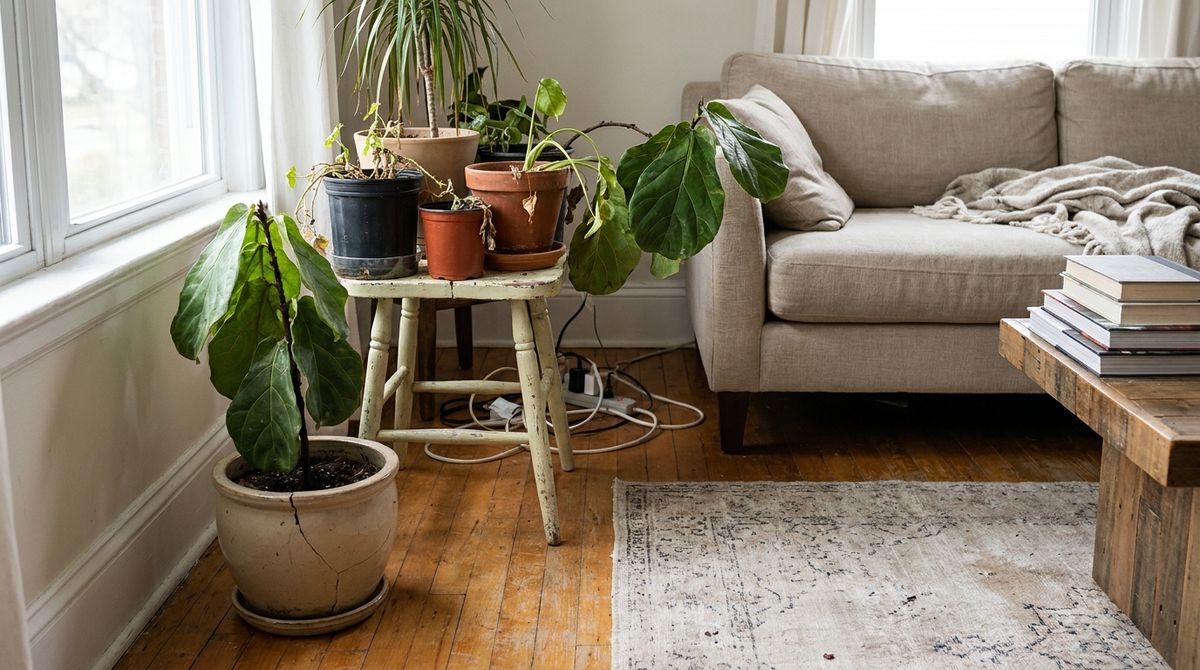
8. A Bare Floor That Reads Unfinished
Many Japandi attempts skip the rug, thinking it adds clutter. A rug defines zones, adds texture and gives the eye a landing place, so a bare floor looks incomplete. Layer a jute base with a low-pile wool rug in a muted tone. In a bedroom, extend the rug at least 18 inches beyond the bed on both sides. IKEA’s 100% jute LOHALS runs $179.99 at 6’7″ x 9’10” and $129.99 at 5’3″ x 7’7″.
9. Plants Crowded Until No One Stands Out
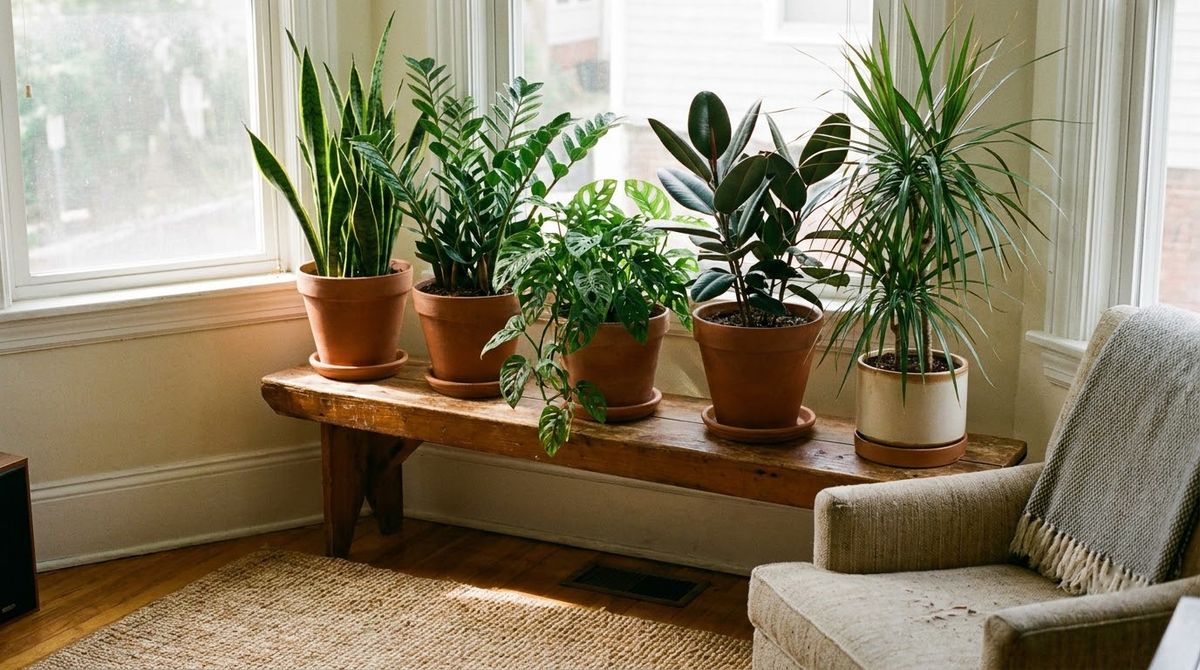
Five medium plants at the same height compete equally, so none reads as an anchor; this is the plant version of the three-wood-tone problem. Pick one structural statement plant for a bare corner and add one accent at a different height. Home Depot listed a Costa Farms snake plant (3 to 4 feet shipped) at $67.99 and 5-foot faux olive trees from about $56.61. The ASPCA lists snake plant as toxic to dogs and cats, so choose another in a pet home.
Fix Order and Cost
If your room shows several mistakes, fix them in this order. Each step is cheaper and more visible than the next.
| Order | Mistake | Fix | Approx. cost |
|---|---|---|---|
| 1 | Cool bulbs (4) | Six 2700K bulbs | about $15 (IKEA) |
| 2 | Wood tones (1) | Store or move one piece | $0 |
| 3 | Cool palette (2) | Warm throw or rug layer | about $17-$130 |
| 4 | Bare floor (8) | Jute rug | $129.99-$179.99 (IKEA) |
| 5 | Tall headboard (5) | Low frame | $69-$354 |
Quick Audit Before You Buy
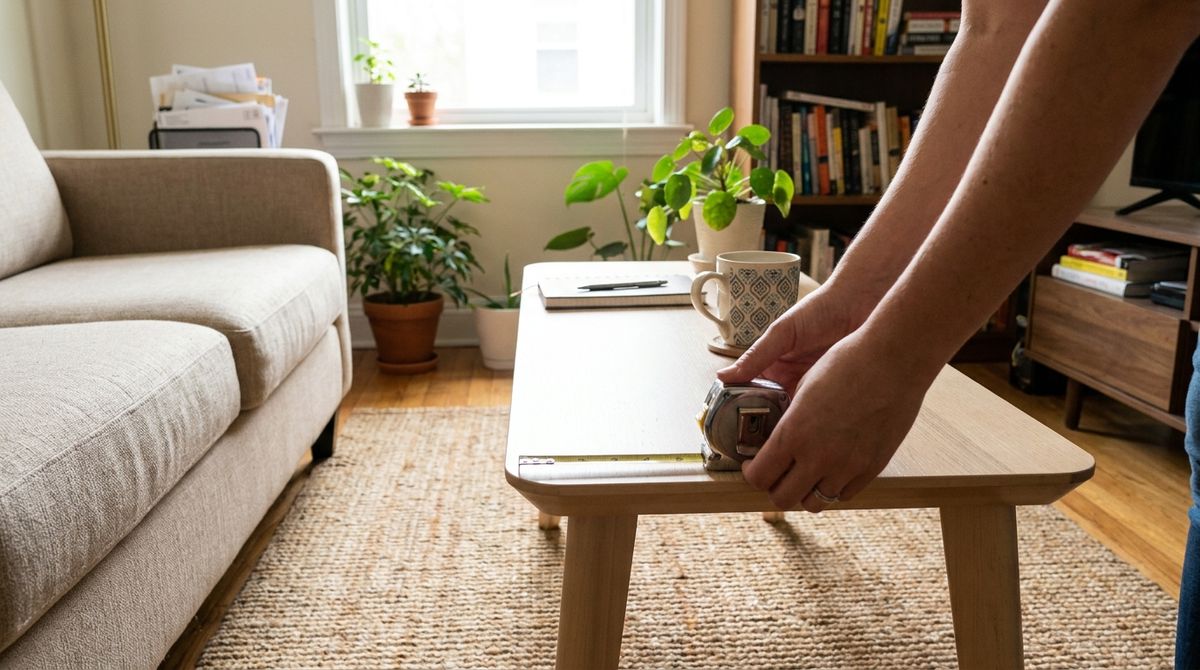
Stand in the doorway with a wide-angle phone photo, which shows color casts more clearly than the eye.
- How many wood tones do you count? More than two points to mistake 1.
- Is there any warm color in the room? None points to mistake 2.
- What does the bulb box say? Anything 4000K or higher points to mistake 4.
- Is there a rug under the main seating or bed? No points to mistake 8.
- How many plant silhouettes can you count? More than two points to mistake 9.
When a “Mistake” Is a Style Choice
Not every rule applies everywhere. Mid-century-leaning Japandi often uses two wood tones on purpose, since walnut paired with ash is a recognized pairing. A matching pillow set is fine in a child’s room, and an entryway can mix materials. The test is simple: does the element add something the room needs, or is it there by default? The 6-step Japandi guide builds that flexibility in from the start.
Frequently Asked Questions
Can I do Japandi on a rental budget without replacing furniture?
Yes. Warm bulbs, a warm throw or rug and real linen bedding can be done for roughly $15 to $150 with no permanent changes. Wood tone problems can often be solved by storing one piece. See the Japandi budget breakdown.
Is Japandi the same as Scandinavian minimalism?
No. Scandinavian minimalism skews cooler and more function-first. Japandi adds wabi-sabi: natural imperfection, organic materials and asymmetry, which makes it warmer and more textural.
My walls are all white. Is that a mistake?
It depends on the undertone. Warm white with a yellow or red undertone suits Japandi; cool white with a blue or gray undertone does not. Hold a warm greige chip against the wall. If the white suddenly looks cold, warm textiles and natural wood are the easier fix than repainting.
How many wood tones should a Japandi room have?
Two at most: one dominant tone across about 60% of surfaces and one accent, with clear contrast such as pale ash and mid walnut. Three or more competing tones is the most common cause of a room that feels busy despite empty space.
Why does my Japandi room feel cold even though it is minimal?
Two causes stack up: 4000K or higher bulbs and bare hard surfaces. Switch to 2700K warm white bulbs and add one soft textured layer such as a wool throw or jute rug. Those two moves warm a room faster than buying another piece of furniture.
Fix the Bulbs First
Start with the five-minute audit, then fix bulbs, then wood tones, then the palette. Once those three are right, the remaining mistakes are easy to spot. For more on the style, read the complete Japandi guide and, for the same discipline in another style, the boho decor mistakes guide.
Prices checked October 2026.