You can build a working entry in under 12 inches of depth with 20 products priced from $3.50 to about $282, each listed here with its real size in inches. Start on the wall beside the door, then add shoe storage and a rug only if floor space allows.
Key Takeaways
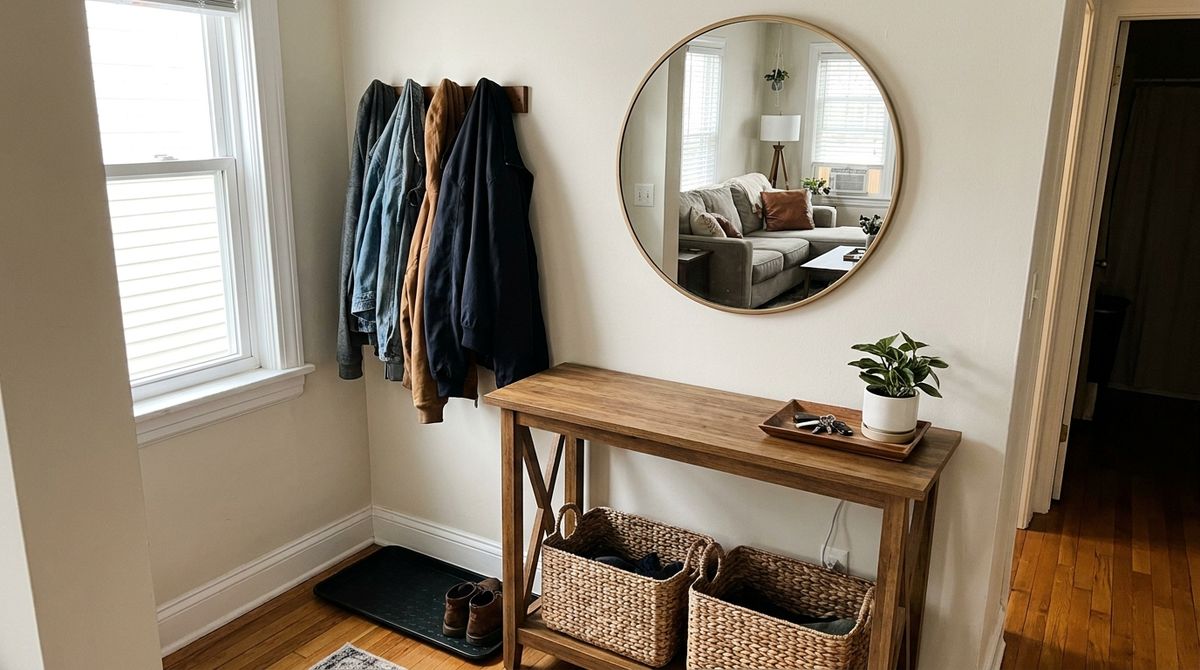
- A wall shelf, a hook rail and a mirror cover keys, coats and a last look in about 10 inches of depth.
- Shoe storage can be as shallow as 7 1/8 inches (IKEA TRONES, $39.99 for two).
- Adhesive hooks hold about 5 pounds each, so keep them for bags and scarves, not wet winter coats.
- A floor-standing console under 14 inches deep starts around $220 new; a wall shelf does the job for $30.
- Anchor any shallow, tall cabinet to the wall. IKEA says the TRONES cabinets must be secured.
Wall-Only Drop Zones
When the door opens into a living room, the wall beside it is the whole entry. These five ideas use 1.7 to 10 inches of depth.
1. Stick a Six-Hook Pack Beside the Door
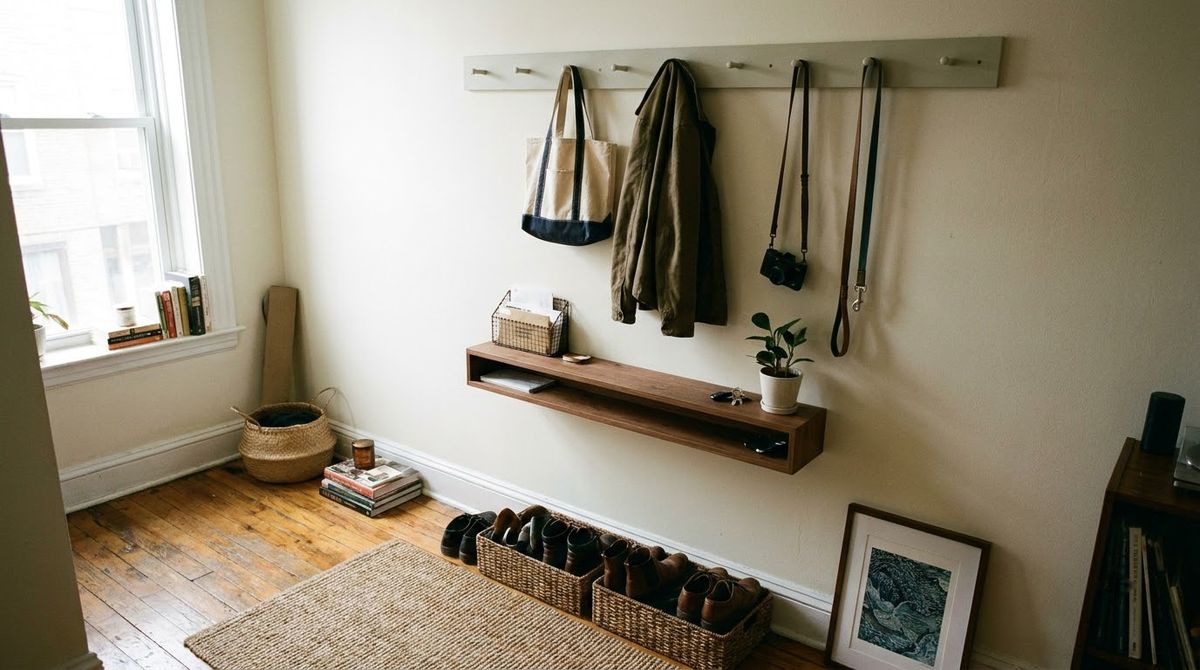
Adhesive hooks give a coat line with no drilling. Target’s Command Large Utility Hooks value pack has six hooks and sixteen strips for $9.97, and each hook holds up to 5 pounds. A listing note says using two hooks together does not raise that limit. Put bags, hats and scarves on them, and keep heavy coats for drilled hooks. Press each strip firmly and leave the hook alone for the time printed on the package before you hang anything on it.
2. Mount a Key and Mail Pocket
A wall organizer keeps flat clutter off every surface. A Walmart listing for a rustic wood version measures 12 inches wide, 4.7 inches high and 3.21 inches deep, with hooks rated for 20 pounds. A TikTok Shop paulownia version at 9.8 by 6.7 by 4.2 inches was listed at $14.99. Both stay within about 4 inches of the wall, so they never narrow the walkway.
3. Choose a 1.7-Inch-Deep Key Rail
When even 3 inches feels like too much, a metal rail is thinner. One metal key organizer in the search results measured 9.65 by 2.28 by 1.7 inches, and a UK model was about 1.6 inches deep. We did not find a US price for either, so check a retailer before you plan around it. Use it for keys only, and keep mail in a pocket elsewhere.
4. Hang a 19 5/8-Inch Round Mirror at Eye Level
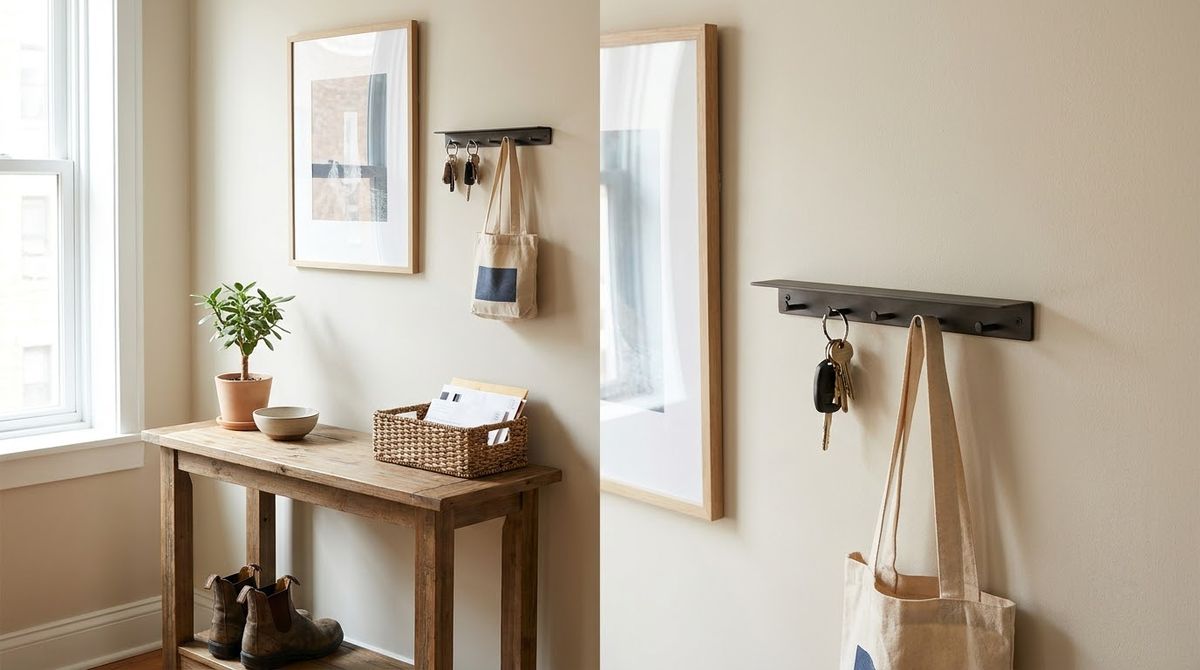
A round mirror is soft against a squared door frame and bounces light down a dark strip. IKEA’s LINDBYN round mirror in black measures 19 5/8 inches across and was listed at $29.99. Hang its center at about 57 to 60 inches from the floor, to the side of the door rather than above a shelf, so you see yourself as you reach for the handle.
5. Mount a 43-Inch Wall Shelf for Keys
A wall shelf is the cheapest console. IKEA’s LACK wall shelf in white is 43 1/4 inches long and 10 1/4 inches deep, holds up to 22 pounds, and costs $29.99. Screws for the wall are sold separately. Mount it at about 36 to 40 inches high, so a tray, a bowl and a small plant fit, and keep the center free for keys.
Shoe Storage Under 13 Inches Deep
Shoes are what spill past the door. These four options hold them in 7 to 13 inches of depth.
6. Wall a Pair of TRONES Cabinets
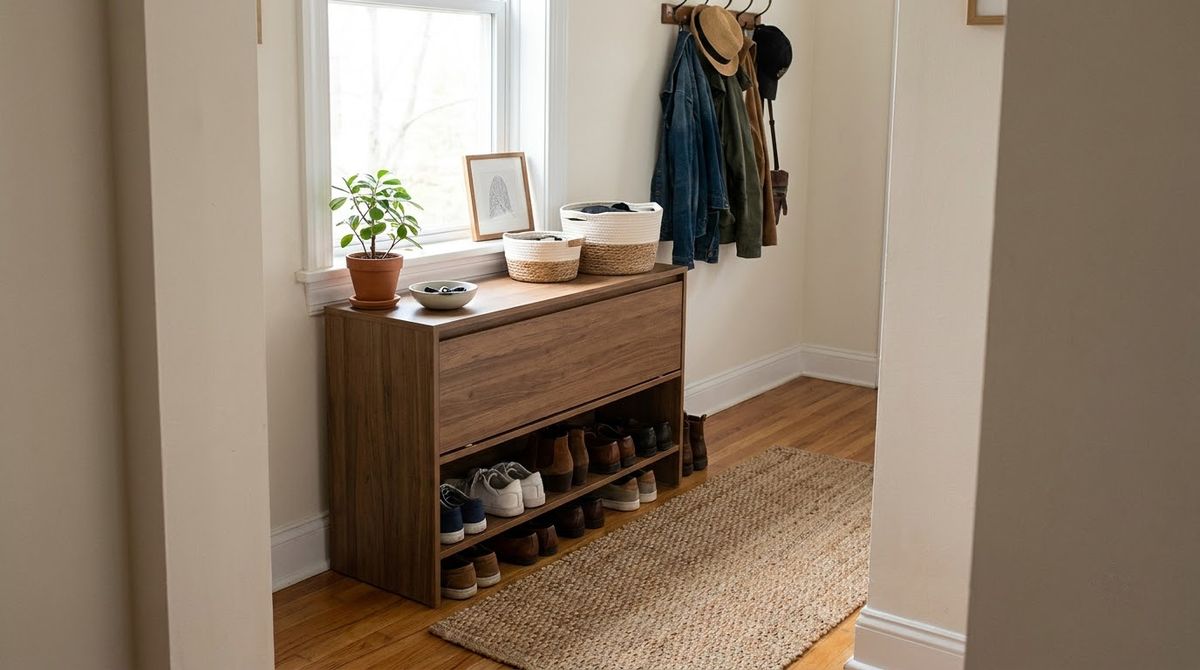
IKEA’s TRONES shoe cabinet is 20 1/2 inches wide, 7 1/8 inches deep and 15 3/8 inches high, and holds roughly 4 pairs. The $39.99 price is for a two-pack, so two cabinets stack to about 30 3/4 inches high. The page states the cabinets must be secured to the wall, and the screws are not included. The shallow 7 1/8-inch depth means the pair fits along a hallway wall without pushing into a 30-inch path.
7. Slide a Two-Tier Fabric Rack Into the Corner
When you want zero hardware, a rack is the lightest answer. A Room Essentials 2-tier fabric shoe rack was listed at $7.50 (regularly $10) at Target. It stands on the floor and moves with you. It holds a few pairs, enough for daily shoes. Add a washable mat in front so wet soles do not reach the floor. Because it is open, wipe the lower tier now and then, since that is where wet soles drip.
8. Sit on the HEMNES Bench
A bench gives a seat for shoes plus a place to put them. IKEA’s HEMNES bench with shoe storage is 33 1/2 inches wide, 12 5/8 inches deep and 25 5/8 inches high, holds approximately 7 pairs of shoes, and was listed at $99.99. At 12 5/8 inches deep it needs a wall at least 34 inches wide and a walkway of 36 inches in front.
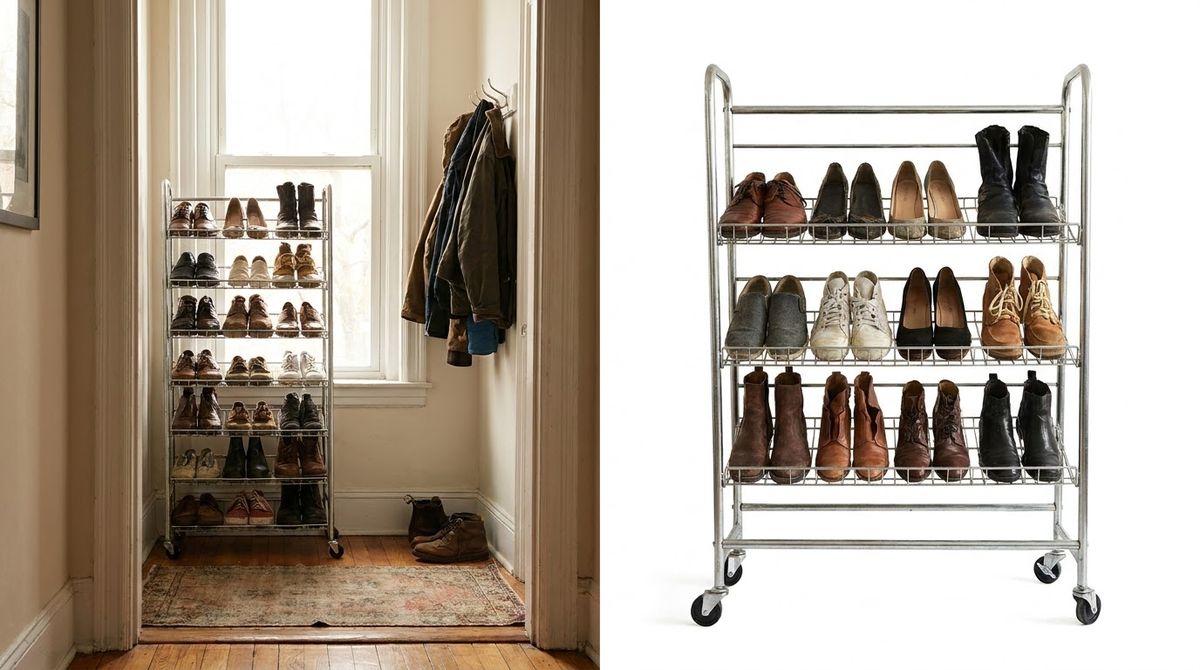
9. Roll a Double-Sided Shoe Rack
A rolling rack holds more shoes in less width. Target listed a Room Essentials double-sided rolling shoe rack at $19.50 (regularly $26) and described capacity as up to 30 pairs. Roll it into a closet or alcove when guests visit. Because it rolls, it also works in a rental where nothing may be fixed to the wall. Check the floor first, since casters can leave marks on soft flooring, and a small mat under it prevents that.
Over-the-Door and No-Drill Fixes
If you cannot drill, use the door, a doorway frame or a tension rod. These four add 1 to 6 inches.
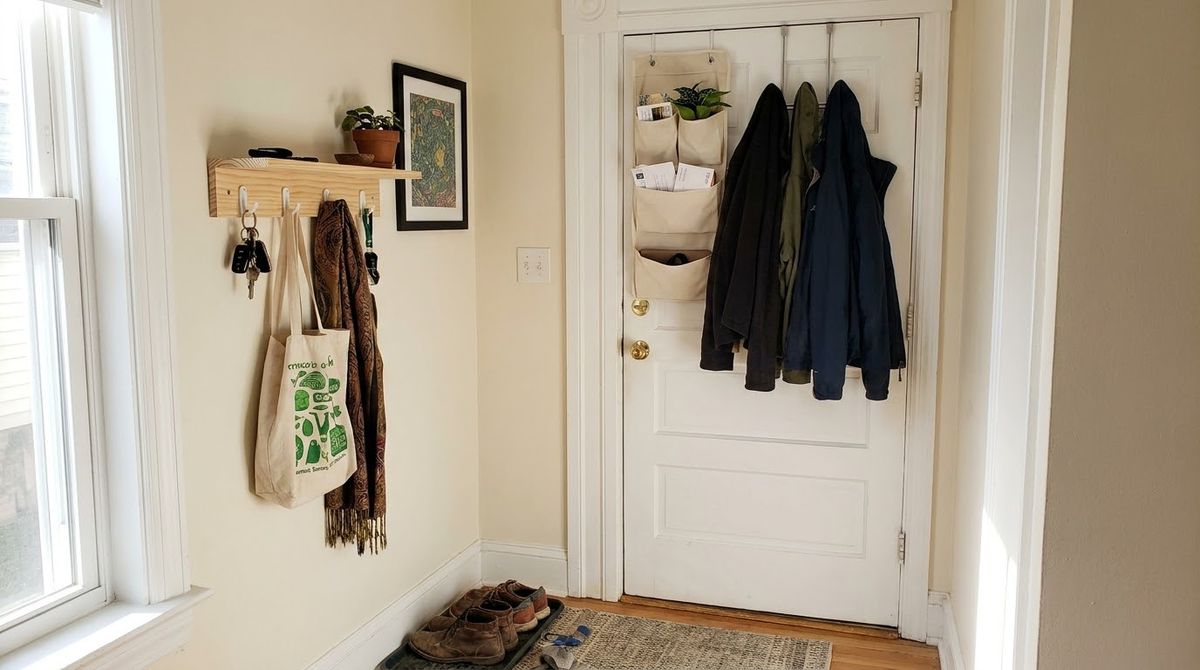
10. Hang a Six-Hook Rack Over the Door
An over-door rack needs no tools and puts six hooks on a surface you already have. Amazon listed a WEBI six-hook rack at $17.99 (list $24.99), and Walmart listed heavy-duty six-hook racks at $6.78 to $7.32. Measure the door’s thickness against the bracket gap first, since the rack can sit crooked on a thick door. Hang it so the hooks sit above the door handle height, and check that the door still closes fully with the rack loaded.
11. Run a Tension Rod Across an Alcove
If the door sits in a recess, a tension rod makes a coat rail without holes. Target listed a Room Essentials spring tension rod, 28 to 48 inches, at $3.50 (regularly $5). Hang light jackets with S-hooks and keep the load low, since spring rods are for light weight. Measure the alcove to the inch first. Pick the rod’s length to be 1 to 2 inches longer than the opening so the spring holds, and test it with the load before leaving it.
12. Mount a Wall Umbrella Holder
A holder keeps a wet umbrella off the floor. Walmart listed an Easeky wall-mounted holder at $9.99, about 5.9 inches tall. Mount it at knee height on the wall beside the mat, so drips hit the mat. It adds only a few inches of depth, so it fits where a standing stand would not. Choose a spot over a tray or mat, so drips do not mark the floor, and keep it clear of the swing of the door.
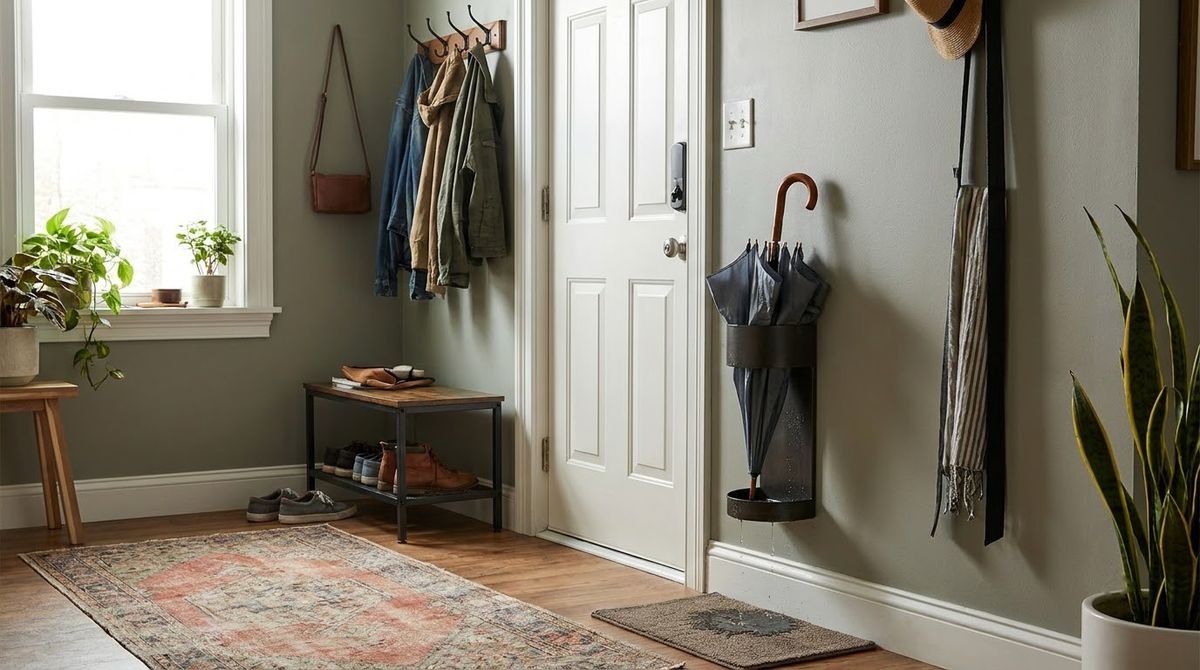
13. Pick a 15-Inch-Wide Hook Rack for a Short Wall
For a strip only 18 to 24 inches wide, choose a short rack. Walmart listed a pine four-double-hook rack measuring about 14.96 by 5.9 inches at $23.97, though it showed as out of stock when captured. Each double hook holds two items, so four hooks carry eight. Check stock and size on the live page. Mount the rack with its first hook about 5 inches in from the edge of the wall so a bulky coat does not hit the door frame.
Furniture That Actually Fits a Narrow Entry
If you want something freestanding, these four sit at the shallow end of what retailers sell.
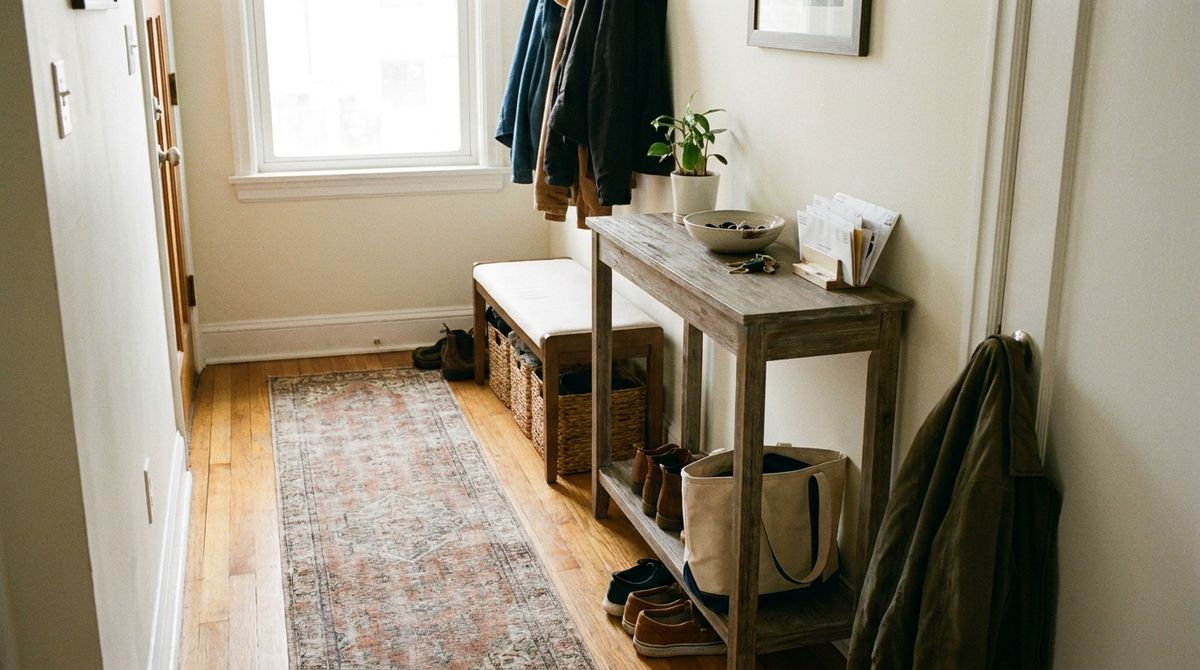
14. Splurge on a 10-Inch-Deep Console
A console under 12 inches deep is rare. Target’s Lydia console table is 24 inches wide, 10 inches deep and 31.5 inches high, with one drawer, at $281.99. At 10 inches deep it leaves a 36-inch walkway in a hall 46 inches wide. It costs about nine times the LACK shelf, so choose it only if you want a drawer.
15. Check IKEA’s HAVSTA for Longer Walls
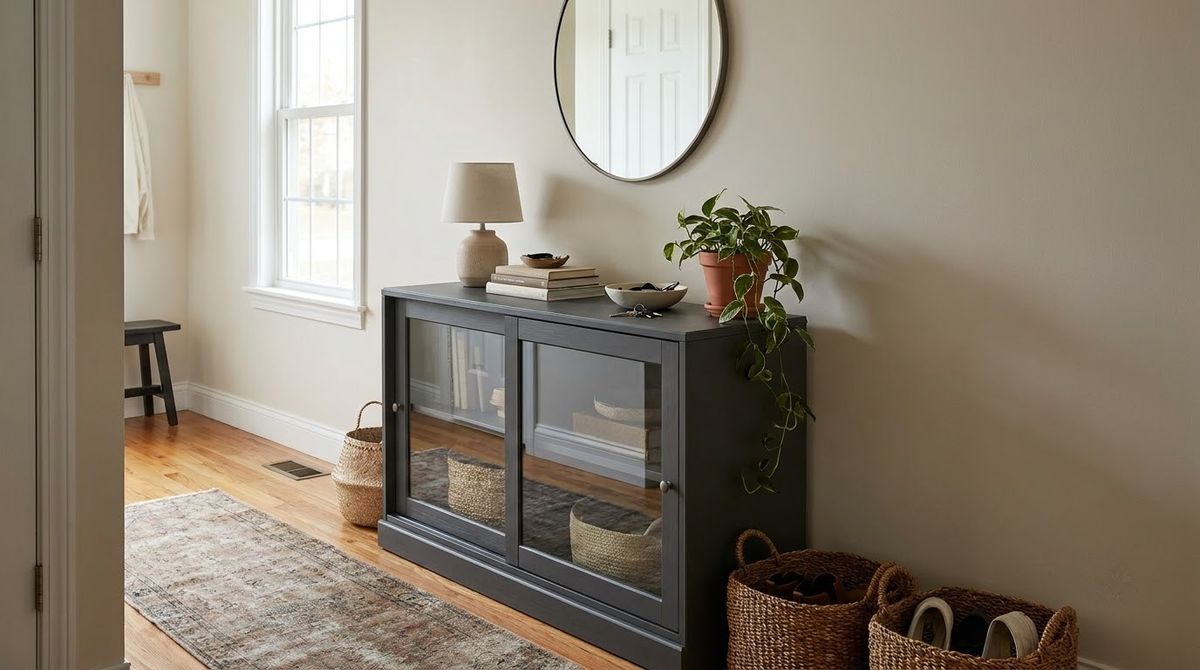
IKEA’s HAVSTA console measures 39 3/8 inches wide, 13 3/4 inches deep and 24 3/4 inches high. It was listed at $219.99, reduced from $299.99 for a sale that began in April 2026, so the price may have changed. It suits a wall 48 inches or wider with a clear path. Anchor it if children live in the home. Measure the width of the wall, not the hallway, since the table must sit between the door frame and the next opening.
16. Choose a Coat Rack With a Shelf
A rack with a shelf gives hooks and a drop surface in a single piece. Walmart listed a Lavish Home 4-hook rack with shelf at $36 in black, measuring 30 inches long, 5 inches deep and 8 inches high. Mount it with the hooks near 64 to 66 inches high for adult coats. Five inches of depth fits a tray but not a lamp.
17. Fold Down a Wall-Mounted Table
A drop-leaf table folds flat when you are not using it. Target listed a Costway wall-mounted drop-leaf table, about 31.5 by 23.5 by 18 inches open and about 3 inches deep when folded, at $54.99 in white, rated for 66 pounds. It gives a landing surface for groceries and folds away before guests arrive. It needs a stud and a wall with 23 inches of free space.
Floor and Light in a Tiny Entry
When the surfaces are fixed, rug and light finish the zone.
18. Mark the Zone With a 24×36-Inch Washable Rug
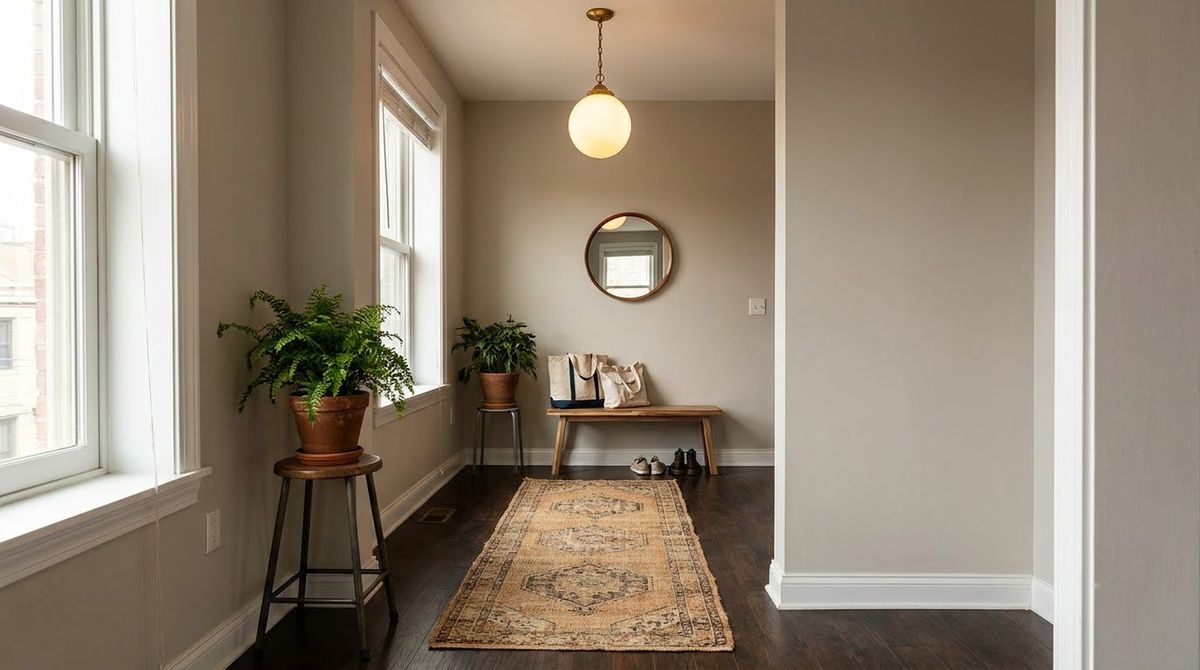
A 2 by 3 foot rug tells the eye where the entry stops and the living room starts. Walmart listed an Ileading 24 by 36 inch non-slip washable runner at $12.99, though options were out of stock when captured. The same size appeared at $17.09 and $18.99 in other listings. See our rug sizing guide for larger rooms. Choose a pattern that hides dirt in a mid-tone, since an entry rug shows grit faster than any other rug in the home.
19. Choose a Deeper Fold-Down Shelf for a Wider Wall
A deeper fold-down option is the Mount-It! wall-mounted drop-leaf table, with a top 15 inches deep, 30 or 45 inches wide, rated for 110 pounds. Walmart listed it at $99.99, though the selected option was out of stock. Choose the 45-inch width only if the wall has no switch or outlet in the way. Mount the leaf at about 36 to 40 inches high, like a shelf, and leave the area beneath it open for shoes.
20. Light the Path With Motion-Sensor Night Lights
A dark entry means fumbling for the switch. Walmart listed a Liwarace 3-pack of battery motion-sensor lights for closets and stairs at $18.49. Stick one at floor level along the baseboard and one above the shelf. They turn on only when you move, so there is no light left on all night. Battery units mean no wiring, so nothing needs repair when you move out.
Space Type to Solution
Match your situation to a row below. Depths assume a 30-inch walkway stays clear.
| Your space | Best fix | Depth | Listed price |
|---|---|---|---|
| Narrow hallway under 36 in. | LACK shelf + hooks | 10 1/4 in. | $29.99 + $9.97 |
| Door opens into living room | Lydia console + rug | 10 in. | $281.99 + $12.99 |
| No floor space | Over-door rack + round mirror | 2 to 3 in. | $17.99 + $29.99 |
| Landing by stairs | TRONES cabinets | 7 1/8 in. | $39.99 (2) |
| Rental, no drilling | Command hooks + tension rod | 1 to 6 in. | $9.97 + $3.50 |
Frequently Asked Questions
How do you make a small entryway?
Claim a 24-inch strip of wall by the door and cover three jobs: a shelf or console 10 inches deep or less for keys, hooks for coats and a mirror for light. IKEA’s LACK shelf, a Command hook pack and a round mirror total $69.95.
What if you have no entryway at all?
Fake one against the first wall inside the door. A wall shelf, a hook set and a 2 by 3 foot washable rug define the zone. See our entryway decor ideas for styling by entry type, and entryway table styling for the surface itself.
How deep should a narrow console be?
Between 8 and 12 inches. Subtract the depth from the hall width and keep about 30 to 36 inches of walkway. Target’s Lydia is 10 inches deep and IKEA’s HAVSTA 13 3/4. A wall shelf like the LACK, at 10 1/4 inches, works the same way for far less.
How high should entryway hooks be?
Set adult coat hooks with centers near 64 to 66 inches from the floor so coats clear the ground. Add a lower row near 38 to 40 inches for kids and bags. Space hooks 4 to 6 inches apart so bulky coats do not overlap.
How much weight can a no-drill hook hold?
Target’s Command large utility hooks are rated 5 pounds each, and its listing says using two hooks together does not raise the total. Keep adhesive hooks for hats, scarves and tote bags. Use drilled hooks screwed into a stud for heavy winter coats.
Start With the Wall
Pick one wall beside the door and add a shelf, hooks and a mirror before buying anything for the floor. Use floating shelf styling to arrange the shelf, and the empty wall ideas if space above it stays bare. If you are furnishing a first place, our first apartment checklist shows what comes first.
Prices checked October 2026.