Quick answer: Hygge (Danish) is the warmest and most layered hygge decor style — built on candles, throws, wood, and cozy nooks. Lagom (Swedish) is the balanced middle path — “just enough” furniture, muted color, and functional restraint. Nordic minimalism (pan-Scandinavian, especially Finnish and Norwegian) is the strictest — pale walls, sculptural furniture, and near-empty surfaces. Pick hygge if you want comfort, lagom if you want balance, and Nordic minimalism if you want calm through subtraction.
All three styles share the same DNA — natural light, pale wood, wool, and quiet color — which is why they get blended together online. But each one solves a different problem. Below is a clear breakdown of what separates them, what each one actually costs to assemble, and a 5-step method for choosing the right direction for your space.
For the full overview of the family, see our Scandinavian / Nordic decor hub and the deeper ultimate Scandinavian decor guide.
Key Takeaways
- Hygge = comfort-first. Lots of textiles, warm light, layered wood, 2,200K–2,700K bulbs, visible “lived-in” objects.
- Lagom = balance-first. Edited but not empty, muted color, functional furniture, one statement per room.
- Nordic minimalism = space-first. White and pale-grey walls, sculptural pieces, negative space, almost no decor.
- Budget reality: A hygge living room refresh runs $400–$1,200; lagom $600–$1,800; Nordic minimalism $1,500–$4,000+ because each piece carries the room.
- Choose based on lifestyle, not Pinterest aesthetics — your daily habits will fight the wrong style every day.
What Each Style Actually Means (Not the Instagram Version)
These three words get used interchangeably in shopping blogs, but they come from different countries and different design philosophies. Getting them straight makes every decision downstream easier.
What most guides miss: the line between these three isn’t color, it’s candle and textile density. Denmark burns roughly 13 pounds of candle wax per person each year, the highest in Europe, and that daily habit, not the paint chip, is what actually makes a room read as hygge rather than lagom or minimalist. If you swap warm textiles and candlelight for bare surfaces, the same wall color reads as minimalism instead.
Hygge (HOO-gah) — Danish
Hygge is not a design style on its own — it’s a feeling of cozy contentment that informs a design style. In a room, hygge shows up as candles (Danes burn more candles per capita than any other country), thick wool throws, warm wood tones like oak and pine, a dedicated reading nook, and warm-temperature lighting (2,200K–2,700K). Clutter is allowed if it’s meaningful clutter — a stack of books, a tray of mugs, a worn leather chair.
Lagom (LAH-gom) — Swedish
Lagom translates roughly to “just the right amount.” In a home, it means restraint without austerity. You’ll see lower furniture counts than a typical American room, muted greens and greys alongside pale wood, functional storage that doubles as decor, and one focal point per room — never three. Lagom rooms feel calm but still useful for everyday life.
Nordic Minimalism — Pan-Scandinavian
Nordic minimalism is the strictest interpretation. Walls are white or pale grey, surfaces are mostly empty, furniture is sculptural (think Wegner, Jacobsen, or HAY), and color comes from a single accent — often black, deep green, or terracotta. It draws heavily from Finnish and Norwegian traditions and overlaps with Japandi. This is the look that fills architecture magazines.
Actionable takeaway: Before buying anything, write down which of these three sentences you most want guests to say: “This is so cozy,” “This feels so balanced,” or “This is so clean.” That answer is your style.
Free · 60 seconds
Not sure which style is actually yours?
Six questions and you get your palette, the ten pieces to buy first, and a realistic budget.
Side-by-Side: The 8 Differences That Actually Matter
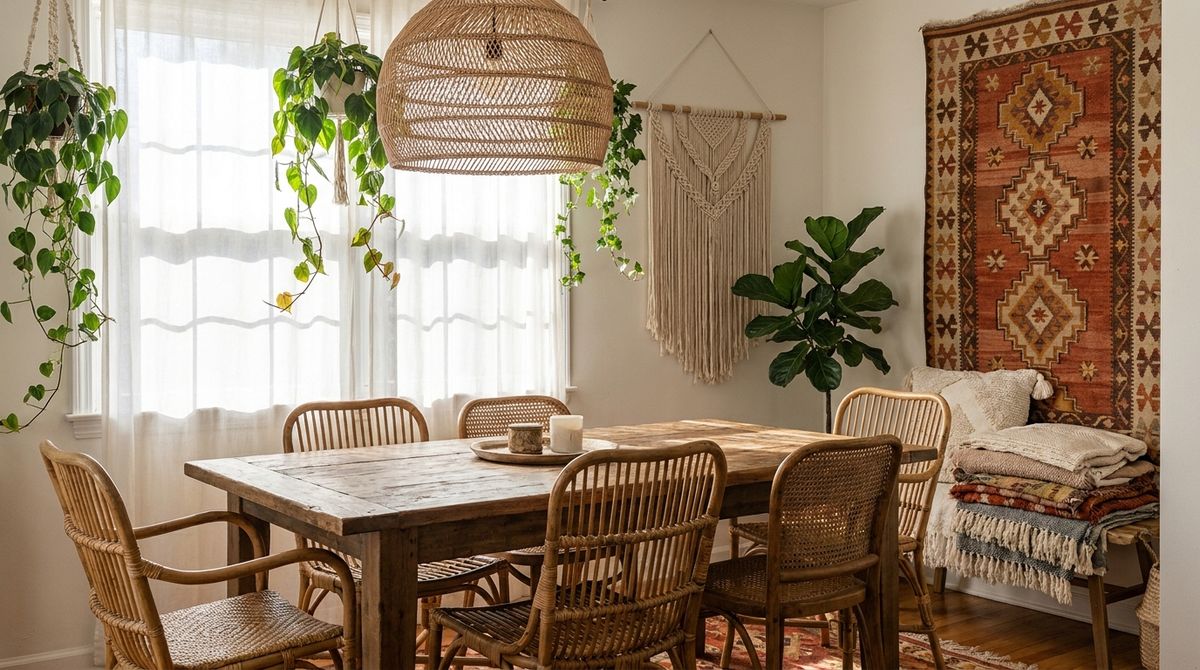
The differences below are where most decorating decisions get made. Use this as a checklist when shopping.
| Element | Hygge | Lagom | Nordic Minimalism |
|---|---|---|---|
| Wall color | Warm white, soft greige | Cool white, sage, muted clay | Pure white, pale grey |
| Lighting temp | 2,200–2,700K (very warm) | 2,700–3,000K | 3,000–3,500K |
| Textile load | High — layered throws, rugs, pillows | Medium — one throw, one rug | Low — one textile per zone |
| Wood tone | Warm oak, pine, walnut | Mid oak, ash | Pale ash, birch, whitewashed |
| Color accents | Burgundy, mustard, forest | Sage, terracotta, dusty blue | Black, deep green, or none |
| Surface decor | Lived-in (books, mugs, candles) | Curated (3–5 objects) | Minimal (0–2 objects) |
| Furniture count | More pieces, layered | Fewer, multi-functional | Fewer, sculptural |
| Lighting fixtures | 5–7 per room | 3–5 per room | 2–3 per room |
Per Nordic Nest’s hygge living room guidance, the cozy version of Scandinavian style “always includes a soft, neutral colour palette” combined with natural wood — which is exactly where hygge and lagom start to diverge from stricter minimalism.
Actionable takeaway: When in doubt, count your light sources. If a room has 5+ small warm light sources, you’re in hygge territory. 3–5 means lagom. 2–3 large fixtures means minimalism.
How Much Each Style Costs to Assemble (Real 2026 Price Ranges)
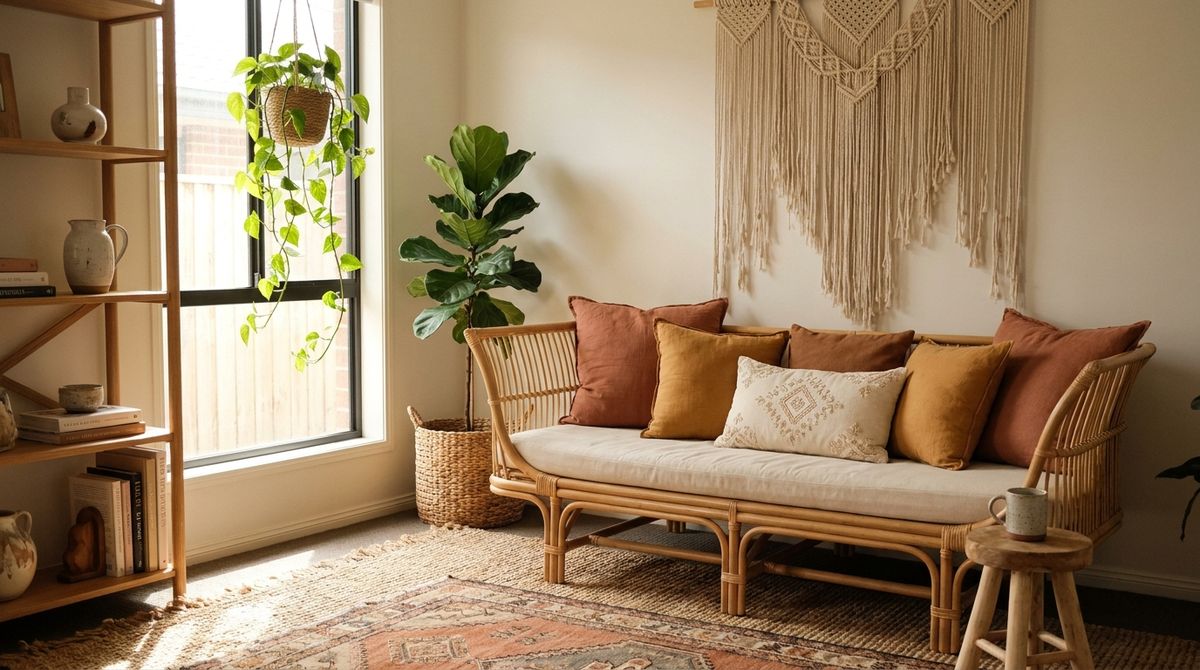
Style costs vary wildly depending on whether you go IKEA, mid-market, or designer. Here are realistic ranges to refresh a single living room from scratch, based on current US retail pricing.
Hygge living room refresh: $400–$1,200
- Wool or chunky-knit throw: $40–$120 (IKEA POLARVIDE $7 to Tekla $300)
- 4–6 pillar candles + holders: $30–$80
- Floor lamp with warm bulb: $60–$180
- Sheepskin rug or faux fur: $25–$120
- Layered area rug (jute base + wool top): $120–$400
- 3–5 accent pillows: $60–$200
- Warm-bulb table lamp: $40–$120
Hygge is the most forgiving budget-wise because thrift stores, IKEA, and HomeGoods all work.
Lagom living room refresh: $600–$1,800
- One quality sofa or reupholster: $400–$1,200
- Multi-function storage (bench, cabinet): $150–$500
- One statement light: $80–$300
- 2–3 ceramic objects: $40–$150
- One quality wool rug: $200–$600
- Plants in terracotta pots: $40–$120
Lagom costs more per item but uses fewer items. The math evens out.
Nordic minimalism refresh: $1,500–$4,000+
- Designer or designer-inspired sofa: $1,200–$3,500
- Sculptural lounge chair: $400–$1,800
- Pendant light (HAY, Muuto, Louis Poulsen-inspired): $200–$900
- Wool boucle or flat-weave rug: $400–$1,200
- One large artwork: $150–$800
Minimalism is expensive because every piece is visible — there’s no clutter to hide behind a $200 mistake.
Actionable takeaway: Set your budget first, then choose your style. Trying to do Nordic minimalism on $500 produces an empty, sad room. Hygge on $500 produces a magazine spread.
How to Choose: A 5-Step Decision Method
Run through these steps in order. Don’t skip ahead.
Step 1: Audit your lifestyle for 7 days. Write down what you actually do in your living spaces. Reading? Hosting? Working from home? Crashing after work? Hygge wins for reading and crashing. Lagom wins for hosting and WFH. Minimalism wins if your home is mostly a backdrop.
Step 2: Check your natural light. Rooms with <4 hours of direct light per day suffer in Nordic minimalism — the cool palette will feel cold. Pick hygge (warm) or lagom (mid) instead. South-facing rooms with 6+ hours can handle minimalism beautifully.
Step 3: Count your stuff. Walk your room and count items on horizontal surfaces. Over 20? Hygge fits your life. 10–20? Lagom. Under 10 and you maintain it? Minimalism is realistic.
Step 4: Test the palette for 30 days. Buy paint samples ($5–$10 each) of one wall color per style. Live with them on a 2’x2′ patch for a month. Most people pick wrong on day one and right by day twenty.
Step 5: Commit to one primary, one accent. The biggest mistake is blending all three. Pick one style as your foundation (80%) and borrow from one other (20%). Common pairings: hygge with lagom accents (most popular), lagom with minimalism accents, minimalism with hygge accents (Japandi-adjacent).
What most guides miss: pick the style that matches the mess you actually maintain, not the one you aspire to. Nordic minimalism only holds up if your surfaces stay under 10 visible objects without effort. If you re-clutter within a week, lagom (10–20 objects) is the honest choice and hygge (20+ lived-in objects) is the comfortable one. Matching the style to your real habits is the single biggest predictor of whether a room still looks intentional six months later.
For palette decisions, our Nordic color palette breakdown walks through nine specific whites, greys, and wood tones that work across all three styles.
Actionable takeaway: Don’t shop until steps 1–4 are done. Steps 1–4 cost under $50. Steps skipped here cost thousands later.
Common Mistakes That Make Any of These Styles Fail
Even the right style choice falls apart under these errors. Avoid them all.
-
Daylight bulbs (4,000K+) in a hygge room. Kills the entire mood instantly. Stick to 2,200–2,700K.
-
Too-cool wood tones with hygge. Whitewashed ash fights warm textiles. Use oak, walnut, or warm pine.
-
Lagom rooms that drift into beige. Lagom needs at least one muted color — sage, dusty blue, terracotta. Pure beige reads “builder-grade.”
-
Nordic minimalism with cheap furniture. When every piece is visible, quality is non-negotiable. Better to have three good pieces than seven mediocre ones.
-
Mixing all three with no anchor. The result is a furniture showroom, not a home. Pick a primary style.
-
Skipping window treatments. All three styles require linen or sheer curtains to diffuse light. Bare windows kill the softness.
-
No greenery. Every Scandinavian style uses living plants. A snake plant, fiddle leaf fig, or olive tree carries any of these palettes.
The FTD design team summarizes the core trap well: hygge “is to create a peaceful, serene space that is free of clutter,” but the line between “lived-in” and “messy” is razor-thin and personal. Build a 5-minute nightly reset into your routine — it’s the only way any Scandinavian style survives real life.
Actionable takeaway: Photograph your room weekly for a month. Looking at a photo (not the room itself) reveals clutter, palette drift, and balance issues you stop seeing in person.
Putting It All Together
The fastest way to know which style fits you: ask whether you want your home to hug you, balance you, or quiet you. Hygge hugs. Lagom balances. Nordic minimalism quiets.
If you’re still on the fence after reading this, start with hygge. It’s the most beginner-friendly, the most affordable, and the easiest to dial back later. Once you’ve lived with cozy layers, you’ll know whether you want to edit toward lagom or strip down to minimalism.
For implementation, work through our 7-step Scandinavian beginner guide with IKEA-friendly picks, then browse 30 Scandi living room ideas to see your chosen direction in real homes.
Frequently Asked Questions
Is hygge a real design style or just a feeling?
Both. Hygge originated as a Danish cultural concept of cozy contentment, but over the last decade it has solidified into a recognizable interior style with consistent elements: warm lighting, layered textiles, candles, warm wood, and lived-in surfaces.
Can I mix hygge and Nordic minimalism?
Yes — this combination is essentially Japandi. Keep walls and large furniture minimalist, then add hygge layers (one throw, one rug, candles) for warmth. The 80/20 rule applies.
Which style is best for small apartments?
Lagom. It prioritizes multi-functional furniture and visual calm without requiring the empty floor space of Nordic minimalism or the layering of hygge.
Does hygge work in warm climates?
Yes, with adjustments. Swap wool throws for linen, use cotton instead of sheepskin, keep the warm 2,200–2,700K lighting, and lean on candles and wood tones for the cozy feel rather than heavy textiles.
What’s the cheapest way to start?
Change your bulbs first. Swapping every bulb in one room to 2,700K warm white costs under $30 and shifts the mood more than any single piece of furniture.
Which Scandinavian style is easiest to keep tidy day to day?
Hygge is the most forgiving, because it treats lived-in surfaces, stacked books, mugs, and folded throws as part of the look. Nordic minimalism is the hardest: with 0–2 objects per surface, one stray item reads as clutter. Lagom sits in the middle at 3–5 curated objects.
Can renters do any of these styles without painting?
Yes. All three lean on warm-white or cool-white walls, but renters can skip paint entirely and shift the mood through bulbs (2,200–2,700K for hygge), textiles, and wood-tone furniture. Peel-and-stick paint samples let you test a palette on a small patch without risking the deposit.