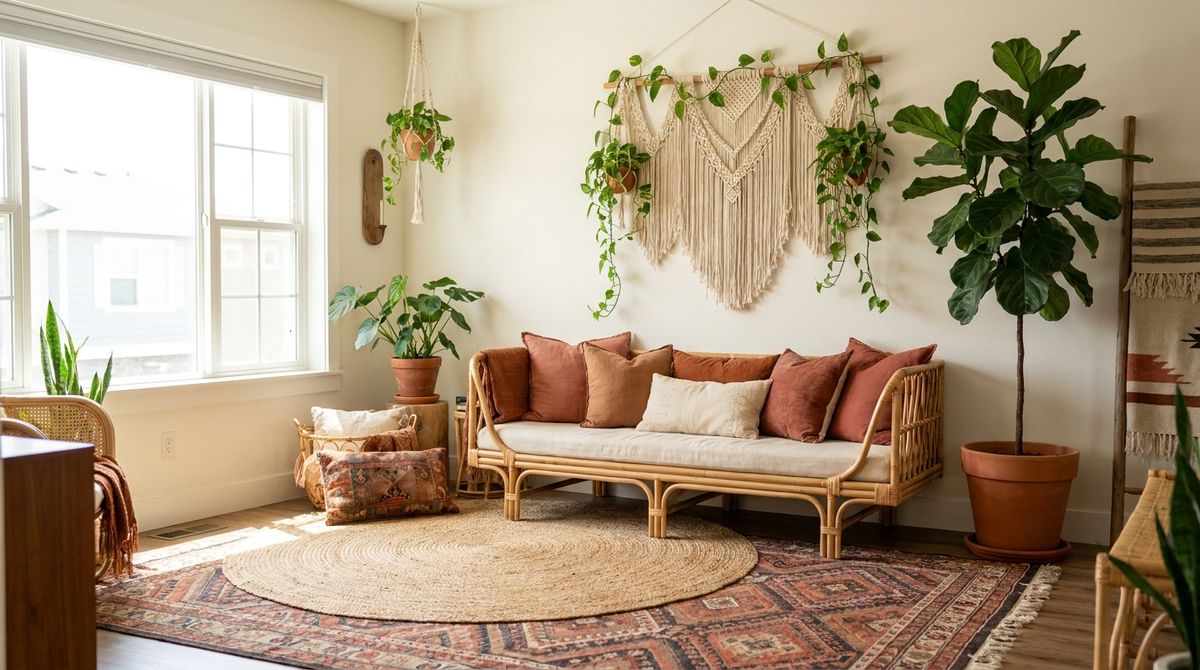
Scandinavian decor in one line: a light-first Nordic style built on cool-to-warm whites, pale wood, layered natural textures, and warm 2700K lighting, designed to make small, dark rooms feel bright, calm, and cozy. You can shift a room meaningfully for $100, or fully commit for around $500.
Scandinavian design has quietly become the most influential interior style of the last decade, and in 2026 it shows no signs of fading. It’s the look behind millions of Pinterest boards, the engine behind IKEA’s global empire, and the aesthetic backbone of half the cafes you’ve ever loved. But Scandinavian decor isn’t just a trend — it’s a 100-year-old design philosophy rooted in light, function, craftsmanship, and a deep respect for the everyday.
If you’ve ever wondered why a simple white room with a pale oak chair and a sheepskin throw feels so calming, this guide will explain exactly why — and show you how to recreate that feeling in your own home, whether you have $100 or $5,000 to spend.
In this complete pillar guide, we’ll cover what Scandinavian design actually is, the three main variants (hygge, lagom, and Nordic minimalism), the six core elements that define the style, how to apply it room by room, three realistic budget tiers, and the mistakes most beginners make. By the end, you’ll have everything you have to build a home that’s bright, warm, intentional — and unmistakably Scandinavian.
What Is Scandinavian Design? A Quick History and Definition
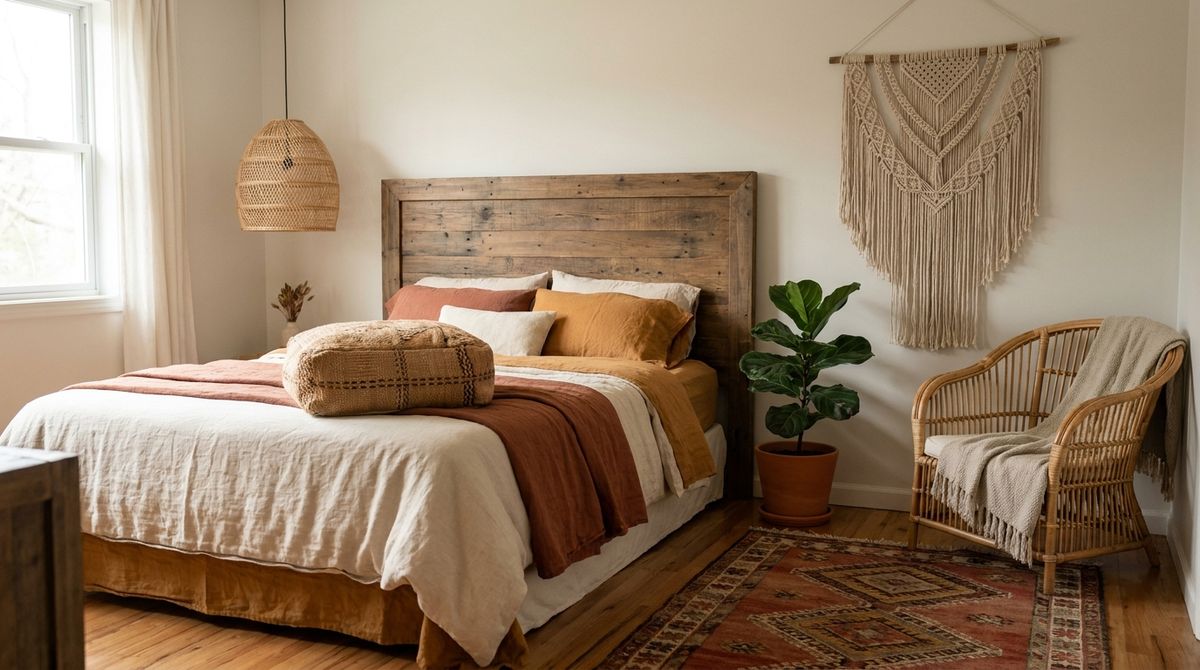
Scandinavian design is a design movement that emerged in the early 20th century across Denmark, Sweden, Norway, Finland, and Iceland, characterized by simplicity, minimalism, and functionality. It rose to international prominence after the “Design in Scandinavia” exhibition toured North America between 1954 and 1957, introducing the world to designers like Arne Jacobsen, Alvar Aalto, Hans Wegner, and Verner Panton.
At its heart, the style is a response to geography. Nordic winters are long, dark, and brutally cold — in parts of Sweden and Norway, the sun barely rises for weeks. Homes had to become sanctuaries: bright enough to fight the gloom, warm enough to feel safe, and efficient enough to make every square meter count. Scandinavian design solves all three problems with one consistent visual language.
Three principles run through every piece of authentic Scandinavian decor:
-
Form follows function. Nothing exists purely for decoration. Even a candle holder has a job.
-
Beauty belongs in everyday objects. A teapot, a chair, a doorknob — all deserve good design.
-
Less, but better. Quality over quantity, always.
For a deeper breakdown of how to start applying these ideas in your own space, see our step-by-step beginner guide to decorating Scandinavian style.
The 3 Main Variants of Scandinavian Style
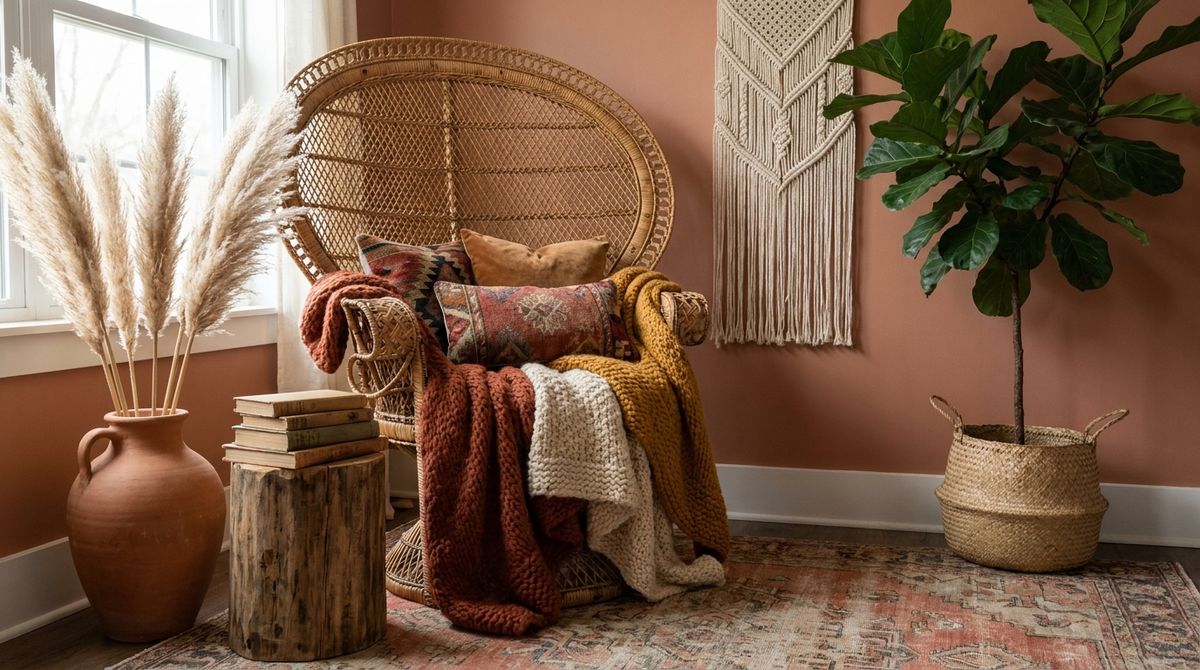
Scandinavian design isn’t a single look. It splits into three closely related but distinct styles, and choosing the right one for your personality is the most important decision you’ll make.
1. Hygge (Danish: Cozy Comfort)
Pronounced “hoo-gah,” hygge is the Danish art of cozy contentment. In decor terms, this is the warmest, softest, most layered version of Scandinavian style. Think chunky knit throws piled on a linen sofa, beeswax candles flickering on a low oak coffee table, sheepskin rugs draped over dining chairs, and warm pendant lighting at eye level rather than overhead.
Hygge interiors lean into texture: bouclé, wool, mohair, vintage rugs, and weathered wood. Color palettes are warm — creamy whites, soft taupes, oat, caramel, and muted terracottas. If you love evenings spent under a blanket with a book and a hot drink, hygge is your variant.
2. Lagom (Swedish: Just the Right Amount)
Lagom translates roughly to “not too little, not too much — just right.” It’s the Swedish middle path, and it sits visually between hygge’s warmth and Nordic minimalism’s restraint. Lagom interiors feel balanced: enough texture to be inviting, enough negative space to feel calm, and an emphasis on sustainability and longevity.
Expect honest materials (solid wood, linen, wool, ceramic), a slightly cooler palette (soft greys, dusty blues, sage, off-white), and considered styling — every object has earned its place. Lagom is the most livable, practical version of Scandinavian design and the easiest to maintain long-term.
3. Nordic Minimalism
The strictest and most architectural variant. Nordic minimalism strips Scandinavian design down to essentials: white walls, pale wood floors, one or two iconic furniture pieces, almost no accessories. The visual interest comes from light, shadow, and material quality — not from objects.
This is the look you see in high-end Copenhagen apartments and Helsinki design magazines. It demands discipline: every surface stays mostly clear, storage is hidden, and color is almost monochromatic. Beautiful, but harder to live with if you have kids, hobbies, or a collection of anything.
Not sure which one suits you? Our deep-dive on hygge vs. lagom vs. Nordic minimalism walks through the differences with side-by-side comparisons.
Free · 60 seconds
Not sure Scandinavian is actually your style?
Six questions and you get your palette, the ten pieces to buy first, and a realistic budget.
The 6 Core Elements of Scandinavian Design
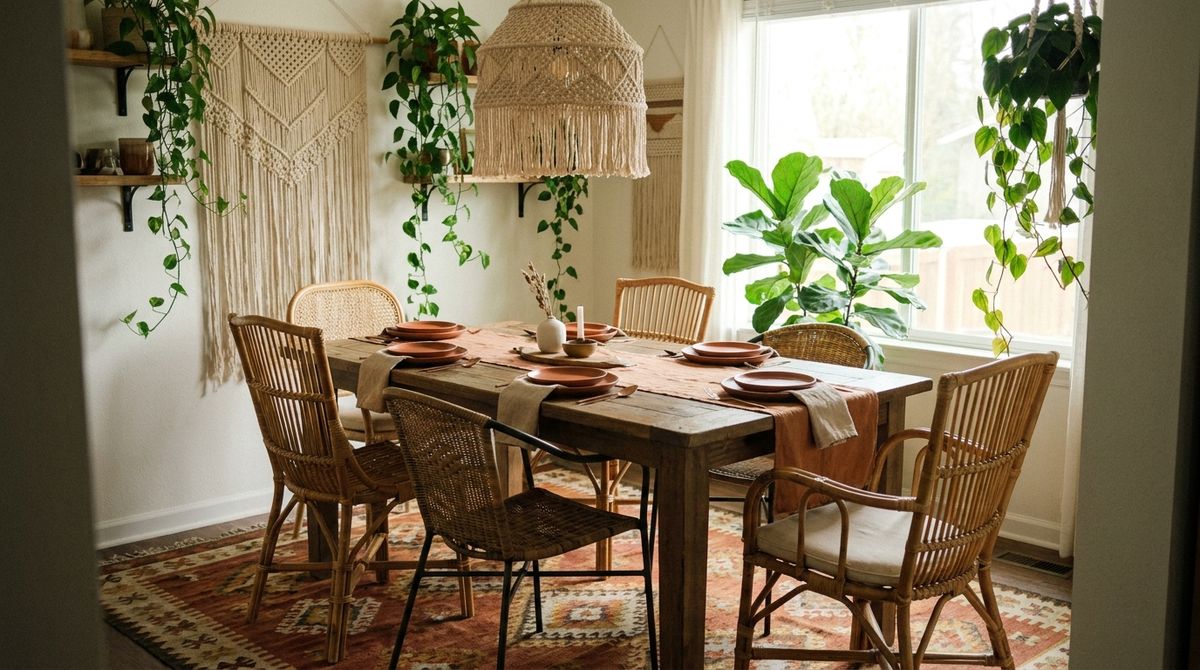
No matter which variant you choose, six fundamental elements appear in virtually every Scandinavian interior. Master these and you have the formula.
1. Light, Bright Spaces
Light is the number one priority. Scandinavian homes maximize every photon: walls are painted in cool or warm whites (Farrow & Ball’s All White, Jotun’s Egghvit, or Benjamin Moore’s Chantilly Lace are classics), windows are left bare or dressed in sheer linen, and mirrors are positioned to bounce daylight deeper into rooms.
In the dark months, layered artificial lighting takes over. A Scandinavian room typically has at least three light sources: ambient (a pendant or floor lamp), task (reading lamps, under-cabinet kitchen lights), and accent (candles, small table lamps). The goal is warm pools of light at human height — never one harsh overhead bulb.
What most guides miss: the exact numbers matter. Use 2700K bulbs (warm white) in living rooms and bedrooms, 3000K at most in kitchens and bathrooms, and choose a CRI of 90+ so wood and linen tones read true instead of washed-out. In practice, one 2700K bulb in a rattan or paper shade lifts the mood more than any single accessory.
2. Light Wood Tones
If there’s one material that defines Nordic interiors, it’s pale wood. Oak, ash, beech, and pine dominate — finished naturally, lightly whitewashed, or in soft matte lacquers. You’ll see it on floors (wide-plank engineered oak is the gold standard), in furniture, on ceiling beams, and in small accessories like cutting boards and bowls.
Avoid dark or red-toned woods like cherry, mahogany, and dark walnut. They fight the bright, airy feeling Scandinavian design is built on. For a complete breakdown of the palette, see our guide to the Nordic color palette and wood tones that define the style.
What most guides miss: the reason all-white Scandi rooms photograph cold is missing warm wood and a cool bulb, not the white paint itself. The fix is cheap. Repeat one warm-toned wood, natural oak or ash rather than grey-washed, across at least three pieces, then switch to 2700K light. Wood, not paint, is what stops a room feeling clinical.
3. A Restrained, Nature-Inspired Color Palette
Scandinavian color palettes are pulled directly from the Nordic landscape: snow, birch bark, fog, slate, moss, sea glass, and wheat. The base is almost always white or off-white (60-70% of the room), supported by natural wood (20-25%), and finished with one or two muted accent colors (5-10%) — typically soft grey, dusty blue, sage, blush, or warm terracotta.
Bold color isn’t forbidden, but it’s used sparingly and never in primary tones. A mustard cushion, a deep forest green throw, a black metal lamp — these accents work because the rest of the room is calm.
What most guides miss: the whites are not interchangeable. Cool Nordic schemes lean on shades near Farrow & Ball All White (about #F2F0E9) and Benjamin Moore Chantilly Lace (about #EDEEE8); warmer hygge rooms sit closer to oat and greige tones around #E8E1D4. Pair either with one muted accent, dusty blue near #9BAAB2 or sage near #A7AE97, and let the wood carry the warmth.
4. Functional, Sculptural Furniture
Scandinavian furniture is famously beautiful because it’s famously practical. Pieces are typically:
- Low-profile — chairs and sofas sit closer to the floor, making rooms feel taller and lighter.
- Tapered — legs angle slightly inward (a hallmark of mid-century Scandi design) to make furniture look lighter visually.
- Multifunctional — storage ottomans, extendable dining tables, sofa beds, modular shelving. Apartments in Stockholm and Copenhagen are small, and furniture earns its keep.
- Built to last — solid wood joinery, full-grain leather, dense wool upholstery. You buy once and keep for 30 years.
Iconic pieces like the Wegner Wishbone Chair, the Jacobsen Egg Chair, the Aalto Stool 60, and the String Shelving system have been in continuous production for 60–90 years for a reason: they still work perfectly.
5. Layered Natural Textures
Because the palette is so restrained, texture does the heavy lifting. A Scandinavian room without texture feels sterile; with texture, it feels like a warm hug.
Build texture in layers:
- Floor: A wool rug, jute mat, or sheepskin draped over a chair
- Seating: Linen or bouclé upholstery, chunky knit throws, mixed cushions in wool, velvet, and cotton
- Surfaces: Ceramic vases, raw wood bowls, woven baskets, candles in glass and brass holders
- Walls: A linen tapestry, a framed botanical print, or simply the texture of a textured paint finish
6. Connection to Nature (Biophilic Design)
Scandinavians spend long winters indoors, so they bring the outside in. Every authentic Scandinavian space includes living elements: a fiddle-leaf fig in a ceramic pot, a vase of dried pampas grass or eucalyptus, a small bowl of pinecones in winter, or branches of cherry blossom in spring.
Natural materials reinforce the connection: stone coasters, leather straps on furniture, wool felt drawer organizers, raw cotton curtains. Plastic is rare and, when used, hidden.
Room-by-Room: Applying Scandinavian Design Throughout Your Home
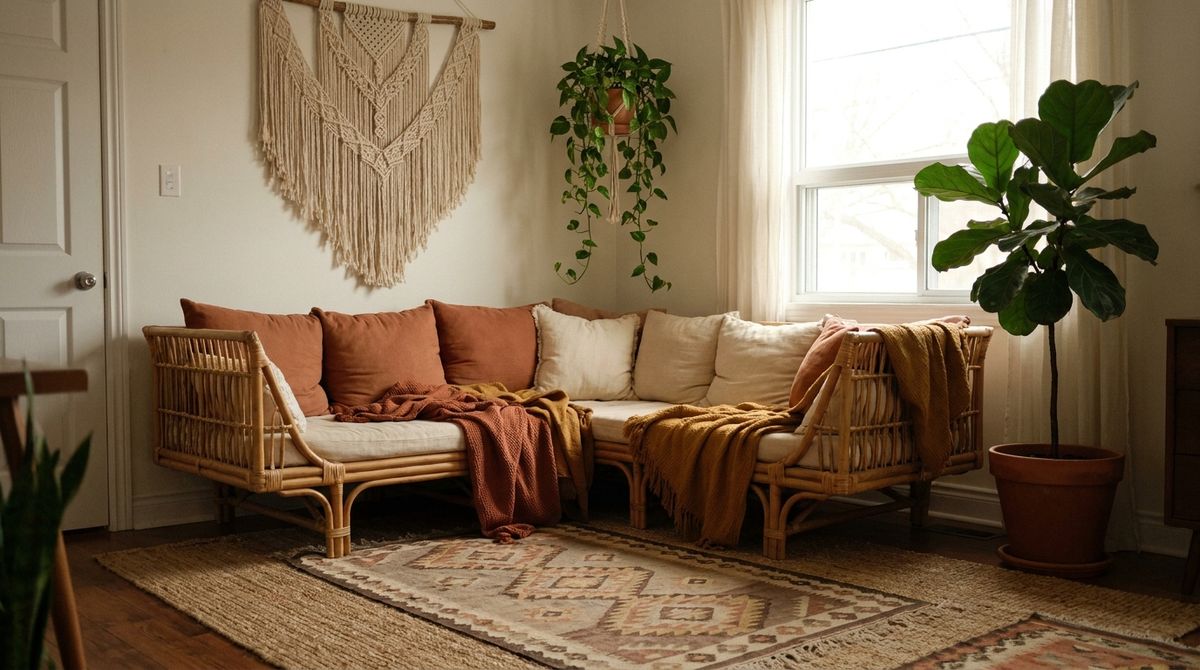
The principles stay the same, but each room calls for a slightly different application.
Living Room
The living room is the most photographed Scandinavian space, and the formula is consistent: a low, light-colored sofa in linen or bouclé (often in cream, oat, or soft grey), a round or oval wooden coffee table, one statement armchair, a generous wool rug to ground the seating, and layered lighting from a floor lamp and a couple of candles.
Storage is built-in or hidden — think a credenza along one wall in pale oak rather than open shelving stuffed with stuff. Art is sparse but intentional: one large piece or a small, well-spaced gallery wall. For 30 ready-to-steal layouts, browse our roundup of Scandinavian living room ideas.
Bedroom
Scandinavian bedrooms are an exercise in calm. The bed is the hero: a low platform or simple upholstered headboard in neutral linen, dressed in white or oatmeal cotton sheets, a chunky knit throw at the foot, and two to four pillows in mixed natural textures.
Nightstands are small and wooden, holding only a lamp, a book, and maybe a small ceramic vessel. Walls stay mostly bare — one piece of art above the bed at most. Wardrobes are floor-to-ceiling and built-in where possible to hide clutter. Curtains are sheer linen by day and lined for blackout at night.
Kitchen
The Scandinavian kitchen is bright, functional, and surprisingly warm. Cabinets are typically flat-panel in white, soft grey, sage, or pale oak. Countertops are usually light — white quartz, butcher block oak, or honed marble. Hardware is minimal: integrated finger pulls or slim brass and matte black handles.
Open shelving in pale wood holds everyday ceramics (stoneware in earthy glazes from brands like HAY, Stelton, or Iittala), and a few wooden cutting boards lean against the backsplash. A single statement pendant hangs over the island or dining table. Greenery — a potted herb on the windowsill, a small olive tree in the corner — adds life.
Bathroom
Bathrooms get the spa treatment. Large-format white or pale grey tiles cover walls and floors; matte black or brushed brass fixtures provide contrast. A wall-hung wooden vanity in oak or walnut keeps the floor visible and the room feeling larger. Towels are waffle-weave cotton in white, sand, or soft grey. A small wooden stool, a eucalyptus bundle in the shower, and a single candle complete the look.
Dining Room
A round or rectangular solid-wood table (often extendable) anchors the space, surrounded by classic Scandinavian chairs — Wegner Wishbones, Eames-style molded shells in pale wood, or upholstered linen dining chairs for a softer look. A single oversized pendant hangs low above the table, creating an intimate pool of light. A linen runner, ceramic candleholders, and a low vase of seasonal stems finish it.
Home Office
Function rules here. A simple wooden desk, an ergonomic chair (the HÅG Capisco or a classic IKEA Markus in light fabric), a clip-on or pendant task light, and built-in or wall-mounted shelving. Cable management is non-negotiable. Add one plant and one piece of personal art — that’s it.
Three Budget Tiers: Scandinavian Style at $100, $250, and $500
You don’t need a Copenhagen designer’s budget to nail this style. Here’s how to make any room feel meaningfully more Scandinavian at three realistic price points.
Tier 1: The $100 Refresh
With $100, you’re upgrading one or two high-impact elements without buying furniture.
- Paint a single accent wall in a soft Nordic neutral — $35–45 for a quality gallon and a small roller kit.
- Add a faux sheepskin throw ($20–25 from IKEA or H&M Home) to drape over an existing chair or sofa corner.
- Swap one harsh ceiling bulb for a warm 2700K LED with a simple paper or rattan pendant shade ($15–25).
- Buy one ceramic vase ($10–15) and fill it with eucalyptus or dried grasses ($8–10 from any florist or grocer).
Total: roughly $90–$120. The room will read instantly calmer and brighter.
Tier 2: The $250 Mini-Makeover
At this level you’re adding presence — a piece big enough to anchor a corner.
- A medium wool-blend rug in cream, oat, or soft grey ($90–130 from IKEA, Ruggable, or Wayfair).
- A new floor lamp with a warm linen or paper shade ($60–80 — IKEA’s HOLMÖ or REGOLIT are classics).
- A stack of three quality cushions in mixed textures (linen, bouclé, knit) — $45–60 total.
- Two framed prints in pale oak frames with botanical or abstract Nordic art ($25–40 — try Desenio or Etsy for the prints, IKEA for the frames).
Total: roughly $220–$310. Enough to transform a living room corner or a bedroom.
Tier 3: The $500 Statement Investment
Now you can buy a real piece of furniture and let it carry the room.
- A solid oak side table or small console ($180–250 from West Elm, Article, or IKEA’s higher lines).
- A larger statement floor lamp like an Arc-style or tripod design ($120–160).
- A wool area rug, 5×7 or 6×9 in a Nordic-inspired weave ($150–200).
Total: roughly $450–$610. This is the bracket where a room stops looking like “Scandi-inspired” and starts looking truly Scandinavian.
What most guides miss: the real first-year cost of a genuinely Scandinavian living room lands around $600–$900 once you add the rug, one anchor furniture piece, layered lighting, and textiles, not the $2,000-plus a showroom implies. Spend the biggest share on the rug and one warm-wood piece; those two do most of the visual work, and everything else can stay under $50 each.
7 Common Scandinavian Decor Mistakes (And How to Fix Them)
Even with the right pieces, beginners often miss the mark. Avoid these traps:
1. Going all-white and calling it done. A pure white room without wood, texture, or warmth feels like a dentist’s office. Always add pale wood and at least three layered textures.
2. Buying everything from one store. Authentic Scandinavian interiors look collected, not catalog-shopped. Mix vintage finds with new pieces, IKEA basics with one or two higher-end anchors.
3. Forgetting warm lighting. Cool white LEDs (4000K+) kill the mood instantly. Use 2700K bulbs everywhere except task areas, and layer at least three light sources per room.
4. Over-accessorizing. Scandinavian design is restrained. If your shelves look like a Pottery Barn display, edit aggressively — leave at least 40% of every surface empty.
5. Ignoring the floor. A bare floor in a Scandinavian room reads as cold, not minimal. Anchor every seating area with a wool, jute, or sheepskin rug.
6. Choosing the wrong wood tone. Mixing pale oak with dark walnut breaks the visual continuity. Pick one wood tone and repeat it across at least three pieces in the room.
7. Skipping greenery. A Scandinavian room without a living plant or a vase of branches looks sterile. Even one snake plant or a $5 bundle of eucalyptus fixes it.
Frequently Asked Questions
Is Scandinavian design the same as minimalism?
No. Minimalism prioritizes empty space and the absence of objects. Scandinavian design prioritizes warmth, texture, and human comfort while keeping things simple. Nordic minimalism is the strictest variant of Scandi style, but classic Scandinavian interiors are much cozier than pure minimalism.
Is Scandinavian decor expensive?
It can be — designer pieces like a real Wegner chair cost thousands. But the style was originally democratic, designed for ordinary homes. IKEA, H&M Home, Bloomingville, and many independent makers offer authentic Scandinavian looks at accessible prices.
Does Scandinavian style work in warm climates?
Yes. The bright, airy palette and natural materials actually suit hot climates beautifully — pale wood, linen, and white walls reflect heat and feel cool. Skip the chunky wool throws and lean into linen, cotton, and rattan instead.
Can I mix Scandinavian with other styles?
Absolutely. Scandinavian pairs especially well with Japandi (Japanese + Scandinavian), mid-century modern, modern farmhouse, and coastal styles. The shared love of natural materials and restrained palettes makes blending easy.
What’s the difference between Scandinavian and Nordic design?
The terms are used interchangeably in most decor contexts. Technically, “Scandinavian” refers to Denmark, Norway, and Sweden, while “Nordic” also includes Finland and Iceland. Visually, the styles overlap almost completely.
Why does my Scandinavian room feel cold instead of cozy?
Usually three fixes solve it: swap cool-white bulbs (4000K+) for warm 2700K, add a warm-toned oak or ash piece so the palette is not all-white, and layer three natural textures such as wool, linen, and sheepskin. Cold Scandi rooms almost always lack warm wood and warm light, not more decor.
What white paint colors are most Scandinavian?
Cool Nordic schemes favor near-white shades like Farrow & Ball All White and Benjamin Moore Chantilly Lace, roughly #F2F0E9 to #EDEEE8. Warmer hygge rooms use oat and greige tones around #E8E1D4. Test a sample in daylight and lamplight first, since undertones shift noticeably under 2700K bulbs.
The Bottom Line: Why Scandinavian Design Still Wins in 2026
Scandinavian design has lasted a century because it solves problems people will always have: too little light, too little space, too little time, and too much stuff. Its answers — bright walls, honest materials, sculptural-but-useful furniture, and a few well-chosen textures — are as relevant in a 2026 city apartment as they were in a 1950s Copenhagen townhouse.
You don’t have to redo your entire home this weekend. Start with one room. Paint the walls a warm white. Add a wool rug and a pale wood side table. Layer in three textures and one plant. Replace the overhead light with a warm pendant. Then live in it for a few weeks and notice how differently the space feels — calmer, lighter, more like home.
That, in the end, is what Scandinavian design is really about: making the everyday feel intentional. The aesthetic is just the visible part. The feeling is the whole point.
Ready to keep going? Explore the full Scandinavian and Nordic decor hub for room-specific guides, shopping lists, and styling tutorials — or jump straight to our 7-step beginner guide and start tonight.