
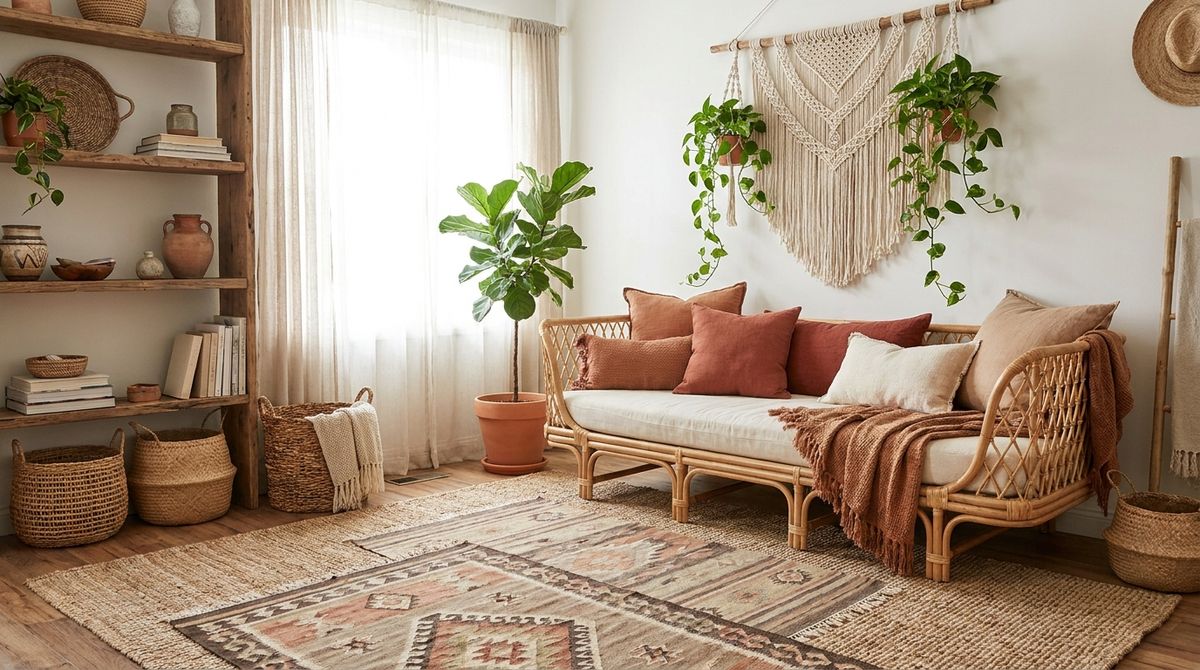
Quick answer: To decorate Scandinavian style on a beginner budget of roughly $1,200 to $2,400, start with a chalky white or warm grey base, layer in light wood furniture (think oak, ash, or birch), keep surfaces uncluttered, add texture through wool, linen, and sheepskin, hang one or two large pieces of black-and-white art, and finish with soft, warm lighting from multiple low sources. The whole formula sits on three pillars: light, functionality, and natural materials.
If you’ve ever scrolled through a Copenhagen apartment tour and thought “how is it that simple and that cozy at the same time?” — that tension is exactly what Scandinavian design solves. This guide walks you through the seven concrete steps to recreate it, with real product categories, current 2026 price ranges, and budget IKEA picks at every step.
Key Takeaways
- Scandinavian style = neutral base + light wood + textural layers + warm low lighting.
- Budget a starter living room at roughly $1,200–$2,400 using IKEA, H&M Home, and thrift finds.
- The single biggest beginner mistake is over-decorating. Remove 30% of what you think you need.
- Lighting is non-negotiable: plan for 3–5 light sources per room, almost all under 2,700K.
- Texture (wool, linen, sheepskin, raw wood) is what keeps a minimalist room from feeling cold.
Step 1: Start With a Neutral, Light-Reflecting Base
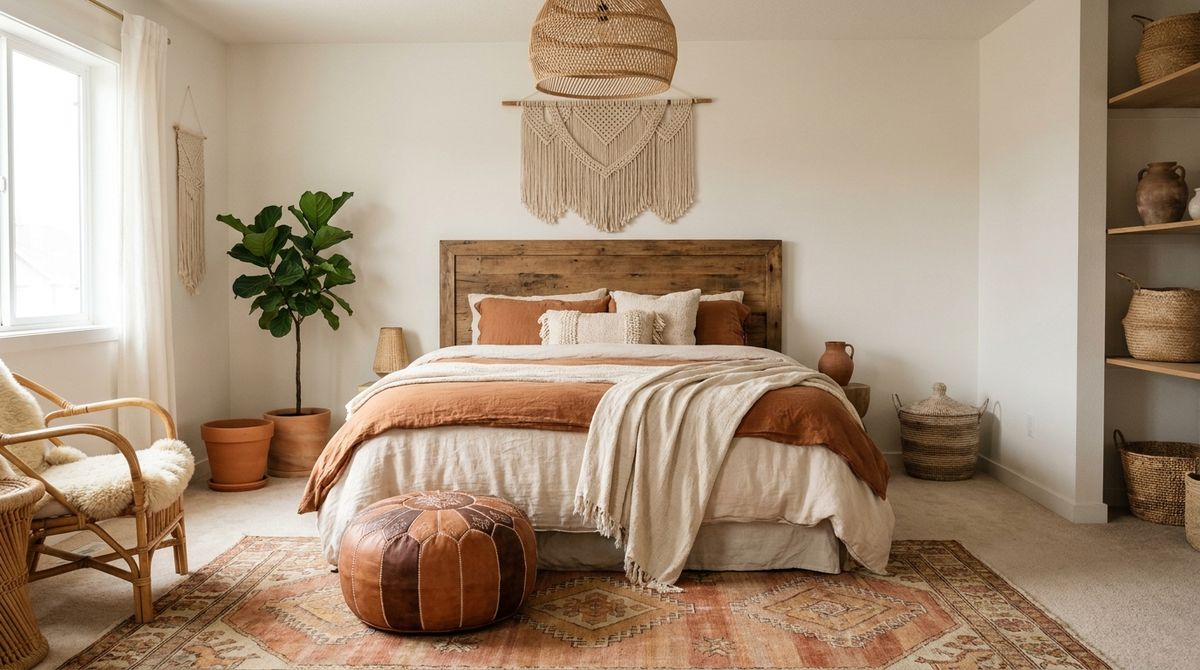
The foundation of every Scandinavian room is the wall and floor palette. Nordic homes get very little daylight in winter — sometimes only 4–6 hours of usable light — so the style evolved to bounce every photon it can off pale surfaces.
What to do:
- Paint walls in chalky off-white, soft greige, or pale dove grey. Avoid cool blue-whites (they read clinical) and yellow-whites (they fight wood tones).
- If you can’t paint, hang a large light-toned linen curtain or oversized canvas to break up a dark wall.
- Keep flooring light: natural oak, whitewashed pine, light LVP, or a large undyed wool rug over what you have.
IKEA-friendly picks (2026 pricing):
- IKEA MORGEDAL or HEMNES in white stain — $179–$429
- LOHALS jute rug, 5’3″ × 7’5″ — around $79
- VIDGA ceiling-track curtain rail with white linen panels — $35–$90 total
What most guides miss: Paint sheen matters as much as color. A flat or matte finish (2–5 sheen units) absorbs light softly and hides wall imperfections, while eggshell reflects just enough to feel clean. Skip satin and semi-gloss on walls: they throw glare that reads harsh and contractor-grade, killing the chalky Nordic softness.
Actionable takeaway: Before you buy a single decor item, fix the base. A $40 gallon of warm white paint will do more for the look than $400 of accessories.
For a deeper breakdown of the exact paint families and wood tones that work together, see our Nordic color palette guide.
Step 2: Choose Light Wood as Your “Second Color”
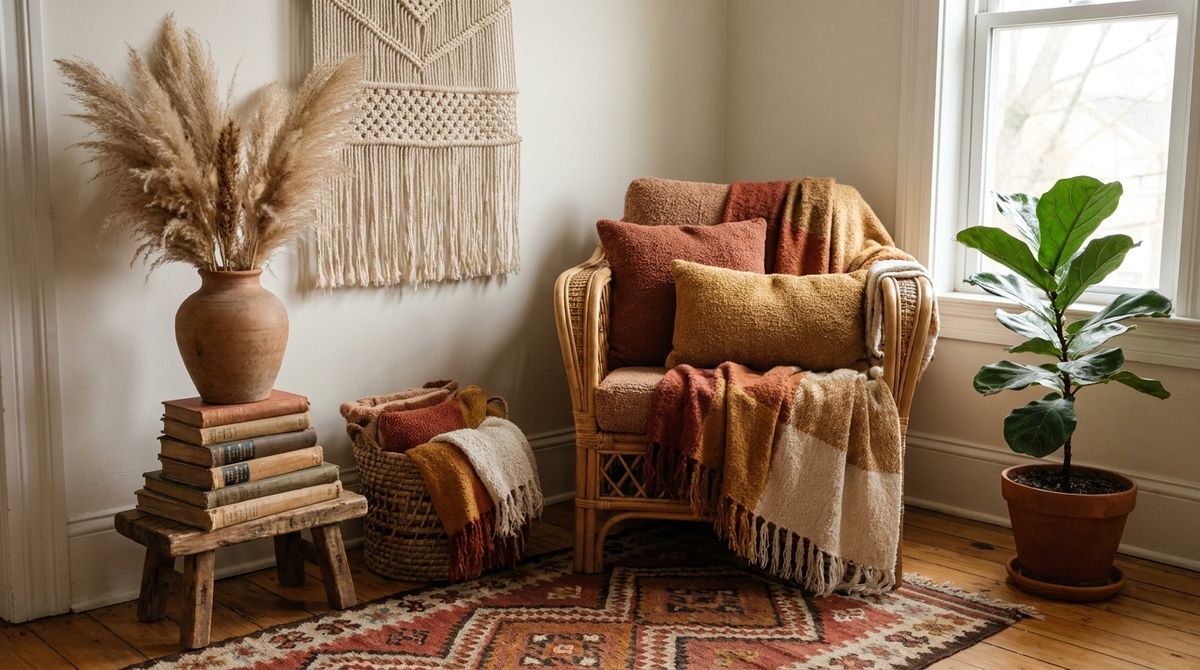
In Scandinavian rooms, wood functions like a color, not a material. It’s the warm counterweight to all that white. The rule of thumb most Nordic designers follow: one dominant wood tone per room, repeated 3–5 times.
The Scandi wood hierarchy:
-
Oak — the workhorse. Pale, slightly golden, ages beautifully.
-
Ash — almost blonde, with subtle grain. Very Danish-modern.
-
Birch — the most affordable, slightly pinker, classic IKEA.
-
Pine (whitewashed) — budget option, best for rustic-leaning Scandi.
Avoid mahogany, walnut, and orange-toned cherry; they pull the room toward mid-century or traditional. If you already own dark wood pieces, you don’t have to throw them out — limit them to one statement item (a sideboard, a single chair) and let the rest of the room stay light.
IKEA-friendly picks:
- LISABO ash dining table — $249
- NORDKISA open wardrobe in bamboo — $199
- IVAR unfinished pine shelving — $80–$150 (whitewash with diluted white paint for the Scandi look)
What most guides miss: Solid light wood carries a hidden upkeep cost. Untreated or oiled oak and ash need re-oiling every 6 to 12 months, and a $12 bottle of clear hardwax oil is the difference between wood that stays warm and honey-toned versus one that dries out and greys within two winters of dry indoor heating.
Actionable takeaway: Walk through your space and count wood items. If you have more than one wood family, decide which one stays and gradually phase the other out.
Free · 60 seconds
Not sure which style is actually yours?
Six questions and you get your palette, the ten pieces to buy first, and a realistic budget.
Step 3: Embrace Functional Minimalism (Not Empty Minimalism)
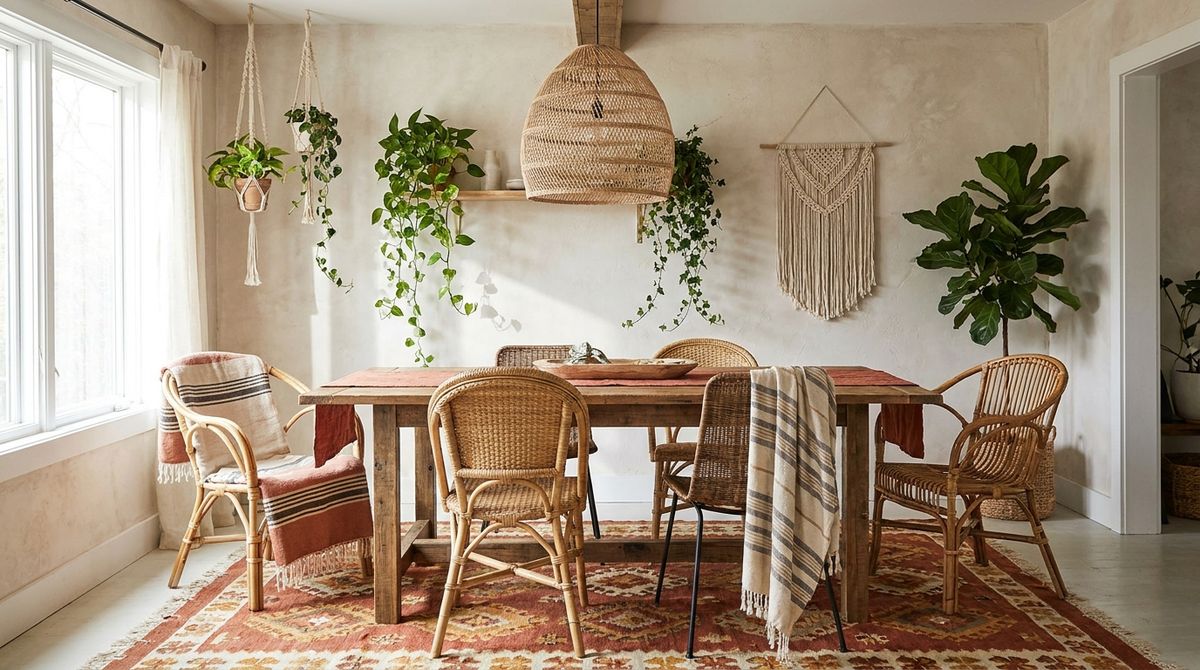
Beginners often confuse Scandinavian style with stark minimalism. It isn’t. Scandi rooms are uncluttered, not empty. Every object should either work hard (a stool that’s also a side table) or earn its space emotionally (a hand-thrown ceramic vase from your trip to Portugal).
The Danish concept of hygge (coziness) and the Swedish concept of lagom (just enough) both live here. If you’re new to the distinction, our breakdown on hygge vs lagom vs Nordic minimalism is worth a read before you start buying.
The 30% rule: Look at any horizontal surface. If you have more than three objects on it, remove one. Repeat until it feels almost-but-not-quite bare.
What stays on a Scandi coffee table:
- A stack of 2–3 books with cloth or muted covers
- One small ceramic or wood object
- A taper candle or small vase with a single stem
- That’s it.
IKEA-friendly picks for “functional minimalism”:
- FRIHETEN sofa with hidden storage — $549
- VITTSJÖ nesting tables (steel + glass, very Scandi) — $59
- KUGGIS lidded boxes in white or bamboo — $5–$15 each
Actionable takeaway: Before adding anything new, do a “subtract first” pass. Remove 30% of what’s currently visible. Live with the result for one week before you add anything back.
Step 4: Layer Texture Like It’s Your Job
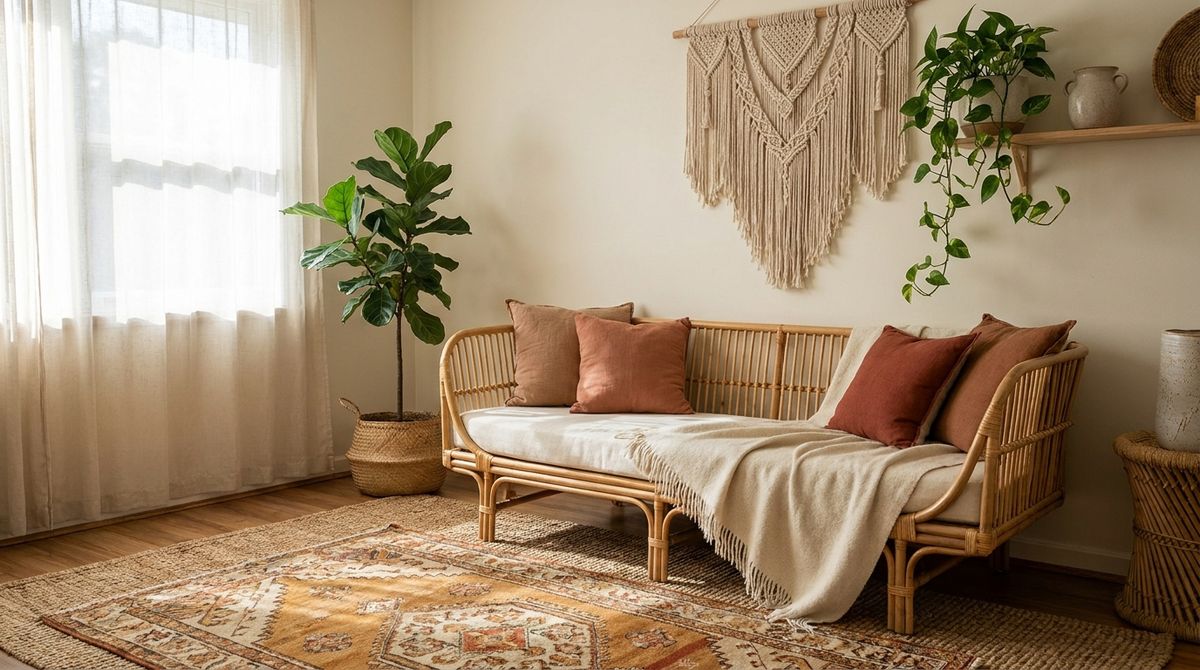
Here’s the trick that separates a real Scandinavian room from a Pinterest-fail attempt: texture density. Because the color palette is so restrained, the eye needs tactile variety to stay engaged. Without it, the room looks like a furniture showroom — sterile and a little sad.
Designer Jonas Bjerre-Poulsen of Norm Architects calls this “the quiet richness.” You should be able to count at least five different textures in any finished Scandi room.
The texture checklist:
- Wool — chunky throws, knit poufs, area rugs
- Linen — curtains, cushion covers, table runners
- Sheepskin or faux fur — draped over a chair back or stool
- Raw wood — cutting boards displayed vertically, wooden bowls
- Ceramic — matte stoneware vases, handmade mugs
- Rattan or cane — pendant shades, basket storage
- Glass — clear or smoked, for vases and light fixtures
IKEA-friendly picks (2026):
- POLARVIDE fleece throw — $4.99 (yes, really)
- STENSUND chunky knit cushion cover — $14.99
- SKOLD sheepskin — $39.99
- GAMLEHULT rattan storage ottoman — $99
Actionable takeaway: Photograph your room. In black and white, can you still see distinct textures? If everything blurs into a single tone, you need more tactile contrast.
Step 5: Get the Lighting Right (This Is Where Most People Fail)
If you only take one lesson from this guide, make it this one: Scandinavians do not rely on a single overhead light. They layer it. A typical Copenhagen living room has 4–6 light sources running at once, almost all of them warm (2,200K–2,700K), almost all of them low-positioned.
The look you’re after is sometimes called “pools of light” — multiple soft glows at table height and below, with the ceiling left relatively dim. This is what gives Scandinavian interiors their famous evening warmth.
Your lighting starter kit:
-
One pendant lamp over the dining or coffee table (paper, opal glass, or rattan shade)
-
Two table lamps at sofa-side and console height
-
One floor lamp in a reading corner
-
Taper candles in brass or ceramic holders — non-negotiable for evening use
-
Optional: a wall sconce or two on plug-in mounts if you rent
Bulb spec: 2,700K maximum, 60W equivalent, dimmable if possible. Cool-white LEDs will ruin the entire effect.
What most guides miss: Color temperature is only half the spec. Check the CRI (Color Rendering Index) printed on the box and buy 90+ CRI bulbs. Cheap LEDs at CRI 80 make oak, wool, and skin tones look flat and greyish even at a correct 2,700K, which is why some warm rooms still feel oddly lifeless.
IKEA-friendly picks:
- REGOLIT paper pendant shade — $9.99 (the iconic budget Scandi pendant)
- ÅRSTID brass-and-fabric table lamp — $34.99
- NYMÅNE floor lamp — $79.99
- STABBIG taper candle holder, set of 3 — $12.99
Actionable takeaway: Tonight, turn off your overhead light and use only lamps. If you can’t get to a comfortable reading-level glow with what you have, you need more light sources — not brighter ones.
Step 6: Add One or Two Pieces of Art (Not a Gallery Wall)
Scandinavian art curation is restrained. You typically see one large statement piece per wall, occasionally a small pair, almost never a packed gallery wall. The art itself tends toward:
- Black-and-white line drawings (single faces, abstract figures)
- Botanical prints with lots of white space
- Architectural photography
- Muted abstracts in dusty pinks, sage, ochre, or charcoal
- Vintage Danish movie posters or museum prints
Framing rule: Thin black, natural oak, or thin white frames. No ornate gold. No matte black with chunky borders. Keep it clean.
Sizing rule: Your main piece should be roughly two-thirds the width of the furniture below it. Smaller and it looks lost; larger and it overwhelms.
Where to shop (2026 price ranges):
- IKEA poster + frame combos — $15–$60 total
- Desenio, The Poster Club, Scandinavian Design Center — $25–$120 per print
- Etsy independent Nordic illustrators — $30–$200
IKEA-friendly picks:
- BILD poster series (line drawings, botanicals) — $7.99–$24.99
- RIBBA frames in black, white, or birch — $4.99–$29.99
- KNOPPÄNG frame multi-packs — $19.99 for four
Actionable takeaway: Pick one wall as your “art wall” and leave the others nearly bare. Resist the urge to fill every vertical surface — negative space is part of the design.
For more inspiration on how art interacts with furniture in real rooms, see our roundup of 30 Scandinavian living room ideas.
Step 7: Bring Nature Indoors (Plants, Stones, Branches)
The final layer is biophilic — actual organic matter in the room. Nordic design has always leaned heavily on bringing the outside in, especially during long winters when the outdoors feels inaccessible.
The Scandi plant shortlist:
- Fiddle leaf fig or rubber plant — one tall statement plant
- Eucalyptus stems (fresh or dried) — in a clear glass vase
- Olive tree — increasingly trendy, very Mediterranean-Scandi
- Trailing pothos or ivy — on open shelving
- Dried pampas grass or wheat — winter-friendly, no maintenance
Don’t overdo it. Two or three plants in a living room is plenty. A jungle of houseplants pushes the look toward bohemian rather than Scandi.
Other natural elements:
- A single curved branch in a tall floor vase
- A small bowl of smooth river stones on the coffee table
- A piece of driftwood on the mantel
- Pinecones in a wooden bowl (autumn/winter)
IKEA-friendly picks:
- FEJKA artificial eucalyptus (if you kill real plants) — $4.99–$14.99
- BERGPALM ceramic plant pot — $7.99
- DRÖMSK glass vase — $9.99
Actionable takeaway: Add one large plant and one organic accent (branch, stones, or dried stems) per room. That’s enough. Resist the urge to turn the place into a greenhouse.
Putting It All Together: A Sample Starter Budget
Here’s what a beginner Scandinavian living room looks like, head-to-toe, using mostly IKEA and budget sources in 2026:
| Category | Item | Price Range |
|---|---|---|
| Paint | Warm white, 1 gallon | $40–$55 |
| Rug | LOHALS jute 5×7 | $79 |
| Sofa | FRIHETEN with storage | $549 |
| Coffee table | LISABO ash | $179 |
| Side table | VITTSJÖ nesting set | $59 |
| Lighting (3 lamps + pendant) | REGOLIT + ÅRSTID + NYMÅNE | $135 |
| Textiles | Throw + 4 cushions + sheepskin | $90 |
| Art (2 pieces, framed) | BILD + RIBBA | $50 |
| Plants + vases | 2 plants + 2 vases | $60 |
| Candles + small objects | Various | $40 |
| Total | ~$1,281–$1,396 |
You can absolutely scale up — replace the sofa with a Sven or Article piece, swap IKEA art for original prints, upgrade to wool throws from Pendleton or Røros Tweed. But the formula doesn’t change.
Common Beginner Mistakes (And How to Fix Them)
-
Too much white, not enough wood. Fix: count your wood pieces. Aim for 3–5 visible at all times.
-
Cool-white LED bulbs. Fix: replace every bulb with 2,700K warm white. This alone transforms a room.
-
Cluttered surfaces. Fix: clear everything, then put back only what passes the “useful or loved” test.
-
Matchy-matchy furniture sets. Fix: mix one vintage piece into every otherwise-new room.
-
No texture. Fix: add one wool throw, one linen cushion, one sheepskin — minimum.
-
Single overhead light. Fix: add three more light sources before buying anything else.
-
Too many plants. Fix: pick your two favorites, donate the rest.
FAQ
Q: Can I do Scandinavian style in a small apartment?
A: It’s actually ideal for small spaces. The light palette and uncluttered surfaces visually expand square footage. Focus extra hard on multi-functional furniture and vertical storage.
Q: Is Scandinavian style the same as minimalism?
A: No. Scandinavian style is warmer, more textural, and more forgiving than strict minimalism. Think “cozy minimalism” rather than “stark minimalism.”
Q: What’s the difference between Scandinavian and Japandi?
A: Japandi blends Scandi with Japanese wabi-sabi — darker woods, lower furniture, more handmade ceramics. Pure Scandi is lighter, brighter, and more functional.
Q: How long does it take to decorate a room Scandi-style on a budget?
A: Most beginners can transform a living room in 2–4 weekends: one for declutter and paint, one for major furniture, one for lighting and textiles, one for art and finishing touches.
Q: Do I have to shop at IKEA?
A: Not at all. IKEA is the easiest budget entry point, but thrift stores, Facebook Marketplace, H&M Home, Target, and West Elm all have Scandi-leaning pieces. Mix sources — that’s actually more authentic than going all-IKEA.
Next Steps
You now have the seven-step framework: neutral base, light wood, functional minimalism, layered texture, warm low lighting, restrained art, and natural elements. Pick one room, work the steps in order, and don’t skip ahead to the fun shopping parts before you’ve done the boring foundation work.
For more depth on any single area, explore:
- The complete Scandinavian / Nordic decor hub — every topic in one place.
- Our deeper editorial in The Ultimate Scandinavian Decor Guide 2026: Hygge, Functionality, Nordic Warmth.
- A visual gallery of 30 Scandinavian living room ideas that are cozy, clean, and never boring.
- The exact paint and finish tones in our Nordic color palette breakdown.
- The philosophical foundation in Hygge vs Lagom vs Nordic Minimalism — Which Should You Choose?
Decorate slowly. Buy fewer, better things. Leave room to breathe. That’s the whole Scandinavian secret.