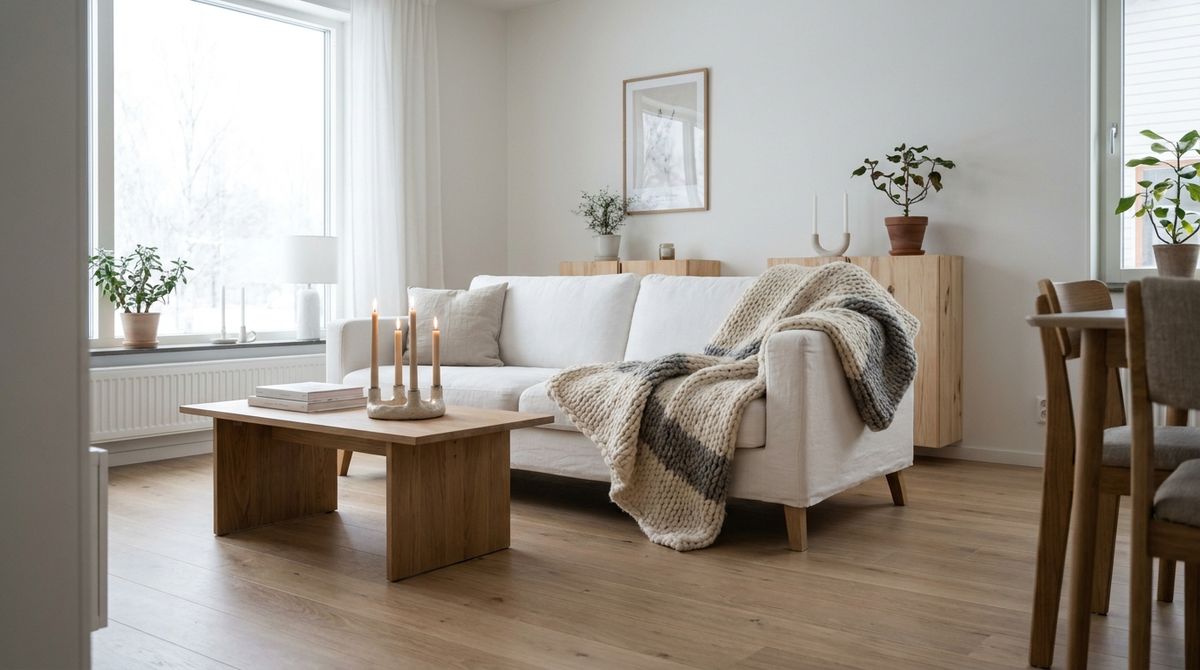
Most people spend too long choosing the right shade of white for their walls. The real secret to that warm, lived-in Nordic room you’ve been trying to recreate isn’t color at all. It’s texture, and specifically it’s the way Scandinavian designers stack three to five contrasting tactile layers until a space stops feeling designed and starts feeling inhabited.
That principle has a name. Hygge, the Danish and Norwegian concept of coziness and togetherness, is built almost entirely on sensory experience: the rough nap of a wool throw against a smooth linen sofa, the soft pooling glow of clustered pillar candles, the cool grain of a birch wood tray beneath a warm cup of tea. Color contributes. Texture delivers.
This guide walks you through every layer, with specific product categories, real price ranges, and a numbered method you can follow room by room. If you’re just starting out with the broader style, our complete Scandinavian and Nordic decor guide covers the full picture.
Key Takeaways
- Scandinavian decor texture is built from natural materials, sheepskin, wool, linen, beeswax, and raw wood, layered in groups of three or more.
- Sheepskin pieces ($40 to $300) deliver the highest visual warmth per dollar of any single decor purchase in a Nordic room.
- Candles function as a texture layer, not just mood lighting; grouping odd numbers of varying heights creates genuine visual depth.
- The global candle market exceeded $14 billion in 2024, reflecting how central candlelight has become to home coziness culture (Allied Market Research, 2024).
- You don’t need to redo a room to feel the shift; two new textures and a candle cluster can change the atmosphere completely.
Why Scandinavian Decor Texture Outperforms Color Every Time
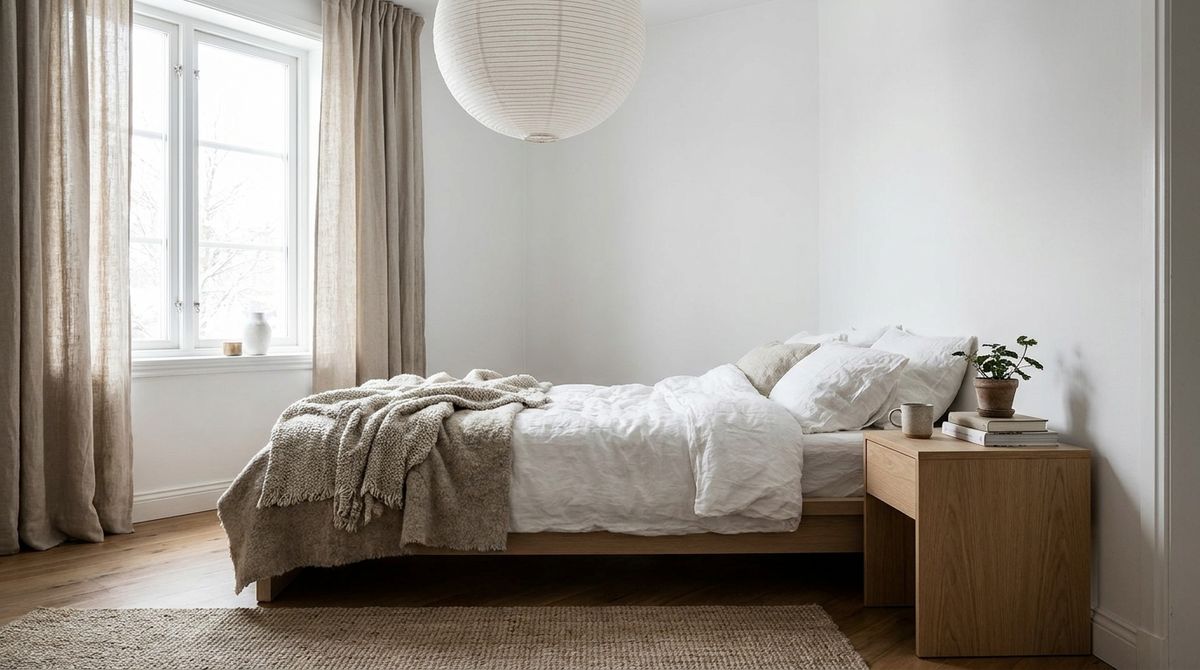
Natural materials form the foundation of authentic Nordic interiors, and that’s not an accident. Scandinavian homes spend months inside long, dark winters, so designers historically made choices that generated warmth through feel and light absorption rather than visual brightness alone. Wool absorbs sound and softens sharp corners. Sheepskin catches light differently at every hour of the day. Unfinished wood grain gives the eye something to rest on rather than slide past.
Vogue’s 2024 deep-dive on Scandinavian design identified natural texture as a “primary characteristic” of the style, placing it ahead of the signature neutral palette. That tracks with how Nordic designers actually work. Color sits in the background; texture sits in your hands.
The key difference between a Scandi room that reads as warm and one that reads as cold is almost always the number of distinct textures present. Rooms with only one or two materials, typically a painted wall and a smooth sofa, register as sterile. Rooms with four or more contrasting tactile surfaces register as intentionally curated. Three is the minimum threshold where the effect starts to work.
What most guides miss: the three-texture minimum is a rule about contrast, not quantity. Three materials that behave the same way, all smooth, all matte, still read as flat. Aim for one light-absorbing surface (wool, sheepskin), one light-reflecting one (washed linen, ceramic), and one hard grain (raw wood, stone). That spread is what makes a room feel layered rather than merely full.
If you’ve looked through before-and-after Nordic room makeovers, you’ll notice the same pattern every time. The “after” photos don’t just have more things in them. They have more different surfaces.
Actionable takeaway: Before buying anything, count the distinct textures already present in your room. Anything under four is a gap worth filling.
Sheepskin: The Fastest Single Texture Upgrade You Can Make
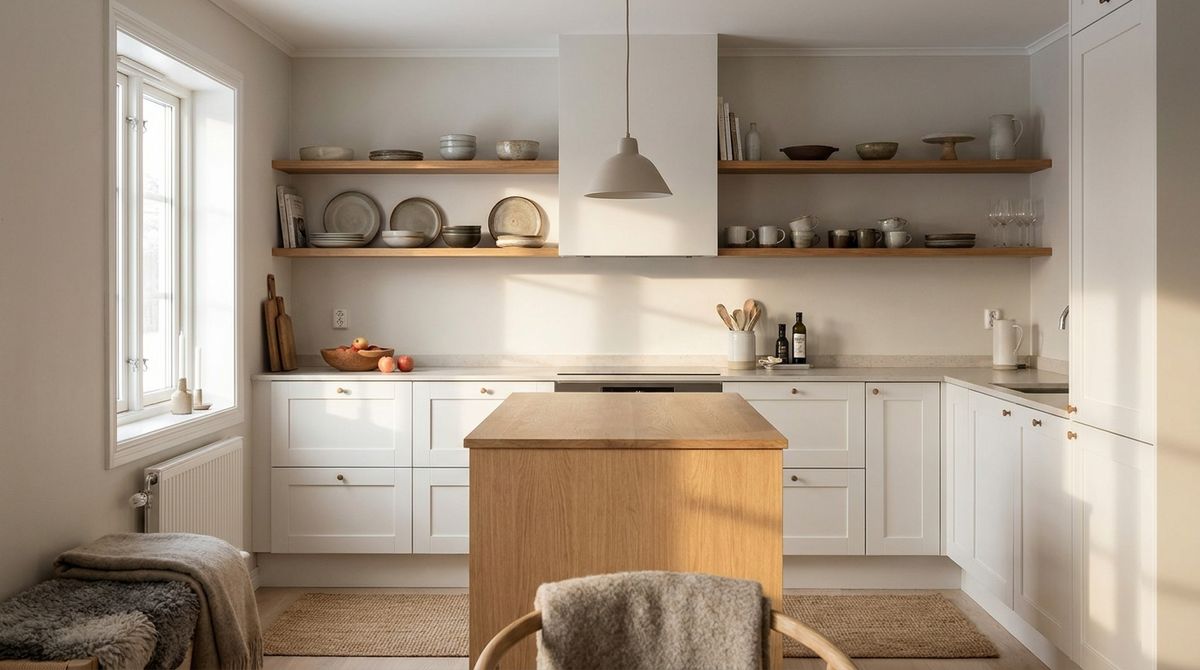
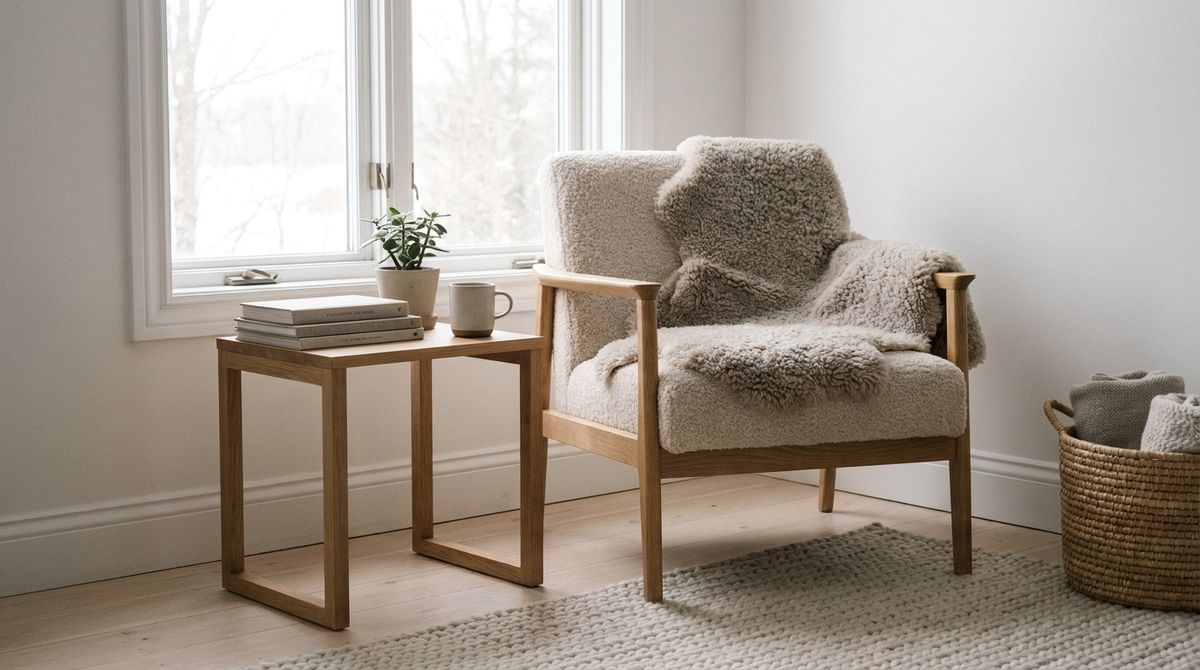
Sheepskin is the shortcut that professional stylists rely on because it works on almost every surface. Draped over a chair arm, layered at a bed corner, laid flat as a small accent rug beside a bath, no other single decor purchase adds as much tactile variety per dollar. It’s also visually recognizable as Scandi from across a room, which means it anchors the style while the rest of your layers build around it.
Price ranges to know:
- Faux sheepskin throw (IKEA TEJN, similar Target options): $15 to $45. Softer and machine-washable. The pile isn’t as deep, but at a normal viewing distance the effect is nearly identical to the real thing.
- Real single-hide sheepskin (standard chair or ottoman size): $60 to $130. Look for long, dense wool and avoid anything with a plasticky sheen; that’s usually a sign of heavy processing.
- Sheepskin area rug (2×3 ft to 4×6 ft): $90 to $300 depending on size and source. Natural hides from Icelandic or Norwegian sheep tend to have the best loft and the most photogenic texture.
How to place sheepskin without it looking staged:
-
Start with one piece, not three. One well-placed sheepskin reads as deliberate; three reads as a costume store.
-
Drape it asymmetrically. A throw folded in thirds and laid over a chair’s back corner looks casually Nordic. Centered and symmetrical looks like a catalog photo.
-
Use it to soften hard furniture. A sheepskin over a wooden bench, a metal stool, or a concrete side table creates exactly the contrast Nordic rooms rely on for depth.
-
Let the edges hang freely. Tucked-in edges lose the organic quality that makes sheepskin work.
What most guides miss: real and faux sheepskin need opposite care. Genuine hides wash by hand in cool water with a wool-specific detergent, then air-dry flat; machine heat permanently mats the pile and stiffens the leather backing. Faux versions handle a cold gentle-cycle machine wash and low-heat tumble, which is exactly why they suit high-traffic spots and homes with pets or young kids.
For the widest range of options at different price points, the best Scandinavian decor pieces for 2026 includes a current roundup with sources across budgets.
Free · 60 seconds
Not sure which style is actually yours?
Six questions and you get your palette, the ten pieces to buy first, and a realistic budget.
Candles: How Scandinavians Use Light as a Texture Layer
The global candle market was valued at over $14 billion in 2024, according to Allied Market Research, and Scandinavian countries consistently rank among the world’s highest candle consumers per capita. That isn’t a lifestyle quirk. In Nordic design philosophy, candlelight isn’t decoration; it’s architecture. The soft, flickering glow creates pools of warmth that reshape a room’s perceived geometry, making flat surfaces look dimensional and empty corners feel occupied.
The types that work best in a Scandi room:
- Beeswax pillars ($18 to $60 each): Burn clean, last long, and produce a subtle honey warmth that pairs beautifully with white and birch tones. Their natural amber color is the most photographed candle in Nordic interior accounts for a reason.
- Unscented white taper candles ($8 to $25 for a set of six): The workhorse of Nordic tablescapes. A set of tapers at varying heights in a simple wooden holder does more for a dining table than a centerpiece arrangement twice the price.
- Soy wax votives ($6 to $15 for a set): Best used in close groupings. Fill a wooden tray with five to seven votives at mixed heights and you have a centerpiece that cost less than a takeaway dinner.
The grouping method that actually works:
-
Always use odd numbers. Three, five, or seven candles grouped together read as organic. Four or six read as formal.
-
Vary the heights by at least two inches between each candle. Uniformity removes all the visual interest.
-
Place the cluster on a natural surface: a birch wood tray, a stone slab, or a shallow ceramic bowl grounds the arrangement and ties it to your other texture layers.
-
Keep open flames at least 12 inches from any textile layer. Sheepskin and loose-weave wool are not forgiving of proximity to naked flames.
What most guides miss: the warmth you love in candlelight measures around 1800 to 1900 Kelvin, far warmer than a standard bulb. To carry that same glow into your lamps, fit them with 2700K (or lower) bulbs rather than cool 4000K daylight ones, and keep dimmers low after dark. Warm-toned flameless LED candles rated near 2200K reproduce the pooled glow without an open flame, which helps in rentals and homes with pets.
Our finding: Unscented candles often produce a stronger atmosphere than heavily scented ones. When there’s no fragrance competing for attention, the eye and brain focus entirely on the light quality and the warmth of the glow. Try a week with unscented tapers before committing to a signature scent.
Actionable takeaway: A $20 investment in white taper candles and a $15 birch tray creates more atmosphere than a $200 lamp in the same corner.
Wool, Linen, and Cotton: Building the Textile Layer Cake
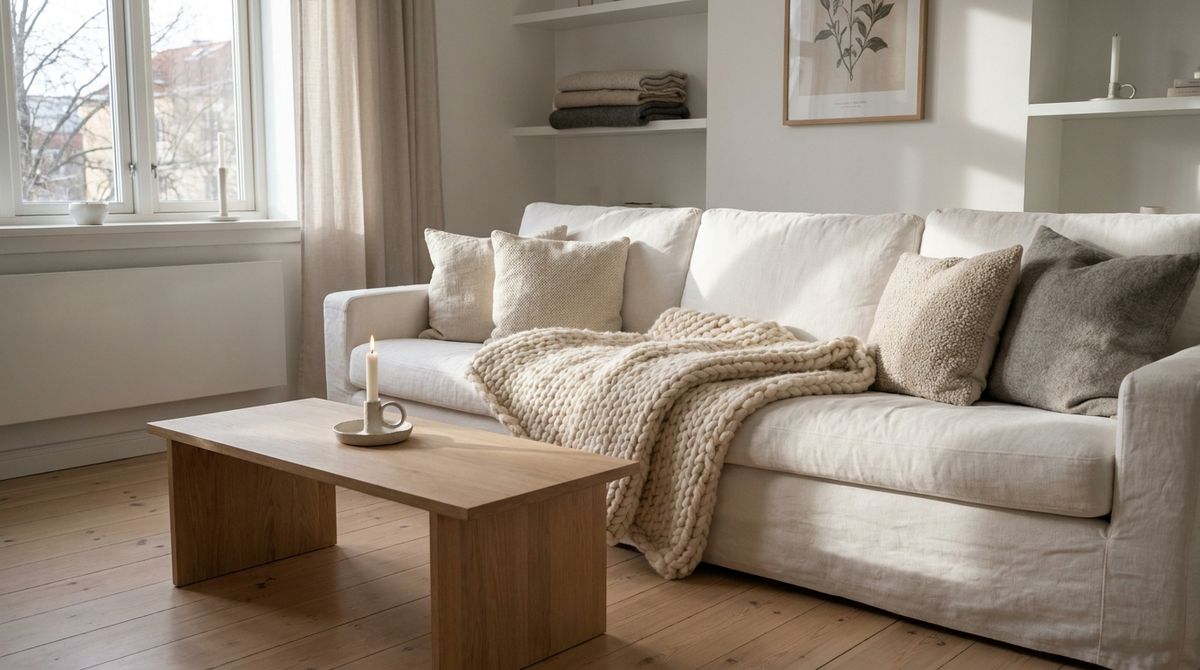
Natural fiber textiles are where Scandinavian decor texture gets its real depth. The goal isn’t to pile on as many cushions as possible; it’s to mix fiber types so the room responds differently to different kinds of light and touch. A chunky wool throw absorbs light and feels weighty. Washed linen reflects it softly and feels effortless. Waffle-weave cotton catches the eye with its grid pattern without demanding attention.
The three-fiber rule:
For any given room, aim for at least three different natural fibers working together. A wool throw, a linen cushion, and a cotton blanket create a hierarchy where the eye moves from coarse to fine without any single material dominating. That movement is what creates the sense of depth.
What to buy and what to spend:
- Chunky wool throw ($55 to $130): Look for a loose, open weave in oatmeal, cream, or warm grey. Merino is softer but thinner. Chunky Icelandic or Norwegian wool has more visual presence from across the room.
- Linen cushion covers ($25 to $65 each): Natural, washed linen in undyed or earth tones. The slight rumple of washed linen is a feature, not a flaw. It looks inhabited.
- Waffle-weave cotton blanket ($35 to $80): The grid texture catches light beautifully on a bed or sofa back. It’s inexpensive, easy to layer under wool throws, and machine-washable without losing its texture.
- Wool area rug ($90 to $250): If you have hard floors, a flatweave wool rug in natural tones provides the base texture layer that everything above it builds on.
Is the pattern too many prints competing for attention? That’s the most common textile mistake in Scandi interiors. Solid or subtly textured fabrics in the same tone family layer beautifully; bold patterns fight each other. If you’re worried about getting this balance wrong, the 9 Scandinavian decor mistakes that make a room feel cold instead of warm covers this exact issue with real examples.
Actionable takeaway: Buy one piece in each fiber type before adding more of any single one. Variety of material always reads better than volume of a single fabric.
Natural Wood: The Anchor That Holds Every Texture Layer Together
Wood is the structural element in Scandinavian decor texture. Without it, sheepskin and candles float in a space without context. With it, the room feels rooted. Vogue, AllModern, and WeAreWellmade all identify wood as a non-negotiable component of Nordic interiors, and the reason is simple: organic grain texture provides the visual “ground” that softer materials need to read as intentional rather than random.
Light-toned species work best here: birch, pine, ash, and light oak. Dark woods pull Nordic spaces toward the heavy end of the spectrum and undercut the signature airiness that makes the style work in small rooms.
Where to add wood texture without renovating:
-
Wooden trays ($18 to $55): Place on a coffee table, console, or bedside as a base layer for candle clusters or small objects. A birch tray from IKEA does the job perfectly and costs less than a magazine subscription.
-
Turned wooden bowls ($25 to $90): A light ash or birch bowl on a shelf or dining table adds organic shape alongside grain texture. It doesn’t need to hold anything to earn its place.
-
Raw wood frames ($12 to $40): Swap black or white metal frames for natural wood ones on a gallery wall. The shift in atmosphere is immediate and noticeable.
-
Wooden candleholders ($15 to $50): A single pillar candle in a turned wood holder does double texture duty, combining the warmth of the candle with the grain of the wood beneath it.
If budget is a real constraint, the realistic cost breakdown for Scandinavian decor details exactly where IKEA and Amazon alternatives hold up and where they fall short for this style.
Actionable takeaway: A $20 birch tray is the single best foundation investment for a candle-and-wood texture node. Start there.
The 5-Step Layering Method: Building Depth Without Visual Clutter
Knowing which textures to buy is only half the task. The other half is sequencing them so each layer adds warmth without turning a clean Nordic room into something that feels overstuffed. Why do some rooms with all the right pieces still feel wrong? Usually it’s because the layers were added in the wrong order.
Nordic stylists follow what’s sometimes called the “anchor, fill, accent” hierarchy: start with the largest hard surface, work down through soft furnishings, and finish with small tactile details. Work in that order and the room builds coherently. Work in reverse, dropping small accent pieces onto an unlayered foundation, and nothing ever settles.
The five steps:
-
Anchor with floor texture first. If you have hard floors, a wool or natural fiber rug sets the tactile foundation for everything above it. It doesn’t need to be large; even a 3×5 ft rug beside a seating area defines the zone and changes how the room feels underfoot.
-
Layer the largest soft surface. Your sofa or bed gets the primary textile: a large linen throw, a heavy wool blanket folded at the foot, or a chunky knit draped over one arm. One piece, placed casually rather than symmetrically.
-
Add sheepskin as the transition material. Drape one sheepskin piece over a chair, bench, or ottoman. This sits between the large textile layer and the smaller accent pieces, bridging rough and soft in a way no other material quite manages.
-
Build the candle cluster. Choose your surface, a tray, stone slab, or wood board, and arrange three to five candles at varying heights. This becomes both a light source and a texture node that anchors one end of your seating area.
-
Fill in with cushions and wood details last. Two to four cushion covers in mixed fibers (linen and wool work well together) and one or two wooden objects finish the composition. If something looks crowded at this stage, remove one cushion before anything else. More cushions is almost never the answer.
Actionable takeaway: The order matters more than the budget. Rug, then large throw, then sheepskin, then candles, then cushions and wood. Reversing it produces clutter regardless of how good the individual pieces are.
Frequently Asked Questions
Does Scandinavian decor texture have to stay in neutral colors?
No, but neutrals make layering significantly easier. When textures vary and colors stay close (cream, warm grey, oatmeal, natural linen, birch), the eye reads richness without confusion. One muted accent works well; a dusty sage cushion or a charcoal wool throw adds personality without competing with the textures you’ve built. Multiple competing colors fight the tactile variety you’re trying to feature.
Can I build authentic Scandinavian decor texture on a tight budget?
Yes, easily. A $20 faux sheepskin from IKEA, a $25 set of white taper candles with a $15 birch tray, and two $30 linen cushion covers give you four distinct textures for under $90. Start there and add one new layer per month. The realistic budget breakdown for Scandinavian decor maps out IKEA and Amazon options at every tier.
How many texture layers is too many for a small room?
Four to five distinct textures is the practical ceiling for most small spaces. Beyond that, even neutral-toned layers create visual noise. In a small bedroom or compact living room, pick three anchor textures (rug, throw, candles) and add one accent (a cushion or wood object). Leave space for the eye to rest; that breathing room is part of the style, not a gap to fill.
Real sheepskin or faux: which is better for Scandinavian decor?
For display placement or a low-traffic spot like a reading chair, faux performs nearly as well visually and washes in a machine, which real hide does not. For a daily-use piece that you’ll interact with every day, real single-hide sheepskin is worth the premium. Genuine Icelandic wool has a longer, denser pile that develops patina over time and catches light more dynamically than faux alternatives in the same price range.
Are flameless LED candles a good substitute in a Scandinavian room?
For renters, homes with pets, or shelves close to textiles, warm-toned LED candles are a genuinely good stand-in. Choose models rated around 2200K with a realistic flicker and a matte, uneven wax shell rather than glossy plastic. Group them in odd numbers at mixed heights exactly as you would real candles, and the pooled-glow effect reads almost identical after dusk, minus the fire risk.
Conclusion
Scandinavian decor texture isn’t a trend to chase. It’s a centuries-old response to long winters and a desire to make interior spaces feel genuinely welcoming rather than merely presentable. Sheepskin, candles, natural fiber textiles, and raw wood aren’t purely decorative choices; they’re functional ones that make rooms feel warmer, more dimensional, and more human.
You don’t need to transform a room to feel the difference. One sheepskin throw, a candle cluster on a birch tray, and two linen cushion covers will shift the atmosphere of almost any neutral space. Start there, layer from the floor up using the five-step method above, and add one new texture each time something feels flat rather than rushing to fill the room all at once.
For the broader context on this style, the complete Scandinavian and Nordic decor guide is the natural next read.
“`