You can decorate your whole home for fall with 45 ideas that cost anywhere from $0 to about $70 each, and most take under 10 minutes. The formula is warm textiles, a few natural elements and amber light, repeated room by room. Everything below is no-nail and no-paint, so your deposit stays safe.
Key Takeaways
- The fall formula is warm textiles, a few natural elements and amber light. Repeat it in each room instead of buying more objects.
- Many ideas are free: foraged pinecones, acorns, branches and paper leaves cost $0 to a few dollars.
- Real uncarved pumpkins last about 2 to 3 months in cool indoor storage, so keep real ones low and reachable and use faux up high.
- Use flameless candles near garland, curtains and dried stems. The U.S. Consumer Product Safety Commission advises keeping lit candles away from anything that can catch fire.
- Living room swaps (pillows, throws, lamps, rugs, coffee table) have their own list in fall living room decor, so this guide covers the rest of the home.
Porch and Entry Ideas
A porch or entry is the first thing guests see, so a small, tidy fall setup here does more than a crowded one. Group items in odd numbers and keep the walkway clear.
1. Two Matching Mums by the Door
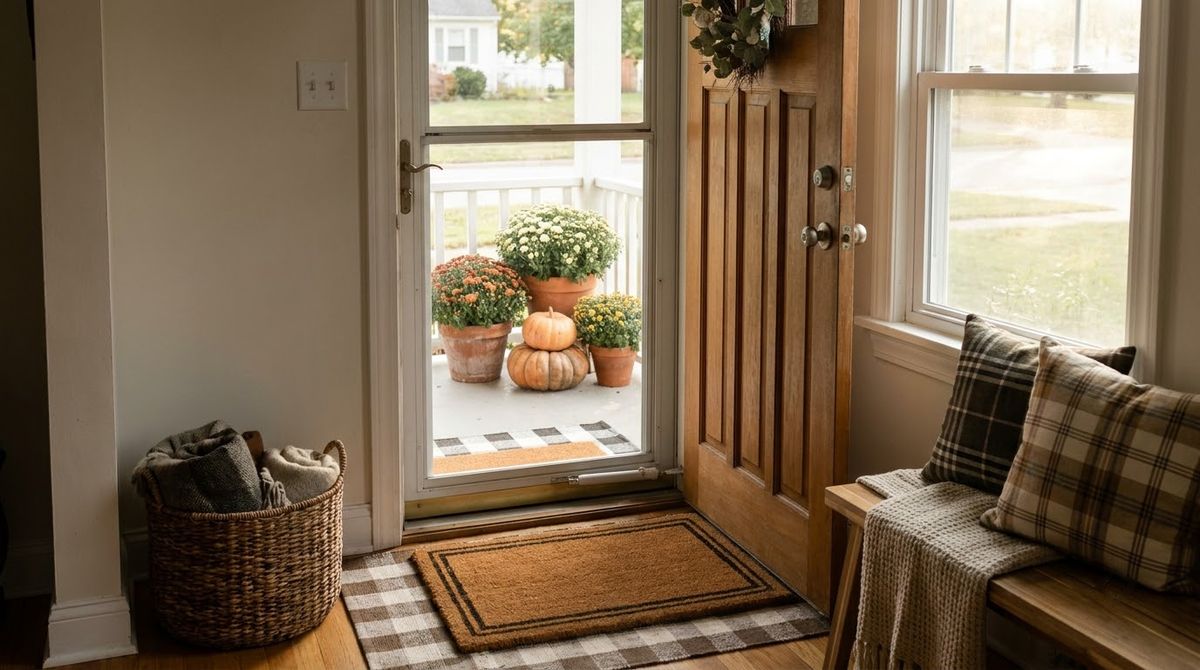
A pair of potted mums on either side of the door frames the entrance and gives a fall color hit that lasts for weeks with regular watering. Matching pots keep it calm. Use rust, yellow or white mums so they read as fall without clashing with the door. Home Depot listed 1-gallon mums at about $27 (Metrolina Winchester planter), and Tractor Supply listed a 1.5-gallon tri-color mum at $19.99. One pot is enough for a small stoop.
2. Staggered Pumpkin Trio
Three pumpkins in graduated sizes, placed unevenly on one side of the door, look natural in a way a straight row never does. Put the tallest at the back and let the smallest sit forward. Real mini pumpkins are cheap at a grocery store, while Walmart listed 7-piece foam pumpkin sets at about $12 to $16 if you want a set that lasts for several seasons.
3. Layered Doormat
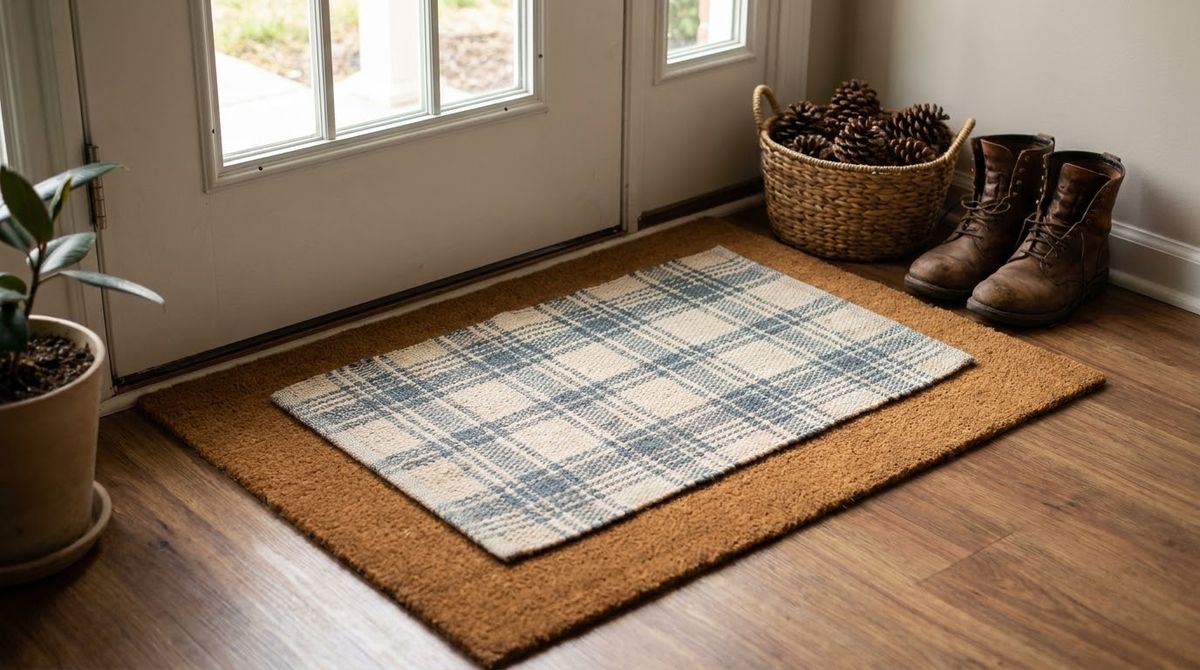
Place a smaller patterned mat on top of a plain coir base for texture without clutter. The coir handles mud, and the top mat carries the fall color. Walmart listed a Mainstays 18 x 30 inch coir mat at $7.97 and a Better Homes & Gardens braided coir mat at $14.97. Choose a top mat in rust, plaid or leaf print, and keep the pair slim enough that the door still opens over it.
4. Wreath on an Over-the-Door Hook
An over-the-door hook holds a wreath with no nail, no adhesive and no paint damage, which suits apartment doors. Pick an 18-inch faux wreath so it stays light and does not fade in a month. Walmart listed 18-inch fall wreaths from $9.27 (maple and sunflower) to $17.99 (eucalyptus or maple and berry) as snippet prices. Hang it at eye level and check that the hook clears the door frame when closed.
5. Lantern With a Flameless Candle
A metal or wood lantern beside the door gives warm light and a solid shape that sits well next to round pumpkins. Use a flameless LED candle inside so wind, rain and fire rules are not a worry. A 5-pack of remote flameless pillars was listed at $18.88 on Walmart, which is more than enough for one lantern and a few other spots in the house.
6. Hook Rail With a Basket of Gourds
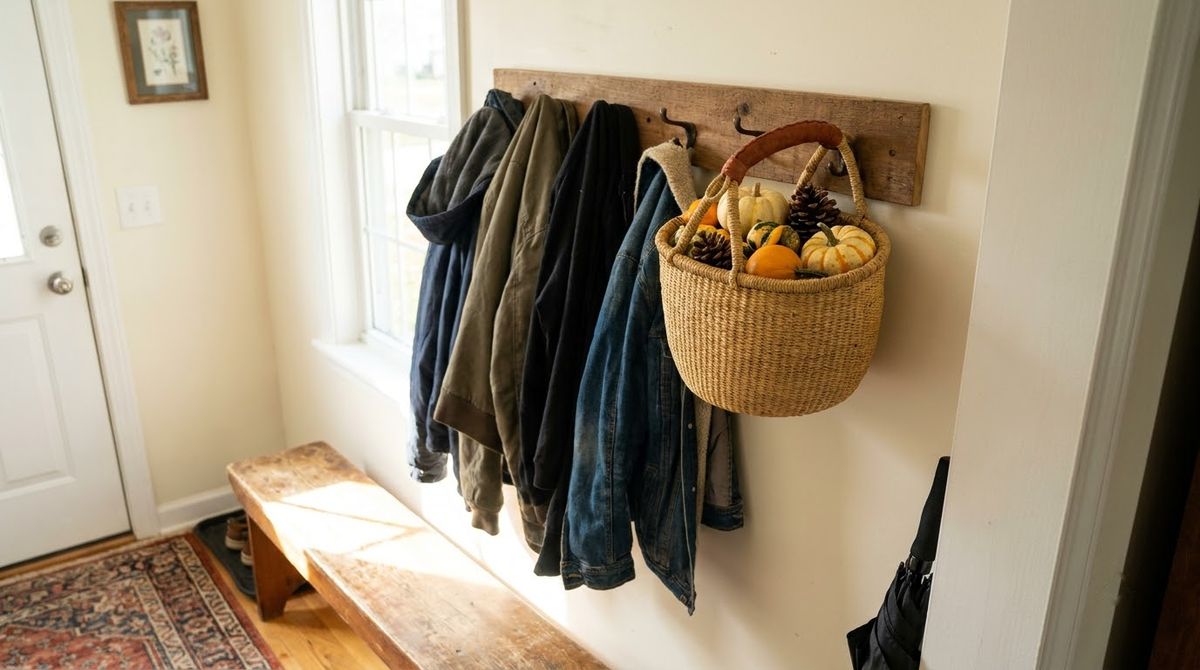
If the entry has a wall hook or rail, hang a small woven basket and fill it with mini gourds or pinecones. It adds texture at eye level and uses no floor space, which matters in a narrow hallway. A basket you already own costs $0. Keep the weight under what the hook is rated for, and check the package before hanging anything heavy from an adhesive hook.
7. Leaf-Print Welcome Mat Swap
Swapping your plain mat for a printed one is the fastest entry change. Look for a coir mat with a leaf, acorn or “hello fall” print. Walmart listed a Briarwood Lane printed coir mat, 18 x 30 inches, at $24.95. Coir is rough on bare feet, so use it outside the door and keep a washable rug inside. Shake it out weekly so leaves and grit do not build up.
8. Ornamental Kale or Cabbage in an Existing Pot
If you already have a planter on the stoop, replacing summer flowers with ornamental kale, which stays frilly and green-purple through cool weather, gives the same effect as mums with less work. Garden centers sell them in 1-gallon pots at similar prices to mums. Water at the base and leave the old soil in place so you do not have to buy anything else.
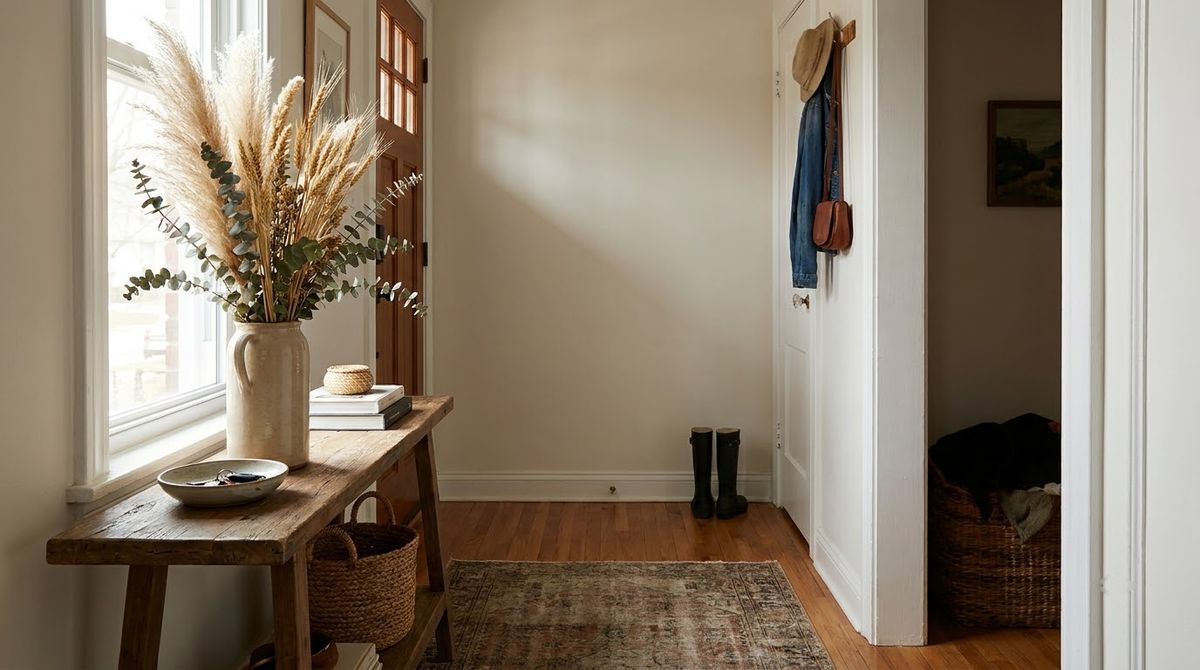
9. Entry Console Bundle of Dried Stems
A tall vase of dried stems on an entry table adds height without taking up the surface. Faux pampas in a 10-stem pack was listed at $6.99 on Walmart, and a 60-stem bundle of dried bunny tails was $10.99. Keep real dried stems out of damp hallways, since they shed and soften in humidity. Place the vase so a door swing cannot knock it.
Dining Table and Kitchen Ideas
A fall table works when the centerpiece stays low enough to see over. Keep each idea simple and repeatable so you can reuse it every year. More complete table setups are in fall table decor ideas.
10. Cotton Runner Down the Center
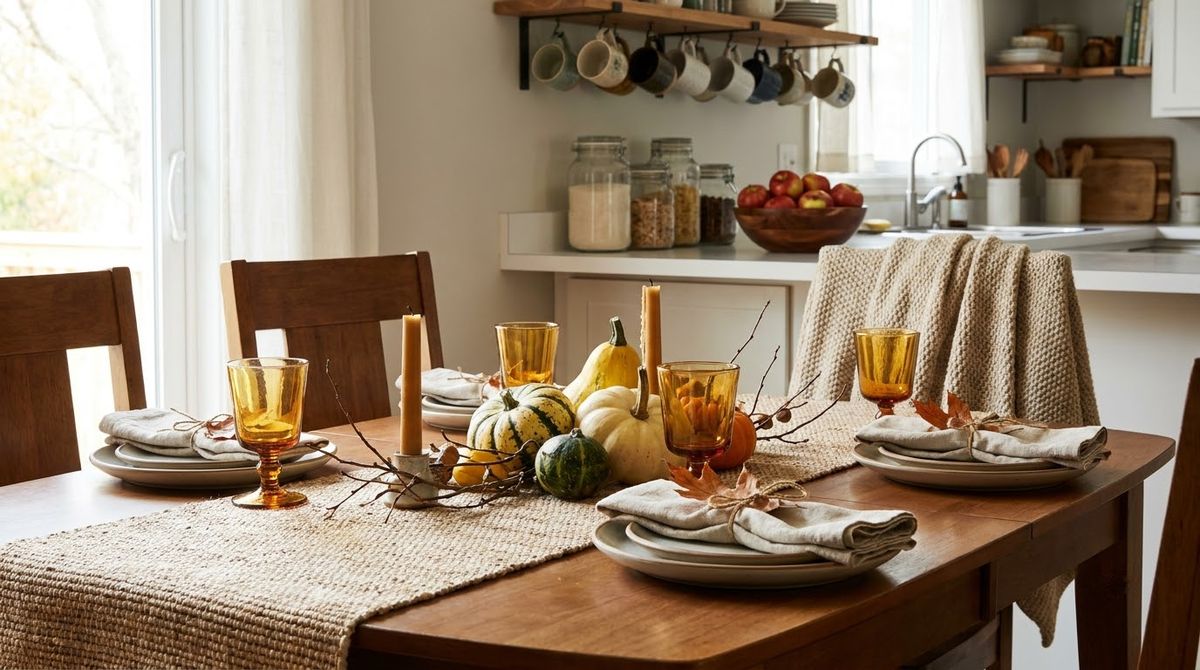
A runner defines the table without hiding it, and a narrow one leaves room for plates. A 35 x 150 cm runner, such as IKEA’s Vårarv (85% cotton, 15% jute), runs about 14 inches wide, which suits most tables. IKEA UK listed it at £7. Choose natural or rust tones, and wash before use so it does not shrink after the first meal.
11. Low Foliage Garland Centerpiece
Lay a faux maple or eucalyptus garland down the middle of the table instead of a tall vase. It adds color at plate level and lets people talk across. Walmart listed 2-packs of 6-ft maple leaf garlands at $14.99 and a clearance single at $6.50. Trim loose wires with scissors so nothing scratches the table finish. Store it flat in a long box so the leaves keep their shape next year.
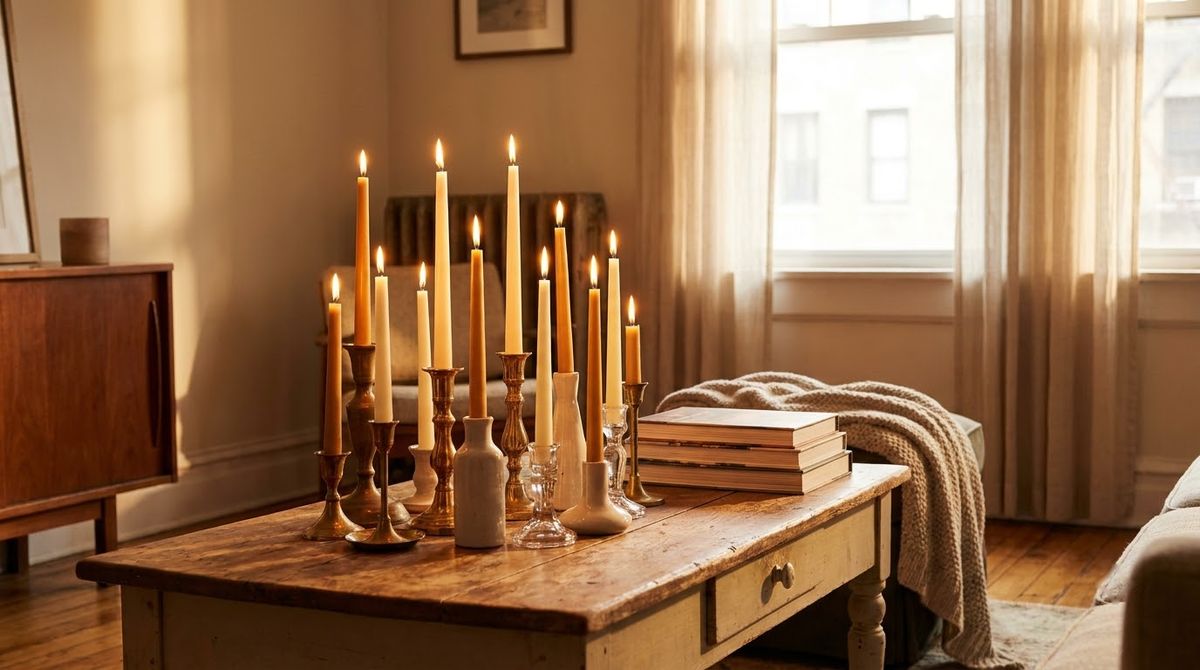
12. Taper Candles in Mismatched Holders
Taper candles at different heights add the amber light the whole look depends on. Target listed a 12-pack of unscented Room Essentials tapers at $7, and Hobby Lobby listed a short black metal holder at $3.99. Mix three or four holders rather than buying a matched set. Keep them away from the garland and stay in the room while they burn.
13. Rust Cloth Napkins
Cloth napkins in rust, cream or mustard change the whole table without new dishes. Fold them simply and lay them across the plate. They also replace paper napkins, so they save a little each week. Look for cotton or cotton-linen in 18-inch squares, and wash them with similar colors for the first few loads, since dark dyes can bleed. Tie each one with a loop of twine for a casual finish.
14. Mini Pumpkin Place Cards
Write guest names on mini pumpkins with a metallic marker and use them as place cards. A 12-piece foam mini set was $4.07 on Walmart, or buy small real pumpkins at a grocery store for a few dollars. Foam holds ink cleanly and survives storage. Skip real pumpkins if the table has candles, since heat softens them faster. Set each one on a folded napkin so the pumpkin does not roll.
15. Wood Bead Garland as a Table Line
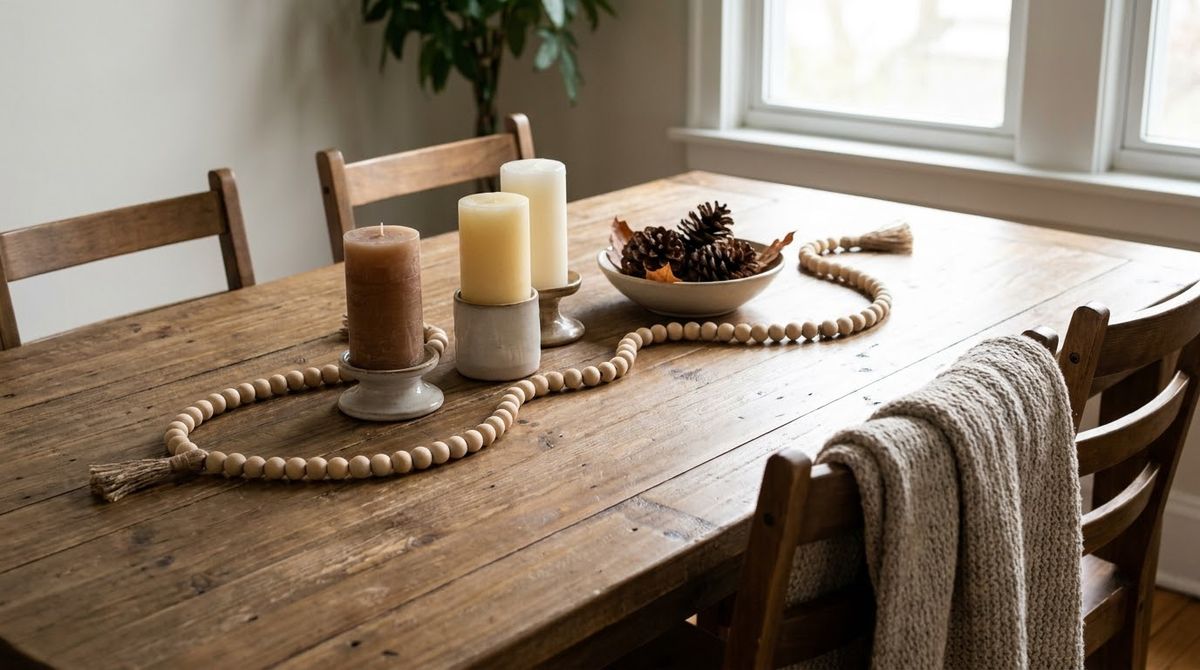
A natural wood bead garland laid in a loose curve adds a warm, handmade texture between candles. Walmart listed a 12-ft natural wood bead garland at $10.99 and a 55-inch one with jute tassels at $4.19. Use it as a runner substitute on a small table, or wrap it around a vase base so it reads as one piece.
16. Apple Bowl on the Kitchen Counter
A wooden bowl of red or green apples is the lowest-effort kitchen fall idea: it costs what the apples cost, and you eat it later. Choose one deep bowl rather than several small dishes, and keep it away from other pumpkins, since the Home for the Harvest storage guide notes apples and pears can speed pumpkin rot. Wash the apples before setting them out, since guests will grab them.
17. Stovetop Simmer Pot
Simmer apple slices, orange peel, a cinnamon stick and a few cloves in a pot of water on low heat for a fall scent with no candle or plug-in. Refill the water as it drops and never leave the stove unattended. The ingredients come to a few dollars at a grocery store, and the pot can be used again for soup the next day.
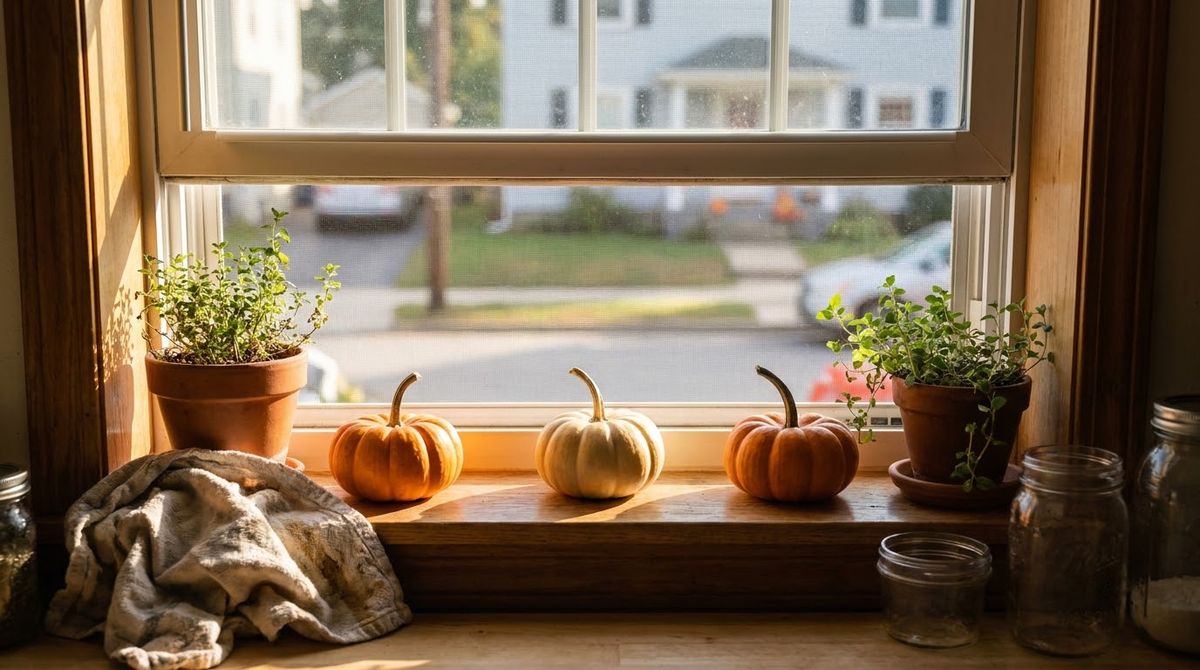
18. Windowsill Pumpkin Row
Line three small ceramic or real pumpkins along the kitchen windowsill, leaving gaps so light passes through. Walmart listed a single ceramic pumpkin at $6.94 and a set of three at $12.99. Ceramic does not soften near a warm window, so it is the better pick here. Keep the sill otherwise clear so it still reads as a window.
Mantel and Shelf Ideas
A mantel, console or bookshelf reads best when the arrangement is layered and uneven. For fireplace-specific layouts, see fall mantel decor ideas.
19. Leaning Mirror as the Backdrop
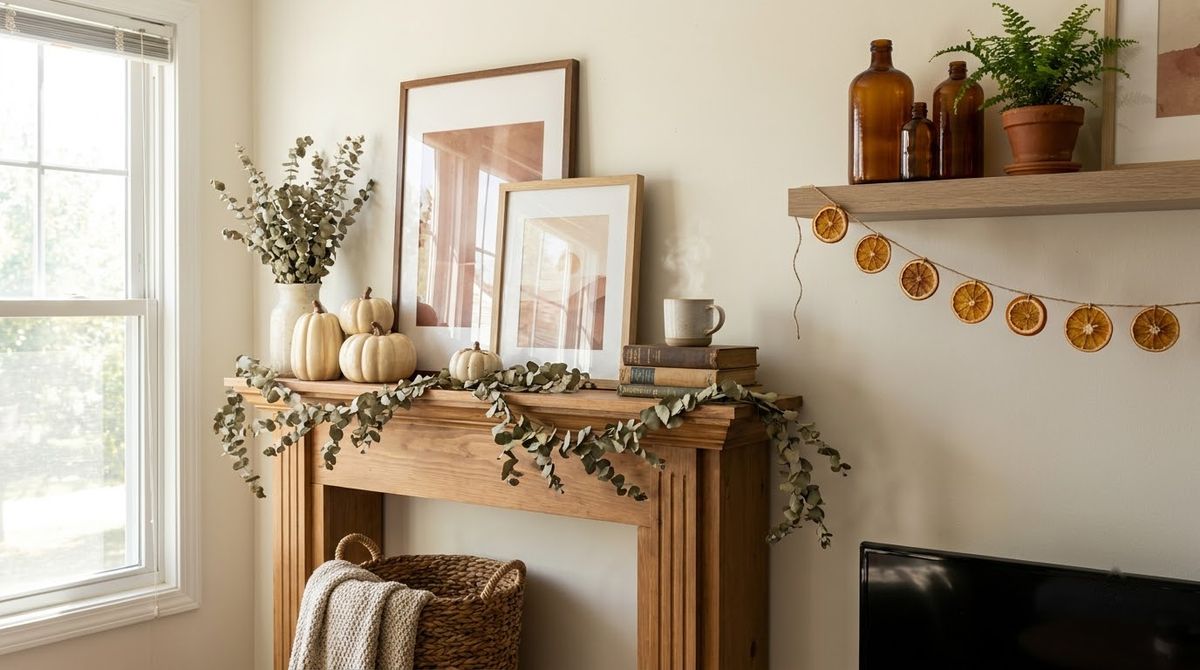
A large mirror leaning on the wall doubles the candle glow and the garland, and needs no nails. Pick a mirror at least as wide as the group below it so the arrangement looks anchored. A mirror you already own costs $0. Put a felt pad under the bottom edge so the mantel is not scratched. Tilt it back a few degrees against the wall so it sits securely.
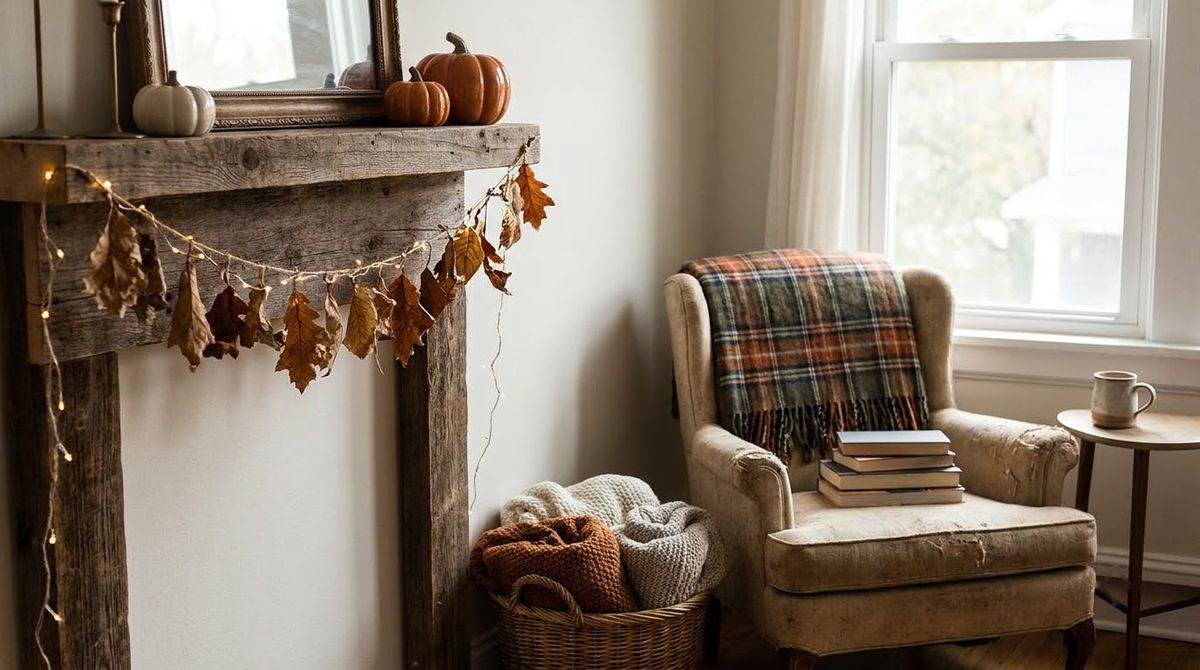
20. Drooping Garland, Off Center
Let a faux garland hang lower on one side instead of centering it, which looks relaxed rather than staged. Secure it with clear adhesive hooks along the front edge. Command clear mini hooks in an 18-pack were listed at $6.89 at Target. Check the package weight rating and avoid any real greenery heavier than the hook allows. Tuck the loose ends behind a candlestick so no wire shows.
21. White Pumpkin Trio
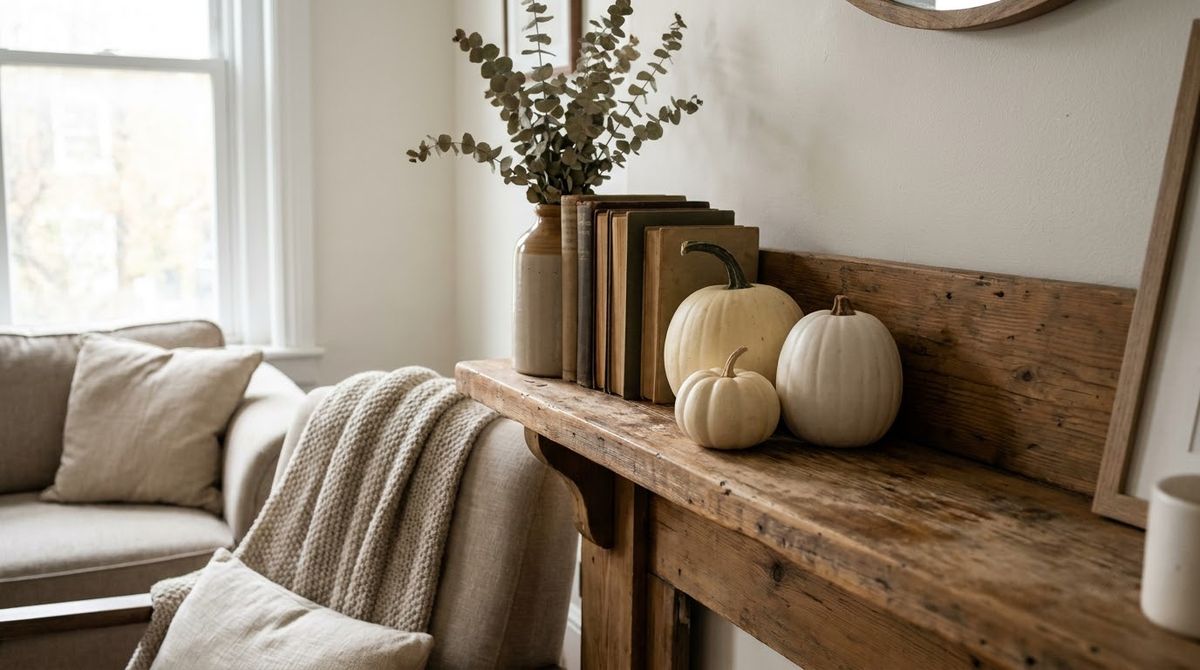
White or cream pumpkins keep the mantel calm, because they add shape without extra color. Use three in two sizes, with one slightly forward. Walmart’s 12-piece mini foam pumpkins at $4.07 work, as do real heirloom white pumpkins in the fall. Real ones near candles soften sooner, so use faux on any surface above head height. Odd numbers look more relaxed than pairs on a long ledge.
22. Candlesticks at Varied Heights
Three candlesticks, one tall, one medium and one short, create the stepped skyline that makes a mantel look layered. Use thrifted brass, wood or glass, since mismatched pieces look collected. Use flameless tapers if the mantel is wood or near the garland. Hobby Lobby listed a short black taper holder at $3.99, and thrift stores often price them lower.
23. Books Turned Spine-In
Turn three or four books on a shelf so the pages face out for a neutral cream block that quiets the shelf. It costs $0 and takes a minute. Stack the books horizontally, then rest a small pumpkin or a single dried stem on top. Put them back spine-out in winter so you can find what you want. Leave a gap at one end so the row does not look like a wall.
24. Dried Bunny Tails in a Bud Vase
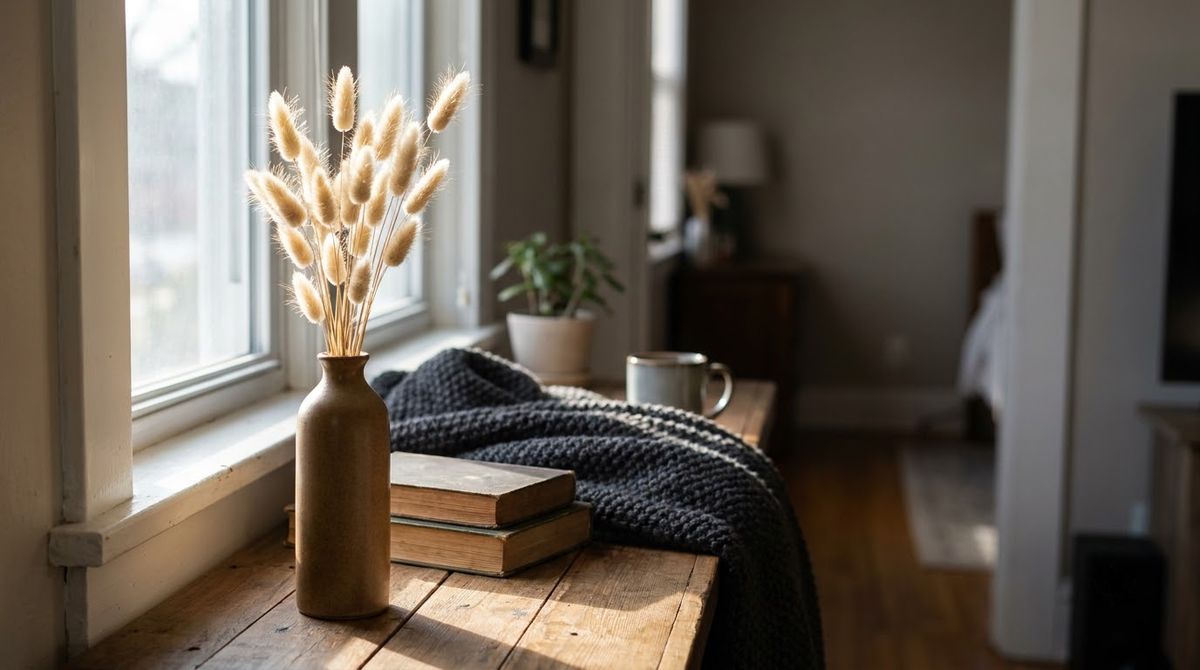
Soft dried bunny tails in a slim vase catch light and add a pale, feathery texture beside darker objects. A 60-stem bunch was $10.99 at Walmart, enough for several vases. Keep the dried stems out of direct sun, so the color does not fade, and shake the bunch outside before bringing it in, since fluff sheds. Pick a vase with a narrow neck so the stems stand upright.
25. Pair of Vintage Candlesticks on a Console
On a console or sideboard, place two matching vintage candlesticks at the ends and leave the middle open. The gap makes the pair look deliberate. Thrift stores and estate sales price brass candlesticks from a few dollars. Add flameless tapers if the console sits under a curtain or near a window, where drafts can move a flame. Step them in two slightly different heights for a casual look.
26. Ceramic Pumpkin Set on a Shelf
A set of three ceramic pumpkins in matte white, cream or black gives a durable seasonal accent that looks the same each year. Walmart listed a set of three at $12.99, about 3.7 inches wide. Place them at different depths on the shelf rather than in a line, and tuck one beside a stack of books to break up the flat edge.
Bedroom Ideas
A bedroom turns cozy through bedding weight and warm light, not objects. Keep decor minimal here, and see cozy bedroom ideas for layouts.
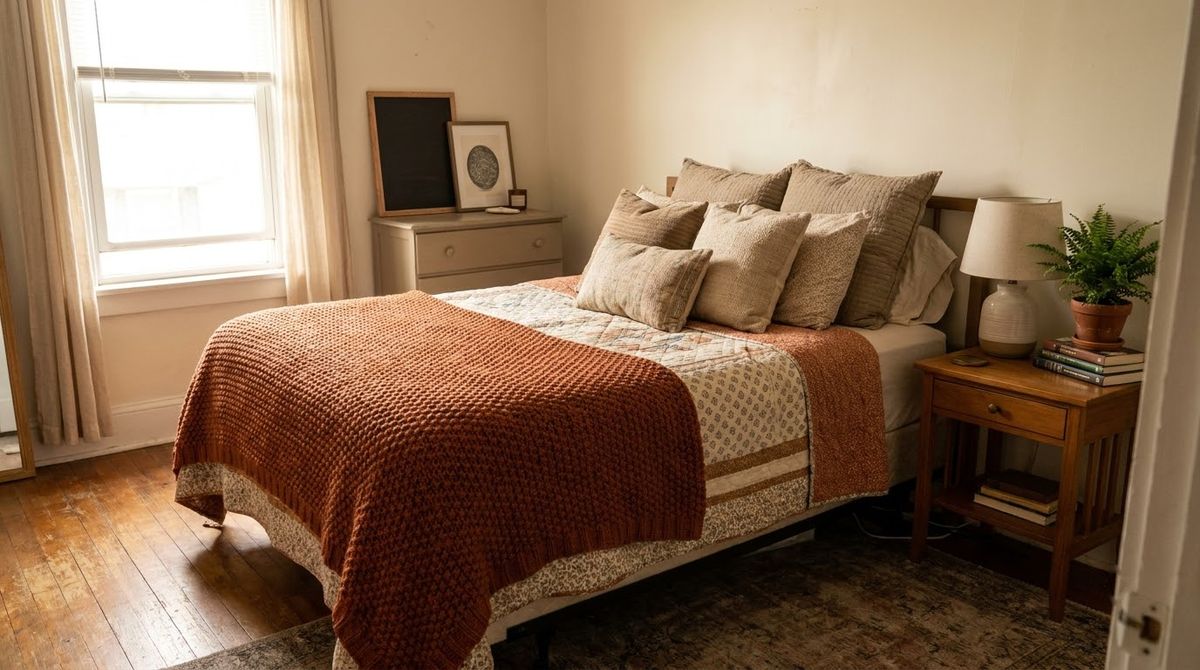
27. Flannel Duvet Cover
Swapping a cotton duvet cover for flannel adds weight and softness that you notice every night, not just in photos. Flannel is brushed, so it holds warmth better than percale. Look for cotton flannel in cream, oatmeal or a muted plaid. Prices vary widely by retailer and thread count, so compare Target, IKEA and Walmart. Wash once before use to loosen the fibers.
28. Second Throw Folded at the Foot
A folded throw at the foot of the bed adds layers and gives you something to pull up on cool nights. Fold it in thirds lengthwise, not in a messy heap. Walmart listed a Better Homes & Gardens plaid plush throw at $19.97. Choose a color from the pillow covers so the bed looks pulled together. Keep the fabric the same family as the duvet, such as wool with cotton.
29. Battery Lights Behind the Headboard
A string of battery fairy lights behind or above the headboard adds low, warm glow that overhead light cannot. Walmart listed a 2-pack of 10-ft battery mini lights at $7.99. Use a timer model so they switch off by themselves, and clip them to the wall with clear hooks rather than tape. Plug in a spare battery pack so you are never in the dark.
30. Bud Vase of Dried Stems on the Nightstand
One small vase with three or four dried stems gives the nightstand a fall touch without taking space from your phone and water. A bunch of dried bunny tails at $10.99 (Walmart) fills several vases. Keep the arrangement short enough that it does not tip when you reach for a lamp switch. Trim the stems with scissors to an even height before arranging.
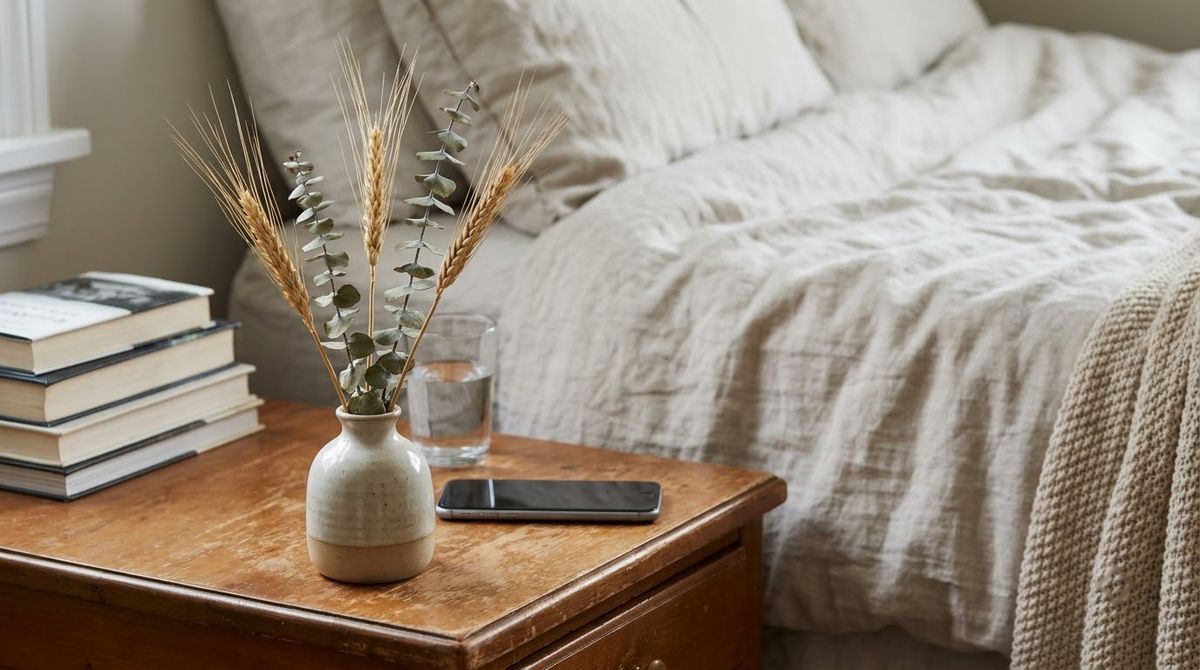
31. Plaid or Flannel Pillowcases
Plaid or flannel pillowcases change the bed’s look in one swap and fold flat for storage. Pick a muted plaid in rust, green or cream so it works with your existing duvet. A pair costs less than a throw and washes easily. If you share the bed, make sure both pillowcases are the same fabric so the bed looks matched.
32. Bench or Chair With a Folded Blanket
If there is a chair or bench in the bedroom, drape a chunky knit blanket over its arm or foot of the bed. It gives a soft focal point and a place for a robe. Target listed a Madison Park chenille chunky knit throw, 50 x 60 inches, at $67.46, while cheaper fleece throws start under $10 at Walmart.
33. Flameless Candle on the Dresser
A flameless LED candle on the dresser gives a warm glow with no risk if you fall asleep. Look for a model with a timer so it switches off after a few hours. Hobby Lobby listed a 5-candle set with a remote at $12. Place it on a small tray so it reads as intentional, and keep cords away from the bed.
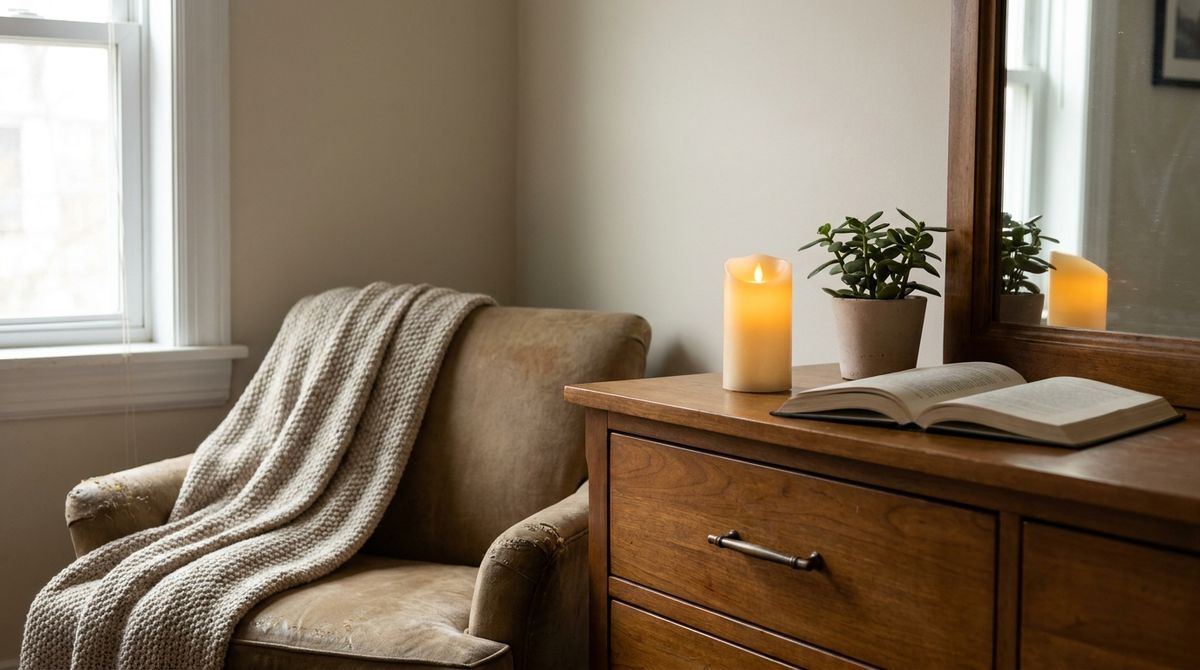
34. Heavier Curtains or Panels
If you own heavier curtains, hang them for fall in place of sheers. A thicker weave in oatmeal, rust or olive blocks drafts and makes the room feel enclosed. If you rent and cannot add rods, use tension rods. Choose panels that reach the floor, and measure the window before buying. Prices vary a lot, so compare before you buy.
Bathroom, Office and Hallway Ideas
Small rooms get one or two moves each. Keep things dry, short and easy to lift off when you need the surface.
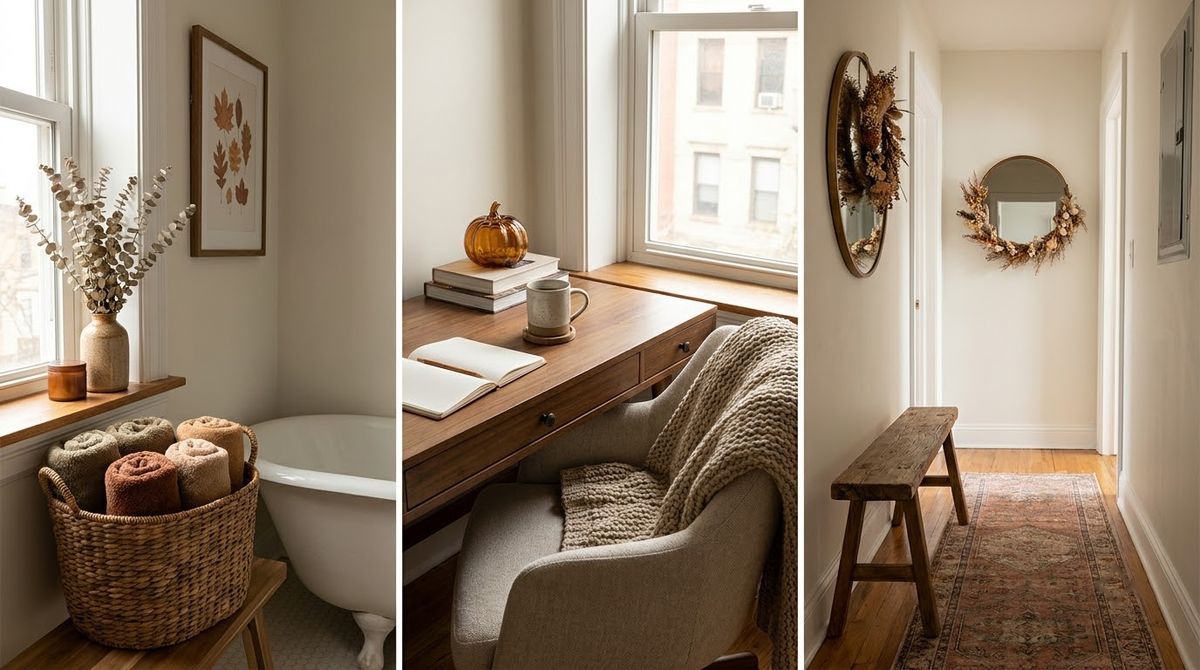
35. Rust or Cream Towel Swap
A set of rust or cream hand towels is the least expensive way to bring fall into a bathroom, and you use them every day. Fold one on the counter and hang one by the sink. Choose cotton, which dries well. Prices vary by retailer, so check Target, Walmart or IKEA. Wash separately at first so the color does not bleed onto white towels.
36. Tray With a Mini Pumpkin and Candle
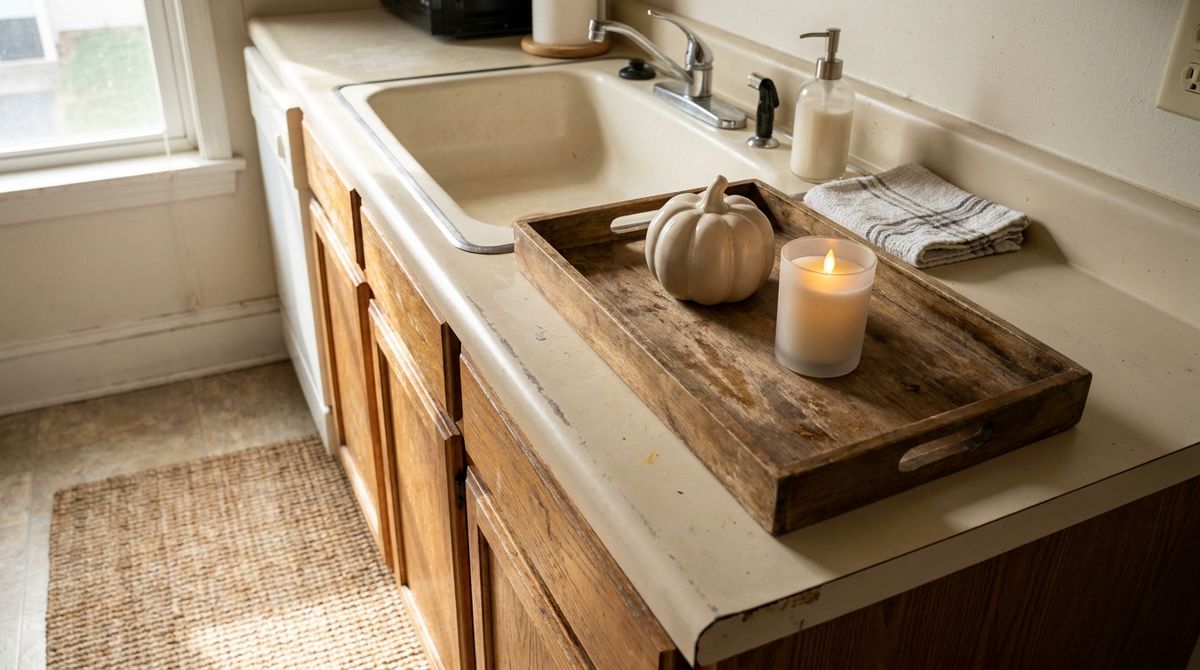
A small wooden tray on the counter corrals a mini ceramic pumpkin and a flameless candle so the sink area looks tidy. Target listed a Threshold wood serving tray, 20 x 13 inches, at $21.25 on clearance, and a smaller tray or cutting board works just as well. Wipe the tray dry so water rings do not mark the finish.
37. Desk Pumpkin and Mug Set
On a work desk, one small pumpkin and a mug of pencils is enough. It adds a seasonal note without blocking the keyboard. Walmart listed a single ceramic pumpkin at $6.94. Pick a color close to the desk lamp, so the setup looks like one scene, and keep the pumpkin to the side of your monitor. Rest the pumpkin on a coaster if it has a rough base.
38. Desk Lamp Warmth
Replace a cool-white bulb in the desk lamp with a warm-white one for evening work. Home Depot listed Bulbrite 4-packs of 2700K A19 bulbs at about $21. Check the lamp’s maximum wattage first and screw in a bulb of equal or lower wattage. Warm light also makes the whole corner look more like fall. Aim the lamp shade slightly down so light lands on the page, not your eyes.
39. Pinecone Bowl in the Hallway
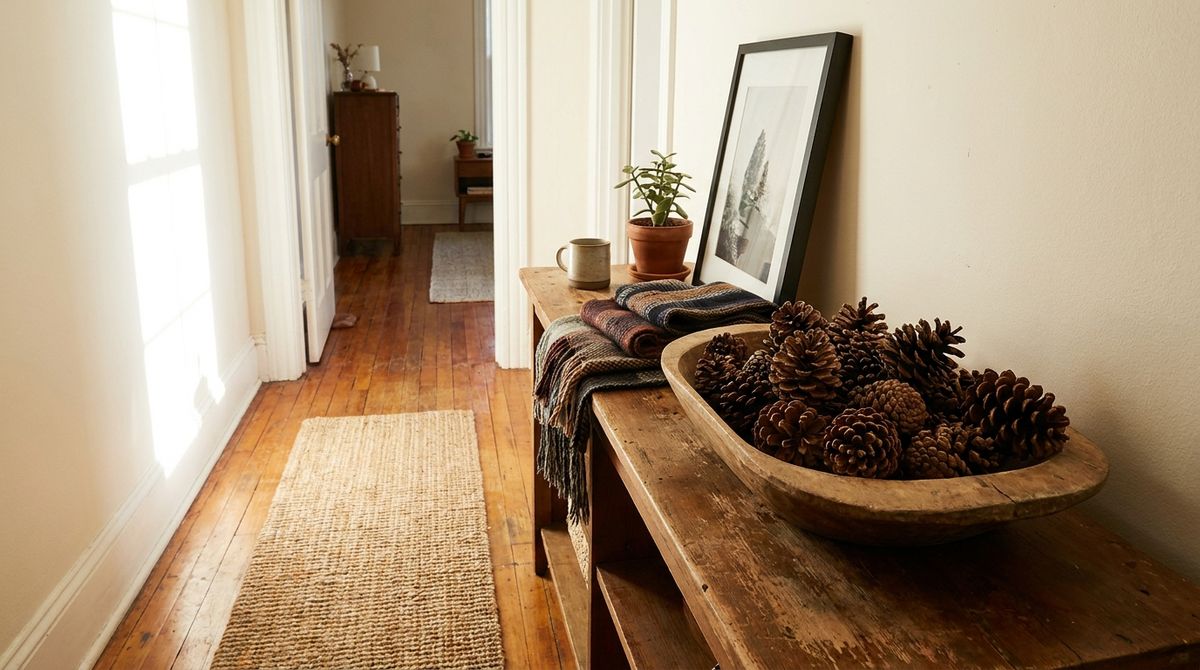
Fill a shallow wood bowl with pinecones and set it on a hallway shelf. It is free if you gather the cones on a walk, and it adds a woody, textured note that matches other fall pieces. Bake foraged cones on a baking sheet at a low oven setting for about 30 minutes to remove insects and sap, then cool them before use.
40. Wooden Hooks With a Wool Scarf
Hang a wool scarf or plaid shirt on a wall hook in the hallway as a display. It looks like a coat-rack vignette, adds color and costs $0 with items you already own. Use a single adhesive hook rated for the weight and rotate the scarf so one piece does not fade. Keep it away from heat vents. Use one hook per item so the hallway does not look piled up.
Forage, Make and Scent Ideas
The cheapest fall decor is outdoors or in the kitchen. These ideas cost $0 to a few dollars and can be put away in a minute.
41. Acorn and Pinecone Jar
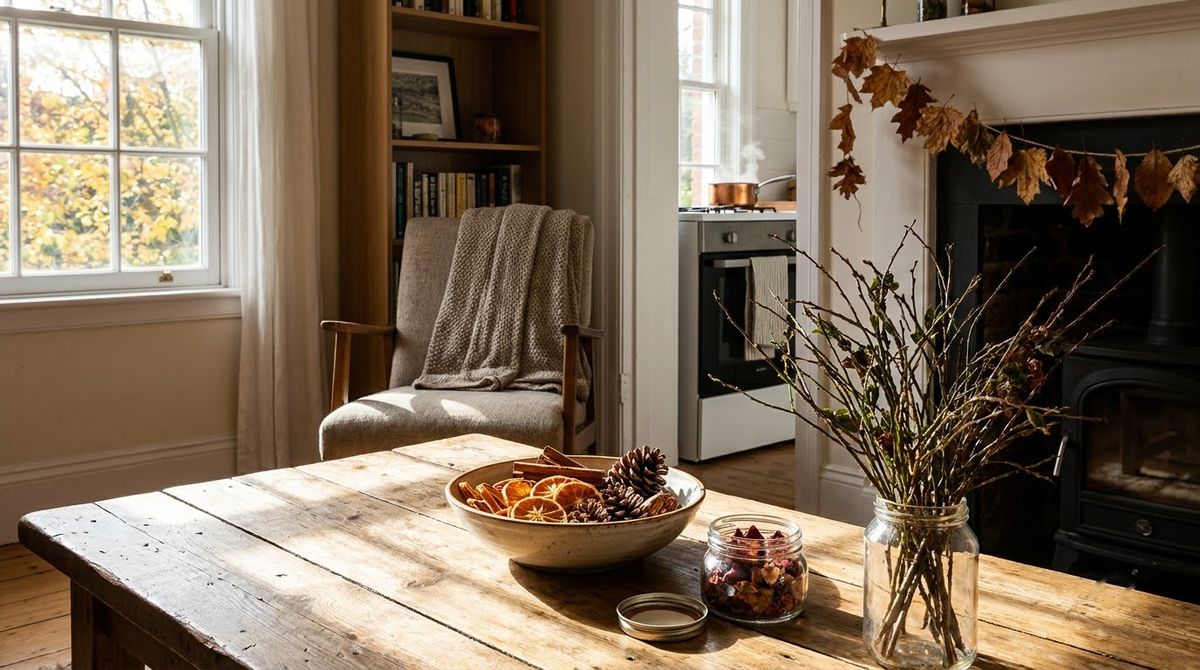
Fill a clear glass jar with acorns and small pinecones and set it on a table or windowsill. It costs $0 if you gather them, and it reads as a natural centerpiece. Remove the caps if they are loose, and bake the nuts briefly at a low heat to kill any insects before bringing them inside. Refresh the jar once a month to keep it looking tidy.
42. Dried Orange Slice Garland
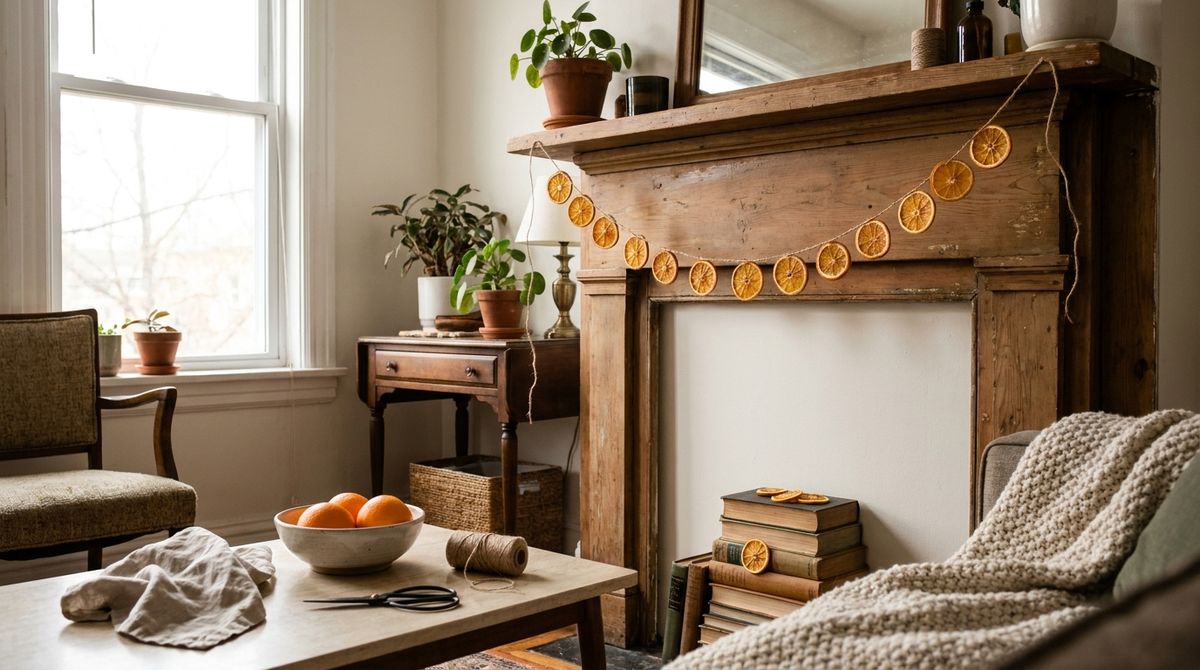
Slice oranges about a quarter inch thick, dry them in a low oven for two to three hours, and thread them onto twine. The slices turn amber and catch light. A small bag of oranges costs a few dollars. Hang the garland on a window or shelf with clear hooks, and keep it away from steam so it does not go soft.
43. Paper Leaf Garland
Cut leaf shapes from cardstock in rust, mustard and olive, then string them on twine. It costs a few dollars for paper and takes about 20 minutes. Vary the sizes from 2 to 5 inches so it looks natural. A garland like this is light enough for a tape or clear hook and stores flat in an envelope. Punch the holes with a hole punch so the twine slides through evenly.
44. Cinnamon Stick Bundles
Tie 5 or 6 cinnamon sticks with twine and tuck them into a bowl, onto a napkin or beside a candle. They add a quiet spice scent and a brown line that matches wood. A jar of sticks is a few dollars at a grocery store. Replace the bundles after a season, since the scent fades. Ask for whole sticks, not ground, which only works for baking.
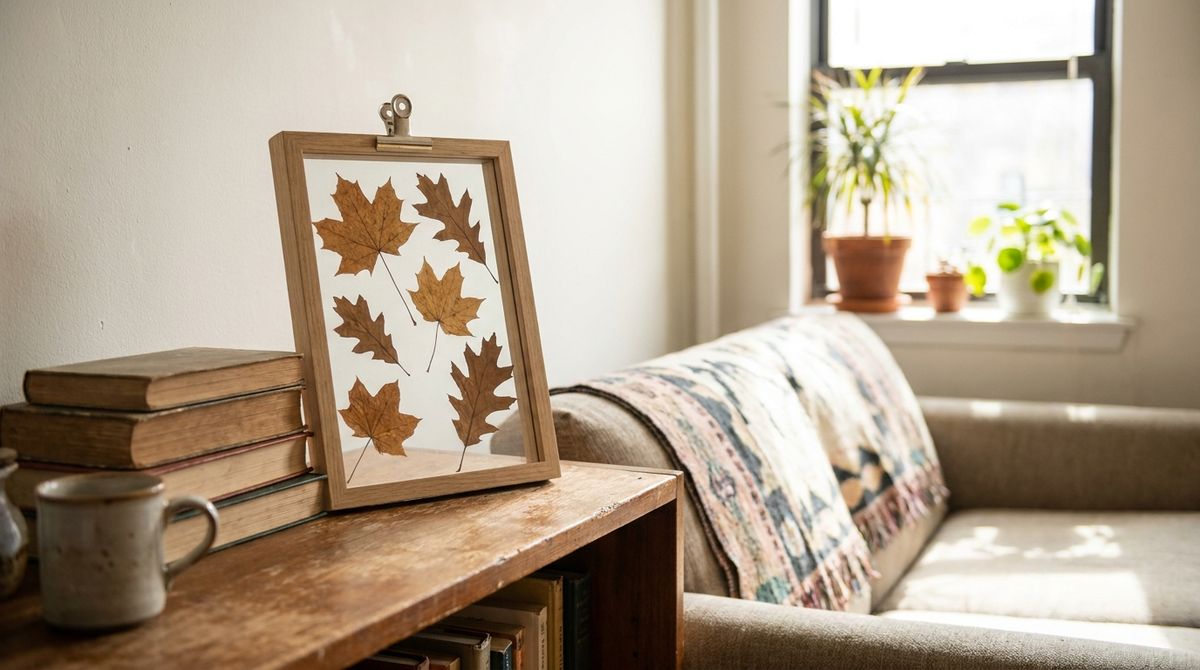
45. Pressed Leaves in a Clip Frame
Press a few maple or oak leaves between book pages for a week, then clip them between two panes of glass in a simple frame. It makes free wall art that matches the season. Use a frame you already own. Choose leaves that are still flexible and mostly dry, because wet ones can mold behind glass. Keep the frame away from damp walls and hot windows to avoid fading.
Fall Decor Cost Snapshot
Prices below are what we saw on retailer pages and search results this month. Most are search snippets, so confirm on the retailer’s site before buying.
| Idea | Typical cost | Retailer |
|---|---|---|
| 1-gal garden mum | about $27 | Home Depot |
| 1.5-gal tri-color mum | $19.99 | Tractor Supply |
| 18 x 30 coir doormat | $7.97 to $14.97 | Walmart |
| 18-inch faux fall wreath | $9.27 to $17.99 | Walmart |
| 12-pack taper candles | $7 | Target |
| 2-pack 6-ft maple garland | $14.99 | Walmart |
| 60-stem bunny tails | $10.99 | Walmart |
| Set of 3 ceramic pumpkins | $12.99 | Walmart |
| 5-pack flameless pillars | $18.88 | Walmart |
| 50 x 60 chenille throw | $67.46 | Target |
Frequently Asked Questions
How do you decorate for fall?
Use the fall formula: warm textiles, a few natural elements and amber light. Add one knit throw, set out three pumpkins or a dried-stem bundle, and swap cool bulbs for warm 2700K light. Many ideas here cost $0 to $20, and a whole-room refresh takes an afternoon.
How do you make a room feel cozy for fall?
Cozy comes from texture and warm light, not clutter. Layer a chunky knit throw and an extra pillow, switch to warm-white bulbs or flameless candles, and add one natural element such as dried stems. Heavier textiles and low, warm lighting do more than any single object.
How do you decorate for fall on a budget?
Reuse a neutral base and add only textiles plus a few naturals. Forage pinecones, acorns and branches for free, buy mini pumpkins at a grocery store, and keep purchases to items you can reuse each year. Our fall decor on a budget guide has the full cost plan.
Should I use real or faux pumpkins?
Use real pumpkins where you can see and replace them, like a porch or low table. Uncarved pumpkins last about 2 to 3 months in cool indoor storage, but carved ones last only 1 to 2 weeks on a chilly porch and a few days indoors, according to Home for the Harvest. Choose faux for mantels and anything near candles.
When should I start decorating for fall?
Late August through mid-September works for most households, because stores stock textiles and faux pumpkins early and prices are lower before the rush. Start with textiles and neutral naturals, then add real pumpkins and mums in late September so they stay fresh through October.
Start With One Room
Pick the room you see most, choose three ideas from its list and stop there. Add more only if the space still feels flat. For a lower-orange look, the neutral fall decor ideas palette swaps orange for cream and sage, and the cozy fall apartment guide keeps every idea no-nail. For safety with candles, the U.S. Consumer Product Safety Commission advises keeping candles on stable surfaces, in sight and away from decorations, curtains and furniture. Porch ideas continue in fall front porch ideas.
Prices checked October 2026.