
A cozy bedroom comes from three changes that can cost under $150: 2700K warm bulbs in two bedside lamps, 5 layers on the bed, and a rug where your feet land. Here are 30 renter-friendly ideas with real prices, grouped so you can start with the cheapest, highest-impact swaps first.
Key Takeaways
- Light first: swap cool bulbs for 2700K warm white and use two bedside sources instead of the ceiling fixture.
- Build the bed in layers: sheets, duvet, quilt, throw and 5 to 6 pillows.
- Size the rug for the bed: an 8×10 for a queen, placed under the lower two-thirds.
- Renters can use tension rods, plug-in sconces and peel-and-stick panels with no drilling.
- Sleep Foundation names about 65 degrees F as the temperature many experts consider ideal, so warm layers beat a warmer room.
Warm Light Ideas
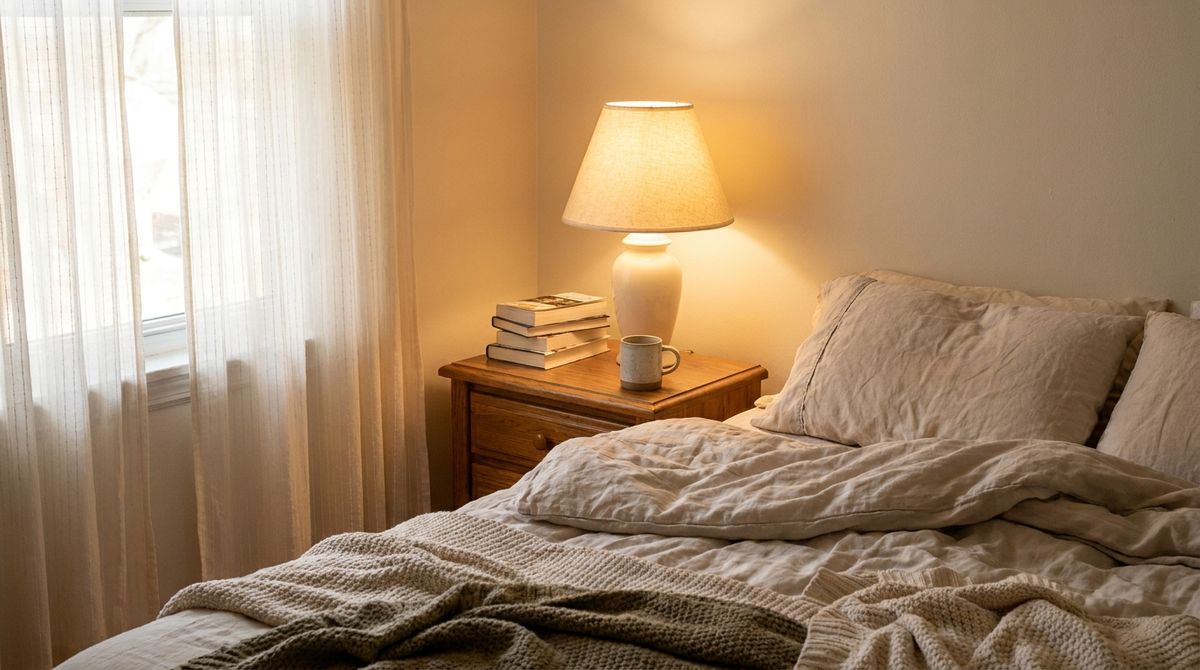
Light changes a bedroom’s mood faster than any purchase. The number on the box to look for is 2700K, which is the soft, warm white range, while 4000K and above reads cool and office-like.
1. Swap in 2700K Soft White Bulbs
Check the Kelvin number on the box and buy 2700K, often labeled soft white. It is the cheapest cozy change you can make. Target’s search page listed a GE 4-pack of 60W-equivalent soft white LEDs at $5.59, and Home Depot listed a 2700K 4-pack at $9.99. Replace every bulb you use at night, including the closet and hall. Mixing 2700K with 4000K bulbs makes the room look patchy.
2. Two Bedside Lamps Instead of the Ceiling Light
Turn the overhead fixture off and light the room from low sources on each side of the bed. A matched pair reads calm because it is symmetrical. IKEA’s HALGATT table lamp is 14 inches tall with a 9-inch shade, dimmable, and listed at $49.99, with bulbs sold separately. Thrift stores often have lamp bases for less, and a new shade makes them match.
3. Dimmable Bulbs for the Bedtime Wind-Down
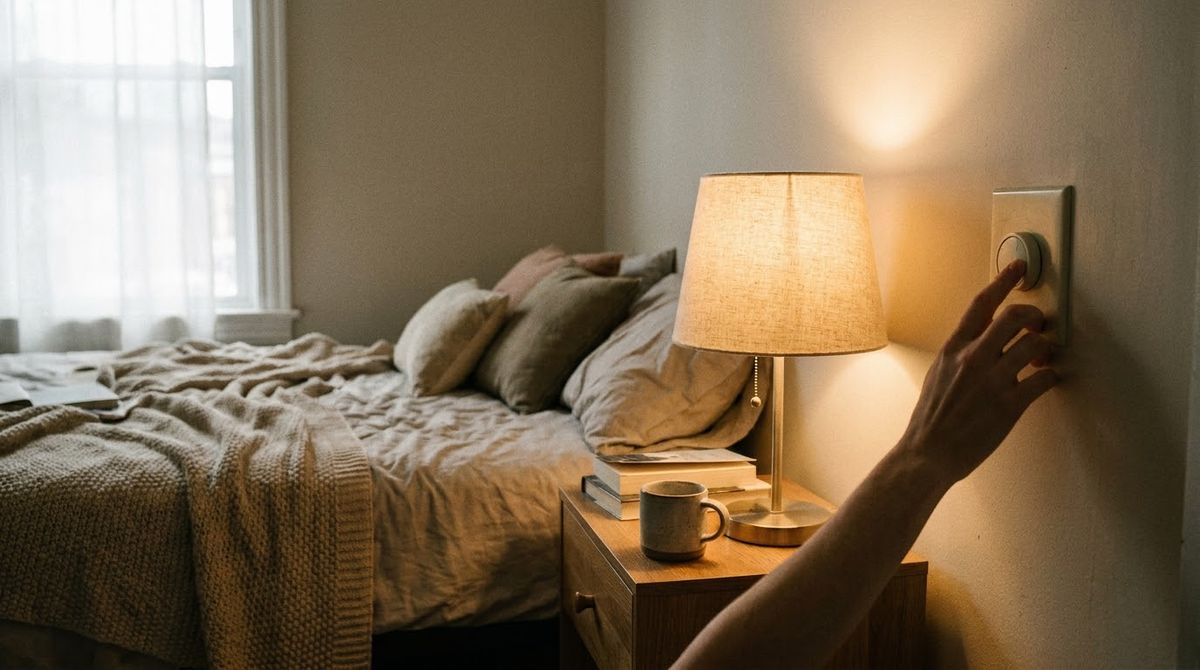
A dimmer lets you drop the light as bedtime nears. The HALGATT works only with dimmable bulbs, and IKEA sells a compatible SOLHETTA E12 LED bulb 2-pack at $7.99. Check that both the bulb and the lamp are marked dimmable, or the bulb will flicker. A smart bulb with an app schedule is another way to dim automatically, with prices varying by brand.
4. Plug-In Wall Sconces
Sconces free nightstand space and put light at reading height. Target listed a Globe Electric plug-in or hardwire sconce at $42.49 on sale, and Walmart listed a set of two plug-in wood sconces at $38.22. Look for a cord at least 5 feet long with an inline switch you can reach from bed. Hide the cord with a clear cord cover, or run it along the wall trim.
5. Clip-On Reading Lamps
A clip lamp on the headboard or shelf gives focused light so one person can read while the other sleeps. Walmart listed headboard clip lamps from $4.89 to about $16, with a dimmable Lepro clamp lamp near $19. Choose a warm 2700K to 3000K setting, since many cheap lamps default to cool white. A rechargeable model avoids a cord across the bed.
6. Warm Fairy Lights Behind the Headboard
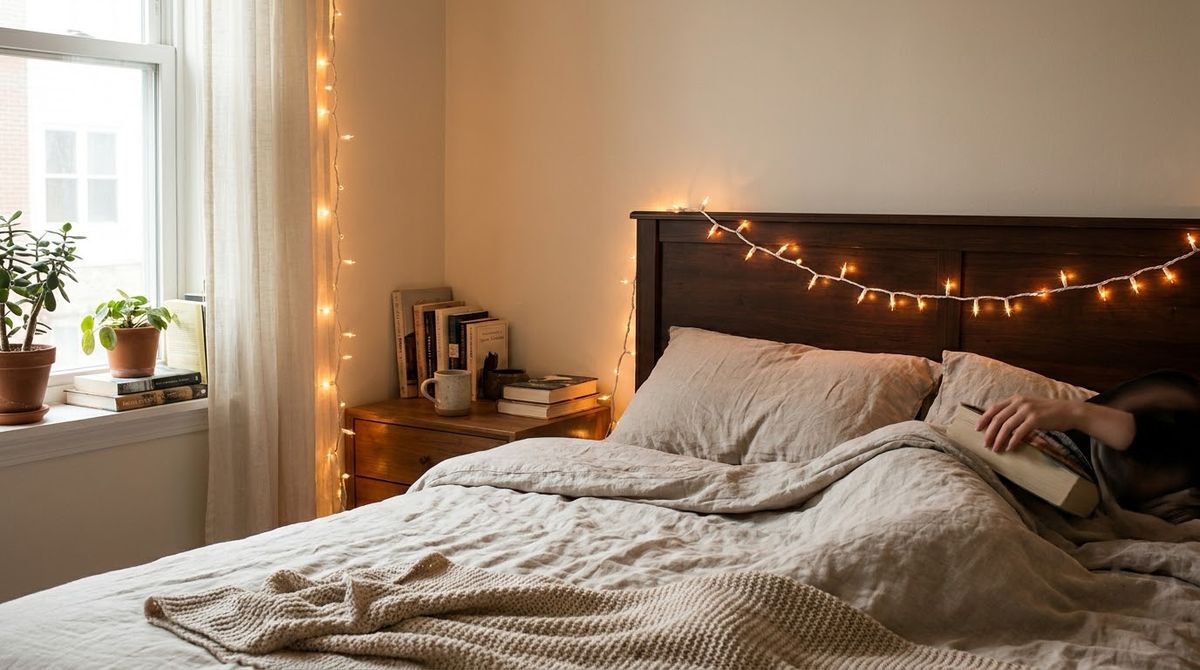
A string of warm-white lights along the headboard or window adds a soft second glow. Walmart listed a 2-pack of 33-foot, 100-LED battery fairy lights from about $15, with a remote and several modes. Hide the battery pack behind the nightstand and choose a timer so it turns off. Keep lights off bedding and curtains, and use only sets that are in good shape.
Bedding Ideas
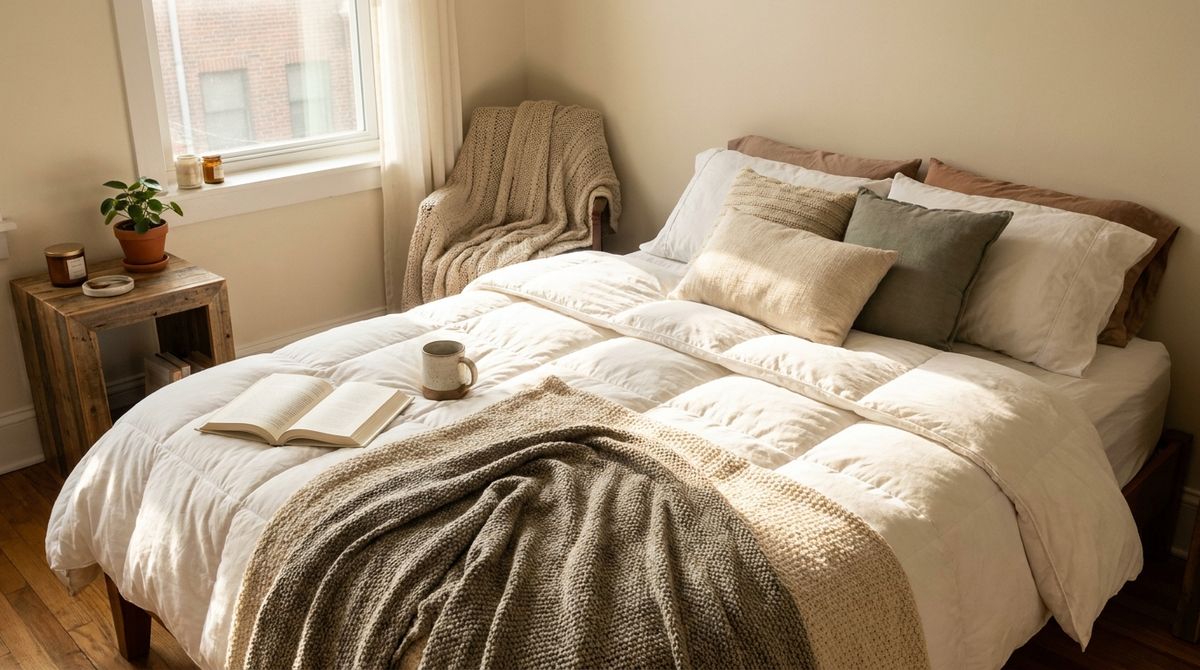
Hotel beds look full because they use stacked layers, not one thick comforter. Build from the base up, and keep the palette to one or two warm tones.
| Layer | What it does | Example price |
|---|---|---|
| Duvet cover (IKEA BERGPALM, full/queen) | Base volume and color | $29.99 |
| Euro shams, 26 x 26 inches | Fullness behind the pillows | about $10-$16 a pair (Walmart) |
| Textured pillow covers, 18 x 18 | Second texture | about $7.88 each (Walmart) |
| Throw blanket | Casual, grab-me layer | about $10-$20 (Walmart) |
| Weighted blanket, 15 lb queen | Optional comfort layer | about $55-$75 (Walmart) |
7. A Duvet and Cover for Plush Volume
A duvet gives the bed its soft, full shape, and a washable cover keeps color and cleaning easy. IKEA listed a 100% cotton BERGPALM striped duvet set (full/queen) at $29.99, and a Puderviva linen-look queen set at $89.99. A queen cover on a queen insert can look flat, so many reviewers suggest sizing the insert up one size for a fuller look. White or oatmeal hides less but looks fresh.
8. A Quilt Folded Across the Foot
Fold a quilt or coverlet into thirds across the bottom third of the bed. It adds a second texture and keeps weight at the feet, and you can pull it up when the night turns cold. Pick a matte cotton or linen texture that contrasts with a smooth duvet. Prices vary a lot by brand and material, so compare cotton quilts across Target, IKEA and Walmart. A neutral or tonal quilt works with every season.
9. A Chunky Throw at the Corner
A throw adds a casual layer you can grab without remaking the bed. Walmart listed 50 x 60-inch chenille throws from about $6 for machine-made styles to $55 to $70 for hand-knit, and a 50 x 72-inch faux fur throw at $9.97. Drape it diagonally across a corner, not folded flat, so the texture shows. Machine-wash cold on gentle and air-dry to keep chunky yarn from stretching.
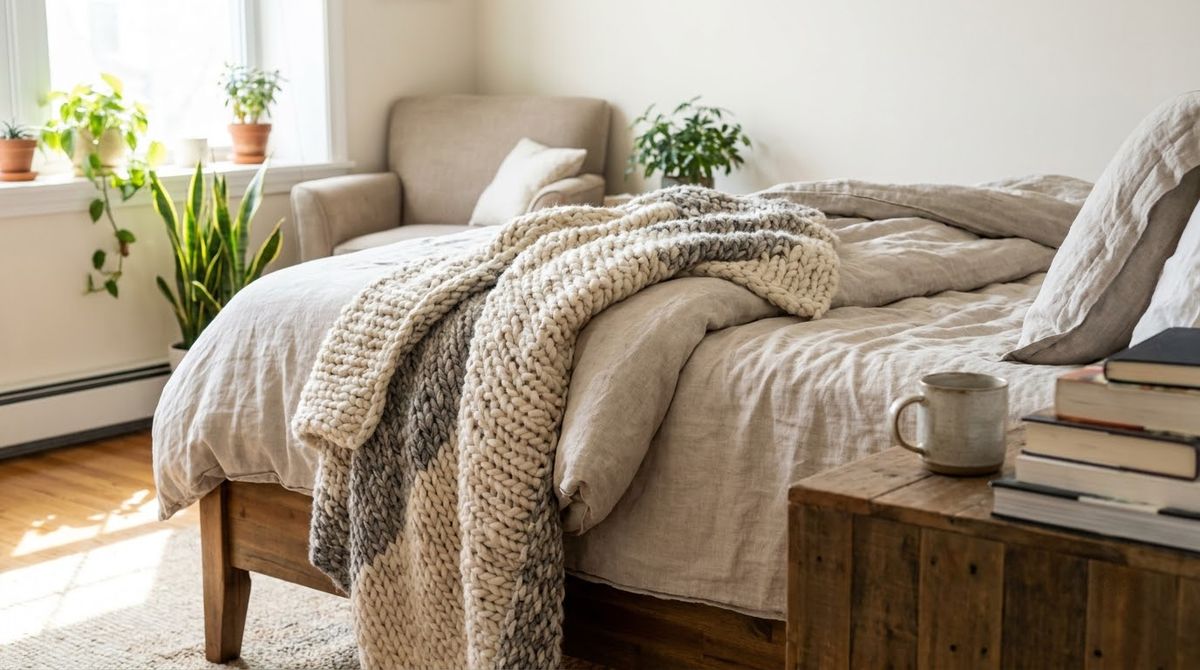
10. Five to Six Pillows in a Graduated Stack
For a queen, use 2 sleeping pillows against the headboard, 2 euro shams in front, and 1 lumbar or small square on top. Odd totals and graduated sizes look composed. Walmart listed 26 x 26-inch euro shams at roughly $9 to $16, but 26-inch down inserts ran about $64 to $66 for a pair, so use a polyester insert to save money. More than six pillows starts to look staged.
11. Euro Shams for Instant Hotel Height
Euro shams stand upright behind the sleeping pillows and fill the space below the headboard. Target’s euro shams fit a 26 x 26-inch pillow, and its brand note says a 28 x 28 insert gives a fuller, snugger look. Walmart listed basic microfiber shams around $10.99 and chenille at $11.44. Choose a solid or subtle texture so they read as a backdrop.
12. A Weighted Blanket as the Bottom Layer
A weighted blanket adds snug pressure and keeps the quilt on top from sliding. Walmart listed 15-pound queen blankets from about $55.99 to $73.96. Choose a weight appropriate for your body and check the maker’s guidance. Use a duvet cover on it so it can be washed. Because the blanket is heavy, a washable cover is the practical way to keep it clean between launderings.
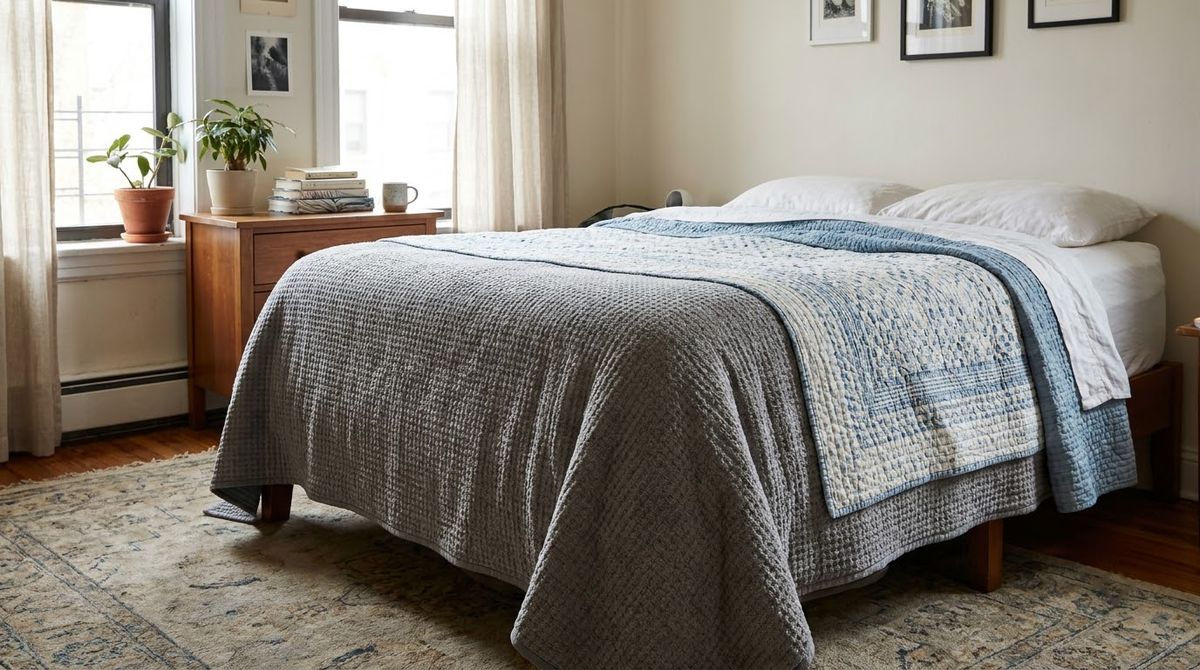
13. Textured Pillow Covers You Can Swap
Linen-look or bouclé covers add a second texture and change with the season. Walmart listed 18 x 18-inch linen-look covers at about $7.88 each in a 2-pack. Zip covers are easier to wash than sewn-in pillows, and you can store spare covers flat in a drawer. Choose two colors that appear elsewhere in the room so the swap looks planned.
Underfoot Ideas
A rug is the first thing your feet touch in the morning, and it earns its cost.
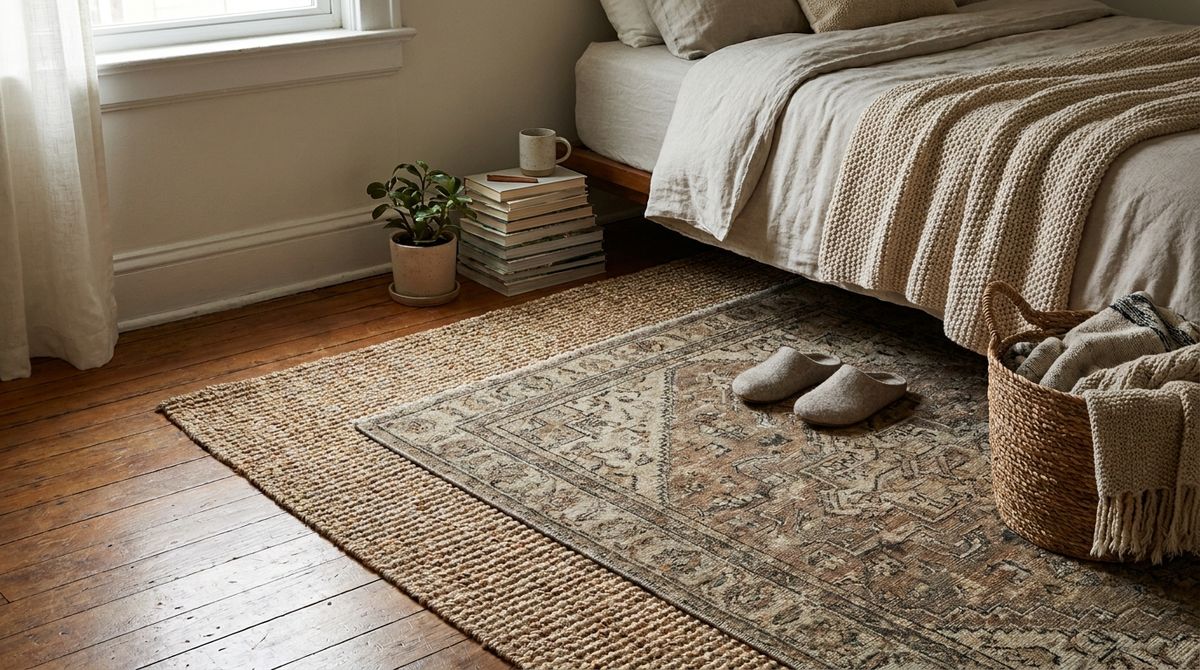
14. An 8×10 Rug Under a Queen Bed
Place an 8×10 rug under the bottom two-thirds of the bed so it extends about 18 to 24 inches past each side and the foot. A king bed wants a 9×12. Walmart listed 8×10 shag rugs from $14.99 for a checkered one to $54.79 on sale, with solid shags at $212 or more, so check reviews on cheaper pile. The same overhang logic is covered in what size rug for a living room.
15. Two Runners Instead of One Big Rug
In a small room, a 2×6 runner on each side of the bed gives soft footing for less. Walmart listed washable 2×6 runners from $21.99 (Findosom, was $35.99) to $27.35 and $48.99, so two cost about $44 to $55. Choose a non-slip backing, and set the runners parallel to the bed so they extend a little past the foot. Measure the gap between the bed and the wall first, since a runner that is too wide will creep under the frame and curl at the edges.
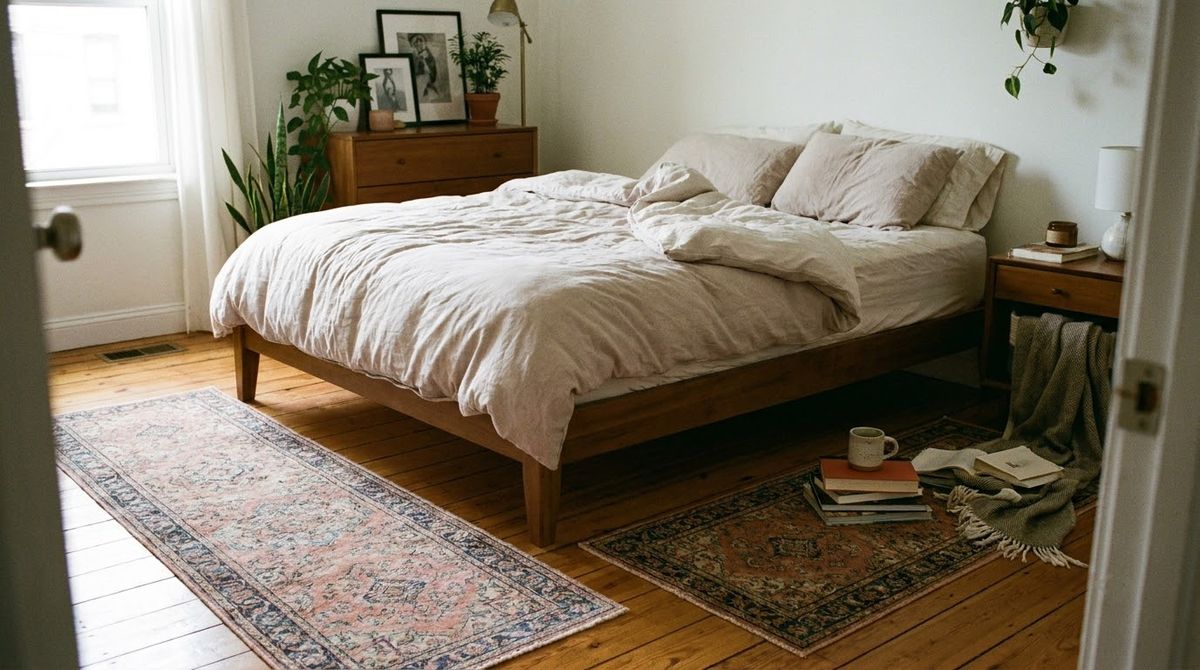
16. A Sheepskin or Faux Shag at the Bedside
A small sheepskin or faux shag beside the bed adds a second texture on top of a flat rug. A faux fur throw is the budget route: Walmart listed a 50 x 72-inch one at $9.97. Fold it in half beside the bed or lay a real sheepskin from IKEA’s range if you want wool. Place it where your feet land, not under furniture legs. A rug grip under it stops it sliding on hard floors, and a quick shake outdoors keeps the pile fluffy.
Wall and Window Ideas
Textiles behind the bed and at the window add the vertical softness that bare walls lack.
17. Peel-and-Stick Upholstered Panels
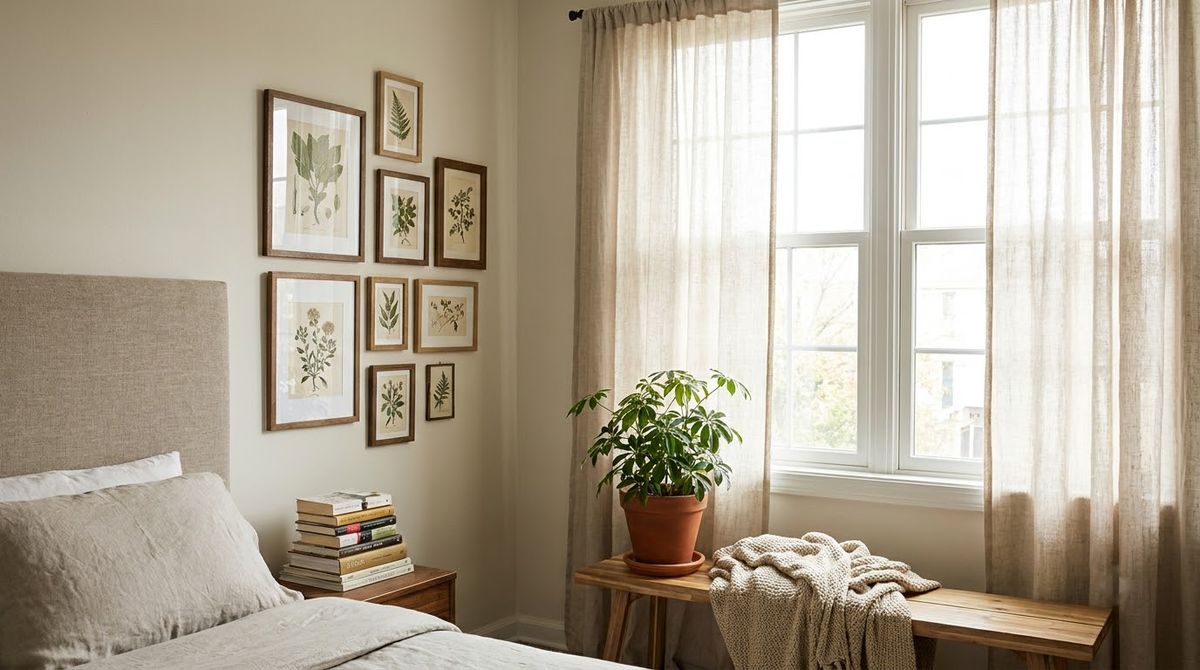
Padded wall panels fake a headboard without furniture. Walmart listed a 27.6 x 13.8-inch panel at $4.79, a 2-pack at $18.31, and a Johnear twin-size set at $20.99. A queen headboard takes several panels, so total cost can reach $50 to $100. Test one panel on a hidden spot first, since adhesive can pull paint on removal. Mount them from the center outward so any gap lands at the edges, where a pillow or nightstand hides it.
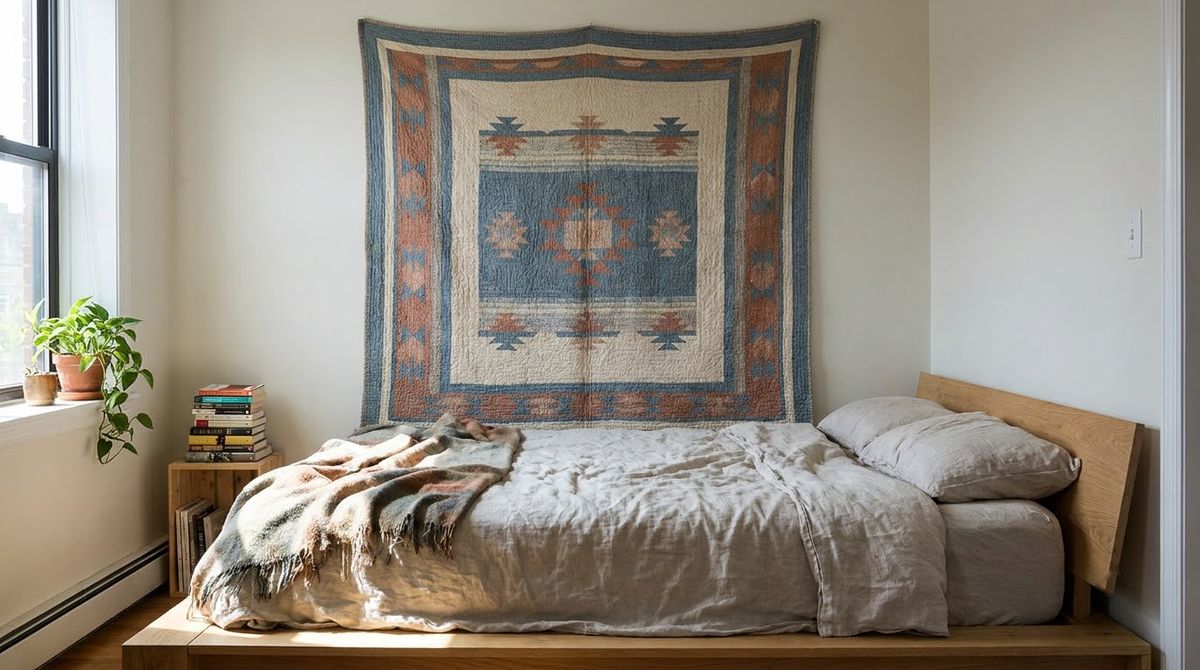
18. A Hung Wall Hanging or Quilt Behind the Bed
A textile on the wall adds color and softness with no build. Walmart listed a 51 x 59-inch wall hanging at $18.99 and similar ones at $16.99. Hang it with a tension rod or from a curtain rod with clips, which avoids nails. Center it above the bed and keep its lower edge a few inches above the headboard. More ideas are in what to put above a bed.
19. Blackout Curtains
Blackout lining blocks light for deeper rest and softens the walls. Walmart listed a 52 x 84-inch blackout pair from $22.99 to $26.99, with a Burke 100% blackout grommet pair at $23.63, and Wayfair listed one at $30.99. Measure your window and choose a width of at least double the window so the panels fall in folds. Look for a lining labeled 100% blackout, since lighter linings still let a glow through at the edges. Hanging panels wider than the window also blocks the light that leaks around the frame.
20. Curtains Hung High and Wide
Hang the rod 4 to 6 inches above the window frame and extend it 4 to 8 inches past each side. That makes the window look larger and the ceiling taller. Panels should just touch the floor, so measure from the rod to the floor before you buy, and choose 84 or 96 inches. Use rod rings or clips so they glide easily. Order panels wide enough that each one is about 1.5 to 2 times the width of its half of the window, so the fabric falls in soft folds.
21. A Tension Rod Inside the Window Frame
Renters can hang curtains inside the window frame with a tension rod, needing no screws and leaving no holes. Measure the width of the opening and pick a rod rated for its span and curtain weight. Blackout panels are heavy, so choose a sturdier rod. This works best for sill-length curtains, and it is easy to remove when you move.
22. Linen-Look Panels for Soft Morning Light
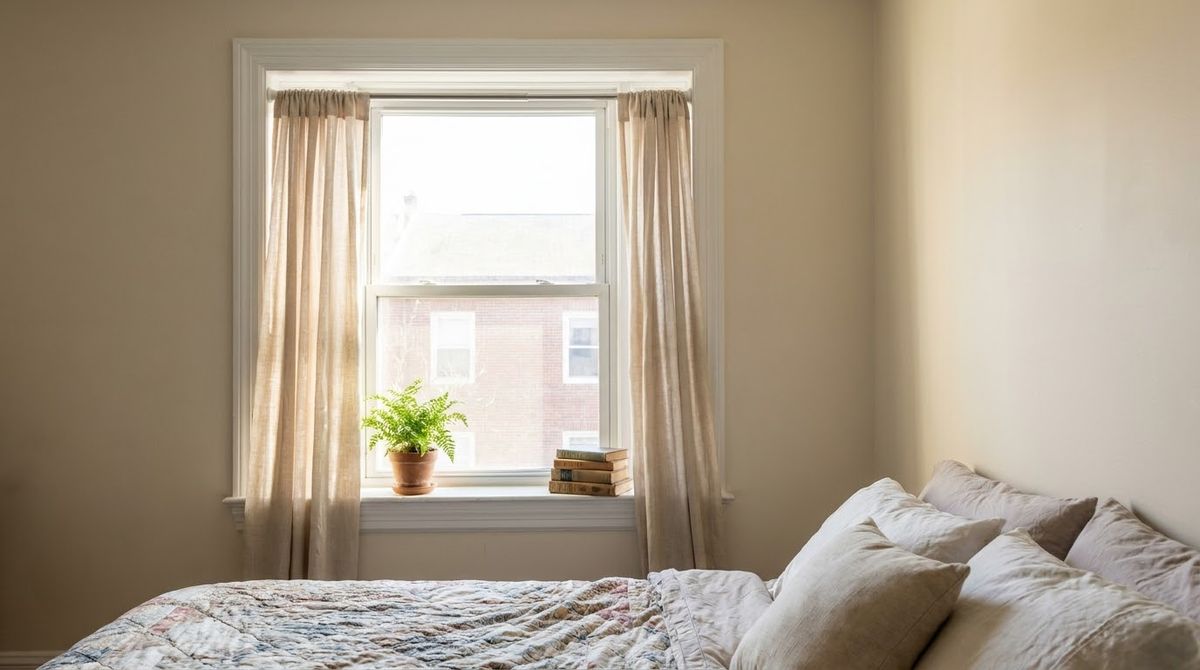
If you like waking with daylight, use linen-look panels in oatmeal or greige instead of full blackout. They filter the light and soften the glare. Layer them over a roller blind if you want both options. Prices vary with fabric and size, so compare lined and unlined versions. Keep the color close to your wall for a calm, tonal look.
Comfort Details
Small sensory details finish the room: temperature, scent, greenery and a place to sit.
23. Aim for a Cooler Room and Warm Layers
Cozy is about warm bedding, not a warm room. The Sleep Foundation says many experts agree about 65 degrees Fahrenheit is the ideal bedroom temperature, and if that feels cold you can add a bedding layer. That makes a quilt and throw the cheapest comfort upgrade you can make, with no extra heating cost. If you run cold, pull the quilt from the foot of the bed up over your legs, or add the weighted blanket, before you reach for the thermostat.
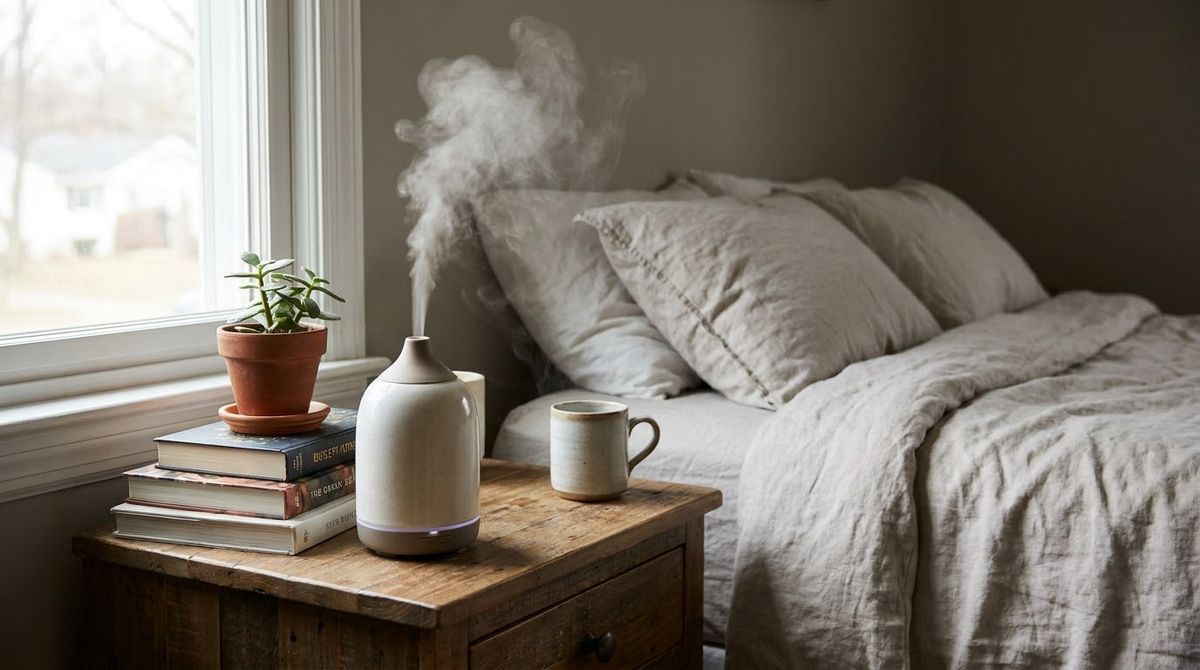
24. A Diffuser for a Soft Scent
An ultrasonic diffuser adds scent without a flame. Walmart listed diffusers from $7.99 for a 50 ml clearance model to $16.87 for a Mainstays 150 mL and $28.96 for a Better Homes & Gardens 150 ml. Use a few drops of oil, run it on a timer, and keep it away from pets that react to scents. Clean it weekly. Place it on a hard, water-safe surface across the room, not on the nightstand, so mist does not settle on books or electronics.
25. A Candle on a Safe Tray
Real candles add warmth, but the CPSC advises keeping them away from decorations and curtains, blowing them out before bed, and setting them on stable, heat-resistant surfaces. See the CPSC holiday safety tips. A flameless LED pillar set is the safest bedside choice. A flameless LED pillar set is the safest bedside choice, and a timer switches it off after you fall asleep. Walmart listed a 3-pack with remote and timer at $10.90.
26. One Statement Plant
One large plant does more than three small ones. A pothos or snake plant tolerates the lower light of most bedrooms. Home Depot listed Costa Farms pothos in 6-inch pots at about $30 to $40, with the plant shipping about 1 to 2 feet tall. Set it in a woven basket in a corner. See bedroom plants for low-maintenance picks.
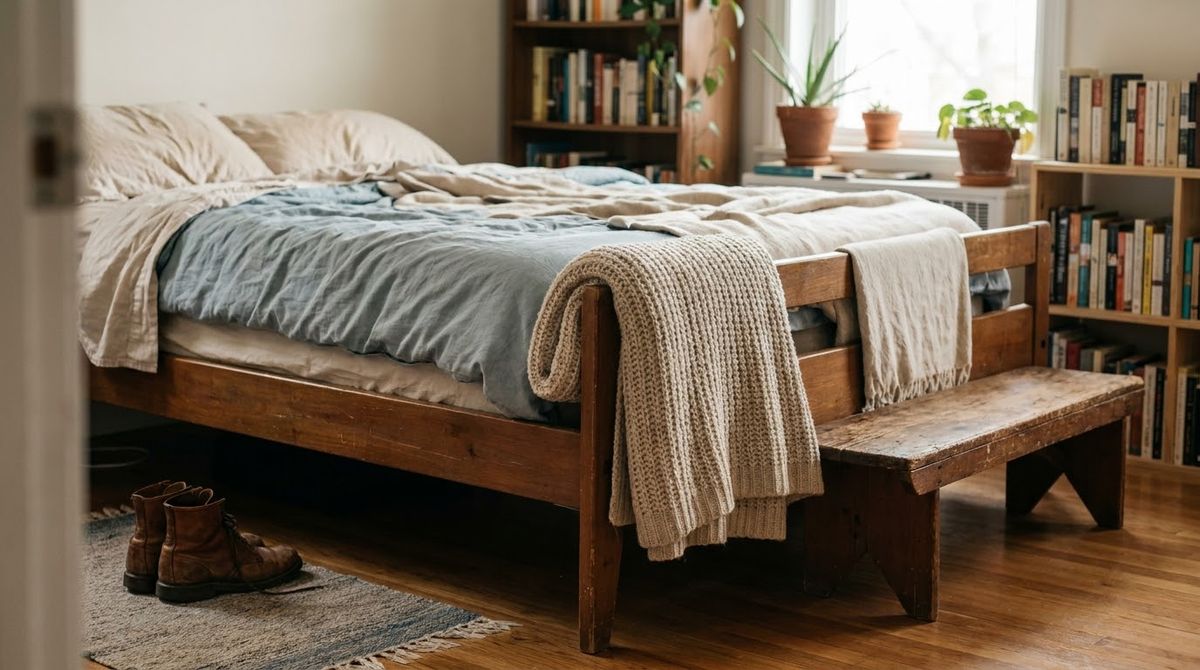
27. A Bench or Chair With a Folded Throw
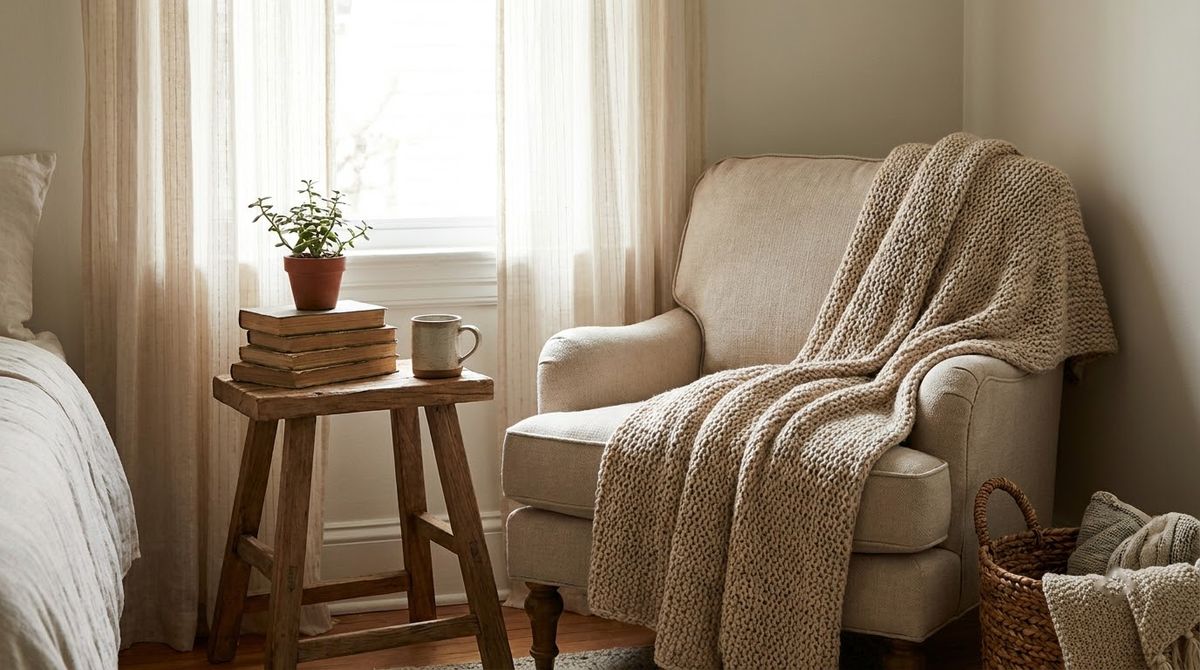
A bench at the foot of the bed gives you a place to sit to put on shoes and adds a layer of texture. Drape a folded throw over it and place a basket underneath for extra pillows. Size the bench about two-thirds the width of the bed so it feels in proportion. Prices vary a lot by material, so compare.
Small Bedroom Ideas
Small rooms become cozy faster, because tight and warm feels intimate. Keep one palette and clear the floor.
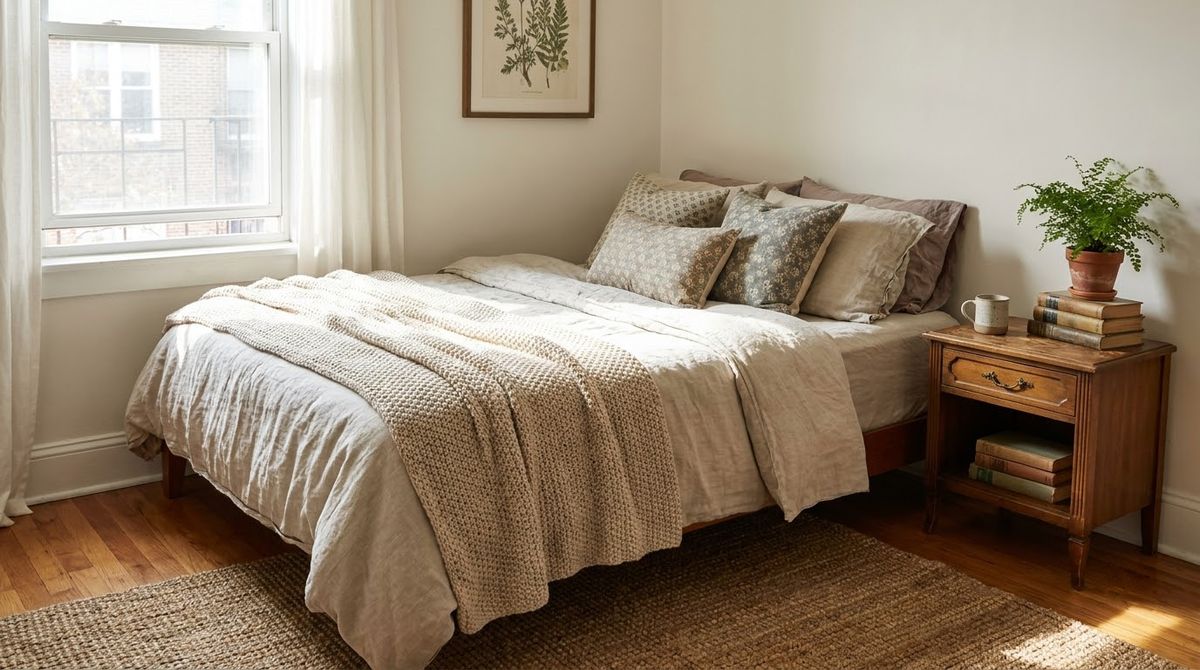
28. One Warm Palette Across Walls and Bedding
Pick two or three warm tones, such as oatmeal, terracotta and soft brown, and repeat them on bedding, curtains and walls. A tonal room looks bigger and calmer. For warm neutral pairings, see colors that go with beige. Add one darker accent, like a rust throw, so the palette has depth without clutter. Paint is optional: textiles alone can carry the palette if the walls are already a pale warm tone.
29. Under-Bed Storage to Clear the Floor
Clear floor space makes a small room feel larger. IKEA’s SKUBB is a zippered fabric case measuring 90 x 53 x 19 cm in the larger size, low enough for most bed frames; check IKEA’s US page for the current price. Under-bed storage holds off-season bedding, and labeled cases make it easy to find. Measure the gap beneath your frame first.
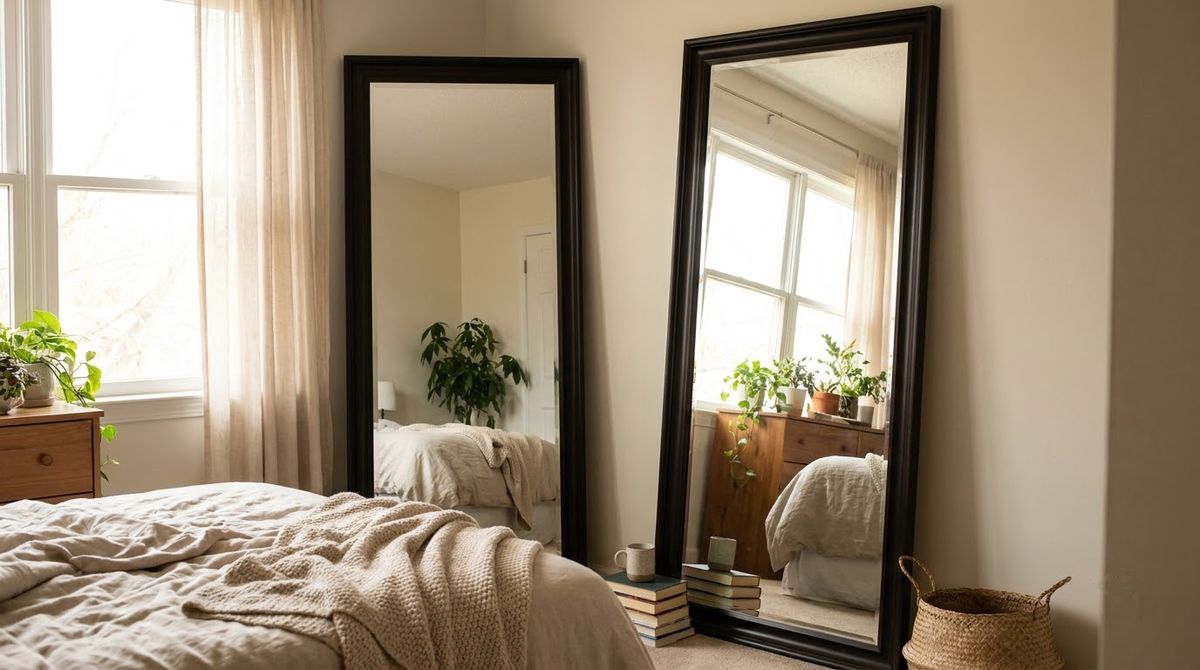
30. A Leaning Mirror Across From the Window
A mirror placed to catch daylight bounces it around the room and makes it look bigger. Walmart listed 65 x 22-inch leaning mirrors from about $101.99 to $135.99, with Home Depot at $91.04 for a black one. Lean it on a wall opposite the window, with a rubber pad under the base and a wall anchor if the mirror is heavy.
Frequently Asked Questions
How do you make a bedroom cozy?
Start with three layers: swap the ceiling light for two bedside lamps with 2700K warm bulbs, build the bed with sheets, duvet, quilt, throw and 5 to 6 pillows, and add a rug underfoot. Those three changes can cost under $150 before furniture.
How do you make a cozy bedroom on a budget?
Begin with the cheapest high-impact changes: 2700K bulbs at about $5 to $10 for a pack, a $20 to $25 throw, two runners at $22 to $28 each and a $29.99 duvet set. These layer together without new furniture.
What size rug goes under a queen bed?
An 8×10 rug works best for a queen. Place it under the bottom two-thirds of the bed so it extends about 18 to 24 inches past each side and the foot. On a tight budget, two 2×6 runners beside the bed give softness underfoot.
What is the best light color for a cozy bedroom?
Choose 2700K soft white bulbs. They give a warm glow, while 4000K and higher reads cool and office-like. Use two bedside lamps instead of the overhead fixture, and add dimmable bulbs to lower the light at night.
How many pillows make a bed look cozy?
Five to six for a queen: two sleeping pillows, two euro shams standing behind them and one lumbar or small square in front. Keep them in one warm palette so the stack reads full and calm rather than cluttered.
Start With the Bulbs
Change the bulbs and lamps first, add a quilt and throw next, and then choose a rug. Those steps cost the least and change the room the most. For more bedroom ideas, see bedroom wall decor ideas, bedroom accent wall ideas, nightstand styling, and cozy Christmas decor ideas when the holidays come around.
Prices checked October 2026.