
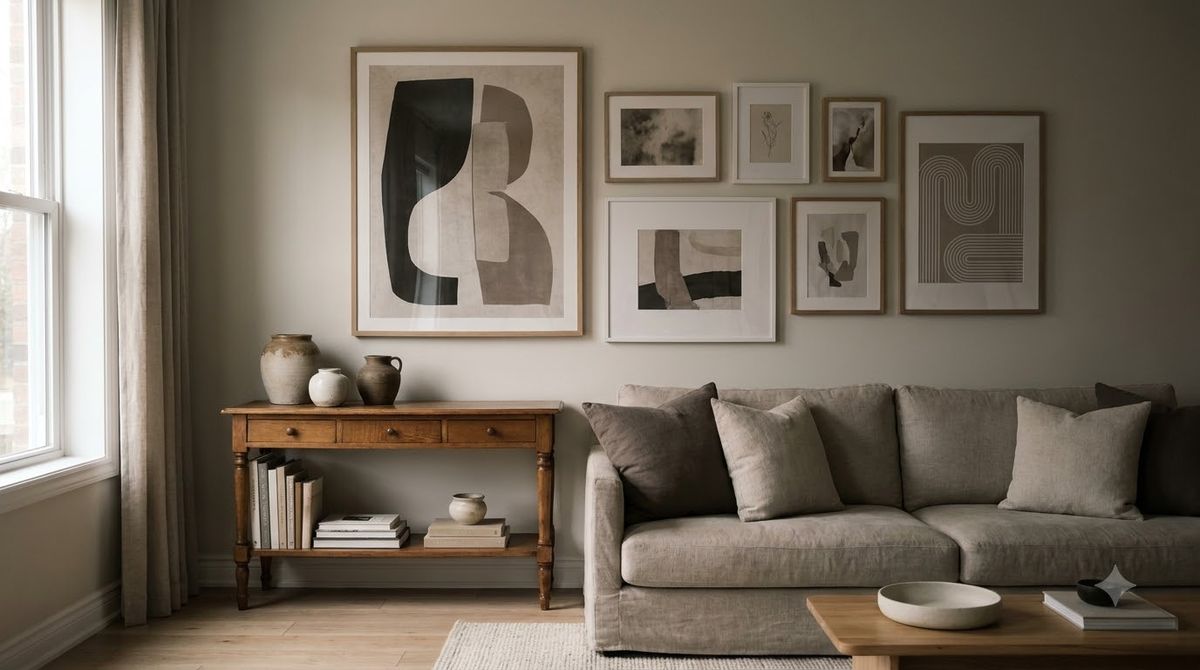
Hang wall art so its center sits 57 to 60 inches from the floor. That single number, the museum and gallery standard, fixes the most common mistake we see in real rooms: art hung too high. When art hangs over furniture, the rule changes slightly. Leave 6 to 10 inches between the bottom of the frame and the sofa back, or 6 to 8 inches above a headboard. Below is every scenario with the exact measurement, plus a full reference table you can hang by.
Key Takeaways
- Single piece, no furniture: center at 57-60 inches from the floor (gallery standard)
- Above a sofa: bottom of frame 6-10 inches above the sofa back
- Above a bed: bottom of frame 6-8 inches above the headboard
- Above a console or dresser: bottom of frame 5-9 inches above the surface
- Gallery wall frames: keep 2-3 inches between every frame, consistent
- Stairwell art: center each piece 57-60 inches above the tread it hangs over, stepping up with the stairs
What Is the Standard Height to Hang Wall Art?
The standard is 57 to 60 inches from the floor to the center of the artwork, the same height museums and galleries use so pieces meet the average adult eye line (The Spruce, 2025). Most people default to 60 inches; we pull it down to 57-58 inches in rooms with lower ceilings or shorter furniture. The center of the piece, not the top or the hook, is what you measure to.
Here’s the math that trips people up. The hook doesn’t go at 57 inches. The center goes at 57 inches. To find the hook, measure from the top of the frame to the taut hanging wire, then subtract that from the height of your art’s center point.
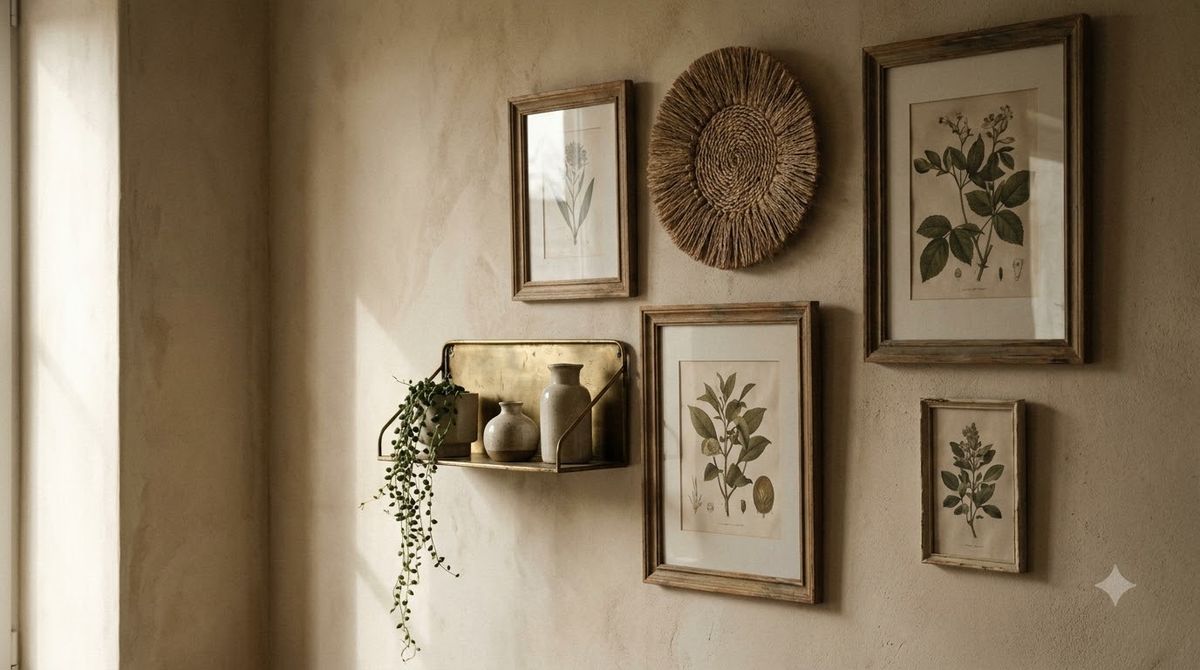
Quick hook formula:
-
Center height you want: 58 inches (a safe middle)
-
Add half the frame’s height: 58 + (frame height ÷ 2) = top of frame
-
Subtract the wire drop (how far the wire pulls down when taut)
-
That final number is where the hook goes
Citation capsule: Interior designers and museums hang art with its center 57-60 inches from the floor, aligning the midpoint of each piece with average adult eye level. The center of the artwork, not the top edge or the hook, is the reference point for this standard.
How High to Hang Art Above a Sofa?
Above a sofa, hang art so the bottom of the frame sits 6 to 10 inches above the top of the sofa back. This keeps the piece visually connected to the furniture instead of floating alone near the ceiling. For a standard 30-to-34-inch-tall sofa, that usually lands the center right in the 57-60 inch zone anyway, so both rules agree.
After hanging art in dozens of rentals, the error we correct most is art floating 15-plus inches above the couch. Drop it. Eight inches above the back reads intentional every time.
The art should also span two-thirds to three-quarters of the sofa’s width. A 72-inch sofa wants a piece or grouping about 48-54 inches wide. For the full breakdown of layouts here, see our guide to above the couch wall decor and broader living room wall decor ideas.
What most guides miss: the two-thirds width rule is a floor, not a target. A single 24-inch print over a 72-inch sofa looks stranded because it clears only one-third of the width. When one piece can’t reach two-thirds, hang a pair or a trio and count the whole group, spacing included, as the width you measure.
Citation capsule: When hanging art above a sofa, leave 6 to 10 inches between the top of the sofa back and the bottom of the frame, and size the art at two-thirds to three-quarters of the sofa’s width for balanced proportion.
How High to Hang Art Above a Bed?
Above a bed, hang art so the bottom of the frame is 6 to 8 inches above the headboard. Beds want a calmer, tighter gap than sofas because you view bedroom art standing, not seated. Keep the piece or pair centered on the bed, not the wall, and sized to roughly two-thirds of the headboard width.
For a queen bed with a 60-inch headboard, that means art or a grouping around 40-50 inches wide. One soft landscape or a low-contrast pair works better than a busy cluster over a place you sleep. We cover the calm options in above the bed wall decor.
How High to Hang Art Above a Console or Dresser?
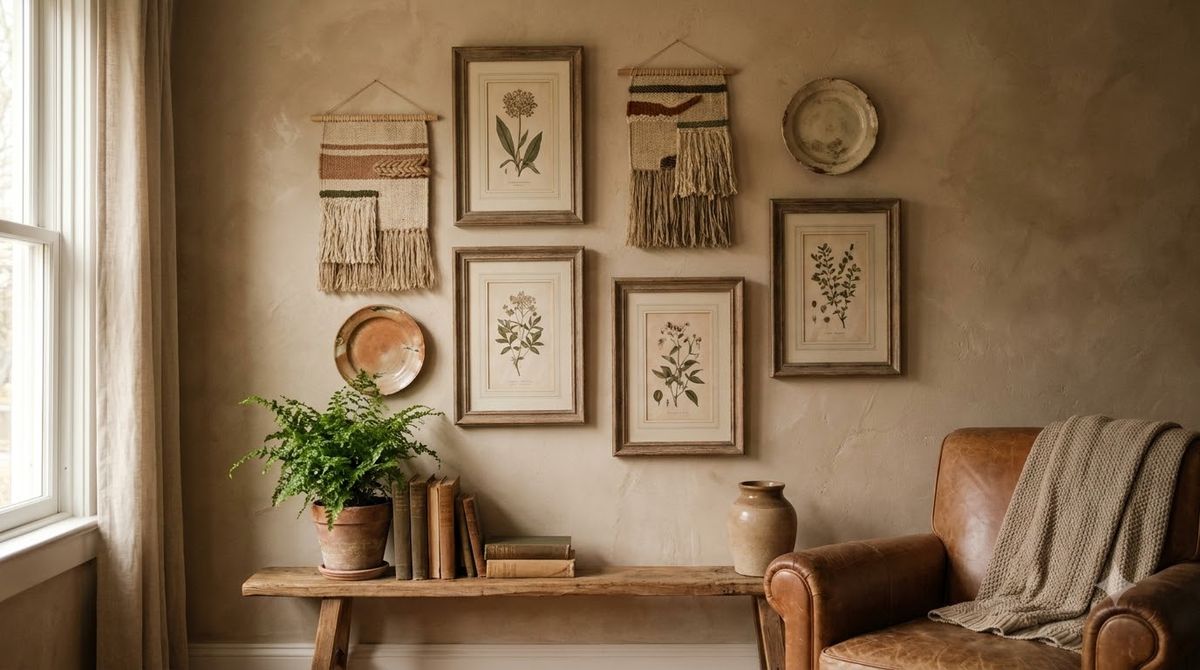
Above a console table, sideboard, or dresser, hang art so the bottom of the frame sits 5 to 9 inches above the surface. The lower end of that range applies when you’re styling the surface with lamps, vases, or books, since those objects fill the visual gap. Leave less space above a busy console and slightly more above a bare one.
Most guides give one number for “above furniture,” but a console and a sofa aren’t the same. A console is taller and often styled with tall objects, so we tighten the gap to 5-9 inches and let a lamp overlap the frame’s bottom edge. That overlap is what makes an entryway vignette look designed rather than stacked. Style the surface itself with tips from our floating shelf wall styling guide.
How Far Apart Should Gallery Wall Frames Be?
Keep 2 to 3 inches between every frame in a gallery wall, and use the same gap throughout. Consistent spacing is the single thing that separates a planned gallery wall from a cluttered one (Apartment Therapy, 2025). Treat the whole arrangement as one large rectangle, and center that rectangle at 57-60 inches like a single piece.
We lay every gallery wall on the floor first, then trace each frame onto kraft paper and tape the paper up before touching a nail. It has saved us from dozens of extra holes, and it lets you slide a 3-inch gap to 2.5 inches until the whole thing clicks.
Gallery wall spacing rules:
- 2-3 inches between frames, kept consistent
- Anchor with the largest piece slightly left of center
- Keep the outer edges of the whole group aligned to an invisible rectangle
- Center the full arrangement at 57-60 inches, same as one piece
What most guides miss: renters can build an entire gallery wall without a single hole. Picture-hanging strips, sold in pairs rated near 4 pounds each, hold most framed prints, let you peel a frame off to re-level it, and release the wall clean when a lease ends. That is why we plan renter galleries around strips, then trace the paper templates before committing.
For full layout templates and step-by-step planning, see our gallery wall ideas guide.
How High to Hang Art on a Stairwell?
On a stairwell, hang each piece so its center is 57-60 inches above the tread directly below it, letting the art step up with the staircase. Follow the rise of the stairs, keeping the midpoints of the frames on an imaginary diagonal line parallel to the handrail. This is the one spot where a single fixed height doesn’t work.
For a staggered stair gallery, measure 57 inches up from each step where a frame lands, so the whole run climbs evenly. Keep your 2-3 inch spacing between frames along the diagonal. A blank staircase wall is one of the best places to solve a big empty wall with a climbing gallery.
How High to Hang Art With Tall or Vaulted Ceilings?
With tall ceilings, keep art at the standard 57-60 inch center and resist the urge to hang it higher to “fill” the wall. Raising art to match a 12-foot ceiling pushes it out of eye line and makes a room feel colder. Instead, fill vertical space with a taller piece, a stacked pair, or a floor-to-eye-level arrangement, keeping the visual weight low.
The instinct to hang high on tall walls is exactly backward. Architectural Digest designers anchor art to human scale, not ceiling height, then add height with the size of the piece rather than its placement (Architectural Digest, 2025). A 5-foot-tall vertical canvas centered at 60 inches fills a soaring wall without abandoning eye level.
The Full Wall Art Height Reference Table
Every scenario condenses into one table you can hang by. Measurements are to the bottom of the frame unless the row specifies “center.”
| Scenario | Exact height / spacing rule |
|---|---|
| Single piece, no furniture | Center 57-60″ from floor |
| Above a sofa | Bottom of frame 6-10″ above sofa back |
| Above a bed / headboard | Bottom of frame 6-8″ above headboard |
| Above a console / dresser | Bottom of frame 5-9″ above surface |
| Above a desk | Bottom of frame 6-10″ above desktop |
| Gallery wall (whole group) | Center the group at 57-60″; 2-3″ between frames |
| Stairwell | Center each piece 57-60″ above the tread below it |
| Tall / vaulted ceiling | Keep center at 57-60″; add height with a taller piece, not higher placement |
| Art size vs furniture | Piece or group = 2/3 to 3/4 the furniture width |
What Hardware Should You Use to Hang Wall Art?
Match the hardware to the art’s weight, and check the printed rating before you hang. For renters and quick swaps, Command strips and picture-hanging strips hold framed art with zero holes; for anything heavier, a proper picture hook into a stud carries the load. The wrong hook is the second most common reason art ends up crooked or on the floor.
Hardware by weight and situation:
- Under 3 lbs: a single 3M Command picture-hanging strip pair, no nails
- 3-8 lbs (framed prints up to 18×24″): two Command strip pairs, or one adhesive picture hook
- 8-20 lbs (large canvas): a nail-in picture hook rated to weight, ideally into a stud
- Over 20 lbs or a mirror: two D-rings on the frame plus wall anchors or a stud
- Gallery walls: picture-hanging strips let you re-level each frame without re-drilling
What most guides miss: a stud isn’t required for most framed prints. A self-drilling drywall anchor or a plastic toggle rated to the frame’s weight holds art up to roughly 20 pounds in bare drywall. Match the anchor’s printed rating to the piece, not to the wall, and set two anchors on wide frames so the load splits evenly. Above 20 pounds or on a mirror, find a stud or use a metal toggle bolt.
For no-nail styling across a whole wall, our empty wall ideas guide lists renter-safe options by budget.
Frequently Asked Questions
How high should I hang a picture?
Hang a single picture so its center is 57 to 60 inches from the floor, the standard gallery and museum height that meets average eye level. Measure to the middle of the piece, not the top or the hook. In rooms with lower ceilings or shorter furniture, aim for the lower end, 57-58 inches.
How high to hang art above a sofa?
Leave 6 to 10 inches between the top of the sofa back and the bottom of the frame. For a standard 30-to-34-inch-tall sofa, that also lands the center in the 57-60 inch range, so both rules agree. Size the art at two-thirds to three-quarters of the sofa’s width.
How far apart should gallery frames be?
Keep 2 to 3 inches between every frame, and use the same gap throughout the arrangement. Consistent spacing is what makes a gallery wall look planned instead of cluttered. Treat the whole group as one rectangle and center that rectangle at 57-60 inches from the floor.
Where should the center of art be?
The center of a single piece of art should be 57 to 60 inches from the floor. This is the reference point for almost every hang: measure to the midpoint of the artwork, not its top edge or the hanging hook. For a gallery wall, center the whole group of frames at that same 57-60 inches.
How high to hang art above a bed?
Position the bottom of the frame 6 to 8 inches above the top of the headboard, and center the art on the bed rather than the wall. A queen headboard around 60 inches wide pairs with art or a grouping about 40-50 inches wide, sized to roughly two-thirds of the headboard.
Can you hang heavy art without hitting a stud?
Yes. A self-drilling drywall anchor or a plastic toggle rated to the frame’s weight holds art up to about 20 pounds in bare drywall, so match the anchor’s printed rating to the piece. For anything heavier or for a mirror, find a stud or step up to a metal toggle bolt with two D-rings.