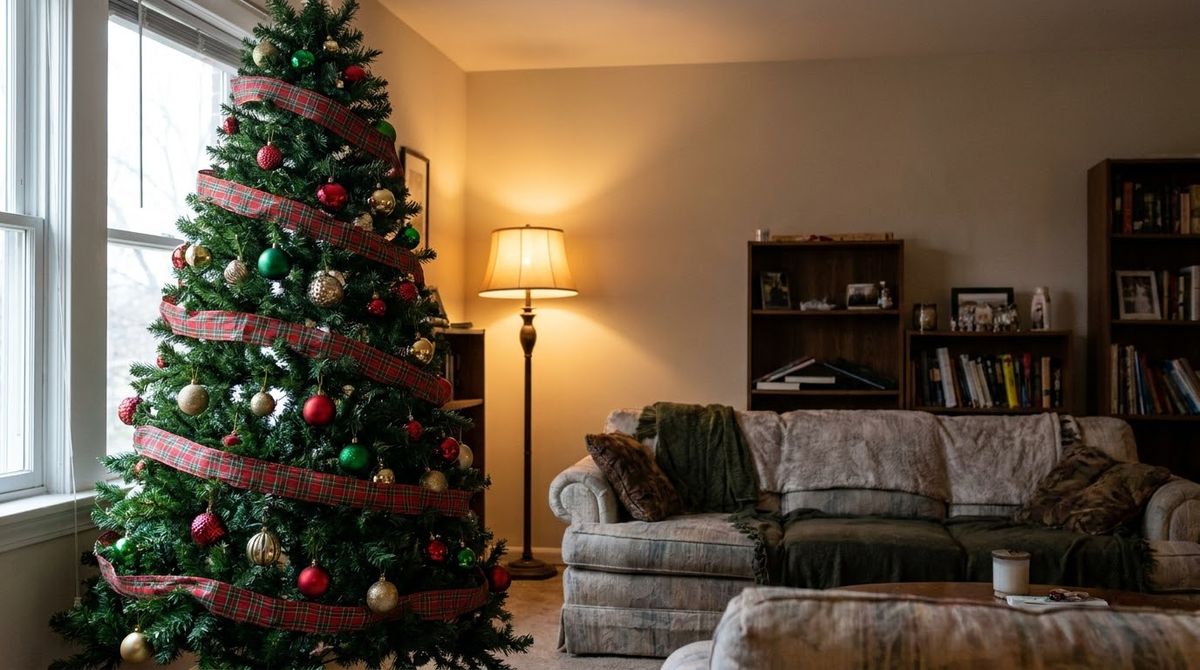
Red and green Christmas tree decorations look intentional when one color leads at about 60 percent, the second supports at 30, and a metallic or neutral accent takes the last 10. The four palette plans below cost about $33 to $58 each in ornaments, ribbon and picks.
Key Takeaways
- Pick a lead color, a support color and one accent, then hold roughly a 60/30/10 split.
- Shade matters more than count: cranberry with sage, scarlet with emerald, burgundy with olive.
- Mix three finishes (matte, shiny, glitter) so one color reads as layers, not a flat block.
- Ribbon is the cheapest unifier: about $2.49 to $4.99 a roll at Hobby Lobby.
- Each of the four full plans below costs about $33 to $58.
Why red and green can look cluttered
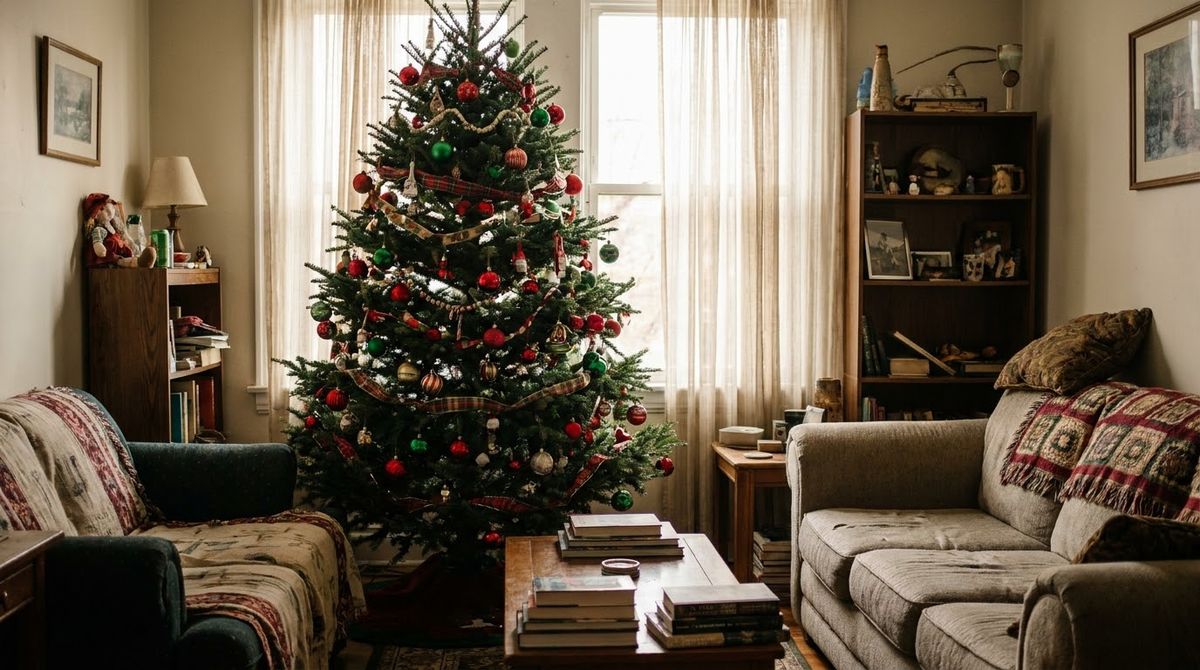
Red and green clutter happens when both colors are equally loud, the shades clash, and every ornament has the same size and finish. The two sit opposite each other on the color wheel, so equal amounts compete for attention instead of working together.
The fix is hierarchy. Choose which color leads, keep the other quieter, and give the eye a rest with one accent. If you want the full tree-shaping process (lights, garland, fill), our Christmas tree decorating ideas guide covers it. This post is only about the color decisions.
The 60/30/10 ratio, applied to a tree
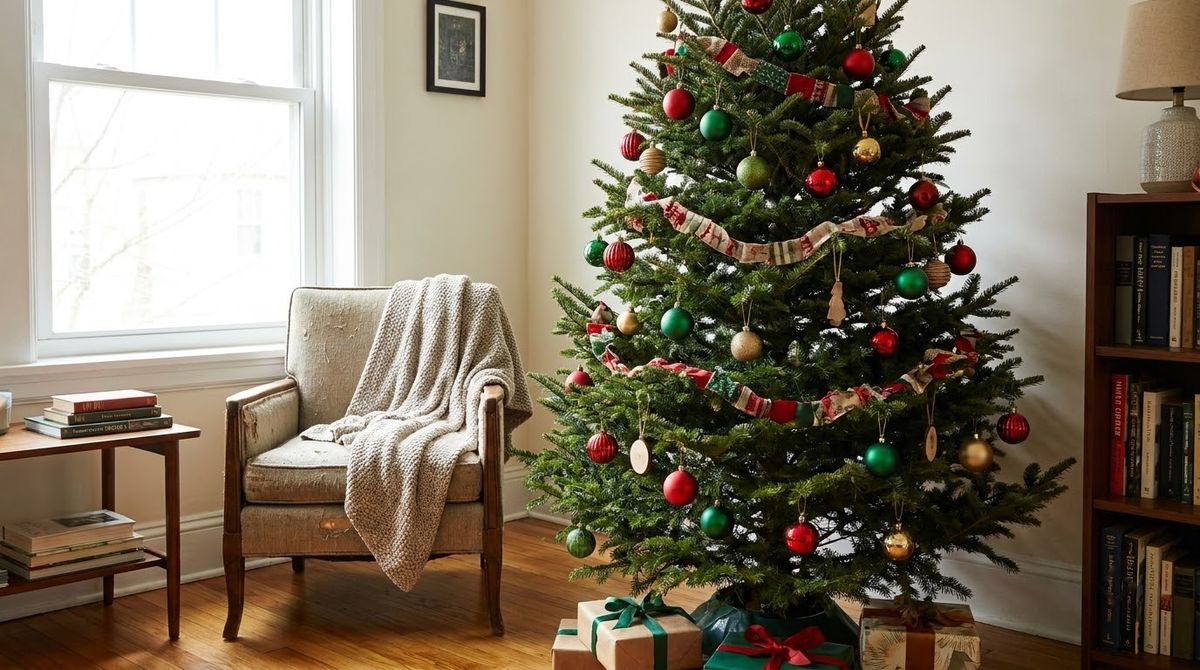
The 60/30/10 rule gives you one lead color (60 percent), one support (30) and one accent (10), counted by ornaments and ribbon rather than by branch area.
A green tree already has a lot of green in the branches. That means you can let red lead the decorations and treat the branches as your green. Or flip it: a flocked or very sparse tree can take green velvet ribbon and leaf picks as the lead, with red as support.
A simple count for a 6.5 to 7.5 ft tree with 50 ornaments:
- 30 in the lead color
- 15 in the support color
- 5 in gold, champagne or white as the accent
Scale the numbers to your tree, but keep the proportions. A 4 ft tabletop tree with 20 ornaments becomes 12, 6 and 2.
Shades that pair well
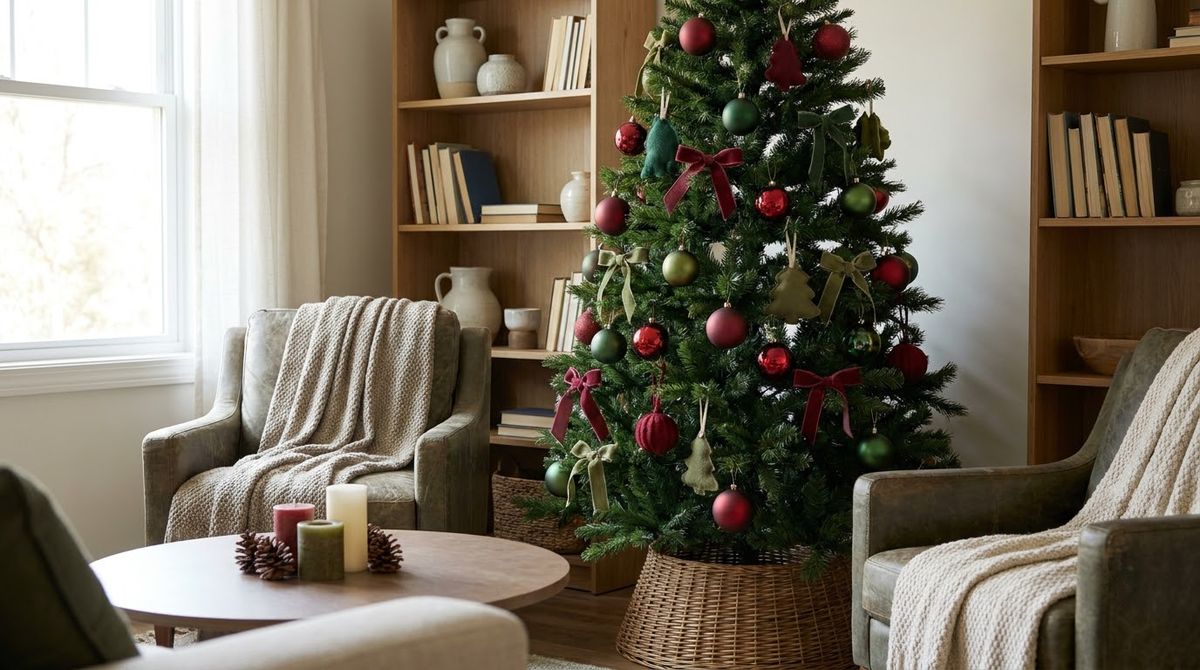
Red and green work best when their undertones match: warm with warm, deep with deep, muted with muted.
| Pairing | Mood | Why it works |
|---|---|---|
| Cranberry + sage | Soft, modern farmhouse | Both are muted and slightly gray, so neither shouts |
| Scarlet + emerald | Classic, bright | Both are saturated, so they hold up under warm lights |
| Burgundy + olive | Moody, vintage | Both lean brown, so they feel aged and rich |
| Brick red + forest green | Rustic | Earthy tones sit naturally beside pinecones and wood |
Mixing across rows, say scarlet with sage, is where trees start to look off. If you already own a green you like, our sage green color pairing guide shows which warm tones sit well beside it.
Mix three finishes in each color
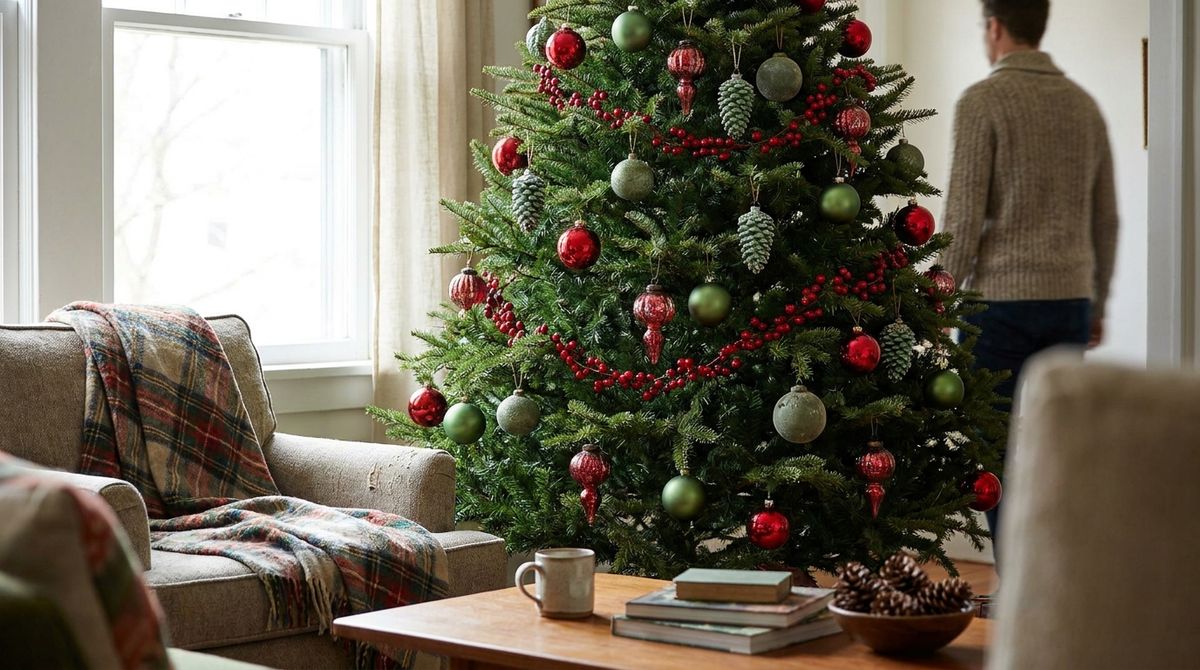
Use matte, shiny and glitter finishes in each color so the same red reads as layers of depth rather than one flat patch.
A good split inside any color is about half shiny (it catches light), a third matte (it absorbs it), and the rest glitter or textured. Matte balls make shiny ones look richer. Retailers sell this mix pre-packed: Target lists a Northlight 50-count shatterproof shiny and matte red set at about $16.99 on sale, against a regular price near $33.
Vary size too. Use two or three sizes, such as 40mm, 60mm and 100mm, so the tree has rhythm. Put the biggest balls deep inside the branches, where they add depth without crowding the surface.
Ribbon and plaid
Ribbon is the cheapest way to tie two colors together, because one plaid carries both red and green.
Hobby Lobby lists red plaid and red, white and green plaid wired-edge ribbon at about $2.49 to $4.99 per roll, depending on the length you pick. Wired edges hold their shape when tucked into branches. Walmart lists a green velvet wired ribbon, 5 yards, at about $4.97.
Two ways to use it:
- Vertical cascade: tuck ribbon from the top down in three or four loose waves
- Bows: a single oversize bow works as a topper; Apartment Therapy covered Target’s Wondershop velvet bows at about $5 each, 12 by 9 inches for the small size
Pick one plaid. Two different plaids on the same tree compete with each other.
Traditional, modern and vintage takes
The same two colors can read three ways depending on which finishes and shapes you choose.
- Traditional: scarlet and emerald, glossy glass-look balls, gold bead garland, plaid ribbon
- Modern: cranberry or burgundy, velvet bows, mostly matte ornaments, no plaid, very little gold
- Vintage: burgundy and olive, mixed finials and teardrops, mercury-style finishes, small glitter picks
If your room leans calm and neutral, the modern version fits best. For a cozier room, our cozy Christmas decor ideas shows how warm textiles can sit alongside a red and green tree without adding more color.
Four palette plans with real costs
Each plan uses retailer prices seen in October 2026 and assumes you already own the tree and lights. Totals are rounded and exclude tax and shipping.
| Plan | Items | Approx. cost |
|---|---|---|
| Classic scarlet + emerald | Target Wondershop 20-ct red/green/gold finial set ($8.40 to $12), Northlight 50-ct red shatterproof set at Target ($16.99), 2 rolls red plaid ribbon at Hobby Lobby ($5 to $10), 10 red berry picks at Hobby Lobby ($1.49 each, $14.90) | About $45 to $54 |
| Cranberry + sage | Valery Madelyn 60-ct red/green/gold set at Walmart ($24.99, check stock), 2 green velvet wired ribbons at Walmart ($4.97 each), 6 frosted berry picks at Hobby Lobby ($1.74 to $2.99 each), 1 Wondershop bow ($5) | About $50 to $58 |
| Modern burgundy + olive | Wondershop 4-ct 150mm red set ($5.60 to $8), Wondershop 20-ct finial set ($8.40 to $12), 2 velvet bows ($10), 1 green gold-backed velvet ribbon at Walmart ($9.38) | About $33 to $39 |
| Vintage plaid | Red plaid ribbon at Walmart ($10.99), 3 red/white/green plaid rolls at Hobby Lobby ($7.47 to $14.97), Northlight 50-ct red set ($16.99), Wondershop 20-ct finial set ($8.40 to $12) | About $44 to $55 |
The ranges come from sale versus regular prices and from Hobby Lobby listing a price spread across ribbon lengths. For other ways to keep the whole house under budget, see our Christmas decor on a budget list.
Step-by-step order
Decorate in layers, with the structure first and the accents last, so the color ratio stays under control.
-
Lights first. Warm white lights flatter both reds and greens.
-
Ribbon next. Run it before ornaments so it sits behind them.
-
Lead-color ornaments. Space them evenly, some deep in the tree and some near the surface.
-
Support-color ornaments. Fill the gaps between the lead color, and avoid placing two of the same size side by side.
-
Picks and berries. Tuck them into empty spots for texture.
-
Accent last. Add the 10 percent gold or white, spacing pieces well apart.
-
Step back and squint. If one color pools in one area, move a few ornaments across.
Pairing the tree with the rest of the room
A red and green tree sits best when nearby colors stay quiet. Cream, wood and warm metal let the tree lead.
If your mantel is near the tree, repeat the support color and the metallic from the tree rather than adding a third color. Our Christmas mantel decor ideas and Christmas living room decor posts show how to carry the palette across a room. For a whole-home view, start with 50 Christmas decor ideas.
Frequently Asked Questions
What ratio of red to green should I use on a Christmas tree?
Aim for about 60 percent of your lead color, 30 percent of the support color and 10 percent accent. A green tree already supplies green through its branches, so many people let red lead the ornaments and use green as the supporting ribbon, picks and a few ornaments.
Which shades of red and green look best together?
Match undertones. Cranberry pairs with sage, scarlet with emerald, burgundy with olive, and brick red with forest green. Mixing a bright red with a muted green, or the reverse, tends to look unplanned because one color overpowers the other.
How do I stop a red and green tree from looking like a mess?
Limit the palette to one lead color, one support and one metallic accent. Use two or three ornament sizes, mix matte, shiny and glitter finishes, and add a single ribbon pattern. Count your ornaments by color before you hang them, then check the ratio.
Is plaid ribbon too much with red and green ornaments?
Not if you use only one plaid and keep the rest of the tree solid. A red and green plaid ties both colors together. Two different plaids compete, so stick to one pattern for the whole tree and repeat it in a bow or two.
How much does it cost to decorate a red and green tree?
Using ornament sets, ribbon and picks from Target, Walmart and Hobby Lobby, the four plans above run about $33 to $58, not counting the tree and lights. Buying sale-priced sets and reusing ribbon from past years brings the number down further.
Pick a plan and start small
Choose one of the four palettes, buy the ornament set first, and hang a test branch before committing to the rest. Want a lighter look instead? See our white Christmas tree decorations guide, then return to the Christmas tree decorating ideas pillar for shape and lighting.
Prices checked October 2026.