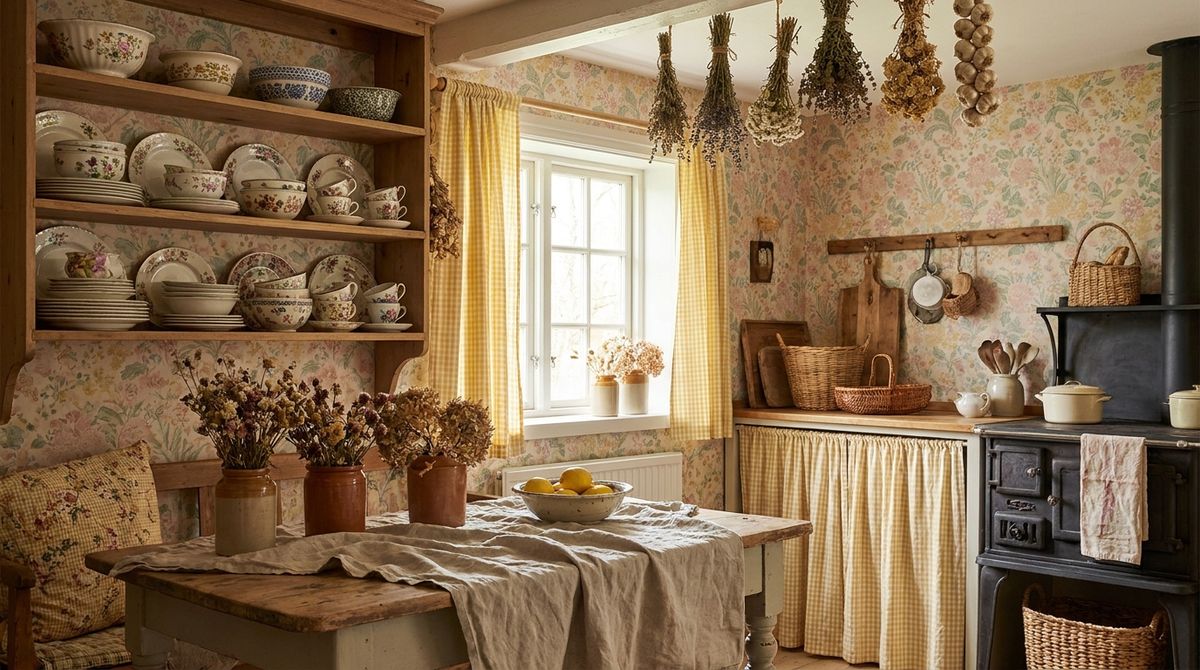
Cottagecore is one of those aesthetics that genuinely works across the whole home. But it does not look the same in every room, and that is exactly the point. The bedroom goes soft and dreamy. The kitchen leans functional and charming. The cottagecore living room layers up into something warm and textural that invites you to stay.
Cottagecore only fails when the same formula gets applied to every room. The bedroom rules do not belong in the kitchen. The kitchen rules do not belong in the living room. Below is what works per space, what to avoid, and how to tie all three together without buying identical things for every room.
Key Takeaways
- The cottagecore bedroom is the most Pinterest-native room in the aesthetic, so it is the easiest one to find visual references for.
- Each room needs a different formula: soft and layered in the bedroom, functional and charming in the kitchen, warm and inviting in the cottagecore living room.
- A $100 refresh can shift any of these three rooms noticeably toward the cottagecore aesthetic without furniture replacement.
- Cross-room continuity comes from three repeating elements: one floral or botanical motif, one shared ceramic style, and a consistent warm-neutral palette anchored in cream or warm white.
What Makes Cottagecore Different Room to Room
Cottagecore’s visual vocabulary includes florals, natural textures, handmade-looking pieces, botanical elements, and a general feeling of slow, pastoral living. But those elements behave differently depending on room function.
The rooms that work best share one trait: they pick one dominant material per space and build around it. Linen in the bedroom. Ceramic in the kitchen. Wicker in the living room. Rooms that try to do all three at once tend to feel cluttered rather than charming.
What most guides miss: cottagecore is not one saturation level copied into every room. The palette should warm up as a room gets busier and more used. The bedroom stays faded and soft, the living room sits earthier in the middle, and the kitchen runs warmest with butter yellow and terracotta. Matching saturation to how hard a room works is what keeps a whole-home cottagecore from reading like a costume.
The three room breakdowns below give you the dominant material, the right color palette, and the specific starting pieces.
Free · 60 seconds
Not sure which style is actually yours?
Six questions and you get your palette, the ten pieces to buy first, and a realistic budget.
Cottagecore Bedroom: The Dream Space
The cottagecore bedroom is the most aspirational cottagecore room: the one where the layered linen, the dried florals, and the fairy lights all come together into something that looks pulled from a slow-living novel.
What Works in a Cottagecore Bedroom
Layered linen bedding is the non-negotiable starting point. A wrinkled linen duvet in dusty rose, lavender, or warm oatmeal reads as cottagecore immediately. Layer over it: one linen quilt in a complementary tone, two floral pillow shams, and a woven cotton blanket folded at the foot. IKEA’s DYTAG linen duvet cover ($89.99 King) is the most accessible entry point. H&M Home and Target’s Threshold linen line offer sets in the $65-$110 range.
A vintage or wood headboard anchors the room without requiring a full bed replacement. Carved wood frames, distressed painted headboards, and rattan-back designs all read cottagecore. Thrift stores and Facebook Marketplace consistently surface these in the $30-$80 range. New options at Target and Wayfair run $90-$160 for similar shapes.
Dried florals above the bed are the most photographed cottagecore bedroom element. A dried pampas grass arrangement or a mixed dried bouquet of lavender, wheat, and eucalyptus hung above the headboard costs $18-$45 on Etsy and delivers immediate visual impact. Avoid fresh florals here; they wilt, and dried arrangements hold the look for months.
Fairy lights add warmth without the harshness of overhead lighting. A warm-white string light draped behind a sheer canopy or along the headboard wall keeps the bedroom feeling cozy rather than cold. $12-$20 for a 33-foot strand on Amazon.
Cottagecore Bedroom Color Palette
Softer than any other room in the cottagecore home. Target: dusty rose, soft lavender, sage green, and warm cream. These tones work together without fighting. Avoid saturated, bright versions of these colors; the palette should feel faded and sun-washed, not primary.
Cottagecore Bedroom Key Pieces
| Piece | Price Range | Where to Look |
|---|---|---|
| Linen duvet cover (Queen) | $65-$110 | IKEA, H&M Home, Target |
| Vintage or rattan headboard | $30-$160 | Facebook Marketplace, Wayfair, Target |
| Dried floral arrangement | $18-$45 | Etsy, Amazon |
| Sheer cotton canopy | $22-$40 | Amazon, Urban Outfitters |
| Warm-white fairy lights (33ft) | $12-$20 | Amazon |
| Floral pillow shams (pair) | $24-$38 | Target, Amazon |
What to Avoid in the Cottagecore Bedroom
Too many competing floral prints. A floral duvet plus floral shams plus a floral wallpaper accent creates visual noise rather than botanical charm. The rule: one dominant floral pattern per room, then neutrals and solids around it. Also avoid cool-white or overhead-only lighting. Both kill the dreamy, warm atmosphere the bedroom needs.
Cottagecore Kitchen: Functional and Charming
The cottagecore kitchen is the most underrated room in the aesthetic. It gets far less attention than the bedroom, which is a real opportunity: the kitchen is actually one of the easier rooms to shift toward cottagecore because the most impactful changes are small and inexpensive.
What Works in a Cottagecore Kitchen
Open shelving with ceramics is the highest-impact change in a cottagecore kitchen. If you have one wall shelf or can add a freestanding shelving unit ($55-$90, black metal frame with wood shelves), style it with 4-6 mismatched but cohesive vintage-look ceramic pieces: a stoneware pitcher, two or three ceramic mugs, a small plate or two. The key word is “mismatched but cohesive” — same color family, different shapes.
Linen tea towels hung from the oven handle or draped over a hook are the fastest cottagecore kitchen signal. A set of two in warm stripe or botanical print runs $12-$18 at World Market or H&M Home. Replace them when they start looking tired; fresh linens read significantly better than worn ones.
Herb pots on the windowsill serve double duty: they’re functional and they add the living botanical element that cottagecore kitchens need. Three small terracotta pots with basil, rosemary, and thyme cost under $15 total. The terracotta material matters; white plastic planters break the vibe immediately.
Vintage-style canisters for flour, sugar, and coffee replace modern steel or plastic versions with something that reads charming rather than utilitarian. Ceramic canisters with cork or wooden lids ($22-$45 for a 3-piece set on Amazon or at World Market) shift the counter entirely.
The $50 cottagecore kitchen upgrade: swap two to three counter items. Replace a plastic dish rack with a wooden one ($20-$28), add a linen tea towel ($8-$12), and set out two ceramic mugs instead of stacking them in a cabinet. These three moves take ten minutes and cost under $50 total. It’s a simple, low-risk cottagecore kitchen entry point.
What most guides miss: a cottagecore kitchen still has to cook. Keep linen and paper florals away from grease and heat. Run peel-and-stick tile on a backsplash beside the stove rather than directly behind the burners, and choose wipeable glazed ceramic over fabric near the hob. Renter-safe swaps stay reversible: removable wallpaper, tension-rod shelving, and adhesive hooks, so nothing needs drilling or a deposit conversation later.
Cottagecore Kitchen Color Palette
Warmer than the bedroom. Butter yellow, warm cream, soft sage, and terracotta are the right range. A single wall in butter yellow or warm sage transforms a white rental kitchen into something that reads cottagecore without painting every surface. If you cannot paint, a removable peel-and-stick backsplash tile in a botanical or floral pattern ($25-$45 for a small kitchen section) achieves a similar shift.
What to Avoid in the Cottagecore Kitchen
Ultra-modern fixtures and stainless-steel appliances left on the counter. A stainless air fryer and a black espresso machine sitting prominently break the cottagecore kitchen vibe more than any other single element. Move visible modern appliances into cabinets, or cover them with a linen cloth when not in use. Also avoid minimalist open shelving with perfectly spaced single items; cottagecore shelving should feel curated but not sterile.
Cottagecore Living Room: Layered and Inviting
The cottagecore living room is where the aesthetic scales up. The style is moving from a bedroom-only look into full-home territory. This room needs more deliberate layering than the other two because it has more surface area and more opportunity to go wrong.
What Works in a Cottagecore Living Room
A floral pillow mix on the sofa is the room’s entry point. Three to four throw pillows in coordinated (not matching) floral, stripe, and botanical prints in a warm cream-to-sage palette transform a neutral sofa immediately. Thrift stores are the best source for floral throw pillows; new options at Target and Amazon run $14-$28 per cover. Mix scales: one large floral, one small floral, one stripe.
Wicker basket storage does two things in a cottagecore living room: it adds natural texture and it solves actual storage problems. A large wicker basket beside the sofa for blankets costs $22-$45 at World Market or Target. A wicker magazine holder on the side table keeps the reading-corner feeling lived-in rather than staged.
Botanical prints on the walls bring the garden inside without requiring real plants in every corner. A set of three matching frames with botanical or vintage floral prints costs $25-$45 total using IKEA RIBBA frames ($4.99 each) and free printables from sites like Canva or Unsplash. The print style matters: choose vintage botanical illustration style rather than modern graphic prints for the most authentic cottagecore result.
A reading corner anchors the room with purpose. An armchair in cream, sage, or dusty rose ($85-$180 at Target or thrift stores), a floor lamp with a warm-white bulb ($35-$65), a small side table with a stack of books, and a trailing plant in a ceramic pot completes the corner. It is the most photographed element in a well-done cottagecore living room.
Trailing plants add life and organic movement that no decorative object replicates. Pothos, ivy, and string of pearls trail naturally from shelves or hanging planters. All three are low-maintenance and under $12 at most nurseries or hardware stores.
Cottagecore Living Room Color Palette
Earthier than the bedroom and warmer than the kitchen. Earthy neutrals (warm cream, sand, soft camel) as the base, with one floral accent color pulled through the pillows and a print. Sage green works as a secondary accent on a throw or plant pot. Avoid going too dark; cottagecore living rooms should feel light and garden-adjacent, not moody.
Cottagecore Living Room Key Pieces
| Piece | Price Range | Where to Look |
|---|---|---|
| Linen sofa throw | $24-$45 | H&M Home, Target, Amazon |
| Rattan side table | $35-$75 | World Market, Target, Amazon |
| Vintage-style floor lamp | $35-$65 | Amazon, Target, thrift stores |
| Floral throw pillow covers (4) | $14-$28 each | Amazon, Target, thrift stores |
| Wicker storage basket (large) | $22-$45 | World Market, Target |
| Botanical print set (3 frames) | $25-$45 | Canva prints + IKEA frames |
| Trailing plant (pothos or ivy) | $8-$12 | Nursery, Home Depot |
What to Avoid in the Cottagecore Living Room
Matching “set” furniture. A sofa-loveseat-armchair set in identical fabric bought from one collection reads as a showroom, not a living room that developed organically over time. Cottagecore living rooms feel most authentic when pieces are mixed: a solid linen sofa, a vintage floral armchair, a rattan accent chair. Cold metal accents (chrome or polished nickel lamp bases, glass-and-chrome coffee tables) also break the vibe; stick to matte black, brass, or natural rattan for metal elements.
The most common cottagecore living room failure we see is not too few items, it is too many items without a cohesive color thread. Rooms that work have 3-4 pieces with the exact same warm cream or sage tone repeated throughout: the throw, the lampshade, the botanical print mat, the plant pot. The repetition reads as intentional. Without it, a room full of individually charming cottagecore pieces looks like a collection, not a style.
Tying All Three Rooms Together
Visual continuity across a cottagecore home does not require buying the same items for every room. It requires repeating three anchors consistently, then letting everything else adapt.
One shared palette across rooms. Warm cream or soft white as the dominant neutral in every room. The accent color shifts per space (dusty rose in the bedroom, butter yellow in the kitchen, sage in the living room), but the base stays consistent. Walk through all three rooms: if the neutral base reads the same, the home coheres even when accent colors differ.
One repeating botanical motif. A dried stem arrangement in the bedroom, a herb pot on the kitchen windowsill, and a trailing plant in the living room all carry the botanical thread. The plants do not need to be the same species. They need to belong to the same visual language: organic, living, unpretentious.
Consistent ceramic style throughout. Handmade-looking, slightly irregular, matte-glazed ceramics in warm neutral tones read as cottagecore in any room. A stoneware mug on the kitchen shelf and a ceramic vase on the bedroom nightstand and a ceramic planter in the living room all read as related, even if purchased from three different places. Avoid mass-produced shiny glazed ceramics; they read as modern, not cottagecore.
| Room | Base Neutral | Accent Color | Botanical Element | Ceramic Style |
|---|---|---|---|---|
| Bedroom | Warm cream linen | Dusty rose or lavender | Dried florals above bed | Matte vase on nightstand |
| Kitchen | Warm white or cream | Butter yellow or sage | Herb pots on windowsill | Stoneware canisters, mugs |
| Living Room | Warm cream sofa | Sage green or soft camel | Trailing plant on shelf | Planter pot, decorative vessel |
Room-by-Room Budget Breakdown
Here’s what a realistic cottagecore refresh costs at two budget points for each room. These assume you keep existing furniture and focus on textiles, accessories, and plants.
Budget ranges below are based on current pricing at Target, Amazon, World Market, H&M Home, and Etsy as of May 2026. Thrift store sourcing can reduce most categories by 40-60%.
Cottagecore Bedroom Refresh
| Budget Level | What You Get | Estimated Total |
|---|---|---|
| $100 | Linen duvet cover + dried floral arrangement + fairy lights + 2 floral shams | $85-$110 |
| $250 | Above + vintage headboard (thrifted) + sheer canopy + botanical print | $200-$265 |
Cottagecore Kitchen Refresh
| Budget Level | What You Get | Estimated Total |
|---|---|---|
| $100 | Linen tea towels + 3 ceramic mugs + herb pots + wooden dish rack | $60-$95 |
| $250 | Above + ceramic canister set + open shelf unit styled with ceramics | $200-$255 |
Cottagecore Living Room Refresh
| Budget Level | What You Get | Estimated Total |
|---|---|---|
| $100 | 3 floral pillow covers + linen throw + wicker basket + trailing plant | $85-$110 |
| $250 | Above + rattan side table + botanical print set + floor lamp | $220-$280 |
The bedroom and kitchen are the highest-return rooms at the $100 level. The living room benefits most from the $250 budget because the rattan side table and lamp do more visual work than any accessories can.
Frequently Asked Questions
Q: Which cottagecore room should I start with if I have a limited budget?
A: The bedroom, every time. A linen duvet cover ($65-$110), a dried floral arrangement ($18-$35), and fairy lights ($12-$20) achieve an immediately recognizable cottagecore bedroom for under $150. No furniture changes needed. The bedroom also benefits most from the aesthetic because the soft palette and layered textiles deliver high impact in photos, which makes it the best room for building a Pinterest presence around your decor (Pinterest Business, 2024 data shows bedroom pins outperform living room pins in saves by 2.3x in the cottagecore category).
Q: Can I do cottagecore in a rental kitchen without painting walls?
A: Yes. Three rental-safe moves that cost under $80 total: add linen tea towels ($12-$18), style a counter corner with 2-3 terracotta herb pots ($10-$15), and replace visible modern appliances with vintage-look ceramic canisters ($22-$35). If your landlord allows removable wallpaper, a single accent wall in a botanical print ($25-$45 for a small kitchen section) adds significant visual change with zero permanent modification.
Q: How do I keep a cottagecore living room from looking cluttered?
A: Use the one-floral-print rule: one dominant floral pattern per room, then neutrals and textures around it. A floral pillow, solid linen throw, and botanical print framed on the wall reads as intentional layering. Three different floral patterns fighting for attention reads as clutter. Also keep plant count to two or three maximum; trailing plants in cottagecore living rooms can multiply quickly until the room tips from charming to overgrown.
Q: What’s the single most important piece for a cottagecore living room?
A: A linen throw in warm cream or sage draped over a neutral sofa. It costs $24-$45 and it is the piece that transforms a generic living room into something that reads cottagecore. After that: two to three floral pillow covers. Both are inexpensive, reversible, and make a significant visual difference before you spend money on furniture or larger pieces.
Q: Is peel-and-stick floral wallpaper safe to remove in a rental?
A: Quality peel-and-stick wallpaper generally lifts cleanly from smooth, primed walls, though textured or freshly painted surfaces are riskier. Test one strip in a closet corner and leave it a week before committing. Expect $25-$45 for a small accent wall, and keep it to a single wall rather than a full room for the easiest reversible cottagecore shift with no deposit risk.
Related Reads
- The Ultimate Cottagecore Decor Guide 2026
- Cottagecore Decor on a Budget: Real Numbers, Sourcing Tips
- Modern Farmhouse vs Cottagecore vs Coastal: Which Fits Your Home?
- Boho Bedroom vs Living Room vs Bathroom: Style Variations Per Space
- Japandi Bedroom vs Living Room vs Kitchen: How the Style Adapts Per Space