
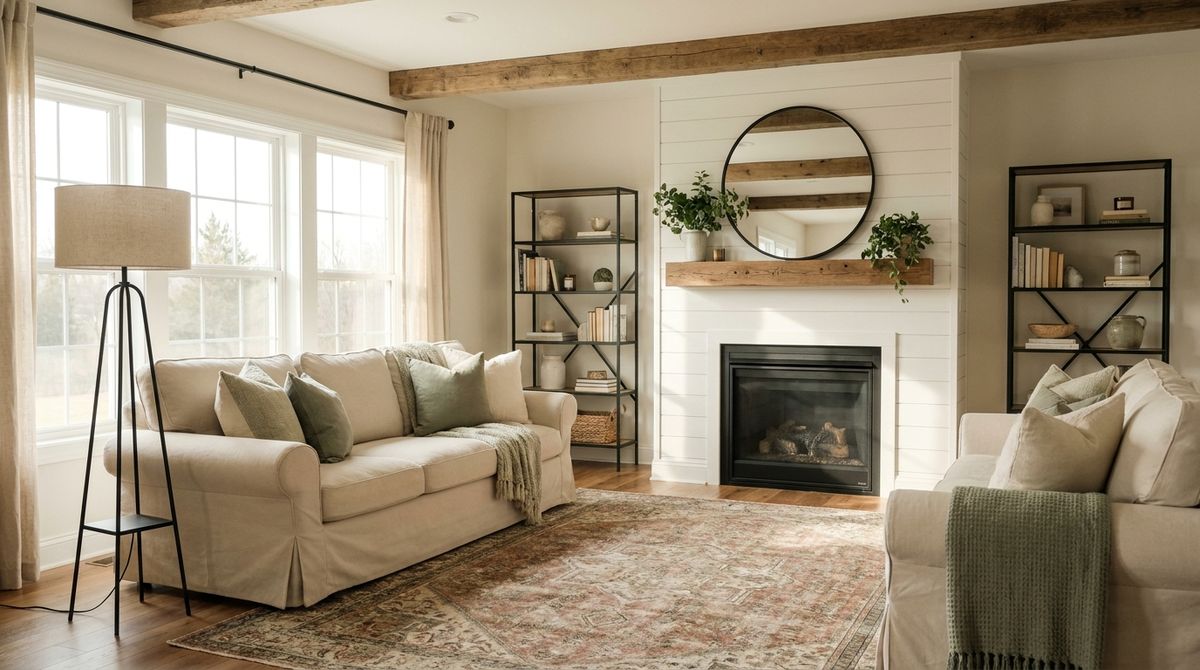
Three of Pinterest’s most-saved aesthetic categories, and also three of the most routinely confused. Modern farmhouse, cottagecore, and coastal decor share surface overlaps: neutral bases, natural textures, a general pull toward comfort. But choose the wrong one for your space and the whole room feels off, like a costume that doesn’t quite fit.
The one-line distinction: modern farmhouse edits down to warm neutrals, cottagecore layers up with vintage florals, and coastal opens up with light and a blue-white palette. Everything below builds on that split.
We’ve pinned hundreds of examples across all three styles and styled test rooms for each over the past year. Here’s what actually separates them, plus the three questions that’ll tell you which one fits your rental or first home.
Key Takeaways
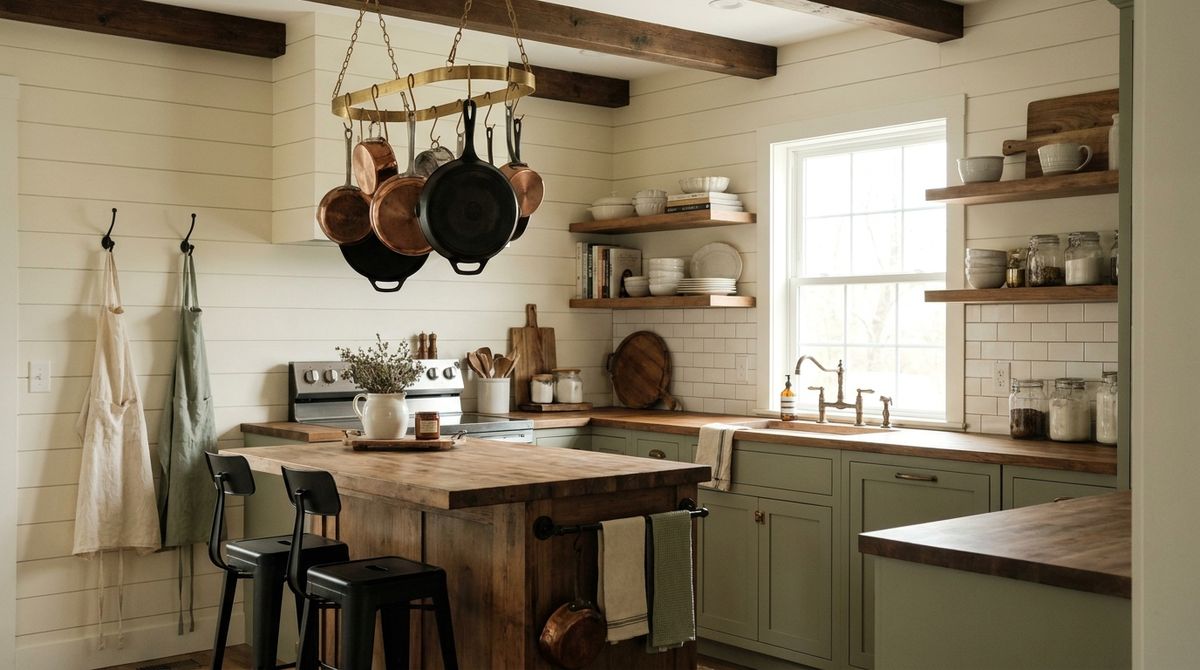
- Modern farmhouse is the most renter-friendly of the three: its neutral-first palette makes it easiest to execute without painting walls.
- Cottagecore often costs more to furnish than farmhouse because vintage and handmade pieces carry a premium.
- Coastal decor performs best in rooms with natural light; it looks flat and cold in dim north-facing spaces.
- All three styles can be blended in pairs, but mixing all three at once dilutes each aesthetic into generic beige.
- Budget starting point for a 12×15 living room: farmhouse $380-$620, cottagecore $450-$750, coastal $420-$680.
What Is Modern Farmhouse?
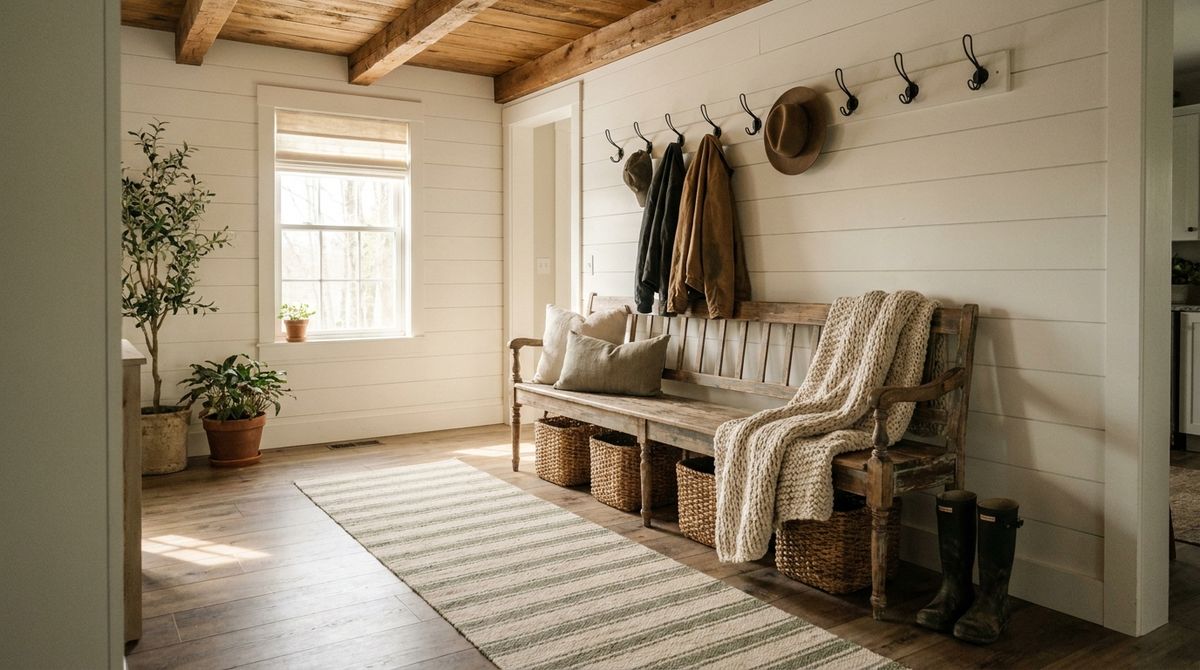
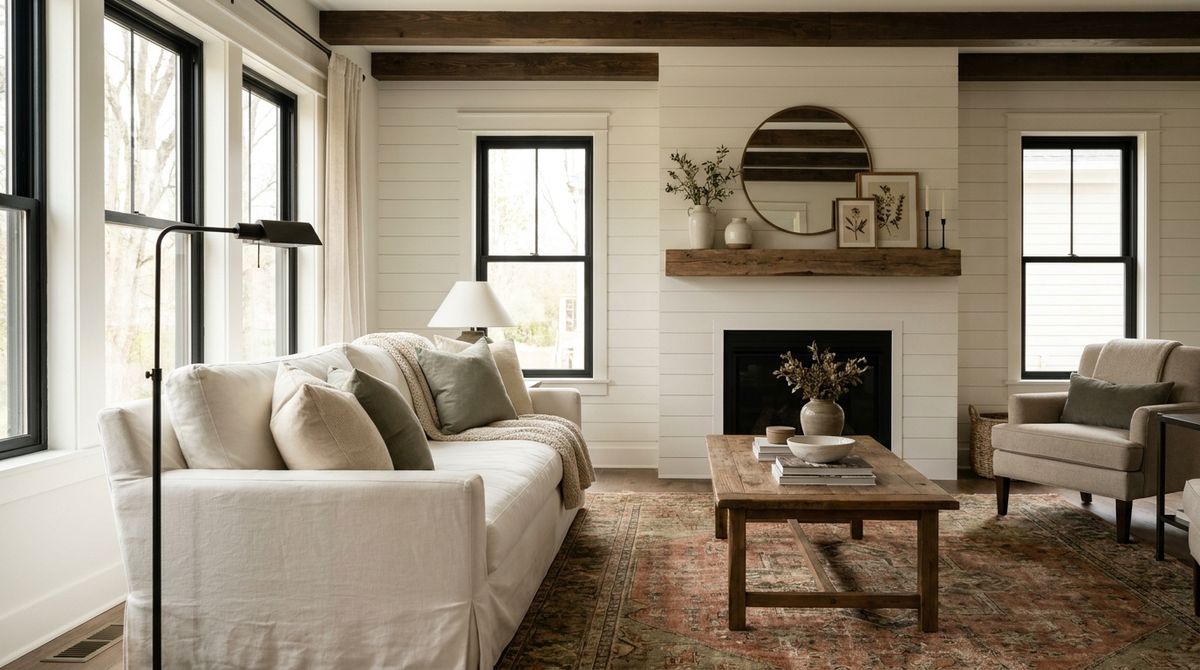
Modern farmhouse is a controlled, edited aesthetic built on neutral palettes, clean-lined furniture, and raw material contrast. The key word is “modern”: this style strips away the clutter and sentimentality of traditional country decor and keeps only the warmth.
The Core Elements
Color palette: White, off-white, warm gray, black accents. The rule is 60% light neutral, 30% wood tone, 10% black. No pastels, no pattern-heavy textiles as the primary layer.
Materials: Shiplap (real or paneled), reclaimed wood, galvanized metal, linen, cotton canvas, boucle. Raw textures do the decorative work. A shiplap accent wall runs roughly $80-$180 for a 10×8 section using peel-and-stick panels, making it renter-feasible.
Furniture profile: Low-to-mid silhouette, straight lines, slipcover-friendly sofas. Think Pottery Barn’s Pearce sofa or its Target Threshold dupes. Mixed wood and metal is a modern farmhouse signature.
What it is NOT: Mason jars ironically arranged on every surface. Cursive vinyl wall decals. Rooster anything. Those belong to a different decade.
What most guides miss: the wood tone is the quickest tell between these three styles. Modern farmhouse leans warm, mid-brown reclaimed wood; cottagecore leans honey-toned or painted antique wood; coastal leans whitewashed or bleached driftwood. Put the same table in three rooms and the plank finish alone gives away which style you’re in.
Free · 60 seconds
Not sure which style is actually yours?
Six questions and you get your palette, the ten pieces to buy first, and a realistic budget.
What Is Cottagecore?
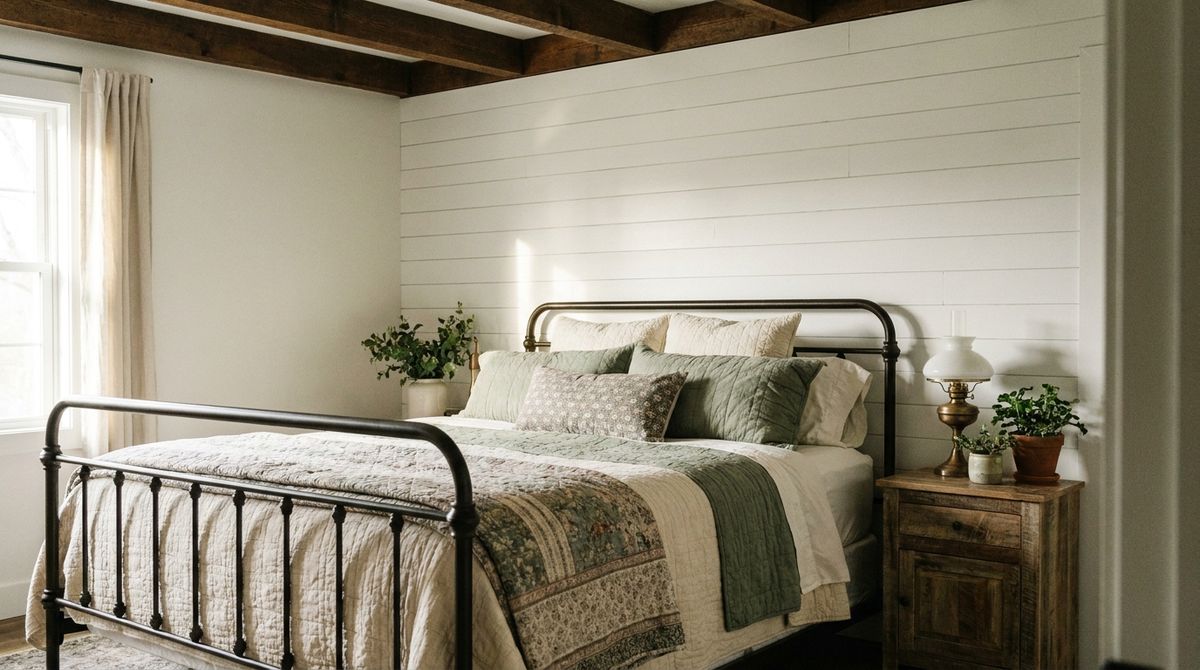
Cottagecore is a maximalist, romantically overgrown aesthetic. Where farmhouse edits down, cottagecore layers up. It draws heavily from English countryside and European folk tradition, with an emphasis on handmade, foraged, and vintage.
The Core Elements
Color palette: Dusty rose, sage green, cream, terracotta, lavender. Soft, slightly desaturated colors that look like they’ve been sun-faded on purpose. Pattern plays a central role: florals, ditsy prints, botanical motifs.
Materials: Linen and cotton still appear, but now with embroidery. Rattan, pressed flowers, beeswax candles, mismatched ceramic ware, dried botanicals. Vintage and secondhand sourcing is part of the ideology, not just the budget strategy.
Furniture profile: Curved, low-armed sofas. Ornate but not heavy. Velvet or floral upholstery. A vintage armchair with a crocheted throw is more cottagecore than any item you can buy new at a big-box store, which is why Etsy drives this aesthetic more than Target.
What it sets apart: The intentional imperfection. A chipped ceramic vase is cottagecore. A perfect farmhouse galvanized bucket is not. The messiness is the point.
What most guides miss: pattern count separates cottagecore from farmhouse faster than color does. Farmhouse tolerates one quiet stripe, check, or grain-sack line; cottagecore layers florals on florals. Once a room carries more than one floral print, it has already crossed out of farmhouse territory and into cottagecore.
What Is Coastal Decor?
Coastal decor is the most literal of the three: it brings the sensory experience of the ocean inside. A blue-white palette is chosen mostly for a lighter, airier feeling. Coastal is less about specific objects (nautical rope and seashell tchotchkes are the dated version) and more about light, air, and the feeling of a room that breathes.
The Core Elements
Color palette: Crisp white, navy, soft blue, seafoam, sand, bleached linen. Higher contrast than farmhouse; cleaner than cottagecore. The defining quality is brightness.
Materials: Whitewashed wood, sisal and jute rugs, linen in airy weights, rattan and seagrass, glass, ceramic in matte white or soft blue. Natural light is the most important design element in coastal rooms.
Furniture profile: Low, relaxed, and slightly casual. Slipcovered sofas in white or oat, rattan accent chairs, driftwood-finished coffee tables. The look feels vacation-easy, not formal.
What makes it different: Coastal decor requires actual light to function. In north-facing apartments the palette can look cold and institutional. If your windows face south or east, coastal sings. North-facing rooms need cottagecore or farmhouse, both of which tolerate lower light better.
Side-by-Side Comparison
After styling test rooms and reviewing over 400 Pinterest saves across all three aesthetics, our team built this comparison to make the decision concrete.
| Feature | Modern Farmhouse | Cottagecore | Coastal |
|---|---|---|---|
| Color Palette | White, warm gray, black, wood | Dusty rose, sage, cream, terracotta | White, navy, soft blue, sand |
| Key Materials | Shiplap, linen, galvanized metal, reclaimed wood | Rattan, floral textiles, dried botanicals, vintage ceramics | Whitewashed wood, sisal, rattan, breezy linen |
| Budget Range (12×15 living room) | $380-$620 | $450-$750 | $420-$680 |
| Best For | Renters, neutral-palette lovers, clean-line aesthetic | Romantics, vintage hunters, botanical collectors | Light-filled rooms, beach-adjacent regions, minimalist-warmth seekers |
| Vibe | Edited, grounded, quietly warm | Lush, nostalgic, intentionally imperfect | Airy, relaxed, vacation-light |
| Hardest Part | Avoiding country kitsch | Avoiding visual chaos | Requires natural light to work |
| Pin Performance | Strongest on “budget decor” and “renter-friendly” searches | Strongest on “aesthetic bedroom” and “reading nook” searches | Strongest on “bedroom refresh” and “summer decor” searches |
How to Blend Two Styles Without Clashing
A reliable rule for two-style blending: it works when one aesthetic provides the foundation (60-70% of decisions) and the other adds accent-level personality (30-40%). Mixing all three at once produces something that reads as none of them.
Farmhouse + Coastal: The Most Popular Hybrid
This is the easiest hybrid to execute on a renter budget. The structure is simple: use farmhouse’s neutral architecture (shiplap or paneled walls, slipcovered sofa, reclaimed wood accents) and swap in coastal’s color accents (soft blue throw, sisal rug, rattan mirror).
What makes it work is that both aesthetics share the same base: natural textures, relaxed furniture profiles, and a preference for matte over glossy. The merge point is the rug. A sisal or jute rug reads as both coastal and farmhouse simultaneously, which makes it the best single purchase to bridge the two styles. Budget: add $60-$120 to a base farmhouse setup.
Cottagecore + Coastal: The “Garden by the Sea” Look
This hybrid requires more discipline. The shared thread is natural materials and botanical mood, but cottagecore’s density fights against coastal’s airiness. The fix: keep the furniture coastal (light, low-profile, bright upholstery) and bring cottagecore in through textiles and accessories only. A ceramic vase with dried pampas, a floral linen pillow, and a stack of vintage books on the coffee table add cottagecore warmth without overwhelming coastal’s breathing room.
Avoid: vintage-heavy furniture in this hybrid. A worn Victorian armchair kills the coastal air entirely.
Which Style Is Right for You?
The single most useful question is not “what do you like” but “how often do you rearrange your room?” High-rearrangers tend to suit farmhouse; sentimental accumulators suit cottagecore; minimalists who hate clutter suit coastal. The questions below sharpen that signal.
Work through these honestly. Your answers should point clearly to one primary style.
1. What’s your natural cleaning style?
- A) I clean frequently and like surfaces clear. (Farmhouse or Coastal)
- B) I like organized clutter. Collections, stacks of books, arranged objects. (Cottagecore)
- C) I don’t mind mess but prefer it to feel “lived in” rather than “decorated.” (Cottagecore or Farmhouse)
2. How does your room’s light situation look?
- A) Multiple south or east-facing windows, bright most of the day. (Coastal wins here)
- B) Mixed or limited natural light. (Farmhouse or Cottagecore)
- C) North-facing or basement apartment. (Farmhouse or Cottagecore, not Coastal)
3. How do you feel about pattern?
- A) One or two subtle patterns max. (Farmhouse)
- B) The more pattern the better: florals, prints, mismatched. (Cottagecore)
- C) I prefer solid colors or very minimal texture variation. (Coastal)
4. What’s your relationship with vintage or secondhand shopping?
- A) I specifically seek out vintage. Thrift stores, estate sales, Etsy. (Cottagecore)
- B) I’d rather buy new and return if it doesn’t work. (Farmhouse or Coastal)
- C) I mix both depending on the item. (Farmhouse-Coastal hybrid)
5. What feeling do you want your room to give?
- A) Warm and grounded. “This is a real home.” (Farmhouse)
- B) Romantic and nostalgic. “This could be a novel.” (Cottagecore)
- C) Light and open. “I could breathe here all day.” (Coastal)
Answer Key:
- Mostly A answers: Modern Farmhouse
- Mostly B answers: Cottagecore
- Mostly C answers: Coastal
- A and C mix: Farmhouse-Coastal hybrid (the easiest blend to pull off)
- A and B mix: Farmhouse base with cottagecore botanicals and textiles
Frequently Asked Questions
Q: Can modern farmhouse and cottagecore coexist in the same room?
A: Yes, but only in controlled doses. Use farmhouse’s clean furniture framework (neutral sofa, wood coffee table, linen rug) and introduce cottagecore through botanicals and textiles only. One floral pillow, a dried flower arrangement, and a vintage ceramic are plenty. More than that and the room splits into two competing personalities. According to Apartment Therapy’s 2024 style survey, farmhouse-cottagecore was the third most common hybrid among readers who described their style as “mixed.”
Q: Is coastal decor too trendy to commit to long-term?
A: The nautical-themed version from 2015 is dated. The current interpretation, which focuses on light, natural textures, and a blue-white palette, has more staying power because it rests on neutral, natural materials rather than themed objects like anchors and seashells.
Q: Which style is the least expensive to start with?
A: Modern farmhouse, consistently. The neutral palette means existing furniture in beige, gray, or brown often works without replacement. A basic farmhouse refresh (shiplap panel, linen throw, woven rug, black iron lamp) runs $180-$280 at Target and Walmart. Cottagecore requires more specific sourcing, and coastal requires the right lighting conditions. Starting with farmhouse also gives you the most flexibility to pivot toward coastal or cottagecore accents later without starting over.
Q: How do I know if my space is too small for cottagecore?
A: If your primary living area is under 200 square feet, cottagecore’s layering approach will feel overwhelming rather than cozy. Apartment Therapy’s small-space survey (2024) found that readers in spaces under 250 sq ft reported the highest satisfaction with minimalist-leaning aesthetics like Scandi or modern farmhouse. Cottagecore works best with dedicated zones: a reading nook corner, a bedroom, or a single shelving wall rather than as a whole-apartment aesthetic in tight quarters.
Q: What’s the fastest way to tell these three apart at a glance?
A: Check the metal finishes, not the wall color. Modern farmhouse runs black or galvanized metal. Cottagecore favors aged brass and wrought iron. Coastal skips black completely, leaning on polished nickel, chrome, or weathered driftwood. Hardware and lighting finishes give a room’s style away faster than its palette does, which is why a finish swap is often the cheapest way to shift a room from one aesthetic toward another.
The Bottom Line
The clearest way to separate these three: modern farmhouse is for editors, cottagecore is for collectors, and coastal is for light-chasers. They’re not interchangeable, and the right choice depends less on which Pinterest board makes you save the fastest and more on how you actually live in your space.
If you’re starting from zero, farmhouse is the lowest-risk entry because its neutral foundation doesn’t fight with existing furniture and it’s the easiest to refresh seasonally. If you have bright windows and want a room that feels like a permanent exhale, coastal. If you genuinely enjoy sourcing vintage pieces and want your room to feel like a curated world rather than a styled set, cottagecore.
And if you want to blend: farmhouse plus coastal is the most forgiving combination. Start there before attempting anything more layered.
Ready to go deeper on the farmhouse side? Our modern farmhouse color palette guide covers exactly which neutrals work room by room, and our modern farmhouse kitchen decor guide handles the room where the style is hardest to get right.