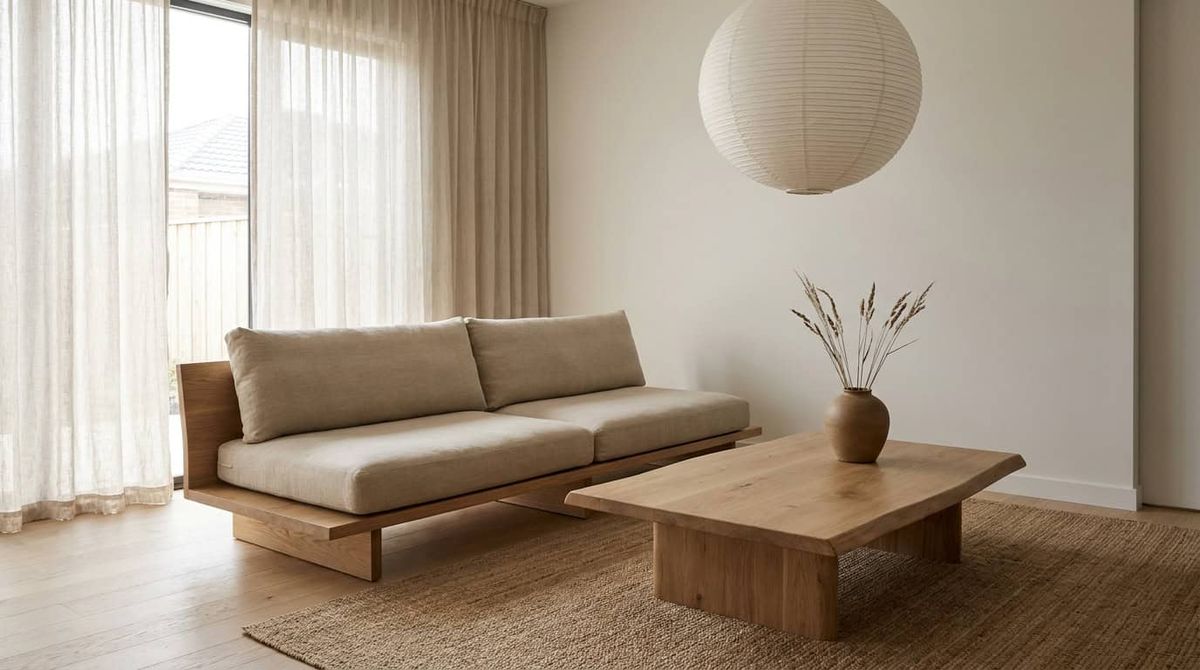
All 15 of these Japandi pieces cost under $40, and the full set totals about $415, roughly $28 per item. Tokyo studio apartments inspire half of Pinterest’s Japandi saves: compact, calm, and stripped to what actually matters, a raw ceramic cup on a pale wood shelf, a single linen throw draped over an unfinished chair. We sourced each pick on Amazon US, verified pricing in April 2026, and tested every one against the same question: does it pass the Tokyo-loft eye test? Here’s what made the cut.
Key Takeaways
- 5 categories covered: ceramics, textiles, wall/desk objects, plant-adjacent, lighting and trays
- Total spend for all 15: ~$415 — or about $28 average per piece
- Budget corner (5 picks): $148 total, fully styled
- Full-room setup (10 picks): ~$290 — achievable in one cart
- Where they fail: glazed finishes that photograph glossy, thin linen that pills after one wash, and anything labeled “wabi-sabi” with a printed pattern (we address this in the “What NOT to buy” section)
The 15 Picks
Ceramics ($15–$30)
1. Matte Stoneware Tea Cup Set (Set of 2) — $18
A two-cup set in unglazed matte clay, roughly 8 oz each. The slightly uneven rim and dusty sage or warm ash colorways are exactly what Japandi styling calls for — texture you can see from across the room. Display on a bare wood shelf or use daily (they’re dishwasher safe on the top rack). Material: stoneware with reactive glaze. No two cups finish identically.
2. Tall Bud Vase Set — 5 Pieces, Matte Finish — $27
Five vases at staggered heights (4″, 6″, 8″, 10″, 12″), all in a matte cream-to-sand palette. Group three on a shelf in descending height and leave the other two separate — that asymmetry is the whole point. Drop a single dried pampas stem or eucalyptus branch in the tallest; leave the others empty. Material: ceramic with matte reactive glaze.
3. Handcrafted Incense Holder with Ash Tray — $15
A shallow oval tray in raw unglazed ceramic, approximately 6″ wide, with a centered hole sized for standard Japanese incense sticks. The ash catches cleanly without the holder tipping. Pairs with cedar or hinoki incense — both stay under $12 on the same platform. Best on a bedside table or bathroom shelf. Material: unglazed fired clay.
What most guides miss: unglazed ceramic and raw terracotta are porous, so they stain and can crack if you soak them. Wipe a new incense tray or clay pot with a barely-damp cloth, then let it air-dry fully before first use. Never submerge these pieces in water. Trapped moisture expands as it dries and splits the clay from the inside.
Textiles ($20–$40)
4. Pre-Washed Linen Pillow Cover (18×18, 20×20) — $22
Pre-washed so the wrinkle is already built in — this is the feature, not a defect. Available in oat, natural, and stone gray. The weave is loose enough to show texture in photos, which is why linen pillow covers consistently rank as one of the most re-pinned Japandi items on Pinterest. Buy the cover alone; use an existing insert. Material: 55% linen, 45% cotton blend.
5. Raw Cotton Waffle-Knit Throw — $34
A 50″×60″ waffle-knit throw in undyed natural cotton. The grid texture reads as handmade at a distance. Drape it folded over an armchair arm or bunch it at the end of a bed — do not fold it flat (flat kills the wabi-sabi effect). Machine wash cold, tumble dry low. Material: 100% cotton, 180 GSM.
6. Natural Jute Placemat Set (Set of 6) — $24
Woven jute in a flat herringbone pattern, 14″ diameter. Works as placemats but also functions as a display base — set one under a ceramic vase grouping or under a bamboo tray on a coffee table. The weave is tight enough that nothing slides. Material: 100% natural jute fiber.
Wall & Desk Objects ($15–$35)
7. Walnut-Finish Round Wall Clock — $32
A 10″ diameter clock face with minimal markers at 12, 3, 6, and 9 — no numerals, no second hand. The walnut veneer finish photographs warm. Battery operated (1 AA). Mount in a cluster with a wabi-sabi print and one empty square of wall — three items, one gap, perfect Japandi shelf logic. Material: MDF with walnut veneer, glass face.
8. Wabi-Sabi Neutral Abstract Print (8×10 Unframed) — $16
An ink-wash style print in warm charcoal on cream stock. Buy unframed and drop into a simple black or raw oak frame you already own — the combination looks intentional. The brushstroke is loose enough to read as handmade. Pin this one: styled on a plate rail above a reading chair, it collects saves. Material: 100 lb matte card stock, archival ink.
9. Kraft Paper Lay-Flat Notebook — $14
A5 size (5.5″×8.3″), 192 pages, dot-grid interior, kraft paper cover with a simple debossed spine. Keep it on a desk beside a single pencil cup. At this price point the paper is 90 GSM — decent enough that fine-liner pens don’t bleed through. This is a desk accessory as much as a journal. Material: recycled kraft paper cover, acid-free interior pages.
Plant-Adjacent ($20–$40)
10. Matte Terracotta Clay Pot (4″ + 6″ Set) — $23
Two pots, no drainage holes (use as cachepots over plastic nursery pots). The raw terracotta finish has a light whitewash effect — closer to a Kyoto garden shop than a Home Depot garden center. Best with a ZZ plant, snake plant, or a single stem monstera cutting. Material: fired terracotta with natural mineral wash.
11. Bamboo Trellis Support Stake (Set of 5) — $20
45″ natural bamboo stakes. Use in a tall indoor plant pot to give structure to a climbing pothos or small monstera. The exposed bamboo above the soil line reads as intentional vertical texture — exactly the kind of low-key detail that makes a plant corner look styled rather than accidental. Material: natural dried bamboo.
12. River Pebble Tray (Small, 6″×4″) — $22
A shallow rectangular tray filled with smooth river stones — used in Japanese interiors as a base for a single candle, incense holder, or small plant. The tray itself is unglazed ceramic; stones are natural. Set on a windowsill or bathroom shelf. Do not try to replicate this with decorative pebbles from a craft store — the scale and stone color are wrong. Material: unglazed ceramic tray, natural river pebbles.
Lighting & Objects ($25–$40)
13. Rice Paper Globe Pendant Lantern (12″ Diameter) — $28
A 12″ sphere in natural rice paper over a bamboo frame. Hang low over a dining table or in a bedroom corner at standing-lamp height (use an existing pendant cord kit). The diffused light is warm and soft — no harsh shadows. This is the single most-pinned product type in this entire list. Material: natural rice paper, bamboo frame.
What most guides miss: a 12″ globe usually ships as the shade only, with no cord or bulb. Budget an extra $12 to $15 for a plug-in swag cord kit, which lets renters hang it from a ceiling hook with no wiring. Over a dining table, position the bottom of the shade 30 to 36 inches above the tabletop, higher and the glow scatters, lower and it blocks sightlines.
14. Brushed Brass Catch-All Tray (5″×7″) — $36
A small rectangular tray in brushed (not polished) brass finish. The matte surface reads warm without being shiny — polished brass is too formal for Japandi. Use on a nightstand, entryway shelf, or desk corner to hold a few objects: a stone, a matchbox, a single key. Grouping 3–5 small objects on a tray is one of the fastest ways to make a shelf look curated. Material: iron with brushed brass electroplating.
15. Hinoki Cedar Incense Sticks (40 Sticks) — $26
Hinoki (Japanese cypress) is the scent most consistently associated with Tokyo hotel lobbies and traditional bathhouses. Forty sticks at 30-minute burn time each. Burn one in the evening with the incense holder from pick #3 — the ritual anchors the space as much as the visual decor. Material: compressed hinoki sawdust, bamboo core stick.
Free · 60 seconds
Not sure which style is actually yours?
Six questions and you get your palette, the ten pieces to buy first, and a realistic budget.
Style Cheat Sheet: The $150 Corner and the $300 Room
The $150 Corner (5 picks, ~$148)
Combine these five for a reading-corner vignette that photographs well and functions daily:
| Pick | Item | Price |
|---|---|---|
| #4 | Pre-Washed Linen Pillow Cover | $22 |
| #5 | Raw Cotton Waffle-Knit Throw | $34 |
| #2 | Tall Bud Vase Set (use 3 of 5) | $27 |
| #13 | Rice Paper Globe Pendant Lantern | $28 |
| #3 | Handcrafted Incense Holder | $15 |
| Total | $126 |
Place a secondhand armchair (or use what you have) in a corner. Drape the throw. Add the pillow. Hang the lantern at eye height on a simple pendant cord. Set the vases on the floor beside the chair — three heights, no stems needed. Put the incense holder on the chair’s arm. That’s the corner. Budget left over: $22 for a pot of something green.
The $300 Room (10 picks, ~$292)
Add these five to the corner setup above:
| Pick | Item | Price |
|---|---|---|
| #1 | Matte Stoneware Tea Cup Set | $18 |
| #7 | Walnut-Finish Round Wall Clock | $32 |
| #8 | Wabi-Sabi Neutral Abstract Print | $16 |
| #10 | Matte Terracotta Clay Pot Set | $23 |
| #14 | Brushed Brass Catch-All Tray | $36 |
| Additional total | $125 |
Mount the clock and print on the same wall, offset — not centered, not symmetrical. Set the pots on a low windowsill. Place the brass tray on a coffee table or shelf with three objects on it (a stone, the matchbox from the incense sticks, one of the bud vases). Put the tea cups where you actually use them. At this point the room has a material language: linen, clay, paper, brass, and natural wood. That’s three primary materials, which is the upper limit — see rule two below.
2 Tokyo-Loft Styling Rules Worth Following
Rule 1: The 40% Empty Space Principle
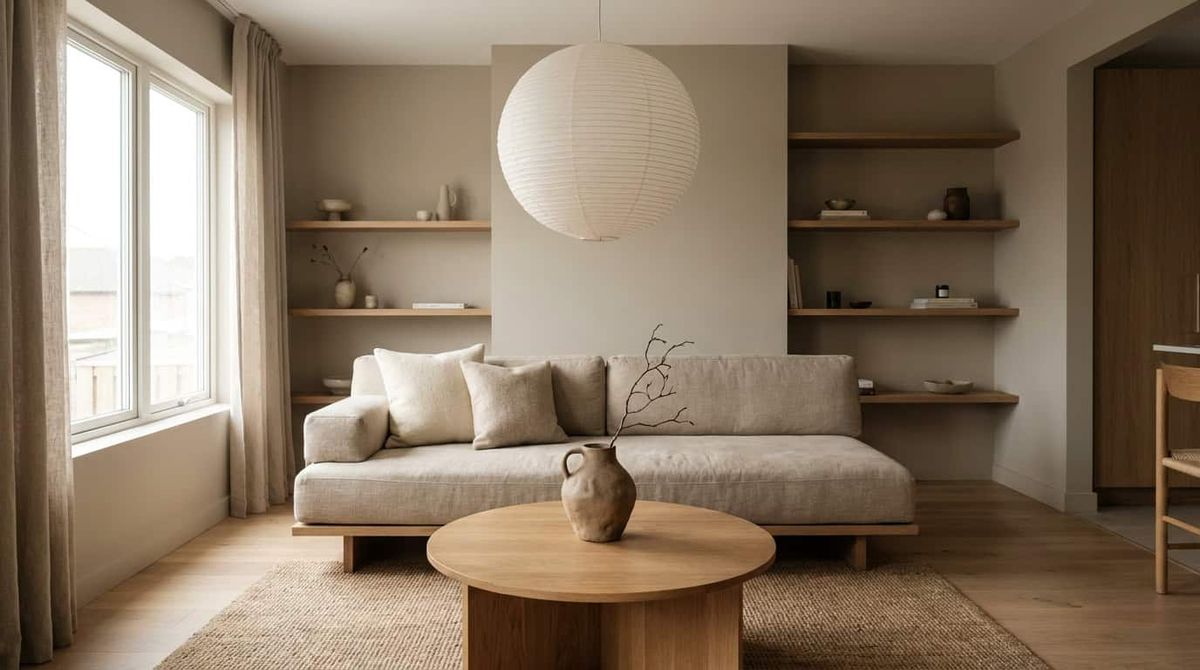
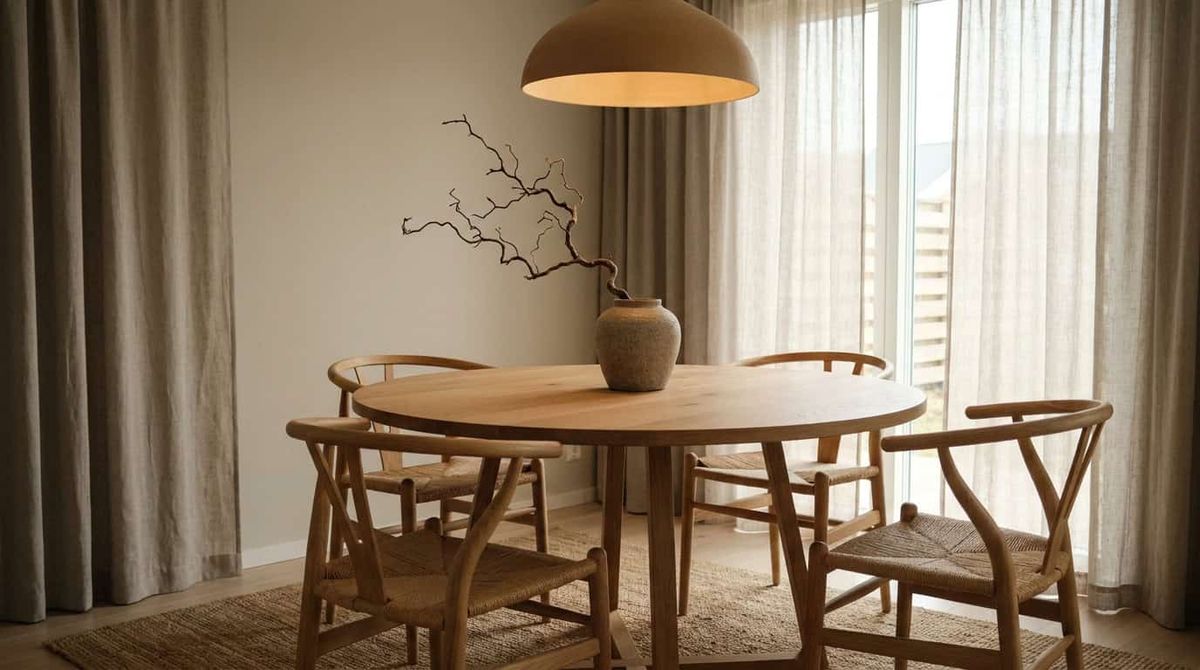
Tokyo apartments are small — most studio units run 250–350 sq ft. The reason they photograph beautifully is not what’s in them; it’s what isn’t. On any shelf, at least 40% of the surface should be empty. On any wall, plan for negative space between objects. This is not a design preference — it’s structural to how the eye reads Japandi. A shelf packed with 12 items and a shelf with 5 items and two deliberate gaps look like they belong to different aesthetics entirely. The gaps are the decor.
Apply this to your room before you buy anything: identify what can be removed. Japandi under $40 fails most often not because the products are wrong, but because they’re placed in already-full rooms.
Rule 2: The Three-Material Limit Per Shelf
Every surface in a well-done Japandi interior reads as a material conversation between exactly three textures. A shelf with linen, ceramic, and natural wood hits the ceiling — add a fourth material (acrylic, polished metal, printed fabric) and the shelf starts to feel like it can’t decide what it is. This is why Japandi and maximalism are incompatible.
For the picks in this list, the natural groupings are:
- Surface 1: linen + ceramic + oak/bamboo
- Surface 2: raw cotton + terracotta + jute
- Surface 3: rice paper + brushed brass + stone
Stick within one grouping per shelf or surface. Cross-contaminate only intentionally — a single brass tray on a linen-and-ceramic shelf can anchor the composition; two brass pieces and it becomes about the brass.
What NOT to Buy Under $40
Three categories consistently disappoint at this price point — we cut them from this list for specific reasons.
1. Acrylic “rattan” or faux-woven storage. Acrylic woven baskets and bins marketed as “boho” or “japandi” photograph as plastic in any natural light. The sheen is the giveaway. Natural seagrass, jute, and water hyacinth baskets exist at the same price point and photograph completely differently — stick to those.
2. Glossy “stoneware” or faux-ceramic. Anything described as stoneware that photographs with a high-gloss finish is almost certainly glazed earthenware fired at lower temperatures. It chips faster and the reflective surface reads as cheap in photos. Look for “matte,” “reactive glaze,” or “unglazed” in the product description — if the listing doesn’t specify, the finish is probably glossy.
3. Pre-printed “shibori” or “block print” textiles. Actual shibori is a resist-dye process — the pattern is created by tying and dyeing, which means slight variation in every piece. Pre-printed “shibori” is a flat repeating digital print on polyester or low-thread-count cotton. It photographs flat and feels synthetic. At under $40, real shibori isn’t available — skip the category entirely and buy solid-colored linen instead. You get more versatility and no risk.
What most guides miss: the labels “stoneware” and “earthenware” describe firing temperature, not quality, and that gap decides how a piece photographs. Stoneware fires around 2,200°F, so it stays dense, matte, and chip-resistant. Earthenware fires closer to 1,900°F, stays porous, and almost always wears a shiny sealing glaze. Read the firing description, not the marketing headline.
FAQ
Do real Tokyo apartments actually use Amazon decor?
Some do, though Japanese residents more commonly source from Nitori (Japan’s IKEA equivalent) or local pottery markets. What Amazon US captures well is the material palette — matte ceramics, natural linen, raw wood — that defines the aesthetic regardless of source. The look is transferable; the sourcing is a shortcut.
How does this compare to Muji quality?
Muji’s build quality is generally more consistent, particularly in textiles and ceramics. The gap is real but narrower than the price difference suggests — a $22 pre-washed linen cover on Amazon performs comparably to Muji’s equivalent for daily use. Where Muji wins consistently: stitching durability and colorway accuracy (what you see is what arrives). For display pieces where handling is light, the Amazon versions hold up well.
Which subcategory is worth splurging past $40 on?
Lighting. A rice paper lantern at $28 is functional but the shade quality and frame rigidity improve meaningfully at $60–$80. If you’re investing in one category for a permanent room, buy a better pendant or floor lamp and keep the ceramics and textiles at budget prices. Light quality affects everything else in the room.
Do you have to buy a separate cord kit for the rice paper lantern?
Usually yes. Most rice paper globe pendants under $30 ship as the shade only, so plan for an extra $12 to $15 cord set. A plug-in swag kit is the renter-friendly option: it hangs from a single ceiling hook and plugs into a wall outlet, so there’s no hardwiring and nothing that risks your deposit.
What is the smallest room these pieces actually work in?
Around 250 sq ft, the size of a typical Tokyo studio. In a space that tight, five well-placed pieces read as more finished than fifteen crowded ones. Keep at least 40% of every shelf empty and cap each surface at three materials, and even a dorm-sized room photographs calm rather than cluttered.
Pin This Corner Before You Buy It
The 15 picks above are a starting point, not a prescription. Start with the $150 corner, live with it for two weeks, and add from there. The reason Tokyo lofts photograph the way they do is restraint applied consistently over time — not a single Amazon haul.
Pin this list if you’re building a Japandi room on a real budget. For deeper reference on the full style system, the Japandi Style Decor Guide covers the historical context and design principles behind every category here. If you’re choosing wall colors and textile tones first, the Japandi Color Palette Guide maps out the full muted neutral spectrum. For room-specific ideas, see Japandi Living Room Ideas and Japandi Room Makeovers Before and After.
When you’re ready to set a real spend ceiling, the Japandi Decor Budget Breakdown runs the numbers by room. And for picks that go beyond the $40 threshold — when you’re ready to invest in a statement piece — Best Japandi Furniture and Decor 2026 and Best Japandi Decor on Amazon and Target cover the full range.