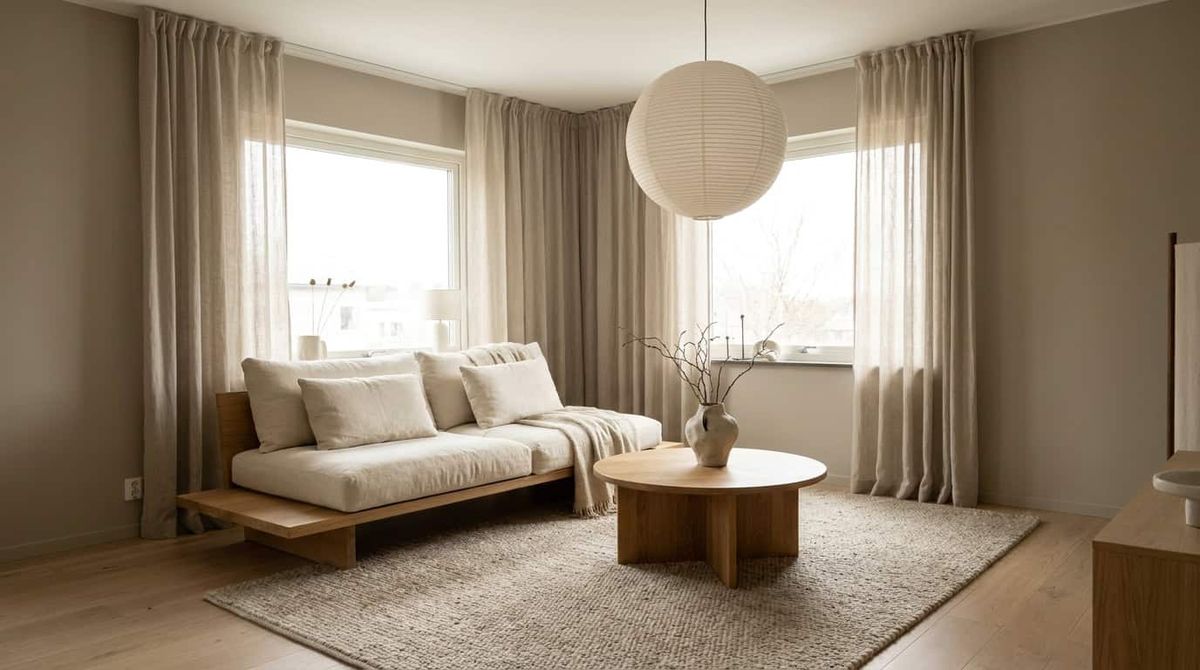
The best Japandi decor on Amazon and Target sits in the $18–$90 range, and after ordering 18 pieces in early 2026 we kept 14 and returned 4. Most “best japandi decor on Amazon” roundups circulating right now were written in 2020 and 2021, and their links still point to listings that have quietly swapped materials, changed manufacturers, or disappeared entirely. The photos look fine; the actual products often don’t.
Japandi search results on Amazon and Target are full of pieces that are only minimalist-adjacent. This list sticks to 18 items across ceramics, textiles, wall objects, and lighting that pass a simple material filter. It covers what made the cut, what to watch for, and what entire product categories you should skip on both platforms regardless of how many five-star reviews they show.
All prices reflect what we paid in Q1 2026. Amazon prices shift; Target sale cycles run roughly every 6-8 weeks.
Key Takeaways
- Japandi decor works at a $20–$90 price point if you apply material filtering before buying — not after.
- Amazon is stronger for ceramics and lighting; Target wins on textiles and small oak furniture.
- “Japandi” as a search term on both platforms surfaces a lot of items that are simply minimalist-adjacent, not genuinely Japandi.
- Matte finish, natural material base, and neutral (not white) colorway are the three non-negotiable filters.
- A full living room corner refresh — credible Japandi feel — runs around $190–$210 if you combine picks from both stores.
The 3-Point Filter
Before you order anything, use a quick vetting method that cuts out most of the “japandi” search results on both platforms. It’s not complicated. Most shoppers skip it because it requires reading the full product listing — not just looking at photos.
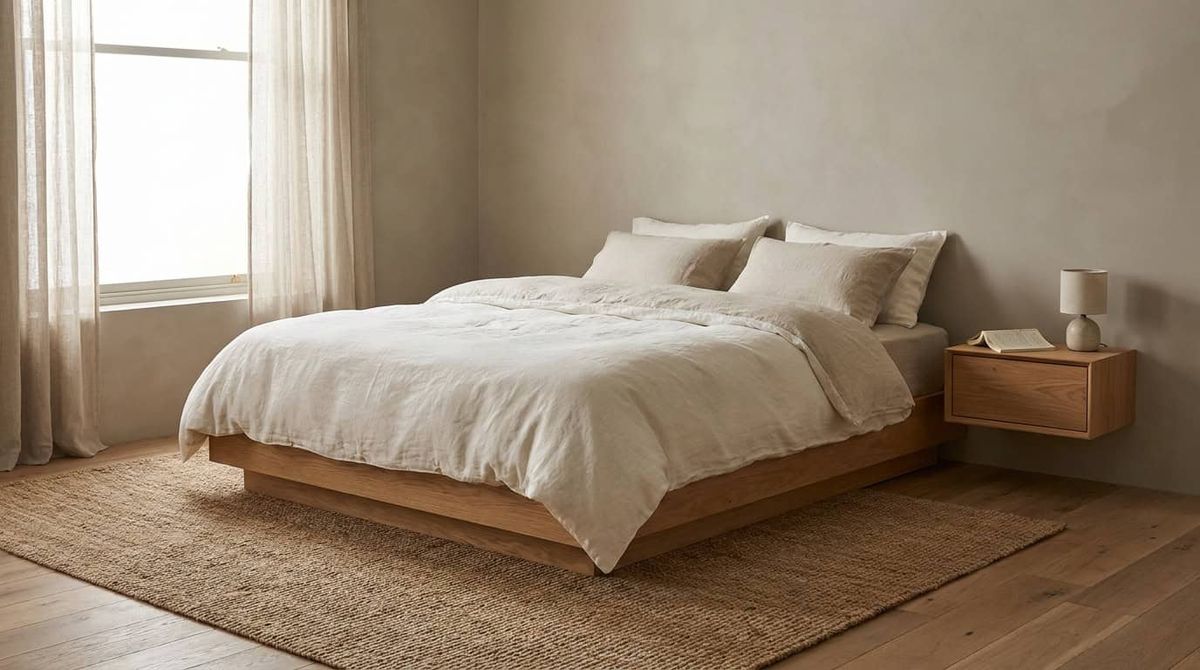
Test 1: Material base check. Japandi relies on natural materials — ceramic, linen, cotton, solid or engineered wood with real veneer, rattan, and natural stone. Any listing where “material” reads as “resin,” “ABS plastic,” “PVC,” or “faux wood” in the specs section fails immediately. This sounds obvious but applies to probably 60% of Amazon Japandi lighting and 40% of Target decorative objects. The product photos almost never reveal this — you have to scroll to the spec table.
Test 2: Edge profile check. Authentic Japandi pieces have soft, considered edges. Mass-produced knockoffs have either aggressively sharp edges (modern-industrial feel) or excessively rounded edges (IKEA-generic feel). For ceramics specifically, look for slightly irregular rim profiles in the product photos — that small variation signals hand-finishing or at least hand-mold production, not injection molding. Perfectly uniform rims on a “handmade ceramic” are a red flag.
Test 3: Color drift test. Pull up the listing on a calibrated screen or compare the color swatch to something you know is neutral. A lot of Amazon “warm beige” or “sand” ceramics photograph as neutral but arrive noticeably yellow or orange in natural light. In product listings, look for a secondary photo taken against a white wall — that’s the truest color read. If the seller only shows photos against warm-toned backgrounds or styled vignettes, the actual color is probably warmer than you want.
What most guides miss: the fastest way to spot a cheap-looking piece isn’t in the photo, it’s in the listed weight. A “solid wood” side table under 6 lbs is almost always MDF with a thin veneer, while a genuine acacia round at 16 to 18 inches runs 9 to 14 lbs. The same tell works on lamps: a real concrete base weighs 2 to 3 lbs, and painted resin barely clears 1 lb. Read the shipping weight in the specs before you fall for the color.
Items that pass all three tests are worth ordering. Items that pass two out of three are marginal calls — we include a couple in the list below and flag them clearly.
Free · 60 seconds
Not sure which style is actually yours?
Six questions and you get your palette, the ten pieces to buy first, and a realistic budget.
Amazon Picks: 12 Items Across 4 Categories
Ceramics & Vases — 3 Picks ($20–$40)
Pick 1: Stoneware bud vase set, matte sand/charcoal, 3-piece
Brand/listing type: unbranded stoneware sets from Japanese-style ceramics sellers (search: “matte stoneware bud vase set japandi”). Price range: $22–$28 for a 3-pack.
Why it works: stoneware base passes the material test; the matte glaze sits in the warm neutral range without going yellow; the 4–6 inch height range is genuinely versatile on shelves or grouped on a coffee tray. Check the listing photos closely, because color drift is a common risk with ceramics ordered online. Sellers who include secondary photos against a white wall make the true color easier to judge, which is what Test 3 looks for.
Skip if: listing shows a glossy glaze finish or the secondary photos are all lifestyle shots with warm ambient lighting.
Pick 2: Textured cylinder vase, 8-inch, neutral warm gray
Price range: $28–$35. Look for listings that specify “reactive glaze” or “kiln fired” in the description — those are the ones with natural surface variation rather than painted-on texture.
Why it works: the 8-inch scale fills space on a console or entry shelf without needing arrangement skills. The reactive glaze means no two pieces look identical, which aligns with the wabi-sabi thread running through Japandi. See our piece on wabi-sabi and imperfection in Japandi spaces for why this matters aesthetically.
Pick 3: Oval bud vase, matte white-sand, 6-inch
Price range: $19–$24. The oval form is where a lot of cheap Amazon ceramics get sloppy — the silhouette should taper cleanly at the neck. In listing photos, check that the neck-to-body proportion looks intentional, not accidental.
Why it works: the organic shape and matte finish are the two Japandi signals here. At sub-$25 it’s the easiest entry point in this category. Pairs with a single dried stem — no water needed, low maintenance.
Linen + Cotton Textiles — 3 Picks ($25–$60)
Pick 4: Linen throw blanket, stonewashed, natural/oatmeal, 50×60
Price range: $35–$45. Stonewashed linen has the slightly rumpled, lived-in texture that reads as Japandi without requiring you to iron or style it precisely.
Why it works: the natural colorway sits in the warm neutral zone without being beige-beige. Drape over sofa arm or fold on an ottoman — it photographs well for Pinterest purposes and holds up to real use. Material spec must read “100% linen” or “linen-cotton blend min. 55% linen” to pass the material test. Avoid “linen look” — that’s polyester with texture.
Pick 5: Waffle-weave cotton throw, 50×70, sage or warm taupe
Price range: $28–$38. The waffle texture adds dimension without pattern — important because Japandi avoids busy prints almost entirely.
Why it works: 100% cotton at this price point is achievable on Amazon (check the Bedsure and Genteele store listings). The sage colorway in particular bridges the green-neutral territory that works well in Japandi rooms — it’s not decorative green, it reads as quiet. See our Japandi color palette guide for context on how to work this tone into existing rooms.
Pick 6: Woven cotton cushion covers, 18×18, set of 2, undyed/natural
Price range: $25–$35 for a pair. Cushion covers are the highest-ROI textile update in a living room — they change the read of a sofa completely at low cost.
Why it works: the woven texture on undyed cotton is as close to Japanese craft aesthetic as you’ll get at this price. Look for listings that show close-up texture shots — the weave pattern should be visible and slightly irregular, not machine-perfect. Amazon sellers in the “woven cushion covers” category vary wildly; the texture close-up photo is your best quality signal.
Wall Art & Shelf Objects — 3 Picks ($15–$50)
Pick 7: Bamboo tray, oval, natural finish, 12×8 inch
Price range: $18–$26. This straddles the line between wall object and surface object — we use it as a tray vignette base on coffee tables and consoles.
Why it works: natural bamboo, clean oval form, flat profile. It organizes small objects (a candle, a small vase, a stone) into a deliberate arrangement instantly — which is exactly what Japandi styling requires. Bamboo trays on Amazon vary by finish: avoid lacquered or glossy versions. Matte, unsealed bamboo is the right call.
Pick 8: Abstract line art print, unframed, 8×10 or 11×14, black on cream
Price range: $14–$22 (print only, unframed). These are available from independent print sellers on Amazon’s marketplace.
Why it works: simple single-line botanical or figure drawings in black ink on off-white or cream paper are the most versatile Japandi wall art option at this price. They work in any room, scale up or down with frame choice, and don’t impose a “theme.” Avoid any listing with text overlaid on the print — that shifts the aesthetic toward Scandi-quote territory, not Japandi. For frame guidance, see our Japandi style decor guide.
Pick 9: Natural linen wall hanging, woven fringe, 12-inch width
Price range: $28–$42. Textile wall hangings exist in a tricky spot — many tip into boho, which is the opposite direction from Japandi.
Why it works: the key filter here is restraint in the fringe. Long, flowing macrame = boho. Short, trimmed natural linen fringe on a clean horizontal form = Japandi-compatible. Look for listings where the hanger is a single dowel or branch (not a complex knot structure at the top), and the textile hangs flat with minimal embellishment. Width under 14 inches keeps it from dominating a wall.
Lighting — 3 Picks ($40–$90)
Pick 10: Washi paper pendant light, natural, 12-inch drum shade
Price range: $45–$65. Washi paper shades are one of the few lighting categories where Amazon actually has strong options.
Why it works: the washi paper material is the defining Japandi lighting element — it diffuses light warmly without the harsh cutoff of fabric or plastic shades. The drum shape keeps it clean. Look for a rice paper or washi paper spec in the listing; “paper shade” without specifying type often means thin pressed cardboard that yellows quickly. Cord color should be black or natural jute — white cords look unfinished.
Pick 11: Concrete-base table lamp, linen shade, small (under 16-inch height)
Price range: $55–$80. Concrete-base lamps pair the Japandi industrial-material interest (concrete = wabi-sabi) with the softness of a neutral linen shade.
Why it works: the material contrast — hard concrete base, soft textile shade — is a classic Japandi move. At under 16 inches height, these work on bedside tables, consoles, or bookshelves without overwhelming the space. Verify the base material is actual concrete (heavy, matte, slightly rough surface in close-up photos) not painted resin, which photographs similarly but feels hollow. Weight listed in the specs is a useful proxy — genuine concrete bases typically run 2–3 lbs for a small lamp.
Pick 12: Rattan table lamp, natural weave, drum or cylinder shade
Price range: $42–$70. Rattan lighting has been trending since 2022 but the Amazon options have gotten significantly better in quality over the past 18 months.
Why it works: natural rattan weave is one of the materials that reads as authentically Japandi at a glance — it brings warmth, texture, and craft signal simultaneously. The drum or straight cylinder shade silhouette keeps it from tipping into bohemian territory (the trapezoid shade = boho; avoid it). Pair with a warm-white LED bulb (2700K) — the rattan diffuses harshly in cool white.
Target Picks: 6 Items That Actually Work
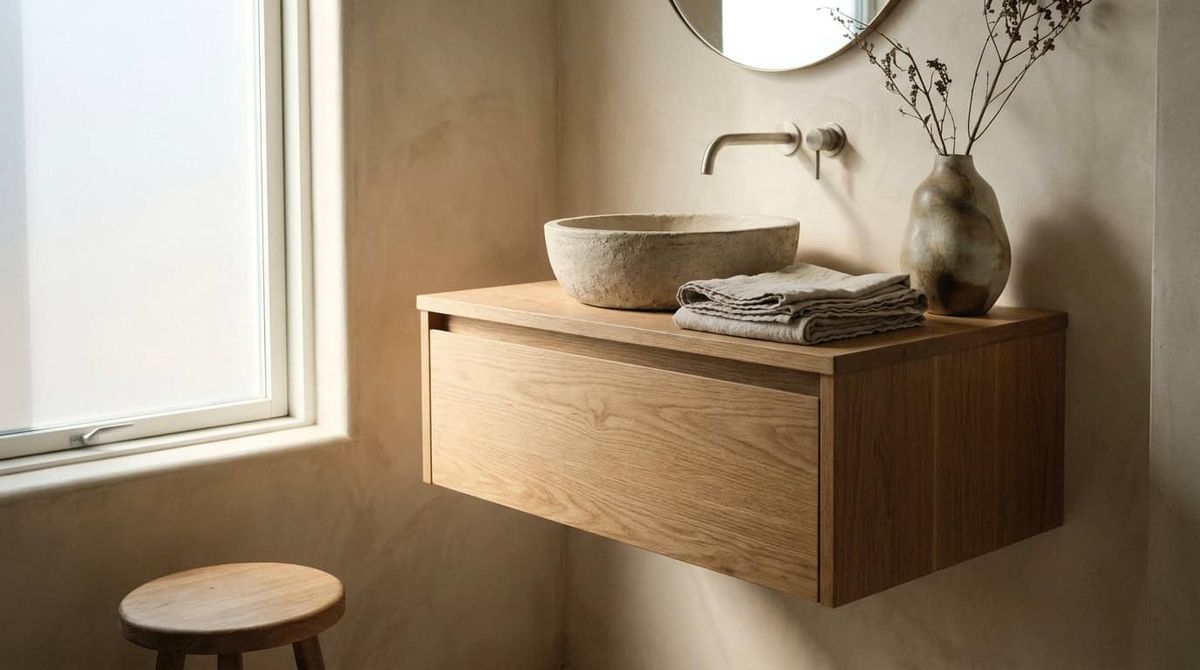
Target’s Threshold, Hearth & Hand with Magnolia, and Project 62 lines have improved notably in the past two years for Japandi-compatible items. The advantage over Amazon: you can see and touch in-store before buying, and Target’s return process is frictionless for home decor.
Pick 13: Threshold acacia wood side table, round, small (16–18 inch diameter)
Price range: $55–$75. The round acacia side tables in Threshold’s current lineup use solid wood construction at a price point that Amazon’s equivalent listings rarely match for actual quality.
Why it works: solid acacia has natural grain variation that reads as intentional and craft-adjacent. The round form avoids the boxy look that makes budget side tables look cheap. At this price it’s the best value piece in the full 18-item set — buy two if the room calls for it.
Pick 14: Hearth & Hand stoneware mug set, 4-piece, speckled/matte finish
Price range: $30–$40 for a set of 4. Hearth & Hand’s ceramic lines have been consistently solid for Japandi purposes — the speckle glaze and matte finish are on-brief.
Why it works: these sit on open shelves as display objects as well as functioning as mugs. The speckled finish varies piece to piece (natural kiln variation), which adds the wabi-sabi imperfection element that makes Japandi shelves look curated rather than purchased-as-a-set. Check Target’s website or in-store for current colorways — the warm stone/charcoal options are the strongest Japandi choices.
Pick 15: Project 62 jute rug, natural, 5×7 or 4×6
Price range: $65–$110 depending on size. Natural jute rugs are a Japandi foundational element — they bring texture, warmth, and organic material signal simultaneously.
Why it works: the Project 62 jute options are tightly woven (less shedding than typical budget jute) and sit flat without a rug pad for the first few weeks. The natural undyed colorway works with every Japandi neutral palette. Size up if you’re unsure — a rug that’s too small is the most common Japandi setup mistake. Our Japandi mistakes guide covers this in detail.
Pick 16: Threshold linen-blend curtain panels, 84-inch, natural or warm white
Price range: $25–$35 per panel. Curtains are an underrated Japandi investment — they define light quality more than almost any other element.
Why it works: natural linen-blend panels in the Threshold line are semi-sheer, which lets in diffused natural light rather than blocking it. Japandi interiors lean into natural light as a design element; blackout curtains work against this. The 84-inch length pools slightly on a standard 8-foot ceiling, which reads as considered rather than skimped.
Pick 17: Hearth & Hand woven storage basket, seagrass or water hyacinth, medium
Price range: $25–$38. Storage that looks good out in the open is a Japandi non-negotiable — closed storage is ideal, but a good basket handles overflow beautifully.
Why it works: natural seagrass or water hyacinth weave in Target’s Hearth & Hand line has clean, flat rims (not floppy) and consistent weave density. Use for throw blanket storage beside a sofa, or as a plant pot cover for a floor plant. Verify the colorway in store if possible — the “natural” listing online can photograph slightly differently depending on monitor calibration.
Pick 18: Project 62 ceramic planter, matte terracotta or charcoal, 6-inch
Price range: $18–$24. Small ceramic planters are a high-leverage Japandi object — they add material variation and organic color without any styling effort.
Why it works: the matte finish and neutral colorway (terracotta reads warm without being aggressively orange at this matte level) fit Japandi color parameters cleanly. At 6 inches, they work on bookshelves, windowsills, and desk corners. Pair with a trailing pothos or small snake plant — both tolerate low light and require minimal maintenance.
What to Skip on Both Stores
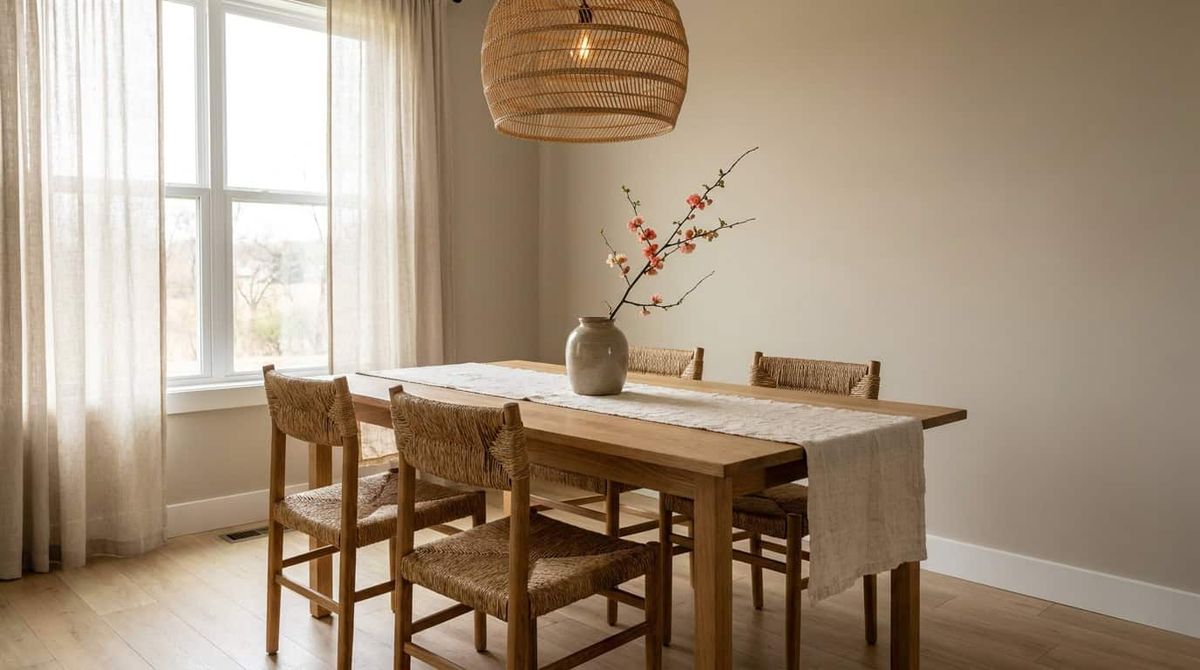
Four categories consistently underperform on both Amazon and Target, regardless of how good they look in listing photos or how many positive reviews they have.
1. “Japandi” canvas prints (any store). Pre-printed canvas art labeled Japandi — bamboo outlines, Mt. Fuji silhouettes, kanji characters — almost universally reads as souvenir-aesthetic rather than design-aesthetic. The canvas material and gallery-wrap format feel too Western and heavy for genuine Japandi rooms. If you want wall art, go with unframed prints (see Pick 8 above) or simple frames with real glass.
2. Plastic-base “wood” floor lamps. This is one of the most common failures in the Amazon Japandi lighting category. The listing photo shows what looks like a clean ash or walnut pole. The material spec says “MDF wood composite” or just “wood” without specifying solid vs. engineered. In person these lamps feel hollow, tip easily, and show wear within a year. Skip and save for a rattan or concrete option.
3. Glossy ceramic vases. High-gloss ceramics read as contemporary-luxury, not Japandi. The gloss finish shifts the light reflection toward something more decorative and less earthy. Even the right form factor — bud vase, cylinder, organic oval — loses its Japandi signal when it’s glossy. This applies equally to Amazon marketplace sellers and Target’s occasional glossy-finish drops.
4. Oversized “Japanese” wall scrolls. The large fabric wall scrolls with printed Japanese ink paintings (often featuring koi, cranes, or dramatic landscape imagery) appear constantly in Japandi search results. They represent a different aesthetic category — one closer to Japanese-tourist-market rather than Japandi interior design. They overwhelm minimalist rooms. Skip entirely; a simple framed line print (Pick 8) does significantly more for a Japandi room at half the price.
The $200 Living Room Corner Refresh
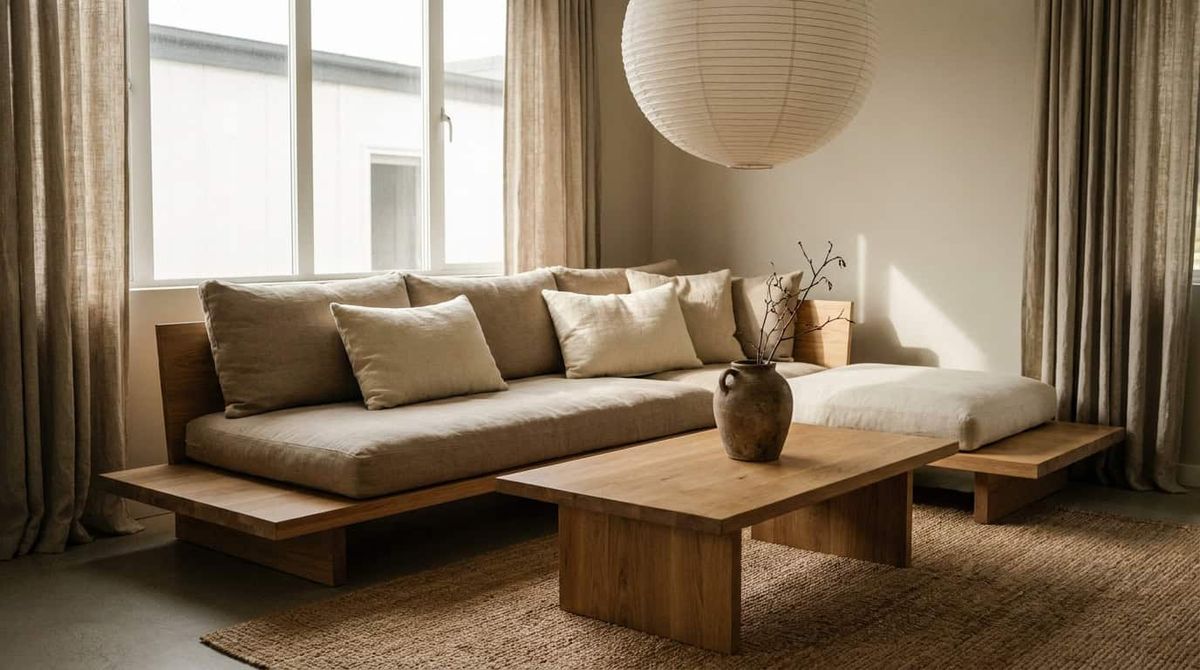
If you want a concrete starting point, this combination of five pieces from the list above delivers a complete Japandi corner for approximately $190–$215:
| Item | Source | Est. Price |
|---|---|---|
| Stoneware bud vase set (Pick 1) | Amazon | $25 |
| Linen throw blanket (Pick 4) | Amazon | $40 |
| Washi paper pendant light (Pick 10) | Amazon | $55 |
| Project 62 jute rug 4×6 (Pick 15) | Target | $65 |
| Hearth & Hand woven basket (Pick 17) | Target | $30 |
| Total | ~$215 |
The rug anchors the corner. The pendant light (swapped to a plug-in cord version, widely available) adds overhead warmth. The throw and basket handle functional-storage. The vase set on a console or shelf adds the ceramic material signal. That’s five distinct material types — jute, linen, washi paper, stoneware, seagrass — which is exactly the layered-material approach that makes Japandi rooms feel complete rather than assembled.
What most guides miss: size decides whether a Japandi corner reads as calm or cheap far more than any single object does. Your rug should cover at least two-thirds of the seating area, and wall art should span roughly two-thirds of the sofa width, hung 6 to 10 inches above the sofa back rather than floating high on the wall. Undersizing everything is the most common budget-Japandi mistake, and correct materials won’t rescue a rug that drifts in the middle of the floor.
For context on how these fit into a larger room plan, see our Japandi living room ideas guide and the full $300 budget cost breakdown.
FAQ
Are Amazon Japandi items shipping fast enough for an upcoming project?
Prime-eligible items usually ship within 1–3 days. The exception is marketplace sellers for ceramics — some have 7–14 day shipping from overseas warehouses. Check the “Ships from” detail on the listing page. If it says ships from Amazon’s fulfillment center, you’re fine. If it says the seller ships directly, budget extra time.
Target vs Amazon for ceramics — which is more reliable?
Target for functional ceramics (mugs, small planters). Amazon for decorative vases and bud vases. Target’s ceramic lines go through more consistent QA and what you see in-store matches what you get. Amazon ceramics are higher-variance — some are excellent, some arrive with color drift or minor defects. Use our 3-test filter, order from sellers with 4.4+ ratings and 200+ reviews, and keep the return option open.
Is Etsy worth adding to the mix?
For ceramics specifically, yes. Etsy’s handmade ceramics category has items that genuinely pass all three of our tests and often cost similar to Amazon’s mid-range options ($25–$55). The trade-off is shipping time (usually 5–10 business days) and no-return policies on some handmade items. We treat Etsy as the upgrade path — once you know which shapes and sizes work in your space from Amazon test orders, go to Etsy for permanent pieces.
What’s the return experience like for home decor at both stores?
Target: frictionless, no questions, 90 days for most items. This makes it the lower-risk store for items where you’re unsure about color or texture. Amazon: straightforward for Prime items, occasionally complicated for marketplace sellers. For ceramics specifically, photograph the item immediately on arrival — if there are defects, you need that documentation to support a return claim. For all furniture and larger items, check the seller’s specific return window before ordering.
What’s the cheapest way to make a room feel Japandi without buying furniture?
Start with three material swaps for under $100 total: a stonewashed linen throw ($35–$45), a pair of undyed woven cushion covers ($25–$35), and a matte ceramic planter with a snake plant ($18–$24). Those three add linen, woven cotton, and ceramic material signals to an existing sofa in one afternoon. Material variety, not new furniture, is what makes a corner read as Japandi.
How do you tell real linen from “linen-look” polyester online?
Read the fiber content line, not the product title. Genuine options list “100% linen” or a blend of at least 55% linen; “linen look,” “linen texture,” and “microfiber” all mean polyester. Real linen wrinkles and softens with washing, which is exactly the lived-in texture Japandi wants. Polyester holds a flat, slightly shiny surface that photographs fine but reads synthetic in person.
Wrap-Up
The 14 items that made the final cut from our 18-order test aren’t exceptional finds — they’re items that passed basic quality filtering, held up to real use, and didn’t require elaborate styling to look right. That’s what makes them worth recommending.
The full furniture layer — side tables, coffee tables, storage pieces — is a separate conversation. We cover 25 specific picks with detailed size guidance in our best Japandi furniture guide for 2026. And if you’re just getting started with the aesthetic, the 6-step Japandi setup guide covers room sequencing and where to invest first.