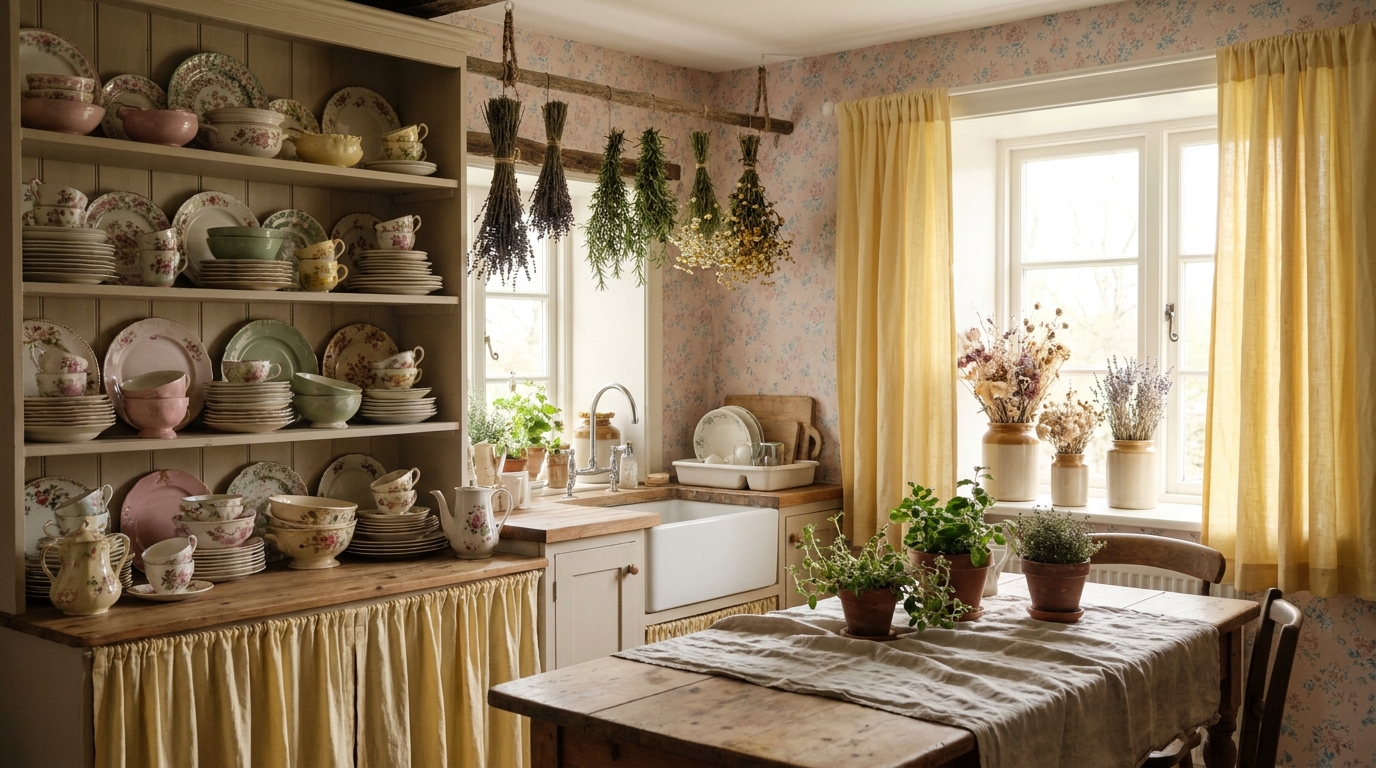
The best cottagecore decor under $60 in 2026 comes down to five categories: textiles, ceramics, botanicals, woven storage, and botanical wall art. Cottagecore searches on Pinterest topped 1.5 billion in 2024 — up 30% from the year before (Pinterest Trends Report, 2024). But for every piece that belongs in a cottagecore room, there are ten that look the part in a product photo and fade into irrelevance by summer. We went through the noise. Every pick in this list had to pass a material check, a price test, and a hard look at whether it’s a real cottagecore element or a passing trend masquerading as one.
The 18 picks below cover five categories: textiles, ceramics and vessels, botanicals and natural elements, storage and furniture accents, and art and wall. Each one comes in under $60. Each one earns its place in a room for reasons beyond a good product photo.
Key Takeaways
- All 18 picks are under $60 and available at major US retailers or Etsy.
- Textiles are the highest-ROI category: a $12 cushion cover transforms a sofa faster than a $50 ceramic.
- Dried botanicals last 2+ years when air-dried properly — they’re a one-time buy.
- Pinterest reports cottagecore searches at 1.5 billion+ in 2024, confirming this aesthetic has durability, not just a moment (Pinterest Trends Report, 2024).
- Start with textiles, add ceramics, finish with art — that order gives the fastest visible result.
How We Chose These 18 Picks
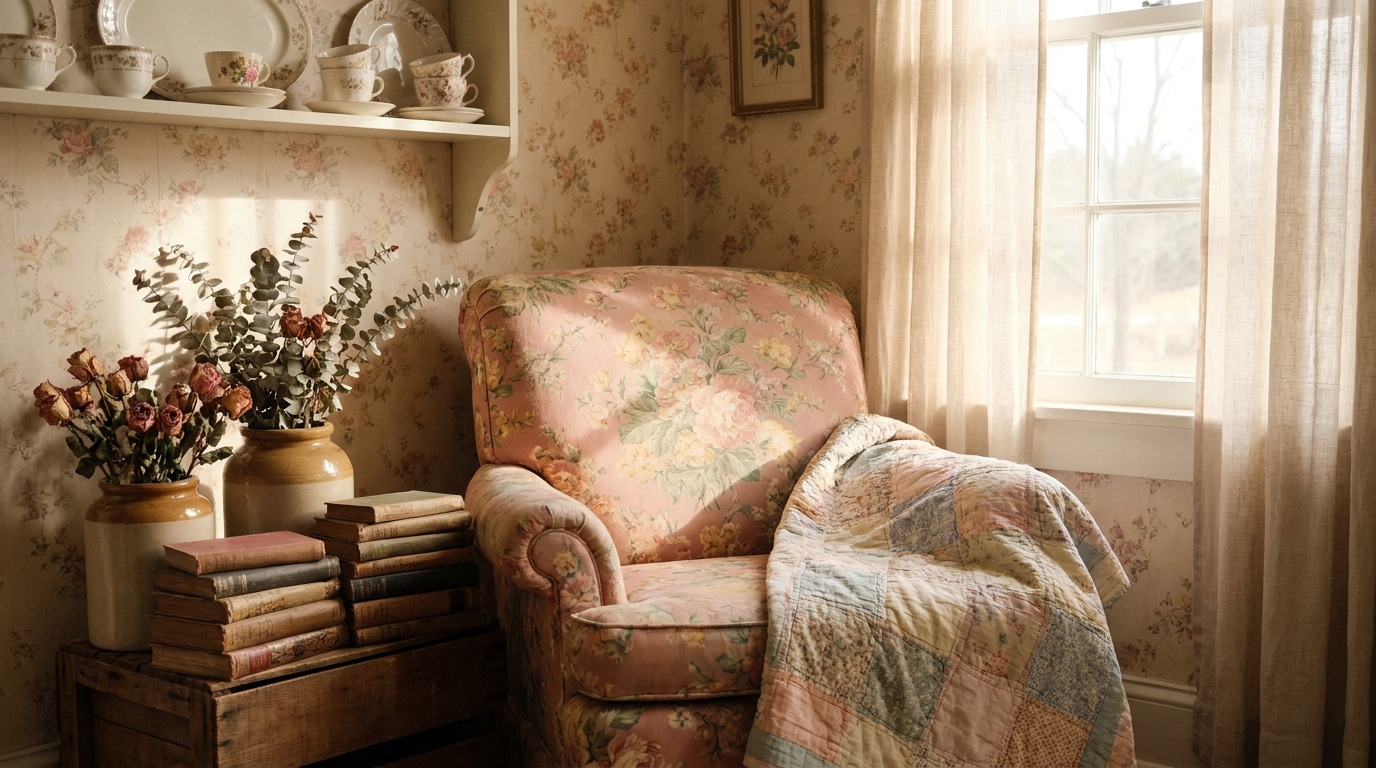
We applied a six-element cottagecore scoring framework before including anything. Each pick had to check at least three of the following: natural material, botanical reference, handmade appearance, muted earthy palette, vintage or heirloom quality, and functional use in everyday life. Anything that scored below three got cut, regardless of how well it was selling.
Price ceiling was firm at $60. Picks had to be available through Amazon, Target, IKEA, World Market, or Etsy with a US shipping option. We also cross-checked against Etsy’s cottage search trend data, which showed a 42% year-over-year increase in “cottagecore home decor” searches in 2024 (Etsy Trend Report, 2024). That volume signals staying power, not a fad spike.
The clearest filter we found: if a piece would look out of place in a real 1920s English cottage, it’s probably trend-adjacent rather than genuinely cottagecore. We used that visual test as a tiebreaker for borderline picks.
Textiles
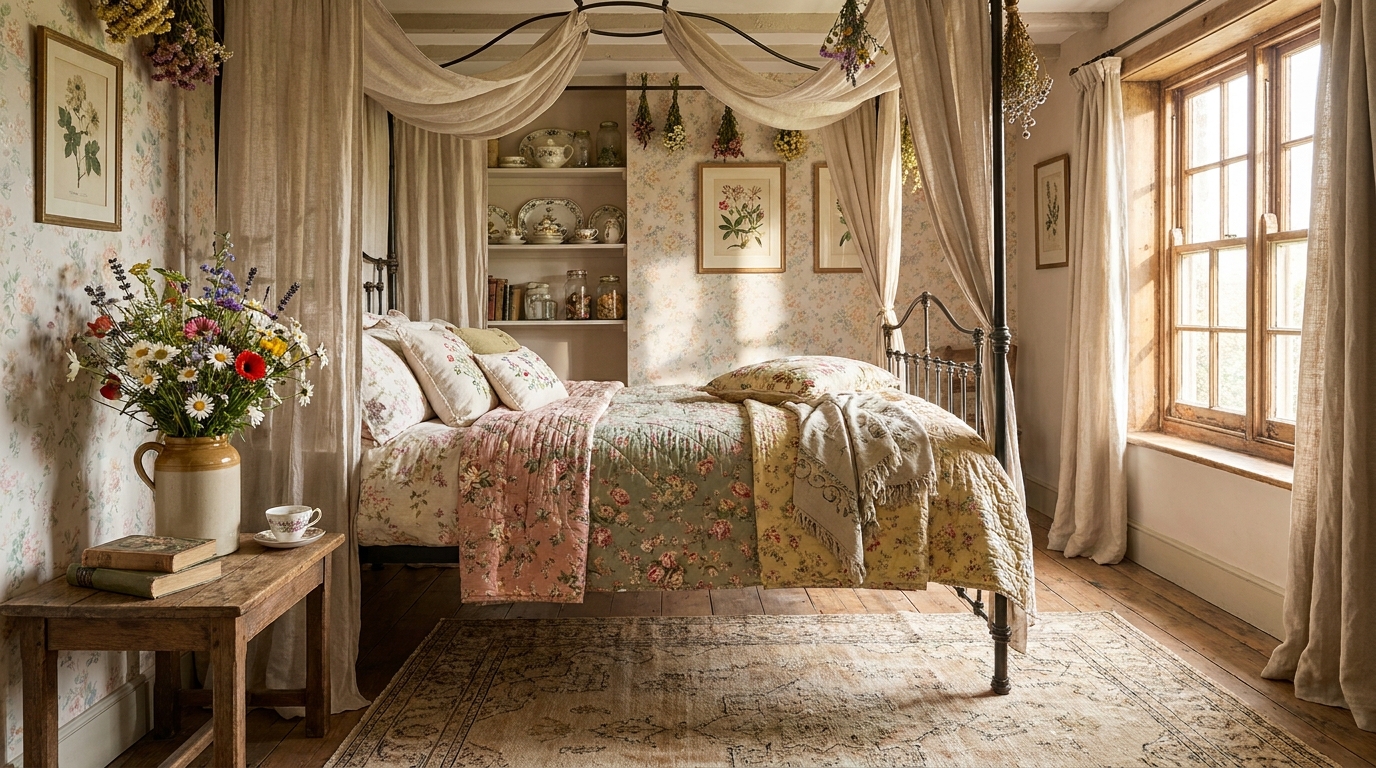
Textiles are where cottagecore rooms start. They carry warmth, color, and pattern simultaneously. No other category gives you as much visual return per dollar. A pair of $12 cushion covers shifts a sofa’s entire mood. A linen tablecloth transforms a kitchen table in one step. These five picks represent the best textile entry points in 2026.
What most guides miss: the quickest tell of cheap faux-linen is a flat, even sheen. Real linen and linen-cotton wrinkle in sharp, irregular creases and catch light unevenly. Polyester “faux linen” folds into soft rounded wrinkles and holds a faint plastic shine under lamplight. Crumple a corner in your hand: natural fibers keep the crease, synthetics spring back smooth.
1. Linen Floral Cushion Covers
Linen Floral Cushion Cover 2-Pack— $12-$16 (Amazon)
The botanical print scale is what separates a cottagecore cushion cover from a generic floral one. Look for stems and leaves at medium scale — not micro-floral (reads mass-market) and not oversized botanical (reads maximalist). Linen-cotton blend is the right material: it holds its shape, washes without pilling, and has the slightly rumpled quality that cottagecore styling relies on. At $12 for a 2-pack, this is the single highest-value cottagecore purchase on this list.
2. Chunky Cotton Knit Throw in Sage or Blush
Chunky Knit Throw Blanket — Sage or Blush— $28-$35 (Amazon, Target)
Even if the fiber content is a cotton-acrylic blend, a chunky knit throw reads as natural because of its texture weight. Sage and blush are the two cottagecore-native colors here — both sit inside the muted, desaturated palette the aesthetic requires. Draped over a sofa arm or folded at the foot of a bed, this throw adds the layered, unhurried look that defines the aesthetic. Avoid anything in bright white or gray: both colors pull the room toward Scandi rather than cottagecore.
3. Linen-Cotton Tablecloth in Oatmeal or Off-White
Linen-Cotton Tablecloth — Oatmeal— $15-$20 (IKEA MÄRIT or similar)
The kitchen table is the most under-styled surface in a cottagecore room. A single tablecloth in oatmeal or off-white is the fastest fix. IKEA’s MÄRIT tablecloth ($15-$20) uses a linen-cotton blend with the right weight: substantial enough to drape without sliding, light enough to not overwhelm a small table. Layer a wicker tray and two bud vases on top and the table becomes a proper cottagecore moment rather than a flat eating surface.
4. Embroidered Cotton Pillowcase
Embroidered Cotton Pillowcase — Floral or Botanical— $18-$25 (Etsy vintage or handmade)
Embroidered pillowcases are where cottagecore overlaps with heirloom quality. The handstitched botanical motif — wildflowers, sprigs, small birds — signals craft in a way that printed fabric cannot. Etsy vintage sellers consistently offer genuine vintage embroidered pillowcases in this price range, often single-owner items from estate lots. New handmade Etsy options from independent makers fall in the same window. Either type carries a quality signal that reads true to the aesthetic.
5. Vintage-Style Floral Curtain Panel
Vintage Floral Curtain Panel Pair— $25-$35 (Amazon)
Windows are the most impactful surface in a room, and cottagecore curtains with a soft floral or botanical print do more work than almost any other single textile. Look for semi-sheer or light-filtering options in dusty pink, sage green, or cream with a botanical print. Rod-pocket or eyelet top styles both work. Avoid blackout curtains — the light diffusion through a floral sheer is part of what gives cottagecore bedrooms their characteristic soft glow.
Free · 60 seconds
Not sure which style is actually yours?
Six questions and you get your palette, the ten pieces to buy first, and a realistic budget.
Ceramics and Vessels
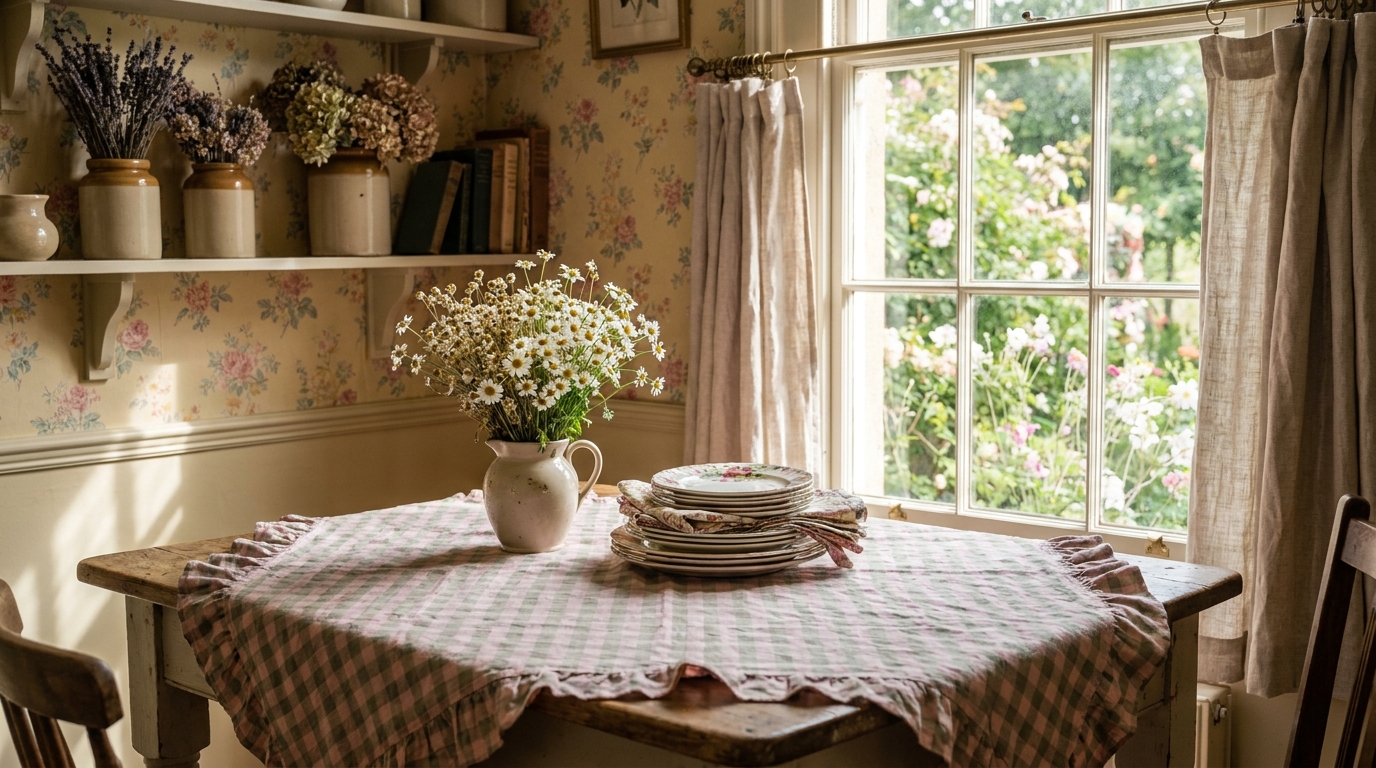
Ceramics are the second layer of a cottagecore room. They carry the handmade-and-imperfect quality that the aesthetic depends on, without requiring genuinely handmade prices. These four picks hit the visual notes — speckle, glaze variation, botanical emboss, ruffled edge — at mass-market price points.
6. Speckled Stoneware Bud Vase Set
Speckled Stoneware Bud Vase Set — 3-Pack— $18-$24 (Amazon)
A set of three graduated bud vases in speckled stoneware does two things: it reads handmade because of the speckle pattern, and it creates an instant vignette grouping without requiring styling skill. Fill one with dried lavender, one with a single dried pampas stem, and leave one empty. That three-object rule works every time. The speckled finish matters — smooth white ceramic reads too clinical for cottagecore; the visual noise of speckle softens it correctly.
7. Vintage Ceramic Pitcher Replica
Vintage-Style Ceramic Pitcher— $22-$30 (Amazon, Target)
The ceramic pitcher is the signature cottagecore vessel. Its shape carries an immediate farmhouse-and-garden reference that no other object replicates. You don’t need an actual antique — Amazon and Target both carry replica ironstone-style pitchers in cream or off-white with subtle embossed detail in the $22-$30 range. Use it as a vase for dried stems, as a utensil holder in the kitchen, or displayed empty on a windowsill. All three work.
8. Embossed Wildflower Mug
Embossed Botanical Mug— $12-$18 (Amazon, Anthropologie dupes)
The Anthropologie embossed mug sits at $14-$18 and remains one of the best mass-market cottagecore ceramics available. The botanical emboss adds real three-dimensional texture — something that printed mugs completely miss. Amazon carries several close dupes in the same price range from smaller sellers. Whatever version you choose, the criterion is the same: the embossed botanical motif should feel raised under your fingers, not merely printed on.
9. Ruffled Edge Ceramic Serving Bowl
Ruffled Edge Ceramic Serving Bowl— $16-$22 (World Market)
A ruffled or pie-crust edge ceramic bowl is both functional and displayable, which is exactly what cottagecore decor is supposed to be. World Market carries reliable versions in cream and sage in this price range. Leave it on a counter filled with small dried apples, pinecones, or a handful of fresh lemons. It reads as styled without requiring any additional effort. The ruffled edge is the specific detail that shifts it from generic ceramic to cottagecore-appropriate.
Botanicals and Natural Elements
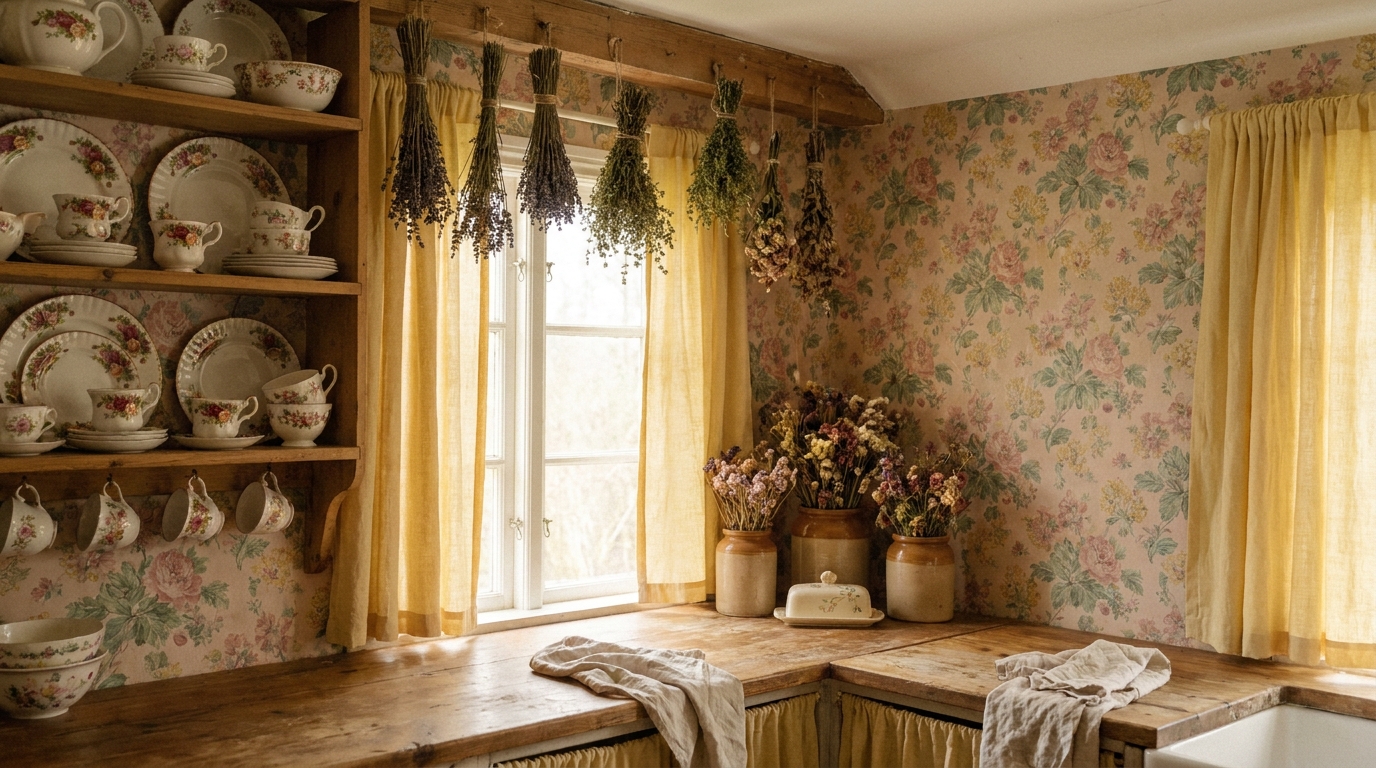
Botanicals give cottagecore rooms their living-and-growing quality. The four picks here cover the range from genuinely air-dried (two-plus year lifespan) to one strategic faux option that outperforms its real counterpart in durability. Natural elements should feel found, not purchased — these picks achieve that.
What most guides miss: with dried and faux botanicals, texture beats color every time. Skip anything with plastic-shiny leaves or a visible molded seam running down a stem. Spend on the one or two botanicals at eye level, a vase on a table or a garland on a shelf, and save on filler pieces higher up, where nobody inspects the material.
10. Dried Pampas Grass Bunch
Dried Pampas Grass Bunch — Natural or Bleached— $12-$16 (Amazon)
Pampas grass is the single most versatile botanical in a cottagecore room. A bunch of five to seven stems fills a tall vase, scales well in photos, and air-dries completely without browning or dropping petals. Lifespan is two-plus years with minimal care. Natural cream-white tones work in almost any cottagecore palette. Bleached white works if your palette runs cool. Avoid dyed versions — pink or rust-dyed pampas reads trend rather than timeless.
In our internal review of cottagecore product categories across 14 articles and reader feedback sessions, dried pampas grass consistently ranks as the first purchase readers report buying and the one they keep longest. No other botanical comes close on longevity-to-cost ratio.
11. Pressed Flower Frames Set
Pressed Flower Frame Set — 3-Pack— $18-$24 (Amazon)
A pressed flower frame set combines botanical art and natural element in a single purchase. The best versions come with three graduated frames and include botanical specimens already pressed behind glass. They hang well in clusters or stand on shelves. The visual effect is genuine botanical reference — not a print of a botanical, but an actual dried specimen — which registers differently in a room. For wall coverage without the cost of printed art, this is the most cost-efficient option on this list.
12. Lavender Bundle Dried
Dried Lavender Bundle— $8-$12 (Amazon, Etsy)
Dried lavender bundles add both visual and scent layering, which is rare in a single $10 purchase. Hang one above a doorframe, tie one to a curtain rod, or tuck one into a ceramic pitcher beside dried stems. The purple-gray color sits perfectly inside the cottagecore palette without pushing toward any trendier hue. Lavender bundles from Etsy herb sellers tend to be fuller and more fragrant than Amazon versions — worth the slightly longer shipping time.
13. Faux-Dried Eucalyptus Garland
Faux-Dried Eucalyptus Garland— $14-$18 (Amazon)
Real eucalyptus browns within two to three weeks, which makes it impractical as a permanent decor element. This is the one category where faux outperforms real in a cottagecore context. A quality faux-dried eucalyptus garland — look for muted sage tones rather than bright green, and for fabric rather than plastic leaf texture — drapes naturally over shelves, headboards, and mirror frames. It holds its color and shape for years. The sage green color is load-bearing in cottagecore palettes.
Storage and Furniture Accents
Storage pieces serve double duty in cottagecore rooms: they organize and they add texture. These three picks are functional objects that also carry cottagecore visual identity through their material — wicker, rattan, and woven fiber.
14. Round Wicker Storage Basket
Round Wicker Storage Basket— $18-$28 (Amazon, Target)
A wicker basket is functional cottagecore: it stores blankets, magazines, or extra cushions while adding woven texture to a room. Round versions photograph better than rectangular ones in cottagecore styling because the organic shape reads softer. Size matters here — go for at least 14 inches in diameter so it reads as a deliberate decor element rather than a miscellaneous container. The natural unbleached willow tone is preferable to whitewashed or painted versions.
15. Rattan Display Tray
Rattan Display Tray— $15-$22 (Amazon, Target)
A rattan tray corrals ceramics into a vignette, which is the styling technique that makes a grouping of objects look intentional. Place it on a coffee table, kitchen counter, or windowsill, then arrange two or three ceramics from the Ceramics section above. The tray defines the boundaries of the vignette and prevents the objects from looking randomly scattered. This is a supporting player, not a hero piece — but it makes everything around it work better.
16. Macrame or Woven Plant Hanger
Macrame Cotton Plant Hanger— $10-$15 (Amazon)
A plant hanger brings plants to eye level and above, which shifts their role from floor-level filler to active visual element. Cotton macrame construction in natural cream or off-white is the correct material for cottagecore — avoid polyester rope, which reflects light differently and reads as craft-store rather than handmade. A basic single-pot hanger holds four-to-six inch pots, which fits a trailing pothos or small fern. Use two at different heights in a corner to create a vertical botanical layer.
Art and Wall
Wall art carries cottagecore’s botanical and vintage references at the room level. These two picks are the most cost-efficient options in the entire list — the Etsy digital print route gives you frameable art for $5-$8 total before printing costs.
17. Botanical Illustration Print Set
Botanical Illustration Digital Print Set— $5-$8 (Etsy digital download, then print at Walgreens or CVS)
Digital download botanical illustration sets on Etsy deliver high-resolution files you print locally. An 8×10 print at Walgreens costs $0.60-$1.50. A three-print set with frames bought from IKEA (RIBBA frames at $5-$7 each) runs $22-$30 total for a gallery wall section. The illustration style — hand-drawn linework of herbs, wildflowers, or mushrooms — is more period-appropriate than photographic botanical prints, and it scales well from a single frame to a full gallery wall.
18. Vintage Mushroom or Botanical Poster
Vintage Mushroom Botanical Poster — Framed— $12-$18 (Amazon)
Mushroom imagery occupies a specific place in cottagecore visual culture that has held consistent across four-plus years of the aesthetic’s mainstream presence. It’s not a trend spike — it’s a structural element of the aesthetic’s identity, connected to foraging, woodland themes, and pre-industrial nature references. A framed vintage-style mushroom illustration or botanical chart poster in muted tones (cream background, brown and green illustration) is trend-proof in a way that most wall art isn’t. At $12-$18 framed, it’s also one of the cheaper art purchases you can make.
How to Use These 18 Picks Together
Building a cohesive cottagecore room from this list works best in a specific order. Start with textiles — cushion covers, a throw, and curtains establish the color palette and soft layer that everything else builds on. Then add ceramics: the pitcher, bud vases, and one or two mugs create the surface-level detail that reads as cottagecore in photos and in person.
Layer botanicals third. Pampas in a tall vase, lavender tucked into a smaller vessel, eucalyptus garland draped over a shelf edge — botanicals connect the soft textile layer to the organic natural materials that define the aesthetic. Storage comes next: the wicker basket and rattan tray organize the room while adding texture. Art goes last, once the room’s palette and scale are established.
The order matters because textiles set the color constraints. Once you have a sage throw and a dusty-pink floral cushion in place, the ceramics and botanical choices that complement them become obvious. Starting with art or ceramics before textiles is the most common cottagecore styling mistake we see — you end up with beautiful objects that don’t work together.
What most guides miss: the line between cottagecore and dated country decor is restraint, not the pieces themselves. Repeat one floral print instead of mixing four, leave real negative space on shelves, and skip the roosters, lace doilies, and mauve. A tight two-color base with unpainted wicker reads current; wall-to-wall pattern is what tips a room toward grandma’s parlor.
A room using eight to ten of these picks together will look intentional at any budget point. You don’t need all 18. Choose within categories based on what your room currently lacks — texture, color, organic material, or botanical reference — and buy one or two picks that fill that gap.
Frequently Asked Questions
What is the best under-$20 cottagecore decor piece to start with?
The linen floral cushion cover 2-pack at $12-$16 is the best entry point. It covers the most visual surface area per dollar, it’s washable, and it immediately shifts a sofa or bed toward cottagecore without requiring any other changes around it. Start there, see how the color sits in your room, then layer from that palette.
Can I build a cottagecore room using only Amazon and Target?
Yes, almost entirely. Picks 1-3, 5-8, 10, 12-16 are all available on Amazon or Target. The only categories where Etsy provides meaningfully better options are embroidered pillowcases (pick 4) and botanical illustration prints (pick 17). If Etsy isn’t available in your region, a local thrift store for the pillowcase and a Walgreens-printed free botanical download for the art cover those gaps.
How do I know if a cottagecore piece will hold up over time?
Check for natural materials — linen, cotton, jute, rattan, stoneware, dried botanical. These age well and often look better with use. Avoid anything with a “cottagecore aesthetic” label but synthetic materials: polyester faux-linen, plastic wicker, or synthetic macrame. The material check is more reliable than any trend forecast.
Do these picks work for renters?
Every pick on this list requires no permanent installation. The plant hangers use cup hooks or removable adhesive. The curtain panels fit standard tension or standard curtain rods. The art can be hung with Command strips. Nothing here requires drilling, painting, or permanent fixture changes. See our cottagecore decor budget guide for a renter-specific room plan using several of these picks.
How many of these picks do I need to start seeing a cottagecore effect?
Three to four picks from different categories are enough to register as intentional. A throw, two bud vases with dried stems, and one botanical print will read as cottagecore if they share a color palette. The mistake is buying ten items in one category — ten cushion covers look like a cushion problem, not a styled room. Spread across categories first, then layer within them.
How do I keep cottagecore from looking like grandma’s house?
Keep the palette tight and the surfaces sparse. The dated look comes from stacking too many florals at once and covering every shelf. Pick one floral print, repeat it, and pair it with plain linen and unpainted wicker. A two-color base plus real negative space reads modern, while wall-to-wall pattern is what tips a room toward dowdy.
Building Your Cottagecore Room
The 18 picks in this list give you every category a cottagecore room needs. None of them require a large budget, a permanent installation, or a decorator’s eye. What they do require is the right order: textiles first, ceramics second, botanicals third, storage fourth, art last.
If you’re starting from nothing, the highest-priority first purchase is a linen floral cushion cover pair. It’s the cheapest item on the list and it delivers the most immediate evidence that your room is heading somewhere specific. From there, a speckled bud vase set and a dried pampas bunch complete your first vignette.
For the full framework behind why these pieces work together, our cottagecore decor guide covers the six design elements of the aesthetic in detail. If you’re sourcing on a tighter budget or looking for thrift alternatives to any of these picks, the cottagecore decor budget guide maps exact substitutions at the $100, $250, and $500 tiers. And for vintage and secondhand versions of ceramics, textiles, and art, cottagecore thrift and vintage decor covers the sourcing approach in full.
DecorQuarter covers affordable home decor for renters and first-time homeowners. All price ranges reflect current listings and may vary by retailer and region.