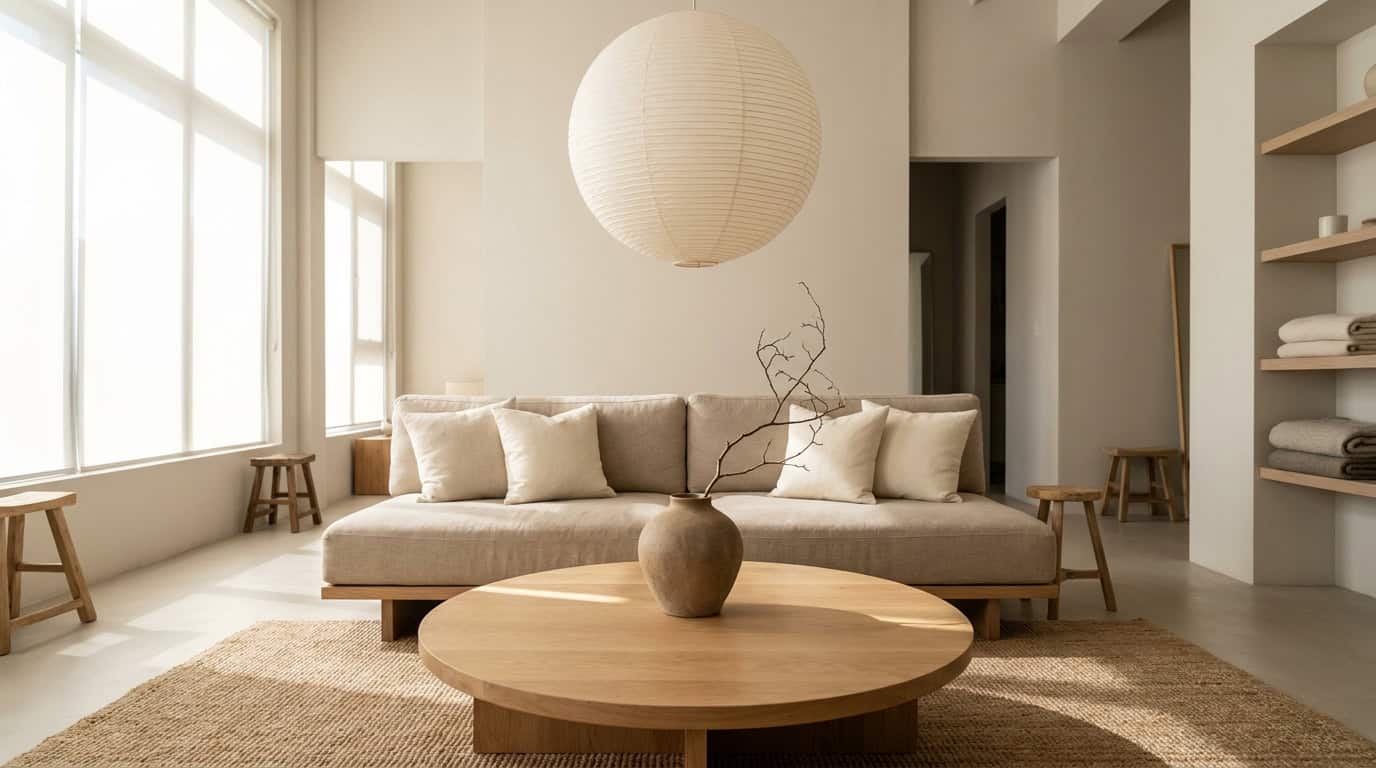
The one-line distinction: Scandinavian is pale wood plus one deliberate color pop, Japandi is dark wood with zero color pops and handmade ceramics, and Modern Minimalist is black-chrome-glass geometry with no wood and no warmth at all. All three share the same surface shortlist, neutral palettes, clean lines, and natural materials, which is exactly why Pinterest boards mislabel them constantly, and why roommates who both claim to like “that calm, simple style” end up arguing about furniture.
Here’s the actual difference: Scandinavian, Japandi, and Modern Minimalist are driven by three entirely different emotional engines. Scandinavian runs on hygge — warmth, coziness, and social comfort in a cold climate. Japandi runs on wabi-sabi — the beauty of imperfection, restraint, and handmade materials. Modern Minimalist runs on geometric purity — reduction as an aesthetic end in itself, with no warmth required.
Most articles nail one of these distinctions. We’ve found five specific signals that interior professionals use to separate all three at a glance. Once you know them, you’ll never mislabel a room again.
Key Takeaways
- Scandinavian: Pale wood + white walls + a deliberate color pop + cozy textiles. Hygge is the goal, not perfection.
- Japandi: Dark or warm-toned wood + zero color pops + handmade ceramics + low-profile furniture. Wabi-sabi imperfection is the point.
- Modern Minimalist: White or greige walls + black/chrome/glass + geometric furniture + zero ornament. Cold precision is the aesthetic.
- For renters: Japandi is the most achievable without painting or major purchases. Minimalist is the hardest.
- Hybrid trap: Mixing Japandi and Minimalist in the same room almost always fails — their instincts on warmth are directly opposed.
The 5 Signals That Separate Them
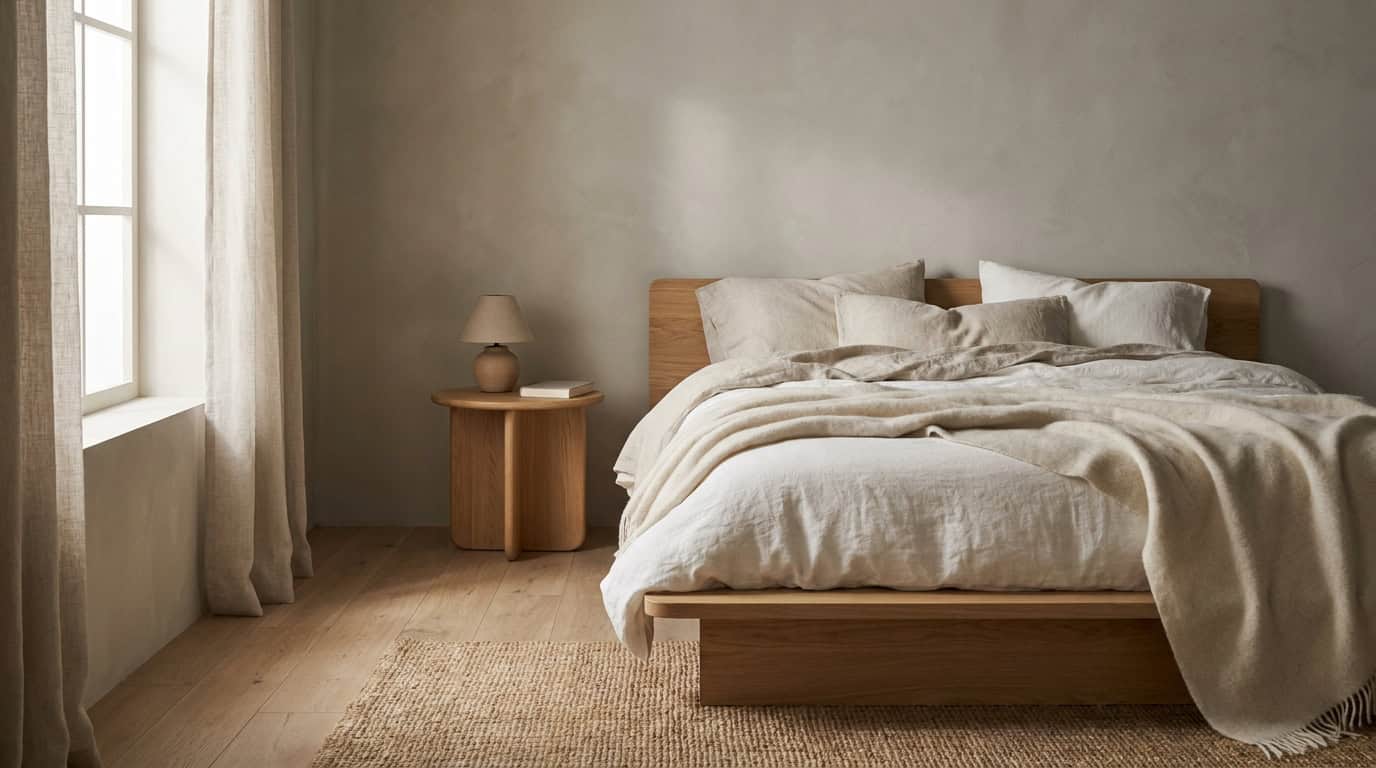
Interior designers don’t ask “does it feel calm?” — that describes all three. They look for five specific markers:
1. Wood tone. Scandinavian uses pale, blonde wood (pine, light oak). Japandi uses medium-to-dark wood with visible grain — walnut, bamboo, dark oak. Minimalist uses wood sparingly, often in thin veneers or avoids it entirely in favor of lacquered surfaces.
2. Color pops. Scandinavian allows — and often requires — one deliberate color accent (a terracotta throw, a dusty blue cushion, a mustard lamp). Japandi has zero color pops; the palette stays in the muted earth range. Minimalist allows black and white contrast but treats color as a mistake.
3. Warmth source. Scandinavian generates warmth through textiles: chunky knits, sheepskin, layered rugs. Japandi generates warmth through material texture: raw linen, handmade ceramic, natural fiber. Minimalist generates no warmth — coolness and visual calm are features, not bugs.
4. Ornament tolerance. Scandinavian tolerates functional decorative objects (candles, ceramic vessels, a single plant). Japandi tolerates handmade objects with visible craft imperfection (a wonky bowl, a woven basket). Minimalist tolerates only geometric objects with clean edges — and usually fewer than two.
5. Empty space ratio. All three value negative space, but the logic differs. Minimalist maximizes empty space as an aesthetic statement. Japandi uses empty space intentionally — each object earns its position. Scandinavian fills space more generously, prioritizing a lived-in, comfortable feel over visual austerity.
Free · 60 seconds
Not sure which style is actually yours?
Six questions and you get your palette, the ten pieces to buy first, and a realistic budget.
Scandinavian Design — Defined
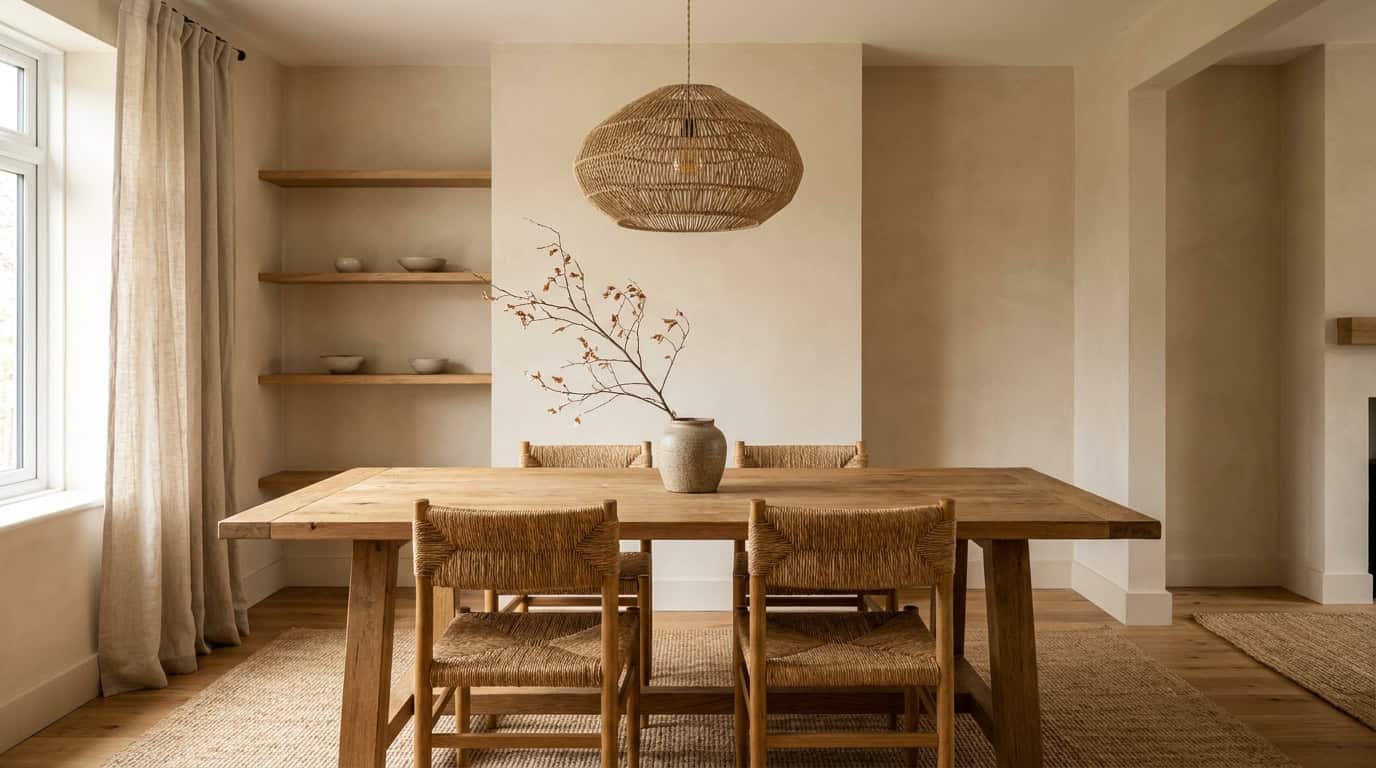
Scandinavian design emerged from 1950s Nordic functionalism — a design culture shaped by long, dark winters and a democratic tradition of affordable good taste. The philosophy: well-designed objects should be available to everyone, not just the wealthy. IKEA is the obvious commercial vehicle for this idea, but the more design-literate expression lives in Danish brands like HAY (founded 2002, Copenhagen) and the work of mid-century architects like Arne Jacobsen.
Iconic moves:
- White or very light grey walls as a baseline
- Pale blonde oak or pine furniture with visible, simple joinery
- One or two deliberate color accents — muted rather than saturated (dusty pink, sage green, warm terracotta)
- Layered soft textiles: sheepskin throws, woven cushions, a flat-woven rug in a muted pattern
- Pendant lighting that reads as a design object (Gubi’s Multi-Lite, for example)
Two reference brands: HAY (mid-market Danish design, widely available) and IKEA’s STOCKHOLM and MARKERAD collections (not the default IKEA catalog — specific curated lines that track Scandinavian design more faithfully).
What makes it distinctly Scandinavian: The color pop. Remove the dusty blue throw or the terracotta vessel from a Scandinavian room and it starts to look like Japandi. That single accent color — chosen carefully, not accidentally — is hygge’s visual signature. It says: this space is for people, not for photographs.
If you want to go deeper on how Japandi evolved from this tradition, our Ultimate Japandi Guide covers the full origin story.
Japandi Design — Defined
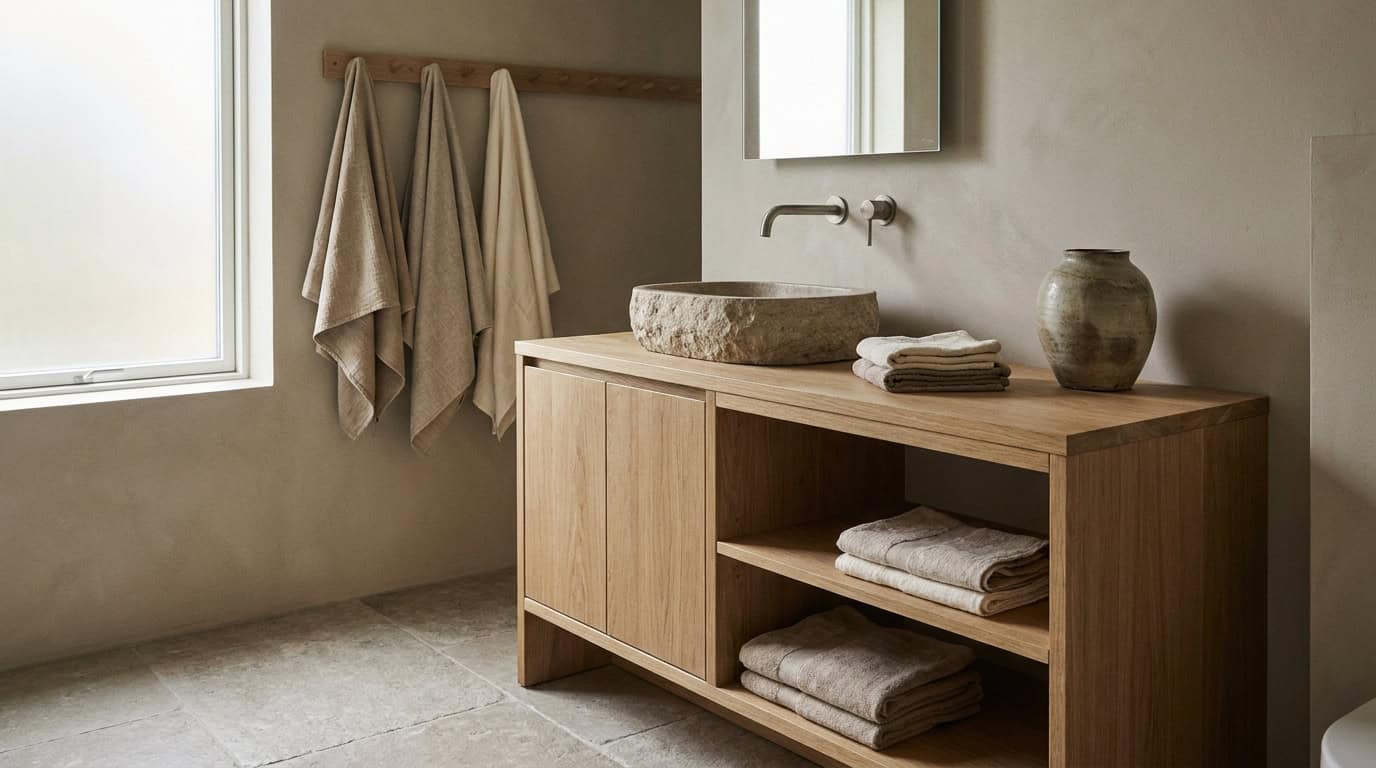
Japandi is the youngest of the three styles as a named trend — it entered mainstream interior design vocabulary around 2018, though its underlying philosophy had been practiced by designers well before that. The concept fuses Japanese wabi-sabi minimalism with Nordic functionalism: you keep Scandinavian’s practical, everyday-functional furniture design but replace hygge warmth with Japanese restraint and a preference for handmade imperfection.
Iconic moves:
- Low-profile furniture (floor-level or close to it — a platform bed, a low sofa with clean lines)
- Medium-to-dark wood tones: walnut, dark oak, bamboo — with visible grain
- A palette of muted earthy neutrals: warm greige, charcoal, terracotta undertones — but never a bright accent
- Handmade ceramic objects: a rough-edged bowl, an asymmetric vase, a wabi-sabi-finished cup
- Negative space used intentionally — fewer objects, each one chosen for material quality
Two reference brands: Article’s Japandi furniture line (accessible price point, ships North America) and Castlery (Singapore-based, strong Japandi-specific catalog available in the US and UK). For the philosophy behind the style, our Wabi-Sabi and Japandi guide covers the Japanese aesthetic roots in detail.
Defining feature: Dark wood combined with zero color pops. This is the fastest diagnostic. If the wood is pale — it’s Scandinavian. If the wood is dark and there is no accent color anywhere — it’s Japandi. The handmade-ceramic detail on the shelf is the confirming signal. For room-by-room application, our Japandi Living Room Ideas and Room Variations guide show how the palette shifts by space.
The Japandi Color Palette guide breaks down the exact hex ranges used across the muted neutral spectrum if you’re matching paint or sourcing textiles.
What most guides miss: Japandi’s real giveaway is the finish, not just the wood color. Authentic Japandi favors matte, low-sheen surfaces and oiled wood, never high-gloss lacquer. A glossy dark-walnut table reads contemporary or Minimalist, not Japandi. The palette stays in a tight greige-to-charcoal band, roughly #D6CFC4 through #3A3632, with warm undertones and no saturated accent anywhere.
Modern Minimalist Design — Defined
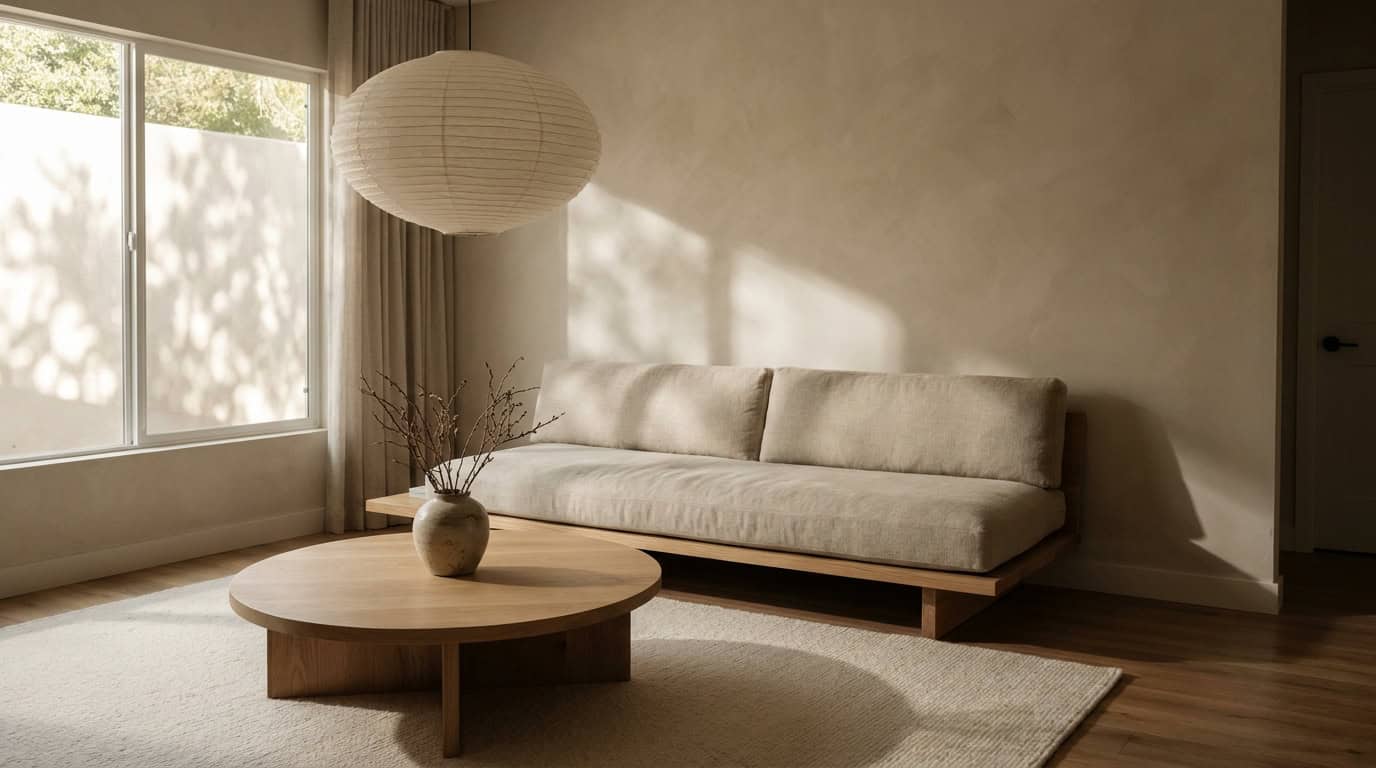
Modern Minimalism as an interior style traces its serious roots to the 1990s and early 2000s — heavily influenced by the architectural minimalism of John Pawson and Tadao Ando, then filtered into consumer furniture design through brands like Muji (Japan, founded 1980, went international mid-1990s) and high-end Italian makers like B&B Italia. The governing idea: every object you add is a decision, and most decisions should be “no.”
Iconic moves:
- White, off-white, or cool greige walls — no warmth
- Black, chrome, or dark metal as the secondary material (legs, frames, fixtures)
- Glass as a surface material: coffee tables, side tables, cabinet fronts
- Furniture with geometric precision: sharp corners, flat planes, symmetrical profiles
- Zero ornament — no ceramics, no throws, no decorative objects unless they are geometric and purposeful
Two reference brands: Muji at the accessible end (their shelving units, storage, and bedroom furniture are textbook minimalism) and B&B Italia at the investment end (the Maxalto line, Charles sofa). The brand gap between them is significant — Minimalist interiors often cost more to execute correctly than either Japandi or Scandinavian because the lack of ornament means every surface and furniture choice is visible and unforgiving.
Defining feature: Geometric purity plus cold hardness. Minimalist spaces do not require warmth. This is the only style of the three where you can have a beautiful, completely intentional room that feels slightly cold — and that coldness is correct. If a Minimalist room starts to feel warm, it usually means a Japandi or Scandinavian element has been introduced.
What most guides miss: True Modern Minimalism controls the joint, not just the color. Handle-less push-to-open cabinets, concealed fixings, flush skirting, and seamless panel gaps are the real tells. A white room with visible knobs, standard trim, and exposed hardware reads as plain, not Minimalist. That hidden-detail requirement is exactly why the style costs more to execute than a matte greige Japandi room.
Side-by-Side: The Visual Cheat Sheet
| Attribute | Scandinavian | Japandi | Modern Minimalist |
|---|---|---|---|
| Wood tone | Pale blonde (pine, light oak) | Medium-dark (walnut, dark oak, bamboo) | Minimal or none (thin veneer, lacquer) |
| Color pops | Yes — one muted accent | Never | Black/white contrast only |
| Texture source | Soft textiles (knit, sheepskin, wool) | Handmade materials (raw linen, ceramic, fiber) | Smooth surfaces (glass, chrome, lacquer) |
| Warmth level | High — hygge is the goal | Medium — warmth from material, not color | Low — coolness is intentional |
| Empty space % | Moderate (lived-in feel) | High (intentional placement) | Very high (austerity as aesthetic) |
| Iconic chair | HAY About a Chair / Wegner CH20 | Muuto Fiber / low bench | Knoll Barcelona Chair / Mies |
| Common mistake | Adding too many color pops (becomes maximalist) | Using light wood (looks Scandinavian) | Adding a patterned throw (breaks the logic) |
Which Works Best for Renters?
Honest answer: the styles are not equally achievable in a rental.
Japandi is the most rental-friendly — and it’s not close. The style relies on layering decor, not on wall color or permanent architectural changes. Dark wood furniture reads Japandi immediately. Add raw linen, a handmade ceramic, and a low-profile layout and the style is readable even in an apartment with standard white walls and beige carpet. You’re working with objects and furniture, not surfaces. Our Budget Cost Breakdown shows you can execute a convincing Japandi living room from under $800 in furniture and decor if you source strategically. The How to Start guide runs through the exact six-step layering sequence.
Scandinavian is medium difficulty for renters. White walls — already the default in most rentals — are actually the Scandinavian baseline. That removes one barrier. The challenge: the style requires deliberate textile layering (sheepskin, knit throws, woven rugs) to activate the hygge warmth. Without those layers, white walls and IKEA oak furniture just looks like a generic apartment. Budget for textiles first, furniture second.
Modern Minimalism is the hardest for renters. The style requires intentional, high-quality surface choices — and rentals rarely give you that. Carpet undermines it. Standard fixture hardware undermines it. Generic white-box walls without crown detail undermine it. To make Minimalism work in a rental, you typically need to invest in furniture that is so precise and well-chosen that it overrides the architectural mediocrity around it. That investment is real. The Best Japandi Furniture guide includes some crossover pieces that work in Minimalist rooms if you’re building in that direction.
The Hybrid Trap
Pinterest boards titled “Japandi Minimalist” or “Scandi-Japandi” are extremely common. Most of them fail — and the reason is predictable.
Japandi and Minimalism have directly opposed instincts on warmth. Japandi requires material warmth (handmade ceramic, raw linen, wabi-sabi imperfection). Minimalism requires the absence of warmth as a principle. When you mix them in a single room, the handmade ceramic reads as clutter inside the Minimalist logic, while the cold chrome fixture undermines the wabi-sabi in the Japandi logic. Each element cancels out what the other is trying to say.
Scandinavian and Japandi blend more naturally — they share a Nordic functionalism base — but the blend requires discipline. Dark wood (Japandi signal) plus a color pop (Scandinavian signal) tips the room back into Scandinavian. Pick one as the dominant language and use the other only as an accent, not an equal partner.
The cleanest hybrid that actually works: Japandi as the base, one Scandinavian textile layer. A single chunky-knit throw on a low Japandi sofa reads as warmth without collapsing the wabi-sabi palette.
FAQ
Is Japandi just dark Scandinavian?
Not exactly. The wood tone is one marker, but the more important difference is philosophical. Scandinavian design is built around social comfort — hygge, warmth, a space that feels welcoming for people. Japandi is built around wabi-sabi — imperfection, restraint, a space that feels considered and quiet. A dark Scandinavian room still has a color pop and layered textiles. A Japandi room has neither.
Can I have all three styles in one home?
You can use different styles in different rooms — a Japandi bedroom, a Scandinavian living room, a Minimalist home office. Within a single room, pick one dominant style. Mixing all three in the same space produces a room that reads as “neutral” without reading as anything intentional.
Which style is most timeless?
Scandinavian design has the longest proven track record — it has been commercially relevant since the 1950s with no signs of exhaustion. Japandi is younger as a trend (mainstream since ~2018) but draws on Japanese minimalism principles that are centuries old, which gives it durability beyond a typical trend cycle. Modern Minimalism has proven timeless at the high end (John Pawson homes from 1995 still look current) but is vulnerable to looking sterile at the execution level most homeowners can afford.
Which style costs the most to execute?
Modern Minimalism at the execution level most people attempt. The absence of ornament means every surface decision is visible — you cannot hide a cheap sofa under a throw. Japandi and Scandinavian are more forgiving because layered textiles and ceramic objects can compensate for budget furniture. Japandi done well on a budget is genuinely achievable; see the full Budget and Cost Breakdown for specifics.
What is the fastest way to tell them apart in a photo?
Check the wood tone, then count the accent colors. Pale blonde wood plus one muted color pop is Scandinavian. Dark wood with no accent color anywhere is Japandi, and the handmade ceramic on the shelf confirms it. No visible wood at all, plus black, chrome, or glass, is Modern Minimalist. Those two signals resolve roughly 80% of rooms before you check texture or empty space.
Conclusion
Skip the debate about which style is “better” — pick the one that matches how you actually live. If you want a warm, social space that feels comfortable and approachable, Scandinavian. If you want quiet restraint with material texture and handmade imperfection, Japandi. If you want geometric precision and are willing to trade warmth for visual clarity, Modern Minimalist.
For most renters starting from a generic apartment, Japandi is the most achievable entry point. Start with dark wood furniture, strip out color pops, add one handmade ceramic, and let the empty space do the rest. Our How to Decorate Japandi in 6 Steps walks through the full process room by room.