Mid-century modern is one of America’s most-searched interior design styles, holding strong in the top five on Google Trends throughout 2025 and into 2026. Yet most beginner guides skip straight to mood boards and product roundups, leaving first-time buyers confused about where to actually start. This 6-step sequence tells you what to buy first, in what order, and how much to realistically spend, so your room looks intentional rather than assembled by accident.
Key Takeaways
- MCM style spans the 1945–1969 era and is built on five principles: clean lines, organic shapes, warm natural materials, earthy color palettes, and form-follows-function design.
- First-time homeowners spend $2,800–$6,500 furnishing a living room on average (Houzz, 2025).
- Always choose one anchor piece before buying any accessories.
- Lighting upgrades deliver one of the highest satisfaction-to-cost ratios in home decor.
Step 1: Understand the 5 Core MCM Principles Before You Spend a Dollar
MCM design emerged between 1945 and 1969, shaped by post-war optimism and a rejection of heavy Victorian ornament. According to the Smithsonian’s Cooper Hewitt Design Museum, the movement produced more iconic everyday furniture than any other 20th-century style, and its core principles have stayed remarkably consistent. Understanding them before you open your wallet is the single most effective thing a beginner can do.
Here are the five principles every purchase decision should filter through:
-
Clean lines, no ornamentation. Surfaces are smooth. Hardware is minimal. Decorative carving, molding, and fuss are absent.
-
Organic and geometric shapes in balance. Legs taper. Cushions curve slightly. A room mixes straight-edged frames with softly rounded upholstery.
-
Warm natural materials. Walnut, teak, and oak for wood. Leather and linen for upholstery. Wool and jute for textiles. Synthetics are used sparingly.
-
Restrained earthy color palette. Warm whites, mustard, terracotta, olive, charcoal, and cognac. Nothing neon. Nothing ice-cold.
-
Form follows function. Every piece has a job. Decorative objects earn their space by also being useful or genuinely beautiful on their own terms.
Most beginner guides skip this principle-first framework and jump straight to product lists. That’s exactly why so many starter MCM rooms end up looking “retro” instead of considered — the shopper was chasing aesthetics without a filter to test each piece against. Running every potential purchase through these five principles takes about 30 seconds and saves hundreds of dollars in returns.
Actionable takeaway: Before buying anything, ask three questions. Does this piece have clean lines with no fussy ornamentation? Is the material natural or at least warm in tone? Does it serve a clear function in the room? If you can’t answer yes to at least two of three, put it back.
For a deeper look at the style’s history and defining characteristics, the complete mid-century modern decor hub is a strong starting point.
Step 2: Set a Realistic Starter Budget by Category
According to the Houzz 2025 U.S. Home Décor Spending Report, the average first-time homeowner spends between $2,800 and $6,500 furnishing a living room from scratch. That range is wide because priorities vary, but MCM’s emphasis on fewer, better pieces actually works in a beginner’s favor — you’re not expected to fill every surface.
The chart below maps realistic price ranges across six core MCM categories for 2026.
The budget allocation rule is simple: put 60% of your total room budget toward the top two categories (sofa and credenza). The remaining 40% covers accent chair, coffee table, floor lamp, and textiles. This ratio reflects the visual weight each category carries in the finished room.
What most guides miss: Spend in a fixed order and never reverse it: anchor first, then lighting, then rug, then accessories. Beginners routinely sink 25–30% of the budget into pillows, vases, and wall art before the sofa or credenza is chosen, then have too little left for the one piece that actually sets the room. A $60 ceramic bought in month one often gets replaced once the anchor arrives, so it becomes wasted money, not a saving.
Actionable takeaway: Calculate your total room budget first. Multiply by 0.35 for the sofa, 0.25 for the credenza, and split the remaining 40% across the four smaller categories. Resist the urge to overspend on accessories early.
Free · 60 seconds
Not sure which style is actually yours?
Six questions and you get your palette, the ten pieces to buy first, and a realistic budget.
Step 3: Choose One Anchor Piece and Build Everything Else Around It
Interior designers consistently report that beginners who choose a hero piece first are far less likely to end up with a mismatched look, according to Architectural Digest’s 2024 designer survey on common first-home decorating mistakes. The anchor piece sets your wood tone, your scale, and your upholstery direction. Everything else responds to it.
Three anchor piece options work well for most MCM beginners at different price points:
- Low-profile sofa with tapered walnut legs ($700–$1,800): Look at Article, Joybird, and AllModern. The legs are the tell. Tapered, solid wood legs are non-negotiable for the MCM silhouette.
- Walnut credenza with sliding or fluted doors, 60–72″ wide ($400–$1,400): The most versatile anchor if your living room layout doesn’t suit a large sofa against the wall. A credenza with hairpin or tapered legs reads immediately as MCM.
- Eames-style lounge chair ($500–$1,200 for quality reproductions; $4,000+ for original Herman Miller): Article and West Elm both offer well-reviewed versions. This works as an anchor for smaller rooms or a home office corner.
Common pattern: Buying accessories before locking in an anchor piece is the easiest MCM mistake. It is easy to fall for a mustard throw pillow or a ceramic vase, buy it, then struggle to find furniture that matches. When the accessories lead, the furniture follows awkwardly.
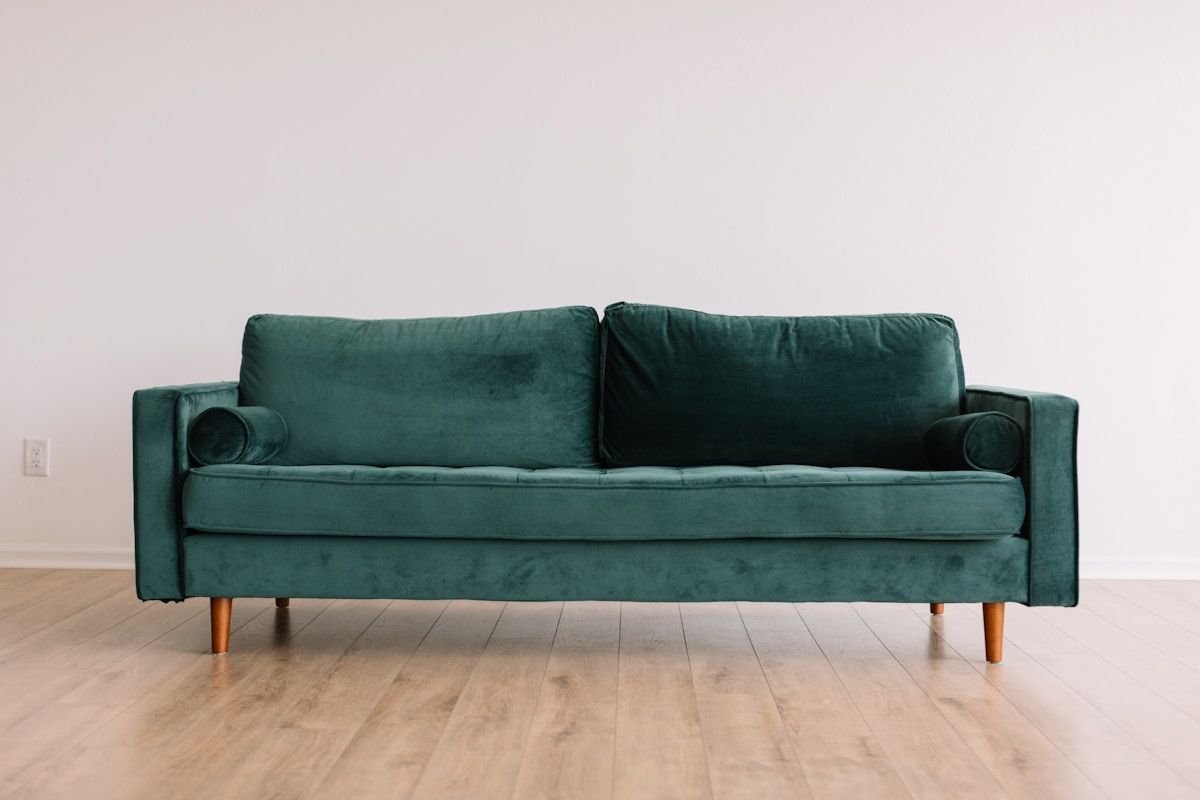
What does a well-anchored MCM room actually look like in practice? The 30 mid-century modern living room ideas show real rooms built around single anchor pieces, which makes the principle much easier to apply to your own space.
What most guides miss: Buying a full matching reproduction set in one order is the fastest way to make a room read as costume-MCM rather than considered. Genuine rooms mix one solid-wood anchor, often a thrifted walnut credenza at $150–$400 on Facebook Marketplace or Chairish, with newer, quieter supporting pieces. Check for real solid-wood construction and dovetail joinery on vintage finds; a single authentic anchor carries more visual weight than a whole showroom set of veneer look-alikes.
Actionable takeaway: Do not buy a single lamp, pillow, or side table until your anchor piece is confirmed, ordered, and ideally already in the room. Every subsequent purchase should respond to the wood tone, scale, and upholstery color of that one piece.
Step 4: Lock In Your MCM Color Palette Before Painting or Buying Textiles
Pinterest Predicts 2025 identified earthy MCM palette families — walnut-and-white, olive-and-cognac, mustard-and-charcoal, and terracotta-and-cream — as consistently among the top home decor search clusters. That’s not a coincidence. These combinations have held up for 70+ years because they’re built on natural undertones, not trend cycles. Getting the palette right before you paint or buy a single textile saves you from expensive do-overs.
The beginner-proof MCM color formula has four parts:
- One neutral base: Warm white, cream, or light greige. Benjamin Moore “White Dove” and “Pale Oak” are period-accurate and widely available.
- One warm wood tone: Walnut, teak, or oak. Pick one and repeat it throughout the room. Mixing wood tones is an advanced move that beginners rarely pull off.
- One earthy accent: Mustard, terracotta, olive, or burnt orange. This color appears in throw pillows, a rug, a lamp shade, or an accent chair.
- One dark anchor: Charcoal, black, or deep forest green. Usually expressed through a lamp base, a small side table, or a picture frame.
Benjamin Moore’s Color Trends 2025 report confirmed that warm neutrals paired with earthy accent tones are the combinations most likely to feel timeless rather than trend-dependent five years from now. That’s the exact outcome a first-time buyer wants from a significant room investment.
Want to see these combinations applied to real MCM rooms? The MCM color palette guide with 10 period-accurate combinations shows each formula in context with exact paint codes.
Actionable takeaway: Pull the wood tone directly from your anchor piece. Then find its complementary earthy accent using Coolors.co or a Benjamin Moore fan deck at your local paint store. Build every textile and paint decision outward from those two reference points.
Step 5: Choose Lighting That Does the Heavy Decorative Lifting
Houzz’s 2025 survey data showed that living room lighting upgrades had one of the highest satisfaction-to-cost ratios of any home decor category. The average homeowner spent $180–$450 on a statement floor lamp and reported that it transformed how the entire room felt — more than any furniture rearrangement or paint change. For MCM specifically, lighting isn’t just functional. It’s structural.
Every MCM beginner needs three lighting pieces:
- Arc floor lamp ($90–$380): Brass or matte black finish, white dome shade, adjustable arm, weighted base. The arc form is one of MCM’s most recognizable silhouettes. It anchors a seating area without requiring an end table.
- Sputnik or starburst chandelier ($120–$600): Primarily for dining areas. Brass or matte black finish. The starburst form is period-accurate to the late 1950s space-age influence on MCM design.
- Tripod or ceramic table lamp ($60–$250): A walnut tripod base or a hand-thrown ceramic base with a linen or drum shade. These sit on credenzas, side tables, and console tables.
Bulb color temperature matters more than most beginners realize, and it costs almost nothing to get right. Warm-white bulbs at 2700K–3000K enhance walnut’s amber tones and make earthy MCM palettes feel cohesive and inviting. Cool-white bulbs at 4000K or above flatten the palette entirely and make rooms feel clinical — the opposite of what MCM is going for. The fixture is visible. The temperature is felt.
Actionable takeaway: Before buying any new fixture, replace every existing bulb in the room with 2700K warm-white LEDs. A four-pack costs under $20 and delivers immediate visual impact. See how the room reads under warm light before making any fixture decisions.
Step 6: Layer Accessories Last — and Edit Ruthlessly
MCM’s “less is more” philosophy isn’t about minimalism for its own sake. It’s about intentionality. According to a 2024 survey by the American Society of Interior Designers, over-accessorizing is the number one decorating mistake identified by professional designers across all style categories. In MCM rooms specifically, every object needs to earn its place with a clear visual or functional purpose.
Three accessory categories are worth investing in:
- Ceramics and pottery ($20–$120 each): Hand-thrown or mold-cast pieces in matte glazes and earthy tones. Avoid anything with glossy, high-shine finishes or decorative patterns. Simple, organic forms in ochre, brown, slate, or cream work best.
- Abstract or geometric wall art ($80–$400): Large-format prints in the style of Calder or Vasarely. One strong piece on a feature wall does more work than three small prints clustered together.
- Natural textiles ($40–$180): A wool or jute rug in a geometric pattern, linen or velvet throw pillows in your chosen earthy accent color, and a boucle or chunky-knit throw draped over the sofa arm.
The editing rule is worth writing down: after placing every accessory in the room, walk to the doorway and look at the full picture. Remove one item. If the room looks better without it, leave it out permanently. If the room feels incomplete, put it back. Repeat until removing anything makes the composition feel sparse rather than clean.
Not sure how these principles translate from a living room to a bedroom or home office? The MCM per-room application guide breaks down exactly how the style shifts by space.
Actionable takeaway: Cap your accessory budget at 15% of your total room budget. Buy fewer, better pieces. A single well-chosen ceramic piece does more for an MCM room than six impulse buys that almost fit the brief.
The Complete MCM Beginner Purchase Timeline
Following the six steps in sequence prevents the most common beginner mistake: buying out of order, then retrofitting a coherent style around mismatched pieces. Here’s a realistic week-by-week schedule.
-
Week 1: Study the five core principles. Audit existing furniture. Identify what stays, what goes, what the room needs.
-
Week 2: Set your total room budget. Allocate by category using the 60/40 rule. Research anchor piece options in your price range.
-
Week 3: Order your anchor piece. Lead times for quality MCM sofas and credenzas typically run 2–6 weeks, so order early.
-
Week 4: Finalize your four-part color palette using the anchor piece’s wood tone as the starting point. Order paint samples.
-
Week 5: Paint the room (or confirm you’re keeping the existing wall color). Confirm the palette works under warm-white lighting.
-
Week 6: Switch all bulbs to 2700K warm-white. Research floor lamp and table lamp options that complement the anchor piece.
-
Week 7: Anchor piece arrives. Place it. Live with it for a few days before ordering anything else.
-
Week 8: Order the accent chair, coffee table, and floor lamp — all responding to the anchor piece’s scale and finish.
-
Week 9+: Accessories last. Ceramics, textiles, and wall art come only after all furniture is placed and the room’s proportions are visible.
For a deeper look at every decision point in this process, the Ultimate Mid-Century Modern Decor Guide 2026 covers the full style in detail, including sourcing, vintage versus reproduction, and room-specific adaptations.
Frequently Asked Questions
What’s the best first piece of furniture to buy for a mid-century modern beginner?
A low-profile sofa with tapered walnut legs is the strongest starting point for most rooms. It sets your wood tone, scale, and upholstery direction — every other piece responds to it. Budget $700–$1,800 for a quality option from retailers like Article, Joybird, or AllModern. If your room is small, a walnut credenza ($400–$1,400) works equally well as an anchor.
How much does it cost to decorate a room in mid-century modern style?
You can keep an MCM living room affordable by prioritizing the sofa and credenza (about 60% of budget) and buying accessories slowly over time. MCM’s restraint-first philosophy actually rewards a staged approach.
Is mid-century modern decor expensive to maintain?
It’s one of the more durable styles to maintain. Solid walnut and teak furniture lasts decades with basic oiling once or twice a year (Howard Feed-N-Wax costs about $12). Quality linen and wool textiles are washable and long-lasting. The style’s preference for natural materials over trend-driven finishes means you’re not replacing pieces every few years to stay current.
Can I mix mid-century modern with other styles?
Yes, with structure. MCM mixes well with Scandinavian minimalism and warm industrial design because they share the clean-line, natural-material foundation. The complete mid-century modern decor guide outlines which hybrid combinations hold together and which ones clash. The rule of thumb: keep 70% of the room’s pieces MCM-aligned, and introduce the secondary style through one or two accent pieces only.
Where can I find affordable authentic MCM pieces?
For reproductions, Article, AllModern, and West Elm offer reliable quality at accessible prices ($250–$1,800 per piece). For genuine vintage, Facebook Marketplace and Chairish consistently surface walnut credenzas and accent chairs in the $150–$600 range. Estate sales in mid-century suburbs — think 1950s–1960s ranch neighborhoods — are the most reliable source for authentic pieces at below-market prices.
How do I stop a mid-century modern room from looking like a costume or theme?
Keep roughly 70% of the room genuinely MCM and let the rest stay quiet and neutral. Costume-MCM usually comes from buying a full matching reproduction set in one order, plus novelty atomic prints. Instead, mix one solid-wood vintage anchor with newer supporting pieces, repeat a single wood tone throughout, and limit accessories to 15% of the budget.
Conclusion
The six steps in this guide follow a deliberate sequence: principles first, then budget, anchor piece, color palette, lighting, and accessories last. Following that order is what separates rooms that look intentional from rooms that look assembled. Skipping steps — especially buying accessories before confirming an anchor piece — is the most common and most expensive beginner mistake.
Mid-century modern has held its place as one of America’s most-loved interior styles for over 70 years. That staying power is the strongest argument for treating your first MCM room as an investment rather than an experiment. The furniture you choose well now will still look right in 20 years — and that’s a rare thing to say about any design decision.
Ready to go deeper on every aspect of the style? The Ultimate Mid-Century Modern Decor Guide 2026 covers sourcing, vintage authentication, room-by-room application, and the full history of the movement in one comprehensive resource.