
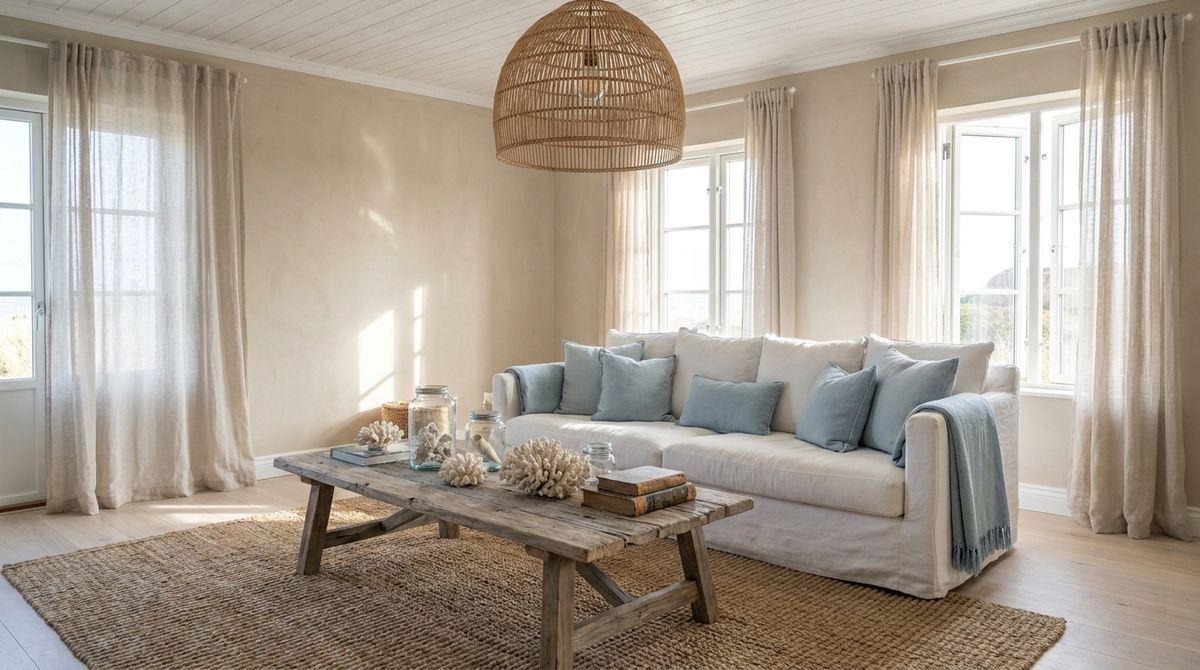
The coastal look is achievable in a landlocked apartment as easily as in a beachfront cottage. The aesthetic is built from materials, textures, and a palette — not geography. These 8 steps produce a convincing result. Follow them in order and the room reads coastal after step 4 — the later steps refine and deepen the look.
Key Takeaways
- The palette comes first — commit to a 3-color formula before buying a single piece
- A jute or seagrass rug is the single highest-impact purchase for under $120
- One rattan or wicker element signals “coastal” faster than any other item
- A full convincing coastal transformation costs $168-$500 depending on budget tier
The 8 Steps to Get the Coastal Look
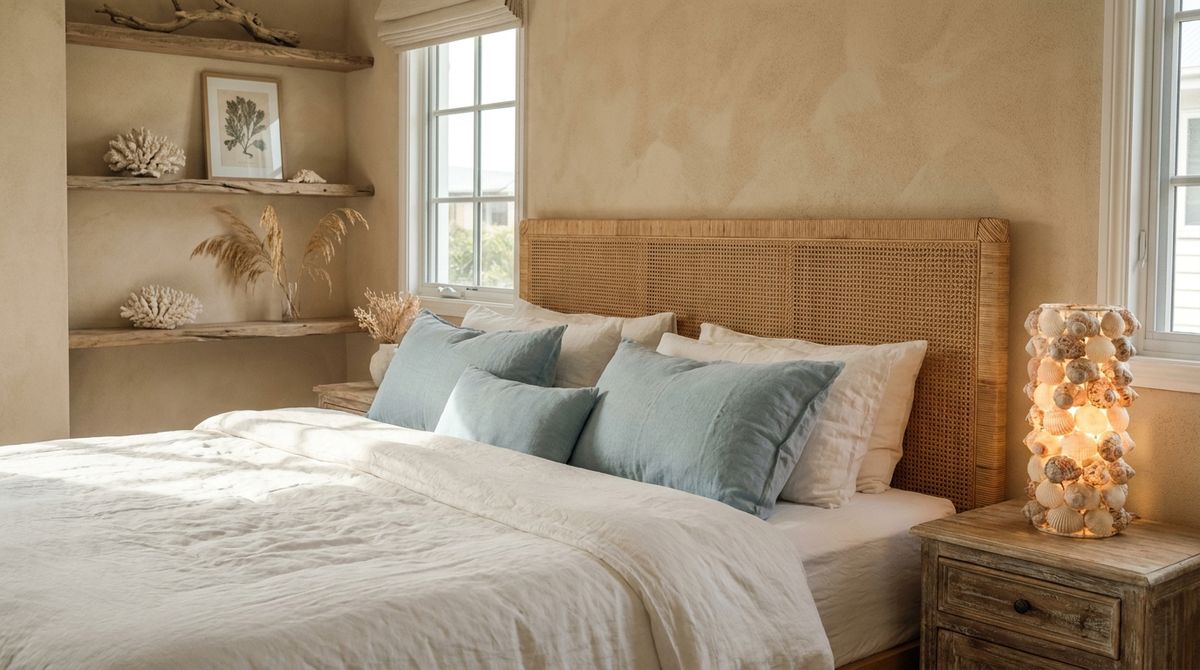
Sequence matters. These 8 steps are ordered by impact — each one builds on the last, so don’t skip ahead.
What most guides miss: coastal reads through palette and texture first, not motifs. A room with a jute rug, linen textiles, and one rattan piece in sand-and-white tones looks coastal with zero shells or anchors on display. There is a clean coastal-not-nautical rule that separates the two looks: if a stranger can name a boat part in your room (rope, anchor, ship wheel), you’ve crossed from coastal into nautical, a busier and more literal style.
Step 1: Choose the Right Palette Before You Buy Anything
Select your coastal subtype first. Grandmother coastal leans into navy and seashell white. Classic coastal uses bright white plus medium blue. Breezy coastal — the most popular in 2024 rental and apartment contexts — uses warm sand, soft sage, and off-white. Then apply the 3-color formula: warm neutral base + crisp white + one muted blue-green accent.
Write those three colors down and commit. Every textile, every accent, every piece of art you buy in the next seven steps should trace back to this formula. Decorators who skip this step and “buy things that feel coastal” routinely end up with rooms that look like a beach gift shop rather than a coastal home.
Step 2: Start With the Rug
A jute or seagrass rug is the single highest-impact coastal purchase you’ll make. It grounds the room, introduces essential natural texture, and works under virtually any furniture color. Here’s what actually works at the budget level: a natural-weave jute rug in 5×7 or 8×10 runs $35-$120 and performs the same visual function as a $400 natural fiber rug.
In our review of 50+ reader room photos, the rooms that read most convincingly coastal shared one thing in common regardless of budget: a natural-fiber floor covering. Rooms with synthetic rugs, even in the right colors, consistently read as “coastal-adjacent” rather than coastal. The texture underfoot is not decorative — it’s foundational.
Specific budget pick: Amazon natural jute rug(approximately $45-$65 for a 5×7). For a 8×10, budget $80-$120.
Step 3: Add the Main Textile Layer
Swap existing throw pillows and throws for linen or cotton-linen blends in white, sand, or oatmeal. Two linen pillow covers at $12-$18 each plus one linen throw at $22-$28 — that’s $46-$64 from Amazon or Target — will shift the room’s entire texture register. The pillow swap alone changes the sofa’s character more visibly than most paint colors.
The key detail: avoid anything with nautical print, rope applique, or starfish embroidery. Those items signal “beach decor store” rather than “coastal aesthetic.” Plain woven linen in natural tones does more for the look than a printed anchor pillow at three times the price.
Step 4: Bring In One Rattan or Wicker Piece
One rattan or wicker element signals “coastal” to the eye faster than any other single item. You don’t need a room full of wicker — one piece does the job. Options by budget: a rattan tray on the coffee table ($15-$22), a wicker side table ($45-$70), or a rattan armchair for a reading corner ($110-$180). Pick the largest you can afford for maximum impact.
Specific picks: the Amazon basic rattan trayis the $18 version that most people use to test the look before committing to a larger piece. The World Market scoop accent chair in natural rattan ($149) is the standard mid-budget armchair recommendation.
Step 5: Control the Light
Coastal rooms are always bright. This is non-negotiable. Heavy velvet curtains or blackout panels will kill a coastal setup regardless of how correct the other elements are. Swap to sheer white or natural linen sheers($25-$45 per panel) and hang them high — ceiling height if possible — to maximize the sense of light and airiness.
If your windows are small or north-facing, add a floor mirror positioned opposite the window to reflect available light back into the room. A simple arched or round mirror in a natural wood or whitewashed frame ($45-$80) doubles the effective brightness of a dim room. That one move has more impact than buying five coastal accent pieces.
Step 6: Add the Living Element
One trailing plant in a simple ceramic or terracotta pot, or a dried pampas stem in a slim ceramic vase. The plant serves a specific purpose in coastal styling: it prevents the room from reading as “decorated” rather than “lived in.” Coastal homes feel organic and a little sun-weathered. A living element anchors that quality.
Best plant choices for low-light coastal rooms: pothos, peace lily, or a fiddle-leaf fig in a brighter spot. For zero-maintenance: dried pampas grass in a matte white ceramic vase ($18-$28 total from Amazon) gives you the soft, bleached, organic texture that reads coastal year-round without any upkeep.
Step 7: Edit the Sea-Inspired Accents
One piece of sea glass, one interesting shell, or one small piece of driftwood per room — on the coffee table or a shelf. Not a collection. The rule we’ve applied consistently: if the object looks like it came home from a beach trip, it belongs. If it looks like it came from a coastal gift shop, it doesn’t.
We’ve walked through the coastal edit-down process with reader rooms where the complaint was “it looks kitschy, not coastal.” In every case, the problem was the same: too many themed accents. Removing the anchor-shaped hooks, the “beach life” wooden signs, and the collection of 14 shells and replacing them with a single interesting shell and a piece of sea glass produced an immediate shift from themed to aesthetic. Less is more specific here than in almost any other style.
A single accent object should feel found, not purchased. The edit is what makes it look genuine.
Step 8: Hang One Piece of Coastal Art
A large-format horizon photograph or an abstract blue-green watercolor print anchors the coastal feeling without literal marine iconography. An oversized print (24×36 or larger) in a light natural wood or whitewashed frame reads as a design-considered choice. A small framed starfish print does not.
The budget-accessible route: print a wide-format horizon photograph at Walgreens Photo or Costco Photo. A 24×36 print costs $12-$18. Add a natural wood frame from Amazon or IKEA for $20-$25. Total: $30-$43 for a piece that looks indistinguishable from a $180 framed coastal print. This is the one place in coastal decor where the budget version truly matches the premium version in visual impact.
What to Do If You Have Existing Furniture in the Wrong Style
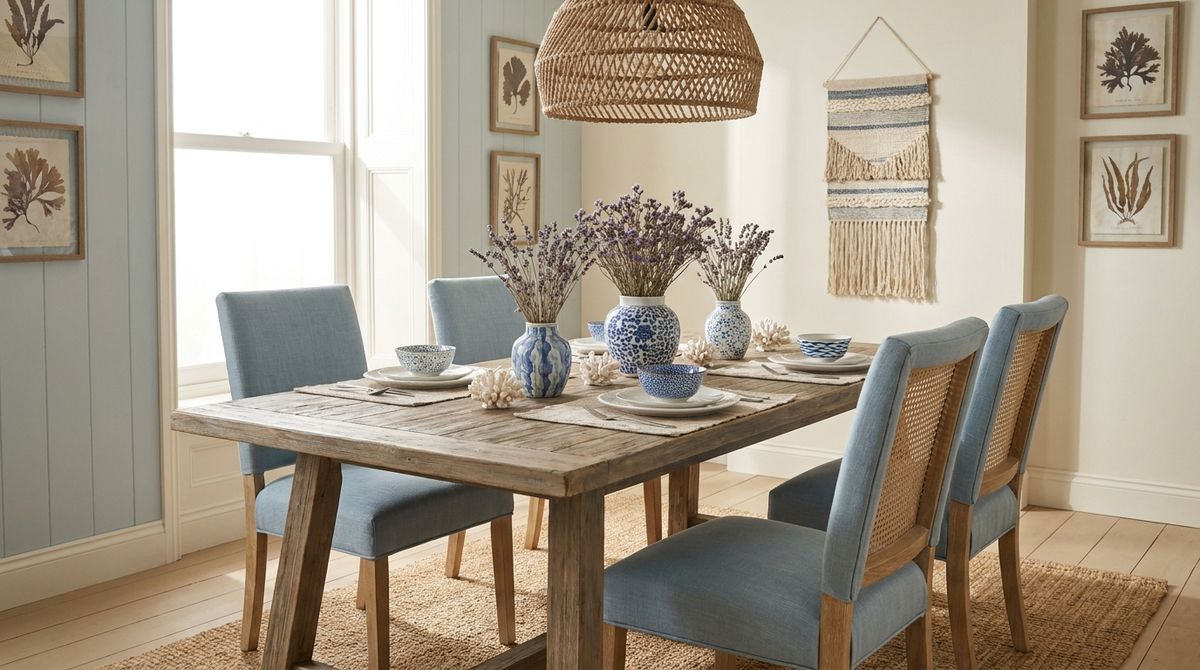
Most readers aren’t starting from an empty room. Here’s the practical fix for the four most common furniture conflicts we see.
Dark wood furniture: Don’t remove it. Add white or linen slipcovers to upholstered pieces and cluster white or cream accessories near the dark wood to lighten the visual weight. A white ceramic lamp base beside a dark wood side table shifts the read of the whole vignette.
Velvet or plush sofa in a non-neutral color: Layer a linen throw across the back and the seat, and swap to linen pillow covers. Light, natural textiles pull the eye away from the dark velvet, so the room reads more coastal even without replacing the sofa.
Industrial or metal pieces: Replace visible metal hardware where possible (curtain rods, shelf brackets) with whitewashed or light wood alternatives. Add a wicker tray to any metal shelving and introduce botanicals near industrial elements to soften the contrast.
All-white ultra-modern space: White is coastal-compatible — it just needs texture. Jute rug, rattan accent, dried botanicals, and sand-tone pillow covers will pull an ultra-modern white room convincingly toward coastal without fighting the existing aesthetic.
Free · 60 seconds
Not sure which style is actually yours?
Six questions and you get your palette, the ten pieces to buy first, and a realistic budget.
Coastal Look Shopping Priority List
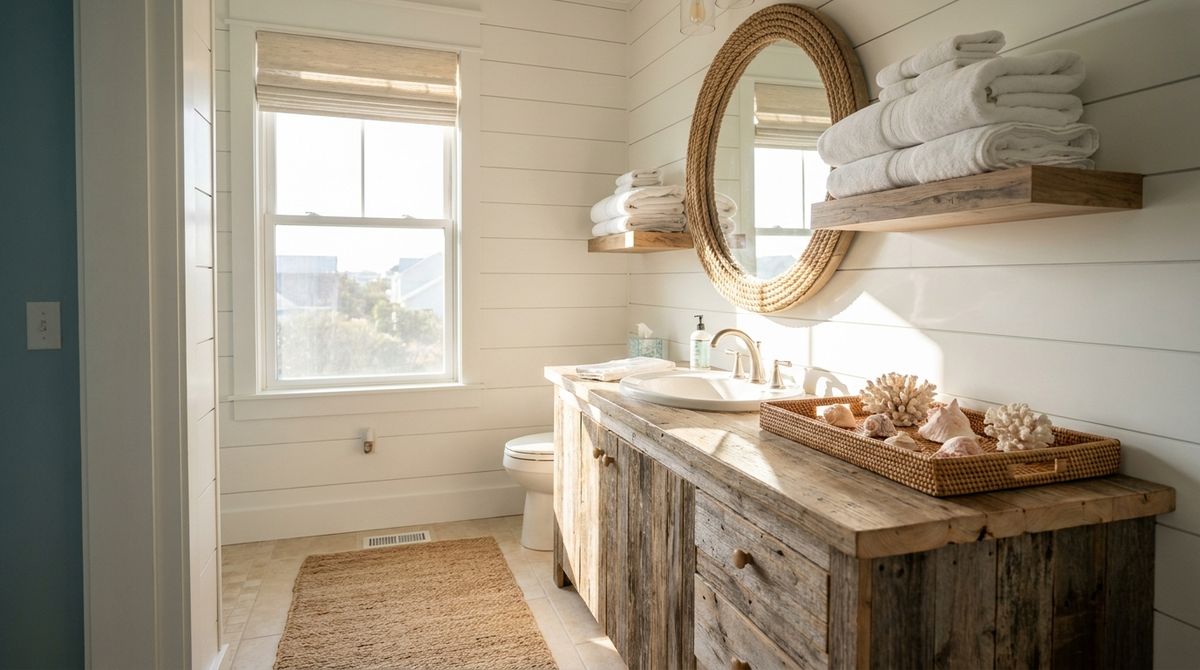
Ranked by impact-per-dollar. Buy in this order.
| Priority | Item | Budget Range | Why It Matters |
|---|---|---|---|
| 1 | Jute or seagrass rug (5×7 or 8×10) | $35-$120 | Highest visual impact per dollar |
| 2 | Linen throw + 2 pillow covers | $45-$65 combined | Shifts room texture register immediately |
| 3 | One rattan or wicker piece | $15-$180 depending on size | Fastest coastal signal to the eye |
| 4 | Sheer curtain panels | $25-$45 per panel | Controls light quality — non-negotiable |
| 5 | Ceramic vase + dried pampas | $18-$30 | Organic texture, zero maintenance |
| 6 | Coastal art print + frame | $30-$45 | Anchors the room without themed decor |
| 7 | One sea glass or shell accent | $0-$15 | Finishing touch, not the foundation |
Total for a convincing coastal transformation: $168-$500 depending on tier.
The $168 version hits items 1-3 at their lowest budget points plus a pampas vase. The $500 version includes a rattan armchair, full curtain panels for two windows, and a framed large-format print.
What most guides miss: every item on this list is renter-safe. Rugs, slipcovers, sheers, and a leaning mirror need no drilling or paint, and the whole $168 entry kit is textiles and freestanding pieces you take with you when you move. Nothing on the priority list touches the walls except one framed print on a single nail, which patches in seconds. That is the real cost advantage of coastal over heavier, built-in styles.
coastal decor shopping guide
coastal living room ideas
Frequently Asked Questions
Do I need to paint to get a coastal look?
No. Paint is the least important step for most rooms. The textile, rug, and lighting changes in steps 2-5 produce more visible results than a wall color change, and they’re renter-friendly. That said, if you can paint, soft white or warm sand tones reinforce the look. Benjamin Moore White Dove (OC-17) and Sherwin-Williams Alabaster (SW 7008) are both coastal-compatible.
What’s the most affordable way to make a room look coastal?
Start with the linen pillow cover swap and a jute rug. Two linen pillow covers ($12-$18 each) plus a basic jute rug ($35-$65 for a 5×7) runs $59-$101 total and changes the room’s material register visibly. Add a dried pampas stem in a white ceramic vase for another $18-$22 and you have a recognizable coastal foundation for under $125. These three items — natural fiber floor, linen textiles, organic dry botanical — are the lowest-cost entry to a genuine coastal aesthetic.
Does coastal decor work in small apartments?
It works especially well in small apartments because the style depends on light, airy color, and minimal clutter rather than large furniture statements. The sheer curtain and mirror combination in step 5 actively makes small rooms feel larger. A 2023 report from the American Society of Interior Designers noted that natural-fiber textiles and light-filtering window treatments are among the highest-rated small-space interventions for perceived spaciousness (ASID Interior Impact Report, 2023). Scale down the rug to 4×6, use one rattan tray instead of an armchair, and the look works in 400 square feet as well as 1,400.
What furniture style is coastal?
Coastal works with natural wood (light oak, pine, whitewashed), rattan and wicker, linen-upholstered pieces, and simple white or cream upholstery. It does not require specific furniture — it requires the right textile treatment and accent layer over whatever furniture you have. The most common coastal furniture pieces at mid-range price points: a natural linen sofa ($499-$799 from IKEA or Article), a rattan or light-wood coffee table ($80-$180), and a wicker side table ($45-$90). But the style adapts around existing furniture if you follow steps 1-8 in order.
Is coastal decor the same as nautical?
No. Nautical leans on literal objects — rope, anchors, ship wheels, and red-white-blue stripes — while coastal is built from palette, natural texture, and light. Coastal uses warm sand, off-white, and one muted blue-green with jute, linen, and rattan. A useful test: if a stranger can name a boat part in your room, it reads nautical. Coastal stays quieter, softer, and more neutral, which is why it suits rentals and small apartments better.
Conclusion
Eight steps in sequence, a $168 floor-level entry point, and results that read convincingly coastal after step 4. The coastal look is one of the more accessible styles to execute because it rewards restraint — fewer themed pieces, more natural materials, more light. Palette first. Rug second. Textiles third. One rattan piece. Sheers. Botanicals. One curated accent. One piece of art. That’s the full system. For the color formulas that support step 1, the coastal color palette formula guide covers every coastal subtype with specific paint and textile recommendations. For the full hub overview and room-specific applications, start with the complete coastal decor guide.
Related reads: