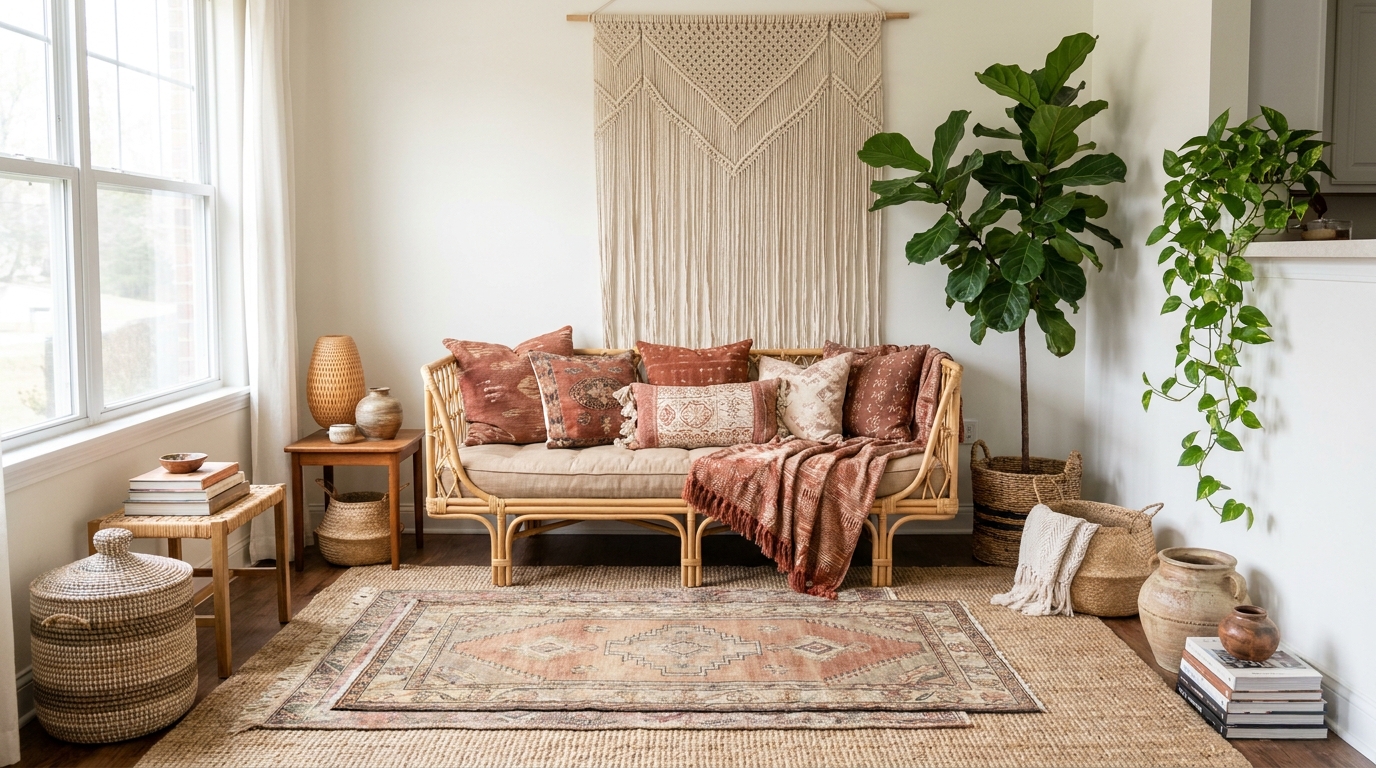
Plants do about 50% of the work in making a room read as boho. The layered textures, the earthy palette, the casual maximalism — none of it lands without greenery. But we have seen plenty of rooms where the answer to “how do I make this feel more boho?” was “add another plant,” repeated twelve times, until the space crossed from lush into chaotic.
More plants does not automatically equal more boho. There is a tipping point where “cultivated jungle” becomes “abandoned greenhouse,” and it mostly comes down to how plants are grouped, what containers they live in, and how the leaf shapes interact with each other.
We mapped 12 styled plant setups across four room types — living room, bedroom, dedicated plant corner, and small spaces. Each setup includes the actual plant species, the container pairing, approximate cost, and light requirements. Use this as a reference sheet, not a prescription.
Key Takeaways
- Easiest boho plants: Pothos, ZZ plant, snake plant — survive low light, irregular watering, and drafty windows
- Hardest to keep: Fiddle leaf fig (needs consistent indirect light, no cold drafts, no overwatering)
- Budget range: $15 (small pothos in terracotta) to $150 (large fiddle leaf fig in statement pot)
- Light summary: South or east-facing windows support monstera and fiddle leaf; north-facing rooms are pothos and ZZ territory
- Container rule: Mix terracotta + woven + ceramic — never use more than one material type in a single cluster
The Boho Plant Formula
The formula that makes a plant grouping read as boho rather than generic comes down to three variables: leaf shape, container material, and scale hierarchy.
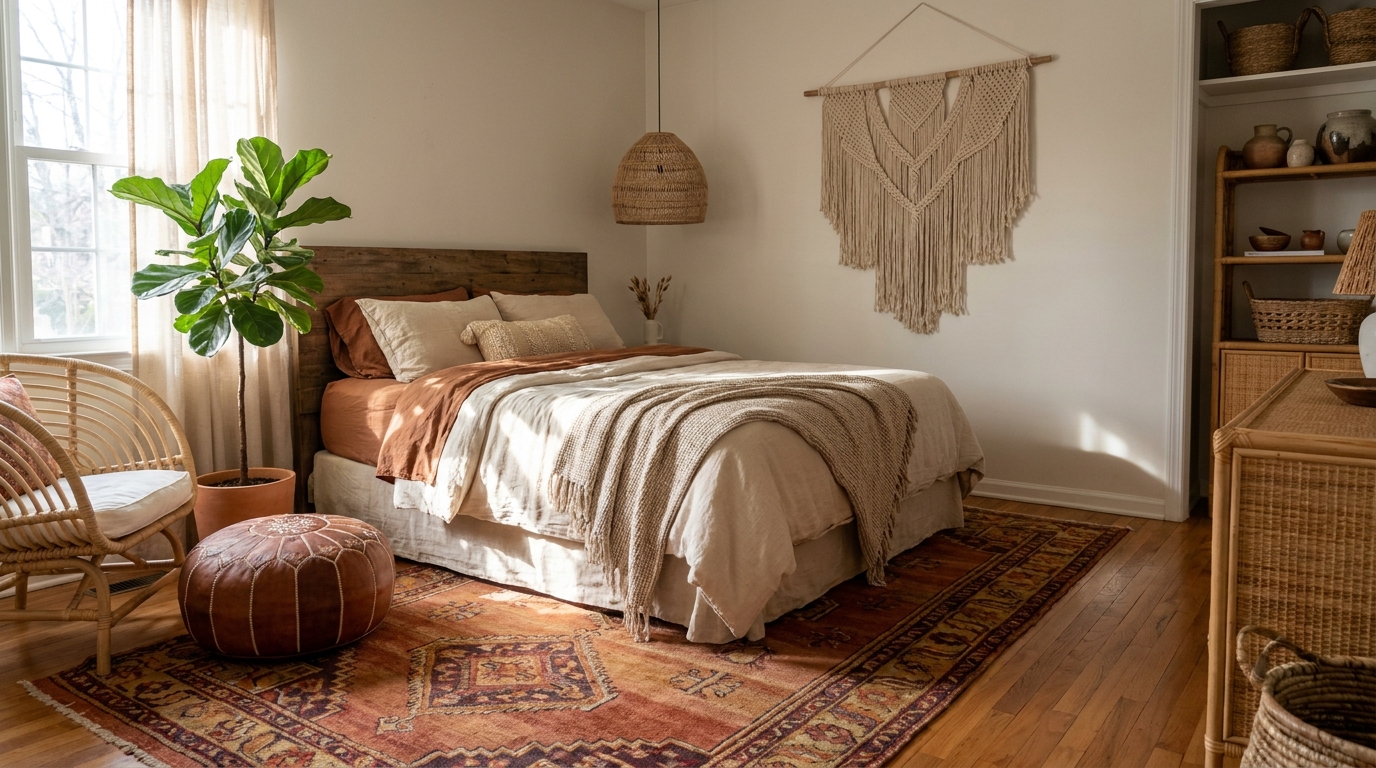
Three leaf shapes per cluster. Every well-styled boho plant grouping has at least three distinct leaf types: round (think rubber plant or Chinese money plant), spiky or architectural (snake plant, aloe), and draping or trailing (pothos, string of pearls, tradescantia). When all your plants have similar leaf silhouettes, the cluster reads flat. The contrast between leaf shapes is what creates visual tension — the same principle behind mixing textures in boho layering.
Three container materials. Terracotta is the classic boho anchor — warm, matte, slightly imperfect. Woven baskets (jute, seagrass, rattan) add the handmade layer that is central to macrame and natural fiber decor. Ceramic in either unglazed or earth-toned glazed finishes rounds out the trio. The rule: never use the same container material for every plant in a zone.
One statement plant per cluster, max four plants per zone. Statement plant = the tallest or visually dominant piece. Clusters of more than four plants in one zone start competing with each other. If you want more plants, create a second zone with clear negative space between the two.
Uneven heights are non-negotiable. A row of plants all at the same height looks like a store display. You want low (floor-level or tabletop), mid (shelf or side table), and tall (floor pot or hanging) all present in the same zone. The height variation is what gives the grouping depth and that slightly disheveled, lived-in energy that boho depends on.
Beginner-Friendly Boho Plants
Six plants that are consistently forgiving and visually match the boho palette:
1. Pothos (Epipremnum aureum)
Light: Low to bright indirect. Water: Every 1-2 weeks. Strength: Trails beautifully from shelves and macrame hangers; tolerates neglect. Price: $8-15 at most garden centers.
2. Snake Plant (Sansevieria trifasciata)
Light: Low to bright indirect. Water: Every 2-6 weeks depending on season. Strength: The architectural spiky shape you need in every cluster; nearly indestructible. Price: $12-30.
3. Monstera Deliciosa
Light: Bright indirect (east or south window). Water: Weekly in growing season. Strength: The large split leaves are a boho staple — reads as both tropical and earthy. USDA zones 10-12 outdoors. Price: $25-80 depending on size.
4. Fiddle Leaf Fig (Ficus lyrata)
Light: Bright indirect, consistent — no cold drafts, no relocating. Water: Weekly, let soil dry slightly. Strength: Statement piece with large paddle-shaped leaves. High-maintenance but high-reward. Price: $40-150.
5. Rubber Plant (Ficus elastica)
Light: Bright indirect. Water: Every 1-2 weeks. Strength: Deep burgundy-green leaves add color depth; works as a statement plant in medium-sized rooms. Price: $20-60.
6. ZZ Plant (Zamioculcas zamiifolia)
Light: Low to medium indirect — handles north-facing rooms. Water: Every 2-3 weeks. Strength: Glossy, architectural, extremely drought-tolerant. Good bathroom and office option. Price: $15-35.
12 Styled Setups
Living Room Setups
Setup 1 — Statement Fiddle Leaf in Terracotta Corner Pot
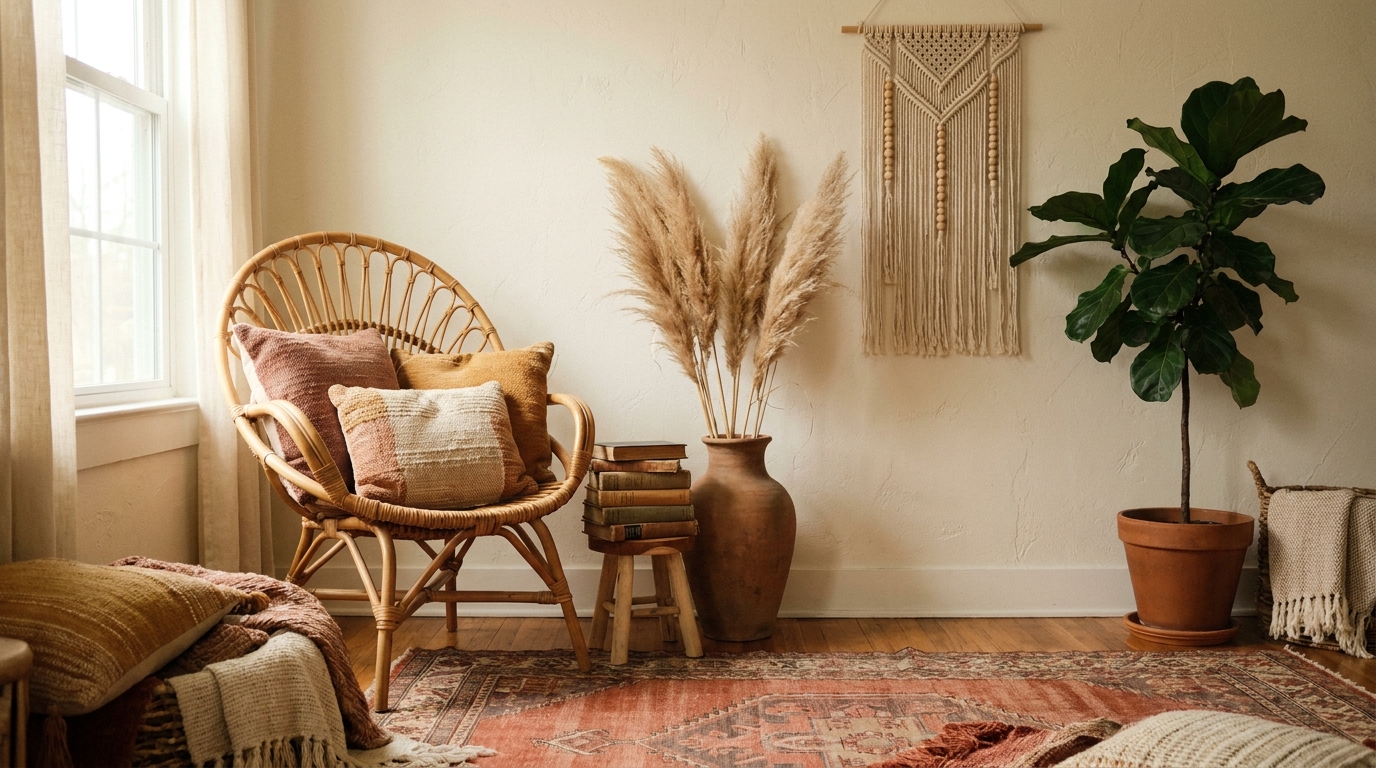
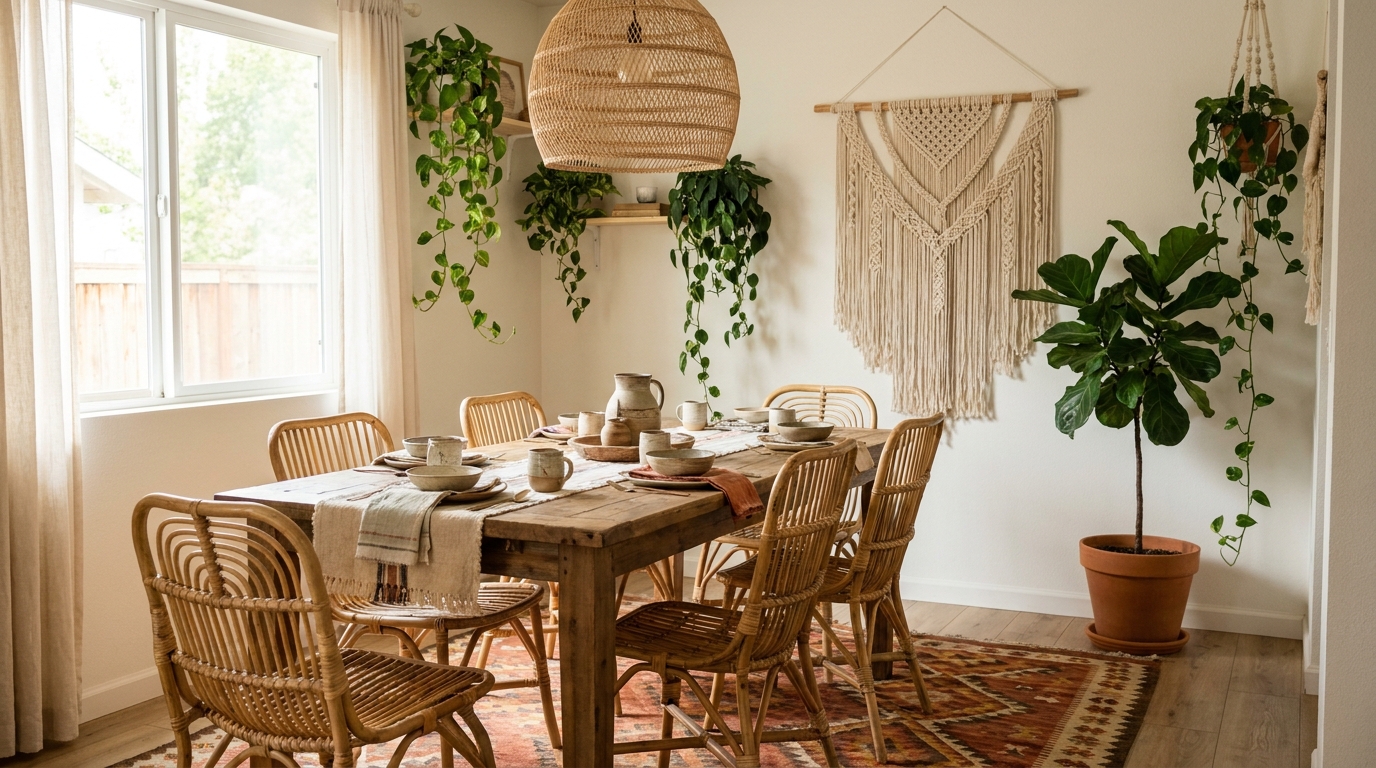
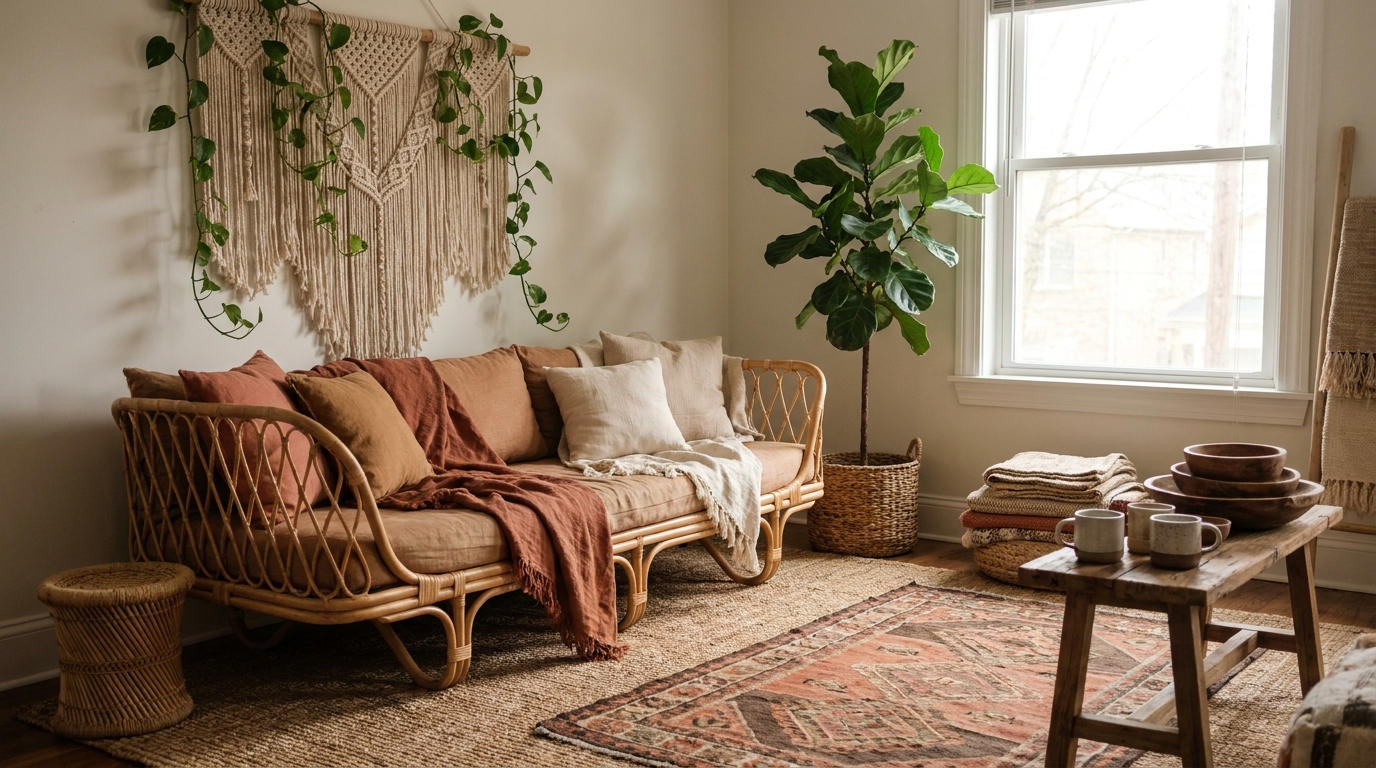
Zone: Living room corner, floor level. Plant: Fiddle leaf fig, 4-5 feet tall. Container: Large terracotta pot, 14-16″ diameter — try Costa Farms or a local nursery pot left unglazed. Light requirement: East or south-facing corner, at least 4-6 hours of bright indirect light. Styling note: Leave the corner mostly empty except for this single plant — the statement works because of what surrounds it (negative space). Add a woven jute rug underneath to anchor the pot. Approximate cost: $90-160 total (plant + pot).
Setup 2 — Hanging Pothos Trio in Macrame Holders by Window
Zone: Window alcove or beside a south/east window. Plants: Three golden pothos in 4-6″ terracotta pots, each in individual macrame hangers at staggered heights (ceiling hooks at 60″, 50″, 42″). Container: Macrame hangers in natural cotton or jute cord — see our macrame guide for DIY options. Styling note: Let the vines trail down at least 12-18 inches before you photograph or style around them — shorter trails look sparse. Light requirement: Bright indirect to moderate light near the window. Cost: $45-75 (three plants + three macrame hangers, or $15-25 for DIY hangers).
Setup 3 — Plant Ladder Shelf
Zone: Living room wall, beside sofa or behind armchair. Structure: A 5-6 rung wooden ladder (A-frame or leaning style — IKEA KNOPPARP or a thrifted wood ladder). Plants: Mix of 5-7 small to medium plants across rungs — pothos trailing from top, snake plant mid-rung, small ZZ or succulent arrangement on lower rungs. Containers: Mix terracotta and ceramic across rungs, no matching sets. Styling note: Fill gaps between pots with trailing vines — the slightly cascading, overgrown look is the point. Cost: $60-130 total depending on plant sizes.
Setup 4 — Console Table Plant Cluster
Zone: Entry console, sideboard, or TV console. Plants: Three plants in varied heights — one tall (rubber plant, 24-30″), one mid (monstera, tabletop size), one low trailing (pothos or string of pearls in a small hanging pot at table edge). Containers: Terracotta (tall plant), woven basket with liner (mid), small ceramic (trailing). Styling note: Add a stack of coffee table books or a woven tray to fill horizontal space between pots — keeps the cluster cohesive rather than scattered. Cost: $55-110.
Bedroom Setups
Setup 5 — Bedside Small Monstera in Woven Basket
Zone: Nightstand or bedside floor, within 2 feet of bed. Plant: Monstera deliciosa, tabletop size (1-2 feet), or a monstera adansonii for narrower nightstands. Container: Woven seagrass or jute basket with plastic liner, 8-10″ diameter. Light requirement: East-facing bedroom works well; north-facing needs a grow light supplement. Styling note: Position so one or two leaves arch toward the bed — creates that enveloping, canopy-adjacent feel without blocking the lamp. Cost: $35-65.
Setup 6 — Hanging Snake Plant for Sky-Light Effect
Zone: Bedroom ceiling corner or above a reading chair. Plant: Snake plant (Sansevieria cylindrica or standard laurentii) in a hanging pot, or a tradescantia for a more trailing silhouette. Container: Macrame hanger in natural cotton, or a wrapped rattan hanging pot. Styling note: This works best in bedrooms with 9-foot or higher ceilings — at 8 feet it can feel oppressive. The upward-pointing leaves of the snake plant create a starburst silhouette against the ceiling. Cost: $30-55.
Setup 7 — Dresser-Top Trailing Pothos
Zone: Dresser surface, at least 18-24 inches wide. Plant: Golden or marble queen pothos in a 6″ pot, placed at the back corner of the dresser so vines trail forward across the surface. Container: Small ceramic pot in earthy glaze (sage, terracotta, or cream) — Anthropologie, IKEA PS, or CB2 earth-toned ceramics work well here. Styling note: Let the vines reach 12-18 inches before letting them drape off the dresser edge. Combine with a small mirror, a candle, and one small woven tray to build a full dresser vignette. Cost: $20-40.
Plant Corner / Dedicated Zone Setups
Setup 8 — Maximalist Plant Wall
Zone: A dedicated corner or wall section, ideally with a south or east-facing window nearby. Plants: 8-12 plants total across floating shelves (3 levels), floor pots, and 1-2 hanging elements. Mix: Large floor snake plant or rubber plant as anchor, 3-4 mid-size monstera or ZZ on shelves, 3-4 trailing pothos or string of pearls at shelf edges, 1-2 hanging plants from ceiling or tension rod. Containers: Full material mix — terracotta, woven baskets, unglazed ceramic. Styling note: This is the boho jungle setup — but the key is that all pots stay in the earthy palette (terracotta, cream, olive, warm brown). One neon or bright pot breaks the whole composition. This links naturally to the color palette principles for boho. Cost: $200-450 fully built out.
Setup 9 — Reading Nook Accent Plant
Zone: Reading nook corner — beside an armchair, next to a bookshelf, or flanking a window seat. Plant: One medium-statement plant: rubber plant, olive tree (Olea europaea, USDA zones 8-10), or large ZZ. Container: Statement pot in terracotta or unglazed ceramic, 12-14″ diameter — the pot does half the work here since the plant is singular. Styling note: This is the one-plant setup where the container earns the most attention. A hand-thrown terracotta pot from a ceramics market or Etsy shop adds more character than any store-bought nursery pot. Cost: $50-120.
Setup 10 — Window-Side Plant Shelf
Zone: Windowsill extended with a narrow floating shelf, or a freestanding plant stand beside the window. Plants: 4-6 small to medium plants that thrive in the window’s light level — bright south/east: monstera, pothos, rubber plant; moderate north/west: ZZ, snake plant, peace lily. Containers: Mix of terracotta and ceramic, small sizes (4-6″). Styling note: This setup works best with a backdrop — a woven wall hanging, a linen curtain, or even a painted board behind the shelf in a warm neutral. The backdrop makes the plant grouping read as intentional rather than crowded. Cost: $70-140 including shelf.
Bathroom and Small Space Setups
Setup 11 — Bathroom ZZ in Macrame Hanger
Zone: Bathroom wall hook or towel bar area. Plant: ZZ plant in a 6″ pot — handles low light and high humidity better than most. Container: Simple macrame hanger in natural cotton, or a hanging ceramic planter. Styling note: Bathrooms are one of the few spaces where a single hanging plant is enough — the steam and humidity make it feel lush without needing a full cluster. Pair with a small eucalyptus bundle hung from the shower head for scent layering. Cost: $25-45.
Setup 12 — Kitchen Herb Shelf with Terracotta Pots
Zone: Kitchen windowsill or a narrow floating shelf above the counter. Plants: 3-5 culinary herbs — rosemary, thyme, basil, mint, sage. Mix in one decorative non-herb: a small pothos or trailing succulent. Containers: Matching terracotta pots in 3-4″ size — uniformity works here because the herb labels and varied leaf shapes provide enough visual differentiation. Styling note: Line the shelf with a strip of jute or a small woven mat under the pots to catch soil and add texture. Consider stamped or hand-painted terracotta (available from Target, World Market, or Etsy ceramic shops). Cost: $20-50.
Container and Plant Species Pairing
The container you choose matters as much as the plant inside it. Here is how we think about the three boho-standard materials:
Terracotta is the baseline of boho plant styling. The warm orange-red clay, the slightly rough texture, the way it ages and develops mineral rings around the rim — it is practically a color palette decision on its own. Terracotta is breathable, which benefits plants prone to root rot (fiddle leaf fig, rubber plant). Downside: it dries out faster, so water more frequently. Sources: Deroma (Italian terracotta, widely stocked), local garden centers, IKEA MUSKOT.
Woven baskets (jute, seagrass, rattan) represent the handmade, artisan layer in boho. They do not have drainage holes, so always use a plastic nursery pot inside with a saucer, or line the basket with a thick plastic bag. Seagrass baskets from IKEA, Target Studio McGee line, or Etsy sellers work well. Rattan baskets with handles add a more nomadic, well-traveled feel. Keep woven baskets off stone or tile floors without a protective layer underneath — moisture from watering wicks through and can cause mold or surface staining.
Ceramic in the boho context means either unglazed stoneware or earth-toned glazed finishes — sage, rust, cream, warm brown, matte olive. This is the category with the widest variety and the most risk of going wrong. Glazed ceramic in the right colors ties a plant cluster together; glazed ceramic in the wrong color (neon yellow, cobalt blue, bright white) instantly pulls the eye out of the palette.
What to avoid: Plastic pots in any visible position, metallic finishes (copper, gold, silver — these lean Japandi, not boho), neon-bright glazes, and overly matching sets. A collection of identical pots in the same color and size reads as a product display, not a lived-in home.
Watering and Light Cheat Sheet
| Plant | Water Frequency | Best Light Position | Mistake to Avoid |
|---|---|---|---|
| Pothos | Every 1-2 weeks | Any — tolerates low light | Overwatering causes yellowing |
| Snake Plant | Every 2-6 weeks | Any — north to south | Root rot from sitting water |
| Monstera | Weekly (growing season) | East or south, bright indirect | Direct sun burns leaves |
| Fiddle Leaf Fig | Weekly | South or east, no drafts | Relocating causes leaf drop |
| Rubber Plant | Every 1-2 weeks | Bright indirect, east/south | Low light fades leaf color |
| ZZ Plant | Every 2-3 weeks | Low to medium — north OK | Overwatering causes rot |
Light position shorthand: south window = highest light, monstera and fiddle leaf thrive. East window = bright morning light, good for most. North window = low light, pothos and ZZ only. West window = afternoon direct sun, can burn tender leaves — use sheer curtains.
For USDA hardiness reference: most of these plants are tropical and rated for zones 10-12 outdoors. In zones 4-9 (most of the US), all are grown strictly as indoor plants.
3 Boho Plant Mistakes
1. Too many plants in one zone. The most common mistake and the hardest to undo once you have already bought everything. More than 4-5 plants in a single zone starts to look cluttered rather than lush — the jungle effect only works when it is intentional and the entire room supports it (see Setup 8). In a normal living room or bedroom, stick to clusters of 3-4 with clear negative space between zones.
2. All-matching pot color. Buying a set of six identical terracotta pots and placing them on a shelf produces a uniform, sterile look that reads more like a kitchen store shelf than a boho home. Vary the size, vary the material, vary the surface finish — even within the same earthy color family.
3. One bright accent pot in a neutral palette. A mostly earthy arrangement with one cobalt blue or yellow glazed pot does not add contrast — it breaks the organic, low-key visual logic of boho. If you want variation, vary texture and size, not color temperature. The full color palette guide covers the earthy range that actually works.
Frequently Asked Questions
What are the best boho plants for low light?
Pothos, ZZ plant, and snake plant are the three most reliable for north-facing rooms or windowless areas. Peace lily (Spathiphyllum) is also worth considering — it produces white blooms in low light and the deep green leaves work well in boho arrangements. All four survive on irregular watering.
How many plants in a small apartment?
Think in zones, not total count. A studio or one-bedroom can support 2-3 plant zones without feeling overwhelmed: one in the living area (3-4 plants), one in the bedroom (1-2), one in the bathroom or kitchen (1). That is 5-7 plants total. Adding more in a small space tips from styled to chaotic.
Which boho plants are pet-safe?
Safe options include spider plant (Chlorophytum comosum), Boston fern, calathea, and peperomia. Unsafe for pets: pothos, snake plant, ZZ plant, fiddle leaf fig, and rubber plant are all toxic to cats and dogs to varying degrees. Check the ASPCA toxic plant database before buying.
Cheapest sources for big statement plants?
Nursery direct is almost always cheaper than chain garden centers for large plants. IKEA sells fiddle leaf figs and monsteras seasonally at $25-40 for medium sizes. Facebook Marketplace and Nextdoor have consistent listings for large established plants at $10-30 from people who are moving. Propagation from cuttings (pothos, snake plant) is free once you have one parent plant.
Wrap-Up
Boho plant styling is one of the highest-impact, lowest-cost changes you can make to a room — if you follow the formula rather than just accumulating plants. Three leaf shapes. Three container materials. One statement plant per cluster. Uneven heights. Stay in the earthy palette.
Start with one zone and build from there. For the full boho style foundation, including how plants fit into the broader layering system, that guide covers everything. Pin this page for reference when you are sourcing plants and containers at the nursery — the setup breakdowns are useful to have on hand.
Related: Boho Living Room Ideas — Boho Corner Setups — Boho Decor Budget Breakdown
Status: DONE
Word count: ~2,080 words