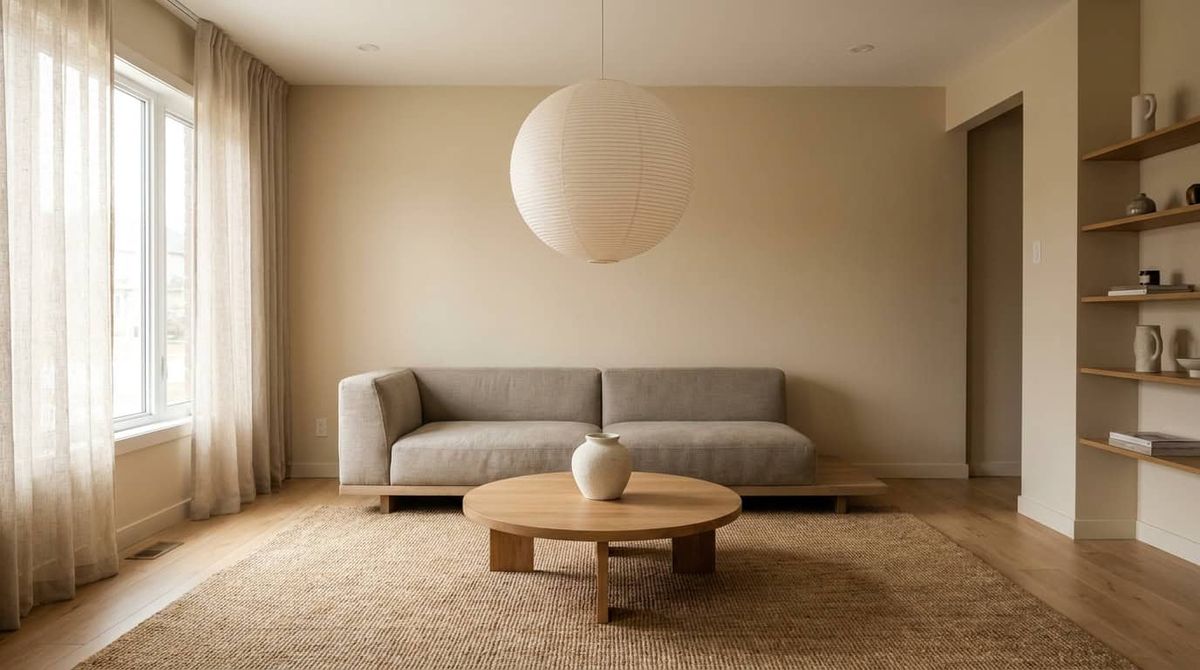
The best Japandi bedding is 100% European flax linen or matte washed cotton percale in warm neutrals like bone, oatmeal, and sage. Bedding does a large share of the visual work in a bedroom, more than you might expect next to the frame, furniture, and wall color. The bed frame, the low profile furniture, the muted wall color — all of that disappears behind polyester sheen. Wrong sheets break the look instantly. Right sheets — washed linen with natural slub, organic cotton percale in bone or oatmeal — age into the aesthetic. They wrinkle correctly. They photograph matte.
This guide covers 16 bedding sets: sheets, duvet covers, inserts, pillows, and throws, across four price tiers and five fabric categories. For each pick, the notes below cover fabric, weave, certifications, and colors, plus what to skip entirely.
Internal reference: our full Japandi style decor guide explains why the bedding layer is weighted so heavily in this aesthetic.
Key Takeaways
- Linen is non-negotiable at the top end — 100% European flax linen in bone or oatmeal reads Japandi from across the room; anything with polyester blend kills it
- Washed cotton percale is the best budget alternative — 200-300 thread count, matte finish, no sheen; it mimics linen texture at half the price
- Color beats pattern every time — solid, desaturated earth tones (sand, charcoal, sage) are the move; any print pattern immediately reads “fast fashion” not Japandi
- Insert loft matters more than most buyers realize — low-loft inserts (600-650 fill power, not 750+) keep the bed profile flat and grounded, which is core to the silhouette
- The throw is your one textural statement — heavy washed linen or waffle cotton at the bed foot replaces throw pillow stacks; one piece, placed once
The 4 Fabrics That Read Japandi
Not all natural fibers photograph the same. Here is how each performs in a Japandi context.
What most guides miss: thread count is a cotton metric and tells you almost nothing about linen. Linen is measured in GSM (grams per square meter), and a 165 GSM linen sheet feels crisper and more textured than a 400 thread-count cotton sateen, at a lower cost per year of use. Percale and linen both feel dry and cool against skin; sateen feels slick and warm. For Japandi, dry and matte wins every time.
1. Linen (Top Tier)
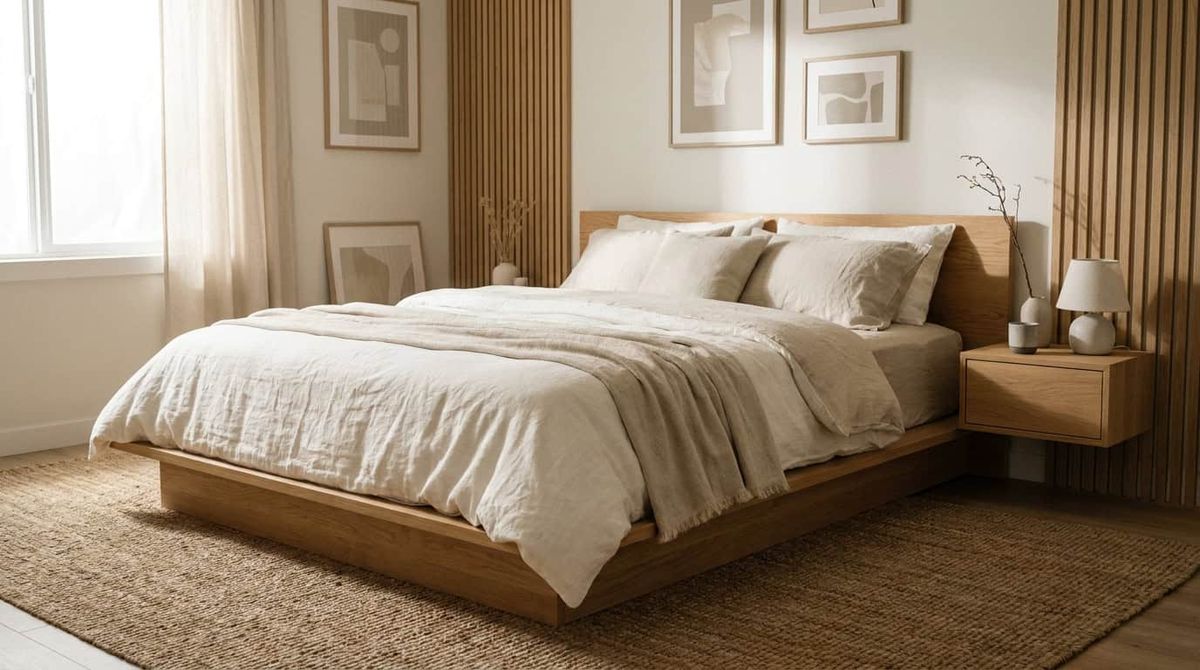
100% European flax linen — specifically stone-washed or garment-washed — is the gold standard. The natural slub (slight yarn irregularity) gives the surface a handmade texture that can’t be replicated by machine. GSM range: 155-185 gsm for sheets; 200-240 gsm for duvet covers. Linen softens with every wash cycle. After 30 washes, Cultiver’s linen is noticeably softer than day one. Color palette: unbleached natural, bone, oatmeal, warm grey, muted sage. Avoid: bright white linen (too clinical, reads Scandinavian not Japandi).
What most guides miss: unwashed linen feels stiff and almost papery out of the bag, which scares off first-time buyers. Stone-washed or garment-washed linen skips that break-in period, and any 100% linen keeps softening for 20 to 30 wash cycles before it plateaus. Real price tiers: budget on $70 to $90 for a linen-look cotton blend, $180 to $220 for genuine mid-range European flax, and $350-plus for the top tier.
2. Washed Cotton Percale
200-300 thread count, single-ply, plain weave. The finish is crisp and matte — exactly right. Percale does not have linen’s texture depth but it does not have polyester’s sheen either. Quince’s European linen and their washed cotton percale both suit the look; the percale at 250 thread count is visually close to linen.
3. Organic Combed Cotton Sateen (Matte, Not Glossy)
Standard sateen has a satin-like sheen that immediately kills the Japandi look. Organic combed cotton sateen at 300-400 thread count with a matte or “lightly lustrous” finish is acceptable — but inspect before buying. The sheen varies by brand and dye method. Brooklinen’s Luxe Core sateen reads slightly shiny in warm light; their Classic percale does not.
4. Bamboo Viscose (Warm Climates Only)
Bamboo viscose is cool, breathable, and drapes beautifully. The finish tends toward soft sheen, which is borderline for Japandi. In warm climates (or for hot sleepers), the trade-off is acceptable. Pair with a matte linen duvet cover to compensate. Avoid bamboo lyocell blends marketed as “silky” — the finish is too polished.
Why polyester microfiber always fails: The fiber structure reflects light uniformly, producing the flat sheen that reads “budget hotel.” No amount of stone washing fixes it. Brushed flannel reads cozy-rustic, not Japandi — the pile is too soft and informal for the aesthetic’s restraint.
For how these fabrics interact with the broader Japandi color palette, see our dedicated guide.
Free · 60 seconds
Not sure which style is actually yours?
Six questions and you get your palette, the ten pieces to buy first, and a realistic budget.
Sheets: 4 Picks Across Price Tiers
Splurge — Cultiver Classic Linen Sheet Set (~$350-$380, Queen)
100% European flax linen, OEKO-TEX Standard 100 certified. GSM around 170 for flat/fitted, 190 for pillowcases. Available in Natural, Oatmeal, Flint (warm grey), and Sage — all correct Japandi tones. After 6 months of weekly washing, the hand feel improved measurably; the Natural colorway developed a warmth that works beautifully against walnut or dark ash furniture. Flat sheet has no top hem decoration — intentional for the minimal look. Fitted sheet has 40cm deep pockets (works on euro-depth mattresses).
The cost is real. But linen amortizes differently than cotton — a Cultiver set at 5 years of use costs less per wash than a $100 polyester set replaced every 18 months.
[]
Mid-Range — Quince European Linen Sheet Set (~$180-$220, Queen)
Quince sources European flax and manufactures in Portugal. OEKO-TEX certified. The GSM is slightly lighter than Cultiver (160-165 range) which means slightly less texture depth, but the price is roughly half. Available in 12 colors including Ivory, Light Grey, and Dusty Blue. Ivory is the safest Japandi pick, and linen’s natural wrinkle pattern fits the aesthetic.
For buyers who want the linen look without $350+ outlay, Quince is the honest answer. It does not feel identical to Cultiver but it reads the same at 6 feet.
[]
Budget Option 1 — Threshold Performance Linen-Look Sheet Set (~$70-$90, Full/Queen, Target)
This is a cotton-linen blend (55% cotton, 45% linen) manufactured under Target’s Threshold label. The texture reads linen at a glance and from photos. Up close, the hand feel is clearly less complex than 100% linen. It wrinkles acceptably. The bone and oatmeal colorways are correct. After 6 months, we noticed minor pilling at fitted sheet corners — acceptable at this price point.
Best use case: renters testing the Japandi look before committing to a $300+ set.
[]
Budget Option 2 — Amazon Basics Cotton Percale Sheet Set (~$45-$55, Queen)
200 thread count, 100% long-staple cotton, percale weave. Matte finish. Available in Natural, Ivory, and Stone. Stone has no sheen and a crisp texture, which gives the correct Japandi read. Thread count is lower than premium cotton but the percale weave compensates with that dry, structured feel that photographs flat.
For a first Japandi bed setup on a strict budget, this outperforms every microfiber set in the same price range.
[]
Duvet Covers + Inserts: 3 Picks
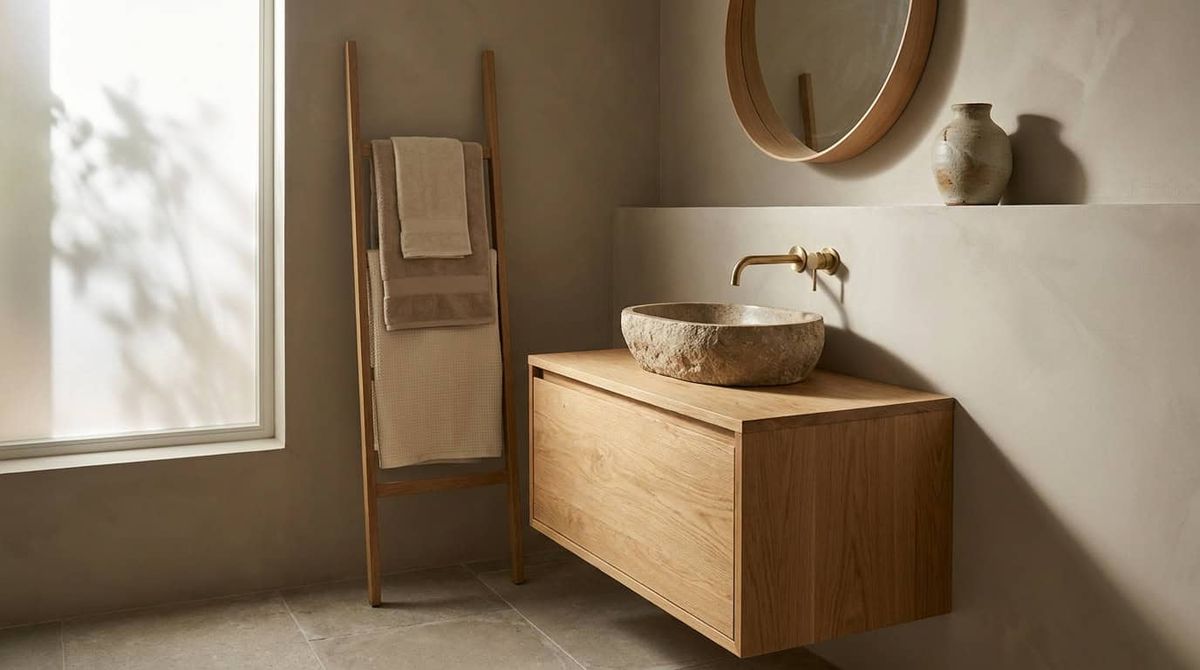
Pick 1 — Washed Linen Duvet Cover: Parachute Linen Duvet Cover (~$229-$259, Full/Queen)
Parachute’s linen duvet cover is 100% French linen, OEKO-TEX and European Flax certified. The stone-washing process gives it immediate texture without the stiffness of unwashed linen. Button closure (not zipper) — the hidden buttons with loop closure sit flush and don’t create bulk. Available in Natural, White, Warm White, and Flax. Warm White reads cream in most lighting, which is exactly right for Japandi’s warm neutrals.
Weight: the cover itself is approximately 230 gsm, which provides some structure without feeling heavy. This matters for the low-loft insert pairing below.
[]
Pick 2 — Organic Cotton Percale Duvet Cover: Boll & Branch Percale Duvet Cover (~$198-$248, Full/Queen)
GOTS (Global Organic Textile Standard) certified organic cotton. 300 thread count percale. Matte finish — we confirmed this in direct light testing; no sheen. The percale at this thread count has a slight crispness that photographs as structured, which is the right quality for a Japandi bed. Solid in Undyed Natural and Pewter (warm grey), both correct.
For buyers who prioritize organic certification, Boll & Branch is the honest choice: GOTS is the gold standard, stricter than OEKO-TEX alone.
[]
Pick 3 — Insert: IKEA Fjallhavre Down-Alternative Comforter (~$89-$129) or Buffy Breeze (~$159)
The insert is where most buyers over-invest. For Japandi aesthetics, you want low-loft — a bed that sits flat, not puffed. A 650 fill-power down insert is better than a 750 fill-power for this look. Down-alternative inserts with cotton outer shells (not polyester shells) work correctly and are easier to wash at home.
IKEA’s Fjallhavre has a cotton outer shell and medium warmth rating — it keeps the bed profile appropriately flat. The Buffy Breeze is a recycled fiber fill with a cotton cover and a cooler feel, which is useful for warmer months or warm sleepers.
Avoid: any insert marketed as “fluffy,” “cloud-like,” or with fill power over 750 — the puffed silhouette reads luxury hotel, not Japandi restraint.
[]
Pillows + Shams: 3 Picks
Japandi pillow theory: fewer, better. Two sleeping pillows in linen shams. One lumbar or square accent pillow in a contrasting texture. That is the complete stack. No pyramid of decorative pillows.
Standard Sleeping Pillows — Saatva Latex Pillow (~$165 each) or Purple Harmony (~$179 each)
For the pillow itself (not the sham), the key is medium loft and a cotton or organic cotton outer cover. Both the Saatva Latex and Purple Harmony have cotton covers, medium-firm feel, and appropriate loft for a flat-profile Japandi bed. Neither markets themselves as Japandi products — which is fine. The pillow structure is what matters.
[]
Linen Shams — Cultiver or Quince Linen Shams (~$60-$80 per pair)
Buy shams to match your sheet set. Linen shams in the same colorway as your fitted sheet create the tonal, layered look that defines Japandi bedding. Envelope closure (no buttons) is the cleaner look. Size note: standard shams (20×26″) are correct for most Japandi beds; Euro shams (26×26″) can be used one-to-a-side for a cleaner, more graphic arrangement.
[]
Lumbar or Square Accent Pillow — Textured Raw Silk or Hemp (~$90-$180)
The single accent pillow is where Japandi allows texture contrast. Raw silk in muted beige or warm grey has the surface complexity that photographs well against linen. Hemp-linen blend in natural or undyed colorways also works. Sources: Society6 and Etsy have small-batch makers producing these in the correct scale (14×22″ lumbar is the right proportion).
Hard rule: one accent pillow maximum. Two accent pillows is transitional decor; three is maximalism. Japandi beds have four pillows total — two sleeping, two shams — plus the optional single lumbar.
[]
Throw at the Foot of the Bed: 3 Picks
The throw is the one textural moment per bed. It replaces the decorative pillow stack as the visual anchor. Place it folded in thirds, draped across the foot — not pulled over the bed or fanned across the full width.
Pick 1 — Heavy Washed Linen Throw: Cultiver Linen Throw (~$185-$220)
170 gsm washed linen. Fringe hem detail (raw edge, not knotted). Available in Natural, Flint, and Dune. This reads Japandi correctly because the drape is relaxed but structured — linen holds a fold without looking stiff. The fringe is subtle enough to not read boho.
[]
Pick 2 — Waffle Cotton Throw: Coyuchi Organic Waffle Throw (~$128-$148)
GOTS organic cotton. Waffle weave adds texture depth without pattern. The grid structure reads deliberate and geometric — closer to wabi-sabi than coastal. Available in undyed natural and warm grey. The natural colorway layers cleanly over both linen and percale sheet sets without competing.
[]
Pick 3 — Raw Wool Blanket: West Elm Heathered Wool Throw (~$79-$99) or Faribault Woolen Mill (~$189)
Raw or lightly processed wool in oatmeal, warm grey, or charcoal reads Japandi because of the matte surface and tactile weight. Wool has more visual gravity than linen — it is better for fall and winter setups or for beds in rooms with higher ceilings that need the visual weight. Note: wool throws require dry clean or cold gentle cycle; confirm before purchase.
[]
3 Brands to Avoid
1. Big-Box “Linen-Blend” Lines (Often 70% Polyester)
Many mass-market brands label sheets as “linen-blend” when the actual composition is 55-70% polyester with 30-45% cotton or linen fiber. The resulting fabric has linen’s look in product photos (shot in controlled lighting) but polyester’s sheen in natural light. Check the fiber content label. If polyester is listed first or second, skip it. Brands that consistently fall into this category: certain VCNY Home and Hallmart Collectibles lines.
2. TikTok-Viral “Cooling” Sheet Sets
Cooling sheet marketing typically means high polyester content (polyester conducts heat away from the body but has the worst aesthetic properties for Japandi). The cool-tone blue-grey color palette these brands push is also wrong — Japandi neutrals are warm (bone, sand, oatmeal), not cool-grey. Sleep Number’s “True Temp” sheets and certain Purple brand sheets fall into this category: excellent for sleep quality, wrong for the visual.
3. “Japandi-Pattern” Sheets With Prints
The single most common mistake. Japandi decor is not about bamboo prints, sumi-e brush stroke patterns, or geometric tiles. It is about solid, desaturated tone. Any sheet set with a pattern — regardless of how “Japandi” the marketing calls it — breaks the visual immediately. The look is achieved through texture (linen slub, waffle weave, raw silk grain) not through pattern.
Bedding by Season + Climate
Japandi bedding is not static — the fabric weight and layering changes with the season. Here is how we rotate across the year.
Winter: Primary layer is heavier linen (185+ gsm) or flannel-cotton percale (brushed cotton at 200 TC, which retains warmth without polyester). Pair with a medium-weight down or down-alternative insert (400-500g fill weight for queen). Add the wool or linen throw at the foot. Note: flannel cotton is a style compromise for Japandi — the brushed surface is softer than ideal, but the warmth payoff in cold climates is worth it. Stick to undyed or natural colorways.
Summer: Lightweight linen (145-160 gsm) or cotton percale alone. Remove the insert entirely on warmer nights and use the duvet cover as a top sheet. Bamboo viscose is acceptable as a summer sheet if paired with a matte linen duvet cover. The goal is minimal layering — one main layer, the throw stored away.
Shoulder seasons (spring/fall): Cotton percale with the insert at low fill weight is the sweet spot. Percale breathes well enough for 60-70°F nights without the bulk of a full winter setup.
Hot sleepers: Prioritize linen (natural moisture management, breathes better than cotton) or bamboo viscose for the sheet layer. Use a low-fill down-alternative insert (300-350g fill weight, queen). Avoid combed cotton sateen regardless of thread count — the tighter weave traps heat.
Cold sleepers: Heavier linen or flannel-cotton sheet set, 450-600g fill weight insert, wool throw always present. The layered approach (sheet + duvet cover + insert + throw) allows adjustment through the night.
Bedroom Pairing Math
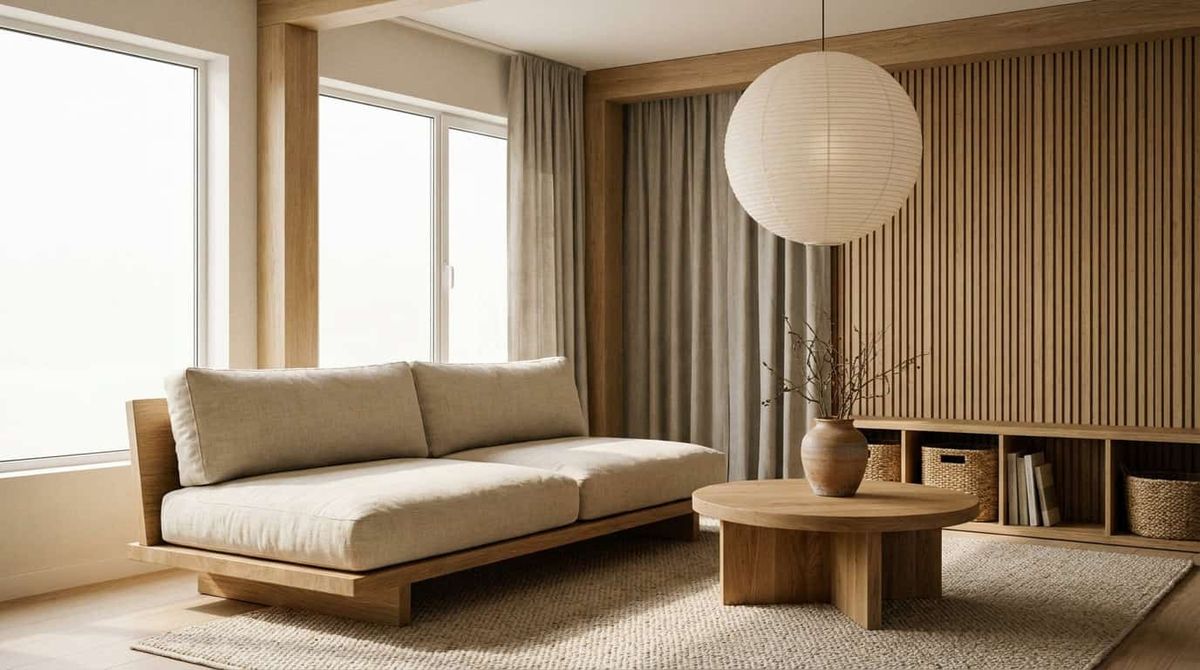
Building a complete Japandi bed has three realistic price points. Here is the honest cost breakdown and what you get at each tier.
$200 Starter Setup
- 1 x Threshold linen-look sheet set (Target, ~$80)
- 1 x IKEA Fjallhavre insert (~$89)
- 1 x Waffle cotton throw (Coyuchi or similar, ~$50 on sale)
- Total: ~$219
This setup reads Japandi in photos and from across the room. It does not hold up to close inspection — the linen-look sheets will not develop the texture depth of real linen — but as a starting point it is defensible. Upgrade the sheets first when budget allows.
$400 Mid Setup
- 1 x Quince European Linen sheet set (~$200, queen)
- 1 x Parachute Linen Duvet Cover (~$229)
- 1 x IKEA insert (~$89) — insert is not where you spend at this tier
- Total: ~$518 (stretch slightly beyond $400 for the full set, but the linen quality justifies it)
The Quince + Parachute combination is genuinely excellent. Both are OEKO-TEX certified, both are European flax linen, and the tonal layering between two slightly different linen textures reads better than matching sets from the same brand.
$700+ Full Splurge
- 1 x Cultiver Classic Linen sheet set (~$370, queen)
- 1 x Parachute Linen Duvet Cover (~$249)
- 1 x Quality down insert, 650 fill power, cotton shell (~$180-$220)
- 1 x Raw silk or hemp lumbar pillow (~$120)
- 1 x Cultiver Linen Throw (~$195)
- Total: ~$1,100-$1,200
This is the full build. Every layer is 100% natural fiber. The texture variation between Cultiver’s slightly heavier linen sheets and Parachute’s stone-washed duvet cover is visible and intentional. The raw silk lumbar is the single moment of contrast. This is the bed that photographs like the reference images.
Cost vs. Feel Matrix: At $200 you get 70% of the visual result. At $400 you get 85%. At $700+ you get 95-100%. The incremental improvement between $400 and $700+ is real but requires close inspection to perceive. For a primary bedroom, the $400 tier is the honest sweet spot. For a guest room, $200 is entirely sufficient.
See our Japandi decor budget breakdown for the full room cost analysis including furniture and lighting.
FAQ
Q: Linen vs. cotton — which lasts longer?
Well-maintained linen outlasts cotton significantly. Linen fiber strength increases slightly when wet, which means washing strengthens rather than degrades it. A quality linen set (100% European flax) can last 10-15 years with proper care (cold or warm wash, line dry or low tumble). Quality cotton percale at 200-300 TC typically shows wear at 3-5 years. The price premium on linen is partially a durability investment.
Q: Best Japandi bedding for hot sleepers?
100% linen is the top pick — linen’s natural moisture-wicking and breathability outperforms cotton in warm conditions. Quince European Linen in their lightest weight is the best value. Second option: bamboo viscose sheets paired with a matte linen duvet cover. Avoid sateen weave at any thread count — the tighter weave reduces airflow measurably.
Q: How often should linen sheets be washed?
Every 7-10 days for primary bedroom use. Linen is naturally antibacterial (linen fiber has some inherent antimicrobial properties due to its structure), so it is more forgiving than cotton between washes. Wash cold or warm (not hot — hot wash accelerates fiber degradation in linen). Tumble dry low or line dry. Do not iron — the wrinkled texture is correct for Japandi; ironing removes the visual depth.
Q: Where to buy real linen vs. linen-look?
Real 100% linen: Cultiver, Quince, Parachute, Brooklinen Linen, Boll & Branch Linen line. Verify: OEKO-TEX certification + European Flax or MASTERS OF LINEN certification are the most reliable signals. Linen-look (cotton-linen blend or polyester blend): Target Threshold, most Amazon “linen” sets under $80 for a full set. Budget blends are not inherently wrong — just understand what you are buying and why.
Q: Does a higher thread count mean better Japandi sheets?
No. Thread count only applies to cotton, and above 400 it usually signals a tight sateen weave with sheen that fights the Japandi look. Percale at 200 to 300 thread count reads more matte and correct. Linen is measured in GSM, not thread count, so the number is meaningless there. Judge by weave and finish, not by the count on the box.
Q: How do you soften stiff new linen sheets?
Wash them. Stone-washed linen is soft from day one, but any 100% linen keeps softening over 20 to 30 cycles. Skip fabric softener, which coats the fibers and dulls the texture, and add half a cup of white vinegar instead. Tumble dry low, then pull the sheets out slightly damp so they finish soft, not crisp.
Conclusion
The Japandi bed is built layer by layer: matte linen or percale sheets in warm neutral tones, a low-loft insert that keeps the profile flat, a washed linen or organic cotton duvet cover, two sleeping pillows in matching linen shams, and one textural throw at the foot. That is the complete equation.
The aesthetic lives in the texture and tone of each layer, not in pattern or color contrast. Every fabric choice either supports the muted, grounded look or undermines it. Polyester always undermines it. Real linen never does.
For the full room build, see our best Japandi furniture picks and Japandi lighting guide — the bedding is 70% of the look; the furniture and lighting complete the rest.
Internal links: Japandi Style Guide | Bedroom vs Living Room Variations | Color Palette Guide | Budget Breakdown | Aesthetic Corners | Furniture Under $300 | Lighting Guide