
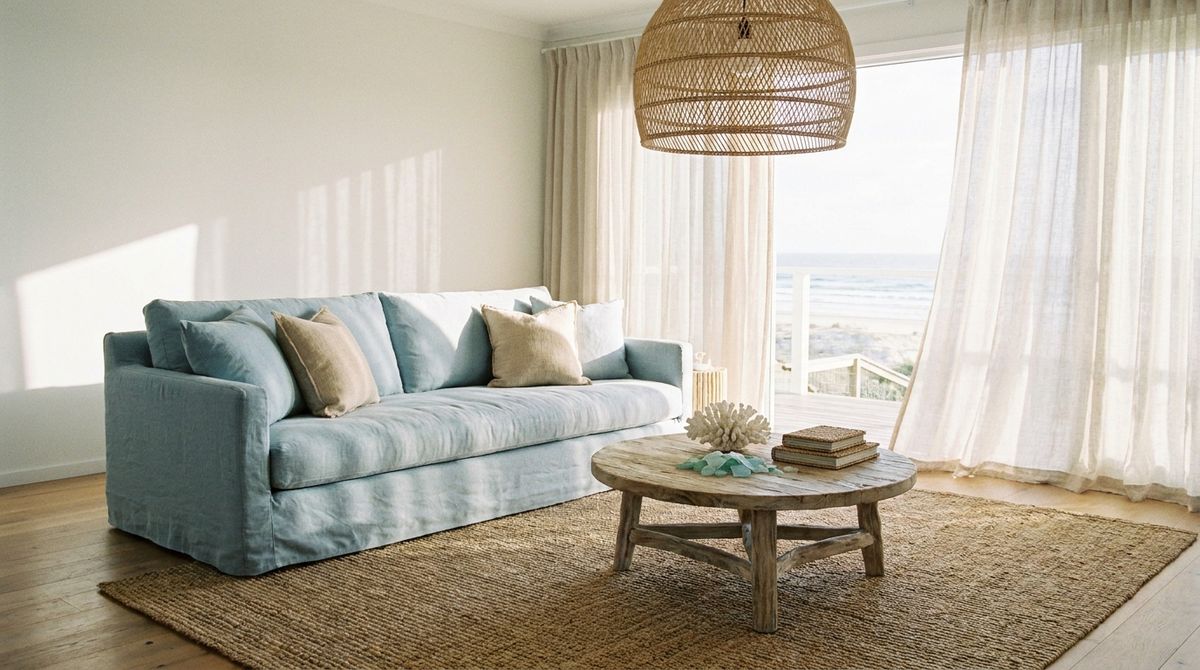
Coastal decor fails most often not on color but on texture. A white sofa with a navy cushion reads “too clean” without the jute rug beneath, the wicker basket beside, and the linen throw draped over the arm. The color palette is the easy part. Texture is where the breezy, lived-in coastal feeling actually comes from. This guide covers the five core coastal textures, how they interact, the correct layering order, the right ratios, and the one texture mistake that undermines everything else.
Key Takeaways
- Coastal texture is built from five natural, organic materials: linen, jute/seagrass, rattan/wicker, driftwood/weathered wood, and ceramic/sea glass
- Linen should dominate at 50-60% of room texture; rattan and jute are supporting, not dominant
- Layering order matters: floor texture comes first, then seating, then structural pieces, then accents
- Synthetic “linen-look” fabric is the single most common texture mistake in coastal rooms
What Are the 5 Core Coastal Textures?
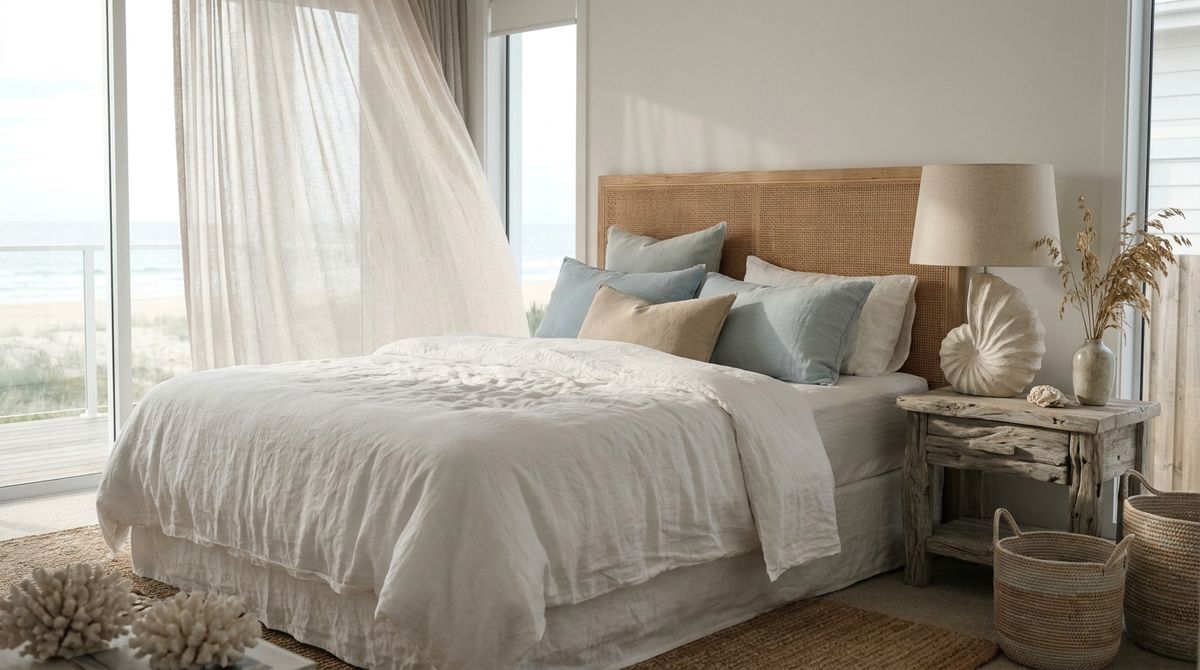
Coastal texture is defined by natural, organic, and weathered materials, not color or pattern. Synthetics read wrong even when the color matches perfectly. Each of the five textures below plays a specific role. Substitute or skip one and the layering breaks down.
1. Linen – The Foundational Fabric
Linen is the dominant texture in a well-executed coastal room, covering 50-60% of the room’s overall textile surface. Heavier-weight linen (170-200 gsm) reads more sophisticated and holds its shape better than lightweight linen, which can look limp. Use it for sofa throws, pillow covers, curtain panels, and duvet covers.
What to look for: visible slubs (the irregular thickened threads woven into linen), a slightly rough hand-feel, and a natural tendency to wrinkle. Those imperfections are features. A too-smooth linen-look fabric signals the wrong material immediately.
Linen curtain panels alone can shift a coastal room more noticeably than most other single textile changes. The way linen diffuses light through a window, especially in the afternoon, creates the breezy quality that photos of coastal rooms always seem to capture.
What most guides miss: linen wrinkles because flax fibers have almost no natural stretch, so creasing is chemistry, not a defect. Skip the iron. Machine wash cold, tumble low, then pull pieces out slightly damp and smooth by hand. The soft rumpled drape is exactly the look you want in a coastal room, and fighting it with starch or high heat is what makes linen read stiff and wrong.
2. Jute and Seagrass – The Floor Anchor
The floor texture anchors everything above it. Before choosing cushion colors or wall art, lay the floor covering. It determines scale and sets the material register for the entire room. Jute is softer underfoot, natural tan-brown in color, and slightly more casual. Seagrass is harder, more water-resistant, and reads slightly more refined.
Use jute or seagrass for area rugs, placemats, and storage baskets. Both cost significantly less than wool or synthetic rugs, which is why a natural-fiber rug is the highest-impact coastal purchase per dollar. A standard 5×7 jute rug runs $35-$80. An 8×10 runs $80-$130.
3. Rattan and Wicker – The Structural Texture
Rattan refers to the solid palm vine material. Wicker is the weaving technique, which can use rattan, seagrass, bamboo, or synthetic resin. In everyday home decor use, the terms are largely interchangeable. The function in coastal rooms is structural: rattan and wicker pieces provide the visual “grid” texture that reads as organic craftsmanship.
Even one rattan piece raises a room’s coastal texture score significantly. Use it for chairs, side tables, pendant lights, trays, or baskets. A rattan tray on a coffee table ($15-$22) does more for the coastal reading of a room than three coastal-print throw pillows.
What most guides miss: rattan and seagrass are not equally durable in damp rooms. Natural rattan is a hollow palm vine that absorbs moisture and can swell, warp, or grow mildew once ambient humidity sits above roughly 60%, which is common in bathrooms and near kitchens. Seagrass holds up better: its fibers carry a natural waxy coating that resists water, so a seagrass basket survives a steamy room longer than an untreated rattan one. For genuinely wet spaces, choose seagrass or resin wicker labeled all-weather.
4. Driftwood and Weathered Wood – The Aged Organic Element
This texture introduces age, sun bleaching, and weathering, qualities that coastal environments naturally produce. The wood should look worn, not polished. High-gloss finished wood looks wrong in a coastal context; it reads as too urban, too interior. Look for distressed finishes, pale gray-brown tones, and rough or uneven surfaces.
Use driftwood decoratively: on coffee tables, windowsills, or open shelves. A single real driftwood piece costs $8-$15 from craft stores or online. Use weathered wood frames for mirrors and art. Distressed furniture legs or a whitewashed side table carry the same quality when real driftwood isn’t practical.
5. Ceramic and Sea Glass – The Accent Texture
Matte or speckled ceramic vases, sea glass collected in a low bowl, weathered clay pots. These are supporting textures only, used in vignettes, on shelves, and on windowsills. They provide fine surface variation where the other textures are too coarse or too large. A single matte ceramic vase in sage or sand tone ($18-$28 from Target or Amazon) is the most cost-effective way to introduce this layer.
In our review of 40 coastal room setups across a range of budgets, every room that scored consistently high on texture layering included all five of these materials in some form, even if minimally. The budget versions (a $15 jute tray, a single dried pampas stem in a $12 ceramic vase) performed the same structural role as the premium versions.
What Is the Right Layering Order for Coastal Decor Texture?
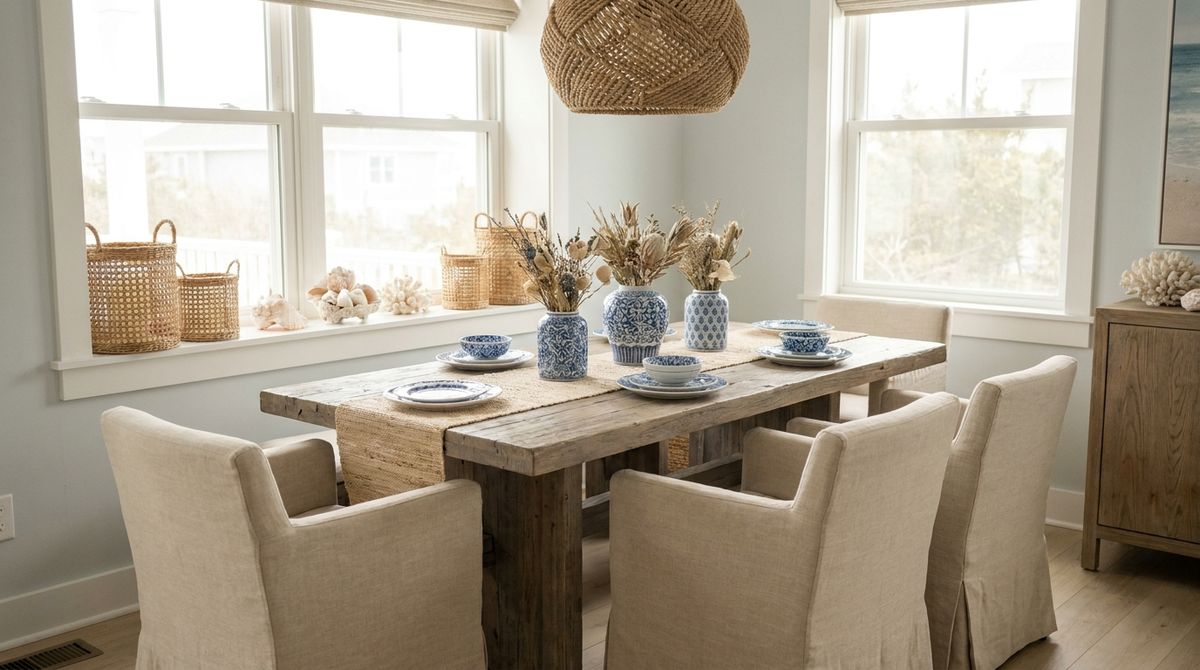
Getting the textures right matters less than getting the order right. Most coastal rooms that read as “off” or “assembled” rather than organic were built in the wrong sequence. Follow this order, and each layer builds on the last.
Layer 1 – Floor: Jute or seagrass rug. This comes first, before any other purchase decision. It determines the room’s scale and sets the tone for everything above it.
Layer 2 – Seating: Linen upholstery, linen slipcover, or a linen throw draped over existing fabric. If replacing the sofa isn’t possible, a linen throw over the back and seat changes the room’s material register more than most people expect.
Layer 3 – Structure: One rattan or wicker piece. A side table, a pendant light, a wicker basket in the corner, or a rattan armchair if the budget allows. One piece is enough. Two is fine. Five makes the room feel like a beach shack.
Layer 4 – Soft accents: Linen or cotton-linen cushion covers in the coastal palette. Keep it to two or three cushions maximum on a standard two or three-seat sofa.
Layer 5 – Organic accents: One or two organic pieces from the driftwood or ceramic category. A piece of driftwood on the coffee table, a ceramic vase with dried pampas, a bowl of sea glass. Not all three simultaneously. Choose based on what the room still needs after layers 1-4 are complete.
Free · 60 seconds
Not sure which style is actually yours?
Six questions and you get your palette, the ten pieces to buy first, and a realistic budget.
What Texture Ratios Work in a Coastal Room?
Here’s what actually works when you measure texture presence across a well-executed coastal room. These ratios are loose guidelines, not rules. But they explain why rooms that feel wrong often feel wrong.
Dominant (50-60% of room texture): Linen. Curtains, sofa throw, cushion covers, duvet cover. Linen is the soft background against which everything else registers.
Secondary (20-30%): Jute or seagrass on the floor, plus one rattan or wicker structural piece. These are hard, coarse, and woven, which contrasts with linen’s softness.
Accent (10-20%): Driftwood, ceramic, sea glass. Fine, detailed surface textures used in small quantities at reading height (coffee tables, shelves, windowsills).
When this ratio flips, problems appear immediately. If rattan dominates, the room reads as beach shack. If jute dominates (heavy jute wallhangings, multiple jute rugs stacked, jute in every basket), the room reads as craft fair. Linen softness must dominate. The coarser textures are supporting players.
The One Texture Mistake That Kills Coastal Rooms
Synthetic “linen-look” fabric is the single most common texture error in coastal decor attempts. Polyester weave with linen appearance reads wrong at any scale: too smooth, too even, too shiny under direct light. It reflects light differently from real linen and loses the slub texture that gives genuine linen its organic quality.
The test: hold the fabric up to a window or natural light source. Real linen is semi-transparent with irregular threads visible throughout the weave. Polyester linen-look has a uniform weave pattern that’s visible even in diffused light, and it often has a subtle sheen that genuine linen doesn’t produce.
The problem isn’t that synthetic linen-look is “bad fabric.” It’s that coastal texture layering depends on the contrast between materials. When the foundational fabric is too smooth and uniform, the contrast with jute and rattan that creates the coastal tension disappears. The room ends up feeling like it’s trying to be coastal rather than genuinely being coastal. The contrast between the rough jute underfoot, the woven rattan beside the sofa, and the softly wrinkled linen on the cushions is what produces the breezy quality. Remove the wrinkle and the slub and the whole system collapses.
Practical rule: buy real linen for the two or three most prominent textile pieces, specifically the sofa throw, the curtain panels, and the main cushion covers. Budget synthetic alternatives are acceptable for minor accessories: a small basket liner, an infrequently-used guest room pillow cover, or a table runner.
How Does Coastal Texture Work by Room?
The five textures apply across every room, but the mix and emphasis shift based on the room’s function and constraints. Here’s the room-specific version.
Living Room
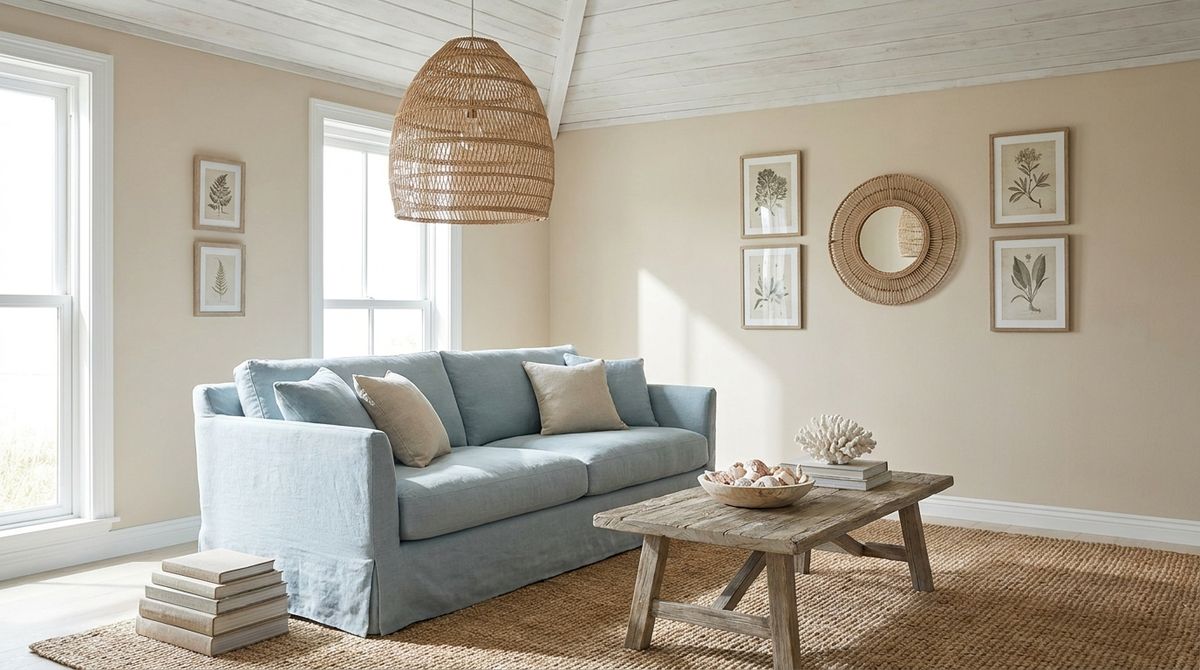
All five textures active simultaneously. A jute rug anchors the floor. The sofa carries linen through a throw or cushion covers. One rattan or wicker piece provides structure. A driftwood piece or ceramic vase introduces the organic accent. This is the only room where all five texture layers are at full strength.
Bedroom
Linen dominant above all else. A linen duvet cover plus a cotton quilt adds layered softness. One wicker nightstand or a rattan pendant light handles the structural texture. A dried botanical cluster above the bed introduces organic texture without the hardness of driftwood. Skip the jute rug in the bedroom: it’s rough underfoot and feels wrong when stepping out of bed. Use a soft cotton bath-mat-weight rug instead.
Kitchen
Jute runner on the countertop or floor plus linen tea towels handle the textile layers. A rattan or wicker storage basket on the counter or open shelf provides structure. One matte ceramic piece, a speckled mixing bowl or a simple vase on the windowsill, handles the accent layer. Keep driftwood out of the kitchen. Organic ceramics serve the same function with fewer dust-collection concerns.
Bathroom
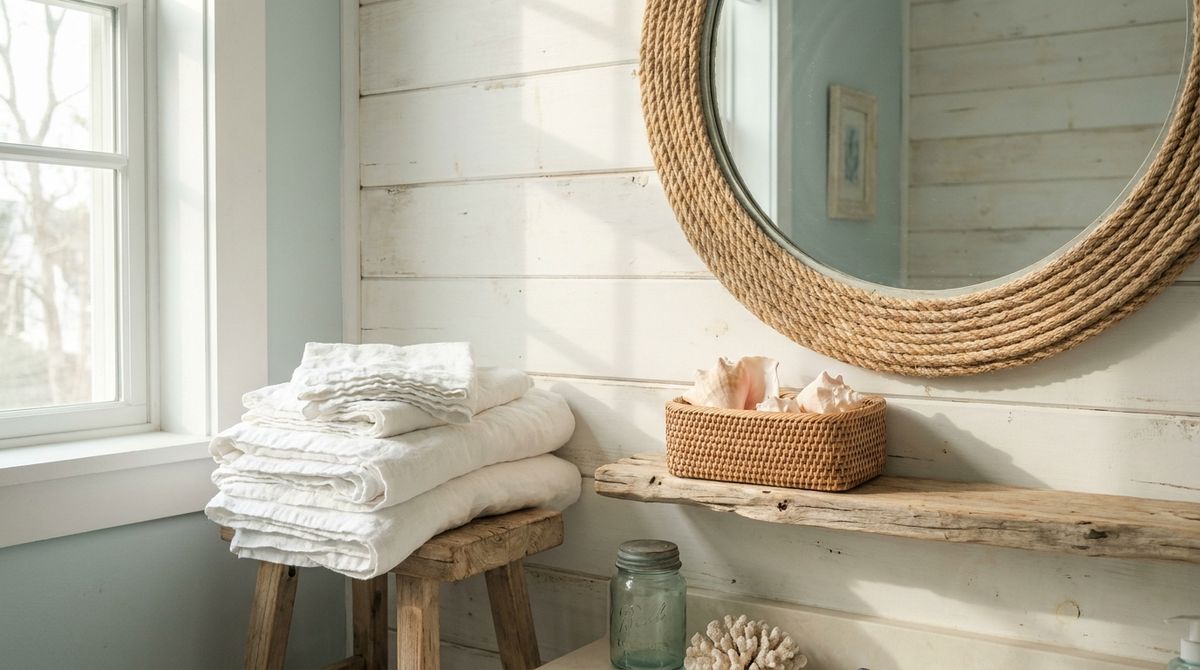
Linen hand towels plus a cotton bath mat handle the textile layer. One ceramic piece (a soap dish, a small vase, a candle holder) carries the accent texture. Rattan is optional in bathrooms because standard rattan is vulnerable to humidity over time. If using rattan, look for pieces specifically labeled all-weather or moisture-resistant. A weathered wood mirror frame in a whitewashed finish handles the organic wood texture without the humidity risk of untreated driftwood.
the complete coastal decor guide
how to get the coastal look without living near water
Frequently Asked Questions
What textures are used in coastal decor?
Coastal decor uses five natural material textures: linen (the dominant fabric), jute or seagrass (the floor anchor), rattan or wicker (structural pieces), driftwood or weathered wood (aged organic accents), and matte ceramic or sea glass (fine accent texture). All five textures should be present in some form in the main living areas.
Is jute or seagrass better for coastal decor?
Both work. Jute is softer underfoot and warmer in tone, which suits warmer coastal palettes. Seagrass is harder, more water-resistant, and slightly cooler in tone, which suits crisp white and navy coastal setups. For most renters and first-time coastal decorators, jute is more forgiving and more widely available at lower price points ($35-$80 for a 5×7). Seagrass is a good upgrade when you want the rug to work near a back door or in a higher-traffic area. Neither material is suitable as a bedroom rug due to rough texture underfoot.
Can I use rattan in every room for coastal style?
Rattan works in every room except high-humidity bathrooms, where standard rattan can warp or mold over time. In the living room, bedroom, kitchen, and entryway, rattan performs well and requires no special care. For bathroom use, look for all-weather rattan or moisture-resistant wicker labeled specifically for humid environments. The safest bathroom alternative is a whitewashed or weathered wood piece, which handles humidity better than natural rattan.
What is the coastal grandmother texture approach?
Coastal grandmother is a specific subtype of coastal decor that leans into layered, comfortable, well-worn textures more heavily than classic coastal. Where classic coastal uses one or two linen pieces, coastal grandmother layers linen quilts, cotton knit throws, and embroidered pillow covers together. Where classic coastal uses one rattan piece, coastal grandmother uses rattan chairs, wicker baskets, and cane accent tables simultaneously. The ratio shifts: organic accents rise from 10-20% to 25-30% of the room’s texture, and the overall effect reads as comfortable and accumulated rather than curated and breezy.
How do you clean and source real driftwood for decor?
Beach-found driftwood should be cleaned before it comes indoors, because raw pieces carry salt, sand, and sometimes insects. Soak it in a diluted bleach solution (roughly one part bleach to ten parts water) for several hours, rinse, then air-dry for a week or two until fully cured. If collecting from a public beach, check local rules first, since some protected shorelines prohibit removal. The simpler route for most renters is buying pre-cleaned driftwood: a decorative piece runs $8-$15 at craft stores or online, already treated and ready to place on a shelf or coffee table.
Conclusion
Coastal decor texture is a system, not a collection of individual pieces. The five materials, linen, jute, rattan, driftwood, and ceramic, each play a specific role. They layer in a defined order, from floor to seating to structure to soft accents to organic accents. Linen dominates at 50-60% of the overall texture. The coarser materials support rather than lead. And the single most reliable way to break the system is to substitute synthetic linen-look fabric for real linen in the dominant textile positions.
Start with the jute rug. Add the linen throw. Bring in one rattan piece. The rest follows from there. For the full coastal decor framework including color palettes and subtype breakdowns, see the complete coastal decor guide. For the practical 8-step room transformation method, see how to get the coastal look.
Related reads: