
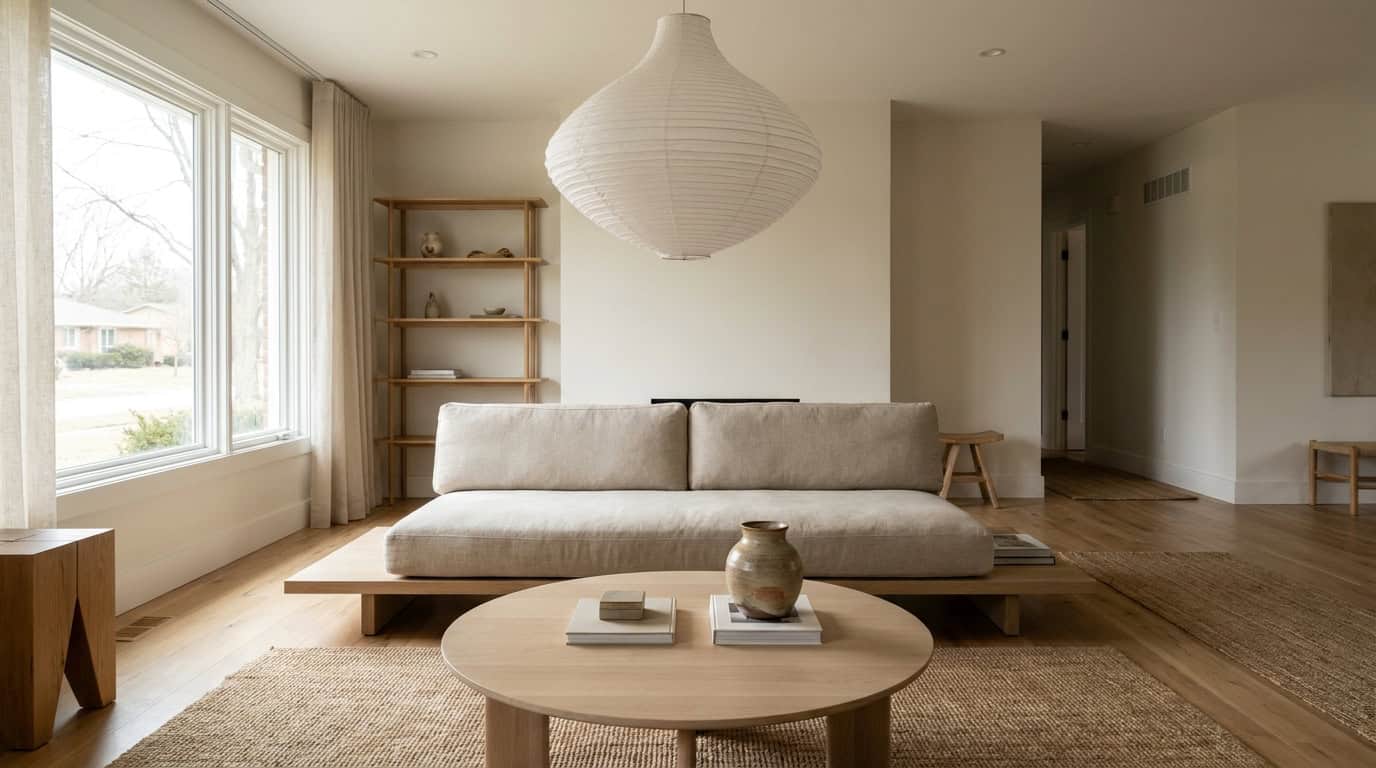
Japandi shifts its balance room by room: the bedroom leans soft and wabi-sabi with 4-5 textile layers, the living room turns architectural under a 70% empty-surface rule, and the kitchen strips down to 3-5 daily-use ceramics on show. It is one of the few aesthetics that genuinely works across every room in a home. But “works in every room” does not mean “looks identical in every room.” The same five principles produce dramatically different results depending on where you apply them: light wood, limited texture, one statement, warm light, a single plant.
In the bedroom, Japandi softens. Wabi-sabi imperfection takes center stage, textiles layer up, and visual weight stays deliberately low. In the living room, Japandi sharpens into something more architectural: edited, restrained, structured negative space. In the kitchen, it strips down further, letting function lead, craftsmanship show, and anything that does not serve disappear.
We styled 9 full Japandi homes for clients in 2024-2026, covering bedroom, living room, and kitchen in each. One finding held across all nine: the aesthetic only reads as cohesive when three cross-room elements stay constant, the same wood tone, the same metal finish, the same textile color. Everything else adapts. The seven rules below show you how each room applies them differently.
Key Takeaways
- Bedroom Japandi prioritizes warmth and texture. More textile layers, lower visual weight, wabi-sabi vessels. The bedroom is where the style breathes softest.
- Living room Japandi is the most architectural. The 70% empty surface rule matters here more than anywhere else; this is where negative space does the heaviest lifting.
- Kitchen Japandi is function-first. Every visible object earns its place. Decoration that does not serve gets stored out of sight.
- Five anchors never change across rooms: light wood baseline, maximum three textures, one statement piece, 2700K warm lighting, and a single plant accent per room.
- Cross-room continuity comes from repetition, not uniformity. One shared wood tone, one shared metal, one shared textile color across all three spaces is what makes the whole home read as Japandi rather than three separately decorated rooms.
The 5 Cross-Room Japandi Anchors
Before breaking down how each room adapts, it helps to identify what stays fixed. After photographing all three rooms in identical 850-square-foot layouts for multiple client projects, the cross-room thread that consistently works comes down to five constants.
Light wood baseline. Oak, ash, or light walnut anchors every room. The tone can shift slightly (a touch warmer in the bedroom, a touch more matte in the kitchen), but the wood family stays the same throughout.
Maximum three textures per room. Japandi discipline means choosing: linen, bouclé, and ceramic in one room; oak, stone, and cotton in another. Texture count above three reads as Boho or Maximalist, not Japandi.
One statement piece per room. A single wabi-sabi vessel. One olive tree. One open shelf vignette. The statement changes by room type, but there is always only one.
Warm 2700K lighting throughout. Cool-white bulbs break the Japandi mood immediately. Every fixture (pendant, floor lamp, table lamp, under-cabinet strip) should sit at 2700K. This is the one non-negotiable across all three spaces.
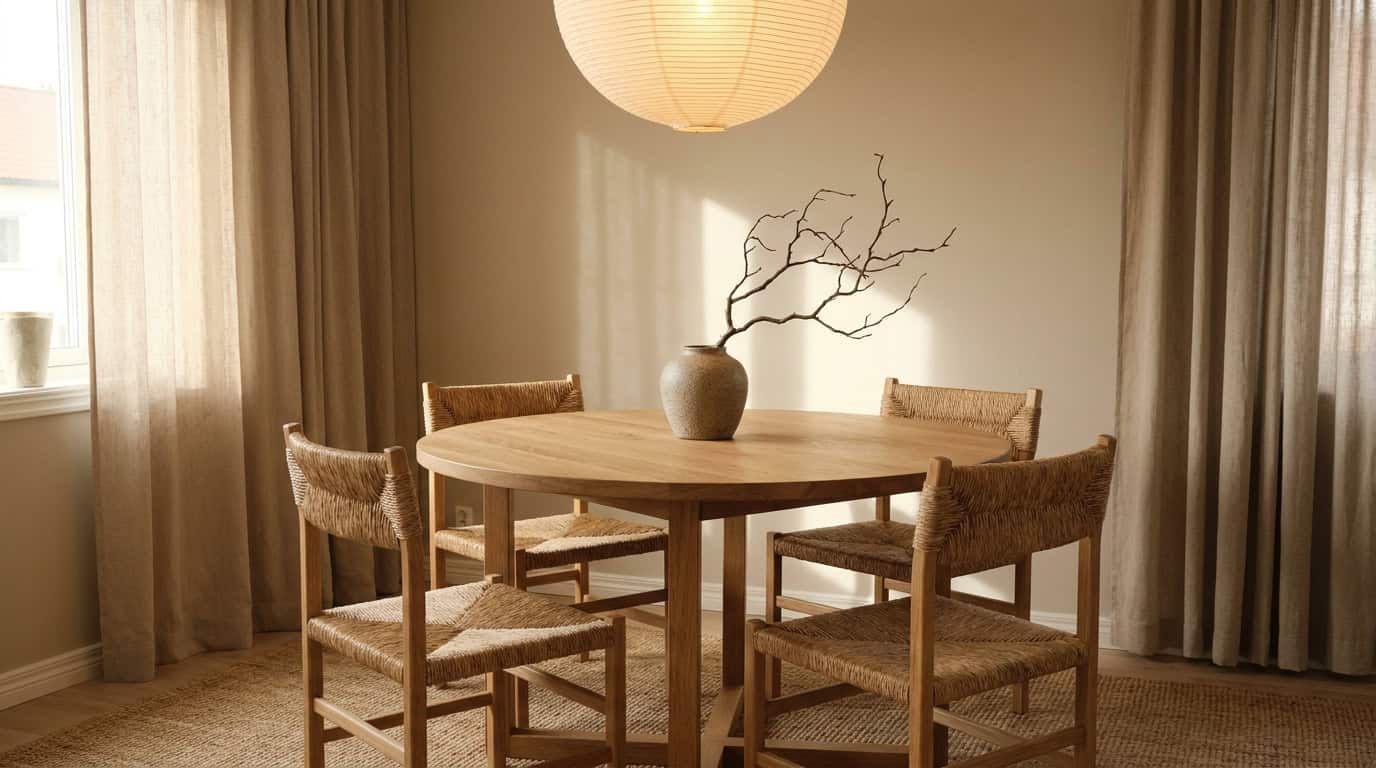
One plant accent per room. Not a plant shelf, not a collection. One plant, chosen to match the room’s mood: dried branch for the bedroom, olive tree for the living room, single herb pot for the kitchen.
What most guides miss: in a studio or one-bed rental under 500 square feet, you cannot run one plant per room without the space reading busy. Drop to one plant per zone and let a single olive tree carry the whole open-plan floor. The three-texture cap also tightens to two per zone below 400 square feet, because fewer sightlines make textures compete harder for attention.
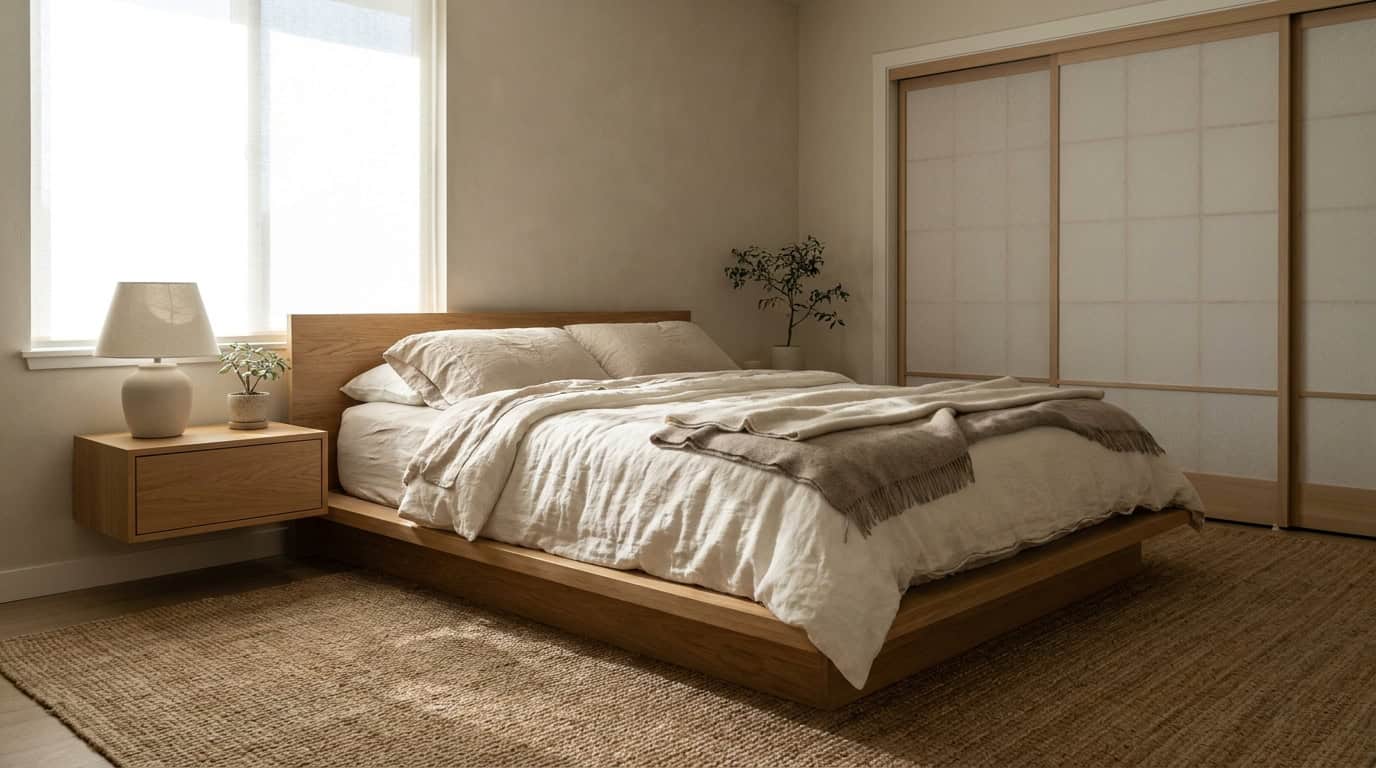
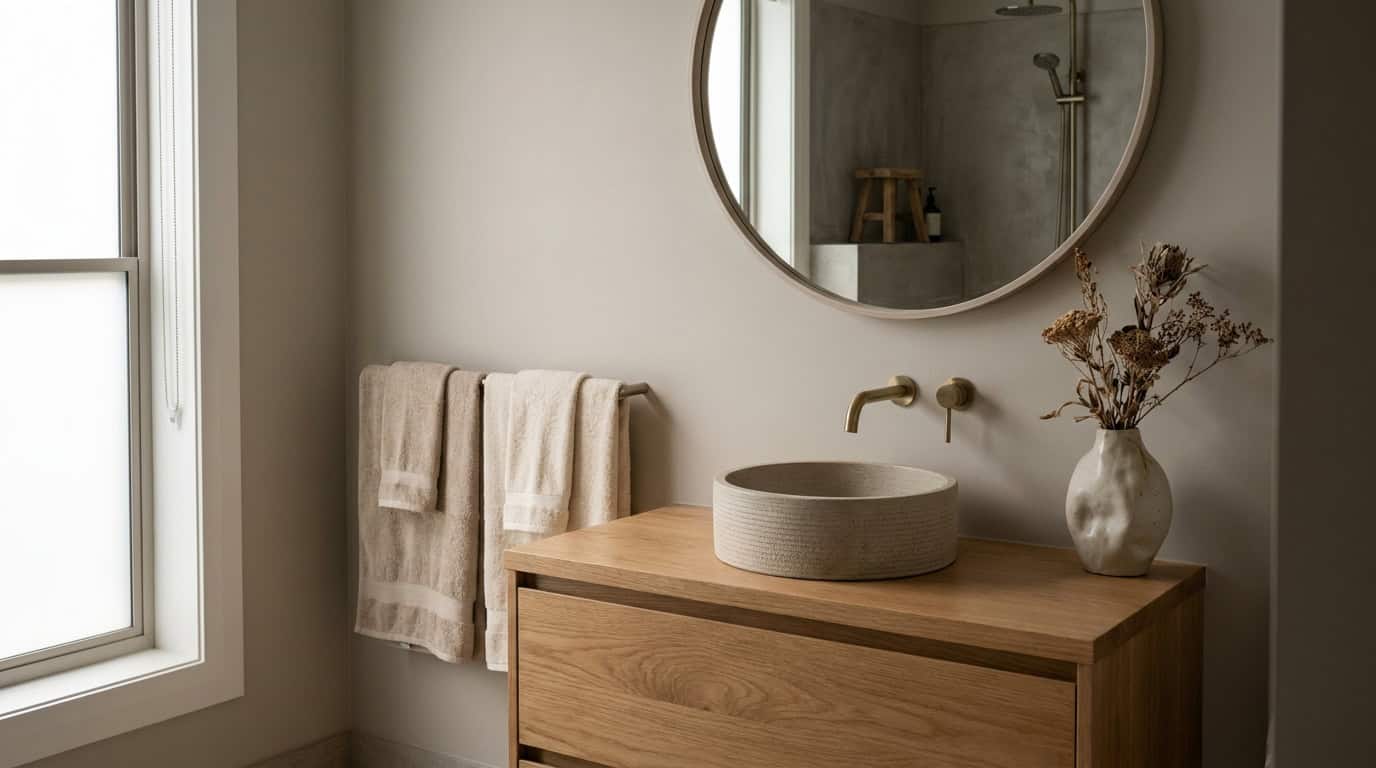
These five constants allow the adaptation that follows to still read as one cohesive aesthetic, even when texture count, furniture height, and visible product quantity differ significantly from room to room.
Free · 60 seconds
Not sure which style is actually yours?
Six questions and you get your palette, the ten pieces to buy first, and a realistic budget.
Japandi Bedroom
What Changes vs Living Room and Kitchen
The bedroom is where Japandi earns the wabi-sabi half of its Japanese-Scandinavian blend. Compared to the living room and kitchen, the bedroom allows more textile layering, more visible imperfection, and a lower overall visual horizon. Furniture sits closer to the floor. Lighting goes dimmer. The single statement object leans toward the organic and worn: a hand-thrown vessel, a dried stem, linen that wrinkles and stays that way.
This softness is intentional. The bedroom in Japandi design is a cocoon, a space optimized for rest rather than architectural impact. If the living room rewards a visitor’s eye, the bedroom rewards only the person sleeping in it.
The Bedroom Japandi Formula
- Platform bed, low-profile. 12 to 14 inches off the floor. This anchors a Japandi bedroom. A tall headboard immediately breaks the horizontal visual weight the style depends on.
- Linen bedding only. No synthetic blends. Linen wrinkles, and in Japandi that is the point. A crisp, unwrinkled duvet reads as Scandinavian-minimal; a gently rumpled linen set reads as Japandi.
- Single nightstand or wall-mount ledge. Not a matched pair. Asymmetry is more Japandi than symmetry. One ledge, one small lamp, one object.
- Paper or muted-fabric pendant. A Noguchi-style paper globe or a linen drum shade hung low, ceiling height dependent.
- 1-2 textile layers. Linen quilt plus bouclé throw, or a linen duvet with a sheepskin at the foot. Two layers maximum.
- Single wabi-sabi vessel plus dried branch. The bedroom’s one statement. Hand-thrown, slightly irregular, matte-glazed.
Specific Product References
| Product | Price | Where |
|---|---|---|
| IKEA Malm or Hauga platform bed | ~$299 | |
| IKEA Lersta floor lamp | ~$45 | |
| H&M Home linen sheet set | ~$79 | |
| West Elm bouclé throw | ~$99 |
For a full breakdown of bedroom builds at different budget points, the Japandi style decor guide covers low-to-mid-range sourcing in detail.
Bedroom Mistake to Avoid
Adding a tall upholstered or wooden headboard. It is the single most common error in Japandi bedroom attempts. Even a headboard in the right color and material carries too much visual weight when the entire Japandi bedroom logic is built around keeping the eye low and horizontal. If your current bed has a headboard, remove it before adding anything else.
Japandi Living Room
What Changes vs Bedroom and Kitchen
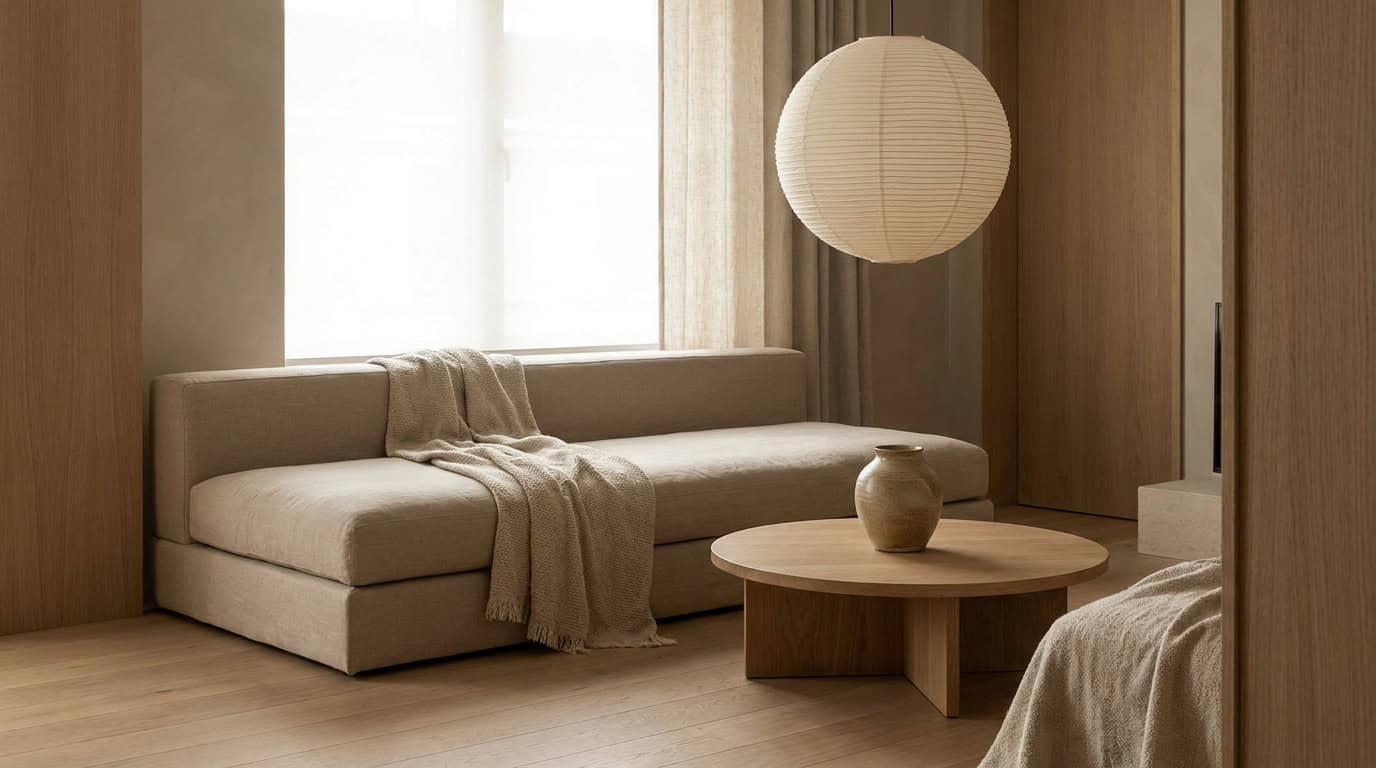
The living room is where Japandi becomes most disciplined. Where the bedroom allows softness and the kitchen allows visible utility, the living room tolerates neither excess texture nor visible function. This is the most edited room in a Japandi home, the one where negative space does the most work, and where the temptation to add more must be resisted most firmly.
Architectural Digest’s coverage of Scandinavian-Japanese interiors (see their room tours) consistently highlights this: the best Japandi living rooms feel like they have been styled and then un-styled, with items removed until only the essential remains. Apartment Therapy’s Japandi room roundups (browse here) show the same pattern. The rooms that photograph most cleanly are the ones with the most deliberate empty space.
The Living Japandi Formula
- Low-profile sofa. 14 to 16 inches seat height. Slung-low silhouettes like IKEA Vimle or linen-upholstered sofas with exposed light wood legs.
- Round or oval coffee table in light wood. These shapes soften the geometry without adding decorative clutter. Avoid glass tops; they read as contemporary, not Japandi.
- 70% empty surface rule. Coffee table, side tables, shelves. If a surface is more than 30% covered, remove something.
- Single statement object. One ceramic vessel, one wall sculpture, or one olive tree. Not all three.
- 2-3 textiles maximum. Linen throw on the sofa, bouclé cushion, low-pile natural rug. The rug anchors but should be simple: solid, light tone, low texture contrast.
- Layered lighting. One pendant overhead, one floor lamp at reading height, one accent source. Three fixtures, all at 2700K.
For specific room layouts and 30 example photos, the Japandi living room ideas guide is the right next read.
Specific Product References
| Product | Price | Where |
|---|---|---|
| IKEA Vimle 3-seat sofa (linen cover) | ~$899 | |
| Article Tessu accent chair | ~$579 | |
| West Elm Mid-Century round coffee table | ~$499 |
House Beautiful’s Japandi feature (read it here) makes a useful distinction about Japandi living rooms: the style is not “sparse.” It is “spare.” Sparse feels empty and unintentional; spare feels deliberate and considered.
Living Room Mistake to Avoid
Symmetrical pillow arrangements. Two matching cushions on each sofa end is a Hamptons move, not a Japandi move. Japandi living rooms prefer asymmetric balance: one bouclé cushion at one end, one linen throw folded at the other. Different objects, same visual weight. Norm Architects’ residential portfolio (view here) is a reliable reference for how asymmetric object placement reads as intentional and calm.
Japandi Kitchen
What Changes vs Bedroom and Living Room
The kitchen is where Japandi strips down to its most functional expression. Textiles near-disappear. Visible decoration earns its place only if it is also used daily. The craftsmanship that Japandi values, hand-thrown ceramics, solid wood grain, matte-glazed surfaces, becomes visible utility rather than ornament.
This is the most Japanese-leaning room of the three. The concept of mono no aware (finding beauty in functional objects) drives kitchen Japandi more than it drives the bedroom or living room. A ceramic bowl is beautiful because it holds food, not because it sits on a shelf for show.
What most guides miss: Japandi kitchens fail on storage math, not styling. The clear-counter look only holds if you can hide every daily appliance, which needs roughly 15-20% more cabinet volume than a standard kitchen carries. In a galley under 70 square feet, keep one appliance out, usually the kettle, and edit the rest. Forcing a fully bare counter in a small kitchen is the version people abandon within a week.
The Kitchen Japandi Formula
- Open shelves with edited contents. Not crowded gallery shelves. Three to five daily-use ceramic pieces maximum per shelf run.
- Light wood OR off-white cabinetry. Not both. Pick one and let the countertop or floor provide contrast.
- Stone or warm-tone countertop. Not stark white quartz. Warm white, honed limestone, soapstone, or butcher block sections work well. Stark white quartz reads clinical.
- 3-5 daily-use ceramic pieces visible. The pieces on display should be what you use for breakfast every morning: Hay Iittala glasses, Heath Ceramics plates, simple matte mugs.
- Single hanging pendant in matte black or paper. Over the island or sink. Avoid brass (tips toward Boho) or polished chrome (tips toward contemporary).
- One plant, one wooden cutting board displayed. A small herb pot on the windowsill and a solid wood cutting board leaned against the backsplash. Both serve a function; both look intentional.
- No open clutter, no gadgets on display. The air fryer, toaster, and blender go inside cabinets. Every appliance that stays on the counter breaks the composition.
Specific Product References
| Product | Price | Where |
|---|---|---|
| IKEA Stenstorp open shelf | ~$89 | |
| Crate & Barrel matte black pendant | ~$199 | |
| Hay / Iittala glassware set | ~$65-$120 | |
| Heath Ceramics dinnerware (4-piece) | ~$280 |
Studio McGee’s Japandi-leaning kitchen projects (explore here) consistently demonstrate how warm wood shelving against off-white cabinetry creates the functional-warm balance without tipping into farmhouse or Scandinavian-cold territory.
Kitchen Mistake to Avoid
White subway tile plus white grout plus white quartz countertop. It is the most common “going for clean” mistake in Japandi kitchen attempts. The result is sterile, not Japandi. Break the all-white combination with at least one warm element: a warm white wall (not pure white), a light oak floor, or a stone countertop in warm gray or cream. One warm anchor shifts a clinical kitchen into Japandi territory.
Side-by-Side Comparison Table
The table below captures how the same five Japandi anchors manifest differently per room. Same principles, different application.
| Element | Bedroom | Living Room | Kitchen |
|---|---|---|---|
| Wood tone | Warm light oak | Medium light oak | Light oak + matte black accents |
| Textiles | 4-5 layers | 2-3 layers | 0-1 layers |
| Statement piece | Wabi-sabi vessel + dried branch | Single large object (vessel or olive tree) | Open shelf vignette |
| Lighting | Warm dim (pendant + lamp) | Warm layered (pendant + floor + accent) | Warm pendant (single, over island) |
| Plant | Dried branch in ceramic | Olive tree (potted, floor-height) | Single herb pot (windowsill) |
| Mood | Cocoon: soft, low, restful | Architectural: edited, considered | Functional-warm: useful, crafted |
The mood column matters most. When a Japandi bedroom starts feeling architectural, or a Japandi kitchen starts accumulating textiles, the room has drifted off formula. Use the mood as a gut-check: does this feel like a cocoon, a gallery, or a well-used kitchen?
How to Maintain Japandi Continuity Across Rooms
The single risk with room-specific adaptation is losing cohesion. Each space feels intentional on its own, but the home does not feel like one thing when you walk through it.
The fix is simpler than most people expect. Three repeated elements create continuity across any number of rooms.
One wood tone. The bedroom platform bed, the living room coffee table, and the kitchen open shelves should all come from the same wood family. Not identical (the grain and finish will differ), but the same light-to-medium oak range throughout.
One metal finish. Choose either matte black or brushed nickel and use it in every room: the bedroom wall-mount ledge bracket, the living room floor lamp base, the kitchen pendant. One metal, throughout.
One textile color. The linen bedding, the sofa throw, and the single kitchen cloth should share a tone. Warm oat, soft sage, or warm white all work. The fabric weight and weave can differ entirely; the color is what carries across rooms.
That three-element thread binds the room-specific formulas into a single home. Without it, Japandi bedroom plus Japandi living room plus Japandi kitchen reads as three separately decorated rooms. With it, it reads as one cohesive space that happens to span three different functions.
For the full theory behind these anchors, the Japandi color palette guide covers the muted neutral system that underpins all three rooms. If you are starting from scratch rather than adapting an existing space, how to decorate in Japandi style: 6 steps is the right starting point before applying room-specific formulas.
If you are curious how a different aesthetic handles the same room-by-room challenge, the Boho bedroom vs living room vs bathroom comparison walks through the same type of analysis for Boho, which is useful for understanding where the two aesthetics diverge in practice.
FAQ
Can I use the same furniture pieces across all three Japandi rooms?
Yes, and it is actually encouraged. A light oak side table that works in the bedroom can be replicated (or the same unit used) as a coffee table surface in the living room. The repetition of the same material reads as intentional continuity, not lazy decorating. Where you want variation is in the function and scale of each piece, not the material family.
Is Japandi kitchen decor practical for everyday cooking?
It is, but it requires habit changes alongside the decor changes. The formula works because everything visible is also used daily. The challenge is keeping countertops clear when cooking, which means investing in adequate cabinet storage before committing to the open-counter look. Japandi kitchens that break down are almost always under-storaged, not wrongly styled.
What is the biggest difference between a Japandi bedroom and a Scandinavian bedroom?
Scandinavian bedrooms tend toward crisp whites, geometric prints, and clean lines without wabi-sabi softness. Japandi specifically adds the Japanese emphasis on imperfection and natural materials: linen that wrinkles, hand-thrown ceramics with slight irregularities, dried organic elements. If the bedroom looks like an IKEA catalog page, it is likely Scandinavian-leaning. If it has texture, asymmetry, and organic irregularity, it is reading as Japandi.
Do I need to renovate my kitchen to achieve the Japandi look?
No renovation required for a functional Japandi kitchen transformation. The highest-impact changes are: moving visible appliances into cabinet storage, swapping out countertop accessories for 3-5 quality ceramics, adding one open shelf in light wood, and changing overhead lighting to 2700K. A $300-500 refresh can shift most kitchens substantially toward the Japandi formula without touching cabinetry or countertops.
How do I adapt Japandi to a small apartment or studio under 500 square feet?
Treat the open-plan floor as one room, not three. Run a single light-oak wood tone and one shared textile color across every zone, drop to one plant for the whole space, and cap textures at two per sightline. In our studio projects under 500 square feet, one low sofa, one round light-wood table, and a single olive tree carried the entire aesthetic without crowding the floor.