A room looks like a 1970s time capsule when it mixes 10 common mistakes, such as shag rugs, avocado green and heavy drapes, into a style that ran from about 1945 to 1970. Most fixes cost $18 to $250. Each mistake below says why it reads dated and what to buy instead.
Key Takeaways
- Mid-century modern means clean lines, little ornament and honest materials, not shag, avocado or harvest gold.
- Lighting and rugs are the fastest fixes: an arc lamp is about $63 to $133 and a low-pile 5 x 7 rug about $65.
- Visible, tapered legs make furniture look light; replacement leg sets start near $18 to $22.
- Edit surfaces: one sculptural vase at $20 to $35 beats a shelf of trinkets.
- Keep one neutral, one wood tone and one accent color so the palette stays period-correct.
Mid-century modern grew out of the years after World War II. Wikipedia describes the style as marked by clean, simple lines, a lack of embellishment and an honest use of materials, popular from roughly 1945 to 1970. The 1970s then brought their own look. Wikipedia’s shag carpet entry says shag was popular in the 1960s and 1970s and captions avocado and harvest gold as two popular colors of the 1970s. For the full style rules, see the mid-century modern decor guide.
Color Mistakes
The palette is the first thing a visitor reads. Keep it to a warm neutral, one wood tone and one accent.
1. Treating Avocado Green and Harvest Gold as Mid-Century Colors
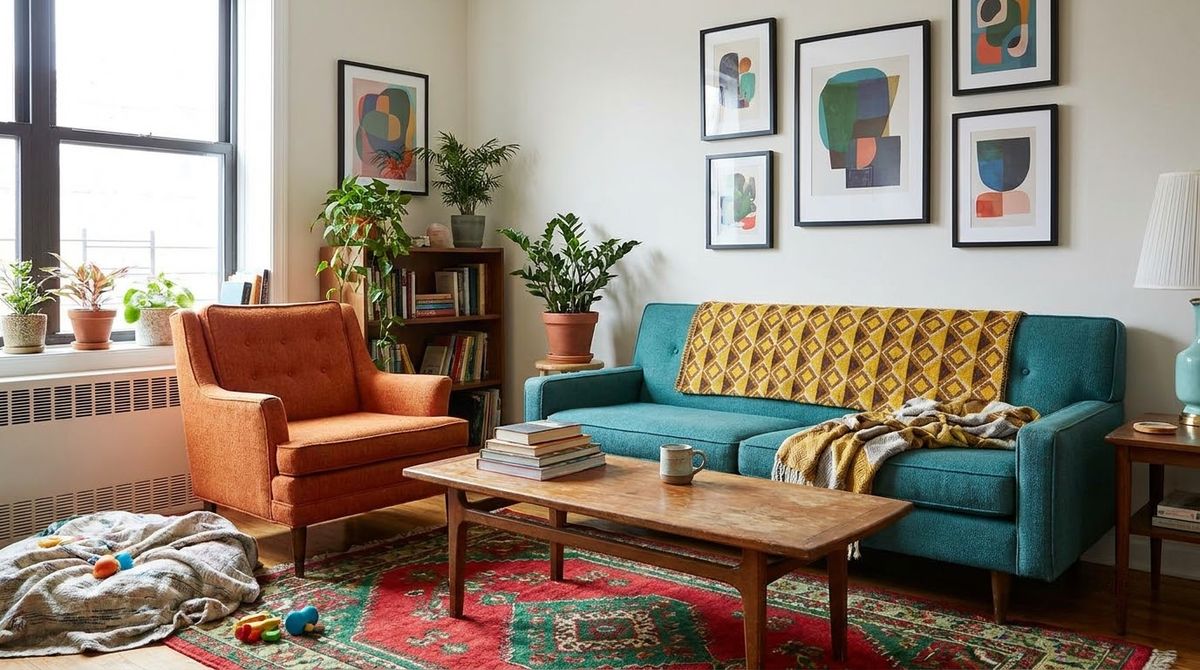
Those two colors read as 1970s because they were the popular kitchen and rug colors of that decade, so using them as wall or sofa color pushes a room into the wrong era. Period-friendly accents are mustard, burnt orange, teal or olive, used in small amounts. The fix is to paint walls a warm white or soft greige and move the color into a pillow or one chair. Benjamin Moore Regal Select was $73.99 a gallon at Ace ($59.19 on a September 2026 sale), and Sherwin-Williams Accessible Beige (SW 7036) has a light reflectance value near 58.
2. Putting Walnut or Teak Against Dark Walls
Warm wood needs light behind it to show its grain and its tapered shapes. Against charcoal or deep navy, the wood disappears and the room looks like a heavy 1970s den. The fix is to keep walls light and warm, and use a dark color only on one accent wall behind a low sofa where the silhouette stays visible. A gallon of paint is the whole cost, about $60 to $74 at the Ace prices above, plus a roller. See the mid-century modern color palette guide for pairings.
Furniture Shape Mistakes
Furniture that sits on the floor without visible legs looks heavy. Mid-century pieces look like they float.
3. Furniture Without Exposed, Tapered Legs
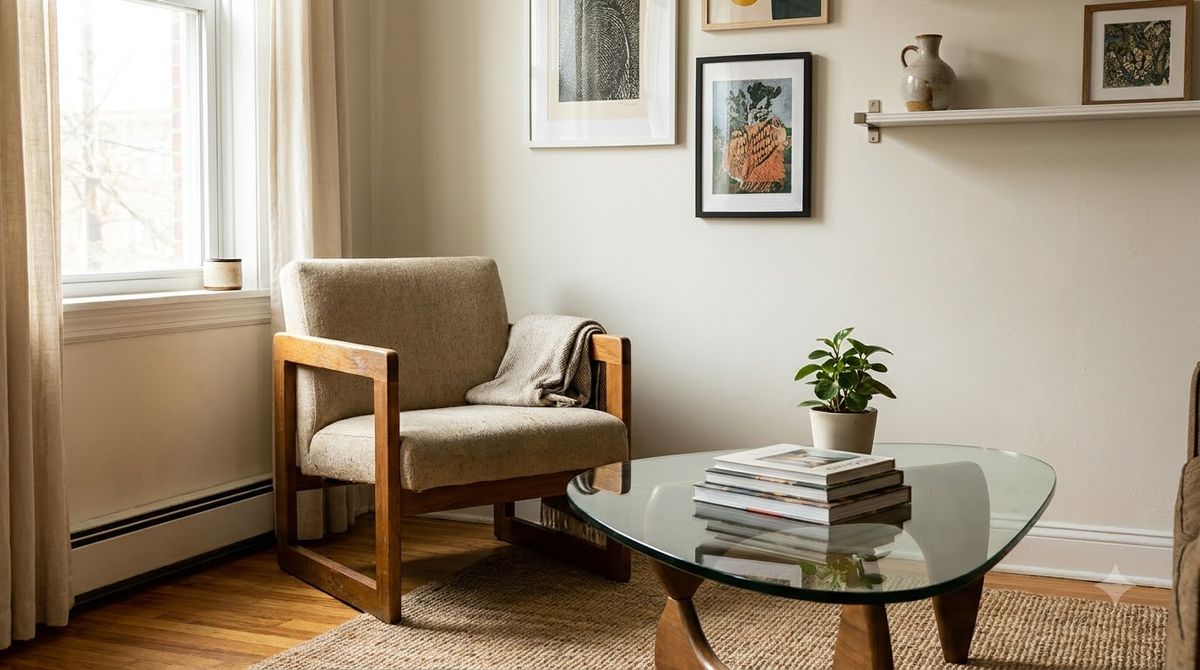
Bun feet, skirted bases and bracket bases hide the floor, and a hidden floor makes a room feel heavy. Slim, tapered or hairpin legs create the lifted look that defines the period. The fix is to swap legs where the piece allows it. Home Depot listed American Pro Decor 4-inch tapered hardwood legs at $22.41 for a 4-pack, WEN 16-inch satin black hairpin legs at $32.19 to $39.25, and Walmart tapered sofa legs at $17.79. Check the hardware and weight rating first. Our leg and wood guide covers it.
4. Reproductions With the Wrong Proportions
Cheap “mid-century inspired” pieces often have thick aprons, tall backs and stubby proportions, which look bulky next to real period lines. Before buying, check the listing for overall height, seat height and visible leg length, and compare with a reference piece. Article’s Sven 88-inch sofa, for example, was listed at about 34 inches tall with a $1,399 estimated retail price on a resale listing. The fix is to buy fewer, better-proportioned pieces; see the best mid-century furniture picks.
Clutter and Art Mistakes
Restraint is part of the style. Every object should earn its place.
5. Covering Every Surface With Small Objects
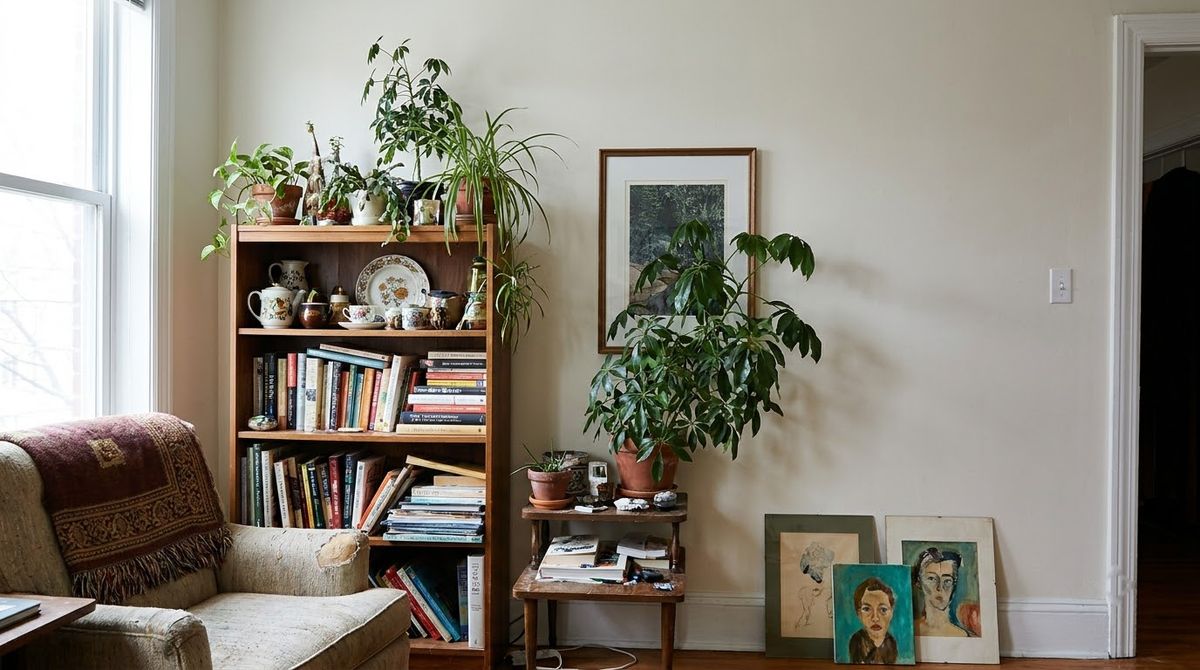
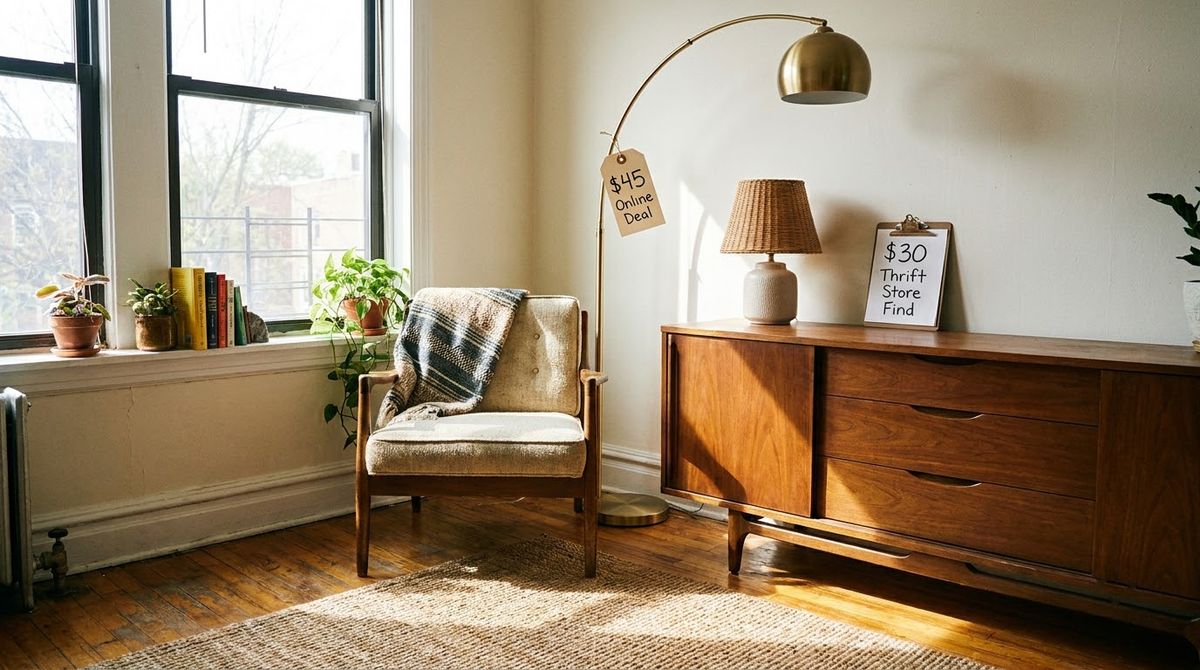
Many small items fight each other and flatten the sculptural lines of the furniture. The fix is to leave surfaces mostly empty and use one strong piece. Target’s Threshold textured ceramic vases were listed at about $20 to $25, and Hearth and Hand pleated ceramic vases at $22 to $35. On a credenza, use one vase and one stack of books, and leave at least a third of the top bare. Pillows follow the same rule: two or three on a sofa, not six.
6. Hanging Busy or Ornate Art
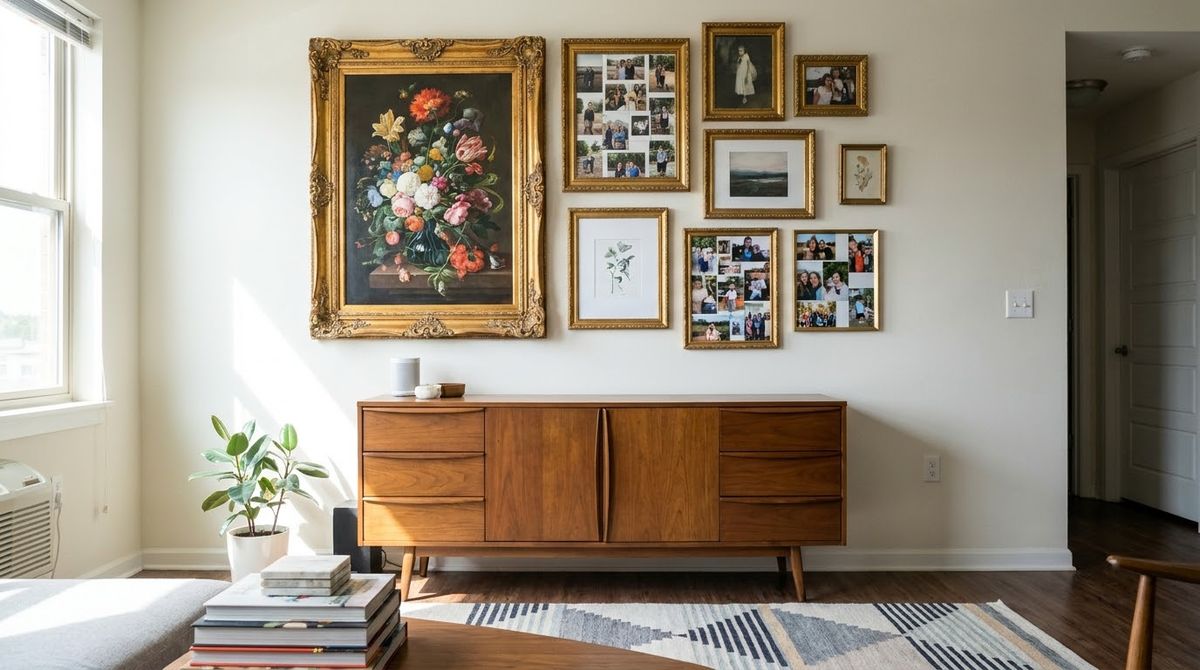
Gilded frames, florals and photo collages fight the style’s calm geometry. Mid-century rooms suit abstract shapes, geometric prints, line drawings and simple frames. Walmart listed Stupell 16 by 20 inch framed mid-century geometric abstract prints at about $43, and Living Spaces listed framed mid-century art from $79. Choose thin black or walnut frames, and hang one large piece rather than a salon wall. The gallery wall layout templates show spacing if you want several.
Lighting and Window Mistakes
Flat ceiling light and covered windows remove depth. Layered lamps and open windows restore it.
7. Relying on Recessed Lights Alone
Recessed cans give an even wash that erases the shadows that make tapered furniture and wood grain look good. The fix is a statement lamp and layers. Walmart listed a Dewenwils arc floor lamp at about $63 on a deal (regular near $138), a Sunmory arc lamp at $132.99 and a Safavieh brass mid-century floor lamp at $116.20. A Sputnik-style brass chandelier ran about $220 to $499 at Walmart. Use one overhead, one floor lamp and one table lamp per seating area.
8. Heavy Drapes That Block the Window
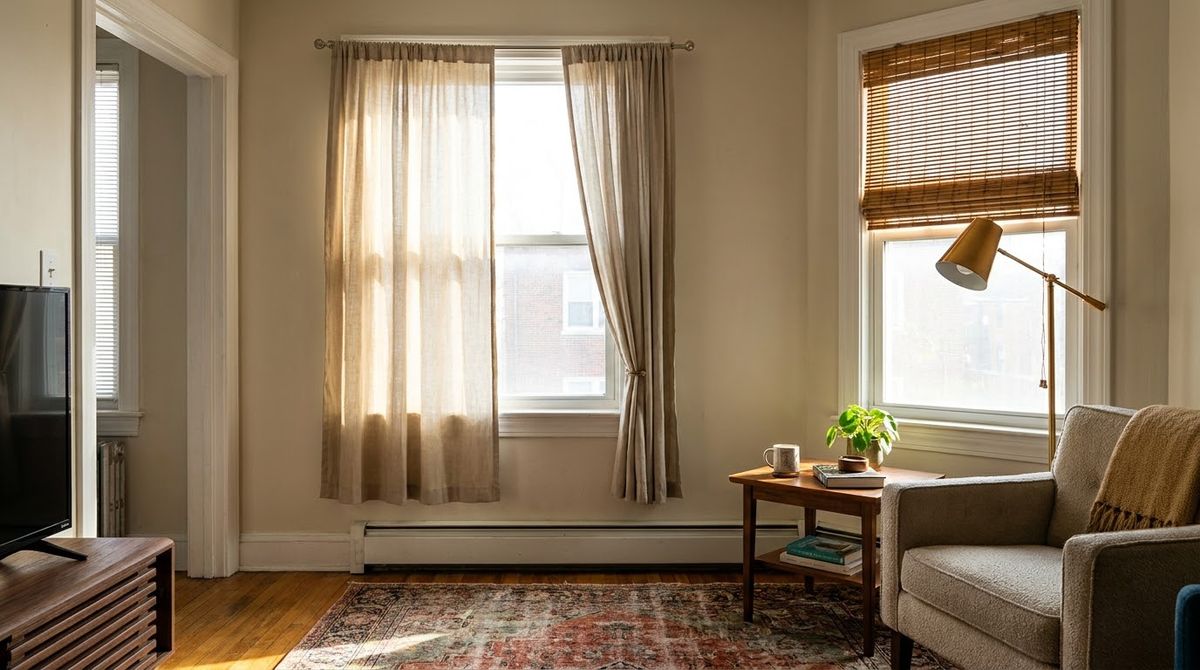
Thick velvet or brown blackout panels are a 1970s look and cut the indoor-outdoor feeling the style is known for. Replace them with light linen-look sheers or roller shades in warm white. Walmart listed linen-look sheer panel pairs at $18.18 to $18.85 and a linen pinch-pleat pair at $29.99, while Home Depot listed Bali cordless white roller shades from $27.07 and Chicology shades near $43. Mount the rod near the ceiling to make windows look taller.
Material and Floor Mistakes
Natural materials and a flat, low rug balance the polished wood and geometric forms.
9. Leaving Out Plants and Natural Texture
A room of only wood and synthetic upholstery looks sterile. One big plant, a ceramic vase or a natural-fiber throw adds the organic note the style relies on. Home Depot listed 10-inch-pot rubber plants (Ficus elastica) from $43.94 for a variegated Tineke to $45.98 for a burgundy. Pair one with a matte earth-tone vase from Target at $20 to $25. Put the plant by a window, since rubber plants need bright light.
10. A Shag Rug or the Wrong Pile
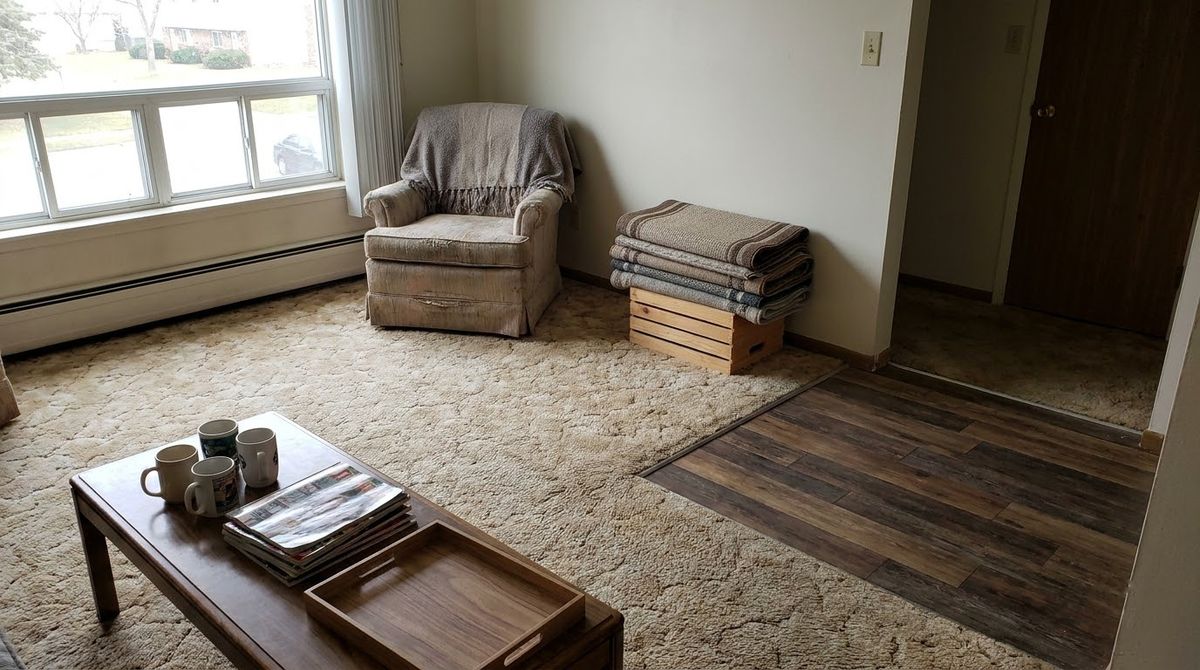
Shag is a 1960s and 1970s look, so it ties the room to the 70s rather than the 50s. Choose a low-pile or flat-weave rug with a geometric or abstract pattern. Walmart listed a Nourison Astra washable 5 foot 3 inch by 7 foot rug at $64.99 and a Garvee 8 by 10 washable geometric rug at $72.87, and IKEA’s low-pile PS 2026 rug, 6 foot 7 inch by 8 foot 9 inch, was listed at $249.99. Size it so the front legs of the sofa sit on it; see the rug size guide.
Cost of the Fixes
| Fix | Price seen | Retailer |
|---|---|---|
| Tapered leg 4-pack | $17.79-$22.41 | Walmart, Home Depot |
| Arc floor lamp | $63-$133 | Walmart |
| Linen-look sheer panels (pair) | $18.18-$29.99 | Walmart |
| Cordless roller shade | $27.07-$46.70 | Home Depot |
| Ceramic vase | $20-$35 | Target |
| Rubber plant, 10-inch pot | $43.94-$45.98 | Home Depot |
| Low-pile 5 x 7 rug | $64.99 | Walmart |
Frequently Asked Questions
What is the fastest single fix for a room that looks too 70s?
Change the lighting. Add an arc floor lamp ($63 to $133 at the Walmart prices above) and remove heavy drapes. A lamp gives the room shadow and a focal point in under an hour, and it is easy to return if it does not suit the space.
Which colors are mid-century modern and which are 70s?
Warm whites, walnut and teak browns, with a single accent such as mustard, burnt orange, teal or olive, fit the earlier style. Avocado green and harvest gold are popular 1970s colors. When three saturated colors compete in one room, at least one belongs to the wrong decade.
Can mid-century modern furniture mix with other styles?
Yes. It pairs well with Scandinavian, Japandi and organic modern pieces because they share clean lines and natural materials. It clashes with heavy ornament or rustic lodge pieces. Any added piece should share one trait with the style, such as slim legs, wood grain or a simple geometric form.
How much does it cost to correct these mistakes?
Single fixes run about $18 to $135 at the prices above. A full room fix with a lamp, sheers, a rug, a vase, a plant and a paint refresh adds up to roughly $270 to $390. Furniture replacement costs far more, so start with the cheap items and live with the room before replacing larger pieces.
Do you have to match all the wood tones?
No. A room where every piece is one identical wood looks like a showroom. Mix two or three warm tones, such as walnut, teak and oak, and let one tone cover most of the wood. Keep undertones warm and avoid very orange or very gray woods next to each other.
Does everything have to be mid-century modern?
No. A fully matching room often tips into costume. Mix a few period-style pieces with simple modern or vintage ones that share clean lines, then leave open space between them. The budget guide explains where to splurge and where to save.
Fix Lighting First, Then Edit
Lighting, the rug and surface editing change a room fastest, and together they cost about $150 to $220. Leave paint, furniture legs and larger pieces for later. If you are starting from scratch, the six-step beginner guide gives a buying order.
Prices checked October 2026.