DecorQuarter · budget decor
Kitchen Drawer Organization: 7 Ways to End the Drawer Chaos in 2026
A messy kitchen drawer isn’t a storage problem. It’s a system problem. Most drawers become a single sliding pile because nothing has a defined lane, so every item drifts every time you open and close.
1. Empty and Measure Your Drawers
Start by emptying the drawer completely, then measure three numbers: interior width, depth (front to back), and clearance height. This single step prevents the most common mistake we see, which is buying an organizer that’s an inch too wide to close the drawer.
$12-$18,
2. Utensil Dividers and Trays
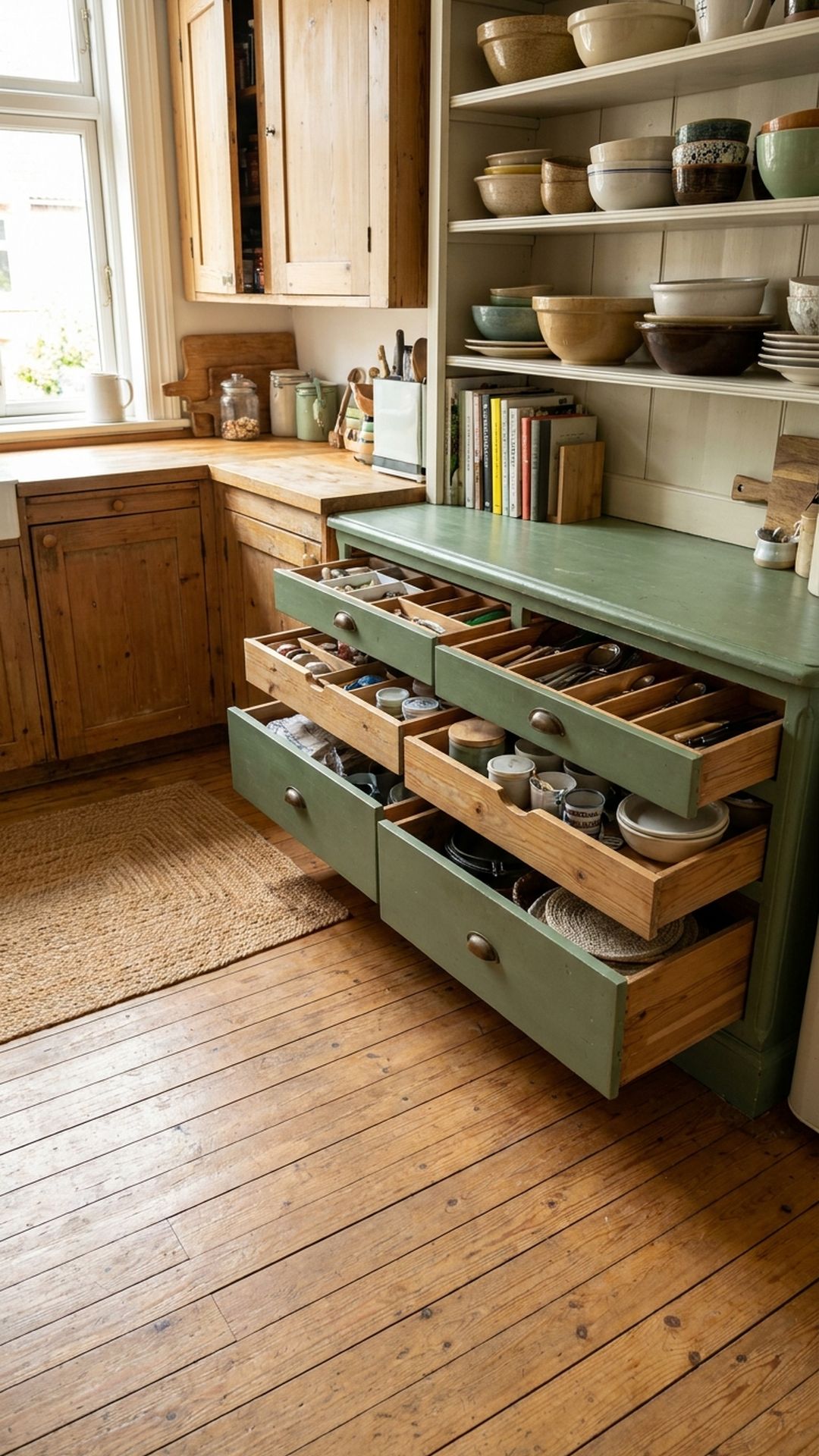
The utensil drawer is where most chaos lives, and dividers are the cure. An expandable bamboo divider set runs about $12-$18, while a molded utensil tray from OXO or mDesign runs $10-$20.
$10-$15
3. The Junk Drawer Fix
Every kitchen has one, and that’s fine. The problem isn’t having a catch-all drawer, it’s letting it run without any structure. A modular small-bin insert set (IKEA and mDesign both sell them for $10-$15) turns the pile into defined zones in about ten minutes.
$25-$40
4. Deep Drawer Solutions
Deep drawers hide the most wasted space in the kitchen because everything stacks into an unstable pile. The fix is dividing vertically. Adjustable peg-board inserts ($25-$40) hold plates and lids upright, and tiered inserts let you see the back row without digging.
$15-$30
5. Spice Drawer Setup
Spices belong in a drawer, not stacked three-deep in a cabinet where the back row expires unseen. An angled tiered drawer insert ($15-$30 from The Container Store or Amazon) tilts each jar so the label faces you the moment you open the drawer.
$8-$12
6. Non-Slip Liners
Liner is the quiet workhorse of a good drawer. A non-slip liner ($8-$12 a roll) stops trays, dividers, and loose items from sliding every time you open and close.
The full plan
Kitchen Drawer Organization: 7 Ways to End the Drawer Chaos in 2026
Every idea, with prices and where to buy it, is in the full guide.