DecorQuarter · budget decor
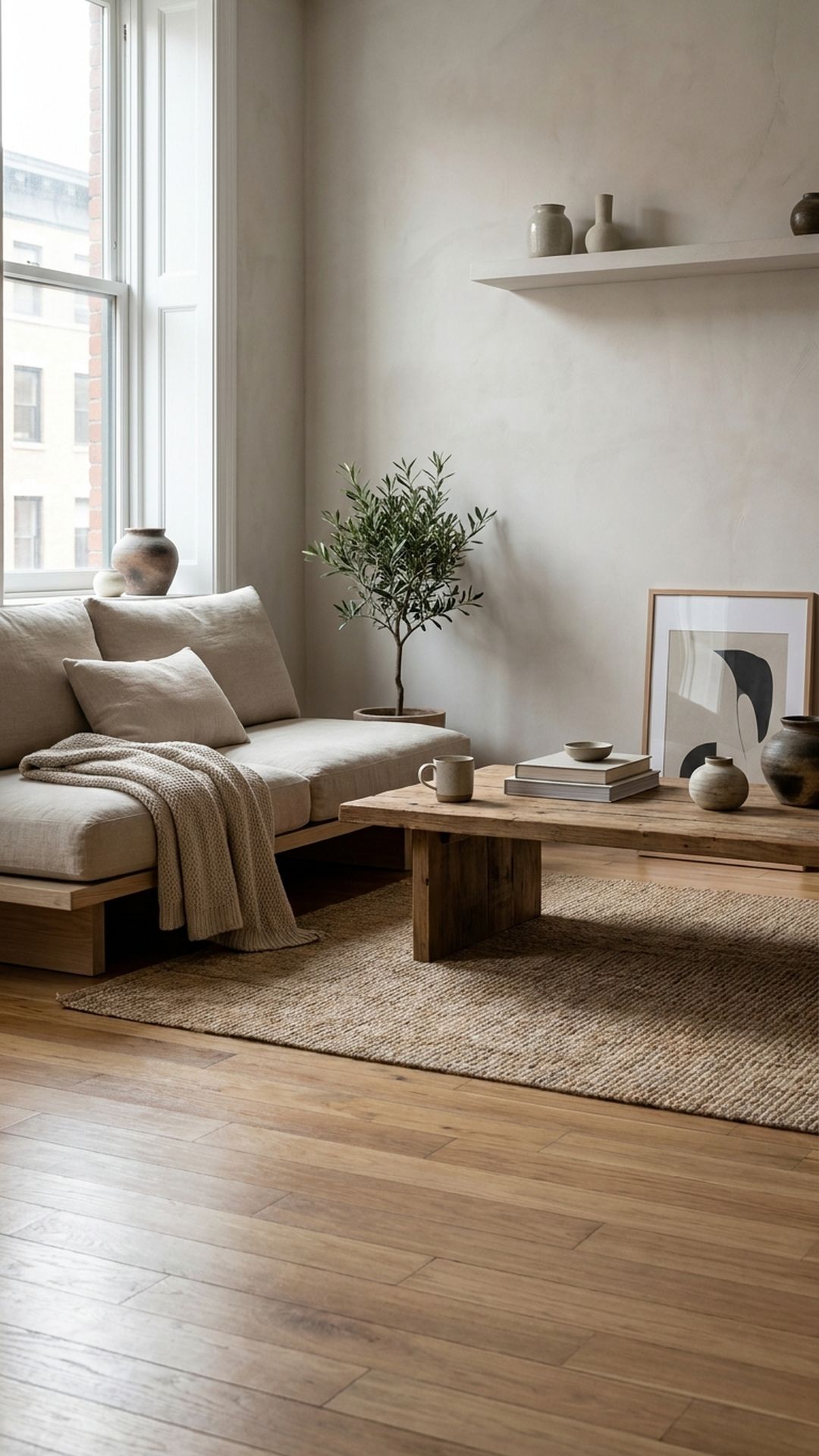
The Ultimate Japandi Decor Guide 2026
Japandi is the #2 most-saved decor aesthetic on Pinterest in 2026, and that number keeps climbing. It’s not hard to see why.
What Japandi Decor Actually Is
The word “Japandi” first circulated in design press around 2019, but the design conversation it describes goes back further.
The 5 Defining Principles of Japandi
Understanding Japandi as a set of principles (rather than a checklist of products) is what separates rooms that actually feel right from rooms that look like a Pinterest board assembled in an afternoon.
Japandi Color Palette: The Muted Earth Spectrum
The first mistake most people make with Japandi color is defaulting to crisp white. Japandi white is not bright white. It is warm white: the off-white of unpainted plaster, aged linen, or paper mulch.
Japandi Materials & Textures
Materials are where Japandi earns its visual warmth. The palette is muted; the materials carry weight. Here are the six categories that do the most work, and where each one belongs in a room.
How Japandi Differs From: Minimalism, Scandi, Wabi-Sabi, Zen
These four aesthetics orbit the same gravitational field, which is why the comparisons constantly come up. Here’s where Japandi diverges from each.
Japandi Furniture: The Low-Profile Rule
The most structurally important Japandi rule is low-profile furniture, and it’s one beginners most often overlook. In traditional Japanese interiors, living happens close to the floor: floor cushions (zabuton), low dining tables (chabudai), futon bedding.
The full plan
The Ultimate Japandi Decor Guide 2026
Every idea, with prices and where to buy it, is in the full guide.