DecorQuarter · budget decor
Japandi Bedroom vs Living Room vs Kitchen
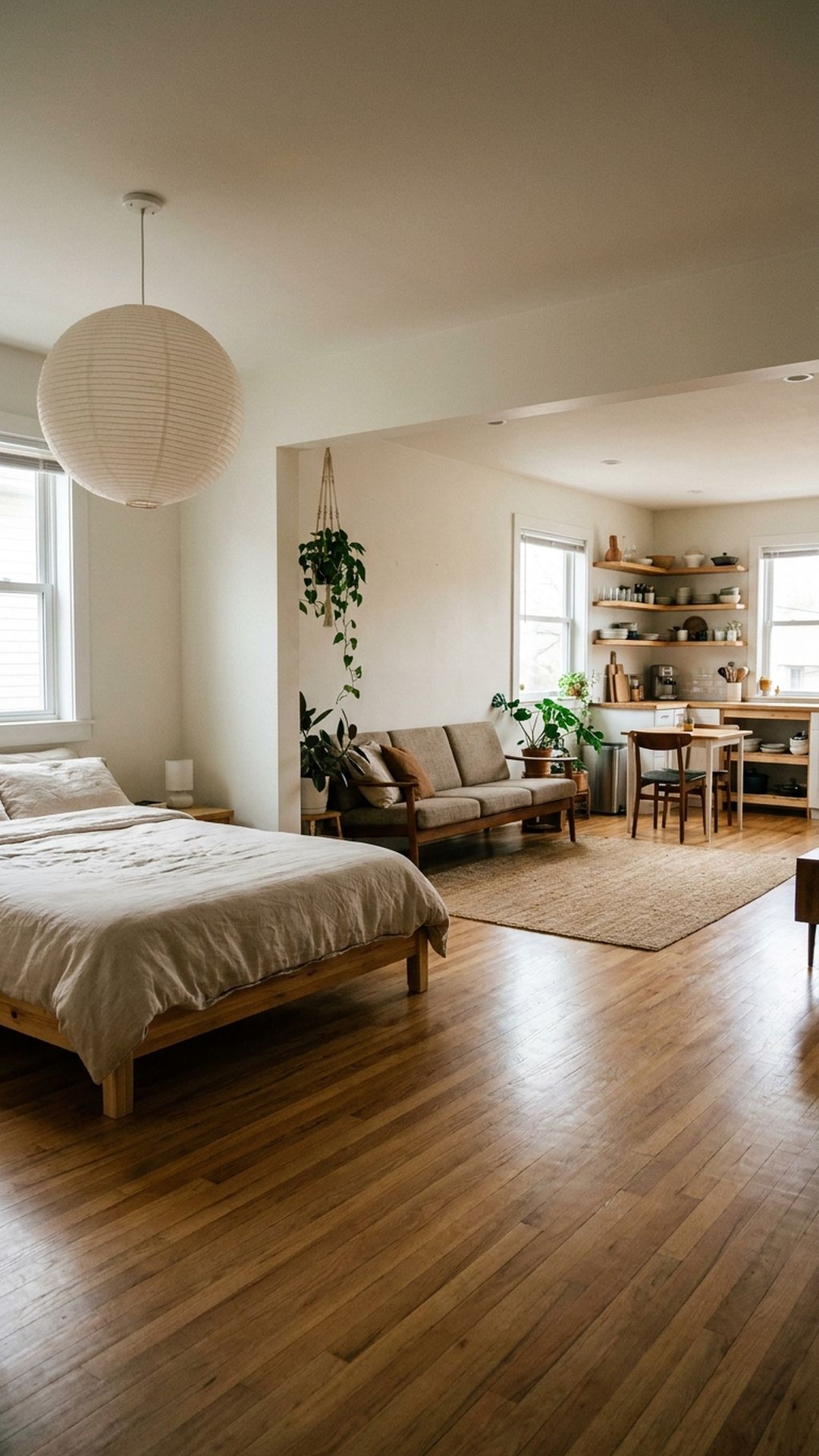
Japandi shifts its balance room by room: the bedroom leans soft and wabi-sabi with 4-5 textile layers, the living room turns architectural under a 70% empty-surface rule, and the kitchen strips down…
The 5 Cross-Room Japandi Anchors
Before breaking down how each room adapts, it helps to identify what stays fixed. After photographing all three rooms in identical 850-square-foot layouts for multiple client projects, the cross-room thread that consistently works comes down to five constants.
Japandi Bedroom
The bedroom is where Japandi earns the wabi-sabi half of its Japanese-Scandinavian blend. Compared to the living room and kitchen, the bedroom allows more textile layering, more visible imperfection, and a lower overall visual horizon. Furniture sits closer to the floor.
Japandi Living Room
The living room is where Japandi becomes most disciplined. Where the bedroom allows softness and the kitchen allows visible utility, the living room tolerates neither excess texture nor visible function.
Japandi Kitchen
The kitchen is where Japandi strips down to its most functional expression. Textiles near-disappear. Visible decoration earns its place only if it is also used daily.
Side-by-Side Comparison Table
Same principles, different application.
How to Maintain Japandi Continuity Across Rooms
The single risk with room-specific adaptation is losing cohesion. Each space feels intentional on its own, but the home does not feel like one thing when you walk through it.
The full plan
Japandi Bedroom vs Living Room vs Kitchen
Every idea, with prices and where to buy it, is in the full guide.