
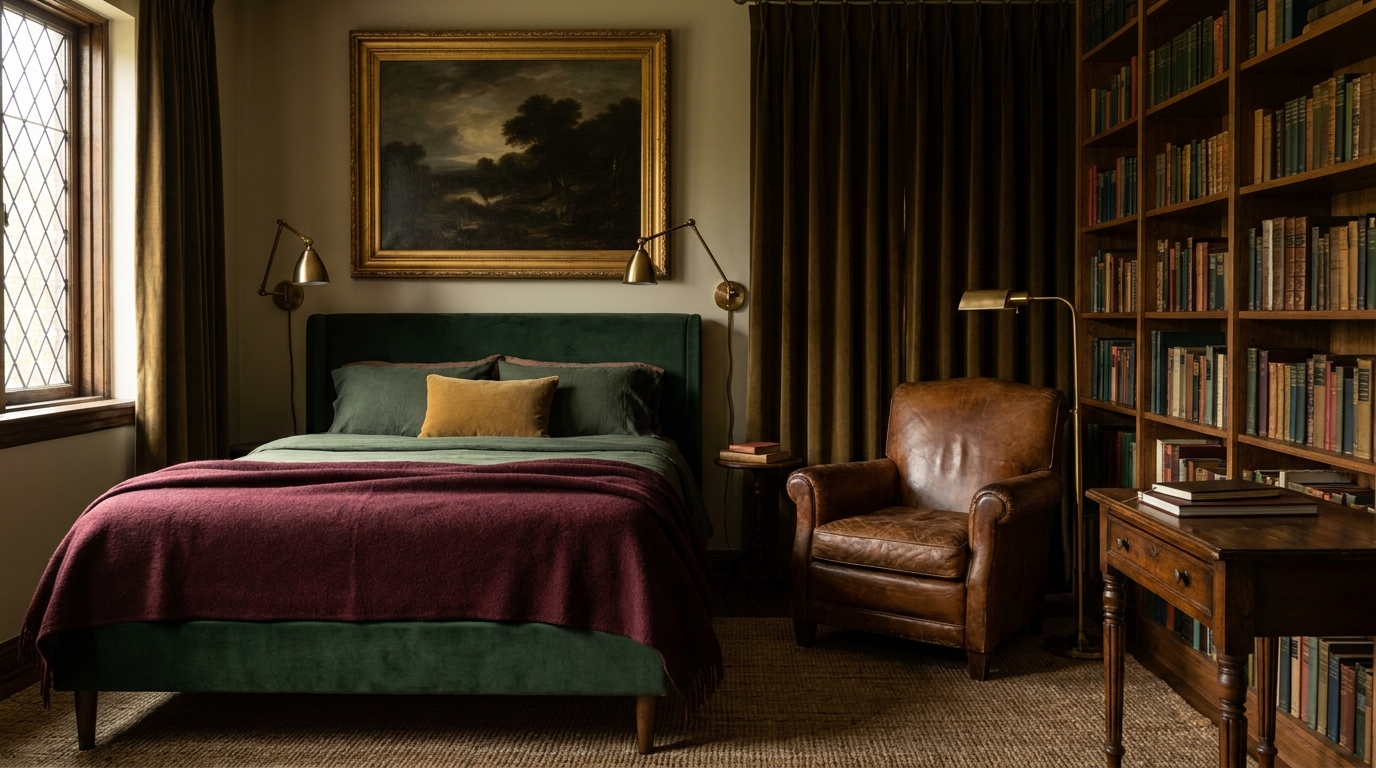
The one-line difference: dark academia is warm and book-driven (oak, brass, forest green), gothic is cold and architectural (true black, wrought iron, pointed arches), and moody mid-century is sleek and low-slung (charcoal, smoked walnut, tapered legs). All three get called “moody,” yet the split comes down to light, era, and materials, right down to what the room is supposed to do when you walk in at 9pm with a glass of wine.
Here’s the short verdict before we get into the long one:
- Dark academia is for readers, students, and writers. Warm, layered, library-coded.
- Gothic is for drama lovers and night owls. Cold, ornate, architectural.
- Moody mid-century is for minimalists who hate beige. Sleek, low-slung, atmospheric without being theatrical.
Pick wrong and the room reads as a Halloween display in March. Pick right and you’ll never want to leave. Let’s break down which one is yours.
Key Takeaways

- Dark academia centers on books, brass, warm wood tones (oak, walnut), forest green, oxblood, and candlelight. It’s nostalgic and scholarly.
- Gothic decor leans cooler — black, deep purple, blood red, ornate iron, velvet, pointed-arch silhouettes, religious or medieval references.
- Moody mid-century uses 1950s–60s furniture forms in saturated dark palettes: charcoal, smoked oak, olive, oxblood leather, brass, with clean lines instead of ornament.
- The fastest way to decide: look at your bookshelf. Heavy on classics and poetry? Dark academia. Heavy on horror, occult, or art history? Gothic. Heavy on design monographs and biographies? Mid-century.
- You can blend two of the three. Blending all three usually creates a muddy room with no point of view.
What Each Style Actually Is (No Pinterest Fluff)
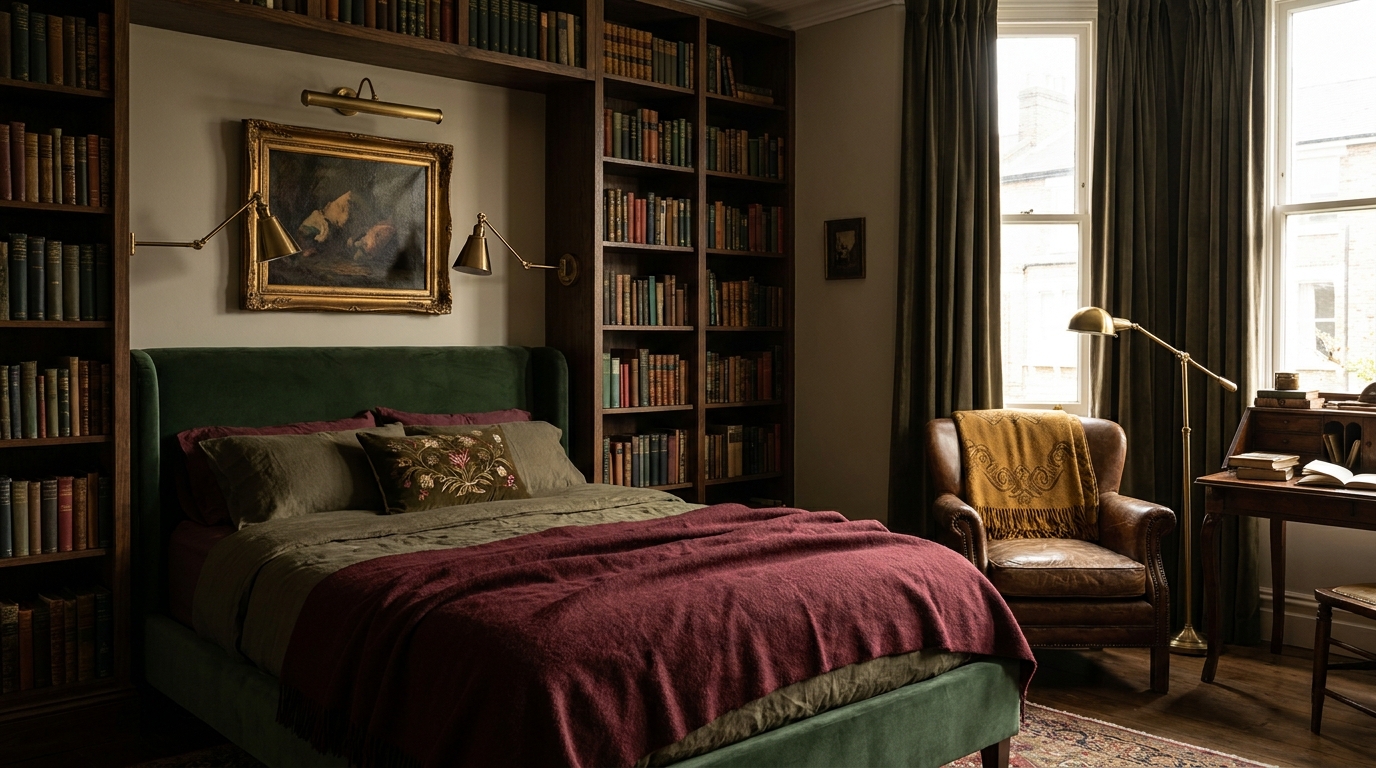
Before we compare, we need clear definitions. Most “moody style” articles online use these three terms interchangeably, which is why so many rooms end up looking like a costume shop.
Dark Academia
Dark academia is rooted in old university aesthetics — think Oxford reading rooms, Ivy League libraries, and the visual world of Dead Poets Society or The Secret History. The aesthetic emerged as an internet subculture in the late 2010s and exploded on TikTok during 2020–2021, then settled into a legitimate interior style with staying power.
Core ingredients:
- Warm wood: oak, walnut, mahogany
- Brass and aged gold finishes
- Forest green, oxblood, mustard, deep navy
- Stacks of hardcover books (functional, not decorative)
- Candles, banker’s lamps, library sconces
- Leather — Chesterfield sofas, journal-style accessories
- Botanical prints, anatomical illustrations, vintage maps
- Tweed, wool, linen textures
The mood is studious warmth. It’s a room that wants you to read for three hours.
Gothic Decor
Gothic decor pulls from medieval cathedrals, Victorian mourning culture, and 19th-century Romanticism. It’s older, colder, and far more architectural than dark academia. Where dark academia evokes a private tutor’s study, gothic evokes a chapel.
Core ingredients:
- Black as a true neutral (not an accent)
- Deep jewel tones: amethyst, burgundy, emerald
- Wrought iron, pewter, antique silver
- Velvet — heavy, drapey, often tufted
- Pointed arches, trefoils, quatrefoils
- Skulls, taxidermy, religious iconography, memento mori
- Damask wallpaper, fleur-de-lis patterns
- Stained or leaded glass
The mood is theatrical reverence. It’s a room that wants you to whisper.
Moody Mid-Century
This is the dark horse of the three — literally. Moody mid-century takes the iconic furniture shapes of the 1950s and 60s (Eames, Saarinen, Wegner silhouettes) and rejects the bright “Mad Men” palette in favor of deep, saturated tones. Think a Don Draper office, but at midnight, in a thunderstorm.
Core ingredients:
- Low-slung furniture with tapered legs
- Smoked oak, walnut, teak — but stained darker than traditional MCM
- Charcoal, espresso, olive, oxblood, burnt orange
- Brass and brushed gold (clean shapes, not ornate)
- Geometric patterns: starbursts, atomic prints in muted tones
- Globe pendants, sputnik chandeliers
- Leather and bouclé in dark colorways
- Minimal accessories — every object earns its spot
The mood is quiet confidence. It’s a room that doesn’t need to prove anything.
What most guides miss: The fastest physical tell is wood finish plus leg line. Dark academia runs honey-to-dark oak on turned or square legs; gothic uses near-black distressed wood with heavy carved feet; moody mid-century uses smoked walnut on thin tapered legs. People confuse dark academia and moody mid-century constantly, but academia piles books and layers, while mid-century keeps surfaces almost bare.
Free · 60 seconds
Not sure which style is actually yours?
Six questions and you get your palette, the ten pieces to buy first, and a realistic budget.
Side-by-Side: The Real Differences
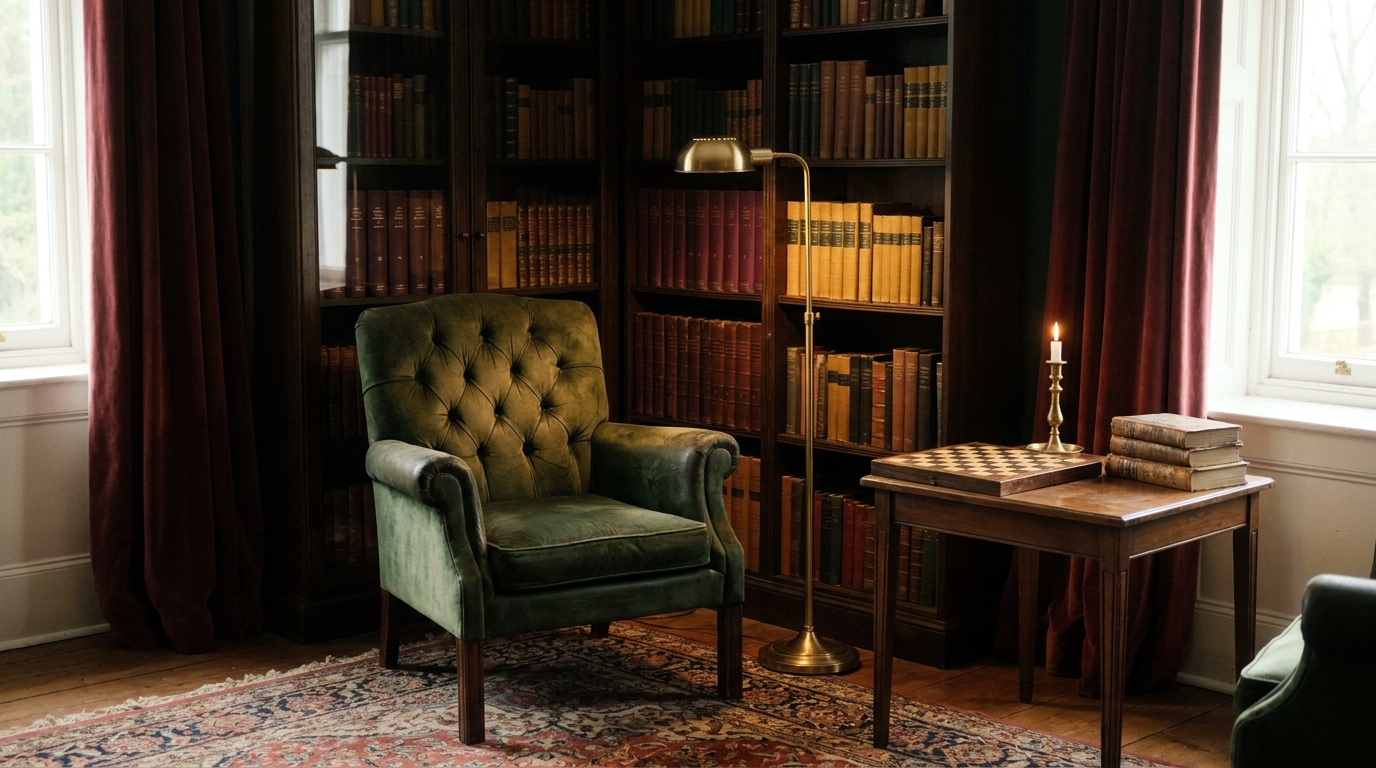
| Element | Dark Academia | Gothic | Moody Mid-Century |
|---|---|---|---|
| Era reference | 1890s–1940s academic | Medieval to Victorian | 1950s–1960s |
| Primary mood | Scholarly, warm, nostalgic | Theatrical, reverent, cool | Confident, clean, atmospheric |
| Color anchor | Warm browns + forest green | True black + jewel tones | Charcoal + smoked wood |
| Wood finish | Honey to dark oak | Near-black, distressed | Walnut, espresso, smoked |
| Metal | Aged brass | Wrought iron, pewter | Brushed brass, blackened steel |
| Lighting | Layered, warm 2700K | Candles, dim sconces | Sculptural pendants, dim |
| Pattern | Botanicals, plaids, tweeds | Damask, fleur-de-lis | Atomic, geometric, abstract |
| Best room | Library, office, bedroom | Living room, bedroom, foyer | Living room, dining, lounge |
| Hardest to pull off | Avoiding “themed” look | Avoiding “Halloween” look | Avoiding “AirBnB” look |
What most guides miss: Black is the trap. True black as a wall or main neutral reads gothic; the moment the base shifts to warm brown or forest green, the room becomes dark academia; charcoal (never pure black) with saturated accents like oxblood and olive is moody mid-century. Many rooms fail because people paint gothic-black walls, then fill them with cozy academia books, mismatching the temperature.
When Each Style Wins
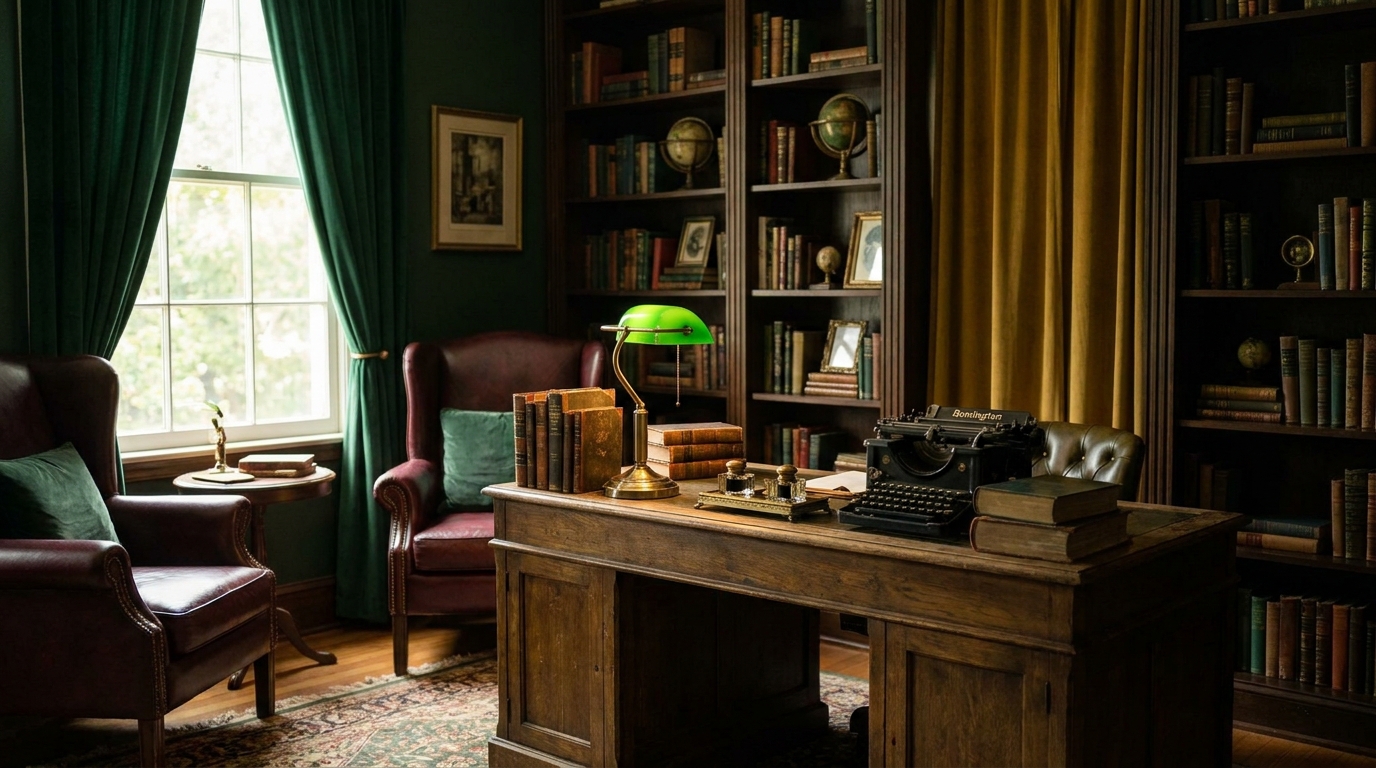
Dark academia wins when you actually read.
Don’t decorate around fake book stacks. Dark academia falls apart immediately if the books on the shelf are styled spine-out for color and you’ve never opened any of them. The style is built on use — worn leather, dog-eared paperbacks, half-burned candles, a heavy mug that lives on the desk.
It also wins in small spaces because the warm palette and layered textures make a 400-square-foot studio feel like a refuge instead of a closet. If you’ve ever wanted your apartment to feel like a graduate seminar room at dusk, this is your style. Start with our hub guide to dark academia decor for the full breakdown.
Gothic wins when the architecture supports it.
Gothic is the hardest of the three because modern apartments fight it. Eight-foot ceilings, drywall, hollow-core doors, and recessed LED lighting are gothic’s natural enemies. The style needs height, shadow, and weight.
Gothic works brilliantly in:
- Pre-war buildings with crown molding and tall windows
- Brownstones, Victorians, and lofts
- Bedrooms (where you can fully commit with a four-poster)
- Rooms with at least one architectural anchor (fireplace, archway, paneling)
If your room is a beige rectangle with a popcorn ceiling, full gothic will read as costume. Borrow one or two gothic elements — a velvet curtain, a wrought iron mirror — and lean into another style as your base.
Moody mid-century wins when you hate clutter.
This is the cleanest of the three. If you love the idea of dark academia but the reality of “stacks of books, towers of candles, layered rugs, three lamps per room” exhausts you, moody mid-century is your answer. It delivers atmosphere through shape and shadow instead of accumulation.
It’s also the most resale-friendly. A dark academia room is a love-it-or-leave-it commitment for a buyer. A moody mid-century room reads as “designer” to almost everyone.
The “Inside Me There Are Three Wolves” Problem
The most-upvoted Reddit thread on this exact question opens with a woman saying: “I am an indecisive woman about everything, this includes my interior decor style. Inside me, there are so many wolves.” She’s not alone — the comment section is full of people trying to combine all three.
Here’s the honest answer: you can blend two of these styles. You cannot cleanly blend all three.
Pairings that work
Dark academia + moody mid-century is the easiest blend and probably the most popular hybrid in 2026. Use mid-century furniture shapes (clean lines, tapered legs) as the bones, then layer dark academia accessories on top — books, brass lamps, leather, botanicals. The clean architecture keeps the room from feeling cluttered, while the academia layer adds personality and warmth.
Dark academia + gothic works if you commit to a Victorian-leaning era. Picture a study in an 1880s townhouse — leather Chesterfield, oxblood walls, gothic-arch mirror over the fireplace, taxidermy moth in a shadow box, towering bookshelves. The key is staying in one historical lane (late Victorian) so the styles share a vocabulary.
Gothic + moody mid-century is the rarest and hardest blend. It can work in a bedroom: a low platform bed in smoked oak, a gothic-arched headboard panel behind it, sputnik pendant in matte black, velvet bedding. Done wrong, it’s a haunted IKEA showroom. Done right, it’s incredible.
The blend that fails
All three at once. The materials fight each other — ornate wrought iron next to a clean walnut credenza next to a leather Chesterfield piled with classics creates visual chaos. You end up with a room that has no center of gravity.
How to Decide in Five Minutes
Skip the personality quizzes. Answer these three questions honestly:
1. What’s your relationship to use vs. display?
- “I want everything in the room to be used regularly” → dark academia or moody mid-century
- “I love beautiful objects that exist purely as objects” → gothic
2. How do you feel about clutter?
- “Layered, lived-in, full” → dark academia
- “I need empty space to breathe” → moody mid-century
- “Maximalism that feels intentional and dramatic” → gothic
3. What’s your default lighting setting?
- Warm, multiple sources, table lamps → dark academia
- Candles and one dim overhead → gothic
- Two sculptural fixtures and that’s it → moody mid-century
If you got the same answer twice, that’s your style. If you got three different answers, default to dark academia — it’s the most forgiving and the easiest to layer into.
Where to Start (Without Buying Everything)
Whichever style you land on, don’t try to redecorate in a weekend. Pick one anchor zone — a desk, a reading corner, a console — and build there first.
For dark academia, start with lighting. The single biggest mistake is keeping bright overhead LEDs and then wondering why your candles “don’t do anything.” Our roundup of the best dark academia candles and lighting under $40 covers 12 pieces that build atmosphere without breaking the budget.
Once your light is right, focus on the desk or reading nook — these are the spaces where the style does its best work. We pulled together 22 of the most atmospheric dark academia desks and reading nooks for inspiration and shopping pulls.
For accessories on a budget, the 15 hidden Amazon finds under $25 skip the obvious picks and focus on objects that genuinely look vintage instead of dropshipped. And if you want a curated, scroll-and-buy list, the 18 best dark academia decor finds from Amazon for 2026 covers the heavy hitters that ship this week.
The Bottom Line
Dark academia, gothic, and moody mid-century all live under the “moody interior” umbrella, but they’re not interchangeable. The question isn’t which one is coolest — it’s which one matches how you actually live.
- Read at night with tea, journal, hate fluorescent light? Dark academia.
- Want a home that feels like a private chapel, not a productivity zone? Gothic.
- Love atmosphere but hate dusting forty objects? Moody mid-century.
Pick the one that fits your real life, not your aspirational life. The room will follow.
FAQ
Is dark academia just gothic with books?
No. Gothic is colder, more ornate, and more theatrical, with roots in medieval and Victorian sources. Dark academia is warmer, more scholarly, and rooted in late 19th- and early 20th-century university aesthetics. Same family, different rooms.
Can mid-century modern be moody?
Yes — and it’s one of the most underrated styles of 2026. Swap the bright atomic palette of traditional MCM for smoked woods, charcoal, oxblood, and olive, and the same clean silhouettes become genuinely atmospheric.
Which style is easiest in a rental?
Dark academia. It relies almost entirely on furniture, textiles, books, and lighting — none of which require painting walls or modifying architecture. Gothic typically needs paint or wallpaper to land. Moody mid-century needs commitment to furniture shapes, which can be harder to find used.
Which style is cheapest to start?
Dark academia, by a wide margin. Thrift stores and used bookstores are full of $5 hardcovers, brass odds and ends, and oak frames. Gothic gets expensive fast (good velvet, real iron). Mid-century requires specific furniture forms that don’t show up in every thrift store.
Will dark academia look dated in five years?
Less than you’d think. The style references aesthetics that have already lasted a century — Oxford libraries, leather Chesterfields, brass banker’s lamps. It’s not a trend rooted in 2020s graphics or fast fashion, so it ages with the room rather than against it.